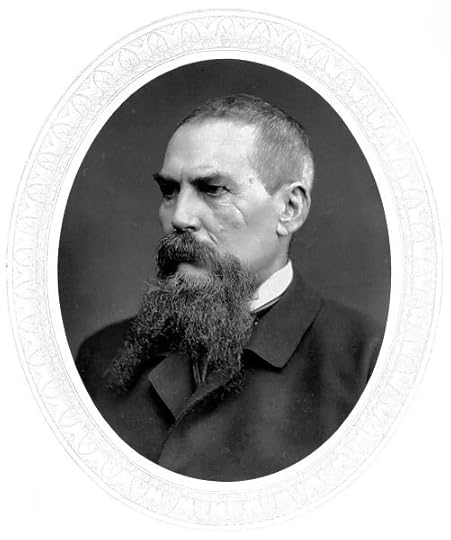
The scope of this biography of Richard Burton does full justice to his life. "no man can be all things at once, no matter how hard he tried, but no man tried harder than Richard Francis Burton". He made significant contributions in the fields of literature and geography. He was also a poet, traveller, soldier, diplomat, inventor, explorer, archaeologist, student of religion and more besides. Above all, however, Burton was an adventurer.
Farwell graduated from Ohio State University and the University of Chicago (M.A., 1968). He served in World War II as a captain of engineers attached to the Mediterranean Allied Air Force in the British Eighth Army area and later also saw combat in the Korean War. He separated from the military after seven years of active duty.
As a civilian, he became director of public relations and director of administration for Chrysler International from 1959 to 1971. He also served three terms as mayor of Hillsboro, Virginia (1977-81).
He published articles in the New York Times, Washington Post, American Heritage, Harper's, Horizon, Smithsonian Magazine as well as serving as a contributing editor to Military History, World War II, and Collier's Encyclopedia. Farwell also published biographies of Stonewall Jackson, Henry M. Stanley, and Sir Richard Francis Burton.
He was a fellow of the MacDowell Colony and a member of both the Royal Geographical Society and the Royal Society of Literature.
Farwell gave his papers to the University of Iowa.
Richard Francis Burton lived life loud. Soldier, spy, explorer, diplomat, proto-anthropologist, writer, and self styled rake and scourge of Victorian polite society, Burton’s life packed accomplishments enough to make ten men famous. As such, no single biography is sufficient to capture the whole man, and anyone truly interested in exploring his amazing life will do well to read several treatments of it. That said, Byron Farwell's excellent biography of Burton is an outstanding place to begin.
Farwell captures Burton's driven, restless spirit, from his wild youth wandering nomadically about Europe with his family, to his old age, when gout and heart disease finally put an end to his adventuring, leaving him to his literary explorations which continued to the day before his death. His years in the Sind soldiering for the East India Company, his mastery of twenty-nine languages, immersion into Eastern ways and culture, adventures and explorations in Arabia and Africa are all thoroughly covered without bogging down into unnecessary detail. Likewise covered are the frustrating years of unofficial exile by his government to forsaken consulate posts on the West African coast and in Brazil, years of brooding, bitterness, and dark depression. And finally, the long twilight of his life as the consulate at Trieste is explored, where failing health slowed his restless travels, but allowed him the time to complete literary treasures, such as his unmatched annotated translation of The Arabian Nights, or his original Sufi poem The Kasidah.
Farwell paints Burton's life on a grand scale - capturing not only his outstanding adventures, explorations, and impressive anthropological and literary accomplishments, but his prejudices, his drinking problems and dark moods, his often difficult personality, and other flaws that were writ just as large as his positive accomplishments. Farwell's frank and honest appraisal of Burton, warts and all, go a long way toward explaining why this giant among men was continually slighted by the Government he served, and never recognize or rewarded in proportion to his outstanding service.
No biography of Burton can ignore his odd marriage to Isabelle Arundell. Isabelle has often been demonize, her influence on Burton question, and her burning of his papers after his death condemned as foulest crime. Farwell, however, shows great sympathy to Isabelle. She emerges as odd, romantic, devout, and utterly devoted to a husband who was also her hero. Farwell makes it clear that she was a good match for Burton, and powerful force behind the scenes in his career.
This is a first rate biography of a unique and amazing life. It’s a good place to begin if you are not yet familiar with this remarkable man.
He could speak 29 languages and 12 dialects. But, for my money, Sir Richard Burton was the second most interesting member of his family. His wife, Isabella, long suffering Isabella, seems the hero of this nineteenth century tale of exploration, travel and adventure. She was the epitome of the loyal, supportive wife. In the beginning, she was almost a stalker. Having been introduced to young Burton she met a gypsy who told her that someday her name would be “Burton.” She set her cap on Richard and waited patiently for years to get him to the altar. Burton’s life can hardly be deemed a success as fantastical as it was with his surreptitious trip to Mecca disguised as an Arab or his African explorations or his many, many books. Burton was a compulsive traveler and writer. He couldn’t stay in one place but had a burning curiosity to see everything of interest. Those travels took him around the world including a trip to Salt Lake City to study Mormons. Following a trip he would write a book or article. Sadly, he wrote poorly; in desperate need of an editor. He loved footnotes. One can find 200 journal and magazine articles on the internet attributed to Burton along with some 40 books. His writing achieved little success until late in life he translated "1001 Arabian Nights", "The Perfumed Garden" and the "Kama Sutra". Isabella lobbied intensely with the Foreign Office for counselor appointments. She was so persistent he was finally given a post just to get rid of her. Isabella was from the upper class Arundel family and had to be respected. She managed all of Burton’s affairs, his household and organized the logistics of his travels as well as her many moves. Significantly, she was his literary agent shepherding many books through publication. She became a writer herself and was loyal to a fault attracting much criticism for destroying many of Burton’s papers at his death to protect him. Although an amazing talent, Burton does not come across as likable. He is a bit of a fool and dreamer who drummed up plans for gold mining in Africa and other poorly thought out enterprises. Isabella, on the other hand, was superstitious and a bit silly. Burton, she claimed, could mesmerize (hypnotize) her with a word. After their marriage Burton came to depend on Isabella and although not the perfect husband, for he had difficulty staying home, he loved and valued her. In an age when women played second fiddle, she played it as well as anyone ever has.
I wasn't sure how to rate this book. I didn't really like it, but I sort of liked it, hence the three stars.
The writing was superb and I have ordered other nonfiction books by the author: one on the life of Henry Stanley who found Livingston and another about the Gurkha warriors.
So if you want a well written biography this is one.
But the subject...blech.
I read Arabian Nights as a child. They were great adventure stories filled with magic carpets and genii granting wishes...Lots of fun.
So as an adult I saw a beautifully illustrated of a volume of selections of the Thousand and One Nights (Burton wrote several volumes) and bought it.
And, to my credit, I finished it. It is probably the most misogynistic and racist book I've ever read.
All women and Africans were villainous animals. Fate plays a huge role and all sorts of mishaps and tragedies happen to the heroes involved that by the time you've read "En Shallah" -or after someone has just has had their arm ripped off by an ogre and their response is "All thanks to Allah, the Merciful One," you begin to wonder if the narrators are not being sarcastic.
There are no happy endings, but all that I could forgive if the story telling wasn't so tedious. I don't know if that is the fault of the folk tales or the translator, which brings me back to this biography.
Sir Richard Burton seems to have popped out of the womb rebellious and just plain odious. As a child his behavior knew no boundaries. He delighted in tormenting his tutors, governesses and fellow classmates. He was expelled from Oxford, which is what he wanted. His father finally caved into his unruly son's will and bought him a commission in the army.
Burton had an insatiable thirst to learn languages (he learned almost thirty) of the Middle Eastern culture. He disguised himself as an Arab and went on many adventures with native tribesmen and Muslims throughout Saudi Arabia, Egypt- he claims to have found the source of the Nile, but this was disputed by other claimants-Syria and Afghanistan. Plus many other countries, including central African countries and also at one point, North America, where he lauded the polygamy of the Mormons. He went to India.
He was the first European to make it to Mecca and Medina, although when certain Arabs saw through his disguise he had to claim to have converted.
Although other explorers challenged Burton's claim to have found the Nile, he did discover Lake Tanganyika in the Congo. So I don't mean to imply that Burton accomplished nothing.
But as far as his writing goes, other than his translation of the Arabian Nights, I don't know that he made much of a contribution to the rest of the world, unless you like reading the sordid sexual practices of the Middle East and India and you don't care how boring the writing is.
His devoted and silly wife burnt all that had not been printed immediately after his death. This caused an uproar throughout England, which surprised her. Considering that, apart from the Nights, few people bought the books of Burton that were published, I can understand why.
I did enjoy the descriptions of the different cultures and people that Burton encountered, but that is to Farwell's credit, not Burton's.
I plan on reading Edward Rice's and Thomas Wright's biographies of Burton. I have started Wright's and so far have found his writing entertaining even if his subject isn't.
A fascinating, readable account of the jaw-droppingly talented man’s life. His ceaseless activity (he would produce 700 pages on a place he had stayed for a week, while sick, and while doing any number of other feats) is contrasted by his limitations (his books were pretty bad; he wasn’t a leader; his theories were often wildly off). Burton described himself: “Briefly, his memory was well-stored; and he had every talent save that of using his talents.” Very apt; Burton’s life was a series of almost great discoveries, of minor treks, and potential popularity spoiled by cynicism and a taste for bickering.
Farwell says in his preface that he doesn’t favor guesswork, and this is one of his book’s weaknesses; I could have used more suggestions on just why Burton’s enemies were so set against him. Or how many Arabs knew Burton was a European when he went to Mecca (didn’t his head look too white after he shaved it?). The biography also suffers from a lack of extra background: Farwell gives no indication of what contemporary life was like in, for example, Trieste, where Burton was stationed, beyond Burton’s impressions. Or he’ll mention a tribe or a village, with no explanation. There are minor complaints; the biography is certainly a success, thorough and even-handed, very well written and neither hagiography nor apologia nor excoriation.
Well, that took a while, (13+ hours over a 20 minute daily commute)!*
This one has been on my "to read" list for years, but I have to say that now I've finally read it, I'm kinda disappointed - not in Farwell's 5-star telling, but in his generally 3-star subject.
I've long known the rough outline and highlights of Burton and his life (much of it admittedly from the movie "Mountains of the Moon"), but never really the details, and so this made for a fascinating (if interminable) listen. And while there's no discounting his intellectual skills and physical accomplishments - polyglot** writer of over 40 books, (one of the) first Westerners to visit Mecca, discoverer of Lake Tanganyika, etc. And yet, he could have been so much more if he hadn't in many ways been his own worst enemy. His careers as both an army officer (never rising above captain) and diplomat (never rising above consul at less-than-key locations) were both personally and professionally disappointing; for that matter his accomplishments as an "explorer" were never first-tier - it well should have been he who discovered Lake Victoria, but he handed that one to Speke on a plate - and all fell within the period 1853-1860. In fact, aside from Mecca and his controversy with Speke over the source of the Nile (in which Speke was ultimately proven correct), his main accomplishments as remembered today are his translations of the "Kama Sutra" and "The Arabian Nights," both completed in his early '60s, by which time he was bitter, broken and largely forgotten.***
Or at least more bitter, since it seems that he was angry and defensive for most of his life. My original mental picture of Burton was as an indefatigable Victorian explorer and rogue, whereas at least in this telling, he comes off more as a compulsive and irresponsible racist, traveler and, well, overall asshole; and a man who spent most of his life avoiding his official duties in order to chase his personal interests, (as impressive and wide-ranging as they were).
I have (or at least had) a copy of Edward Rice's more recent Captain Sir Richard Francis Burton, which I believe presents him in a more heroic light; and there is also a well-reviewed combined bio of Richard and Isabel (herself being also a bit of a nutter****), Mary Lovell's A Rage to Live: A Biography of Richard and Isabel Burton. However, with those clocking in at 700 and nearly 1,000 pages respectively, this will probably be it for me and RFB - there are just so many other, and apparently more impressive, individuals out there still to read about, (and I'm looking specifically at you, Alfred Russel Wallace: A Life).
* So I listened to the audiobook but list the hardcover here, as I own it and referred to it for the helpful maps and photos.
** By the end of his life Burton spoke either 26 or 40 languages, depending on whether you include distinct dialects.
*** And aside from these two translations, Farwell summarizes his other books as being poorly written, highly opinionated, largely forgotten, and in many cases just plain wrong.
**** Again, at least according to Farwell.
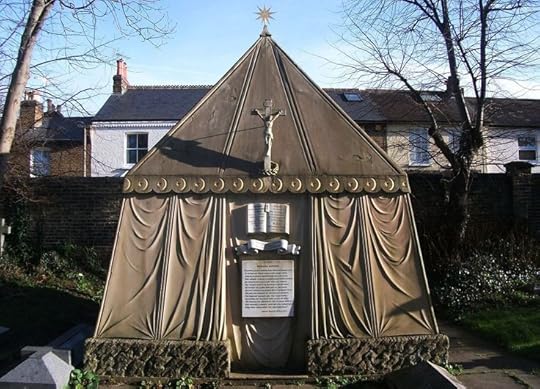
(At least he went out in typically eccentric style, even if his tomb is largely forgotten today in the small, suburban cemetery at Mortlake)
"He dared to think and believe what other brave men would have shrunk from contemplating. He He was an adventurer in the intellectual and the spiritual as well as the physical world and it was this combination of interests, actively followed, which made him unique, one of the rarest personalities ever seen on earth." - Byron Farwell, Burton: A Biography of Sir Richard Francis Burton
While not an academic, it is hard not to think of him as a professional historian. Over a 40 year period he published 14 books, mostly focused on the Victorian period of exploration and war, mostly published by Norton and Viking.
The book isn't a hagiography. Burton had many faults, many short-comings, many quirks and Farwell highlights those as well as his brilliance and bravery. I can't give it my highest ratings for biographies simply because while I adore both Burton and Farwell, this isn't up to the level of Robert A Caro, Edmund Morris, or say David W. Blight. It was really good, just not great. The narrative drive of the book is sidetracked by Burton himself who jumps from place to place, ship to ship, idea to idea.
That said, it is a fantastic start to exploring Burton's character and to gain insight into England during its Victorian period in Africa, South America, and the Middle East. Points should also be given to not ignoring Burton's wife and her role in Burton's life.
One of my favorite characters in all of history: adventurer, linguist, swordsmen, diplomat, and writer. Burton was a cool chap. This biography is very careful not to sound like a hagiography of its subject, but even so, Burton comes off sounding like a superman. He lived at the very end of the age of exploration and whatever adventurers who came after, pale in comparison and seem more like circus performers pulling off a stunt.
Burton: A Biography of Sir Richard Francis Burton is a story about a most remarkable man whose life borders on legend. Burton was a 19th century explorer, soldier, diplomat, linguist, scholar, translator, and iconoclast who often defied the conventions of Victorian Britain. He was likely the first European who managed to take part in the Haj in Mecca -- albeit surreptitiously for only Muslims were permitted access to that holy city. (Had Burton been found out, he would most likely have been put to death for being an "infidel.")
Burton, along with John Hanning Speke, was instrumental in discovering the source of the Nile during a perilous expedition they undertook during the 1850s. All in all, this was a book that taught me a lot. I very much enjoyed the journey.
A fascinating view of a life too often overlooked for all the feats he had accomplished. The book marvellously follows Mr. Burton's life and the world he inhabited. There are few countries that Burton did not travel to in his life and likewise the work feels like a veritable world history of the 19th century. I found the author's views on Burton helpful especially considering the heights his life could of accomplished had personal and circumstantial shortcomings been evident. The author is no paean fulfilling a gap in the fan service of one of Victorian Britain's most unique characters - the author vividly explains his failings. A must read for those interested in interesting life in interesting times.
I was always curious about Sir Richard Burton so I decided it was about time to have that curiosity satisfied. This book does that in spades, as it quite meticulously follows Burton's adult life.
Now that I've finished I found myself wondering about the man. He is, undoubtedly, a man of his time. his prejudices are the ones that plagued England (and the occidental world as a whole, tbh) during the Victorian era. But he is also a curious man, and his curiosity is ample and not limited to what was considered important or relevant or even decent in his social circle. He was, in essence, an adventurer, a traveller; someone who longed to see, to taste, to hear everything that a place has to offer, everything regarding the people in that place; their beliefs, customs and ways of life. That, that curiosity is, IMHO, what made him a remarkable man.
So yes, if you want to know more about Sir Richard Burton, this is a good place to begin. And I must say, now, more than ever, want to read his footnotes :P
Wow! What a life and what a book. I would have loved to have hung out with him on some of his journeys. Sir Richard Burton was a man after my own heart. I love to travel and I cannot sit still.
This book has it all. I don't think I will ever have to read another biography about him. His world is a world I would love to visit. The trill of visiting far off lands, filling in the blank spots on the map. Yes it was dangerous and yes he feel ill many times but in the end he made it to old age and lived to tell the tale.
The only thing I didn't like about this book was the long portion of his translation of the Arabian Nights. The author spent too much time describing various women from the tales. It seemed that the author went off on a tangent and it took a while to refocus. I wish there were 1/2 stars because I would give this one another 1/2. The rest of the work was excellent.
If you want to read about a person who lived the life of high adventure and for the thrill of it all check this biography out.
A pretty solid biography. It has the right amount of attention to detail, and Farwell examines Burton's character (as well as his wife's) in a balanced way that avoids hero worship as well as latter-day moral judgment. Burton (or Dickie B. as I've taken to calling him) was quite the character: curious and often brilliant, daring and energetic, narcissistic and absurdly petty. It's amazing how much life and complexity could exist in one man. Of course, the downside is that reading about his life makes me feel like a total sluggard--at the age I am now, he'd seen and done and achieved more than I can ever hope to!
The incredible biography of a brilliant British career soldier and diplomat whose abilities to learn and to be adopted into native cultures are an inspiration to both the incredible enlightenment and loneliness which can result. Growing up in India, he apparently learned no less than 25 languages ultimately translating the Tales of the Arabian Nights. After his death his wife burned the remainder of his manuscripts which contained, like the Kama Sutra, which he also translated, fascinating first-hand tales of sexual exploits in many cultures. A skilled swordsman, his books on the art of swordsmanship remain the classics in the field to this day. Ultimately unable to fit in British society in spite of recognition of many of his achievements such as the discovery of the source of the Nile, he passed away in a remote African island outpost. His love affair with Arab culture was similar to that of Lawrence of Arabia 60 years later.
The Most Complex, Adventurous, Iconoclastic, and Daring Victorian of the Era Sir Richard Francis Burton is probably one of the most (in)famous and complex of all the Victorian-era English adventurers, a polymath and obsessive traveller and researcher of exotic foreign cultures and languages. According to the book blurb, “He made significant contributions in the fields of literature and geography, and was also a poet, traveler, soldier, diplomat, inventor, explorer, archaeologist, student of religion and more.”
I can’t argue with that, he truly wanted to do it all, and did it with a stubborn and relentless intensity that more genteel Victorian society, with its tedious propriety and rigid hierarchy, didn’t have room to accommodate. He was an inveterate iconoclast of Christianty and the British government, and yet was dependent on it to feed his insatiable desire to travel and explore by becoming a diplomat, though based on this book he was probably one of the most unmotivated and irresponsible ever to hold such posts, using every excuse to get out and explore for weeks and months, abandoning and shirking his official duties in favor of exciting adventures among the locals.
He also didn’t hesitate to tell off his superiors back home, which of course damaged his career prospects time and again, and it was only the dogged efforts of his dutiful and almost slavishly-loyal wife Isabel to get him reinstated after various fallings-out and acrimonious exchanges. He almost seemed to revel in conflict and bating what he considered his inferiors, pompous stuffed shirts unworthy of respect. But when such men are your employers, most people will toe the line and play the social game. Not Burton though, he was both proud and irascible, and never forgot a slight or grudge.
He was profoundly interested in Arabian and Indian culture, and had an incredible talent to acquire languages with his powerful memory and self-developed learning techniques, a self-taught linguist. He delved deep into the cultures, literary works, religions, politics, and even sexual practices of these cultures, and learned first hand through whatever means suited his interests and circumstances. He was so convincing that he managed to pretend to be a devout Muslim and make the holy pilgrimage, the hajj, to Medica and Medina, and touch the Black Stone of the Kaaba there, having memorized the dozens of specific prayers, worship practices, and speech inflections. Any slip up and he would have been killed immediately.
He also was a prodigious writer of his explorations and adventures, taking detailed notes on everything he observed and thought, producing dense books packed with annotated notes, that were apparently not the most readable. His masterworks were his translations of the 1001 Arabian Nights, the Kama Sutra, and The Perfumed Garden, all delving deeply into taboo and exotic Middle Eastern and South Indian sexual lore, and we can surmise that he was intent on doing first-hand research in all of it. I am amazed he did not contract any serious venereal diseases given all his sexual escapades, if the book is accurate.
Finally, like most Victorians, he was a virulently racist (by our moderns standards), believing firmly in the innate superiority of the white British race, and that it was the duty of said race to rule over the lower races. His quotes and comments on Africans in particular would raise the hackles of any modern reader, woke or otherwise, with their biting contempt for darker peoples, in many cases depicting them as less than full human, closer to the apes. While these attitudes were prevalent in the British Empire and the Victorians, it’s still hard to stomach them when you read them straight from his comments. But that was the reality of those times. ��
There is so much more to this complex and difficult person that cannot be fit into a simple book review. This biography is a good entry point, and I choose it mainly because there was an audiobook version, but have two other hardcopy biographies of him that I may someday read, Edward Rice’s “Captain Sir Richard Francis Burton : The Secret Agent Who Made the Pilgrimage to Mecca, Discovered the Kama Sutra, and Brought the Arabian Nights to the West”, and Mary Lovell’s “A Rage To Live: A Biography of Richard and Isabel Burton”.
Sir Richard Burton KCMG FRGS was a world explorer during the great Victorian Age of the British Empire. He and men like him are the basis for such characters as Allan Quatermain and Indiana Jones. He traveled the world, searched for the source of the Nile, did not marry Elizabeth Taylor, but did almost invent Coca-Cola.
Burton was a cad and scoundrel and enjoyed the notoriety. He worked tirelessly for the British Government his entire life, just never at the job he was being paid for. As a soldier in the East India Company he was constantly off on some wild survey mission and never saw combat. As Consul of several posts for the Foreign Office he was rarely present. He would be sent a letter to his post, let's say this time it's Brazil, requiring him to return to London. He would actually get the letter some weeks later when he dropped by to pick up his mail. Then he would make haste to London, by way of a six week trek overland to Chile, then take a ship to France by way of Cameroon. After four months there exploring the Oil Rivers in Africa and making it to France, he would spend three months on a tour of Europe, immediately speed to London, and report in not more than a week or so after arriving. That's not a literal description but gives a good idea of how he worked. His entire life was like that. He could not be made to stay in one place for more than a week, but if it was some place he wanted to go he could stay there for months and endure any hardship. In the process he advanced the sciences of geography, anthropology, linguistics, botany, and zoology.
Burton was a polyglot who could speak at least 29 languages, and speak them well enough to be taken for a native. He used this skill along with his enormous mustaches to pass for an Afghani Muslim and make the pilgrimage to Medina and Mecca. He was not the first European to do so, but the most famous. He set out to find the Source of the Nile, which in the 19th century was the equal of the Moon Landing. He did find Lake Tanganyika, a notable achievement, and though he himself did not find Lake Victoria, the actual source, it was on this expedition that John Speke made the discovery. Burton's entire life was like that. He possessed enormous talents. An expert swordsman who wrote books on the subject, a chess player who could play two games simultaneously blindfolded, an award winning linguist in several languages, the only talent he lacked was the ability to take advantage of his talents. After his remarkable trip to Lake Tanganyika, instead of immediately going to London to announce his discovery to the world he spent weeks wandering around the Middle East looking at lizards and such, while Speke hurried home and took all the credit for the entire expedition. This kind of thing happened often.
Burton wrote over 40 books, some of them selling as many as 100 copies. They covered every topic imaginable: mining, Iceland, Indians both Asian and American, falconry, eunuchs, the history of farting, French poetry, Portuguese poetry, Hindu poetry, Mormons, and most of all Arabia and Africa. He was not a very good writer but an excellent translator, and at the end of his life he translated his most famous work, The Book of the Thousand Nights and a Night. He developed practically every disease that could be contracted in Africa, India, and South America, along with the gout, and took an African spear through the face, knocking out four upper molars and giving him some handsome scars.
His is the story of a rugged individual who would not be tamed, one of the great explorers who went to the empty places on the map and filled them in. And his wife was a saint.
Note: As Burton spent a good deal of time at both Zanzibar and Fernando Po it is clear the John Brunner was a huge fanboy.
Audible. Listened to the book, though I own the Hardback also. I've been fascinated by Sir R. F. B since I read Fawn Brodie's biography of Burton (The Devil Drives) way back when I was a 20 y.o. (That was a very long time ago). I've collected every biography I could find on him. I've read the Rice biography of him and another one called The Highly Civilized Man by Dane Kennedy. I believe I read the one by Michael Hastings also. I've got Burton's book The Book of the Sword. And of course I have the complete, 16 volume (unexpurgated) Burton translation of The Arabian Nights, the last six volumes being references and footnotes on the language and culture. That's the thing with Burton, he was a very serious and detailed man and would reference everything in all of his writings, trying to get in every detail about a language and culture, which can be a little trying for the reader. I have a couple other biographies of Burton, and his wife, etc. Like I said, I was fascinated (a fanboy? as the kids would say these days? Maybe). For me Burton was the ultimate renaissance man. He was a linguist, explorer, expert swordsman, etc. Now, the fact that he was a racist was either not played up that much in the first few biographies I read, and when I read of it I chalked it up to Burton simply being a man of his times. Didn't all W.A.S.P. Victorian era men hold pretty much the same views on race, and women--Yes, he was very much a misogynist also. And then he was British too . . . Anyway, this book lays it all out and takes a cold hard look at the facts. R. F. Burton was most definitely a racist, and a pretty hard core one. I don't condone the views, and I can't overlook them either. However, having said that, and now setting that issue aside, I'll say that this was probably the best biography I have read/listened to of him. Not only does this bio lay everything out, including his feud with Speke (which all of the bios explore), his relationship with his wife, his failures at promotion within the govt, and his trip to Mecca, etc. Not only does this biographer explore everything, he also is very descriptive of the treks and perils of African exploration: plagued by sickness and death at every turn, lost and stolen supplies, quarrels with porters and guides, etc. The author's description of the attack of the Somalis and the battle that ensues--where Burton gets the spear(?) run through his cheek, the one that left the scar, was extremely descriptive. The author was descriptive, but my memory is faulty here, but it seems that I remember being a little surprised--after reading and believing it was a spear all of these years--the author states it was a thrown dagger or something something similar. I'll have to go back and check. I was driving and listening and didn't have the chance at the time to hit the back arrow to listen again. The author doesn't sugar coat anything regarding Burton's personality either, but seems to give a fair and honest assessment of the man. He doesn't glorify Burton (as Brodie tended to do, if I remember correctly) and ignore the faults. In any case, this is a very good biography, and the narrator was excellent. Another good book on African explorations at the time is the Stanley (of "Dr. Livingston, I presume" fame) autobiography. I read that one a while back. I believe it is called Bula Mutari (or Matari) which is what the natives called Henry M. Stanley.
I first encountered Richard Francis Burton as a fictional character. He is the hero of Philip Jose Farmer's Riverworld books. Now having learned more about Burton, I think that he would have mostly been flattered by Mr. Farmer's portrayal, but it's equally possible that he could have been angry about it and become Mr. Farmer's sworn enemy. What a character Burton was! Larger than life. He's mostly famous for his translation of the Arabian Nights, but there was so much more to him.
Burton was a natural linguist, mastering almost thirty languages. He was a prolific writer and translator, a man of broad interests in world cultures, philosophies and spiritual practices. He was one of the few non-Muslims to successfully complete the Hadj. He loved the cultures of Arabia, India and Africa but he had the typical Victorian attitude of colonialist superiority toward dark skinned people and was a relentless Orientalizer. He would have been Exhibit A for Edward Said. He was a womanizer and lover of pornography, often sexually inappropriate in his language, writing and thinking, but he was also a devoted and loving husband. He was negligent in his official duties, completely unable to stay at any of his many posts or attend to official duties for more than five minutes. He had ants in his pants. He undertook many journeys of exploration, but none of them yielded the great discoveries that he hoped for in either knowledge or riches. He wrote non-stop, but most of his books were turgid and forgettable, badly needing the hand of a strong editor. He was a great scoffer and tweaker of the establishment. He had the sharp wit and presence of mind to say the kinds of things all of us wish that we had said, but his scathing honesty only ever worked to his professional and social detriment.
In many ways Burton reminded me of my father who was also a brilliant but eccentric man, an accomplished linguist, a prolific writer and translator, a scoffer who delighted in tweaking the established order and a lover of exotic pornography. When Burton died he was in the middle of translating an Arabic pornographic text called The Perfumed Garden, which I remember finding in my dad's pornography collection when I was 11. I have never seen it elsewhere.
In his Introduction, Byron Farwell calls his subject, "one of the rarest personalities ever seen on earth." When the reader has finished his superb biography of Richard Francis Burton, he is in hearty agreement. Nothing stops Burton. He is utterly fearless and indefatigable. He seems not even to need sleep. He's equal to any challenge, overmatched by nothing, laughs at hazards, and will take any risk. Setbacks serve only to spur him forward with still more energy, if that's possible, and determination. Yet fickle fate plays him false when it matters most. He is in command of an expedition in Africa. He is sick and taking the day off (you might say), although he never takes an hour off, let alone a day. Moreover, this illness isn't his first; it might be his hundredth. Maladies like fevers and dysentery come with the turf, and he scorns them. Another member of the expedition, John Hanning Speke, a dauntless explorer in his own right with whom Burton has an uneasy bond, for they are rivals, sets out on his own and discovers that greatest and most elusive of prizes, Lake Victoria, the source of the Nile. If you ever need proof life isn't fair, look no farther than this. The discovery belonged to Burton, and he didn't get it.
Burton was a Renaissance figure in Victorian times. Explorer, inventor, poet, anthropologist- he put his hand to every trade imaginable but he's known today as one of the men who led the way in discovering the source of the Nile. His trip across central Africa in the late 1850s was epic and he suffered greatly from many diseases contracted while on the way to hitting the shore of Lake Tanganyika. But he blundered badly in sending his rival Speke farther north where Speke found what would become known as Lake Victoria- the true source of the Nile. Burton never quite lived this down. The rest of his career he bumped around as a foreign consul in West Africa, Brazil, Syria and Trieste for a British government that never really knew what to do with him. He travelled widely took copious notes that filled books- 40 or more that were published mostly due to the hard work of his long suffering wife Isabel. Many of his attitudes are repugnant by modern standards but he is a great figure of history and Farwell's book serves him well.
Although it took me quite some time to complete this biography, it goes to the top of the books I’ve read this year. An immediate word that comes to mind, is fascinating. This man truly was adventurous, and was meticulous about studying a variety of things. He is the type of man you cannot put into a box, because he would outgrow it and make another box to immerse himself in. An outstanding character study was done, by him, to learn about many different subjects, religions, cultures, and geographical areas. I applaud his efforts to commit to learning, for he dedicated his life to this, and left much behind, to show for it. An incredible story, of a man who challenged himself, for the greater good, to share with the world, how precious life is, for all who dare to explore it.
In a rather readable prose, the book offers a glimpse on a life that just can't be summarized in a single biography. Owing to many controversies around Burton's personality (e.g. the feud with Speke), his early biographers had often fallen in quite partial accounts of his life, while Farewell shows a more balanced portrait of him. Still, the book was published in early 1960's, so the author shows an unapologetic posh accent (probably due to his upper class upbringing), entrenched with not so few sexist and colonialist remarks. Aside that, many facts of his life were poorly addressed or just ignored. That said, this book is a coherent and compact compilation of Burton's life.
OK biography of adventurer Burton by another one (the author). Pretty good. I read the Devil Drives about Burton a long time ago. This one seems more open-minded, I think. Brings out the faults as well as strength of this "Renaissance Man." Worthwhile if you are into this kind of thing (like I am).
The don't make men like Richard Francis Burton any more. The world has changed since his day and he could never have accomplished what he did if he was living today. A fascinating life. A man of mystery. So well written - Byron Farwell was a great story teller. I love all his works.
I am bummed. I was going to say that I started reading this book 20+ years ago, and it sat on my bedside table for just about as long. Always with the intent to pick it up again, as I am genuinely interested in Burton and his life's adventures. What I just saw though, when clicking to add the book, is that this book is not THE book. Farwell's biography on Burton was not the book at my bedside. It was Edward Rice's biography on Burton that sat there. Well, I enjoyed Farwell's biography, so I guess that's what is important.
Anyway, to sum up Farwell's book in one word would be thorough. Burton's wife Isabel famously burnt a good chunk of his papers and manuscripts after his death. Even with his daily diaries lost, Farwell was able to construct an impressive retracing of Burton's life and travels. One of the reasons why I've admired Burton was because of they way he documented his life. Not just what he did, but how we processed what he did. The idea of being present in the moment, and actually seeing the world around us is so exciting to me. It is how I've wanted to live my life and see the world. I haven't been so successful in it unfortunately. I try. As a baby explorer myself, I appreciate how Burton looked at the world. Although his views on the world aren't so great. Still, it isn't enough to go and be in a place, you need to absorb a place. Burton has inspired me to do that.
I also appreciated how Farwell included Isabel. She was quite a character herself. I really liked how he kept up with what she was doing when they were apart. The book is very detailed, and maybe too much so. Burton just had such an amazing full life that it is hard not to talk about everything. I guess I'll never know if Rice's book was better. I just know that Farwell's book was a great listen. I'm so happy that I got the whole story, and then some.
I am somewhat mystified that the fascinating life of Sir Richard Francis Burton is not better known. He seems to have become a footnote in the history of the Victorian age of exploration. Although many of his exploits ended in failure, the magnitude of his unsavory yet dominating character should be enough to have made him an enduring legend. The basis for my beloved Flashman, he spoke nearly 30 languages, snuck into Mecca disguised as a Mohammedan, almost discovered the source of the Nile, served as British Consul in obscure corners of the Empire, travelled constantly, translated the 1001 Arabian Nights and other erotic literature from the East, formed a society for orientalists called the Cannibal Club, and was buried in a giant marble tent. I see Johnny Depp playing Burton, perhaps Adrian Brody as his arch-rival Speke and Helena Bonham Carter as his beloved wife Isabel. This biography was very well written, witty and complete.
When I picked up this book, I had read the wiki of Burton and checked out a few websites devoted to him. These made me imagine Burton as a paragon of adventure and a hero of a man. I wanted a book that would weave tales of his travels and tell me of the legend. But this book actually told me who the real Burton was: an incredible man, yes - he spoke 29 languages, was a master swordsman, wrote dozens of books, traveled to unexplored areas of Africa, and more - but he was also an alcoholic obsessed with his own image, who struggled to find relevance, and lacked completely in forgiveness. Despite his iron will, he was made into a bitter person because he was unable to forgive those who he thought had betrayed him, even after their deaths. Truly, the real man is much more interesting that his myth.