

What do you think?

Priceless Collection #1
Florian's Gate
As the main entrance to the medieval city of Cracow, Poland, centuries of history have passed through Florian's Gate. But for Alexander Kantor, now a successful antiques dealer in London, the place holds only one memory. It was here that he was arrested by the Nazis as a young man. There he passed from freedom to imprisonment; there began a lifetime of challenges to his heritage, his well-being, his relationships and his faith.
Through dramatic events spanning fifty years, Florian's Gate follows members of a war-torn Polish family as they come to terms with their circumstances and the choices that divided them. Set in the luxurious trappings of today's London and the turbulent economies of Eastern Europe, the mysterious disappearance of an antiques dealer causes Alexander to travel back to his homeland. He did not suspect that the trail would ultimately lead to Florian's Gate and the discovery of a treasure of infinite value.
A fascinating story blending a family epic with mystery and romance.
Through dramatic events spanning fifty years, Florian's Gate follows members of a war-torn Polish family as they come to terms with their circumstances and the choices that divided them. Set in the luxurious trappings of today's London and the turbulent economies of Eastern Europe, the mysterious disappearance of an antiques dealer causes Alexander to travel back to his homeland. He did not suspect that the trail would ultimately lead to Florian's Gate and the discovery of a treasure of infinite value.
A fascinating story blending a family epic with mystery and romance.
341 pages, Paperback
First published May 1, 1992
About the author
T. Davis Bunn
83 books159 followersAlso writes under the names Thomas Locke and Davis Bunn.
Ratings & Reviews
Friends & Following
Create a free account to discover what your friends think of this book!
Community Reviews
Displaying 1 - 30 of 88 reviews

December 6, 2016
Dull, dull, dull. I give it two stars for the good writing and heart, though/
June 8, 2013
I don't think I've read anything by the author that I didn't like. This was a great story about a couple of antique dealers who find faith in Jesus. It's also a story with a lot of history--Poland, Auschwitz, the end of World War II. What are the stories of each character that they are so reluctant to tell, but when they do, their world changes for them? I definitely want to read more of the series!
May 15, 2014
Book 1 of priceless series. Somewhat mysterious characters who have suffered and witnessed great suffering. The destruction of virtue in Poland by the Nazis is repaired only at a great cost to individuals and nations. The book has spiritual depth and is touching on the nature of suffering and recovery. Been to Florians Gate and the marketplace as described is still there.

April 6, 2018
Reread.
More like 4.5. A really interesting and thought provoking book. I learned so much about those that experienced life with communism and after. I did not realize all that the Polish endured. I tend to read a lot of ww2 fiction focusing mainly on The western side but this has made me want to read more about those in the Eastern bloc. I also appreciated the comments regarding suffering as a Christian. I am looking forward to reading the other books in the series.
More like 4.5. A really interesting and thought provoking book. I learned so much about those that experienced life with communism and after. I did not realize all that the Polish endured. I tend to read a lot of ww2 fiction focusing mainly on The western side but this has made me want to read more about those in the Eastern bloc. I also appreciated the comments regarding suffering as a Christian. I am looking forward to reading the other books in the series.
August 5, 2017
Excellent read with Polish history as a bonus!
I liked the history, especially about Poland. I recently read Poland by James Michener, and I also discovered that I have Polish ancestry.
I liked the history, especially about Poland. I recently read Poland by James Michener, and I also discovered that I have Polish ancestry.

April 23, 2013
I really enjoyed the glimpse of history in the book. I learned so much about Poland and its sad history. The antiques were fascinating, and the various stories included in the plot were delightful.

December 27, 2018
n T. Davis Bunn’s novel, Florian’s Gate, American Jeffrey Sinclair is bored in his job. His mysterious uncle, Alexander Kantor, has a glowing reputation in the antiques business in London. Alexander never reveals where his exquisite pieces come from, but their high quality always fetches good prices and willing buyers. When Alexander invites Jeffrey to become his assistant, Jeffrey jumps at the chance, quickly learning both the details and the instincts needed.
Jeffrey hires a part-time helper who rapidly becomes a valuable assistant, Katya. Jeffrey falls head over heels for her, but she is guarded around him. He senses her past contains pain, but she’s not willing to reveal it to him yet. Plus she is a believer, but he has turned his back on God after a family tragedy.
When Alexander asks Jeffrey to take a trip to Poland, Jeffrey is thrilled to be trusted enough to be asked. There he meets Alexander’s brother, Gregor, and begins to learn some of Alexander’s sources. Poland is still reeling from being trampled underfoot by WWII and then Soviet occupation. At first Jeffrey thinks everyone looks sad and depressed, understandably. But he soon finds an underlying resilience in their character. Alexander, Jeffrey, and Gregor visit some of the most unlikely places to find some of the poorest people with great treasures they’ve been holding on to for years but are now in desperate enough straits to sell.
Surprisingly, Alexander comes face to face with his own painful past, which Jeffrey learns of for the first time. When Alexander is incapacitated for while, Katya comes to assist and translate. What Jeffrey learns through all these experiences helps him understand his uncle and Katya and helps him come to grips with his own past as well.
Normally Bunn’s stories involve quick-moving plots and page-turning intrigue. There was intrigue here, but a different sort than I am used to from him. His mother’s former ownership of an antiques gallery and management of others informed his knowledge of antiques. He says at the beginning of the book that each piece he describes is real. The different Polish people and stories that he shares are based on real people and situations in his wife’s family in Poland.
I thought the story ended somewhat abruptly, but then I found that this book is the first of three in the Priceless Collection series. So maybe some day I’ll find out what’s next for Jeffrey, Katya, and the others.
Jeffrey hires a part-time helper who rapidly becomes a valuable assistant, Katya. Jeffrey falls head over heels for her, but she is guarded around him. He senses her past contains pain, but she’s not willing to reveal it to him yet. Plus she is a believer, but he has turned his back on God after a family tragedy.
When Alexander asks Jeffrey to take a trip to Poland, Jeffrey is thrilled to be trusted enough to be asked. There he meets Alexander’s brother, Gregor, and begins to learn some of Alexander’s sources. Poland is still reeling from being trampled underfoot by WWII and then Soviet occupation. At first Jeffrey thinks everyone looks sad and depressed, understandably. But he soon finds an underlying resilience in their character. Alexander, Jeffrey, and Gregor visit some of the most unlikely places to find some of the poorest people with great treasures they’ve been holding on to for years but are now in desperate enough straits to sell.
Surprisingly, Alexander comes face to face with his own painful past, which Jeffrey learns of for the first time. When Alexander is incapacitated for while, Katya comes to assist and translate. What Jeffrey learns through all these experiences helps him understand his uncle and Katya and helps him come to grips with his own past as well.
Normally Bunn’s stories involve quick-moving plots and page-turning intrigue. There was intrigue here, but a different sort than I am used to from him. His mother’s former ownership of an antiques gallery and management of others informed his knowledge of antiques. He says at the beginning of the book that each piece he describes is real. The different Polish people and stories that he shares are based on real people and situations in his wife’s family in Poland.
I thought the story ended somewhat abruptly, but then I found that this book is the first of three in the Priceless Collection series. So maybe some day I’ll find out what’s next for Jeffrey, Katya, and the others.
June 7, 2021
I borrowed this from my aunt as we both love reading and like discussing books we enjoy and sometimes swapping books. I introduced her to my favorite series, so she did the same with me!
While I do think that the plot of this book was neat (antiques being sold and stolen from poor families and the rush to get to them for a fair deal before the criminals do), I did get lost with the large descriptions of particular antiques. I do think antiques are neat, because I like history and vintage things, but my aunt really really likes antiques and probably can get a better grasp on what these looked like than I did.
Aside from the descriptions of the antiques, I do think the writing style, for this specific audience and date it was published, was not bad at all. I didn't struggle to understand what was going on (not until the politics of some countries or the antique descriptions hit) for the most part and it wasn't overwhelming like some writers like to do. Sometimes the book felt a bit slow for me but the second half of the book was more interesting than the beginning.
I did think that the WW2 history stuff was interesting. If you look at my shelves you can see that I do have an interest in reading about this and learning lots about the events during that time period.
I do wonder what happened to the little bird from the start of the book... :P
Anyway, I liked that my aunt offered it for me to read as it's fun to see what other people enjoy reading. I do wish I liked it a bit more but again, it's probably due to the fact that I'm not nearly as into specific complicated antiques as she is. If you like antiques, then pick this book up.
Content:
Language: heck
Sexy Stuff/Romance: a few kisses, feelings of love. All of which are very mild
Violence: Someone retells what they remember from WW2 which lasts for a chapter or so.
Other: One character is mentioned to have been an addict. There is some Christian and Catholic content.
While I do think that the plot of this book was neat (antiques being sold and stolen from poor families and the rush to get to them for a fair deal before the criminals do), I did get lost with the large descriptions of particular antiques. I do think antiques are neat, because I like history and vintage things, but my aunt really really likes antiques and probably can get a better grasp on what these looked like than I did.
Aside from the descriptions of the antiques, I do think the writing style, for this specific audience and date it was published, was not bad at all. I didn't struggle to understand what was going on (not until the politics of some countries or the antique descriptions hit) for the most part and it wasn't overwhelming like some writers like to do. Sometimes the book felt a bit slow for me but the second half of the book was more interesting than the beginning.
I did think that the WW2 history stuff was interesting. If you look at my shelves you can see that I do have an interest in reading about this and learning lots about the events during that time period.
I do wonder what happened to the little bird from the start of the book... :P
Anyway, I liked that my aunt offered it for me to read as it's fun to see what other people enjoy reading. I do wish I liked it a bit more but again, it's probably due to the fact that I'm not nearly as into specific complicated antiques as she is. If you like antiques, then pick this book up.
Content:
Language: heck
Sexy Stuff/Romance: a few kisses, feelings of love. All of which are very mild
Violence: Someone retells what they remember from WW2 which lasts for a chapter or so.
Other: One character is mentioned to have been an addict. There is some Christian and Catholic content.

May 6, 2018
I have read this book before, but it was a pleasure to revisit it. Davis Bunn has done a masterful job of researching it. It’s an excellent opportunity for those too young to remember the collapse of the Iron Curtain a brief look into the chaos created by Communism & the turmoil following that period. There are many parts of the story (& the history that it refers to) that are quite heartbreaking, but it indeed gives hope for the human spirit & for Poland as well.
I highly recommend not only this book, but the entire series as well.
One of my favorite lines from the book: Those who disbelieve the extent of another’s suffering simply because the wounds are not visible are not only insensitive, they are dangerous. They literally push a sufferer toward death’s door.”
I highly recommend not only this book, but the entire series as well.
One of my favorite lines from the book: Those who disbelieve the extent of another’s suffering simply because the wounds are not visible are not only insensitive, they are dangerous. They literally push a sufferer toward death’s door.”

October 6, 2017
This book was sweet and airy, and the author's writing mechanics were excellent. The author wrote with authority about the antiques trade in Europe and Asia, primarily in Poland during WWII. In that era, people hid their valuables in various places hoping to retrieve them after the war ended. Their plans, in large part, failed leaving a massive antiques trade after the war's end. I noted the difference between the slangy American speech and the genteel speech used in Europe and Asia. The book handles subjects like love and redemption in good taste. I thought the author wrote too heavily about the personal aspects of Christianity. My faith is the core of who I am, and I found myself praying for repentance of sins I had never acknowledged heretofore.
Thank you, Mr. Bunn, for a good read.
Thank you, Mr. Bunn, for a good read.
June 3, 2021
An enthralling introduction to Polish history disguised as a page turning character-driven mystery.
The depth of knowledge that Davis Bunn brings to all of his novels gives them a level of realism that combined with excellent plots and writing turn them into page turners. The descriptions of antique pieces, the business of antiques, the history of Poland and the brutal realities of communism and its efforts at the destruction of polish culture and society are all enthralling, powerful, and moving. Another excellent novel.
The depth of knowledge that Davis Bunn brings to all of his novels gives them a level of realism that combined with excellent plots and writing turn them into page turners. The descriptions of antique pieces, the business of antiques, the history of Poland and the brutal realities of communism and its efforts at the destruction of polish culture and society are all enthralling, powerful, and moving. Another excellent novel.
February 22, 2022
Living history
I really enjoyed this book. I liked the Christian message, which was not preachy, but the real struggles that people can have in their life and with faith. The people seemed real, I liked them and I liked getting to know them. I was quite surprised by how much I enjoyed learning about the history of Poland. Finally, being nearly an antique myself, and a woodworker, I enjoyed learning something about the world of very high end antiques. Clearly not the world I’m in, but interesting non the less.
I really enjoyed this book. I liked the Christian message, which was not preachy, but the real struggles that people can have in their life and with faith. The people seemed real, I liked them and I liked getting to know them. I was quite surprised by how much I enjoyed learning about the history of Poland. Finally, being nearly an antique myself, and a woodworker, I enjoyed learning something about the world of very high end antiques. Clearly not the world I’m in, but interesting non the less.
June 26, 2019
Wonderful story.
This was a book that was filled with history and mystery. It had many interesting characters and intriguing places. The storyline covered so many different times and places and woven through it was the beginning of a love story. The main characters were also struggling in different ways with their relationship with God. It is wonderful to find so much in one story. Thanks for the journey.
This was a book that was filled with history and mystery. It had many interesting characters and intriguing places. The storyline covered so many different times and places and woven through it was the beginning of a love story. The main characters were also struggling in different ways with their relationship with God. It is wonderful to find so much in one story. Thanks for the journey.

June 27, 2020
The first book I have finished for our Public Library's Summer reading challenge "Book your summer getaway" The look at Poland after the iron current comes down was interesting but sad. The look at life in a concentration camp was unthinkable as to what went on there. I did enjoy the christian side of this story too. And for a former member of our book club it also has a little bit of a love story in it.

December 5, 2022
A rough book to read, as it fictionalized the events just after the fall of the Iron Curtain in Europe. Such tragedy and despair. But that highlights all the more the hope, redemption and spirit of the people who survived first the Nazis in WWII and then the iron fist of Stalin. The main character comes to realize more parallels in his own life with the downtrodden yet not defeated people of post-Cold War Poland. Such a good book!!
June 8, 2026
The description of this book is way off the mark IMO. It should have been described as a historical novel with a mention of Alexander’s trials under Nazi rule when I was about 60% through the book! Alexander, Jeffrey, Katya and Gregor were all well written, but couldn’t save this monstrosity. Unless you absolutely love reading about antiques in painstaking detail, steer clear of this book. I truly wish I stopped a lot sooner than I did.
December 10, 2018
An author from my teens/twenties who I really loved. This one was really good with lots of historical tales of interest as well as characters that I was interested in. It's staying on the shelf (I'm purging some of this genre b/c I don't have space for all the books I own).

December 29, 2019
Finally finished, what in my opinion, was the worst book by Davis Bunn. I usually finish his books in two days or less, this one three months. It was slow and with little action or suspense... I don’t think I can read the remaining books in the series...
January 21, 2020
This is probably one of the most depressing books I have read by this author. However, he is my most favorite author so it won't deter me from reading other books by him. I always learn something from each of his books.
This entire review has been hidden because of spoilers.

August 9, 2020
Surprise find
I truly enjoyed this book that I just stumbled upon. Having never read this author before and knowing nothing about the book other than it deals with WWII I just started reading and I am calling this my favorite book of the year. Will definitely read The Amber Room.
I truly enjoyed this book that I just stumbled upon. Having never read this author before and knowing nothing about the book other than it deals with WWII I just started reading and I am calling this my favorite book of the year. Will definitely read The Amber Room.
August 21, 2023
A wonderful historical saga
Great complex characters who show compassion, personal growth, bravery, and kindness make for an exciting story with heart. The history lessons are fascinating. Sorry to see it end.
Great complex characters who show compassion, personal growth, bravery, and kindness make for an exciting story with heart. The history lessons are fascinating. Sorry to see it end.

August 23, 2017
I tell you,” Jeffrey said. “These have to be the strongest people on earth, not to be crying all the time.”
In a nutshell, that one line of conversation from the novel condenses the plot.
In a nutshell, that one line of conversation from the novel condenses the plot.

October 16, 2017
Not one of Bunn's best books (or series) but interesting in the respect of post-wall Poland and post unification Germany history.
October 31, 2017
I was disappointed. Too disjointed. Could have been much better.
December 21, 2017
good writing

January 14, 2018
Treasure
You can learn a lot from this book. The main character certainly does. I had a certain amount of nostalgia from my years in the former Soviet Union, lots of visual imagery.
You can learn a lot from this book. The main character certainly does. I had a certain amount of nostalgia from my years in the former Soviet Union, lots of visual imagery.
December 19, 2018
Great book. Loved it.

January 3, 2019
Great series.
January 30, 2021
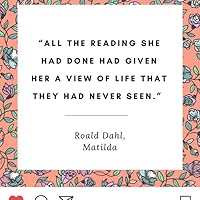
I love the mixture of spiritual insight and historical perspective in this book. It makes me want to learn more about Poland and it’s incredible past.

December 16, 2021
If you love antiques, you'll love this series!!
Displaying 1 - 30 of 88 reviews