

What do you think?
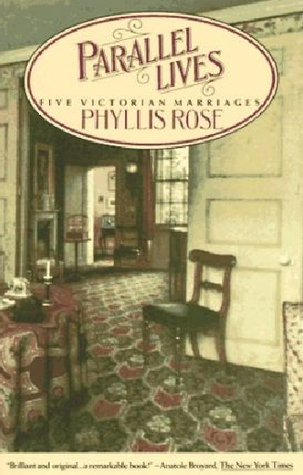
Parallel Lives: Five Victorian Marriages
In her study of the married couple as the smallest political unit, Phyllis Rose uses the marriages of five Victorian writers who wrote about their own lives with unusual candor: Charles Dickens, John Ruskin, Thomas Carlyle, John Stuart Mill, and George Eliot--née Marian Evans.
318 pages, Paperback
First published October 1, 1983
About the author
Phyllis Rose
20 books48 followersPhyllis Rose is an American literary critic, essayist, biographer, and educator.
She lives in Connecticut with her husband, writer and illustrator Laurent de Brunhoff
She lives in Connecticut with her husband, writer and illustrator Laurent de Brunhoff
Ratings & Reviews
Friends & Following
Create a free account to discover what your friends think of this book!
Community Reviews
Displaying 1 - 30 of 224 reviews

October 18, 2017
Fascinating journey into the mostly failed marriages of famous people in the Victorian era and how the institution of marriage was and probably is much better for men than women. The best coupling in the book is between George Elliot and George Henry Lewes who were actually never married, but lived together after his marriage went sour, because his wife had 4 children with another man! The worst marriage depicted is between Charles Dickens and Catharine Hogarth. He was very cruel to his wife after 20 years of marriage and 10 children. He kicked her out of their home and never let her see her children again. He blamed her for having all those children, and also several miscarriages (as though he had nothing to do with it). She had become fat and unattractive and he got himself a lovely young mistress. As the author say, her life became. . ."a kind of living death. His behavior towards her, accentuated by his self-righteous posturing, seems little short of murder."

June 12, 2022
4+
Phillis Rose examines the marriages of four 19th century writers and one unwed relationship. They are: John Ruskin- art critic, artist, and writer, Thomas Carlyle- essayist, historian, and philosopher, John Stuart Mill- liberal classical economist and proponent of individual rights, Charles Dickens- novelist and actor, and the lone woman, Mary Anne (Marian) Evans, a.k.a. George Eliot- novelist best known for her work, Middlemarch. Each relationship veered from the norms of the day in some aspects, and all provided gossip and judgement from society. Rose's book is a peek into the private lives of these very public figures, often showing how brilliant the husbands were in their accomplishments but totally clueless about their wives. The author believes, "Gossip may be the beginning of moral inquiry and may lead to self-understanding". What makes this book particularly fascinating is the time period and its prevailing laws restricting women from any kind of power, in or out of marriage. A wife was the legal property of her husband and sexual performance was on of her duties, noncompliance being punishable.Victorian advice to married women was, "Lie back and think of England".
The patriarchal paradigm is evident in three of these case studies, although during courtship all these smart and highly educated(for the period) women had intellectual goals of their own and spent hours with their intended in scholarly dialogue, Catherine and Charles Dickens being the exception. John Ruskin was so disgusted by the sight of his wife's naked body on their wedding night, the marriage was never consummated. That, and interfering in-laws, resulted in a short marriage. Thomas Carlyle became totally absorbed in his work leaving his wife to handle all the domestic trivia.Upon her death, her diaries revealed her anger and frustration, a revenge of sorts. "Her life was a story of great promise, great gifts, great advantages sacrificed for a man who ultimately neglected her", Carlyle regretfully said upon reading her journals. John Stuart Mill went to the other extreme. He created a fantasy narrative about his beloved attributing many of his ideas to her and comparing her poetry to that of Shelley and finding her poetry superior. Others viewed his wife as a haughty shrew. Dickens seemed to have had a mid-life crisis. He sought a much younger woman to bolster his ego. He claimed he had never loved his wife and blamed her for her many pregnancies and their subsequent ten children. Then, there is George Eliot. Her scandalous (as viewed by some) relationship of over twenty years was one of shared power, love, and commitment, while being completely ostracized by society.
The author's intention was to portray both happy and unhappy unions. She offered her insightful and researched options but encouraged the reader to form his/her own. We all make up the narrative of the people we love and demonize those we don't. It was true then and now. This scholarly but very readable (an oxymoron?) book caused me to reflect deeply about relationships and the institution of marriage. I highly recommend it.
"Marriages go bad not when love fades, but when the weaker member feels exploited or the stronger feels unrewarded her his or her strength."
Phillis Rose examines the marriages of four 19th century writers and one unwed relationship. They are: John Ruskin- art critic, artist, and writer, Thomas Carlyle- essayist, historian, and philosopher, John Stuart Mill- liberal classical economist and proponent of individual rights, Charles Dickens- novelist and actor, and the lone woman, Mary Anne (Marian) Evans, a.k.a. George Eliot- novelist best known for her work, Middlemarch. Each relationship veered from the norms of the day in some aspects, and all provided gossip and judgement from society. Rose's book is a peek into the private lives of these very public figures, often showing how brilliant the husbands were in their accomplishments but totally clueless about their wives. The author believes, "Gossip may be the beginning of moral inquiry and may lead to self-understanding". What makes this book particularly fascinating is the time period and its prevailing laws restricting women from any kind of power, in or out of marriage. A wife was the legal property of her husband and sexual performance was on of her duties, noncompliance being punishable.Victorian advice to married women was, "Lie back and think of England".
The patriarchal paradigm is evident in three of these case studies, although during courtship all these smart and highly educated(for the period) women had intellectual goals of their own and spent hours with their intended in scholarly dialogue, Catherine and Charles Dickens being the exception. John Ruskin was so disgusted by the sight of his wife's naked body on their wedding night, the marriage was never consummated. That, and interfering in-laws, resulted in a short marriage. Thomas Carlyle became totally absorbed in his work leaving his wife to handle all the domestic trivia.Upon her death, her diaries revealed her anger and frustration, a revenge of sorts. "Her life was a story of great promise, great gifts, great advantages sacrificed for a man who ultimately neglected her", Carlyle regretfully said upon reading her journals. John Stuart Mill went to the other extreme. He created a fantasy narrative about his beloved attributing many of his ideas to her and comparing her poetry to that of Shelley and finding her poetry superior. Others viewed his wife as a haughty shrew. Dickens seemed to have had a mid-life crisis. He sought a much younger woman to bolster his ego. He claimed he had never loved his wife and blamed her for her many pregnancies and their subsequent ten children. Then, there is George Eliot. Her scandalous (as viewed by some) relationship of over twenty years was one of shared power, love, and commitment, while being completely ostracized by society.
The author's intention was to portray both happy and unhappy unions. She offered her insightful and researched options but encouraged the reader to form his/her own. We all make up the narrative of the people we love and demonize those we don't. It was true then and now. This scholarly but very readable (an oxymoron?) book caused me to reflect deeply about relationships and the institution of marriage. I highly recommend it.
"Marriages go bad not when love fades, but when the weaker member feels exploited or the stronger feels unrewarded her his or her strength."

November 18, 2021
Thoroughly enjoyed this one. A rich, fascinating historical exploration of Victorian marriage and society. I love how it used these case studies to look at wider society.

December 9, 2016
This is a brilliant and insightful academic study of five marriages in Victorian England; well, to be more precise, four marriages and one partnership. On one hand, the author Phyllis Rose is examining marriage as a patriarchal institution which favoured men and reinforced their own power; but on the other, she shows that marriage is a delicate and complex negotiation, and that women have had various means of strengthening their own roles - or, in the case of Jane Carlyle, exacting their revenge for various suppressions and humiliations. One of Rose's central ideas is that the success or happiness of a marriage depends of whether or not the partners "agree on the scenario they are enacting." Rose makes the case that marriage "has determined the story of all of our lives more than we have generally acknowledged," and also argues - very effectively, to my mind - that by examining other marriages, other ways of being married - it enables us to consider our own lives and relationships. I first read this book in 1990 - in fact, I vividly remember coming across it at the University Co-Op in Austin, Texas - and I have returned to it several times over the course of nearly 30 years. I would definitely rate it as one of the more influential and enduring academic books I've read over the years - and yes, I've gleaned one or two insights about my own marriage through comparing it to those in the book.
The chapters which have most appealed to me, or affected me, are those featuring the marriages between Charles Dickens and Catherine Hogarth, George Eliot and her partner George Henry Lewes, and Jane Welsh and Thomas Carlyle. The Carlyles, who created a famous literary salon in Victorian London, are not well-known now outside of academic circles - but they were extraordinarily well-connected in their day, and in every way 'Eminent Victorians' for those who are interested in London life in the 19th century. Their marriage - from courtship, to the messy middle, to posthumous, infamous fame - is used as a framing device in this study of marriage. Power shifts back and forth in the Carlyle marriage, and it is fascinating to see how both Jane and Thomas use writing, invalidism and the war of wits to assert themselves. Jane was a skilled mimic and humorist, famous for her broad correspondence, and one of her ways of revenging herself on her husband was her mockery of him. As he took himself exceedingly seriously, her barbs were undoubtedly an effective means of letting off emotional steam - even if he was unaware of them. Although Rose makes a strong case for the partnership between Eliot and Lewes being the most successful, partly because it didn't have to conform to all the conventions and pressures of marriage, I found the Carlyle marriage the most complicated and interesting. I would also recommend The Carlyles at Home, by Thea Holme - a Persephone book.
The chapters which have most appealed to me, or affected me, are those featuring the marriages between Charles Dickens and Catherine Hogarth, George Eliot and her partner George Henry Lewes, and Jane Welsh and Thomas Carlyle. The Carlyles, who created a famous literary salon in Victorian London, are not well-known now outside of academic circles - but they were extraordinarily well-connected in their day, and in every way 'Eminent Victorians' for those who are interested in London life in the 19th century. Their marriage - from courtship, to the messy middle, to posthumous, infamous fame - is used as a framing device in this study of marriage. Power shifts back and forth in the Carlyle marriage, and it is fascinating to see how both Jane and Thomas use writing, invalidism and the war of wits to assert themselves. Jane was a skilled mimic and humorist, famous for her broad correspondence, and one of her ways of revenging herself on her husband was her mockery of him. As he took himself exceedingly seriously, her barbs were undoubtedly an effective means of letting off emotional steam - even if he was unaware of them. Although Rose makes a strong case for the partnership between Eliot and Lewes being the most successful, partly because it didn't have to conform to all the conventions and pressures of marriage, I found the Carlyle marriage the most complicated and interesting. I would also recommend The Carlyles at Home, by Thea Holme - a Persephone book.

June 13, 2011
(Update May 2013)
Hi book. I am five-starring you after all, because I think about you all the time and I learned so much, and I've recommended you to everyone and thumbed through countless times to cite things. And I think my tolerance for academic-speak was raised a little bit in the last year, too, which was really the only relationship problem we had. How love can change, indeed! XO!!
(Feb. 2012)
Oh hello, now is when I catch up on all my Goodreads at once!
This is such a great plan for a book. IT IS AWESOME. I enjoyed it immensely.
The book, indeed, looks at five marriages of Victorian authors, and generally uses each example to explain a result, either of the person's work, or of their personal character.
In a way, she uses the first couple as a framing device, Thomas and Jane Carlyle. Their courtship is shown at the start of the book, their last years of marriage are shown at the end, and there are a few brief scenes throughout of times that one of the Carlyles interacted in some way with the next couple. As themselves, though, I was most interested by them as a courting couple. Jane is a heck of a sass, which pretty classically covers for quite a lot of empathetic self-doubt. She felt she was talented but with nothing original to say, so ironically, she simply became known for talking, and writing letters, and generally saying quite a lot, just as herself.
The fascinating thing about her relationship with Thomas comes at the point they decide to commit to each other: during their courtship he has spent almost all of his time praising her skill and her writing and giving her suggestions and encouragement and basically wishing that she would pursue a great ambition. She too expects great things of him. And seemingly the moment they get engaged, suddenly, he sees her only as a woman, a wife to do the things he asks, and no longer is he asking for anything intellectual. It is not flattering.
(This is also the section where the author writes something I've found myself trying to remember since reading it: "She might reject the idea of marrying him, but she had conceived it, and it seems that no matter how impossible a thing appears, if it can be imagined, it can be enacted." How a turning point works.)
I really looked forward to the John Ruskin chapter, as it of course is a deconstruction of the notorious "Actually no no no please put your clothes back on!!" unconsummated wedding-night story. What a piece of work, what a piece of work. A total cuckoo clock. I think the greatest thing about what the author brings to this chapter is a depiction of Ruskin's parents, who are awful snobbish nutters, and from whom it comes as no surprise whatever to have produced a repressed nutter of a son. (… Who may have had a thing for little girls. Er. I am going to have to read something more about that somewhere because I feel like I need to know.)
The author rather brilliantly compares the Ruskins to the marriages in Middlemarch — one similarity from her perspective, one similarity from his — which was almost too great to be true. Also, like the author's last example, this marriage too came apart at the seams around gender expectation. But there is essentially a good ending, and I really enjoyed the rest of the story, of how this marriage was finished. It's so awkward, and then so happy (for, uh, everyone who isn't Ruskin), it's almost a romantic comedy.
(Also, on the side, I enjoyed how often this chapter made me look up art: mainly Effie's modeling in her future husband's painting, and the portrait of Ruskin he was working on when they met. Similarly, I'm enchanted with this book's cover art; it's perfect — first, I thought it was simply a photograph of an old house, but it is in fact a slice from a painting of the Carlyles at their house, by a painter of Ruskin's photo-realistic school.)
(More outstanding wisdom from the author in Ruskin's chapter: "There is, I think, a kind of natural astonishment at the moments when one's personal life coincides with the great, public, recurring events of mankind, when one marries, for example, or produces a child. One is so amazed to have done it at all that one can by no means perceive it has been done badly.")
The only chapter I didn't enjoy very much was that of John Stuart Mill. It's too bad, because it's an incredibly interesting and weird situation, and I in fact liked him quite a lot. (And Harriet is… something else, if not quite likable.) They were sort of ridiculously idealistic intellectuals who began a (basically sexless) relationship while she was married, and she managed to have dominant enough a personality that her husband just kinda… let her. She seems to have been one of those people who comes in the room, merrily convinces everyone do what she wants, leaves, and everyone is left going, "uh… what just…?"
Mill himself was famous as a philosopher of great justness and belief in social equality and freedom, and was perhaps one of the fiercest feminists of the Victorian age. He saw this nontraditional partnership with someone as strong as Harriet to be exactly the right antidote to the problem of unequal marriage. He adored her so unobjectively that eventually they were a mockery, but their beliefs were fervent and clear. Because he wrote about them so straightforwardly, the author uses a lot of his own writing to lace together her ideas in this chapter. Which works, but became sort of overdone, and I felt kind of like I was reading one of those papers you write in college where you quote way too much to take up room on the page.
(But she's got it: "Of course he made her up, as we all make up the people we love.")
Now, book-lovers, I give you 100% serious warning: reading this book might make you hate Charles Dickens. Really irrecoverably hate him and his work. Unfortunately it turns out that Charles was aaaaa jeeeeeeeeerrrrrkkkk, just terrible, and there is nothing we can do about it!
I think some facts about Dickens's marriage/mistress are somewhat common knowledge, but the author's chapter on it does a marvelous job of plotting it out in great depth. The reason it's an extraordinary chapter instead of just a slugfest is because by the end of it, I felt that I really understood Charles Dickens, really well. Of course, it is really the author's interpretation that I understand so well, but it truly does feel well done and just. At the end of it I think he's pretty much an awful dingbat, but good gracious is he an interesting one.
It's truly a fascinating chapter. I think he's the writer that I'll come away from this book talking the most about. It seems like a little bit of what everyone knows about him weaves into his ugly destiny in some way. He had 10 kids, yes. He loved acting and attention and friends and company and felt he was truly the greatest person in the world, yes. He was a liiiiittle obsessed with innocent girls, yes. He just thought young women were the best, yes, right up until the point that he didn't.
Largely, the thing that came so clear for me was his genuine, true despising of adult women. They disgusted him, and he sincerely believed them responsible for their own fertility, appearance, and energy level (after having 10 kids). e.g. My wife is pregnant again, why is she doing this to me! He feels they are punishing him, and deserve to be punished in return. My favorite (?) story came when he begins to stray, fidelity-wise, by reconnecting with a teenage flame, who warns him that she is now fat and toothless. He thinks she is demurring. When she turns out to be in fact fat and toothless, he makes up an awkward excuse never to see her again, and then writes up the situation in one of his books. And admits it directly in a letter to a friend. This guy.
Of course, though, of course, my true favorite chapter here was George Eliot's (Marian Evans's), as it was bound to be. I have deeply admired her for years, and been very curious to know more about her life, particularly her infamous un-marriage. Her partner of 25 years, George Lewes, was otherwise married (its own odd situation), which meant that he and Marian never were. The author here takes no pains to conceal her enjoyment that the only truly blissfully happy couple in her book had the least "acceptable" connection. She also uses this chapter essentially to paint a picture of Marian that is crackling with empathy and admiration, and I was just hooked-lined-and-sinkered. I can hardly believe how much I truly care about her.
The main point that the author illustrates is the way that falling in love affected Marian. She was over 30, considered dull and homely, and was basically too humble to protest. She did smart editing work. She fell in love. And it transformed her, encouraged her, made her happy to take risks, and ultimately enabled her to take herself seriously as a writer. Historically, it's often suggested that because she began writing after they met, George Lewes is somehow "responsible" for George Eliot's career, but what the author firmly indicates here is that it was simply the power of the immense respect he gave Marian that changed her. A transformation they both cherished. Plus, they had great love and sex and everyone sort of laughed at them — they weren't even pretty, how dare they! — but they made a wonderful life and a wonderful partnership, and it was no accident that a great novelist found herself, too.
AND I LOVE HER.
By the time the book comes back around to talk about the Carlyles again, I've had so much fun with the other folks that they're rather a disappointment. For one thing, they turned out to be pretty much jerks. They are super outlandishly racist and elitist, even for their time and place. And the public penance thing is unsatisfying at best. I liked more when Carlyle and Mill were quoted side by side regarding a discussion of black populations. (They literally penned twin articles, one which used the horrible word with gusto, and one which pointedly didn't.) It certainly drives home who each of them ultimately were.
Really, this book is wonderful. I loved reading it and want to recommend it to every bookish friend I know. 4.5 stars for sure — I think it is just the fact that I found some parts far more interesting than others that holds it back. I'd probably reread it in chunks rather than as a whole. It also amused me how many people and anecdotes were familiar to me from Bill Bryson's book about Victorians. They are definitely cousins, these books.
Side note: I enjoyed that George Bernard Shaw comes up quite a lot on the sidelines. It turns out he had some damn cool things to say about the institution of marriage. It's made me really interested in him in a way I was not.
Random fun fact: Jane Eyre was considered to have been written by William Thackeray's governess. On account of it was kind of reminiscent of his life. And his actual mad wife in the semi-figurative attic. To me, that story just kind of says everything about what Victorians understood the boundaries of marriage could hold.
Hi book. I am five-starring you after all, because I think about you all the time and I learned so much, and I've recommended you to everyone and thumbed through countless times to cite things. And I think my tolerance for academic-speak was raised a little bit in the last year, too, which was really the only relationship problem we had. How love can change, indeed! XO!!
(Feb. 2012)
Oh hello, now is when I catch up on all my Goodreads at once!
This is such a great plan for a book. IT IS AWESOME. I enjoyed it immensely.
The book, indeed, looks at five marriages of Victorian authors, and generally uses each example to explain a result, either of the person's work, or of their personal character.
In a way, she uses the first couple as a framing device, Thomas and Jane Carlyle. Their courtship is shown at the start of the book, their last years of marriage are shown at the end, and there are a few brief scenes throughout of times that one of the Carlyles interacted in some way with the next couple. As themselves, though, I was most interested by them as a courting couple. Jane is a heck of a sass, which pretty classically covers for quite a lot of empathetic self-doubt. She felt she was talented but with nothing original to say, so ironically, she simply became known for talking, and writing letters, and generally saying quite a lot, just as herself.
The fascinating thing about her relationship with Thomas comes at the point they decide to commit to each other: during their courtship he has spent almost all of his time praising her skill and her writing and giving her suggestions and encouragement and basically wishing that she would pursue a great ambition. She too expects great things of him. And seemingly the moment they get engaged, suddenly, he sees her only as a woman, a wife to do the things he asks, and no longer is he asking for anything intellectual. It is not flattering.
(This is also the section where the author writes something I've found myself trying to remember since reading it: "She might reject the idea of marrying him, but she had conceived it, and it seems that no matter how impossible a thing appears, if it can be imagined, it can be enacted." How a turning point works.)
I really looked forward to the John Ruskin chapter, as it of course is a deconstruction of the notorious "Actually no no no please put your clothes back on!!" unconsummated wedding-night story. What a piece of work, what a piece of work. A total cuckoo clock. I think the greatest thing about what the author brings to this chapter is a depiction of Ruskin's parents, who are awful snobbish nutters, and from whom it comes as no surprise whatever to have produced a repressed nutter of a son. (… Who may have had a thing for little girls. Er. I am going to have to read something more about that somewhere because I feel like I need to know.)
The author rather brilliantly compares the Ruskins to the marriages in Middlemarch — one similarity from her perspective, one similarity from his — which was almost too great to be true. Also, like the author's last example, this marriage too came apart at the seams around gender expectation. But there is essentially a good ending, and I really enjoyed the rest of the story, of how this marriage was finished. It's so awkward, and then so happy (for, uh, everyone who isn't Ruskin), it's almost a romantic comedy.
(Also, on the side, I enjoyed how often this chapter made me look up art: mainly Effie's modeling in her future husband's painting, and the portrait of Ruskin he was working on when they met. Similarly, I'm enchanted with this book's cover art; it's perfect — first, I thought it was simply a photograph of an old house, but it is in fact a slice from a painting of the Carlyles at their house, by a painter of Ruskin's photo-realistic school.)
(More outstanding wisdom from the author in Ruskin's chapter: "There is, I think, a kind of natural astonishment at the moments when one's personal life coincides with the great, public, recurring events of mankind, when one marries, for example, or produces a child. One is so amazed to have done it at all that one can by no means perceive it has been done badly.")
The only chapter I didn't enjoy very much was that of John Stuart Mill. It's too bad, because it's an incredibly interesting and weird situation, and I in fact liked him quite a lot. (And Harriet is… something else, if not quite likable.) They were sort of ridiculously idealistic intellectuals who began a (basically sexless) relationship while she was married, and she managed to have dominant enough a personality that her husband just kinda… let her. She seems to have been one of those people who comes in the room, merrily convinces everyone do what she wants, leaves, and everyone is left going, "uh… what just…?"
Mill himself was famous as a philosopher of great justness and belief in social equality and freedom, and was perhaps one of the fiercest feminists of the Victorian age. He saw this nontraditional partnership with someone as strong as Harriet to be exactly the right antidote to the problem of unequal marriage. He adored her so unobjectively that eventually they were a mockery, but their beliefs were fervent and clear. Because he wrote about them so straightforwardly, the author uses a lot of his own writing to lace together her ideas in this chapter. Which works, but became sort of overdone, and I felt kind of like I was reading one of those papers you write in college where you quote way too much to take up room on the page.
(But she's got it: "Of course he made her up, as we all make up the people we love.")
Now, book-lovers, I give you 100% serious warning: reading this book might make you hate Charles Dickens. Really irrecoverably hate him and his work. Unfortunately it turns out that Charles was aaaaa jeeeeeeeeerrrrrkkkk, just terrible, and there is nothing we can do about it!
I think some facts about Dickens's marriage/mistress are somewhat common knowledge, but the author's chapter on it does a marvelous job of plotting it out in great depth. The reason it's an extraordinary chapter instead of just a slugfest is because by the end of it, I felt that I really understood Charles Dickens, really well. Of course, it is really the author's interpretation that I understand so well, but it truly does feel well done and just. At the end of it I think he's pretty much an awful dingbat, but good gracious is he an interesting one.
It's truly a fascinating chapter. I think he's the writer that I'll come away from this book talking the most about. It seems like a little bit of what everyone knows about him weaves into his ugly destiny in some way. He had 10 kids, yes. He loved acting and attention and friends and company and felt he was truly the greatest person in the world, yes. He was a liiiiittle obsessed with innocent girls, yes. He just thought young women were the best, yes, right up until the point that he didn't.
Largely, the thing that came so clear for me was his genuine, true despising of adult women. They disgusted him, and he sincerely believed them responsible for their own fertility, appearance, and energy level (after having 10 kids). e.g. My wife is pregnant again, why is she doing this to me! He feels they are punishing him, and deserve to be punished in return. My favorite (?) story came when he begins to stray, fidelity-wise, by reconnecting with a teenage flame, who warns him that she is now fat and toothless. He thinks she is demurring. When she turns out to be in fact fat and toothless, he makes up an awkward excuse never to see her again, and then writes up the situation in one of his books. And admits it directly in a letter to a friend. This guy.
Of course, though, of course, my true favorite chapter here was George Eliot's (Marian Evans's), as it was bound to be. I have deeply admired her for years, and been very curious to know more about her life, particularly her infamous un-marriage. Her partner of 25 years, George Lewes, was otherwise married (its own odd situation), which meant that he and Marian never were. The author here takes no pains to conceal her enjoyment that the only truly blissfully happy couple in her book had the least "acceptable" connection. She also uses this chapter essentially to paint a picture of Marian that is crackling with empathy and admiration, and I was just hooked-lined-and-sinkered. I can hardly believe how much I truly care about her.
The main point that the author illustrates is the way that falling in love affected Marian. She was over 30, considered dull and homely, and was basically too humble to protest. She did smart editing work. She fell in love. And it transformed her, encouraged her, made her happy to take risks, and ultimately enabled her to take herself seriously as a writer. Historically, it's often suggested that because she began writing after they met, George Lewes is somehow "responsible" for George Eliot's career, but what the author firmly indicates here is that it was simply the power of the immense respect he gave Marian that changed her. A transformation they both cherished. Plus, they had great love and sex and everyone sort of laughed at them — they weren't even pretty, how dare they! — but they made a wonderful life and a wonderful partnership, and it was no accident that a great novelist found herself, too.
AND I LOVE HER.
By the time the book comes back around to talk about the Carlyles again, I've had so much fun with the other folks that they're rather a disappointment. For one thing, they turned out to be pretty much jerks. They are super outlandishly racist and elitist, even for their time and place. And the public penance thing is unsatisfying at best. I liked more when Carlyle and Mill were quoted side by side regarding a discussion of black populations. (They literally penned twin articles, one which used the horrible word with gusto, and one which pointedly didn't.) It certainly drives home who each of them ultimately were.
Really, this book is wonderful. I loved reading it and want to recommend it to every bookish friend I know. 4.5 stars for sure — I think it is just the fact that I found some parts far more interesting than others that holds it back. I'd probably reread it in chunks rather than as a whole. It also amused me how many people and anecdotes were familiar to me from Bill Bryson's book about Victorians. They are definitely cousins, these books.
Side note: I enjoyed that George Bernard Shaw comes up quite a lot on the sidelines. It turns out he had some damn cool things to say about the institution of marriage. It's made me really interested in him in a way I was not.
Random fun fact: Jane Eyre was considered to have been written by William Thackeray's governess. On account of it was kind of reminiscent of his life. And his actual mad wife in the semi-figurative attic. To me, that story just kind of says everything about what Victorians understood the boundaries of marriage could hold.

January 6, 2023
I love some in-depth analysis of personalities and relationships, so a book that explores the intricacies of five Victorian marriages, all involving writers who left lots of documentation, tied together by a scholar interested in the nuances and complexities of their stories—sign me up! It’s a thoughtful book, fair to everyone involved and much less a litany of patriarchy horror stories than I expected. In the prologue, Rose writes about gossip as serving a higher psychological function—people need templates for their lives, whether to follow or to react against—and in a sense this is particularly high-class, analytical gossip. It doesn’t pretend to present a representative study of the age (for instance, only one of these couples had children together, though in three other cases one of the partners had kids with someone else), though one can certainly learn about the age from it.
A few notes on the couples profiled here:
Jane Welsh and Thomas Carlyle: A storybook courtship between a scholar and an intellectually-minded heiress, leading to something less than a storybook marriage—after their mostly epistolary courtship, they had a childless and possibly sexless marriage, and during one difficult stretch (when he was spending a lot of time with a richer, wittier female friend) she spent a lot of time venting in her diary, causing him no end of regret after her death.
Effie Gray and John Ruskin: The biggest trash fire of a marriage in the book, this one was thankfully short-lived. He seems to have realized on their wedding night that he was not in fact sexually attracted to grown women (the prudishness of the era making it difficult to know how one felt about sex in advance). Both couples’ parents were heavily involved, they turned out to have completely different tastes and interests, and much drama ensued. Fortunately, non-consummation meant they could get an annulment: she married again and had several children; he never did.
Harriet Taylor and John Stuart Mill: I think Rose gives this couple a bit of an unfairly bad rap. They married later in life after a very long, intimate friendship—the problem was that she was already married, though unhappily (she didn’t appreciate sexual demands, or think much of John Taylor’s intellect)—and their own view of their marriage was at odds with others’ interpretations, but they seem to have been happy on their own terms. He thought she was way smarter than any outsiders ever judged her to be, and their mutual commitment to gender equality in an era when that was radical seems to have resulted in her calling all the shots. But he was happy with this and she clearly contributed a lot to his writing. I thought the disability angle was underexplored—there’s a mention of her being bedridden due to injuries from a carriage accident before their marriage ever happened, which is never followed up on.
Catherine Hogarth and Charles Dickens: This marriage in particular I expected to be an absolute patriarchy horror story, and perhaps because of that billing, my overall reaction was “eh, I’ve seen a lot worse, and in the 21st century too.” This couple started out happily, but grew apart as he become a celebrity touring the world and she grew worn out giving birth to their 10 kids. The strain of having such a large family to support, not to mention his grasping parents and siblings—and some serious emotional immaturity on his part—did not help. He eventually left her for a younger woman and completely disregarded her existence from that point on (though he did pay support for the rest of her life, he made no efforts to encourage the kids to visit with their mom, which they apparently had little interest in doing). Again, the disability angle isn’t fully explored. She seems to have had some serious health issues: no doubt giving birth to 10 kids (plus some miscarriages) is indeed exhausting, but lying on the couch for years while your sister runs the household and raises your kids seems like more than simple tiredness, perhaps a fatigue disorder or depression.
George Eliot (aka Mary Ann Evans) and George Henry Lewes: Rose posits this as the one happy couple in the book, despite or perhaps because of the fact they were never formally married. (He was married to someone else, but what had begun as a 19th century version of an open marriage turned into a long-term relationship between his wife and his also-married business partner.) I got the sense Rose identifies a lot with Eliot, but casts her into what for me is quite an off-putting mold: the professional woman who is nonetheless sad, lonely and unfulfilled until she finds a man to complete her, at which point her life is perfect. Well, except for the fact that she was extremely morbid, and so sensitive about any criticism of her writing that he censored newspapers and correspondence for her! Someone’s lucky not to live in the age of Goodreads.
As with any good nonfiction, I’ve only skimmed the surface here—it’s a thoughtful, detailed, and engaging book that I’d recommend to anyone interested in Victorian England, scholarly gossip, or in-depth studies of marriage and women’s lives.
A few notes on the couples profiled here:
Jane Welsh and Thomas Carlyle: A storybook courtship between a scholar and an intellectually-minded heiress, leading to something less than a storybook marriage—after their mostly epistolary courtship, they had a childless and possibly sexless marriage, and during one difficult stretch (when he was spending a lot of time with a richer, wittier female friend) she spent a lot of time venting in her diary, causing him no end of regret after her death.
Effie Gray and John Ruskin: The biggest trash fire of a marriage in the book, this one was thankfully short-lived. He seems to have realized on their wedding night that he was not in fact sexually attracted to grown women (the prudishness of the era making it difficult to know how one felt about sex in advance). Both couples’ parents were heavily involved, they turned out to have completely different tastes and interests, and much drama ensued. Fortunately, non-consummation meant they could get an annulment: she married again and had several children; he never did.
Harriet Taylor and John Stuart Mill: I think Rose gives this couple a bit of an unfairly bad rap. They married later in life after a very long, intimate friendship—the problem was that she was already married, though unhappily (she didn’t appreciate sexual demands, or think much of John Taylor’s intellect)—and their own view of their marriage was at odds with others’ interpretations, but they seem to have been happy on their own terms. He thought she was way smarter than any outsiders ever judged her to be, and their mutual commitment to gender equality in an era when that was radical seems to have resulted in her calling all the shots. But he was happy with this and she clearly contributed a lot to his writing. I thought the disability angle was underexplored—there’s a mention of her being bedridden due to injuries from a carriage accident before their marriage ever happened, which is never followed up on.
Catherine Hogarth and Charles Dickens: This marriage in particular I expected to be an absolute patriarchy horror story, and perhaps because of that billing, my overall reaction was “eh, I’ve seen a lot worse, and in the 21st century too.” This couple started out happily, but grew apart as he become a celebrity touring the world and she grew worn out giving birth to their 10 kids. The strain of having such a large family to support, not to mention his grasping parents and siblings—and some serious emotional immaturity on his part—did not help. He eventually left her for a younger woman and completely disregarded her existence from that point on (though he did pay support for the rest of her life, he made no efforts to encourage the kids to visit with their mom, which they apparently had little interest in doing). Again, the disability angle isn’t fully explored. She seems to have had some serious health issues: no doubt giving birth to 10 kids (plus some miscarriages) is indeed exhausting, but lying on the couch for years while your sister runs the household and raises your kids seems like more than simple tiredness, perhaps a fatigue disorder or depression.
George Eliot (aka Mary Ann Evans) and George Henry Lewes: Rose posits this as the one happy couple in the book, despite or perhaps because of the fact they were never formally married. (He was married to someone else, but what had begun as a 19th century version of an open marriage turned into a long-term relationship between his wife and his also-married business partner.) I got the sense Rose identifies a lot with Eliot, but casts her into what for me is quite an off-putting mold: the professional woman who is nonetheless sad, lonely and unfulfilled until she finds a man to complete her, at which point her life is perfect. Well, except for the fact that she was extremely morbid, and so sensitive about any criticism of her writing that he censored newspapers and correspondence for her! Someone’s lucky not to live in the age of Goodreads.
As with any good nonfiction, I’ve only skimmed the surface here—it’s a thoughtful, detailed, and engaging book that I’d recommend to anyone interested in Victorian England, scholarly gossip, or in-depth studies of marriage and women’s lives.

August 10, 2011
What a great social history of personal relationships - whether they were larger-than-life literary figures or not, these well documented couples present variations on a theme of women's role in Victorian England. Fantastic read - well written, very enjoyable.
Sadly, I loaned my copy to someone and it hasn't returned. It seems like a re-read is in order with all the celebratory fluff around Charles Dickens. The section on Charles Dickens relationship with his wife in this book merits more attention. Yes, he was a talented writer and overcame much but he was also an incredible dick! He philandered, he was controlling and abusive with his family, and more.
ORIGINAL URL: http://www.livegreenwearblack.com/201...
© Jennifer R Clark. This work is licensed under a Creative Commons Attribution 4.0 International License. You may share and adapt this content with proper attribution.
Sadly, I loaned my copy to someone and it hasn't returned. It seems like a re-read is in order with all the celebratory fluff around Charles Dickens. The section on Charles Dickens relationship with his wife in this book merits more attention. Yes, he was a talented writer and overcame much but he was also an incredible dick! He philandered, he was controlling and abusive with his family, and more.
ORIGINAL URL: http://www.livegreenwearblack.com/201...
© Jennifer R Clark. This work is licensed under a Creative Commons Attribution 4.0 International License. You may share and adapt this content with proper attribution.
July 28, 2008
I enjoyed this book so much I wrote the author. She responded graciously.
February 11, 2012
Phyllis Rose is doing something important in this book. I wanted to read it because I'm interested in Victorians and in the history of marriage, and if you're interested in those things you'll automatically love it. But her subject matter turns out to be much bigger than expected.
It's not really possible to summarize Parallel Lives. A central part of Rose's argument is that details matter, that complex narratives are usually better and more real than simplistic ones. The body chapters are full of details of the different forms marriages can take, and of those I loved the George Eliot and George Henry Lewes chapter best. (It seems like Rose does too.)
My favorite parts of the book, though, were the prologue and postludes. Those are the places where Rose does the most serious thinking about marriage as an idea, and about gender questions more broadly. Framing the central dilemma behind her feminist suspicion of marriage, she writes, "Equality is to sexual politics what the classless society is to Marxist theory: the hypothesis that solves the problem. Anyone who thinks about human relationships as negotiations of power will quickly and inevitably come to consider the ideal of equality. But despite the number of people who pay lip service to this ideal, few have been able to pin down exactly what it means or describe how this desirable state may be achieved."
It's tempting, I think, to try and understand equality in quantifiable terms (and maybe even more tempting to paint quantitative pictures of inequality--it feels so definite, impossible to refute), but numbers never tell the whole story, or even most of the story. Rose clearly believes it matters that we tell ourselves good stories, which are not generally the simplest ones or the easiest ones. She thinks the best way we can learn about what equality might look like is through studying the stories people write and the stories they live. That's my belief too. Reading her version of it reminded me of how much I love the strand of feminism that believes living is an act of authorship, which is why making your own best effort at equality is a serious, important undertaking.
It's not really possible to summarize Parallel Lives. A central part of Rose's argument is that details matter, that complex narratives are usually better and more real than simplistic ones. The body chapters are full of details of the different forms marriages can take, and of those I loved the George Eliot and George Henry Lewes chapter best. (It seems like Rose does too.)
My favorite parts of the book, though, were the prologue and postludes. Those are the places where Rose does the most serious thinking about marriage as an idea, and about gender questions more broadly. Framing the central dilemma behind her feminist suspicion of marriage, she writes, "Equality is to sexual politics what the classless society is to Marxist theory: the hypothesis that solves the problem. Anyone who thinks about human relationships as negotiations of power will quickly and inevitably come to consider the ideal of equality. But despite the number of people who pay lip service to this ideal, few have been able to pin down exactly what it means or describe how this desirable state may be achieved."
It's tempting, I think, to try and understand equality in quantifiable terms (and maybe even more tempting to paint quantitative pictures of inequality--it feels so definite, impossible to refute), but numbers never tell the whole story, or even most of the story. Rose clearly believes it matters that we tell ourselves good stories, which are not generally the simplest ones or the easiest ones. She thinks the best way we can learn about what equality might look like is through studying the stories people write and the stories they live. That's my belief too. Reading her version of it reminded me of how much I love the strand of feminism that believes living is an act of authorship, which is why making your own best effort at equality is a serious, important undertaking.

July 14, 2023
Grandes escritores, pésimos maridos.
Así podría resumir este ensayo que nos habla de cinco matrimonios victorianos del círculo de los grandes intelectuales del momento.
Conoceremos a grandes mujeres, algunas de ellas también escritoras, y veremos cómo las leyes y obligaciones del matrimonio les hacen la vida complicada, por no decir otra cosa.
Como curiosidad solo se salva en felicidad la pareja compuesta por la gran novelista George Eliot y su enamorado el filósofo George Henry Lewes, que vivieron como un matrimonio muchos años pero sin casarse, ya que él estaba casado con otra mujer e incluso tenía hijos. Todo un escándalo para la época.
Y también quiero mencionar al gran Charles Dickens, amado escritor en la actualidad, especialmente querido por sus novelas con moralinas, personajes extremadamente bondadosos, su peculiar romantización de la pobreza y la alabanza del matrimonio y de la virtud de las mujeres sacrificadas, que fue un marido pésimo, maltratador y narcisista. Toda una joya de marido, vamos.
(4/5) ⭐️⭐️⭐️⭐️ ¡me ha gustado mucho! La autora es quizás demasiado buenilla con ellos, supongo que porque contextualiza pero incluso para la época algunos de ellos tela.
Así podría resumir este ensayo que nos habla de cinco matrimonios victorianos del círculo de los grandes intelectuales del momento.
Conoceremos a grandes mujeres, algunas de ellas también escritoras, y veremos cómo las leyes y obligaciones del matrimonio les hacen la vida complicada, por no decir otra cosa.
Como curiosidad solo se salva en felicidad la pareja compuesta por la gran novelista George Eliot y su enamorado el filósofo George Henry Lewes, que vivieron como un matrimonio muchos años pero sin casarse, ya que él estaba casado con otra mujer e incluso tenía hijos. Todo un escándalo para la época.
Y también quiero mencionar al gran Charles Dickens, amado escritor en la actualidad, especialmente querido por sus novelas con moralinas, personajes extremadamente bondadosos, su peculiar romantización de la pobreza y la alabanza del matrimonio y de la virtud de las mujeres sacrificadas, que fue un marido pésimo, maltratador y narcisista. Toda una joya de marido, vamos.
(4/5) ⭐️⭐️⭐️⭐️ ¡me ha gustado mucho! La autora es quizás demasiado buenilla con ellos, supongo que porque contextualiza pero incluso para la época algunos de ellos tela.
February 8, 2011
I just read this a second time and loved it as much as the first. I'm thinking it's probably because 1) She's so freaking smart 2) You get to see inside 5 relationships. So intimate! So much dirt! 3) George Elliot's my hero 4) Author links personal to political, role of women in relationships to role of disempowered in society 5) All about power! 6) Get to compare then and now 7) Victorians and their sex habits, always fascinating 8) Ah, the footnotes

August 29, 2007
This was a perceptive exploration of marriage written from a feminist viewpoint, but with considerable compassion for both the men and women involved. The five marriages were of literary couples, including Charles Dickens and his first wife. One of the relationships described (and the only successful one, really) wasn't a marriage at all -- that of George Eliot and George Henry Lewes. Here the author builds a case that these two creative individuals were freer to build a solid relationship outside the constrictions of Victorian marriage.
Two of the relationships were really triads -- Harriet and John Taylor with John Stuart Mill, and then Effie and John Ruskin with John Everett Millais. To say that the relationships described in the book were complex would be an understatement. I can well imagine that some readers would loose patience with such intricacies, but I found Rose's dissections fascinating.
The aspect of the book that I found most intriguing concerned marriage as a power struggle. This was a theme that came out particularly well in discussing the marriage of Thomas and Jane Carlyle. I hadn't really ever considered marriage from this perspective and I found it illuminating.
One thing I will warn readers about, however: if you have any regard for Charles Dickens, you're liable to lose it after reading this book. He was a real bastard!
Two of the relationships were really triads -- Harriet and John Taylor with John Stuart Mill, and then Effie and John Ruskin with John Everett Millais. To say that the relationships described in the book were complex would be an understatement. I can well imagine that some readers would loose patience with such intricacies, but I found Rose's dissections fascinating.
The aspect of the book that I found most intriguing concerned marriage as a power struggle. This was a theme that came out particularly well in discussing the marriage of Thomas and Jane Carlyle. I hadn't really ever considered marriage from this perspective and I found it illuminating.
One thing I will warn readers about, however: if you have any regard for Charles Dickens, you're liable to lose it after reading this book. He was a real bastard!

October 26, 2023
4,5
Un día que estaba leyendo este libro recordé una frase que leí en La felicidad conyugal (Tolstói, 1859) que es, para mí, una gran definición sobre el matrimonio: «Tú sacrificas y yo sacrifico. ¿Acaso puede haber algo mejor? Una lucha de generosidades. ¿No es eso la felicidad conyugal?»
Es decir, el matrimonio constituye (o debería constituir) un equilibrio de poderes entre dos personas. Cuando una cede en una situación, la otra debe ceder en la siguiente. Pero, en los matrimonios del siglo XIX, la balanza de poder siempre se inclinaba a favor del hombre, a no ser que él mismo intercediera a favor de su mujer y la respetara y le diera su espacio. Pero lo que la autora nos explica es que lo primero era lo único aceptado y "correcto" socialmente.
Los hombres que daban espacio a sus mujeres para desarrollarse intelectual y profesionalmente, incluso hasta llegar a tener más éxito que ellos, como Harriet Taylor o George Eliot, eran repudiadas o rechazadas en sus círculos sociales, incluso por otras mujeres.
Esta infelicidad general a nivel social es lo que retrata esta autora a través de las historias de cinco matrimonios de escritores/as, populares y desconocidos, que en su mayoría, fueron desgraciados, sobre todo por ese afán de los hombres de hacer de sus esposas sujetos pasivos, relegados a las tareas domésticas y simples acompañantes y apoyos principales de sus logros.
«El deseo de independencia y autonomía por parte de una mujer —lo mismo que por parte de un estado colonial— se considera infantil, mezquino, irritantemente rebelde.»
Pero lo más importante es en qué lugar dejaba esto a las mujeres: ¿podían negarse a ser tratadas como objetos y separarse? ¿Podían tratar de desarrollar su intelecto y explorar sus curiosidades y valía fuera de su matrimonio?
La respuesta es no, aunque hay excepciones. En el caso de Effie Gray, por ejemplo, que logró separarse de John Ruskin tras muchos esfuerzos al demostrar que no se había consumado su matrimonio. En la mayoría de los casos, no era una cuestión de amor, ni siquiera una elección personal, sino una forma de mantener y reafirmar su posición en la sociedad.
La historia que más me ha impresionado, y también la más triste, ha sido la de Dickens, que hizo sentir a su esposa aburrida, fea e insignificante por su trauma de abandono y el rechazo anterior de otra mujer a la que amaba, forzándola a que fuera ella quien le dejara utilizando el maltrato psicológico y quedándose con sus hijos. Antes, era el marido el que tenía el derecho a cuidar de los hijos si algo le ocurría a su mujer.
Os recomiendo muchísimo este libro, para mí ha sido toda una sorpresa. Está muy bien documentado, explicado y es todo lo objetivo que puede llegar a ser siendo un ensayo en clave feminista. Me ha hecho reflexionar mucho sobre cómo ha evolucionado la institución del matrimonio, qué se mantiene y qué ha quedado obsoleto, sobre todo en su importancia a nivel social y la posición de la mujer y el hombre.
Un día que estaba leyendo este libro recordé una frase que leí en La felicidad conyugal (Tolstói, 1859) que es, para mí, una gran definición sobre el matrimonio: «Tú sacrificas y yo sacrifico. ¿Acaso puede haber algo mejor? Una lucha de generosidades. ¿No es eso la felicidad conyugal?»
Es decir, el matrimonio constituye (o debería constituir) un equilibrio de poderes entre dos personas. Cuando una cede en una situación, la otra debe ceder en la siguiente. Pero, en los matrimonios del siglo XIX, la balanza de poder siempre se inclinaba a favor del hombre, a no ser que él mismo intercediera a favor de su mujer y la respetara y le diera su espacio. Pero lo que la autora nos explica es que lo primero era lo único aceptado y "correcto" socialmente.
Los hombres que daban espacio a sus mujeres para desarrollarse intelectual y profesionalmente, incluso hasta llegar a tener más éxito que ellos, como Harriet Taylor o George Eliot, eran repudiadas o rechazadas en sus círculos sociales, incluso por otras mujeres.
Esta infelicidad general a nivel social es lo que retrata esta autora a través de las historias de cinco matrimonios de escritores/as, populares y desconocidos, que en su mayoría, fueron desgraciados, sobre todo por ese afán de los hombres de hacer de sus esposas sujetos pasivos, relegados a las tareas domésticas y simples acompañantes y apoyos principales de sus logros.
«El deseo de independencia y autonomía por parte de una mujer —lo mismo que por parte de un estado colonial— se considera infantil, mezquino, irritantemente rebelde.»
Pero lo más importante es en qué lugar dejaba esto a las mujeres: ¿podían negarse a ser tratadas como objetos y separarse? ¿Podían tratar de desarrollar su intelecto y explorar sus curiosidades y valía fuera de su matrimonio?
La respuesta es no, aunque hay excepciones. En el caso de Effie Gray, por ejemplo, que logró separarse de John Ruskin tras muchos esfuerzos al demostrar que no se había consumado su matrimonio. En la mayoría de los casos, no era una cuestión de amor, ni siquiera una elección personal, sino una forma de mantener y reafirmar su posición en la sociedad.
La historia que más me ha impresionado, y también la más triste, ha sido la de Dickens, que hizo sentir a su esposa aburrida, fea e insignificante por su trauma de abandono y el rechazo anterior de otra mujer a la que amaba, forzándola a que fuera ella quien le dejara utilizando el maltrato psicológico y quedándose con sus hijos. Antes, era el marido el que tenía el derecho a cuidar de los hijos si algo le ocurría a su mujer.
Os recomiendo muchísimo este libro, para mí ha sido toda una sorpresa. Está muy bien documentado, explicado y es todo lo objetivo que puede llegar a ser siendo un ensayo en clave feminista. Me ha hecho reflexionar mucho sobre cómo ha evolucionado la institución del matrimonio, qué se mantiene y qué ha quedado obsoleto, sobre todo en su importancia a nivel social y la posición de la mujer y el hombre.
June 30, 2008
This book was fantastic. And it made me mad, and if Charles Dickens were still alive, I would picket in front of house about what a bad guy he was.
Dickens marries Catherine Hogarth--her father is a publisher and Dickens like that. He seems to be in love with her, too. She has four children--he even takes her to the US of A when he goes on tour. But then when he come home, she just keeps having babies. He doesn't like that, and blames EVERYTHING on her. He boards up the door between his room and hers and leaves her bed. She has ten kids in sixteen years. He is not happy about that. It is all her fault. To make a long story short, he starts producing plays and gets involved with actresses. Catherine accuses him of having an affair, and she asks for a separation. Which is exactly what he wants her to do. For HER to ask for the separation. That makes her look bad, not him. She separate--he takes all of the kids with him except the oldest boy. Of course, she is devasted, but he is more exciting than she is, so apparently the kids love living with him. A son dies and she is not invited to the funeral, nor is she invited to his funeral when he dies.
In 1890 his daughter, Kate, told George Bernard Shaw, that she was not going to publish her mother's journal or her father's letters to her. It was okay for her father to separate from her--she was tiresome and boring. He told her that a case definitely could be made for her mother, but Kate was an old-fashioned romantic, and she liked the story of a great man mismated and dragged down by an inferior woman. Shaw argued that "the sentimental sympathy of the nineteenth century with a man of genius tied to a commonplace wife, had been rudely upset by a writer named Ibsen." He predicted that posterity would sympathize more with the woman sacrificed fo her husband's uxoriosness to the extend of being made to bear ten children in sixteen years than with the man whose grievances only amounted to the fact that "she was not a female Charles Dickens."
Whatever the quote--"these are the worst of times, these are the best of times" or vice-versa in "A Tale of Two Cities," Catherine Hogarth Dickens, didn't have it so great.
George Eliot and George Henry Lewes lived in sin--defied Victorian society.
Jane Welsh
and Thomas Carlyle were in this book. She devoted all of her time to him, and then wrote a mean letter to him and told him how selfish he was, and she managed to die before him, and he spent the rest of his
life in "monumental remorse."
Others in the book Harriet Taylor and John Stuart Mill, Effie Gray and John Ruskin.
This book was published in 1983 by Phyllis Rose who has lots of degrees from Radcliffe, Harvard, and Yale, so it must be true.
Dickens marries Catherine Hogarth--her father is a publisher and Dickens like that. He seems to be in love with her, too. She has four children--he even takes her to the US of A when he goes on tour. But then when he come home, she just keeps having babies. He doesn't like that, and blames EVERYTHING on her. He boards up the door between his room and hers and leaves her bed. She has ten kids in sixteen years. He is not happy about that. It is all her fault. To make a long story short, he starts producing plays and gets involved with actresses. Catherine accuses him of having an affair, and she asks for a separation. Which is exactly what he wants her to do. For HER to ask for the separation. That makes her look bad, not him. She separate--he takes all of the kids with him except the oldest boy. Of course, she is devasted, but he is more exciting than she is, so apparently the kids love living with him. A son dies and she is not invited to the funeral, nor is she invited to his funeral when he dies.
In 1890 his daughter, Kate, told George Bernard Shaw, that she was not going to publish her mother's journal or her father's letters to her. It was okay for her father to separate from her--she was tiresome and boring. He told her that a case definitely could be made for her mother, but Kate was an old-fashioned romantic, and she liked the story of a great man mismated and dragged down by an inferior woman. Shaw argued that "the sentimental sympathy of the nineteenth century with a man of genius tied to a commonplace wife, had been rudely upset by a writer named Ibsen." He predicted that posterity would sympathize more with the woman sacrificed fo her husband's uxoriosness to the extend of being made to bear ten children in sixteen years than with the man whose grievances only amounted to the fact that "she was not a female Charles Dickens."
Whatever the quote--"these are the worst of times, these are the best of times" or vice-versa in "A Tale of Two Cities," Catherine Hogarth Dickens, didn't have it so great.
George Eliot and George Henry Lewes lived in sin--defied Victorian society.
Jane Welsh
and Thomas Carlyle were in this book. She devoted all of her time to him, and then wrote a mean letter to him and told him how selfish he was, and she managed to die before him, and he spent the rest of his
life in "monumental remorse."
Others in the book Harriet Taylor and John Stuart Mill, Effie Gray and John Ruskin.
This book was published in 1983 by Phyllis Rose who has lots of degrees from Radcliffe, Harvard, and Yale, so it must be true.
April 26, 2011
Interesting details about five Victorian marriages. The book lacks a strong analytical lens, which makes it an engaging read for lay readers interested in these person's lives. I really enjoyed reading about the trials of marriage and courtship among these very famous Victorians. Sadly, marriage does not hold up as an institution worth sanctifying as the law and social custom limited its enjoyment.
My main dispute with Rose's analysis was in her section on the relationship between John Stuart Mill and Harriet Taylor. Although she does much to resurrect Taylor's image from the enmity with which Mill lovers depict her, Taylor still comes off as a woman's whose forceful personality dominated Mill. Moreover, Rose suggests that Mill's desire for gender equity in marriage led him to move too far and he allowed Taylor's dominance. Rose's evidence about this supposedly domineering woman is limited to a few examples.
The book is somewhat dated. New historiography suggests that Victorian prudery was a farce, so the author's views often seem misplaced. The 1980s penchant for a feminist Freudianism mark her analysis: Charles Dickens desires a happy family to make up for his lack of mother love; John Ruskin is infantilized by his parents.
My main dispute with Rose's analysis was in her section on the relationship between John Stuart Mill and Harriet Taylor. Although she does much to resurrect Taylor's image from the enmity with which Mill lovers depict her, Taylor still comes off as a woman's whose forceful personality dominated Mill. Moreover, Rose suggests that Mill's desire for gender equity in marriage led him to move too far and he allowed Taylor's dominance. Rose's evidence about this supposedly domineering woman is limited to a few examples.
The book is somewhat dated. New historiography suggests that Victorian prudery was a farce, so the author's views often seem misplaced. The 1980s penchant for a feminist Freudianism mark her analysis: Charles Dickens desires a happy family to make up for his lack of mother love; John Ruskin is infantilized by his parents.

June 29, 2019
Cinque matrimoni vittoriani per narrare una pseudo storia cronologica del matrimonio, fra cliché, errori e vita quotidiana, gli stessi riti che si ripetono immutati nel tempo.
È vero che nel IX secolo il matrimonio era visto come una tappa obbligata nella vita di una donna, un sacrificio verso cui, volente o nolente, si dovesse sottomettere. E se a quei tempi, parlando dell'incontro fisico col proprio marito si soleva dire alla malcapitata "distenditi e pensa all'Inghilterra" al giorno d'oggi questo problema è stato largamente superato. Anche la scelta del consorte, una volta imposta, adesso viene fatta liberamente e consapevolmente. Eppure, nonostante i molti cambiamenti avvenuti negli anni, permane ancora oggi una certa supremazia maschile e, se una volta il divorzio era praticamente impossibile, oggi la facilità con cui lo si può ottenere spinge forse a scelte avventate e, se forse si è raggiunta una parità dei sessi, la supremazia maschile, dove non può più tenere la donna segregata in casa, emerge troppo spesso sotto forma di femminicidio.
Anche per questo è interessante leggere questo saggio. Ogni legame qui illustrato fa da esempio ad una situazione tipica matrimoniale.
1. Jane Welsh e Thomas Carlyle (1821-1866)
2. Effie Gray e John Ruskin (1848-1854)
3. Harriet Taylor e John Stuart Mill (1830-1858)
4. Catherine Hogarth e Charles Dickens (1835-1858).
5. George Eliot e George Henry Lewes (1854-1878)
Di queste cinque storie stranamente le più felici risultano essere quelle non vincolate dal matrimonio tradizionale e forse anche quelle mai consumate.
Più che pessimi mariti emergono delle donne forti e ammirevoli e dei matrimoni vittoriani più moderni e anticonvenzionali di quanto si potesse immaginare.
È vero che nel IX secolo il matrimonio era visto come una tappa obbligata nella vita di una donna, un sacrificio verso cui, volente o nolente, si dovesse sottomettere. E se a quei tempi, parlando dell'incontro fisico col proprio marito si soleva dire alla malcapitata "distenditi e pensa all'Inghilterra" al giorno d'oggi questo problema è stato largamente superato. Anche la scelta del consorte, una volta imposta, adesso viene fatta liberamente e consapevolmente. Eppure, nonostante i molti cambiamenti avvenuti negli anni, permane ancora oggi una certa supremazia maschile e, se una volta il divorzio era praticamente impossibile, oggi la facilità con cui lo si può ottenere spinge forse a scelte avventate e, se forse si è raggiunta una parità dei sessi, la supremazia maschile, dove non può più tenere la donna segregata in casa, emerge troppo spesso sotto forma di femminicidio.
Anche per questo è interessante leggere questo saggio. Ogni legame qui illustrato fa da esempio ad una situazione tipica matrimoniale.
1. Jane Welsh e Thomas Carlyle (1821-1866)
2. Effie Gray e John Ruskin (1848-1854)
3. Harriet Taylor e John Stuart Mill (1830-1858)
4. Catherine Hogarth e Charles Dickens (1835-1858).
5. George Eliot e George Henry Lewes (1854-1878)
Di queste cinque storie stranamente le più felici risultano essere quelle non vincolate dal matrimonio tradizionale e forse anche quelle mai consumate.
Più che pessimi mariti emergono delle donne forti e ammirevoli e dei matrimoni vittoriani più moderni e anticonvenzionali di quanto si potesse immaginare.

December 26, 2010
I came across a copy of Parallel Lives: Five Victorian Marriages by Phyllis Rose at a library book sale. I have passed by copies of the book many times, but did not decide to read it until I bought a copy. I am a slow nonfiction reader typically, and I read this slowly, but I found it so captivating that I couldn’t wait to have a moment to pick it up and dive back in.
Why did I find a book about five Victorian marriages so captivating? For one, Rose illustrates just how rich and complex her subject is—for one, by choosing important intellectuals and writers of the time. She looks at the marriages of Jane Welsh and Thomas Carlyle, Effie Gray and John Ruskin, Harriet Taylor and John Stuart Mill, Catherine Hogarth and Charles Dickens, and George Eliot and George Henry Lewes. George Eliot and George Lewes were the only couple who weren’t, in the eyes of the law, married at all, and their union was the happiest of them. But beyond happy or unhappy, these glimpses into the domestic lives of the Victorians are illuminating.
Rose keeps plying home her belief that things are always more complicated than our society wants to make them. “Easy stories drive out hard ones. Simple paradigms prevail over complicated ones.” And the stories we choose to tell about ourselves have a lot to do with how we live and see our lives and our connections to other people. Rose says this better: “all living is a creative act of greater or lesser authenticity, hindered or helped by the fictions to which we submit ourselves.”
Parallel Lives did exactly what I hope to find when I pick up a nonfiction book—it made me care about something I thought I had no interest in. I found that every chapter brought up thought-provoking and fascinating food for thought.
This would be a wonderful book for discussion. It offers no easy answers. And its subjects offer up so many possibilities for further reading. You could read this book in conjunction with a novel by Charles Dickens, and talk about how his work’s embrace of domestic sanguinity was contradictory to his life choices. You can read John Stuart Mill’s The Subjection of Women or On Liberty, with the thought that his wife, Harriet Taylor, had a hand in his writing. Or you can read Middlemarch, and discuss how her views of marriage and society’s views were explored in her fiction. Like I said, lots to discuss.
Why did I find a book about five Victorian marriages so captivating? For one, Rose illustrates just how rich and complex her subject is—for one, by choosing important intellectuals and writers of the time. She looks at the marriages of Jane Welsh and Thomas Carlyle, Effie Gray and John Ruskin, Harriet Taylor and John Stuart Mill, Catherine Hogarth and Charles Dickens, and George Eliot and George Henry Lewes. George Eliot and George Lewes were the only couple who weren’t, in the eyes of the law, married at all, and their union was the happiest of them. But beyond happy or unhappy, these glimpses into the domestic lives of the Victorians are illuminating.
Rose keeps plying home her belief that things are always more complicated than our society wants to make them. “Easy stories drive out hard ones. Simple paradigms prevail over complicated ones.” And the stories we choose to tell about ourselves have a lot to do with how we live and see our lives and our connections to other people. Rose says this better: “all living is a creative act of greater or lesser authenticity, hindered or helped by the fictions to which we submit ourselves.”
Parallel Lives did exactly what I hope to find when I pick up a nonfiction book—it made me care about something I thought I had no interest in. I found that every chapter brought up thought-provoking and fascinating food for thought.
This would be a wonderful book for discussion. It offers no easy answers. And its subjects offer up so many possibilities for further reading. You could read this book in conjunction with a novel by Charles Dickens, and talk about how his work’s embrace of domestic sanguinity was contradictory to his life choices. You can read John Stuart Mill’s The Subjection of Women or On Liberty, with the thought that his wife, Harriet Taylor, had a hand in his writing. Or you can read Middlemarch, and discuss how her views of marriage and society’s views were explored in her fiction. Like I said, lots to discuss.
January 18, 2016
This is a strange book, but definitely in a good way. It's part biography, part literary criticism, part historical analysis, part chick-lit romance novel... all blended together seamlessly into something that feels natural and is a very easy read. The blurb here on Goodreads really doesn't do it justice--it's not a "study of marriage as the smallest political unit" or whatever it says, but more like the story of the romantic lives of 5 famous Victorian writers and their spouses/lovers, told by a third person narrator with a feminist point of view, who takes as a given the Victorians' own assumption that the family is the basic political unit... If that makes any sense. Point is, it's much more complicated than the blurb makes it sound, and unravelling all the different ideas and mix of genres going on here is really the best part of reading this book.
November 13, 2021
Incredibly readable and thorough analysis of power dynamics within these 5 marriages. The focus are 5 Victorian marriages, however, I think the theme of power in marriage is always interesting especially when thinking about what an equal share of power in marriage looks like.

May 29, 2017
How do I love thee? Let me count the ways.—Elizabeth Barrett Browning
This book is damn near perfection.
1. In the prologue, Phyllis Rose has some astoundingly insightful and clear-eyed things to say about marriage. I will definitely be revisiting this piece of writing. She talks about shifting power dynamics (if you are one of those people who finds talking about power dynamics in relationships "unromantic," you might not want to risk the damage this will do to your naive, oppression-enabling bubble); about the interplay between engaging in intellectual, social, sexual, and care-taking ways; and about what does and does not seem to make for "happy" marriages. Wow.
2. You get to peer under the façades of five very different marriages, all resplendent with emotional drama. Rose brilliantly crafts, from largely firsthand sources, unfolding narratives of courtship and partnership (and sometimes separation), periodically offering wry and trenchant analysis. Gossipy and smart and literarily crafted? Yes, yes, yes.
3. These aren't just any marriages Rose is examining—they involve famous writers and thinkers, including George Eliot, Charles Dickens, John Ruskin, John Stuart Mill, and Thomas Carlyle, many of whom meaningfully interacted with one another, so you also get a bite-sized intellectual and literary history of the Victorian era. Score!
Pardon me while I go track down everything Phyllis Rose ever wrote. I knew her from The Year of Reading Proust, which I also adored.

November 17, 2025
I felt, but was not absolutely sure, that Phyllis Rose is my research twin from the moment I picked up the book and saw its subtitle was Five Victorian Marriages. FIVE, dear Reader. Not one dessert but the whole cart! Of course it could still be dull. It could be bad. But it isn’t. It is Glorious. Perhaps you think I am saying this because I am besotted with the story of the Brownings, but the Brownings are not one of the five marriages considered here. Remember John Stuart Mill? From some anthology you were too young to think relevant to your life? John Stuart Mill is relevant to everything, it turns out, and his passionately chaste love triangle with Mrs. Taylor is described here so engrossingly that I would marry him on the spot and/or listen to a recording of a book called Utilitarianism. The plight of Catherine Hogarth Dickens—oh my goodness. I thought I knew her sad story well, but this adds much detail. Among the fascinating revelations of this delicious book, may I simply list just one: George Eliot and George Henry Lewes raised tadpoles together.
August 22, 2015
This book was referenced in My Life in Middlemarch by Rebecca Mead and considers the lives of five Victorian couples, including George Eliot and George Henry Lewes. Fascinating, it looks at the different ways men and women were able to manage within the constraints of legal and social mores, before divorce became possible and at a time when people were welcome in society only if they conformed, no matter how superficially. Other couples considered were John Ruskin and Effie Gray; Thomas Carlyle and Jane Welsh; John Stuart Mill and Harriet Taylor; and Charles Dickens and Catherine Hogarth. An excellent read for anyone interested in these times.

June 9, 2014
A fascinating account of five "literary" marriages - beautifully written and very provocative - read it when it first came out - read it in part because I was interested in Dicken's marriage (after seeing The Invisible Woman) and what a horror he was to his wife but what was really lovely is that of the five (John Stuart Mill and Harriet Taylor, Ruskin and Effie Gray, the Carlyles and George Elliot and George Henry Lewes) that George Elliot's was, for Rose, the most successful of the lot - a marriage of true minds indeed! Now I am thinking of re-reading Marian Fowler's Beneath the Peacock Fan about woman's lives in the Raj
Read
April 16, 2012Rose focuses on five partnerships; the Ruskins', Dickens', Mills', Carlyles' and Eliot/Lewes. These are separate essays really and brilliantly written. She is perhaps best in describing and parsing the Carlyles and Lewes/Eliot. Here she has the advantage of writing from both halves of the marriage. Can Rose really know what Catherine Hogarth (Mrs. Dickens) felt or truly suffered? Or Harriet Taylor, JS Mill's paramour? There is naturally a lot of supposition to make up for the lack of letters, diaries or other documentation.
December 25, 2018
I reread this book and enjoyed it the second time as much as the first, and learned some new things about the marriages she describes but also about the dynamics of marriage in ways that were illuminating not only about the relationships of men and women then, but also today. Although this is written by an academic, I found it anything but dry. In describing the marriage of John Stuart Mill and Harriet Taylor she calls it a strange case of 'domestic affirmative action.' Read the book and find out why...it's a great read.

December 24, 2018
I loved this book. Speaking as a psychiatrist, as a devotee of Victorian literature and as someone who has been married for a long time, I found that Dr. Rose's understanding of the relationships portrayed in her book was amazingly sympathetic and subtle. It makes me want to read more George Eliot and even John Stuart Mill.

October 24, 2023
This is actually more like 4.5 stars, but I rounded up. A really interesting window into five marriages that all take place in the Victorian era. Fans of Victober should definitely give this a try!

January 27, 2022
Phyllis Rose takes five Victorian era marriages of writers/intellectuals and postulates on how their relationships affected their work and image. The five couples are Thomas Carlyle and Jane Welsh Carlyle; John Ruskin and Effie Gray Ruskin; John Stuart Mill and Harriet Taylor Mill; Charles Dickens and Catherine Hogarth Dickens; and George Eliot and G. H. Lewes. Rose uses the Carlyle union to start and conclude the entire narrative as well as to introduce each of the other four marriages. This was a fascinating look at each of the couples and their relationships as well as a wider look at marriage as an institution both then and now.
I had only known about the Dicken’s marriage and what a terrible husband he was (and not a great father either) having previously read Claire Tomlin’s . The other personages were new to me for the most part. Clearly Rose considers the partnership between George Eliot and G. H. Lewes the most successful. She says as much, though she also admits that the fact that it was a common-law union which set them apart from most of respectable Victorian society may have played into its success. Marriage is actually more than a piece of paper and particularly in the Victorian Era, its legal constraints were narrow. But I think that the Carlyle partnership as well as that between John Stuart Mill and Harriet Taylor Mill were successful in their ways.
I had only known about the Dicken’s marriage and what a terrible husband he was (and not a great father either) having previously read Claire Tomlin’s . The other personages were new to me for the most part. Clearly Rose considers the partnership between George Eliot and G. H. Lewes the most successful. She says as much, though she also admits that the fact that it was a common-law union which set them apart from most of respectable Victorian society may have played into its success. Marriage is actually more than a piece of paper and particularly in the Victorian Era, its legal constraints were narrow. But I think that the Carlyle partnership as well as that between John Stuart Mill and Harriet Taylor Mill were successful in their ways.

August 24, 2022
2,5 * Nemultumirea face parte din casnicie si trebuie suportata, asta era mentalitatea societatii victoriene.Divortul nu putea oferi o solutie la nefericirea conjugala, intrucat legea privind casatoria, ce instituia divortul, a fost dezbatuta in Parlament abia in 1857. Divortul putea fi acordat doar daca una dintre parti era vinovata de esec, iar dovada acestei vinovatii era adulterul. Din aceast motiv, cazurile de divort au fost putine in perioada dinaintea Primului Razboi Mondial. Abia dupa razboi clasele superioare si-au manifestat dispretul fata de absurditatile legii, inscenarea infidelitatilor devenind o practica curenta pentru divorturile de comun acord.

February 14, 2024
This book was fantastic - an amazing insight into the Victorian domestic life through the marriages of five famous authors. I thoroughly enjoyed reading about each one of them, they were all well-researched and entertaining, even though, as the author said - she chose more unhappy couples, rather than happy ones.
I was looking forward to reading about Charles Dickens's marriage since he is one of my favourite authors, but oh boy, I wasn't prepared for the disappointment. As they say: Never meet your heroes. It was really sad to see what a manipulative, egocentric jerk he was in real life. The way he treated his poor wife and blamed her for everything while painting himself as the "victim" made me angry. I feel very conflicted now between my love for Dickens's books and the hate for the man himself. :')
I was looking forward to reading about Charles Dickens's marriage since he is one of my favourite authors, but oh boy, I wasn't prepared for the disappointment. As they say: Never meet your heroes. It was really sad to see what a manipulative, egocentric jerk he was in real life. The way he treated his poor wife and blamed her for everything while painting himself as the "victim" made me angry. I feel very conflicted now between my love for Dickens's books and the hate for the man himself. :')
Displaying 1 - 30 of 224 reviews