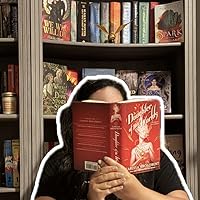
Oh, why couldn't she go off to a summer place the way her friends did? Why couldn't her family move to the suburbs? Why couldn't she do what she most wanted—ride horses? Why? Sue knows the answer. Her father is ill. Her mother must work. When the Ballantines invite her to the farm she discovers she has much to learn about riding—and other people.
American juvenile author (full name: Elizabeth Allen) Betty Cavanna suffered from a crippling disease, infantile paralysis, as a child, which she eventually overcame with treatment and exercise. During her convalescence, attentive adults read to her until she was old enough to read to herself, beginning a long love affair with books.
Cavanna majored in journalism at the New Jersey College for Women in New Brunswick, from where she received the Bachelor of Letters degree in 1929. She also took art classes in New York and Philadelphia. Cavanna's first job was as a reporter for the Bayonne Times. In 1931 she joined the staff of the Westminster Press in Philadelphia and over the next ten years served as advertising manager and art director. She also wrote and sold material to Methodist and Baptist publishing firms. In 1940 she married Edward Talman Headley, with whom she had a son. They moved to Philadelphia. After her husband's death, she married George Russell Harrison, a university dean of science, as well as nonfiction writer, in 1957. He died in 1979.
Cavanna became a full-time writer in 1941. Since then she has written more than seventy books under the name of Betty Cavanna as well as two pseudonyms: Betsy Allen, under which she wrote the "Connie Blair Mystery" series, and Elizabeth Headley, under which she wrote several books, including the Diane stories. As Betty Cavanna she also published the nonfiction "Around the World Today" about young people living in various countries.
Cavanna's juvenile fiction, about the difficulties of adolescenc, appealed to generations of teenage girls. Her characters confronted loneliness, sibling rivalries, divorce, and tense mother-daughter relationships. Her books, although characterized as pleasant, conventional, and stereotyped, have been extremely popular and recommended by critics for their attention to subjects which have reflected girls' interests. Going on Sixteen and Secret Passage were Spring Book Festival honor books in 1946 and 1947.
In the 1970s Cavanna turned to writing mysteries, which she termed "escape fiction," because she said she felt out of sync with the problems of modern teenagers. Two of her books have been runners-up for the Edgar Allan Poe Award: Spice Island Mystery in 1970 and the Ghost of Ballyhooly in 1972.
The title and cover made me think this 1947 YA novel was going to take place on a ranch out West, but when the book opens, we meet Sue, discontented with her city life in Philadelphia, who ends up spending a summer on a farm near West Chester, PA. This meant I liked it better than I thought I was going to. This was a high 3 for me, as has been the case with the other Betty Cavanna's I've read thus far.
Sue is horse-mad and loves to read. We are told some of her favorite horse stories, including My Friend Flicka, and Hobby Horse Hill, the latter a rather obscure book that was published about 10 years before this one. I wonder if the authors were friends. I happened to have read Hobby Horse Hill earlier this year, and the two books have rather similar plots: spoiled only child makes extended visit to close-knit horsey family who do not exactly welcome her into the fold. This one is much the better read of the two, although one might have expected Sue to have learned a thing or two from her literary predecessor's experiences!
Very short and sweet. My mother-in-law bought this book for me and told me she read it as a girl and that it shaped her. I wish this book was longer because it was such a joy to read. It reminded me of Louisa May Alcott’s writing in Little Women.
I read this book back when I was 15 or 16. It was one of my very favorite books. I need a new copy. Highly recommend for horse lover young and old. I have read this book several times and have lost count of how many times. Reading this at an older age has change the way I view it today but I still love this book. 2/8/2017 5 stars
This is a great read for any child who loves horses!!! I love the fact that it takes you back to a time that now seems foreign and that the author challenges readers by using big words.
I first read this book while back when i was like 11 or 12 and horse crazy. Actually it might have been at horse summer camp when I first read this! Anyway, for some reason a couple years or so ago it popped back into my mind. Easy enough to find a used copy online for less than a dollar. Of course now that it's been a few decades, I'm understanding it more.
Sue is kind of spoiled and lazy. Her dad is at the hospital for his lung. Her mom works as a photographer. She's a nice enough girl though. Horse crazy. She gets the opportunity to stay at the Ballantine's farm in upstate Pennsylvania for a month and it changes her life.
One thing I really love about this book is that author Betty Cavanna didn't think about what the world would be like 10-15-30 years later. The book FEELS like 1946. Which is when the story takes place. Her dad is in the hospital because he was overseas in WWII. The description of Wanamaker's department store and the tea room where Suzy ordered bisque ice cream. Just the feeling of the book. Lovely to read.
I think there's a lot of flaw in a story that is surmised by "a spoiled child gets her way and then sees the error of her ways and comes back home as a good child" -- even in 1947, the original publishing year of this book, children deserved more.