The title, taken from a Flannery O'Connor short story, sums up a key theme developed by Elie: one's spiritual experience, no matter how public or inspirational, always starts and ends at the deeply personal, individual level. As Elie says in final chapter, "The clear lines of any orthodoxy are made crooked by our experience, are complicated by our lives." This quote also sums up E's main achievement in this masterful group portrait of 4 American Catholic writers, O'Connor, Dorothy Day, Thomas Merton, and Walker Percy: his ability to show how the "crooked experiences" and "complicated lives" of these four did more to enrich their spiritual lives than blind obedience to dogma. Instead of settting them up as one-dimensional paragons of piety, E. works in the spirit of Day's own command, "Don't call me a saint!" In the process, he humanizes them in ways that, ironically, make their lives all the more inspirational by rendering them more accessible. And though each wanted to reach a wider audience in his or her writings, they resisted being held up as, what Merton angrily called "surrogate believers" that unintentionally prompt others to "bury their unbelief in a master's belief."
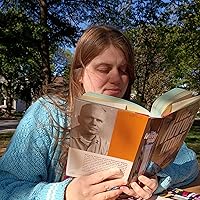
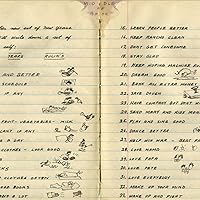
E's other main achievement is the manner in which he weaves together four such rich lives in a seamless way, alternating and juxtaposing sections, some lengthy, some as brief as a short paragraph. And though he offers a good sense of their daily lives, this is more of a critical biography than a conventional chronological one, "reading" their lives, so to speak, by examining the books they read and how those readings, as well as their personal experiences, influenced their writings. And my oh my, did these folks write a lot -- columns, letters, diaries, essays, memoirs, stories, novels. More inspiring, for me, than their devotion was their intellectual curiosity; I found myself making lists of other books and authors to look up. These folks were big readers, of everything, including Literature. They were all influenced by the great Russian writers, especially Dostoevsky. At the end of her life, when asked what she would like to be her legacy, Day said she wanted to be remembered as reader, as someone who was lived out the ideals in her favorites novels, by Tolstoy and Dickens, which she reread after her official retirement. As he was dying of cancer, Percy was discussing Chekhov through letters with his lifelong friend the writer Shelby Foote (in particular, he liked C's "The Bishop," about a dying bishop who realizes and embraces his own insignificance). Like Robert Richardson in his superb bios of Emerson and Thoreau, Elie is adept at summarizing complex ideas in a very accessible form without sacrificing rigor. Though Elie is a lucid writer, such depth and richness of material requires careful attention. I wouldn't describe the book as dense, in terms of accessibility, but thick with ideas that reward a slower pace of reading. Not a book to rush through. I never read more than 20-25 pgs at a crack, and I confess that sometimes I felt like I needed a break from so much spiritual commotion and struggling. Hence, it took me 2-3 months to finish the book.
Personally, I found Day's story the most compelling, and Walker's the least, but such is Elie's talent that I never felt impatient to leave one life to get back to another.
It would be a mistake to think of this book solely as a portrait of faith; it's also a portrait of writers working out their visions of the world on the page. These folks were highly dedicated to their craft as writers, and they are as inspiring for their aesthetic commitment as much as for their spiritual conviction. On a more general level, I think anyone interested in stories of how beliefs and values -- whether religious, social, political or aesthetic -- develop over a lifetime would find this a rewarding read.
My only complaint is that Elie tends to push the "pligrimage" theme too much, constantly reminding us of what quickly becomes fairly obvious throughout the book. Perhaps he thought it was necessary to hold together so much material from four different lives, but it all pretty much speaks for itself.