Andrei Lankov has gone where few outsiders have ever been. A native of the former Soviet Union, he lived as an exchange student in North Korea in the 1980s. He has studied it for his entire career, using his fluency in Korean and personal contacts to build a rich, nuanced understanding. In The Real North Korea, Lankov substitutes cold, clear analysis for the overheated rhetoric surrounding this opaque police state. After providing an accessible history of the nation, he turns his focus to what North Korea is, what its leadership thinks, and how its people cope with living in such an oppressive and poor place. He argues that North Korea is not irrational, and nothing shows this better than its continuing survival against all odds. A living political fossil, it clings to existence in the face of limited resources and a zombie economy, manipulating great powers despite its weakness. Its leaders are not ideological zealots or madmen, but perhaps the best practitioners of Machiavellian politics that can be found in the modern world. Even though they preside over a failed state, they have successfully used diplomacy-including nuclear threats-to extract support from other nations. But while the people in charge have been ruthless and successful in holding on to power, Lankov goes on to argue that this cannot continue forever, since the old system is slowly falling apart. In the long run, with or without reform, the regime is unsustainable. Lankov contends that reforms, if attempted, will trigger a dramatic implosion of the regime. They will not prolong its existence. Based on vast expertise, this book reveals how average North Koreans live, how their leaders rule, and how both survive.
Andrei Lankov is a North Korea expert and professor of history at Kookmin University in Seoul. He graduated from Leningrad State University and has been an exchange student at Pyongyang Kim Il-sung University.
This is a great book for those wishing to understand North Korea - how the country was formed, how it operates, and what drives it today. Andrei Lankov is a Russian scholar of Asia who specializes in Korea, and has lived in the North as a Soviet exchange student during the 1980's, attending Kim Il-sung University in Pyongyang. Lankov is fluent in Russian, English and Korean, and currently lives and teaches in Seoul at Kookmin University.
The Real North Korea could well have been titled North Korea for Beginners - Lankov not only present a compact and accessible history of the country, but provides insight into the mechanics of its government and daily life of its people, and presents his own thoughts on the country's future and the challenges it will face.
Lankov's observations on North Korea are fascinating. His central thesis is that North Korean leaders are not the irrational, fanatic despots that their public image would suggest. The Kim dynasty is bound on remaining in power, and understands very well that the current economic system not only can't compete internationally but is woefully inefficient on domestic level (one just has to remember the horrible North Korean famine in the late 1990's, where a conservative estimate of victims begins in hundreds of thousands). So the question is: How can a state which is unable to feed its own people continue to exist in the 21st century?
Lankov's answer is a simple one, and requires just two words - Foreign Aid! The Kim dynasty and the North Korean elite is well aware of the inefficiency of their system, and will regularly threat stability of the whole region to extort foreign aid not only from Beijing or Moscow, but also from officially hostile government, such as those in Washington and Seoul. North Korea depends on aid for its very existence - two thirds of its population struggles every day to secure their daily meals.
If the situation is so dire, why won't the ruling elite implement a set of economic reforms to improve the situation - especially after such reforms elevated neighboring China to one of the world's largest economies? The answer is also simple: the ruling elite is very aware that any reforms are a threat to the current system which guarantees their hold on power, and could possibly end up in a revolution which would remove them from it - the very same civilians who toil the fields in poverty would be the first to reach for their throats, and if they were to survive they would undoubtedly be prosecuted by international courts. To maintain their secure and privileged status, the regime acts coldly and rationally in the only way it can to protect its own best interest - by maintaining a failed and inefficient system, and extorting foreign aid in a manipulative, Machiavellian way. North Korea has no intention of starting any real conflict simply because it is not in the interest of its rulers - while its army is large in number it's relatively unsophisticated, and reliant on old equipment which is often obsolete by modern standards. It would ultimately be outmatched by a modern military, and resulted in the regime being removed from power.
Despite that, Lankov argues against a military intervention, even if it were to be completely selfless and meant only to liberate North Koreans. North Korea is a very mountainous country, which is poor for agricultural development but excellent for guerrilla warfare - which would be very bloody and could potentially last for decades, as the various armies which invaded Afghanistan have so painfully learned. Even if the resistance were to be ultimately wiped out, the cost in lives on both sides would be enormous - a good comparison which comes to mind is an allied land invasion of Japan during the second World War, a plan which was abandoned for precisely the same reason. But Japan was not and is not a nuclear power - unlike North Korea, which if attacked with a nuclear bomb could not reach Europe or the Americas with its own missiles, but would be able to turn greater Seoul - and its 25 million people - into a sea of fire. Unless the world is perfectly okay with sending generations of soldiers to fight and die in a decade long conflict with a 21st century Viet Cong or the total destruction of the Korean peninsula, a military intervention is best left out of the question.
Still, certain improvements have surfaced in North Korea in recent years, and the country is in a very different state than it was when it was first ruled by Kim Il-sung. This is mostly because of the inevitable influx of information and media from China and South Korea into the North. Pyongyang has department stores with foreign goods and fancy restaurants; Over a million people own a mobile phone, and having a personal computer is not unheard of (the latest fashion fad among privileged Pyongyang teens is wearing USB sticks on a necklace). The government tolerates small farmer markets, described by Lankov as "capitalism from below", and which often are the main source for goods and income in certain ares of the country. Punishment for various crimes - severe and ordinary - has been reduced.
Lankov's analysis is particularly interesting, as so far it's the only report I've read on the country which was written by a scholar who actually lived there, and is not a refugee. Most material on North Korea is written either by foreign analysts with very limited access to the country itself, or by refugees who were born in North Korea and defected to another country - usually South Korea. As a former Soviet foreign student in Pyongyang, Lankov is in a unique system to compare the North Korean and Soviet system and society - and draw interesting parallels and differences. While the Soviet Union can be considered a totalitarian state for much of its history, Lankov argues that the level of repression in North Korea was much higher, especially during the Kim Il-sung era - who, in Lankov's words, managed to out-Stalin Stalin himself. A good example are the draconian travel restrictions - while certain cities in the Soviet Union were closed to the public (mostly for military reasons) and travel abroad was indeed restricted if not impossible, short-time domestic travel was relatively free and unrestricted. In comparison, for decades North Koreans needed special permits to leave their home counties - and still do, although, they are much easier to obtain after the Great Famine as officials can be bribed to issue one. Nowadays, North Koreans can even apply for a permit to legally cross the border with China.
A change is brewing for North Korea - and Lankov argues that it is unavoidable. The last portion of the book consists of his speculations about the future for post-Kim North Korea. Much space is devoted to possible unification with the South - which, if not carefully guarded, will not be beneficial for the North. For Lankov the North needs to be protected from the harmful, uncontrolled shock therapy which swept through eastern Europe in the 1990's and resulted in what can only be described as a robbery: selling off state enterprises for pennies to private investors in rigged contracts and destruction of entire industries. Ordinary North Koreans would have to be protected from scams and frauds which would be undoubtedly set up to exploit them; millions of engineers, doctors and soldiers would soon learn that their knowledge from the North is largely incomplete at best and completely obsolete at worst, placing them many years behind the Southerners, able to work only in menial and low-skilled jobs. To truly benefit all Koreans, unification would have to cost billions of dollars, be gradual, and last for decades, as it would have to unify one people but two very different nations.
Lankov does a great job at maintaining a neutral and academic tone throughout the book, and although English is not his first language he is fluent in it and very readable, if a bit dry in places; he does his subject justice and has written an excellent and valuable work on North Korea, which I can recommend to anyone interested in the country.
Also worth reading (reviewed and recommended by me):
A well thought out, researched look behind the iron curtain. The author does an excellent job presenting the facts with references and making the whole arc of the book interesting.
Why 3 stars, won't lie didn't really care for his hypotheticals that make up the latter portion of the book. I was just there/here for the history. 😊
Andrei Lankov is uniquely qualified to write this book. Having grown up in Russia, graduating from Leningrad State University and studying as an exchange student in the 1980’s at Pyongyang Kim Il-sung University, he has lived under communism and the aftermath of dictatorship. Currently a professor of history at Kookmin University in Seoul, his lifelong research is on North Korea where he has an extensive contacts inside and outside of the county.
While on the surface it appears the North Korean’s rulers are bizarre madmen, Lankov shows how their decisions are rational responses to their need to survive and pass on their achievements to their families. For them, the alternative is unthinkable since they understand that their wealth (at the top) or modest life style (for the “elite”) has been built on the suffering of others.
Figures are hard to come by, but there may be a 1:40 disparity in personal wealth of North and South Korea. This knowledge is far more dangerous than the Chinese under Mao knowing the wealth of Japan, or Brezhnev’s Russians knowing the lifestyle of those in Europe. Those discrepancies were not as great and could be explained away, but the North/South gap, which gets deeper each year, poses questions about “Great Leader” and “Dear Leader”. Lankov shows how keeping knowledge of the world outside is getting more and more difficult.
The comparisons of life in the Kim regimes to life in Stalin’s are most interesting. Lankov describes the different living conditions, mobility, individualism, the penal system, defection, agricultural policy and more. In each category, life under Stalin was comparatively open. The few breaks in surveillance system are usually from bribing lower level officials, and a sign of change it that this is getting more and more common.
Since the country cannot provide for its needs and Soviet largess has dried up, North Korea has become skilled in using threats regarding its nuclear program to extract aid. There are smaller schemes such as bootlegging and counterfeiting. A few North-South cooperative projects (these have ramifications for information control) are discussed.
Lankov concludes with how the regime might end and what can be done to minimize its fall out. Here Lankov uses examples from the changes in different social and political climates in the Soviet satellites fared and the lessons that could be applied to North Korea.
This book delves behind the history and policy behind the lives described in Barbara Deming's Nothing to Envy: Ordinary Lives in North Korea. If you are at all interested in North Korea, how it got this way and what can(‘t) be done about it, this is a must read.
Andrei Lankov, realiza una excepcional disección del pasado, el presente y el futuro del régimen Norcoreano. A cualquiera que le fascine la historia, la política y la geopolítica le fascinará este relato sobre el último régimen estalinista en nuestro planeta. El autor hace gala de un extraordinario conocimiento de primera mano (como estudiante soviético viajó a Norcorea en un programa de intercambio). El libro como tal no requiere un gran conocimiento previo de la situación norcoreana, pero, aunque escrito con agilidad y de forma muy amena, si es un libro que quizá puede resultar aburrido a un lector que simplemente quiera acercarse a la realidad de los habitantes de Corea del Norte. Ya que, aunque el libro este escrito con un afán divulgativo amplio y dirigido a cualquiera, si es cierto que existen otras obras que vienen a exponer esta realidad de forma más literaria o sencilla (cualquier libro de Barbara Demick o "La acusación" de Bandi, un conjunto de cuentos redactados por un norcoreano que, según se cree, todavia permanece allí y que logró sacar los manuscritos a través de un familiar). En cualquier caso lo recomiendo a cualquiera, especialmente a quienes tengan gusto por la política, la sociología y la historia. Lamentablemente no existe edición en español, y diría que el nivel requerido de inglés es medio, tirando a alto.
At last, here is an antidote to all the media hysteria about North Korea. Andrei Lankov is one of the top experts on the subject, and as a historian, he cuts through the bluster and the posturing to offer a realpolitik analysis of the Kim family regime.
His central thesis makes a great deal of sense: the North Korean political elite do not act the way they do out of irrationality and fanaticism. This is merely what they want the world to believe in order to extract much-needed foreign aid from reluctant countries such as the United States and South Korea. They are intelligent, resourceful, and utterly ruthless individuals who are quite willing to trigger international crises to get what they want, and will go to any length to protect themselves from a possible regime collapse.
I particularly liked how Lankov drew on his own Soviet background to contrast the Kim family regime with Stalin's Russia and other communist regimes. This was a truly novel perspective on the DPRK for me. Lankov also draws from personal experience on a number of topics, having lived in Pyongyang for a year as an exchange student, and discussing with many North Koreans from all walks of life.
Do note that this book is academic. It's pretty dry in places, and is probably a tough read if one has only a passing interest in North Korea. But for serious North Korean watchers, this book is a goldmine of information and analysis, on topics ranging from the ultimate goals of nuclear brinkmanship, potential scenarios for the fall of the Kim family regime, and recommendations for how to rebuild North Korea and reunify Korea when the current regime inevitably collapses.
This book is really good actually. The only reason I am giving it 4 stars is because, while this book wrote relatively quite a lot about women compared to other books, I was left still wanting to know what life (as described in the title of the book) is like for everyone else, not just able bodied adults.
It could’ve been really interesting to have a section in the book on what life is like in north Korea for children, elderly people, or disabled people, or if we actually don’t know much about it, you could at least write that rather than leaving out a whole chunk of society altogether.
I just want to add to all the other glowing reviews of this book.
The Real North Korea is a text of two halves. The first part is a bracing history of the formation and construction of the North Korean state. It approaches this from a conventional geopolitical perspective (in terms of post war superpower politics) rather than a leftist, anti-imperialist perspective. Although the historical narrative is factual and even handed, it downplays the extent to which the experience of the 1950-53 Korean war, in which the population and built environment of the DPRK was obliterated to an even greater extent than Poland during WWII, impacted on the nature of the state.
The second half of the book is an analysis of how the North Korean power structure has actually functioned since the de-facto collapse of Stalinism-Kim Il Sungism since the 1990s. Lankov shows the ways in which it is a dysfunctional, but by no means irrational, regime. This section then transitions to several chapters with Lankov's own policy prescriptions for how to deal with the regime in its current guise and what to do in the event of North Korean regime failure and reunification.
By the end, it is clear that The Real North Korea is explicitly directed at foreign policy wonks in the American state who are expected to take part in their own country's moral crusade against this "rogue state" but have not the faintest clue what they are really dealing with.
What makes this such a worthwhile read is the author's own historical and personal perspective. He is a former Soviet exchange student to North Korea who now resides in South Korea. He brings his own scholarly knowledge and lived experience to the subject, leaving it refreshingly free from liberal pretension, even if it is directed primarily towards observers in the liberal world.
All in all, would heartily recommend, but will also be looking to read a denser, more textured history of North Korea from an anti-imperialist perspective.
Առիթ եմ ունեցել ներկա լինել Անդրեյ Լանկովի դասախոսություններին Կորեայի մասին, դրանք հիմնականում անցնում են չափազանց դինամիկ ու հետաքրքիր․ գիրքը բացառություն չէր, երկու օր հարկավոր եղավ այն ավարտին հասցնելու համար։
Եթե լուրերով լսում եք որևէ բան Հյուսիսային Կորեայի մասին, ամենայն հավանականությամբ դա չափազանցված ու խիստ ծայրահեղացված ինֆորմացիա է։ Լանկովը լինելով ժամանակակից լավագույն կորեագետներից և Հյուսիսային Կորեայի առաջատար մասնագետնրից մեկը, մեզ է ներկայացնում այս իզոլացված երկրի ներքին քաղաքական դինամիկան, պատմությունը և շարքային քաղաքացու առօրյան։
Գրքից կառանձնացնեմ 5 կետ՝
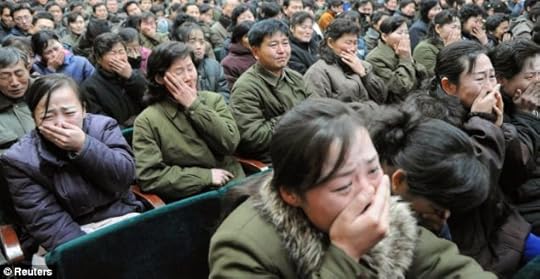
Ոչ ռացիոնալ երկիր Հյուսիսային Կորեան նկարագրելու համար օգտագարոծվող արտահայտություններն են՝ «խելագառ», «վերջին Ստալինիստ ռեժիմ» ու ամենատարածված նկարագրությունը լայն հասարակության կողմից` «ոչ ռացիոնալ» (մանավանդ տեսնելով այդ ամբոխները, որոնք ուղղակի լացակումաց վազում են տեսնելով իրենց առաջնորդին)։ Դա իրականում այդպես չէ, ինչպես հենց ինքը Լանկովն է բերում իր արգումենտը ի հակադրություն վերոնշյալ ընկալումների․ Հյուսիսային Կորեան դեռ կա, դեմ բոլոր սպասումների և մարտահրավերների, որոնք կանգնել են տվյալ ռեժիմի առջև։
Радиоактивный пепел Հյուսիսային Կորեան օգտագործում է իր ռազմական ու ապոկալիպտիկ հռետորաբանությունը հինականում քաղաքական ու նյութական դիվիդենտներ ստանալու համար, ինչը անում են չափազանց գրագետ ձևով։ Քաղաքական՝ հիմնականում կարող է լինի թեթև սանկցիաների հանում, կամ երկխոսություն, իսկ նյութական՝ երբեմն հենց սնունդ։ Որքան էլ, որ զարմանալի կարող է թվալ, 1996-2001 թթ․, որոնք ամենածանր տարիներն են եղել սովամահների քանակով, Հյուսիսային Կորեայի 3 հիմնական դոնորները եղել են իրենց ոխերիմ թշնամիները՝ ԱՄՆ, Հարավային Կորեա և Ճապոնիա։
Քադաֆիի հետքերով Հյուսիսային Կորեան չի հրաժարվի միջուկային զենքի իր պրոյեկտներից և երբեք ինքնակամ չի զինաթափվի։ Դա չի լինի, քանի որ իրենց աչքի առաջ արդեն կոնկրետ օրինակ կա նման զիջումների գնացած երկրի՝ Լիբիա։ Իսկ թե ինչ եղավ Լիբիայի ու իր առաջնորդի հետ, բոլորս գիտենք։ Հյուսիսային Կորեայի առաջնորդների և ռազմական վերնախավին կուռ է պահում հենց այդ գիտակցումը, որ փլուզման կամ պարտության դեպքում, առաջինը կտուժեն հենց իրենք և իրենց հարազատները։
Կապ արտաքին աշխարհի հետ Հյուսիսային Կորեան իր ներկայիս ռեժիմով և նման համակարգով չի կարող հավերժ գոյություն ունենալ, այն ուշ թե շուտ փլուզվելու է ինչին պետք է պատրաստ լինի միջազգային հանրությունը։ Ռեժիմի փլուզումը կարող է տեղի ունենալ միայն այն ժամանակ երբ Հյուսիսային Կորեայի բնակչությունը ավելի ինֆորմացված լինի արտաքին աշխարհի մասին։ Մինչ այժմ հյուսիս կորեացիների ճնշող մեծամասնությունը չգիտի, որ Հարավային Կորեայի կենսամակարդակը որոշ հաշվարկներով քառապատիկ բարձր է։ Ռեժիմը երկար ժամանակ կարողացել է իզոլացված պահել իր հասարակությանը, սակայն ժամանակակից տեխնոլոգիաները թույլ են տալիս էլեկտրոնային կրիչների ու սկավառկների միջոցով, ինֆորմացիայի ներթափանցում շարքային հյուսիս կորեացիների տներ։ Ցավոք այդ ինֆորմացիան հիմնականում հարավ-կորեական սերիալներ են ու գունեղ հակաքարազչություն ուղղված ռեժիմի դեմ։ Իրականում այդ կրիչների մեջ պետք է լինեն նյութեր ժամանակակից աշխարհում տեղի ունեցող գաղափարական դեբատների և հակադրությունների մասին, հյուսիս կորեացիները պետք է զգան հենց գաղափարների ազատ արտահայտման հնարավորությունը, որը կա քաղաքակիրթ աշխարհում։
Գերմանիայի հետքերով Կորեաների վերամիավորումը շատ ցավոտ կարող է լինել, եթե Հարավային Կորեան ու միջազգային հանրությունը չսկսի դրան նախապատրաստվել։ Օրինակ որպես կարող է ծառայել Գերմանիաների վերամիավորումը, սակայն Կորեաների դեպքը ավելի ծայրահեղ է։ Կորեաների տնտեսական ցուցանիշները անհամեմատելի են, ի տարբերություն ավելի զարգացած Արևմտյան Գերմանիայի ու տնտեսապես նահանջող Արևելյան Գերմանիայի։
ՀԳ․ Փորձելու եմ մյուս բաց դասախոսությանը ստորագրություն պոկել Լանկովից, հուսով եմ կստացվի։ ։)))
Broadly speaking, there two reasons any long-time North Korea-watchers and those simply interested in better understanding North Korea should pick up this book: 1) it gives a comprehensive, learned overview of North Korea from the point of its inception as a state under Soviet tutelage, through the Soviet-North Korean schism, and forward to the modern, post-Kim Il-sung era; and 2) Lankov’s methodology, an approach to scholarship which differs from many conventional academics covering North Korea in that he uses a combination of primary source material: defector testimonies, interviews, and personal experiences to create an image of “the real North Korea.”
One of the most interesting, and insightful, reads in the book is found in the section on “The Logic of Survival,” wherein Lankov argues that the leadership’s unwillingness to reform “has very rational explanations” and that contrary to popular opinion, “North Korea leaders stubbornly resist reform not because they are ideological zealots who blindly believe in the prescriptions of Juche Idea … nor because they are ignorant of the outside world” (pp. 111-112). They are rational, Machiavellian-types, who are concerned about maintaining power and dying of natural causes. This, then, leads Lankov to speculate (probably quite rightly) that “one of the reason behind the remarkable resilience of the North Korean regime is [the] universal assumption of its bureaucrats (including those who are quite low in the pecking order) that they would have no future in case of regime collapse” (p. 115).
Thus, Lankov has added to the recent literature on “what sustains the regime” that in addition to the “pomp serving power” argument put forth in North Korea: Beyond Charismatic Politics, there is another element to explain resilience and continuity: pure power considerations and a fear of the alternative.
Among all the American imperialism propaganda about the "axis" of "evil" - a more realistic view on North Korea.
I was always saying that the only prison is the prison of belief. How you can change something for people when they don't even know what's wrong? If they live in their fantasy world, how you can explain it's not real? Change in Eastern Europe also came slowly (if so for some), when people started to see more and more of new things, like shiny shop or how people live outside the wall.
Real change is based on economics, not some magic powers of living in opposite fantasy world of "liberators".
The problem is the strength of ideological belief, implementing even language of 1984, when even Russian "communism" though to be too liberal. It requires years and years to die off. North Korea is the one current examples that religion should cease to exist in the 21st century.
It's rare for a historian to write a good book let alone an excellent book, here's an example of excellence.
so many other reviews, no point me adding at this point, except to say the author has a very perceptive eye and I hope politicians in the US, south korea & china read this book.
Wow, this is a must read. An incredible insight into North Korea, exposing its domestic and foreign affairs, incredibly well written. I can't believe such a place still exists in the 21st century....but as the author questions, how much longer will it last?
The Real North Korea by Andrei Lankov was pretty disappointing. I had some very high expectations since it was published by Oxford University Press. I was looking for an insider's view of life in North Korea but that's not what I found here.
To be fair, in the middle of the chapters, Lankov, on gray pages, does include some stories from life in North Korea. There are even a few photographs which is pretty impressive for a country so closed off from the rest of the world.
The book focuses on the problem of North Korea. Lots of discussion about how they use their growing nuclear capabilities to keep the great nations running to them with foreign aid. The book concludes that there is no simple solution to this problem. Probably the most favorable solution would be if there were some sort of uprising by the people of North Korea to oust the current family dynasty that runs the country and keeps the citizen so isolated from the rest of the world. A desire for the material wealth enjoyed by nations like South Korea may be able to spark such a movement.
Lankov does a good job of describing the Kim Family's rise to power and how they retain their power. So, I did learn about the historical background of North Korea.
I do believe that most of the information in this book could be gleaned from reading current affairs and news magazines and Encyclopedia Britannica.
It is one of the most difficult tasks for any historian to maintain neutrality while writing on North Korea. This is precisely what Andrei Lankov managed to pull off. The Humane portrayal of everyone involved underlies the fact that on the most basic level, every individual involved is a human himself, with the same aspirations and feelings. It would be easy to argue that the Removal of the Kim family would be the ultimate solution. A quick look at the failed(almost) Arab revolution shows us that a quick fix does not always work. North Korea's case is far more unique than the Arab situation and requires measures which work on the ground rather than on paper. The sensitive issue of integration(reunification) with South Korea has been explored on a scale unparalleled and leaves the reader wondering what the ultimate solution would shape out to be like. The difficulties a backward nation faces while integrating into a developed economy as described by Andrei can be used to portray the difficulties the African nations are facing into integrating into a highly complex global economy which is moving at a rapid pace.
Fantastic eye-opening book that provides easily readable, instructive lessons on:
The history of North Korea and how the Kims came to power (and just how much of the legend is total crap);
What "Juche" is and how it's different from Stalinism;
Why their regime hasn't collapsed the way that the Soviets did (or why they haven't changed like the Chinese did);
Why what they do makes complete sense (from their perspective);
Why even if North Korea collapses it will be a huge problem for everyone involved.
Highly recommended for any reader with an interest in understanding North Korea. Some parts are written for more academic audiences or those involved with Korean policy making; that's why I don't give it five stars for a reader like me who just wants to understand North Korea better. But all in all, I don't think a layperson can choose a better introduction to understanding North Korea, why it does what it does, and what it holds for the future.
A great book on North Korea. Especially interesting is the author's take on likely reunification scenarios and their specific ramifications for both the privileged classes and the rank and file on both sides of the border. He sees risks as well as opportunities for both sides and recommends a gradual process that manages the interests of both sides as they merge into a single people.
If there is a weakness in the book it is the author's South Korean/Western bias in his view of the Korean people(s). He sees South Koreans as prosperous and happy and North Koreans as poor and suffering, and seems to ignore, on the Southern side, growing systemic economic problems and social malaise, and, on the Northern side, strong ability to adapt to economic hardship and survive if not prosper through personal initiative. I recommend that anyone who reads this book also read, if they haven't already, Daniel Tudor and James Pearson, North Korea Confidential.
I picked this up because I knew nothing about North Korea and thought it would be interesting to get a Russian's take on its history and situation. It was certainly a fascinating read (listen). I couldn't comment on its accuracy other than it *sounds* fairly levelheaded, based on conversations and interactions with North Koreans and other people who would actually know anything about the situation, and internally consistent.
It certainly gives an interesting context to the recent developments here in March 2017. Obviously, on the theory put forward in this book Kim Jong Un and his advisors are playing straight from the existing strategy guide, trying to embarrass a new American administration and get what they want (food, cash) from it, "secure" in the knowledge that even Donald Trump is not actually going to invade or drop a strategic nuke on the top two or five places where Kim might be.
I've read most every book available in English about North Korea, and at some point they've started to repeat themselves. What makes this one special, though, is the analysis of the situation and what actually can be done (in contrast to everything else that's been tried and hasn't worked) to improve it. I kind of feel like everyone in a position of foreign-policy influence in the U.S. and South Korea should try to read it with an open mind. I'm giving it three stars rather than four because the writing is somewhat awkward in a lot of places (the author is not a native speaker of English), but it's definitely four-star information and analysis.
This sounds fantastic. From The New York Times Book Review: "The book, an engaging blend of scholarship, reportage and memoir, offers striking details about daily life in a country reminiscent of George Orwell's '1984.'" The author was born in the Soviet Union during the cold war and had access to North Korea as a student. Can. Not. Wait.
A great summary of one particular country's modern evolution and how it maintains itself against all odds. Lankov goes to great lengths demonstrating that the apparent chaos of the North Korean state is a calculated approach that is necessary to the survival of its regime, and it does a great deal to put into proper context the occasional "flareups in tension" that seem to define its relationship with the United States and North Korea.
Lankov also gives an economic description of the country's situation and its access to outside currency. This feeds into a focus on how the country can transition away from its current system and how wildly expensive and difficult that will be.
This systematic approach to explaining a difficult country is helpful in cutting through the political rhetoric to some basic principles. It also reveals the two main challenges in my reading, neither of which are substantial drawbacks but which bear mentioning.
First, the academic text can be difficult to get into at first. The extended description of the country's founding seems so far removed that it can be hard to latch onto familiar details. But stick with it! The foundation is necessary for understanding the modern application.
The second issue is tonal. With the author proposing a system of interpreting North Korean action, he also takes his fair share of sneering potshots at those on either side of the political spectrum who would disagree. At points it's necessary for him to distinguish his views, but after his distinctive approach has been made clear, it can feel at points like the book is saying "And here, once again, I am right and the others are, as we can plainly see, wrong (and a bit silly)."
Published just after Kim Jong Un came to power, it doesn't encapsulate every relevant event. Still, one feels much more capable of understanding North Korean issues, even ones that happened after the book's publication. I'd recommend it gladly to anyone who finds the existence of that strange country perplexing and wants to learn more.
This was a fascinating and detailed look at the evolution of The Hermit Kingdom, including the mechanics of how it actually works and considered, sober theorizing what a collapse or reunification could look like.
Among the fascinating insights were descriptions of North Korean literature such as Rim Hwawon's representative short story, "The Fifth Photo" which follows the ordeal of a Russian girl in a post-Soviet world.[24] The protagonist with a revolutionary family history enters university, where she is exposed to "dangerous ideas". She is seduced by an American student, who, it turns out, is in fact a Russian whose ancestors were anti-communist landlords. It is said that the girl protagonist symbolizes modern Russia after the end of the Cold War: "Fooled into selling her heritage, she ends up a pitiful prostitute at the bottom of the merciless capitalist heap", a path that the author warns North Korea should not follow. It is interesting to think how this depiction of Russians may factor into the growing Russo-Korean military pact we see actualized in Kursk. More is explained here how historically the isolationist nationalism of North Korean drifted away from Stalin etc.
I did not know of the ward-like, block control of the inminban system. Among the things they do, is check that radios cannot be tuned, which all seems as quaint as it is authoritarian.
A great starting point for tackling one of the great international enigmas
By virtue of the political situation and media control information in English on North Korea is severely limited, with most books being the accounts of defectors which while having value don’t have the greater context needed to better understand the country as a whole.
As to why one would want to understand North Korea better, its a country which uniquely seems to exist in defiance of general orthodoxy:
-It has a GDP per capita that places it among some of the poorest countries on the planet however it is an industrialised and developed country with a successful nuclear weapons program.
-It is one of the most diplomatically isolated countries on the planet and surrounded by vastly more powerful states which would like to have it in their spheres and yet it has essentially been fully independent since the 1950s and suffered no coups, revolts or governance changes.
-When the centrally planned economies ended in the 1990s North Korea persisted.
The Author does a solid job of explaining these matters and how what we see is not mindless ideological fanaticism but a ruthlessly effective and successful pragmatism. Furthermore the Author explores questions such as how unification could take place and why Deng like reforms have not and likely will not take place.
Naturally its size means it cant do justice to all these areas but I have yet to see any other book make the attempt.
Here’s something North Korea we can all benefit from. I’d recommend a chapter of reading this book (listening in my case), every time you’re about to be served a media outing spouting sparsely researched, often flawed and usually superficial information on North Korea and all that it has going on. Here’s a detailed and in-depth look at the country, its politics but also its people and their day-to-day life. Lankov’s deep knowledge of the peninsula and his substantial experience of living in North Korea ensure a strong fundament for him to provide insights and opinions on the future scenarios that should be considered. Looking at the country from all angles (North Korea, South Korea, the eastern Asian region, Western countries), and both the advantages and disadvantages for all parties involved.
A highly recommended source of information with one major gap. Not caused by Lankov, but by me the late reader. The book ends around Kim Jong Un succeeding his late father, and therefore lacks a good 10 recent years of political development. The Winter Olympics, the weird advances from general Bleach Bum, Moon Jae-In’s governmental approach to the North, the latest big mouth talk from papa Yoon, the nuclear dance-offs. One can only hope for Lankov to start working on a sequel.
Great book and very good Intel and has a great understanding of the DPRK people, as a Russian citizen he has lived in Korea has great ideas of the mechanisms that would benefit unification and if so, it would be a international catastraphe. As a 50% Korean myself I would love to see a unification but the 25 million refugees that will need reeducation, the culture shock for the North Koreans and the malnutrition children, the paranoid high officials from reprisals and China's fear of having a US backed Korea bordering them will seem like a far long future idea. alot of books on North Korea this is the most insightful of them all.
I'm not sure North Korea can ever be understood or explained, but Lankov presents a thorough history of the politics and economics of the hermit kingdom that is enthralling because it is so bizarre. Why did Soviet-style communism split with Mao's version and the Kims? Lankov explains it! What's at stake for the reunification of North and South Korea? Lankov explains it! What's the likelihood of it ever happening? Lankov explains it! What happens when the North Wind and the Sun argue over whether they can make a man remove his cloak? Lankov explains it, and North Korea tries to put it in practice.
I am both repulsed and fascinated by North Korea the way most women are repulsed and fascinated with serial killers. What makes it tick, and why did it turn out the way it did? The author lived in North Korea for years as a student, and his research and insight into the culture really shows. This is a fascinating and eye opening look into a country that's a cross between 1984 and M. Night Shyamalan's The Village.
Title: An Eye-Opening Journey: "The Real North Korea: Life and Politics in the Failed Stalinist Utopia"
Rating: ⭐⭐⭐⭐⭐ (5/5 stars)
Review:
"The Real North Korea" by Andrei Lankov is nothing short of a revelation. This meticulously researched and brilliantly written book offers an unparalleled glimpse into the enigmatic and often misunderstood nation of North Korea. Lankov's extensive expertise and deep understanding of the subject matter shine through every page, making this book an indispensable resource for anyone seeking to comprehend the complexities of North Korean society, politics, and ideology.
What sets "The Real North Korea" apart is its commitment to providing a nuanced and balanced perspective. Lankov deftly navigates through the propaganda and misconceptions surrounding North Korea, offering readers a sobering look at the harsh realities faced by its citizens. From the oppressive regime of the Kim dynasty to the daily struggles of ordinary North Koreans, Lankov leaves no stone unturned in his quest to uncover the truth.
One of the most compelling aspects of this book is its exploration of the internal dynamics within North Korea. Lankov delves deep into the intricate web of power relations and factional politics that shape the country's governance, shedding light on the inner workings of one of the world's most secretive regimes. Through firsthand accounts, historical analysis, and expert commentary, he paints a vivid portrait of a society grappling with poverty, repression, and isolation.
Despite the bleak picture it paints, "The Real North Korea" is not without hope. Lankov offers insights into the potential pathways for change within the country, highlighting the resilience and ingenuity of the North Korean people in the face of adversity. By dispelling myths and challenging stereotypes, he opens up new avenues for dialogue and understanding, paving the way for a more informed approach to engaging with North Korea on the global stage.
In conclusion, "The Real North Korea" is a tour de force that deserves the highest praise. Engaging, enlightening, and thought-provoking, it is essential reading for anyone seeking to unravel the mysteries of this enigmatic nation. Andrei Lankov's masterpiece is sure to leave a lasting impression on all who dare to delve into its pages.
Such a great, informative and surprisingly unbiased account of the DPRK. A must read for whoever who wishes to understand the past, present and future of the failed Stalinist utopia as the author put it.
I began this book about North Korea with high expectations. The author, an academic in South Korea, lived in North Korea as an exchange student when he was living in his native USSR. I had hoped to learn much more about life in North Korea than was revealed in this book whose subtitle is "life and politics in the failed Stalinist Utopia." Of politics, there was an adequate serving, but of 'life', the quantity of information was less substantial. The author has written another book, which I have not read, which includes essays on daily life in North Korea. Maybe, I should look at that one to satisfy my curiosity about the living conditions of North Koreans.
Much of the book is dedicated to speculations of what might happen to North Korea in the future and what might be done to influence the country's fate. I found my attention wandering in these sections.
This is the first book that I have read about North Korea. I hope that better ones exist!