CATHOLIC PRESS ASSOCIATION BOOK AWARD WINNER! NAUTILUS BOOK AWARD - SILVER in Science & Religion The award-winning author of Christ in Evolution and The Emergent Christ breaks new ground with this capstone in a trilogy that opens our eyes to the everywhere active, all powerful, all intelligent Love that guides and directs our new awareness of interrelatedness and interbeing. She We all have a part to play in this unfolding Love; we are wholes within wholes; persons within persons; religions within religions. We are one body and we seek one mind and heart so that the whole may become more whole, more personal and unified in love. This is our Christian vocation, to live in the Christ who is rising up from the ashes of death to become for us the God of the future.
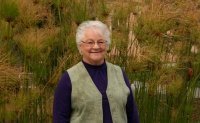
Ilia Delio, OSF is a Franciscan Sister of Washington, D.C. and American theologian specializing in the area of science and religion, with interests in evolution, physics and neuroscience and the importance of these for theology. She was born in Newark, New Jersey and is the youngest of four children.
Fordham University Ph.D., Historical Theology M.A. Historical Theology
Rutgers University Healthcare and Biomedical Sciences Ph. D., Pharmacology
The theological implications of evolution have always intrigued me, but Ilia Delio, standing on the shoulders of Jesuit philosopher and paleontologist/geologist Pierre Teilhard de Chardin, paints with a broader brush than anyone I've read on the subject before. Breathtaking insights abound in this book. Strange ones do, as well—Delio even drops a few references to cyberpunk culture in her rumination on technology and "noogenesis"—there's no niche corner of this topic she's not interested in. She sees a powerful spiritual arc in the grand cosmological drama that science is uncovering, and traces it beautifully for any reader who is equally interested in reconciling these two spheres of understanding, which are too often pitted against each other. "Theological education," she says, "should include Big Bang cosmology, quantum physics, systems biology, and consciousness studies as well as tradition and Scripture." If only...
This book explores Teilhard de Chardin's idea of evolution being God in action through love in the universe. These are complex ideas but even someone not familiar with Teilhard will be able to understand it. DeLio is a scientist as well as a mystical theologian with a gift for bringing a lot of different approaches to this idea in comprehensible way. What is especially compelling is the way Teihard's ideas bring a holistic approach to science and a truly spiritual understanding of the reality and materiality of the world. These ideas offer a true alternative to further blind technological manipulation of the world in order to solve humankind's and the planet's problems - most of which have been caused by the blind technical manipulation of things. If you are interested in the spirituality of science, mysticism alternative understandings of how the universe grows/works, I think you will find this fascinating.
I've been asked if this book stands alone or if one needs to read the other two of the trilogy. Simple answer: it stands alone. I would have responded directly but the site would not let that happen for some reason.
So yeah, I can only review that which I understood. Y'all ever read her bio??? she's wild. Some chapters had me with heart-eyes and I felt touched to my core. Others went straight through the back of my head.
Some fav quotes: "Out of a long history of cosmic cataclysms and mass extinctions, we humans emerge. We are born out of stardust, cousins of daffodils, and bonobos; We are the conscious voice of a fragile earth. . . Where would we be without star factories? Without blue-green algae? Without rainforests?. . . We are the most recent arrivals on the evolutionary scene, so why do we think this story is all about us?"
"The mystery of divine love is hidden in the other, and it is precisely in the other that God shines through (or hides)--in the unbearable wholeness of being."
"Love lives in persons not ideas. Love is not a concept but a powerful, transforming energy that heals, reconciles, unites, and makes whole."
"As biogenesis yields noogenesis love will emerge more unified through collective consciousness. We must strive not to enhance ourselves or transcend our biological limits. Instead, we must deepen our capacity to love."
This was one of the most powerful books that I have read...it impacted me greatly. I realized after reading it that it was the third in a trilogy so I am now reading the first in the trilogy, Christ in Evolution. I am finding it to be almost as amazing.
A deep and dense exploration that I agreed at that times and disagreed at times, understood at times did not understand at all at times, but truly truly enjoyed from start to finish!
I love this book! Ilia Delio is able to embrace here Roman Catholic tradition while at the same time opening up all the windows, unlocking the doors and inviting all of creation in. Building on an evolutionary perspective championed by De Chardin, Delio invites her readers to see Christ, the church, our world, indeed, even the whole cosmos as drenched in the loving, creative presence that we call God. It was a joy to read and worthy of deep contemplation during this Easter season.
A breathtaking book that explores and updates the work of Teilhard de Chardin and provides a view of evolution that takes it out of the realm of mechanistic materialism and shows how spirituality and religion are inherent to evolutionary theory.
I approached The Unbearable Wholeness of Being with an open mind, hoping for a thought-provoking exploration of life’s big questions. Unfortunately, what I found was a confusing and often frustrating attempt to merge science with spirituality in ways that felt forced, unconvincing, and ultimately hollow.
The book's central idea — that there's an underlying divine order or "wholeness" to the universe — is an appealing concept for those inclined towards faith. But for readers grounded in a naturalistic worldview, it comes across as metaphysical overreach. The author frequently draws from scientific fields like quantum physics and evolutionary biology, but rather than respecting the integrity of these sciences, they’re twisted to serve a theological agenda. Phrases like “divine interconnectedness” and “spiritual wholeness” are scattered throughout, with little to no empirical evidence supporting such claims.
What really troubled me was the book’s casual disregard for the scientific method. Instead of sticking to what we know from rigorous, evidence-based research, the author indulges in mystical interpretations and attempts to fuse science with spirituality. This may work for some readers, but for those who value clear, testable ideas, the book becomes an exercise in frustration. Science doesn't need spirituality to be meaningful — it’s awe-inspiring in its own right.
The prose itself often veers into dense, academic language, which only adds to the book’s inaccessibility. Ideas feel fragmented, lacking the logical progression or structure needed to build a coherent argument. The author makes sweeping philosophical statements without offering enough real-world examples or tangible applications to ground the ideas.
In the end, The Unbearable Wholeness of Being left me unsatisfied. If you’re someone who enjoys a blend of spirituality and science, you may appreciate the ambitious scope of this work. But for those who seek clarity, reason, and evidence, the book falls short, offering little more than abstract speculation dressed up in spiritual rhetoric.
Would not recommend unless you’re prepared for a lot of hand-waving and leaps of faith.
I grabbed this book from the library after hearing Delio on podcast The Bible for Normal People. Her discussion of the connectedness of the cosmos and its tendency toward greater unity, complexity and love was full of ideas that I'd never considered and sparked a lot of interest and excitement in me. I put her book on hold and, after passing it back and forth with another patron a couple of times, finally got it read.
I have to say: if I was hoping to be clear on the ideas she'd brought up on the podcast, those hopes haven't been entirely fulfilled. It's probably due to my inexperience with philosophical texts and that the way she talks about Christianity is so very different from the ways I'm used to.
Part of Delio's point in this book is that Christianity today relies on a conception of God that was cemented at a time and in texts that assumed the universe was a static place that played by the rules of a machine, like a clock. She tracks a revolution of Christian thought and practice that occurred when ideas like heliocentrism and Newtonian physics came on the scene. Understandings of God changed because of change in understandings of the universe God was understood to have created. Delio suggests (relying on the work of other thinkers before her) that the arrival of evolution and quantum physics marks another fundamental shift that should change our understanding of God, the universe and humans' place in it. It is a big shift and the challenge of wrapping my mind around it felt like confirmation of its bigness.
It's not the most accessible book (though I am not the most expert reader) and some of my confusion surely stems from my unfamiliarity with the thought that came before. At the same time, it feels challenging in that it dares to suggest big things about God and Christianity and humanity that do feel as ground-shifting as they are promised to be.
Historically, Christian theology has interacted with generally accepted scientific worldviews- first Greek Hellenism, then a Newtonian mechanistic understanding. Here, Ilia Delio tries to move the conversation forward by engaging with contemporary evolutionary and quantum ways of understanding reality and seeing how these change our anthropology of humans/ individual selves, God, and love. I particularly appreciated her analysis at the beginning of how our religious thinking is super influenced by Hellenistic and Newtonian assumptions. Often when people talk about the so-called tension between science and religion, they're engaging uncritically in an outdated mechanistic context that misses the points of both endeavors. I also really liked Delio's explanation of the early monastic view of contemplative education, knowledge gained from multiple disciplines rooted in love that reveals the interconnected wholeness of all things, as a way of critiquing our current university system that's all about specializations disconnected from other disciplines that results in feelings of dislocation.
In The Unbearable Wholeness of Being, Ilia Delio makes the case for taking Teilhard de Chardin seriously as a guide for rethinking Christian theology. Following Teilhard, Delio encourages Christians to embrace Evolution as the observable fact that everything is a part of everything, and that there is a dynamic move from singularity to existence, to life, to consciousness, to something more (to Someone yet to come). On that, I agree with her but, as I see it, the starting point for Christian theology should not be the latest scientific consensus, but Jesus. There are however two big problems with hearing Jesus on his own terms: 1) a lot of Christian education is not education at all, but indoctrination, and indoctrination tends toward infantilization (we are not often encouraged to encounter Jesus as adults); 2) for a long, long time, the Christian gospel has been framed as a kind of Greek myth in which humans are saved from an evil material existence (we are not often encouraged to listen to Jesus when he says things like, “Consider the lilies of the field”). If Ilia Delio can help us overcome those two problems, she is doing us all a real service.
Religion: is it about love or about constraint? Delio here presents a full-out embrace of all that is. It is a vision so freeing, so positive, so grounded in experience and longing that it challenges any static view of the world. Creation is now and here, and it is relational, personal, not something that was done in one powerful act and left to repeat. Its energy, its dynamism is love. Religion is not about the individual and heaven, it is about mankind and the earth.
The science of evolution, quantum physics, traditional Christian theology are woven into a coherent way of understanding incarnation, death and life in a dynamic, ongoing relational unfolding of new life and deepening consciousness.
It's a vision that is not determined but ever evolving, based on unconditional love with all the risk that makes it vulnerable. A two way act of creation, always becoming, as love is. There is an ongoing giving and an ongoing receiving. A different worldview, physical and spiritual.
I found it refreshing, exciting, attractive-- like life itself.
Very thoughtful and thought provoking. I liked and understood the first half better than the second half. I appreciated how she encourages us to let go of a Middle Ages view of God and the cosmos. I appreciated getting a thorough introduction to the theology of Pierre Teilhard de Chardin. I also appreciated the emphasis on the evolving and dynamic nature of the universe. And the notion that humans, while obviously not the center of the universe, might be the arrows of evolution. And the idea of moving toward greater wholeness, and wholes within wholes. I struggled to see how the word “love” could be used to cover so many different things, including the underlying force related to the movement of galaxies and ordinary human interactions and Christ incarnation. I thought her writing was clear but since she was talking about things as complex as quantum physics and the meaning of life, it still was, as other reviewers have said, dense reading.
Amazing is a good start. For anyone who is interested in exploring the power of both God and the human spirit, heart and passion in the context of evolution, this is a great book. If you are content with the current Church, world view and powerlessness we seem to be slogging through, don’t bother to read this book.
Sr. Delio challenges us to look deeper and more broadly of what our Christian faith is all about. Life and death seem to be bookends, but our loving Sister takes us on a journey of what our future can hold for us, if we have faith in the power of Love – Love, as revealed by Jesus and his life.
One thing is for sure, we are not finished on this journey of discovery of what “The unbearable Wholeness of Being” is. May God give us the grace and wisdom to transform into a people of wholeness. Thank you …
Written like a prayer - every sentence is inspired and inspiring. For anyone seeking intellectual and spiritual depth and to be spared religious dogmatism this is a must.("Deeply religious without being formally religious, deeply secular without being profane ..") Based on the work of Pierre Teilhard de Chardin and also inspired by The Unbearable Wholeness of Beings by Stephen Talbot. Read a while back but kept copious notes. These stand out: Love and relation are the producers not the product of being. Without relationship there can be no being ...
If love is absent from the core of knowledge - whether on the level of science, university education, or faith - the end result is division, confusion and separation
Read this for a project at work — this is a genuinely great theological book on evolution, physics, and their cosmological/theological implications. The stuff on Einstein vs. Newton, process vs. mechanics, open systems vs. closed systems, and holons/holarchy was genuinely phenomenal. Some stuff that really connects to other theoretical projects I’ve been invested in such as Paul North’s Bizarre Privileged Items and Dussel’s neurobiological material ethics. Have to knock it a star though because I don’t find the Teilhard de Chardin stuff as good — nonetheless, I find it infinitely more interesting and relevant than the prevalent ontotheology that can’t even begin to think about what evolution might mean for theology and God.
Can't believe I hadn't rated this yet. I found this book while going through an awkward period of life where I was trying to reconcile my training as a scientist with my belief in a very large and broad cosmology. Delio, as both biologist and theologian, penetrated the heart of my doubts and skepticism and helped me see how the two disciplines are indeed complimentary rather than in opposition. It's not a casual read but absolutely a primer for those interested in marrying mind and soul. (Note: Delio comes from a Christian perspective, but if that is not your faith as it isn't mine, don't be put off for she addresses spirit more than religion.)
“A world opened to the future makes the present rich in possibilities to create something new.”
This quote from the book sums up the heart of what makes emergent Christianity so exciting to me. I love the way Ilia Delio thinks, and how she synthesizes complex ideas from a variety of disciplines and thinkers into a beautiful picture of an evolving spiritual universe. Some of it was way over my head and lost me a bit (hence 4 stars), but I’m encouraged to return to this book again once I have dug deeper into this topic and learned more.
There is too much to say about this book. It is incredible. I want to buy a copy for so many people. It encompasses the closest to what I believe the truth about life, God, faith, and Christianity is that I have ever read, and it written so beautifully and comprehensively. It has taken me over a year to read it because I was so blown away at times that I had to sit with the information for a while before continuing to read. Thank you deeply, Ilia Delio, for this book.
The book was difficult for me to understand as it seems to be written for theologians more than for the more casual reader. There were several times when the light went on for me with such things as the wholeness of being and how the Cosmos and humanity as a part of that whole is evolving. There was a strong emphasis on the power that love has in being itself. There is a lot of material and thoughts of Teilhard de Chardin contained and clarified. That was a big plus for me.
This book is fascinating but oh so challenging. Delio examines the ideas of Teilhard de Chardin and his theology of evolution. Evolution is not just biological but also pertains to consciousness. Humans must evolve into a more complex consciousness in unity with the cosmos and with all the earth (animals, trees, rocks, etc). I need not only to read it again, but also to read it under the tutelage of someone who really understands Teilhard.
Dense and hard to consume very much at a time, but really good. It's not a book that I particularly enjoyed reading, just because it was so much to take in...but a good deal of the material has become some of my core beliefs! I could make a book just from my highlights. She quotes Teilhard de Chardin so much that at times I wondered if I should have just read his works instead.
A Beautiful, Glorious Read. It inspired me daily and there were a few phenemonological experiences with the Universe from there... One included the induction of a feeling of "Invincibility" that lasted exactly 7 seconds and I Stood Still as a Tree. Another; how other Universal Beings see Our Plants and Technology. Marvelous!
If you as a believer are wrestling with your current image of God, how you think about Christianity, theodicy, the role of technology, notions of inclusivity versus exclusivity, and how to integrate (or not) evolutionary concepts, this is the book for you! One of the most forward thinking books I've read in a long time.
Ilia Delio takes us on a cosmic journey where the awesome love of God and the greatness of human destiny, far from being scary, makes one feel at home, in the bosom of Reality.
This book may have made me into a theological philosopher. I will probably continue to read in this area. This book fascinated me, from the physics early in the book, through the evolution towards the end.
Interesting, but some aspects are difficult to swallow - partly bc of the sources on which she draws, partly bc her writing style is so academic as to be difficult to understand. Mostly worth reading, but I wouldn't necessarily recommend. Was glad to finish it...!
I would be overstating to suggest that I understood the fullness of the concepts Dr. Delio presents in this book. Not do I agree with some of what I think I understood. But, this is an effort to make sense of God and science - or God and deep time.
This entire review has been hidden because of spoilers.