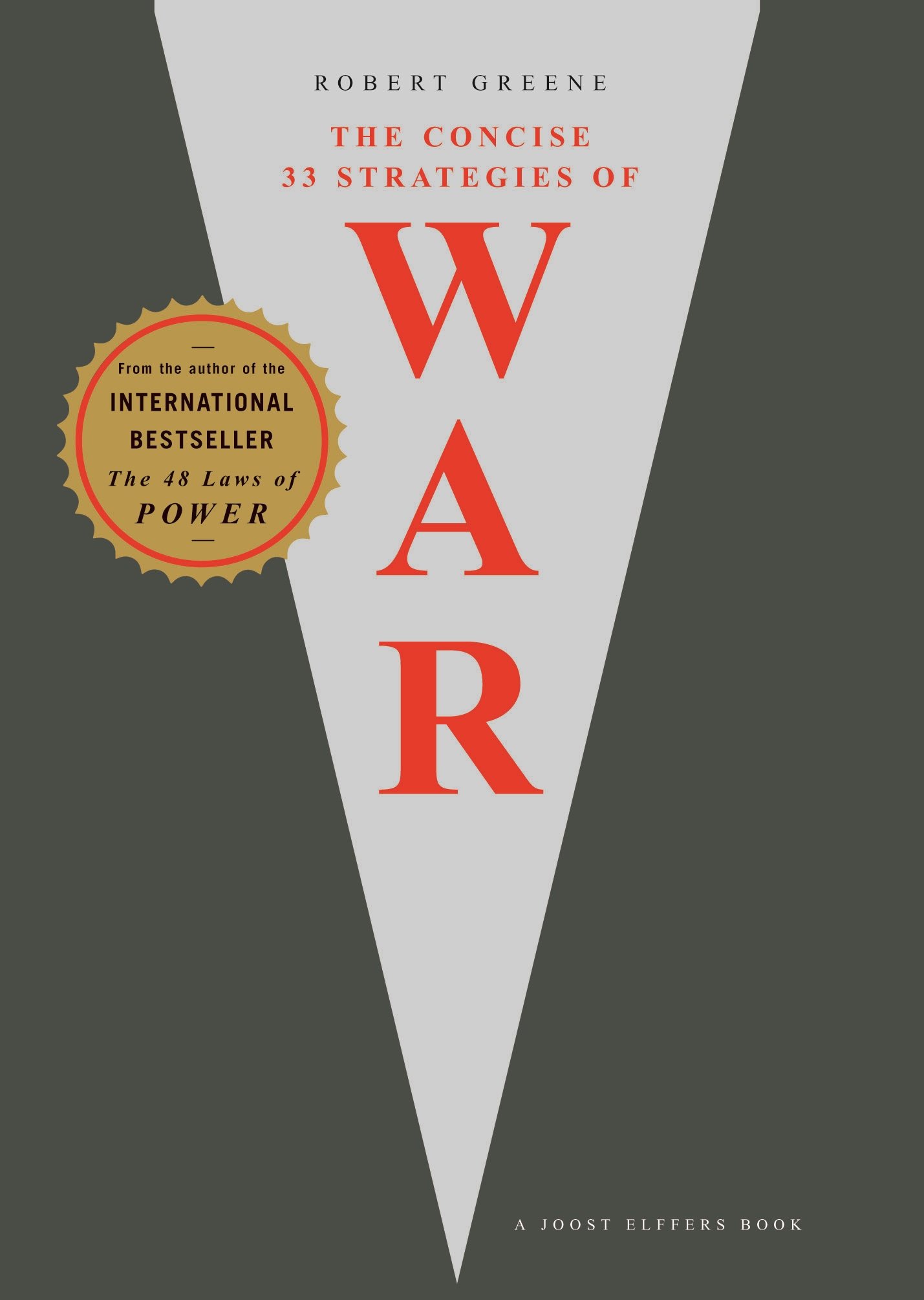
From bestselling author Robert Greene comes a new guide to the strategies of war that can help us gain mastery in the modern world. Spanning world civilisations, and synthesising dozens of political, philosophical, and religious texts, The Concise 33 Strategies of War is a guide to the subtle social game of everyday life. Based on profound and timeless lessons, it is abundantly illustrated with examples of the genius and folly of everyone from Napoleon to Margaret Thatcher and Hannibal to Ulysses S. Grant, as well as diplomats, captains of industry and Samurai swordsmen.
There is more than one author by this name on Goodreads.
Best-selling author and public speaker, Robert Greene was born in Los Angeles. He attended U.C. California at Berkeley and the University of Wisconsin at Madison, where he received a degree in classical studies. He has worked in New York as an editor and writer at several magazines, including Esquire; and in Hollywood as a story developer and writer.
Robert has lived in London, Paris, and Barcelona; he speaks several languages and has worked as a translator. In 1995 he was involved in the planning and creation of the art school Fabrica, outside Venice, Italy. There he met Joost Elffers, the New York book packager and discussed with him his idea for a book on power and manipulation, the ultimate modern version of Machiavelli's The Prince.
Robert and Joost became partners and in 1998, The 48 Laws of Power was born. The book has been a national and international bestseller, and has been translated into 17 languages. In 2001, Robert released his second book, The Art of Seduction, which is more than a sequel to The 48 Laws; it is both a handbook on how to wield the ultimate form of power, and a detailed look at the greatest seducers in history.
The third in this highly anticipated series of books, The 33 Strategies of War, hit bookstores January 2006 and offers a strategic look behind the movements of War in application to everyday life. In addition to having a strong following within the business world and a deep following in Washington, DC, these books are also being hailed by everyone from war historians to some of the heaviest hitters in the rap world (including Jay-Z and 50 Cent).
The popularity of these books along with their vast and fiercely loyal audience proves these are profound, timeless lessons from historical leaders that still ring true in today's culture. Robert currently lives in Los Angeles.
Having read Machiavelli before this which is a much more refined and philosophical body of work on the nature of political strategy; and having recently acquired an interest in, and understanding of, Stoic philosophy, which advocates reluctance towards extending control over external factors, I feel as if I did this book a great injustice by picking it up when I did.
As it stands, I feel that this is a good enough introduction towards understanding the various categories of stratagem that can be applied in martial war, however, it fails at creating relevance towards any real-life application albeit not for lack of trying. Perhaps this is just a flaw of the concise edition that I found myself in possession of and the extended work does a better job of it.
Ultimately, there are better works out there both in political strategy and in war strategy that are much richer in the dimensions they explore, and this is at best a very introductory text to serve as an appetizer before the main course.
Cilvēces vēsture ir balstīta uz karu tas ir dzinis civilizācijas atīsttīstibu , veidojis nācijas un izmainījis robežas. Karš ir neizbēgams faktors mūsu eksistence. Mums no kara nav jabaidās vai jāmūk mums tas ir japieņam un jabūt gatavam tam.Šodien tā ir Krievija un Ukraina kur plosās nemieri vai Palestīnas un Izraēlas konflikts. Rīt tie varam būt mēs , neviens nav no tā pasargāts tas ir tikai laika jautājums , jo kā mes zinam no vēstures miers strap valstīm ir tikai pagaidu stāvoklis un jebkurā brīdi tas var tikt sagrauts! Bet “Karš” nenozīme tikai ierocis rokās vai asinis un kaujas lauka tas ir kaut kas vairāk. Mēs katru dienu cīnāmies ne tikai ar citiem, bet arī paši ar sevi. Mūsu prāts ir kaujas lauks kurā saduras šaubas un pārliecība, bailes un drosme, mērķi un vilšanās. mēs bieži vien esam paši sev lielākie ienaidnieki. Un tāpat kā kaujā, arī šajā cīņā ir uzvarētāji un zaudētāji. Tapat kā man vārds “Karš” nav svešs es cīnos pats ar sevi, cīnos par sev tuvajiem cilvēkiem un cīnos ar pārejiem par savu taisnību. Man daudzas cīņas ir zaudētas bet nepadoties es zinu ka daudz uzvaru ir priekšā!
Prefer this to the more popular rules of power. Its still cynical about human behaviour. So much infact I'd say Robert greene has superseded Machiavelli when talking on manipulation and craftiness.
Despite the small size of this, took a little longer than expected to get through it. Mainly as kept stopping to think about it almost every other page which is always a good thing.
I still don't like the format with the quotes on the side and in the end, some are really weird as well but guess that comes along with the territory.
Para ser una guia rapida esta muy bien. Me recordo mucho al arte de la guerra por lo conciso. Es un libro que puedes enforcarlo, como el antes mencionado, a todo en la vida para enfrentar las distintas batallas por las metas que queremos. Me quito el sombrero ante Robert Greene por otro bien libro de estrategia.
A good read but one may find the contents of this book somewhat repetitive in nature, especially if one has already read "The 48 Laws of Power" (a previous book by the same author) before.
(review of the concise edition) this book's information is incredibly basic and boring to read. All of it's "insights" are very straight-forward and obvious. Not worth the time.
The 33 strategies of War (concise) 🎧📖 ⭐️⭐️⭐️⭐️⭐️ (5/5)
Key Points:
✅ I very much enjoy this type of writing. The rule/subject, partnered with a historical reference/explanation and then summarised with an interpretation or “so what/therfore”.
✅ Examples from Napoleon to Alexander the Great. Each subject holds relevance to not just warfare from a military standpoint but also can be converted to business and corporate strategy.
❌ Contains degrees of military relevance that a civilian may find irrelevant.
At the conclusion of an Audible subscription I have now listened to two of Greene’s concise editions. Again I am glad to have opted for a shortened version as this breakdown of warfare tactics soon felt repetitive. The history is often interesting and I share his skeptical view on human nature. However, beware coming away too paranoid and feeling that you must sow terror and confusion in grandma next time you visit.
One of those reread many times in your life book. Along with the art of war and the 36 strategies, as well as the harder to find wisdom- filled books.
This is very accessible when compared to the art of war. Reading them all in quick succession or even together consoldiates quickly the study of strategy, logic and outwitting, so you can use it for the numerous and inevitable enemies in life.
I suggest getting the full version instead of the concise one.
Bardzo lekkie do czytania. Większość treści to faktycznie fakty, nie opinia. Jak ktoś się nie umie pogodzić z rzeczywistością to może faktycznie warto.
I was ready after reading this, for a war against all the bitches that talks behind my back. Really good book, motivational too. Would recommend to those having a downfall right now, like me.
This book as the title says is the 'concise' version of the 33 strategies. There is a much thicker and lengthier version of the same, however I wonder how interesting that would be. For someone short on time, this book should be enough and interesting (194 pages long).
Reading 2-3 strategies daily is easy and does not take much effort. The chapters are small and the way text is arranged on the pages makes it interesting and simple to read. Anecdotes and stories from history are sprinkled throughout the book in red colour text in the wide margins of the pages. At the end of each chapter, the particular strategy is explained through examples in nature or history.
The book has 5 parts (each one containing strategies) - self directed warfare (more of personal warfare inside your head), organizational warfare (handling teams), defensive warfare, offensive warfare, unconventional warfare(dirty warfare)
Do you really need to be at War to read the book? Of course not. You wouldn’t have the time to read the book then. It's not really about going and fighting wars but more about dealing with situations and people not aligned with your goals, in the present context.
I am not sure how much one can remember and implement in real life (using these books), but i believe that the books we read somehow become a part of us.
I liked how the author presented his idea in his books, he has a unique style for representing his ideas💡. This is the third book I read for Robert Greene after “The concise 48 laws of power” and “The Concise Mastery” books 📚 . To be honest, I Liked the other two books more than this one. This book contains 33 strategies that can guide you in your business and everyday life and help you to be in control and to know how to act. The 33 Strategies in this book is divided into five sections: 1- Self-Directed Warfare (4 Strategies) 2- Organizational (Team) Warfare (3 Strategies) 3- Defensive Warfare (4 Strategies) 4- Offensive Warfare (11 Strategies) 5- Unconventional (Dirty) War (11 Strategies) This book contains historical stories, quotes and examples from famous & most skillful men in the arts of war such as: Napoleon, Sun Tzu and Julius Caesar. It is an interesting and amazing book 📖. Quotes from the book: - “12--Lose Battles, But Win The War: Grand Strategy Grand strategy is the art of looking beyond the present battle and calculating ahead. Focus on your ultimate goal and plot to reach it.” - “Do not fight them. Instead think of them the way you think of children, or pets, not important enough to affect your mental balance.”
I'd couple this book with The 48 Laws of Power, simply because they both have have the focus on understanding and attaining power. Interestingly enough, I felt like this book was more about the relationships we deal with on a daily basis, and how there's always at least one person who's trying to gain the upper advantage. This book helps you realize, that you are always in the game! You're always in the war, and with the right mental tools, you can come out on top! I love Robert Greene books, because his language is direct and simple. You won't read him and have to pull out a dictionary a thousand times, and that's not to discredit his intelligence. I believe he's under the simple philosophy of not trying to confuse his audience with a bunch of 18 syllable words that have 4 letter synonyms. So I'd recommend this book to everyone who wants to be on top of these miniature wars we have every day. Want to win an argument? Read this book. Want to deceive your boss? Read this book! Want to win period? Read this book! Thanks Robert Greene, for yet again, another great book!
Nice book. First section is about strategic thinking, how typical things can cloud your judgement and clear thinking and strangely enough reads like a self help book. Second section is defensive warfare and third is offensive warfare. Fourth section is dirty warfare(will probably make your stomach churn a bit) and the last chapter is about terrorism, interesting read through and through, which aims to prepare you for the battles you’ll inevitably encounter. Wish I’d picked up his concise versions earlier.
Started off good but became less inspiring towards the end. I would have liked to have seen more variety in those he was quoting. Nevertheless some good strategems relevant to the modern workplace and career progression. 'Power is not only what you have but what the enemy thinks you have.' 'Being attacked is a sign that you are important enough to be a target.' 'When we are tired, it is often because we are bored. When no real challenge faces us, a mental and physical lethargy sets in. Lack of energy comes from lack of challenges, when we have taken on less than we are capable of.'
This book is quite useful, yet you can't really extract bullet points that you can teach others. it makes sense, and adds an insight about thinking strategically, I think it made me change the way I think, especially when it comes to accepting defeat as a means to prepare for next battle. in short it made me more of a fighter. what I don't like about this book, is the last part, where it came to dirty war, it is sad but true, yet I don't have to practice it
I thought this was going to be about purely Military strategy but it was in fact written more for people dealing with conflict in the work place or their personal life and is pretty negative stuff really implying of course that we must crush our enemies at any cost and there are these various ways to do it. Found it unnecessarily wordy but liked the sections at the end of each chapter
I bought the concise edition of this book ages ago but could not find the time to read it. It has a wide variety of offensive and defensive war strategies which can easily be applied to different situations in the business world or sports etc.
For me, the book delivers on what it advertises. It also has quotes from famous books and authors on the sidelines which are a useful addition.
This guy knows how to communicate ideas to readers. If I could only read books from one author for the rest of my life, I'd choose Robert Green. This is a another gem of a book. I have read it a few times and I'm going to reread it a few more times.