

What do you think?

Change and Cherish Historical #3
A Mending at the Edge
"Of all the things I left in Willapa, hope is what I missed the most."
So begins this story of one woman's restoration from personal grief to the meaning of community. Based on the life of German-American Emma Wagner Giesy, the only woman sent to the Oregon Territory in the 1850s to help found a communal society, award-winning author Jane Kirkpatrick shows how landscape, relationships, spirituality and artistry poignantly reflect a woman's desire to weave a unique and meaningful legacy from the threads of an ordinary life. While set in the historical past, it's a story for our own time answering the Can threads of an isolated life weave a legacy of purpose in community?
So begins this story of one woman's restoration from personal grief to the meaning of community. Based on the life of German-American Emma Wagner Giesy, the only woman sent to the Oregon Territory in the 1850s to help found a communal society, award-winning author Jane Kirkpatrick shows how landscape, relationships, spirituality and artistry poignantly reflect a woman's desire to weave a unique and meaningful legacy from the threads of an ordinary life. While set in the historical past, it's a story for our own time answering the Can threads of an isolated life weave a legacy of purpose in community?
397 pages, Paperback
First published January 1, 2008
About the author
Jane Kirkpatrick
59 books1,117 followersKirkpatrick brings us a story of one woman's restoration from personal grief to the meaning of community."
Ratings & Reviews
Friends & Following
Create a free account to discover what your friends think of this book!
Community Reviews
Displaying 1 - 30 of 77 reviews

February 26, 2013
I want to visit Aurora!I knew nothing about the Aurora Colony, a 19th century religious commune that is now the town of Aurora OR, just before the Keizer Starbucks turnoff if I remember correctly my Saturday trip to Salem. This historical novel is based on the life of Emma Giesey, the only Colony woman to get her own house and have her own page in the commune's ledger. I'd have to see her as an early feminist in a society defined as patriarchal. I learned in the acknowledements that late in life, she moved to Portland where she was a member of Kenilworth Presbyterian Church. The final volume in a 3 part series about Emma, now I have to read the 1st 2!

December 17, 2012
A Mending in the Storm, the conclusion of her trilogy on the life of Emma Giesy. Tireless research gives Jane Kirkpatrick’s historical fiction a real window into the past. All of her books feature strong, independent women whose stories would be lost without Jane Kirkpatrick’s books. Researching Emma Giesy’s story, Jane haunted the archives of the Aurora Colony Historical Society for information on life in the colony. She interviewed descendants of the Giesy, Wagner and Keil families to develop a sense of the real people behind the story. She had access to family letters, journal, and records, granting her rich historical detail. Jane went to the historic houses in Aurora in order to write with a sense of reality about life in the colony. She walked through rooms Emma Giesy would have walked, looked at the view of Mt. Hood Emma would have seen, and got a sense of the rhythm of Emma’s days. Reading a Jane Kirkpatrick book you are transported back in time to an era when fir trees were so huge grown men could not circle them with their arms and Celilo Falls ran wild.
A Mending at the Edge concludes Emma Giesy’s story. Life has turned out differently than Emma planned. She has taken refuge in the Aurora Colony under Wilhelm Keil’s protection. She moves from pain to acceptance, finding peace in helping others. Other women have also suffered from poor choices or unforeseen circumstances, Emma finds a sense of purpose in helping them get back on their feet. Emma builds a life for herself, doing the best she can. She quilts with the other women in the colony, tends her garden, and discovers a joy in drawing. Her parents move from Bethel Missouri to the Aurora Colony in Oregon. Emma is keenly anxious to reconcile with her parents. Although Emma has had challenges that kept her from raising her children in her own way, she learns to accept that she has done her best.
So many stories from the past are lost. Jane Kirkpatrick saves some of them, giving us historical fiction about the remarkable women who bravely faced obstacles and helped settle the land. She has written some fascinating sagas of early life in the Pacific Northwest.
A Mending at the Edge concludes Emma Giesy’s story. Life has turned out differently than Emma planned. She has taken refuge in the Aurora Colony under Wilhelm Keil’s protection. She moves from pain to acceptance, finding peace in helping others. Other women have also suffered from poor choices or unforeseen circumstances, Emma finds a sense of purpose in helping them get back on their feet. Emma builds a life for herself, doing the best she can. She quilts with the other women in the colony, tends her garden, and discovers a joy in drawing. Her parents move from Bethel Missouri to the Aurora Colony in Oregon. Emma is keenly anxious to reconcile with her parents. Although Emma has had challenges that kept her from raising her children in her own way, she learns to accept that she has done her best.
So many stories from the past are lost. Jane Kirkpatrick saves some of them, giving us historical fiction about the remarkable women who bravely faced obstacles and helped settle the land. She has written some fascinating sagas of early life in the Pacific Northwest.

May 11, 2008
I read all 3 books in this series, A Clearing in the Wild, A Tendering in the Storm and A Mending at the Edge. They follow a woman, Emma Wagner Giesy in her journey from Bethel, Missouri to Willipa, Washington and then on to Aurora, Oregon. She is part of a religious group led by a Wilhelm Keil. During this journey she learns a great deal about herself. I wanted to read this book as I volunteer with the Aurora Colony Historical Society. I did enjoy the book as it gave me a great look into the lives of these people and as a volunteer that information is great! However, it didn't capture my attention as much as I would have liked and the story moved along a bit slow for me. I felt the three books could have been condensed into one or maybe two. I think people get bored and turned off with the first book and never make it to the next two so they can read more as the story unfolds. I kept with it because it was a book about the very settlement I volunteer with. If this had not been the case I would have not continued reading that and I had to know the end, of course!

June 22, 2008
This is the 3rd book in a historical fiction trilogy about a religious group who came from Bethel, MS to Oregon in the 1800's and founded a colony named Aurora. The leader of the group, Dr Wilhelm Keil, was an autocrat who ruled with an iron hand. The main character is Emma Wagner Giesy and the trilogy tells the story of Emma's life as a thorn in Dr. Keil's side as she fights to maintain her independence. Dr. Keil and Emma were real people and I was SO disappointed when I googled Aurora and discovered David & I had been within a few miles of it on a backroads trip last year. I enjoyed this book and Jane Kirkpatrick's unique style of weaving faith throughout her stories without preaching!

April 10, 2018
A Mending at the Edge by Jane Kirkpatrick
Year: Late 1800s
Emma Wagner: Living at the Aurora Bethelite compound
Wilhelm Keil: Leader of the Bethelites
Locations: Aurora, OR - south of Portland
This was a VERY different book. It was like a diary of Emma's life in a communal society which began it as a German Christian society, but more or less ended it as an economic one in which Wilhelm Keil held all the purse strings, allowing no other's decisions but his own, including whether a person married, or who took care of their children or educated them. Emma had resisted this colony all her life, because she resented his leadership, but when her new husband had continued to be dangerously abusive, she sought refuge there.
In this book she worked her tail off and got nothing, including the right to be a mother to her two boys. Wilhelm decided her boys would be better off without her and took them to live in his massive house with many others. All the way through the book she either resented other's input, sadly relented to their decisions, or manipulated others to have things done, including hiding truths or lying. I didn't like her much of the time, then she would show such kindness, generosity and submissiveness, learning much from the circumstances, I was impressed.
I suppose it was the "diary" way of telling the story I didn't care for. So much of it was day to day events, and inconsequential stories that lead to more questions and non-endings that it was tedious to wade through.
I was so hoping for more of impactful ending to this series, but it just ended with resignation to her life as it was rather than a "Mending" as the title suggests.
I do not recommend this series unless you want to read someone else's fictional accounts of the Bethelite history in Aurora, Oregon.
Year: Late 1800s
Emma Wagner: Living at the Aurora Bethelite compound
Wilhelm Keil: Leader of the Bethelites
Locations: Aurora, OR - south of Portland
This was a VERY different book. It was like a diary of Emma's life in a communal society which began it as a German Christian society, but more or less ended it as an economic one in which Wilhelm Keil held all the purse strings, allowing no other's decisions but his own, including whether a person married, or who took care of their children or educated them. Emma had resisted this colony all her life, because she resented his leadership, but when her new husband had continued to be dangerously abusive, she sought refuge there.
In this book she worked her tail off and got nothing, including the right to be a mother to her two boys. Wilhelm decided her boys would be better off without her and took them to live in his massive house with many others. All the way through the book she either resented other's input, sadly relented to their decisions, or manipulated others to have things done, including hiding truths or lying. I didn't like her much of the time, then she would show such kindness, generosity and submissiveness, learning much from the circumstances, I was impressed.
I suppose it was the "diary" way of telling the story I didn't care for. So much of it was day to day events, and inconsequential stories that lead to more questions and non-endings that it was tedious to wade through.
I was so hoping for more of impactful ending to this series, but it just ended with resignation to her life as it was rather than a "Mending" as the title suggests.
I do not recommend this series unless you want to read someone else's fictional accounts of the Bethelite history in Aurora, Oregon.

August 27, 2013
"A Mending At The Edge" by Jane Kirkpatrick gets 4 stars from me. I didn't give it 5 stars because it is a rather long story and at times slow reading, I did enjoy reading about Emma and the members of the Aurora Colony. It is the third in the Change and Cherish Historical Series. I felt there was alot of repeating scenes in these three books. I think the story could have been shorter and still been told. These three books are fiction but are based on actual events.
My questions that I left in my review of "A Tendering in the Storm" has been answered.
Yes Emma sees her parents and is reunited with them. Yes her son becomes a doctor. Emma gets her own house but at a cost.
Emma even climbed to the bellfry and stood upside down on the bells.
Emma has more challenges and growing in this book as well as the others. I found myself actually feeling her pain as she is forced to let someone else raise her sons again but in the end realized that the time and place she was in that maybe that was the best from them.
Emma tries to follow The Diamond Rule in inviting outsiders to live with her in her two door house.
Emma and the others who live with her start a inhouse church on Sundays when there are no church meetings and it from this, that changes are discussed and then plans are made to convince their leader Brother Kiel to think it was his idea such as allowing men and women both to sing when they have the service for the new bells. It is at one of these meetings the idea is formed to build a restaurant at the State fair that is held every October. It was at these meeting they were able to connivence Louisa that it was okay to mend quilts for others and not for themselves on Sundays.
Brother Kiel and Louisa Kiel have another heartache in this book to accept and it changes them both once again.
This book shows that when you give to others you help yourself.
In closing this review I want to include a quote from the book that I think sums Emma really well.
Page 284 "I looked down at my hand. The crooked fingers would always be a reminder of Jack. But they'd remind me, too, of my strength, my ability to take necessary next steps for my family. Maybe I wouldn't bring a dozen people to the faith the way Christian had; maybe I wouldn't tend a large family as my mother did;maybe I'd never be as faithful as Helena and Louisa , but I was who I was;I would leave a legacy of everyday devotion both to my family and to the delights of life, including standing upside down on a bell.
August 3, 2013
The story continues, this time in the Aurora Colony of Northwestern Oregon Territory. In this installment Emma finds her way, still learning how to co-exist in a communal type of life but maintain some semblance of her own identity. She is a natural born leader and even though she lives in a sub-culture that does not recognize women as leaders in any way, she finds that she can be of great service to other women just by her example in persevering and reaching out to those in need. This portion is greatly about the relationships between a few of the women in this colony who developed close supportive friendships, even some unlikely ones.
As times change through this tumultuous era of the 1870’s the colony finds itself unable to hold back the tide of worldly influence, a great irony as that was the reason for the move west. Emma also finds that she is unable to hold back the many changes that occur in her own family. She learns that to truly love sometimes means letting go and sacrifice, putting the best interests of others ahead of our own desires, a very painful lesson indeed.
I found Emma Wagner to be one of the most inspirational historical persons I have ever encountered. I could hardly recommend this series highly enough to anyone but especially to women who are trying to grow in their faith and trust God with their lives.
As times change through this tumultuous era of the 1870’s the colony finds itself unable to hold back the tide of worldly influence, a great irony as that was the reason for the move west. Emma also finds that she is unable to hold back the many changes that occur in her own family. She learns that to truly love sometimes means letting go and sacrifice, putting the best interests of others ahead of our own desires, a very painful lesson indeed.
I found Emma Wagner to be one of the most inspirational historical persons I have ever encountered. I could hardly recommend this series highly enough to anyone but especially to women who are trying to grow in their faith and trust God with their lives.
February 21, 2009
I think I liked this book better the first time I read it. But since it is the third and final in the series, you just don't feel complete until you finish the last one. This book does a nice job of tying up the life of Emma, the main character. She finally realizes what things in life she needs to control and what she can let go. She discovers what matters. But this book doesn't have a continuing story line to keep you wanting to turn pages. Instead it has lots of little life moments of self discovery. They were interesting, but not anything that you couldn't put down for a few days. Any exciting stuff seemed to happen to perifrial characters whose lives brushed Emma's. That was kinda boring after the first couple of books where the focus is on Emma. You do learn more about the history of Aurora in the third book than the other two and you watch it evolve along with Emma and the founder of Aurora, Wm Keil. I would recommend it to read following the first two books, (A Clearing in the Wild and A Tendering in the Storm) but not as a stand alone historical novel.
June 29, 2012
This is the final book in the "change and cherish" historical series, with
Emma Geisy as the central character. Oh, I hated for this book to come to an end because Kirkpatrick has taken the readers on a fascinating journey--physical, mental, emotional, and spiritual--as Emma has grown in each of those aspects of her life.
Strong characters, interwoven plot lines, conflict of every variety (personal, communal, relational), deep themes (hunger for meaning and purpose, desire to contribute and "make others' lives better than my own"; accommodation of family and community, yet maintaining individuality; choices and consequences)--and so much more.
Kirkpatrick is at her best in historical fiction because her research is meticulous. She takes the threads and remnants of stories of women in the past and pieces them together in such a way that creates a literary quilt which illustrates the deepest longings of readers' lives even though our circumstances, landscapes, relationships, faith, and work may be very different.
Emma Geisy as the central character. Oh, I hated for this book to come to an end because Kirkpatrick has taken the readers on a fascinating journey--physical, mental, emotional, and spiritual--as Emma has grown in each of those aspects of her life.
Strong characters, interwoven plot lines, conflict of every variety (personal, communal, relational), deep themes (hunger for meaning and purpose, desire to contribute and "make others' lives better than my own"; accommodation of family and community, yet maintaining individuality; choices and consequences)--and so much more.
Kirkpatrick is at her best in historical fiction because her research is meticulous. She takes the threads and remnants of stories of women in the past and pieces them together in such a way that creates a literary quilt which illustrates the deepest longings of readers' lives even though our circumstances, landscapes, relationships, faith, and work may be very different.

May 13, 2008
In the final installment of the Change and Cherish historical trilogy series, A Mending at the Edge featured Emma Geisy's final chapters in her story. This one was a heart-wrenching one, when she dealt with personal loss and grief and tried to protect her family anyway she could. She endured and survived through it all and wanted to reunite with her daughter Ida, when they were separated. She had to make tough choices to build her own home on a peaceful land and learned the important meaning of community. The conclusion of this series was a successful and poignant one with a happy ending to her story.
June 28, 2010
"Of all the things I left behind in Willapa, hope was what I missed the most." This is the story, based on a real person, of the first woman of a German community to migrate to Washington Territory in the early 1850's. Emma's a strong-willed woman and continually gets herself into trouble by challenging the dictates of the men in her life. She also feels that she's meant for more than just cooking, cleaning, and looking after the children. I felt constricted just reading about her life, but felt better when she was able to put everything into a perspective that allowed her an acceptable way of living.
September 5, 2009
I love historical fiction and this is the third book of Jane Kirkpatrick's, Change and Cherish Historical Series, that I have read. It is a saga of pioneer woman Emma Giesy, her story and that of the Aurora Colony in Oregon. It is based on the history of the Aurora Colony and deals with the politics and culture of the 1860s. Emma lives in a religious communal society and the story shares what life was like in the Oregon community. The author's discription of the Oregon landscape, Mt Hood and the seasons are captivating.

November 2, 2009
This book wasn't what I expected but it was a nice audiobook while driving the last few weekends. At first, I thought I had fallen into conservative Christian chick-lit, but was delightfully surprised when the author developed a strong female character who was open to exploring non-traditional spiritual practices . . . a house church for women, radical hospitality, walking labyrinths, etc. I liked the setting of a Utopian Christian community and the historical setting. I enjoyed this last book of a series, but will unlikely seek out another.
December 2, 2007
While I really enjoyed her other series, this one, not so much. This third book in the series tells the story of Emma Wagner Giesy and her trials in pioneering Oregon. I did like the historical aspect of this books, as I do all her books, but this one seemed to drag and didn't hold my interest as much as the others. I even got a bit irritated with Emma for putting up with all that she did, although the society that she lived in frowned upon outspoken women in those times.

January 1, 2010
An enjoyable read, however, I felt that it ended rather abruptly.
Having lived for a bout 10 years in the area, I really liked the historical aspect of the series. It was fun to read about places I've been and what they were like when the first settlers came. Many things about Aurora have not changed, many of the original buildings are still there, even if they've been moved. The Aurora Historical Museum is a wonderful place to visit, especially during Aurora days.
Having lived for a bout 10 years in the area, I really liked the historical aspect of the series. It was fun to read about places I've been and what they were like when the first settlers came. Many things about Aurora have not changed, many of the original buildings are still there, even if they've been moved. The Aurora Historical Museum is a wonderful place to visit, especially during Aurora days.

September 11, 2015
A nice conclusion to the trilogy, though I thought it ended abruptly. Some of the things Emma did were annoying, but her behavior fit the circumstances in which she was so I can't complain too much about it. All in all, a good series that I enjoyed but not one I'd recommend to everyone. I think this is a series you have to have patience with to enjoy.
I received a complimentary copy of this book to review. I was asked to give my honest opinion of the book - which I have done.
I received a complimentary copy of this book to review. I was asked to give my honest opinion of the book - which I have done.
June 6, 2008
I enjoyed this book, it chronicles a spirited woman's journey and gives good life lessons. Emma has learned to accept with grace what she cannot change. She learned to cherish what she had, to nurture hope, and to use new brush strokes to bring vibrancy to the painting of her life. She wanted a voice in a time when women didn't have one.
September 23, 2009
Another good series from this author....I agree w/ Kristiina that the second one was my favorite, but I really enjoyed the descriptions of life during this time/place. Hadn't really known there was that much communal living and learned much about it that was interesting. Kirkpatrick has always been one of my favorite historical fiction authors and she didn't disappoint this time either.
November 28, 2010
Written by a wonderful author, this series tells the story of a woman pioneer who settles in Washington, then Oregon. By this time, however, her life is more settled, and therefore less intriguing. The book shows her life among her religious community, but has less story than philosophy (although her resolutions towards service, humility, and growth are always inspiring).
June 6, 2011
In an attempt to maintain her independence from her former in-laws, Emma married Jack Giesey. This turned out to be a poor decision as he became abusive and she eventually escaped and lived at the Aurora Colony (Aurora, OR) She feared for the safety of her family thinking her in laws would find reason to take her sons from her.

November 13, 2013
I enjoyed reading the last book in the series, and it was great to make it to Aurora! I am looking forward to heading over to Aurora this summer and doing the "Emma Walk" to check out the old colony buildings more. I didn't find myself quite as engaged in the storyline as I was in the first two books of the series, but I still enjoyed the reading.

August 26, 2016
It was sooooo good, the whole series, that I can't seem to move on to another book. I can't leave Emma behind! What an inspiration! I loved seeing her mature from a young girl into a strong woman, who was somehow able to take all that life threw at her and learn from it, and use this knowledge to better herself and her family. She never gave up!!! Such lessons for all women!!!

November 28, 2007
This series is honestly one of the best I have ever read! I am sad it's ending with book three, A Mending at the Edge, but I understand why. I guess you just always wish the good series could go on forever!
May 24, 2008
This book reminds me of my mormon upbringing and the early pioneer stories I grew up on. It's warm and inviting and real in its' sharing of hardship and joy. I'm really enjoying this book. I will probably read more of her work.

February 22, 2009
I stumbled upon this one by accident. I didn't like it as well as some of her other books, but the historical elements were interesting. I really didn't like the characters all that much, but just the way their society functioned kept my interest.
July 27, 2009
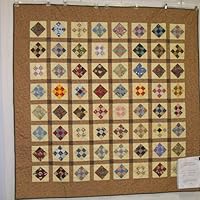
This one didn't have the tension of the 2nd one but I enjoyed the descriptions of the prayer walk and the women's sewing bees. Also, this one had several phrases that I liked and have written down. Overall, a good series! This series rates up there with the kinship series!

March 14, 2010
Such a good book! It is the last book in the Change and Cherish series. These were true events in Oregon and Washington state from 1860 - 1883. Communal living. This tells the life of Emma Wagner Giesy.

January 2, 2011
The final edition from a series of three. Factual rendering of one woman’s life. I especially like the addition of historical data and how she wove the story from bits and pieces of information collected from descendants of this heroin.
July 28, 2011
This one was sort of Anti-climactic because Emma's life is explained and possible choices she made explained and her children's lives and the lives of others are also explained. Im glad I finally finished this series.
January 22, 2012
I'm going to miss Emma, and her family, since this is the final book in the series. I'm excited to spend time, in Aurora, exploring the things discussed in this book. It's a great fictional/history series, one worth reading.
Displaying 1 - 30 of 77 reviews