The Art of Executive Communication: Is Being Heard the Same as Being a Leader?
What makes someone sound like a leader? Confidence? Charisma? Clarity? The ability to command a room?
And here's the bigger question: Does sounding like a CEO mean someone knows how to lead?
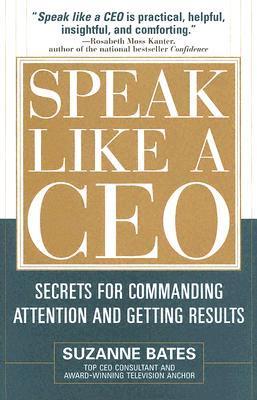
In Speak Like a CEO: Secrets for Commanding Attention and Getting Results, Suzanne Bates explores the connection between communication and leadership. Her argument is straightforward. Great communication isn't a natural gift reserved for a select few. It's a skill people can develop through preparation, practice, and self-awareness.
Bates offers practical advice on public speaking, presentations, media interviews, meetings, and everyday professional interactions.
The central idea is that leadership isn't just about what you know or what you do. It's also about how you communicate, build confidence, and influence others.
I agree with much of that. But there's an important distinction between communicating like a leader and being one.
One of the book's strongest points is its rejection of the idea that great communicators are born, not made.
Bates treats executive communication as a discipline, not a personality trait. She focuses on authenticity, audience awareness, preparation, storytelling, and delivering messages people understand and remember.
Her advice is practical and grounded in real business situations. She doesn't treat public speaking as a standalone performance. She connects it to the broader responsibilities of leadership.
I particularly appreciate her emphasis on authenticity.
Because confidence without authenticity is just performance. And polished communication without substance is little more than impression management.
A leader's credibility depends on whether their words match their convictions, decisions, and actions.
You can polish a message all you want. If the actions don't support it, people will notice.
And that's where I think the book leaves some important questions unanswered.
Bates offers a useful framework for improving communication skills. But much of the book focuses on projecting confidence, establishing credibility, and commanding attention.
The problem?
Commanding attention isn't the same as earning trust. And persuading an audience isn't the same as leading people.
A charismatic speaker can sell a flawed strategy with absolute conviction. A confident executive can generate enthusiasm while exercising poor judgment. A brilliant presentation can hide a serious lack of substance.
History is full of leaders who mastered persuasion but failed when it came to judgment, integrity, and accountability.
So here's the question worth asking: Are we developing better leaders, or teaching people how to look more convincing?
We also tend to associate leadership with people who speak confidently, take up space, and hold an audience's attention.
But what about the leader who listens, asks difficult questions, and makes sound decisions without commanding the room?
Does that make them less effective?
I don't think so.
Executive presence without executive substance is a convincing performance, not effective leadership.
The Missing Dimension: Leadership Is Also About Listening
Another gap is the book's focus on delivering messages rather than creating the conditions for meaningful communication.
Bates covers meetings and conversations. But I would have liked more attention to listening, dissent, power dynamics, and psychological safety.
Because leadership communication isn't just about getting people to listen. It's about creating an environment where people feel confident enough to speak up.
Can employees challenge the CEO's assumptions?
Can bad news reach the top without getting filtered, softened, or buried?
Can a leader admit uncertainty, acknowledge mistakes, or change their mind without seeing disagreement as a threat?
These aren't presentation skills. They're tests of leadership maturity.
A CEO can deliver an inspiring message about openness and collaboration. But if employees face consequences for challenging decisions, that message means very little.
People judge communication by what happens when they respond, not just by what they hear.
The most important leadership communication can happen when the CEO stops talking and starts listening.
A Framework That Reflects Its Time
First published in 2005, the book reflects a different era of executive communication.
The focus was largely on formal presentations, public appearances, media interviews, and traditional corporate settings.
The core principles still hold. But the environment has changed.
Today's executives communicate across distributed teams, digital platforms, cultures, and audiences that question corporate messages rather than accept them at face value.
They face greater demands for transparency, public scrutiny, organizational uncertainty, and the tension between personal visibility and institutional credibility.
A CEO's words can shape employee confidence, investor expectations, customer trust, and organizational reputation. What they say matters. What they choose not to say matters too.
Delivering a great speech still has value. But it isn't enough.
Leaders need to know when to communicate, what to disclose, how to handle disagreement, and how to maintain trust when their decisions are unpopular.
These challenges demand more than communication techniques. They demand judgment.
Because a CEO's message doesn't exist in isolation. People judge it against what happens next.
Final Thoughts
Speak Like a CEO is a practical, accessible guide for professionals who want to improve their public speaking, presentations, and executive presence.
Its greatest strength is making effective communication a skill people can develop, rather than a mysterious quality some people possess and others don't.
For experienced executives, though, I see more value in the book as a communication toolkit than as a complete examination of leadership.
And that distinction matters.
Effective leadership isn't measured by how confidently we speak or how persuasive our messages sound. It's measured by the decisions we make, the trust we earn, and the responsibility we accept.
Perhaps the real challenge isn't learning how to speak like a CEO. It's understanding what makes a CEO worth listening to.
And I believe that's a much harder skill to master.