Poetry of meditiation, from the reverberations of dead poets to murmers of the heart which force the poet to dwell on the irregular beat of the poet's lot.
Thought provoking, beautiful and great practice for Welsh learners. Menna Elfyn’s poetry is what started me reading poetry again after years of disinterest. I love that Welsh language originals are translated and responded to by other bilingual poets. Reading one of her collections is to experience being part of a dialogue and a retelling within the Welsh language community.
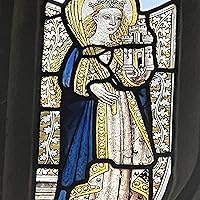
Particular favourites of mine in the collection are the famous Drws yn Epynt (Door in Epynt) which has acute resonance for my own place of residence, Afalau minswyn (Bitter Apples) and of, course the Catrin Glyn Dŵr cycle, that forms the core of this volume. Catrin Glyn Dŵr is an own voice piece, where Elfyn’s own experiences as a political prisoner are entwined with the reimagined suffering of her doomed medieval “predecessor”.
A poignant reminder of the oppression and “cancellation” of minority cultures globally. To be political is not necessarily to be violent or even an activist. The mere use of an alternate or condemned language is to stand up and stand out.
A poignant collection which stirred childhood memories. I did attempt to read the Welsh, but although I can still pronounce the words in my head, understanding /translating is another thing entirely, my Welsh so rusty. But, I'm in awe of the translator's poetic sensibilities. I loved "The Cocklewoman" - " Waves of hair swept Waves of hair swept under a hat, / her shawl a fringe on the shore;". With it's underlying theme of the young observer's awakening to wider horizons ... "at the Manse's teetotal door". The "scooping of sacramental shells / sound of innocence, ... / A coming of age, / that emptying, emptying cry." So many powerful images crowd these pages; Menna Elfyn's Murmur is a book I will return to again and again.
My favourite of Menna Elfyn's collections that I've read so far, although I've not got Parch yet. The Catrin ferch Owain Glyndŵr cycle in particular is both beautiful and heartbreaking, but the whole collection is excellent as a whole and even encompasses three translations into English done by Elfyn herself of poems by Waldo Williams.
It is a bilingual collection, translators include Elin ap Hywel, Gillian Clarke, and Joseph Clancy, and the English reads well too.
I got more out of this collection on a second reading. There were two or three slightly longer poems in the first part that I hadn't really appreciated first time which I enjoyed the second time around. Then I didn't realise I was into the Catrin Glendwr section first time, I just became aware that several poems had been set in prison; the second time they made more sense! In fact, it all improved, so the lesson is, don't be too hasty to your judgement!