

What do you think?
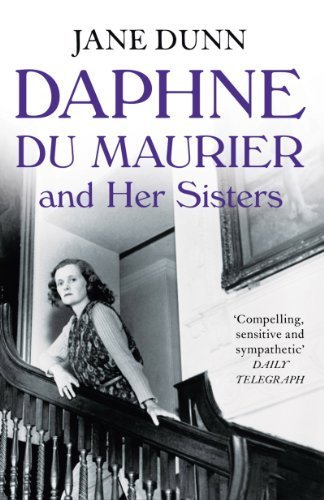
Daphne du Maurier and her Sisters
Celebrated novelist Daphne Du Maurier and her sisters, eclipsed by her fame, are revealed in all their surprising complexity in this riveting new biography.
The middle sister in a famous artistic dynasty, Daphne du Maurier is one of the master storytellers of our time, author of ‘Rebecca’, ‘Jamaica Inn’ and ‘My Cousin Rachel’, and short stories, ‘Don’t Look Now’ and the terrifying ‘The Birds’ among many. Her stories were made memorable by the iconic films they inspired, three of them classic Hitchcock chillers. But it was her sisters, writer Angela and artist Jeanne,who found the courage to defy the conventions that hampered Daphne’s emotional life.
In this group biography they are considered side by side, as they were in life, three sisters who grew up during the 20th century in the glamorous hothouse of a theatrical family dominated by a charismatic and powerful father. This family dynamic reveals the hidden world of the three sisters – Piffy, Bird & Bing, as they were known to each other – full of social non-conformity, love, rivalry and compulsive make-believe, their lives as psychologically complex as a Daphne du Maurier novel.
The middle sister in a famous artistic dynasty, Daphne du Maurier is one of the master storytellers of our time, author of ‘Rebecca’, ‘Jamaica Inn’ and ‘My Cousin Rachel’, and short stories, ‘Don’t Look Now’ and the terrifying ‘The Birds’ among many. Her stories were made memorable by the iconic films they inspired, three of them classic Hitchcock chillers. But it was her sisters, writer Angela and artist Jeanne,who found the courage to defy the conventions that hampered Daphne’s emotional life.
In this group biography they are considered side by side, as they were in life, three sisters who grew up during the 20th century in the glamorous hothouse of a theatrical family dominated by a charismatic and powerful father. This family dynamic reveals the hidden world of the three sisters – Piffy, Bird & Bing, as they were known to each other – full of social non-conformity, love, rivalry and compulsive make-believe, their lives as psychologically complex as a Daphne du Maurier novel.
Unknown Binding
First published February 21, 2013
About the author
Jane Dunn
22 books148 followersJane Dunn is a leading biographer, the author of Moon in Eclipse: A Life of Mary Shelley, A Very Close Conspiracy: Vanessa Bell and Virginia Wolf, and Antonia White: A Life. Elizabeth and Mary: Cousins, Rivals, Queens was published in the spring of 2003 and spent seven weeks in the top ten of the Sunday Times bestseller list. A fellow of the Royal Society of Literature, Dunn lives near Bath with her husband, the linguist and writer Nicholas Ostler. Her most recent book is Read My Heart.
Ratings & Reviews
Friends & Following
Create a free account to discover what your friends think of this book!
Community Reviews
Displaying 1 - 30 of 51 reviews
November 24, 2019
In spite of some ragged writing at the start I very much enjoyed this biography.
 goes into exhaustive detail about the girls' early life and their famous family. I'm glad Dunn focused on the sisters as adults. She details Gerald's possessive love for his middle daughter, but doesn't speculate on it.
Jane Dunn doesn't go into as much detail about Daphne du Maurier's books, (which is a plus as far as I am concerned - I just hate having to watch for spoilers in literary biographies) - & they were easy to skip. Dunn covers far more about Angela's literary works which are less well known. I wasn't so concerned about this as I am unlikely to read Angela's works.
I would like to get my hands on though. Dunn has drawn pretty freely from it. It must have been painful at times for Angela to be so overshadowed by her brilliant younger sister, but they remained affectionate & close for all of their lives.
A weakness that Dunn is unable to help. There isn't much about Jeanne - Muriel du Maurier's favourite daughter. Jeanne's partner Noel Welch refused to cooperate with this biography. Welch was intending to write one of her own.
http://www.dumaurier.org/menu_page.ph...
I wondering if Welch was protecting Jeanne's memory. Jeanne got stuck with the bulk of Muriel's care when Muriel's health & mental well being started to decline, then later on Jeanne decided, "It's my time!"and refused to help. I do get that. Jeanne worked really hard as a farm labourer as her war work and she wanted to paint. Dunn allows herself a slight sneer at Jeanne's paintings, but I really liked the retro charm of the ones I have seen.
Hopefully Jeanne's papers haven't been destroyed and one day the public will be able to read them.
I loved Angela's clumsy charm and enthusiasms - the way she tried so many different things in her life. For the most part she never quite succeeded - but they were different times. At 30 Angela having to lie to her mother & sneak out to meet. her lesbian friends! Different times.
Dunn had the cooperation of Daphne's children and Dunn is appreciative that they remained helpful even though they didn't like the results. Dunn was (I believe) given the POV that it was a loveless marriage, with both parents having affairs. Dunn is also far harsher on the hard bargain the owner of Menabilly was able to drive, due to Daphne's obsession with a cold and uncomfortable near ruin of a house.
I don't think I would have liked Daphne but I admire her independent spirit.her sad and confused end was tragic.
This picture shows how I like to think of Daphne.
Independent, fierce, free.
https://wordpress.com/view/carolshess...
goes into exhaustive detail about the girls' early life and their famous family. I'm glad Dunn focused on the sisters as adults. She details Gerald's possessive love for his middle daughter, but doesn't speculate on it.Jane Dunn doesn't go into as much detail about Daphne du Maurier's books, (which is a plus as far as I am concerned - I just hate having to watch for spoilers in literary biographies) - & they were easy to skip. Dunn covers far more about Angela's literary works which are less well known. I wasn't so concerned about this as I am unlikely to read Angela's works.
I would like to get my hands on
though. Dunn has drawn pretty freely from it. It must have been painful at times for Angela to be so overshadowed by her brilliant younger sister, but they remained affectionate & close for all of their lives.A weakness that Dunn is unable to help. There isn't much about Jeanne - Muriel du Maurier's favourite daughter. Jeanne's partner Noel Welch refused to cooperate with this biography. Welch was intending to write one of her own.
http://www.dumaurier.org/menu_page.ph...
I wondering if Welch was protecting Jeanne's memory. Jeanne got stuck with the bulk of Muriel's care when Muriel's health & mental well being started to decline, then later on Jeanne decided, "It's my time!"and refused to help. I do get that. Jeanne worked really hard as a farm labourer as her war work and she wanted to paint. Dunn allows herself a slight sneer at Jeanne's paintings, but I really liked the retro charm of the ones I have seen.

Hopefully Jeanne's papers haven't been destroyed and one day the public will be able to read them.
I loved Angela's clumsy charm and enthusiasms - the way she tried so many different things in her life. For the most part she never quite succeeded - but they were different times. At 30 Angela having to lie to her mother & sneak out to meet. her lesbian friends! Different times.
Dunn had the cooperation of Daphne's children and Dunn is appreciative that they remained helpful even though they didn't like the results. Dunn was (I believe) given the POV that it was a loveless marriage, with both parents having affairs. Dunn is also far harsher on the hard bargain the owner of Menabilly was able to drive, due to Daphne's obsession with a cold and uncomfortable near ruin of a house.
I don't think I would have liked Daphne but I admire her independent spirit.her sad and confused end was tragic.
This picture shows how I like to think of Daphne.

Independent, fierce, free.

https://wordpress.com/view/carolshess...

November 21, 2014
In this compelling biography of three sisters we meet Angela, Daphne, and Jeanne du Maurier and learn how their lives were shaped not only by their parents and the world of privilege the girls grew up in, but by the bonds of sisterhood they shared.
With a mercurial father, the actor Gerald du Maurier, and distant mother Muriel, whose life was centered on keeping Gerald happy, the sisters struggled from their earliest years to cope with life and learn who they were as individuals.
Angela the eldest was considered a failure because she was not pretty according to family standards. Daphne was Gerald's favorite, becoming the victim of a disturbingly unhealthy emotional obsession. Jeanne was Muriel's pet but seemed to be the most overlooked of the three.
The focus of much of the book is on Daphne, who of course is the most famous sister, but Angela and Jeanne were talented also: Angela wrote many novels and a couple of biographies, and Jeanne studied art, becoming well known in her day as a painter.
But they all struggled with huge insecurities, and their talents were used as ways to cope with a world none ever seemed to feel comfortable in. I think that if Daphne had not been able to spin stories from her earliest days, she would have gone stark-raving mad. Her writing was both her escape from the world and her way of sorting out her issues with that world.
Some people do not like to know too much about the private lives of favorite authors, but I have always enjoyed learning about how my favorite authors became who they were. This portrait of the family brought Daphne to life and provided background for how and why many of her books were created. Of course now I want to go back and re-read them. And I wish I could read Angela's work as well, especially her 1951 autobiography titled It's Only The Sister , written after she seemed to finally accept not being THAT du Maurier.
There is much attention paid to the sexual orientation of the sisters, and some readers might be bothered about this but the book deals with each woman discovering who they truly were and daring to live their own lives, trying to find happiness and mostly succeeding, mainly by not following society rules of their era. I thought this was a fascinating study of sisterhood and the lives of three talented women who seemed to have life easy, but in reality struggled for serenity as much if not more than everyone else.
With a mercurial father, the actor Gerald du Maurier, and distant mother Muriel, whose life was centered on keeping Gerald happy, the sisters struggled from their earliest years to cope with life and learn who they were as individuals.
Angela the eldest was considered a failure because she was not pretty according to family standards. Daphne was Gerald's favorite, becoming the victim of a disturbingly unhealthy emotional obsession. Jeanne was Muriel's pet but seemed to be the most overlooked of the three.
The focus of much of the book is on Daphne, who of course is the most famous sister, but Angela and Jeanne were talented also: Angela wrote many novels and a couple of biographies, and Jeanne studied art, becoming well known in her day as a painter.
But they all struggled with huge insecurities, and their talents were used as ways to cope with a world none ever seemed to feel comfortable in. I think that if Daphne had not been able to spin stories from her earliest days, she would have gone stark-raving mad. Her writing was both her escape from the world and her way of sorting out her issues with that world.
Some people do not like to know too much about the private lives of favorite authors, but I have always enjoyed learning about how my favorite authors became who they were. This portrait of the family brought Daphne to life and provided background for how and why many of her books were created. Of course now I want to go back and re-read them. And I wish I could read Angela's work as well, especially her 1951 autobiography titled It's Only The Sister , written after she seemed to finally accept not being THAT du Maurier.
There is much attention paid to the sexual orientation of the sisters, and some readers might be bothered about this but the book deals with each woman discovering who they truly were and daring to live their own lives, trying to find happiness and mostly succeeding, mainly by not following society rules of their era. I thought this was a fascinating study of sisterhood and the lives of three talented women who seemed to have life easy, but in reality struggled for serenity as much if not more than everyone else.

February 22, 2013
I have enjoyed many of Jane Dunn's previous biographies, including A Very Close Conspiracy: Vanessa Bell and Virginia Woolf which also looked at the relationship between sisters ; so I had great expectations of her latest work and was not disappointed. Angela, Daphne and Jeanne du Maurier were born into a family of storytellers, the celebrity children of actor/theatre manager father Gerald and actress mother, Muriel Beaumont. Theirs was a life of privilege and a feeling of being special, although it was certainly not always happy. Muriel was a remote and selfish woman, while Gerald was mercurial, emotional, attention seeking and demanding. Daphne certainly came to dislike the constant socialising and, it is clear from the book, that Gerald always put himself first and the household spent much time in trying to placate him and keep him happy. All three girls shied away from the ideal of their parents marriage, with Muriel giving up her career to put her husband first at all times and, as they grew older, Angela and Daphne came to dread their father's attempts to control their lives and friendships.
Angela, the eldest, was a trusting and emotional girl, slightly overweight and plainer than her sisters. She often became the butt of Gerald's cruel humour and it is plain that her self confidence suffered under his jibes. Daphne was far more detached, less naive and believing. Jeanne, the youngest, was closer to her mother than the elder daughters. Daphne was easily Gerald's favourite, although her relationship with her mother suffered because of it. The author takes us through their early lives, through intermittent schooling, their London homes and the family love affair with Cornwall. Angela spend much of her youth suffering painful crushes before eventually finding a partner who was supportive and loving towards her. Both Angela and Jeanne found their life partners with other women, although Angela certainly had relationships with men as well. Of the three sisters, Daphne was the only one who married.
This book is, of course, called Daphne du Maurier and her sisters and there is no avoiding the fact that it is Daphne who was the most successful of the three in her career; although Angela was also a published author and Jeanne an artist. It was Daphne who was undoubtedly the most determined to become independent - even once married she found it hard to live without the space she needed to write. Dunn unfolds her life, career and relationships alongside that of her sisters, careful for no story to overwhelm the other. Despite her often difficult relationship with her own mother, it is odd to read of Daphne du Maurier, perhaps unintentionally, mirroring Muriel's own disinterest once she had children of her own. Certainly, her writing and Hitchcock's success with making films from her work, meant that she was financially independent. Daphne's own obsessions were partly with people, love affairs and crushes and a deep love for her only son, and mostly with the house of Menabilly, which she obviously used in her inspiration for Manderley.
Overall, this book works as a biography of a family, as well as of the individual sisters. Angela and Daphne were also close confidants. Jeanne may have felt resentful, especially during the war years, when she shouldered most of the burdens; but all three sisters were always there for each other. As with other books by this author, this is a well researched, well written and extremely enjoyable biography, which leaves you feeling you have a greater understanding of the sisters and of their lives and work. Their relationships, both with each other and of their lovers, friends and family, are dealt with sensitively, and the book a great joy to read; intelligent, well written and immensely readable.
Angela, the eldest, was a trusting and emotional girl, slightly overweight and plainer than her sisters. She often became the butt of Gerald's cruel humour and it is plain that her self confidence suffered under his jibes. Daphne was far more detached, less naive and believing. Jeanne, the youngest, was closer to her mother than the elder daughters. Daphne was easily Gerald's favourite, although her relationship with her mother suffered because of it. The author takes us through their early lives, through intermittent schooling, their London homes and the family love affair with Cornwall. Angela spend much of her youth suffering painful crushes before eventually finding a partner who was supportive and loving towards her. Both Angela and Jeanne found their life partners with other women, although Angela certainly had relationships with men as well. Of the three sisters, Daphne was the only one who married.
This book is, of course, called Daphne du Maurier and her sisters and there is no avoiding the fact that it is Daphne who was the most successful of the three in her career; although Angela was also a published author and Jeanne an artist. It was Daphne who was undoubtedly the most determined to become independent - even once married she found it hard to live without the space she needed to write. Dunn unfolds her life, career and relationships alongside that of her sisters, careful for no story to overwhelm the other. Despite her often difficult relationship with her own mother, it is odd to read of Daphne du Maurier, perhaps unintentionally, mirroring Muriel's own disinterest once she had children of her own. Certainly, her writing and Hitchcock's success with making films from her work, meant that she was financially independent. Daphne's own obsessions were partly with people, love affairs and crushes and a deep love for her only son, and mostly with the house of Menabilly, which she obviously used in her inspiration for Manderley.
Overall, this book works as a biography of a family, as well as of the individual sisters. Angela and Daphne were also close confidants. Jeanne may have felt resentful, especially during the war years, when she shouldered most of the burdens; but all three sisters were always there for each other. As with other books by this author, this is a well researched, well written and extremely enjoyable biography, which leaves you feeling you have a greater understanding of the sisters and of their lives and work. Their relationships, both with each other and of their lovers, friends and family, are dealt with sensitively, and the book a great joy to read; intelligent, well written and immensely readable.

April 11, 2013
Angela (Piffy) and Jeanne (Bing) du Maurier are not as famous as their sister Daphne (Bird) or their father and grandfather. This book is about the three sisters and so gives the two lesser known ones a greater prominence than they managed to achieve in life. It also helps in understanding the famous but often enigmatic and reclusive Daphne.
The girls actor and theatre manager father Gerald insists on taking a leading role in the first half of the book. The book could be divided into with Gerald and after Gerald. He was a possessive father who insulted and belittled his eldest daughter and favoured his second daughter, while trying to control her. The eldest, Angela, grew up needy, emotional and insecure. The second, Daphne, grew up self-contained, lacking in empathy and selfish. The youngest, Jeanne, was her mother's favourite, although this does not seem to have been of much support to her. None of the three really started to live their own lives and find their way in the world until after their father's death. Their mother Muriel was not a very caring figure to her children, she mostly thought of what Gerald wanted.
In the second half of the book the three sisters, now grown women, finally start to learn how to interact with other people better, to decide what they want from life and try to achieve it, and to develop their different personalities. Good for them, all three of them.
The girls actor and theatre manager father Gerald insists on taking a leading role in the first half of the book. The book could be divided into with Gerald and after Gerald. He was a possessive father who insulted and belittled his eldest daughter and favoured his second daughter, while trying to control her. The eldest, Angela, grew up needy, emotional and insecure. The second, Daphne, grew up self-contained, lacking in empathy and selfish. The youngest, Jeanne, was her mother's favourite, although this does not seem to have been of much support to her. None of the three really started to live their own lives and find their way in the world until after their father's death. Their mother Muriel was not a very caring figure to her children, she mostly thought of what Gerald wanted.
In the second half of the book the three sisters, now grown women, finally start to learn how to interact with other people better, to decide what they want from life and try to achieve it, and to develop their different personalities. Good for them, all three of them.

October 11, 2014
This was good biography in that it accomplished exactly what it set out to do: explain the lives and complex relationships that Daphne du Maurier had with her sisters. It was educational and clearly told. It's not a 'wow' biography brimming with style; there is no fresh voice here. However, when it comes to biographies I almost always pick substance over style, and this book had substance in spades.

November 13, 2017
I really enjoyed Jane Dunn's biography of Virginia Woolf and Vanessa Bell, and was very much looking forward to what she had unearthed about the du Maurier sisters - incredibly famous Daphne, and her elder and younger siblings, Angela and Jeanne, who have faded somewhat into the background. Whilst I feel well informed about Daphne's life, having read all of her fiction, her autobiography, and several other biographies about her, I knew next to nothing about her sisters before beginning this.
Daphne du Maurier and Her Sisters is well written, with an accessible and engaging style, and impeccably researched. The book is packed with information, but due to the way in which Dunn has handled it and pulled different threads together, it does not feel overloaded. I found myself pulled in immediately, and was immediately endeared to all three sisters.
I definitely found the chapters about their childhoods most interesting, and felt as though Dunn herself did too; later chapters lacked the brio of earlier ones at points. Dunn also fell into the habit of repeating herself rather a lot, and this dulled my enjoyment a little. Whilst comprehensive, I could not award Daphne du Maurier and Her Sisters five stars, as it ends rather abruptly, and feels a little rushed as it reaches the final chapters.
Daphne du Maurier and Her Sisters is well written, with an accessible and engaging style, and impeccably researched. The book is packed with information, but due to the way in which Dunn has handled it and pulled different threads together, it does not feel overloaded. I found myself pulled in immediately, and was immediately endeared to all three sisters.
I definitely found the chapters about their childhoods most interesting, and felt as though Dunn herself did too; later chapters lacked the brio of earlier ones at points. Dunn also fell into the habit of repeating herself rather a lot, and this dulled my enjoyment a little. Whilst comprehensive, I could not award Daphne du Maurier and Her Sisters five stars, as it ends rather abruptly, and feels a little rushed as it reaches the final chapters.

January 24, 2023
A terrific book!
What feels like a really long ride, looking at the lives of these three young women as they look from behind a curtain at the events of the Twentieth Century ... so many people seemed to go mad, or give up. Even Alfred Hitchcock, enjoying a bit of a resurgence in the United States (see the recent "The 12 Lives of Alfred Hitchcock" biography and the fairly-recent "Hitchcock/Truffaut" documentary film), given the propensity now the be grateful and look back at our reformed, innovative past, merits little more than a "thanks!" for the *three films* he made of Daphne du Maurier's material, having become friends with her father and finding this bond lasting ... the money comes in, the films are made, and Daphne returns to her work. *The world goes on*. The world goes on, crazy on it's axis, from World Wars and Anthony Perkins, Vietnam Nixon and "A Clockwork Orange," Kennedy's assassination and Mao Tse-tung coming into, and falling from, fashion ... while so few seemed to have a continuity in their life -- coitus or not, everyone seemed to suffer done form of "interruptus" -- the du Maurier sisters seemed to have a continuity and a timeline, going back to their grandfather and embracing the land, and, ironically, more of the changing times than most could, landed gentry or *not*.
This is an admirable book.
I highly recommend it.
Kudos! I say Kudos.
What feels like a really long ride, looking at the lives of these three young women as they look from behind a curtain at the events of the Twentieth Century ... so many people seemed to go mad, or give up. Even Alfred Hitchcock, enjoying a bit of a resurgence in the United States (see the recent "The 12 Lives of Alfred Hitchcock" biography and the fairly-recent "Hitchcock/Truffaut" documentary film), given the propensity now the be grateful and look back at our reformed, innovative past, merits little more than a "thanks!" for the *three films* he made of Daphne du Maurier's material, having become friends with her father and finding this bond lasting ... the money comes in, the films are made, and Daphne returns to her work. *The world goes on*. The world goes on, crazy on it's axis, from World Wars and Anthony Perkins, Vietnam Nixon and "A Clockwork Orange," Kennedy's assassination and Mao Tse-tung coming into, and falling from, fashion ... while so few seemed to have a continuity in their life -- coitus or not, everyone seemed to suffer done form of "interruptus" -- the du Maurier sisters seemed to have a continuity and a timeline, going back to their grandfather and embracing the land, and, ironically, more of the changing times than most could, landed gentry or *not*.
This is an admirable book.
I highly recommend it.
Kudos! I say Kudos.
September 4, 2014
It was OK. It was more about Daphne and her older sister Angela who was also a writer; it did not have much information on the younger sister Jeanne.
The parts about them growing up in Edwardian England with a famous theatrical family was somewhat interesting. It is also interesting that all three sisters were either gay or bisexual and their father was homophobic. They were educated that their goal in life was to marry a man(which only Daphne did) and become a "good wife". Even though Daphne married she was not a "conventional" wife
A lot the book is about Angela the eldest sister. For some reason, I did not like her or find her interesting. She seemed like a spoiled upper class person. Jeanne seems to have had more of an interesting life but we don't really get too close to her in the book. The book was more about Daphne and Angela.
I think all good biographies tell us why the person in the biography is worth our interest.I read the book because I like Daphne Du Maurier. However, even with Daphne I felt the book did not do a good enough job of explaining of what makes her an interesting subject of a biography.
The author says she likes writing about sisters but I was never clear about what makes the Du Maurier sisters interesting material in a book about sisters.
The parts about them growing up in Edwardian England with a famous theatrical family was somewhat interesting. It is also interesting that all three sisters were either gay or bisexual and their father was homophobic. They were educated that their goal in life was to marry a man(which only Daphne did) and become a "good wife". Even though Daphne married she was not a "conventional" wife
A lot the book is about Angela the eldest sister. For some reason, I did not like her or find her interesting. She seemed like a spoiled upper class person. Jeanne seems to have had more of an interesting life but we don't really get too close to her in the book. The book was more about Daphne and Angela.
I think all good biographies tell us why the person in the biography is worth our interest.I read the book because I like Daphne Du Maurier. However, even with Daphne I felt the book did not do a good enough job of explaining of what makes her an interesting subject of a biography.
The author says she likes writing about sisters but I was never clear about what makes the Du Maurier sisters interesting material in a book about sisters.
January 17, 2015
I enjoyed this book immensely. Other reviews I have read, said that the book was "a bit laboured", and whilst there really is a lot of detail here, I don't regard this as superfluous - it all goes to building up a picture of these gifted, but nonetheless flawed humans (no one is immune, but "the gifted" really do have the lion's share of the negative side). Another "critique" says the book flits around from sister to sister and from time to time, but I can live with that given that it is hard to keep it all in line when the subject is 3 individual sisters and their remarkable friends and relations.
It really is a window on to the world of these 3 sisters and their acting/artistic/lesbian/other friends and family, especially their childhoods in Edwardian England - a world which was not at all typical of their era, but even that has now vanished forever. A window too, on the creative mind - its ups and downs.
I have enjoyed the book immensely, and would encourage anyone interested in not only these people, but any people.
It really is a window on to the world of these 3 sisters and their acting/artistic/lesbian/other friends and family, especially their childhoods in Edwardian England - a world which was not at all typical of their era, but even that has now vanished forever. A window too, on the creative mind - its ups and downs.
I have enjoyed the book immensely, and would encourage anyone interested in not only these people, but any people.
January 4, 2019
Excellent non-fiction look at Daphne du Maurier, the author of Rebecca. The entire du Maurier family is fascinating. The parents were British stage stars; Daphne became a wildly popular writer; her older sister had several lesbian romances and wrote, though not as successfully as Daphne; the younger sister was an artist and had a long-lasting love affair with another woman, as well. The sisters lived through the privations of WW II on the Cornish coast of Britain. I loved the book

March 8, 2013
3½ stars
I enjoy Jane Dunn's books and this is an interesting idea to chart the lives of all 3 du Maurier sisters and not just 'the famous one'. However, the book was far too long and could have done with some careful editing. I tried but failed to be interested in the plots of Angela's novels, which I doubt are read much these days.
I enjoy Jane Dunn's books and this is an interesting idea to chart the lives of all 3 du Maurier sisters and not just 'the famous one'. However, the book was far too long and could have done with some careful editing. I tried but failed to be interested in the plots of Angela's novels, which I doubt are read much these days.

February 10, 2019
One of my most favourite biographies and novel in that it considers all of these siblings. I am so much wiser on the literary and artistic, and indeed social merits of this big family name now and urge others to seek out this read. I paid a pound in Poundland but it is easily as a hardback worth the RRP of £25. Recommended. Now to read some novels: I’ve read Jamaica Inn and Frenchman’s Creek (I want to watch them) so more will be required!

August 27, 2022
Jane Dunn does a wonderful job of recreating the worlds and lives of her subjects. The three du Maurier sisters and their beloved Cornwall come to life within the pages of this fascinating biography.

March 10, 2014
The author of this latest du Maurier biography says she has always been fascinated by sisters; obviously she imagined that her researches would give rise to an instant classic of the kind written about the Mitford girls. Surely the fact that all three had ambiguous sexualities, Jeanne actually having a female life partner, would give it a touch of modern spice?
Unfortunately - though appropriately, considering their granddad George du Maurier coined the expression - this is a real curate's egg of a book. I adore Daphne du Maurier, but didn't feel this added anything new. It amped up her selfish and solitary tendencies, as though trying to shock us, and paid her books (the main reason why most people would be reading anyway!) the most cursory glances. Dunn seems obsessed with the idea that Daphne scooped all the prizes, whether in beauty, fame or talent (do I sense the projections of an overlooked sibling here?) She also has an inexplicable fondness for Daphne's husband Tommy, by all other accounts a self pitying, pathetic man, war hero status notwithstanding.
Where this book falls down is in its depiction of the sisters. Dunn may feel that Angela and Jeanne have been unfairly eclipsed by their gifted sister, but all this seems to show is how much Daphne deserved her success, and the others - Angela particularly- deserve their obscurity. Jeanne's partner refused to have anything to do with this biography, meaning she is barely chalked out, bar the few descriptions of her art and war work, but Angela is described in hypertrophied detail. The more I read about this eldest sister, the more silly and tiresome she became - she was put off following any number of career paths by a slither of discouragement, seemed to write only as a cynical cashing in exercise, and spent most of her time weeping and wailing over assorted lovers. Her general attitude appears to have been that success should be handed to her on a plate because of the family name, ignoring that in her case, the talent was missing. I hooted with laughter at the description of one of her books: a man is stopped from murder by Jesus suddenly materialising in front of his car! Granted, it was very brave to tackle lesbian themes in her first book, especially when her own tendencies risked being exposed, but the gesture is undermined by the fact she sat on the manuscript and twiddled her thumbs for years on end.
The message I took away from this seems to be rather different from the one Dunn intended. While she undoubtedly wanted to celebrate the power of the sisterly bond, the book's underlying theme is that you can't breeze through life on the strength of your connections. Angela's writing didn't receive wider recognition because she was lazy and her books were mediocre. Daphne had both the talent and the application, creating such unforgettable novels as Rebecca, My Cousin Rachel and Jamaica Inn. Readers know the difference!
Unfortunately - though appropriately, considering their granddad George du Maurier coined the expression - this is a real curate's egg of a book. I adore Daphne du Maurier, but didn't feel this added anything new. It amped up her selfish and solitary tendencies, as though trying to shock us, and paid her books (the main reason why most people would be reading anyway!) the most cursory glances. Dunn seems obsessed with the idea that Daphne scooped all the prizes, whether in beauty, fame or talent (do I sense the projections of an overlooked sibling here?) She also has an inexplicable fondness for Daphne's husband Tommy, by all other accounts a self pitying, pathetic man, war hero status notwithstanding.
Where this book falls down is in its depiction of the sisters. Dunn may feel that Angela and Jeanne have been unfairly eclipsed by their gifted sister, but all this seems to show is how much Daphne deserved her success, and the others - Angela particularly- deserve their obscurity. Jeanne's partner refused to have anything to do with this biography, meaning she is barely chalked out, bar the few descriptions of her art and war work, but Angela is described in hypertrophied detail. The more I read about this eldest sister, the more silly and tiresome she became - she was put off following any number of career paths by a slither of discouragement, seemed to write only as a cynical cashing in exercise, and spent most of her time weeping and wailing over assorted lovers. Her general attitude appears to have been that success should be handed to her on a plate because of the family name, ignoring that in her case, the talent was missing. I hooted with laughter at the description of one of her books: a man is stopped from murder by Jesus suddenly materialising in front of his car! Granted, it was very brave to tackle lesbian themes in her first book, especially when her own tendencies risked being exposed, but the gesture is undermined by the fact she sat on the manuscript and twiddled her thumbs for years on end.
The message I took away from this seems to be rather different from the one Dunn intended. While she undoubtedly wanted to celebrate the power of the sisterly bond, the book's underlying theme is that you can't breeze through life on the strength of your connections. Angela's writing didn't receive wider recognition because she was lazy and her books were mediocre. Daphne had both the talent and the application, creating such unforgettable novels as Rebecca, My Cousin Rachel and Jamaica Inn. Readers know the difference!

December 25, 2019
The Du Maurier Family was fascinating no matter which generation we look at. George du Maurier was a novelist and cartoonist at Punch in the Nineteenth century. His son Gerald was a leading man in the theatre and later a director and producer, his wife a beautiful actress and they were rich and successful and famous. This book is about their three children, Angela, Daphne and Jeanne.
The three girls had fairy tale childhoods in many ways. Their family were close to many creative and talented and famous stars of stage and early screen, writers and artists and musicians. There was money and fabulous holidays and houses. Their father was fun, loving and indulgent.
Their mother less so and her dullness and self obsession became a problem when they had to take care of her as she became elderly. She had never shown any affection to her daughters and they struggled to remain loyal to her when she needed them.
And they were so different to one another. All three were involved in same sex relationships, and Angela and Jeanne settled down with women life partners. Daphne married and had three children but she may have done better staying single and devoted to her writing as her books left her with little energy or interest in her husband and daughters. Her last born got more attention as he was a son.
Angela also wrote novels but they didn’t have the success of those of Daphne. Jeanne was a painter and the few paintings in the illustrations look wonderful. Angela was described as the plain one although she looks lovely in the photos but Daphne was stunning and attractive to men and women.
I sound critical. I don’t mean to be. I love the books of Daphne du Maurier and I loved reading about her and her sisters. I was sorry their lives weren’t enchanted all the way to the end. I found the endings of the three sisters and of the husband of Daphne unbearably sad even though the book does not dwell on it.
I enjoyed this book a lot.
The three girls had fairy tale childhoods in many ways. Their family were close to many creative and talented and famous stars of stage and early screen, writers and artists and musicians. There was money and fabulous holidays and houses. Their father was fun, loving and indulgent.
Their mother less so and her dullness and self obsession became a problem when they had to take care of her as she became elderly. She had never shown any affection to her daughters and they struggled to remain loyal to her when she needed them.
And they were so different to one another. All three were involved in same sex relationships, and Angela and Jeanne settled down with women life partners. Daphne married and had three children but she may have done better staying single and devoted to her writing as her books left her with little energy or interest in her husband and daughters. Her last born got more attention as he was a son.
Angela also wrote novels but they didn’t have the success of those of Daphne. Jeanne was a painter and the few paintings in the illustrations look wonderful. Angela was described as the plain one although she looks lovely in the photos but Daphne was stunning and attractive to men and women.
I sound critical. I don’t mean to be. I love the books of Daphne du Maurier and I loved reading about her and her sisters. I was sorry their lives weren’t enchanted all the way to the end. I found the endings of the three sisters and of the husband of Daphne unbearably sad even though the book does not dwell on it.
I enjoyed this book a lot.

August 26, 2013
Well-written, intriguing and entertaining 'warts-and-all' biography of Daphne du Maurier and her sisters, Angela and Jeanne including their privileged yet, in terms of love and affection, deprived background, causing the three sisters to become the people they were, with all their flaws. Excellent read - 9/10.

August 28, 2015
Though I have yet to read any of the Du Maurier books this story of the lives of the three sisters is absolutely captivating. I tire of reading of the impoverished difficult lives of a great many writers. This family is at the other end of the spectrum and delightfully so.
November 17, 2020
I would really recommend this book. The research was impeccable and it's very readable. Jane Dunn really brings the three women and the early twentieth century to life in a sympathetic but insightful study. Really fascinating.

February 22, 2020
A marvelous book for any fan of Daphne du Maurier.

October 24, 2017
The title, at least, is broadly accurate: this is a biography of Daphne Du Maurier, interspersed with biographical details regarding her sisters. While the second of the three sisters became famous and made a noteworthy contribution to literature, the other two did not make comparable contributions. Nor are their lives particularly fascinating; all three sisters were born and bred to great privilege, which they and the biographer are happy to dwell upon at great and tedious length, and all clearly felt comfortably entitled thereto. Unsurprisingly, their life spans consist of a long unspooling of expensive and glamorous vacations, a predictable succession of love affairs, and periodic periods of grief when each in turn of their preferred breed dogs met their expected demise.
Inexplicably, Angela stubbornly persisted in spawning a fleet of awful novels, undaunted by the merciless spanking delivered to each one by critics, along with the inevitable comparisons with Daphne's work. Daphne married a military man and spawned children and books, with most of her devotion reserved for the latter; she too had many love affairs, but her singular devotion in life was reserved for a mouldering old house, into which she poured endless amounts of her plentiful money and time. Jeanne painted and raised farm animals in seclusion. The less said there, the better.
The only rather interesting fact concerning this trio of upperclass twits - and this only from a prurient perspective - is that all three sisters were, according to contemporary definition, lesbians. And all three definitively and repeatedly refuted this label. In fact, a great deal of their surviving correspondence, of which there is a lot (when all is said and done, they were all certainly writers), is devoted to a never-ending and unconvincing series of sophistric contortions about why the dreaded "L word" (Daphne referred to it specifically in that way) did not apply to them. Methinks the ladies doth protest too much.
The evidence - and there is a lot of it, both on paper, photographic, and that of multiple eye witnesses - clearly shows that they had romantic-sexual relationships and affairs with women throughout their long lives, and that these were the primary foci of their psycho-sexual yearnings. Sadly, all three were so steeped in the traditions and mores of the time and place of their upbringing, that they were never able to fully reconcile themselves with their sexual identities. Also, their father, a conceited and popular actor-impresario to whom they were all utterly loyal and blindly devoted, despite the fact that he was a domineering philanderer who extolled the possession of good looks and splashy charm above all other human qualities, was a virulent homophobe. His influence is most probably the primary source of their internalized sexual self-loathing as well as their lifelong snobbery and general lack of empathy towards humans (they were, on the other hand, totally uninhibited when it came to dogs, landscapes and large estates). This contradiction and struggle provides for the only true point of substance or interest in the otherwise tedious tale of the trio's trials and tribulations*. I'm forced to admit that they make for a solidly unattractive tribe, and I am rather relieved to be done with them. As to the writing, it is perfectly adequate and better than the average tabloid tale-telling; it might have been directed elsewhere with more fruitful results.
*I'm being utterly facetious when I refer to trials and tribulations, since it's difficult to make the argument that any of these three women experienced anything of the sort, either by the standards of the times in which they lived, or ours. I just couldn't resist the alliteration. Even though they lived through both World Wars, it is clear, despite the biographer's mincing delicacy in so describing, that their socio-economic privilege afforded them an unparalleled (aka, revolting, shocking, indecent, unfair, classist, unwarranted) degree of comfort and safety that very few of their more "common" contemporaries experienced during those times. Like everything else that came to them in life, the sisters (with the occasional exception of Jeanne, who spent WWII engaged in an extreme form of health-impairing potato-farming) breezily accepted it as a form of tribute that they deemed to be the natural due of the supposedly superior breed known as the Du Mauriers.
Inexplicably, Angela stubbornly persisted in spawning a fleet of awful novels, undaunted by the merciless spanking delivered to each one by critics, along with the inevitable comparisons with Daphne's work. Daphne married a military man and spawned children and books, with most of her devotion reserved for the latter; she too had many love affairs, but her singular devotion in life was reserved for a mouldering old house, into which she poured endless amounts of her plentiful money and time. Jeanne painted and raised farm animals in seclusion. The less said there, the better.
The only rather interesting fact concerning this trio of upperclass twits - and this only from a prurient perspective - is that all three sisters were, according to contemporary definition, lesbians. And all three definitively and repeatedly refuted this label. In fact, a great deal of their surviving correspondence, of which there is a lot (when all is said and done, they were all certainly writers), is devoted to a never-ending and unconvincing series of sophistric contortions about why the dreaded "L word" (Daphne referred to it specifically in that way) did not apply to them. Methinks the ladies doth protest too much.
The evidence - and there is a lot of it, both on paper, photographic, and that of multiple eye witnesses - clearly shows that they had romantic-sexual relationships and affairs with women throughout their long lives, and that these were the primary foci of their psycho-sexual yearnings. Sadly, all three were so steeped in the traditions and mores of the time and place of their upbringing, that they were never able to fully reconcile themselves with their sexual identities. Also, their father, a conceited and popular actor-impresario to whom they were all utterly loyal and blindly devoted, despite the fact that he was a domineering philanderer who extolled the possession of good looks and splashy charm above all other human qualities, was a virulent homophobe. His influence is most probably the primary source of their internalized sexual self-loathing as well as their lifelong snobbery and general lack of empathy towards humans (they were, on the other hand, totally uninhibited when it came to dogs, landscapes and large estates). This contradiction and struggle provides for the only true point of substance or interest in the otherwise tedious tale of the trio's trials and tribulations*. I'm forced to admit that they make for a solidly unattractive tribe, and I am rather relieved to be done with them. As to the writing, it is perfectly adequate and better than the average tabloid tale-telling; it might have been directed elsewhere with more fruitful results.
*I'm being utterly facetious when I refer to trials and tribulations, since it's difficult to make the argument that any of these three women experienced anything of the sort, either by the standards of the times in which they lived, or ours. I just couldn't resist the alliteration. Even though they lived through both World Wars, it is clear, despite the biographer's mincing delicacy in so describing, that their socio-economic privilege afforded them an unparalleled (aka, revolting, shocking, indecent, unfair, classist, unwarranted) degree of comfort and safety that very few of their more "common" contemporaries experienced during those times. Like everything else that came to them in life, the sisters (with the occasional exception of Jeanne, who spent WWII engaged in an extreme form of health-impairing potato-farming) breezily accepted it as a form of tribute that they deemed to be the natural due of the supposedly superior breed known as the Du Mauriers.
July 20, 2023
Three sparkling daughters raised by two self-involved parents written about by one armchair psychologist author. This book is heavy on the impulses and psychological make up (gleaned from letters) of the du Maurer sisters. They appear to be a pretty disconnected bunch due to the belief in their own “specialness” or lack thereof. I am still a bit baffled that they were so untouched by WWII even though they lived in England. Yes, Jeanne worked tirelessly in her large garden as part of the war effort but it seemed to be a tiny blip on their radar. This is one of the few biographies I’ve read about someone I held in regard that completely turned me off to them as an individual. Daphne was disconnected from the real world, her children,and her husband. She shows minimal self-reflection of her impact on those around her and is what I’d call a friendship vampire - demanding attention and sucking them dry.
August 29, 2022
Excellent look at all 3 Du Mauriers not just Daphne. Least information about Jeanne the artist who I find most interesting in some respects. Daphne and Angela both sound monstrous. Well researched but verging on the psycho analytical a little too much once or twice. Gerald and Muriel clearly screwed them up as do all parents but think you have to be very careful ascribing lesbianism to lack of motherly affection or desire to be the son your parents always wanted. Very interesting to learn about that privileged milieu of lesbians though - wouldn't it be amazing to be able to find similar history around communities of working class women who could not hide their sexuality behind castles and foreign travel? Almost tempted to read Angela's novels but I don't like the gothic melodrama in some of Daphnes, like Loving Spirit, and Angela sounds extremely melodramatic in style.
October 4, 2026
2.5
I found the early chapters on the sisters childhood the most interesting- I had no idea that Daphne du Maurer had such a privileged and wealthy childhood and had no idea that she was the middle one of 3 sisters.
Learning more about her life and personality does give greater insight into her writings , but Daphne was much odder than I had expected.
I sympathised most with her older sister Angela , who was nobody’s favourite and often came off worse in comparison with Daphne .
There was less information about the youngest girl Jeanne and therefore seems rather colourless.
The writing was OK but somewhat clichéd at times .
If I can find a copy I would be interested in Jane Dunn’s other books about sisters.
I found the early chapters on the sisters childhood the most interesting- I had no idea that Daphne du Maurer had such a privileged and wealthy childhood and had no idea that she was the middle one of 3 sisters.
Learning more about her life and personality does give greater insight into her writings , but Daphne was much odder than I had expected.
I sympathised most with her older sister Angela , who was nobody’s favourite and often came off worse in comparison with Daphne .
There was less information about the youngest girl Jeanne and therefore seems rather colourless.
The writing was OK but somewhat clichéd at times .
If I can find a copy I would be interested in Jane Dunn’s other books about sisters.

December 21, 2025
A very interesting biography of Daphne du Maurier and her sisters, Angela and Jeanne. I found it needed some proof-reading-for example, Angela, born in 1904, was declared to be 14 when the First World War broke out, in 1914. A number of mistakes were in the text. However, I enjoyed the book. The only du Maurier story I have read is Rebecca, but I was interested to read about these sisters' lives.

June 18, 2020
One of the most fascinating bag fees I’ve ever read. I could not put it down. I could not stop thinking about it when I was doing other things. I was riveted. Saddened. Fascinated. Surprised. Horrified. Delighted.
September 19, 2022
Jane Dunn does a marvelous job bringing the du Maurier sisters (Angela, Daphne and Jeanne) to life along with their beloved Cornwall. This biography delves into the psychology of each of the sisters and explores the du Maurier family dynamics to great effect.

May 23, 2019
I didn’t enjoy this as much as “A Very Close Conspiracy”, but it was still very interesting & well written.

May 9, 2020
Had to read this because of my love for "Rebecca."
December 8, 2021
Lovely capture of Angela and Daphne, full of interesting anecdotes and evocative of contemporary life, felt as though Jeanne got a bit sidelined. Made me want to live a more artistic life.

October 24, 2024
Sometimes I am glad I am an only child.
Displaying 1 - 30 of 51 reviews