Jump to ratings and reviews
Rate this book

The Puttermesser Papers

Rate this book
With dashing originality and in prose that sings like an entire choir of sirens, Cynthia Ozick relates the life and times of her most compelling fictional creation. Ruth Puttermesser lives in New York City. Her learning is monumental. Her love life is minimal (she prefers pouring through Plato to romping with married Morris Rappoport). And her fantasies have a disconcerting tendency to come true - with disastrous consequences for what we laughably call "reality."

Puttermesser yearns for a daughter and promptly creates one, unassisted, in the form of the first recorded female golem. Laboring in the dusty crevices of the civil service, she dreams of reforming the city - and manages to get herself elected mayor. Puttermesser contemplates the afterlife and is hurtled into it headlong, only to discover that a paradise found is also paradise lost. Overflowing with ideas, lambent with wit, The Puttermesser Papers is a tour de force by one of our most visionary novelists.

"The finest achievement of Ozick's career... It has all the buoyant integrity of a Chagall painting." - San Francisco Chronicle
"Fanciful, poignant... so intelligent, so finely expressed that, like its main character, it remains endearing, edifying, a spark of light in the gloom." - The New York Times
"A crazy delight." - The New York Time Book Review

235 pages, Paperback

First published May 27, 1997

135 people are currently reading
3135 people want to read

About the author

Cynthia Ozick

108 books427 followers
Recipient of the first Rea Award for the Short Story (in 1976; other winners Rea honorees include Lorrie Moore, John Updike, Alice Munro), an American Academy of Arts and Letters Mildred and Harold Strauss Living Award, and the PEN/Malamud award in 2008.

Upon publication of her 1983 The Shawl, Edmund White wrote in the New York Times, "Miss Ozick strikes me as the best American writer to have emerged in recent years...Judaism has given to her what Catholicism gave to Flannery O'Connor."

Ratings & Reviews

What do you think?
Rate this book

Friends & Following

Create a free account to discover what your friends think of this book!

Community Reviews

5 stars
369 (23%)
4 stars
512 (32%)
3 stars
453 (28%)
2 stars
183 (11%)
1 star
58 (3%)
Displaying 1 - 30 of 246 reviews
Profile Image for William2.
859 reviews4,045 followers
March 8, 2020
As you read this review, please bear in mind that The Puttermesser Papers really defies summarization. What I offer here can only be the most impoverished of overviews. The book must be read!

Ruth Puttermesser is a woman, an attorney, living alone in New York City. Her mother, retired with her father to Florida, writes to ask Puttermesser to fly down to check out an acquaintance's newly divorced CPA son. "Well," writes her mom, "he's divorced now no children thank God so he's free as a bird as they say his ex the poor thing couldn't conceive." Puttermesser disdains the idea. She is a woman with a considerable intellect, and if there’s one thing she’s not obsessed by it’s her biological clock.

"She went to work for the Department of Receipts and Disbursements. Her title was Assistant Corporation Counsel." She works in a great cumbrous municipal office building to the northeast of city hall — it actually exists — which Ozick describes with a kind of Dantean glee. "It was a monstrous place, gray everywhere, abundantly tunneled, with multitudes of corridors and stairs and shafts, a kind of swollen doom through which the bickering of small-voiced officials whinnied."

Rappoport, her married lover, a fundraiser for oppressed Soviet Jewry, leaves her one night because she prefers Plato’s Theaetetus to his embraces. She develops periodontal disease and fears the surgical exposure of her bones. At work, alas, she’s too smart for her own good. Her presence creates uncomfortable contrasts for those who are less so. Perhaps inevitably she is demoted and hidden away in Taxation. There she writes snappy, indignant letters to her boss. “Dear Mayor Mavett: Your new appointee...Commissioner Alvin Turtleman, has forced a fine civil servant of honorable temperament, with experience both wide and impassioned, out of her job. I am that civil servant. Without a hearing, without due process...” and so on. She does not receive a reply.

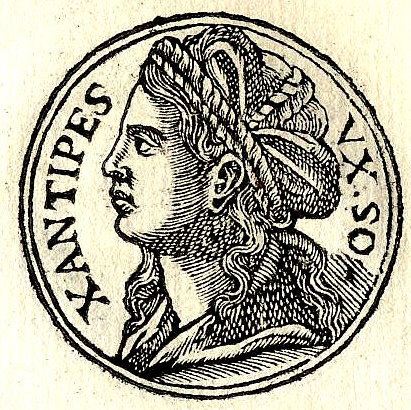
In her distress one night, Puttermesser doesn’t quite remember how she’s done it at first, she creates a female golem. A nice little overview of the golem in history follows. The golem, Xanthippe, knows everything her “mother” knows. She is taken to work at the cumbrous municipal office building where she begins to type. She produces a Plan. In short order, that plan has made Puttermesser New York City’s mayor by popular vote and the city flourishes as a low crime, highly civilized quasi-utopia. The murder rate plummets. Sobbing muggers walk into precinct houses, arms raised. Vast gardens thrive all over the city.

But now Rappoport has returned. He is not long in discovering his lust for Xanthippe, whom he takes to bed in Gracie Mansion, for the golem of course is among Puttermesser’s closest advisors. Soon Rappoport is sexually exhausted, raw. He leaves the city with a limp. Xanthippe, however, having tasted human lust, runs amok (as it is historically within the purview of golems to do). In her insatiable craving for boo-tay, one by one she fucks each of Mayor Puttermesser’s esteemed commissioners — presumably also the women — into Rappoportian insensibility. Gradually, the mayor’s carefully selected lieutenants, one by one, resign. Their marriages break up. They move to Florida. They enter monasteries. And just as gradually the city morphs back into the crime-ridden dystopia that it was before our heroine took office. Suffice it to say that Puttermesser does not seek reelection. She takes a year off.

Puttermesser, her name means butterknife in German, is lonely without anything to occupy her time. She reads widely about the life of her favorite novelist, George Eliot, and admires that single woman’s at-the-time scandalous relationship with the married George Lewes. Puttermesser understandably pines for her George Lewes. One day in the Met she comes across Rupert Rabeeno, twenty years her junior, copying David’s Death of Socrates with an accuracy that borders on the uncanny.

Rupert’s card reads “Reenactments of the Masters.” It turns out that this very postmodern art form is how Rupert earns his living. His reenactments are reduced to postcard size and sold in stationers shops. Puttermesser explains to Rupert her dream of finding her own Lewes, and in time she comes to believe she’s found him in Rupert. What follows with their relationship — after long nights of rereading Eliot’s novels and comparing all the major biographies — amazes the reader and defies summary. It must be read.

Then Puttermesser is visited by her Muscovite cousin. Lidia — a cynical, mercenary young woman — has seized on her New York connection in order to make money. God knows she can’t make any in Moscow. It is the era of Gorbachev and perestroika. Lidia comes to New York laden with all sorts of tchotchkes: Lenin as a boy pins, Russian nested dolls, etc. She finds a naive fellow she calls Pyotr, a man utterly without guile, whom she promptly seduces. (One thinks of Lidia as Peter’s first lover ever.) Puttermesser has installed Lidia on a sofa bed in her living room. Soon this is a veritable warehouse filled with Lidia’s inventory. Volodya, Lidia’s man back in Vladivostok, calls every morning at 3 am, inevitably waking Puttermesser. Soon, Lidia, having made her pile so she can marry Volodya, exits. Peter is shattered.

The novel has been rendered in the form of interconnected stories which were previously published independently. Yet together they make an indissoluble whole. It’s quite a trick on Ozick’s part. One studies the book deeply but exactly how she’s done this remains a mystery. Moreover, Ozick’s ear is exquisite. There is only one other such ear I have ever come across in my wide reading and that belongs to Martin Amis. Both writers have this innate zingy facility with language, both use vocabulary as punchlines, and both have unerring narrative instincts. Both also, it might be said, though their respective subject matters differ greatly, put enormous loving care into their work. I’ll spare you the usual superlatives, yet there can be no question that The Puttermesser Papers rises to such an exalted level.

Like Cather, Cynthia Ozick is an essential American novelist. So far her work has been egregiously overlooked by the mainstream. I have the pleasure of robustly recommending it. Please read as well Ozick's The Messiah of Stockholm and Heir to the Glimmering World, both wonderful, which I also review here.
Profile Image for Ian "Marvin" Graye.
948 reviews2,783 followers
January 4, 2016
Flaubert's Epigraph

The epigraph for Cynthia Ozick’s fourth novel is a quotation of a literary critic from Julian Barnes's novel “Flaubert's Parrot”. Barnes' subsequent comments are so scathing, it’s quite possible to read his novel, unaware that the ostensible source of the original quotation, Dr. Enid Starkie, Reader Emeritus in French Literature at Oxford, is a real person:

“Flaubert does not build up his characters, as did Balzac, by objective, external description: in fact, so careless is he of their outward appearance that on one occasion he gives Emma brown eyes; on another deep black eyes; and on another blue eyes.”

However, what is the significance of this quotation for Cynthia Ozick's novel?

Achieving a Real Sense of Trust and Distrust

Whatever else Ozick aspires to do, she studiously avoids making the same mistake as Flaubert (if, indeed, he had erred, as alleged, which is questionable).

She works hard on verisimilitude and plausibility. She requires the reader's trust to achieve her purpose.

As a result, there's a beautifully crafted sense of realism in the first chapter or episode in particular. Here, we’re introduced to Ruth Puttermesser (Ozick refers to her solely by her surname, which means “butter knife”), who when we first meet her is a single 34 year old New York lawyer, the child of Russian Jewish immigrants:

“Puttermesser had a Jewish face and a modicum of American distrust of it.”

Despite her rationalism, her intellectualism, her political idealism and her profession, Puttermesser still hasn’t come to grips with her identity, her culture, her home and her place in it.

Blurred Distinction

On the other hand, what isn't anticipated by the epigraph is that the realism is soon joined by a Postmodern sensibility that works its way into the narrative extremely subtly, almost within the space of a sentence.

Distracted from her work, Puttermesser dreams of "a reconstituted Garden of Eden, a World to Come," in which she -

“...will read Non-Fiction into eternity; and there is still time for Fiction! Eden is equipped above all with timelessness, so Puttermesser will read at last all of Balzac, all of Dickens, all of Turgenev and Dostoevsky (her mortal self has already read all of Tolstoy and George Eliot)...”

Her self-image is defined by the literary (as was Emma Bovary's). However, suddenly, she enters a world in which reality, fiction, fable and myth blur into one, by way of Ozick's expert objective, external description and careful attention to both outward appearance and inward perspective.

Ozick nevertheless adds a touch of the comic to her metafiction:

"Puttermesser is not to be examined as an artifact but as an essence. Who made her? No one cares. Puttermesser is henceforth to be presented as given."

description

A Golem Story In Rehearsal

Sculpted from Clay with Nothing But a Knife

Ozick positions Puttermesser inside literary and religious myths, and builds her story out of these experiences. She uses her character to impersonate mythology. Creator and creation continually struggle to become one. Via creativity, the creator endeavours to become one with all creation.

Yet, there is a sense in which this whole enterprise is egocentric. Puttermesser is a flawed character, and so therefore is her creation. Just as she embraces myth, she removes herself, consciously or unconsciously, from reality or, at least, some version of it. She is duped by the duplicate. She remains a copyist and somehow inauthentic (a theme seemingly reprised from William Gaddis' "The Recognitions").

The novel consists of five episodes set (and actually written as connected short stories) decades apart. The second and longest episode features a golem called "Xanthippe", named after one of Socrates' wives. For a while, it allows Ozick to explore Puttermesser's repressed desires:

"I know everything you know. I am made of earth but also I am made out of your mind...I am the first female golem...I will ameliorate your woe."

Still, it’s not a fairy tale world, nor is there a fairy tale outcome. Xanthippe acts as Puttermesser's amanuensis, but fails to help her "become what she was intended to become." Puttermesser's experience is primarily an imagined, rather than a lived, experience. The novel, both before and after Xanthippe, seems rather to be a caution that isolation from our family, society or culture can undermine the prospect of happiness.

No Entry to Paradise Without Papers

The papers of the title don’t exist in real life. They’re literally what we’re reading, the fragments of Puttermesser’s fictional life. Without family, without these papers, there would be nothing to remind us that Puttermesser had ever existed, nothing to document or recognise the beauty of her short, mortal life, even if it was only in the minds of writer and reader.

This is not just a personal tale, but potentially an allegory. How many people, how many families, how many communities, how many stories were irretrievably lost in the Holocaust?

These papers, these fictions are the vehicle for something authentic, something of value to transcend death from generation to generation, notwithstanding the constant threat of ephemerality. Whether or not any of us end up in Paradise, the future is better for the fragments that Ozick has located and preserved.

description

Personal Ad(d)

This review wouldn’t be complete without mentioning Ozick’s killer sense of humour and her ability to nail stereotypes. Here is her version of a personal ad in the New York Review of Books:

“Fit, handsome, ambitious writer/editor, non-smoker, witty, imaginative, irreverent, seeks lasting relationship with non-smoking female. Must be brilliant, unpretentious, passionate, creative. Prefer Ph.D. in Milton, Shakespeare, or Beowulf.”

Here are a few other parodies:

"Thirtyish academic wishes to meet woman who's interested in Mozart, James Joyce, and sodomy." [Woody Allen, “Annie Hall”]

https://www.youtube.com/watch?v=OpIYz...

“Lawyer and self-deprecating, but otherwise appealing, Good Reader seeks poignant quotation for perusal, update and possible review, suitable for close-knitting circle of global friends and followers.”

“Bald, fat, short, and ugly male, 53, seeks short-sighted woman with tremendous sexual appetite.” [London Review of Books]

“Blah blah, whatever. Indifferent woman. Go ahead and write. Box no. 3253. Like I care.” [London Review of Books]


SOUNDTRACK:

Cynthia Ozick responds to Norman Mailer at Town Bloody Hall, 1971

https://www.youtube.com/watch?v=eCTl0...

Listen to some music here:

https://www.goodreads.com/read_status...
Profile Image for Lora.
163 reviews2 followers
Read
May 4, 2021
Ohhhh life has no meaning and god has no meaning and there is no love and dreams are useless and heaven is hell and no one understaaaaands because you're all sheeeep waaaaaaahhhh.

Pure nihilistic drivel. I loved the first page, which is why I bought it, but it was all downhill from there. This book felt like listening to that loud annoying guy at the coffeeshop trying to get girls to go home with him by spouting philosophy, only worse. What's really clever is that if you don't like it, others can say you're just not enlightened enough, poor you.

The only part I enjoyed was the Russian cousin who played everyone.

Just. Ugh.
Profile Image for Margaret.
278 reviews190 followers
October 14, 2013
What kind of reader might appreciate Cynthia Ozick’s brilliantly written yet totally bizarre novel The Puttermesser Papers? The protagonist, Ruth Puttermesser, lives to read. She, like Ozick herself, is an expert on mystical Judaism; Greek philosophy; European literatures, languages, and history; contemporary New York City; and so much more. Ozick’s readers are likely themselves to be great readers, and they, no doubt, think themselves the better for it. But Ozick’s not so sure. Puttermesser’s life story fails to include anything much that might resemble the success or happiness or enlightenment we might hope would befall such a brilliant and highly moral protagonist.

As the novel begins Puttermesser lives “in the Bronx, on the Grand Concourse, among other people’s decaying old parents” (3). A good student all her life, Puttermesser has graduated from law school and obtained a job in one of the old “white-shoe” (read anti-Semitic, anti-Catholic, anti-anybody who’s not a well-off WASP) law firms. She’s relegated to a back office where she works in support of those who are less capable but more presentable. She spends her life outside the firm eating bon-bons and reading the great works of literature and philosophy that she finds in the Crotona Park Branch of the NYC public library. Ozick’s so totally on-the-mark about major NY law firms that readers whoop with conspiratorial recognition of the way things were in 1950’s and 60’s NYC. The same readers, especially if they are of a certain age, also recognize the intellectual children of the Jewish working class who were brought up to value continuous study as the most revered way of life. Ozick’s nothing if not a great realist writer.

Puttermesser leaves the law firm and goes to work for the Department of Receipts and Disbursemnets. No “white-shoes” here, but now there are Commissioners and Assistant Commissioners, all dear friends of the most newly elected mayor. Again Puttermesser finds herself doing all the work while those above her find themselves caught up in internecine quarrels which require them to have endless lunches in fine restaurants with allies. It’s all about work, of course, and now Puttermesser finds herself forced to witness corruption on the grandest of scales. This sort of storyline could get tiresome, and Ozick veers off in a completely different direction. Puttermesser, much to her own surprise, creates a golem out of the dirt in her potted plants, a mute young woman who names herself Xantippe (after Socrates’ allegedly shrewish wife) rather than accepting the name Leah, which Puttermesser had chosen. Xantippe communicates with written notes, which Puttermesser, having the most refined taste, criticizes by saying, “You write like a translation from the Middle Finnish” (50). The two argue about whether Xantippe was the first female golem in much the same manner two Yeshivah boys might quibble over arcane passages of Talmud. Xantippe does more than quibble; she manages to get Puttermesser elected as the mayor of NYC, after which all corrupt commissioners, etc. are booted out of their jobs and NYC comes to resemble some sort of Eden here on Earth. But like all good golems, Xanitppe turns on her creator. NYC is no longer Eden. Ozick’s nothing if not a great fabulist writer.

Later sections of the book (there are five, all of which were previously published separately in The New Yorker, The Atlantic Monthly, and Salmagundi) bring a Russian cousin, Lidia, to New York, whom Puttermesser welcomes and tries to assist as Lidia seeks to make her fortune. Nothing happens as you might expect, and we find ourselves at a huge party where the intellects behind two of the great Jewish contemporary magazines find themselves in near mortal combat. Another section introduces us to Rupert Rabeeno, who at forty is twenty years younger than the then sixtyish Puttermesseer. Rabeeno spends his days making exact replicas of the great masterpieces of European art and when Puttermesser points out that he is copying others’ works, he insists that he is not a copyist but a reenactor and that his reenactments are wholly his own work. The two take up reading to each other the life and letters of George Eliot. It’s all new to Rupert, who knew nothing of George Eliot, George Lewes, or the young Johnny Cross. I’ll leave it to your imagination to figure out what Rupert learns and how he interprets it. Ozick’s nothing if she’s not a great satirist.

The last section of the book is the most bizarre, the most original, and the most upsetting. In fact, despite all the cleverness and laughter throughout the book, this is a deeply despairing book. As I read I would occasionally stand outside the narrative and ask myself what was keeping me reading. I assure you, there is no good news between these book covers; only the most eloquently crafted ideas and imaginings of a most brilliant literary master. Ozick herself most likely would tell us that that is not enough, even as we cannot stop ourselves from reading.
Profile Image for Jamie.
1,435 reviews221 followers
July 26, 2022
Socially awkward spinster Ruth Puttermesser leads a kind of double life. Her career as a paper pushing attorney deeply ensconced in New York City's mammoth bureaucracy lies in stark contrast to her personal life as a kind of introverted intellectual with her head firmly stuck in the clouds. Both, I suppose, diverge equally from reality, yet as polar opposites. The best of these stories are witty and satirical, tending to the abstruse and bizarre, blurring the line between her fantastical daydreaming and her drab reality, as in Puttermesser and Xanthippe, a golem story where the golem physically embodies aspects of her personality and desires that she's unable to express directly. Others like Puttermesser Paired seem to get too tangled up in knots for me to appreciate or really even follow. Politics, bureaucracy and political ideology are frequently the targets of Ozick's satire, along with love, family, urban life, religion, feminism and more. Ozick's writing is a joy to read, full of wit and humor although more than occasionally inscrutable.
Profile Image for Paul Sánchez Keighley.
152 reviews135 followers
August 1, 2019
Cynthia Ozick writes some truly beautiful prose. Her metaphors and turns of phrase are relentlessly unexpected and have the organic majesty of a garden gone wild.

The book compiles five unconnected episodes from the life of Ruth Puttermesser, an introverted grotesquely over-educated Jewish civil servant, which Ozick originally wrote and published as individual short stories in several magazines - perhaps a literary alter ego? Each story shows us Puttermesser in a different decade of her life, starting in her thirties and escalating into her seventies.

Puttermesser: Her Work History, Her Ancestry, Her Afterlife. A sort of character study, gives a taste of what is to come. I particularly enjoyed how she portrayed the discrepancy a minority member feels between the way other people see you (a clumsy Frankenstein's monster of movie references and mythology) and the way you know yourself to be (rather ordinary) - and how you sometimes secretly wish some of the mythology surrounding the minority you belong to applied to you, if only to make you as different - and consequently interesting - as others suppose you are.

Puttermesser and Xanthippe is a fun, mostly harmless retelling of the story of the Golem of Prague, only the Golem is a woman and the setting is the pulsing gray flickering-fluorescent-lighted intestines of New York’s Department of Receipts and Disbursements.

Puttermesser Paired was possibly my favourite, a heartbreaking work of art imitating life imitating art imitating life. About George Eliot.

Puttermesser and the Muscovite Cousin fell a bit flat for me, I think because it focused more on the titular Muscovite cousin and Puttermesser was relegated to the role of observer or unmoved mover. Still, has some worthwhile commentary on the magazine industry that made me laugh.

Puttermesser in Paradise is exactly that. A hard one to stomach, it’s a washing-machine tumble of images and emotions that, if anything, makes one happy to be alive.

I’ll miss Ruth Puttermesser, but I can’t wait to get my hands on some more of Ozick's intoxicating words.
Profile Image for John Pistelli.
Author 9 books360 followers
June 3, 2015
[Spoilers below, not that a book of this tough intellectual fiber can be spoiled by the mere discussion of narrative events.]

I decided to start reading Ozick in earnest—and see my review of her last essay collection here—because of her piece on the new Bloom, which reminded me of her older essay on Bloom, wherein she accuses him (rightly enough from within her own paradigm) of "idolatry," which reminded me in turn that I've never really read an Ozick book from cover to cover and that I have been too intimidated, for almost a decade, by her sternly intelligent essays to read her fiction. (Not to mention her politics in the Bush years; but the terms of debate have shifted sufficiently and my own political ardor has cooled enough that I can regard all that philosophically now.) What impelled me to start on her fiction with The Puttermesser Papers? Probably Victoria Nelson's intriguing discussion thereof in The Secret Life of Puppets. Why am I telling you all this? Well, I sometimes come on a bit Olympian (deliberately enough—there are no non-poses, so why not an authoritative pose?), but it's good to remember the actual chance and vagary involved in real-life reading.

Also, Ozick is something of a writer's writer, and this is a very bookish book. Ruth Puttermesser, New Yorker and civil servant, is a reader above all. This book, not exactly a novel, collects Ozick's novellas and stories about the heroine, following her from her mid-thirties to her startling murder by a home intruder in old age (more of that later). I think the best way to proceed is to discuss the book's contents in order:

"Puttermesser: Her Work History, Her Ancestry, Her Afterlife." This is a superb character sketch, more or less realistic, explaining Puttermesser's movement through the legal profession (sexist and anti-Semitic) and then into the bureaucracy of New York, a snake pit of patronage and privilege that batters her touching civic idealism. We also learn about her Uncle Zindel, who teaches her Hebrew and instructs her in the old ways. Above all, we learn about her vision of the paradisal afterlife, the social and gustatory problems with which the conclusion of the story (and the conclusion of my review) will answer for:
Here Puttermesser sits. Day after celestial day, perfection of desire upon perfection of contemplation, into the exultations of an uninterrupted forever, she eats fudge in human shape (once known—no use covering this up—as nigger babies), or fudge in square shapes (and in Eden there is no tooth decay); and she reads. Puttermesser reads and reads. Her eyes in Paradise are unfatigued. And if she still does not know what it is she wants to solve, she has only to read on. The Crotona Park Branch is as paradisal here as it was on earth. She reads anthropology, zoology, physical chemistry, philosophy (in the green air of heaven, Kant and Nietzsche together fall into crystal splinters). The New Books section is peerless: she will learn about the linkages of genes, about quarks, about primate sign language, theories of the origins of the races, religions of ancient civilizations, what Stonehenger meanest. Puttermesser will read Non-Fiction into eternity; and there is still time for Fiction! Eden is equipped above all with timelessness, so Puttermesser will read at last all of Balzac, all of Dickens, all of Turgenev and Dostoevsky (her mortal self has already read all of Tolstoy and George Eliot); at last Puttermesser will read Kristin Lavransdatter and the stupendous trilogy of Dmitri Merezhkovsky, she will read the whole Faerie Queene and every line of The Ring and the Book, she will read a biography of Beatrix Potter and one of Walter Scott in many entrancing volumes and one of Lytton Strachey, at last, at last! In Eden insatiable Puttermesser will be nourished, if not glutted. She will study Roman Law, the more arcane varieties of higher mathematics, the nuclear composition of the stars, what happened to the Monophysites, Chinese history, Russian, and Icelandic.

I said "more or less realistic," but not quite. For the narrator of Puttermesser's life is self-conscious and a bit zany, something like the "biographer" of Woolf's Orlando, or perhaps like a heckler berating that biographer; this narrator lets us believe in Uncle Zindel for five pages ("Uncle Zindel blinked lids like insect wings, translucent") before telling us that he had actually died before Puttermesser's birth and is an artifact of her longing and deracinated imagination ("She demands connection—surely a Jew must own a past"). Even this little overture is enough to show why Ozick is, as I said, a writer's writer: prose this light but dense, a narrative so balanced between realism and the fantastical, a tone as poised as this on the line between comedy and elegy—if you think that's easy to write, you should try it!

"Puttermesser and Xanthippe." This is probably the section this book is best known for. Puttermesser, childless, unlucky in love, unappreciated at work, is disgusted by the corruption of the NYC bureaucracy and creates the world's first female golem to defeat the city's enemies. (Strange that Ozick and James Wood have a little mutual appreciation society, because I would call this "hysterical realism," though without the excessive length of that mode's practitioners.) Puttermesser's golem takes the name Xanthippe from Socrates's wife, long scorned as a nag, thus suggesting the need for social and intellectual redress from the excluded female perspective. Accordingly, Xanthippe gets Puttermesser elected mayor, and, in a bravura set piece that must have been inspired by the New Bloomusalem sequence from "Circe" in Ulysses, Joyce's loving parody of Enlightened (implicitly Jewish) civic republican utopianism, Puttermesser does indeed reform the polity—for a time, until the golem's story takes its traditional course. This novella is a spirited literary fantasy; again, Ozick's gift for light and comic treatment of the most serious themes is to be envied. The moral of the story can perhaps be located somewhere between Xanthippe's assertion that "[t]he politics of Paradise is no longer politics," and Puttermesser's rejoinder that "[t]he politics of Paradise is no longer Paradise." In other words: the conflict between the ideal and the real, the imagination and the world.

"Puttermesser Paired." This novella is an erotic exploration of the last-named theme. In it, Puttermesser, quietly grieving the difficulties of an intellectual, middle-aged woman's finding a male partner both interested in her and adequate to her mind, has a love affair with a younger man—a painter who paints only recreations of classic paintings. The affair is overtly modeled on the relation between George Eliot and George Henry Lewes, the ideal intellectual marriage of true minds, though no true marriage due to Lewes's inability to secure a divorce from his first wife. Anyway, this novella has some well-observed moments, especially around the erotic frustrations of middle age, but it is too literary a conceit too mechanically played out.

"Puttermesser and the Muscovite Cousin." This is my favorite piece in the collection: Puttermesser's cousin Lidia arrives from the Soviet Union and proves to be what neither Puttermesser nor her friends on the bien pensant liberal left expect. In Ozick's portrayal, communism has created a society of total cynicism and materialist selfishness—in fact, a kind of parody of what Marxists accuse capitalism of producing. And indeed, Ozick depicts a kind of complicity between the two systems, which both disparage the metaphysical and leave only appetite in its place. At the same time, Ozick effectively mocks the phony metaphysics of the left-liberals who want to make a mascot of Lidia, their New Age selfishness (their journal is called Shekhina—I suppose Tikkun is the real-world butt of the joke) and total disconnection from the oppressed they claim to champion. Compared to their fundamental dishonesty, Lidia's resourceful ability to look out for number one is refreshingly honest and spirited. This is a masterpiece of political comedy and irresolvable irony to put next to Turgenev and Dostoevsky—and so economical, all in 40 pages! Let me say it a third time: writer's writer!

"Puttermesser in Paradise." I confess I do not understand why Puttermesser has to have her throat cut by a robber who then necrophiliacally rapes her. While such things do happen, and probably happened more back in New York City's high-crime period when this story was written, I still think an author has to design events according to the emotional consistency of the work. So far, the book has been genially mocking of Puttermesser, validating her literary idealism on its own terms even as it demonstrates that idealism's inability to sustain itself amid the corruptions of the world. Puttermesser is a kind of Quixote, an ineffectual idealist whom we love more for her very ineffectualness. But to subject her to such an ugly end, to pit her mere butterknife (the literal meaning of "puttermesser") against a murderous blade, seems punitive, even self-punitive, as if Ozick were mortifying her own imagination. Further evidence for this thesis comes when we learn that Puttermesser has merely fantasized some of what we have learned about her in prior stories. And finally, this concluding story's depiction of the real paradise leaves nothing of the bookish paradise Puttermesser had desired in the first story. It is a solipsist's heaven in which the past can be endlessly recreated, endlessly remade—and yet "it too is hell." Why hell? Because every glory in paradise is both timeless and transient, which means that all its sorrows are equally unending. The imagination, therefore, offers no redemption, only the endless repetition of what already exists. Paradise represents "[t]he perfection of desire," as the narrator had earlier defined the heroine's paradisal fantasy, and despite its bookworm attractiveness, it is an eternity of candy, and candy with a racial slur for a name to boot. The hellish paradise with which the book concludes merely reveals that earlier paradise to also have been hell: greedy and puerile and devoid of higher purpose. Paradise as a kind of fiction: infinite and inadequate—idolatrous. What do the sports of imagination avail us? Can they assuage suffering? This beautifully Nabokovian reflection of Puttermesser's, just before her death, is lovely, but what can it do against the reality of suffering?—
Exegetical onomastic Puttermesser!—what was she musing on in the nanosecond of life still allotted to her? She was thinking of Paradise, yes, but (because the earthly and the heavenly are so interlocked one into the other) she was also thinking about how names have their destiny, how they drive whoever holds or beholds them. For instance: the poet Wordsworth giving exact value for each syllable. Or Mann himself—Man, Mankind, seeking the origins of human character in Israelitish prehistory. Or how one Eliot reins in the other Eliot: "the jew squats on the windowsill"—that's Tom—rebuked by Deronda's visionary Zion—that's George. And James the aristocratic Jacobite, pretender to the throne. Joyce's Molly rejoicing. Bellow fanning fires; Updike fingering apertures; Oates wildly sowing; Roth wroth. And so on. Puttermesser: no more cutting than a butterknife.


Because what, after all, can the imagination without limits really accomplish for reality? All fictions and fictionists are just butterknives in a world of cutting edges.

A sour note to end on, comedy of a bitter and Swiftian kind, though perhaps only so that we may recognize the necessity of belief as opposed to imagination. (Is it not common to say that Ozick is akin to Flannery O'Connor?) Ozick is one of the few contemporary writers to understand what is really at stake in fiction, in modernity, in the whole adventure of an ungrounded life, an untethered morality, a self without bounds. She is like Puttermesser's beloved George Eliot in this: she leaves one unsatisfied with fiction less rigorously intelligent than hers. She is colder than Eliot, to be sure; but then modernity is so much further along, the consolations fewer and fewer.
Profile Image for Jan Rice.
585 reviews517 followers
March 6, 2020
Paradise lost

This book was among several a friend gave me for my Little Free Library, but it caught my attention and I kept it.

Never read anything by Cynthia Ozick before.

I started out like a house afire. The book radiated intelligence and brilliance. It was the third part, "Puttermesser Paired," that I tripped over. For one thing, the book doesn't take easily to interruptions, and I'd had to interrupt. But the other thing was that I felt something bad coming, and I was right.

This book was light on redemption. Nothing much good happens, or if it does, it gets cancelled and reversed. Everyone Puttermesser runs into is a user or an abuser, or incomprehensibly out for themselves. Or inexplicably contrary. Never good to, or for, Puttermesser. Neither caring nor loving . As I said, no redemption. She doesn't get anywhere but old. Well, eventually she does get somewhere, but it's far from being an improvement

Not only that, but in each of these linked tales, there is no mention or memory of what happened in earlier tales. Kind of like a Stephen King plot device of characters losing their memories for what came before.

The writing is beautiful but the book is bleak.

There is stuff to learn, though -- lots. For instance, I now know golem lore (although less than the vampire lore in Dracula.

The picture of the times and circumstances is good. The selling of trinkets by the cousin recently in from Russia? That was in Gary Shteyngart's memoir, too, except that Ozick takes it further.

So much is good. If only Puttermesser could have had a dollop of happiness! Even Rohinton Mistry's characters in the bibliotraumatic A Fine Balance had one good year!

I'd be apprehensive right now about another of the author's books. There is one with such a tempting title, though: Heir to the Glimmering World. Not sure I can resist that, although the last time a title tempted me -- All the Sad Young Literary Men -- the result was not good.
Profile Image for Isaac.
35 reviews8 followers
June 2, 2014
If Rose, Blanche, Dorothea and Sophia had an extra spare, somewhere in the back of their Miami bungalow, Cynthia Ozick could've been the fifth Golden Girl. After all, the octogenarian reportedly sleeps in past ten, is armed with a catastrophic wit, and once made an author so upset he stormed out of his own apartment. And she probably wouldn't look so bad on white wicker. Thing is, Ozick is heir to the strain of Yiddish mystical-realist literature that once roiled through Isaac Bashevis Singer's half-hysterical Polish villages. Whereas Singer focused more on horny love triangles in his later writing after he resettled in the US, Ozick's grasp on the dybbuks remains firm. Follow Ruth Puttermesser through stories culled from the New Yorker over the years: as the unwed lawyer reconciles her unproductive time at a goyish firm, as she transforms New York into a post-Giuliani Garden of Babylon, as she accidentally creates a dangerous, lascivious golem from her potting soil. It's an excellent, immersive, heady read for any friend of Kafka.
Profile Image for Lee Foust.
Author 11 books213 followers
February 1, 2025
Oddly, the last book of fiction I finished (Chelsea Girls by Eileen Myles) billed itself as a novel and I felt compelled in my review to challenge that distinction as I feel that, in the end, that book presented itself as more of a collection of short memoirs. It just didn't, in my humble opinion, present the narrative cohesion I feel a novel should have. Not that that narrative, plot, or story--or whatever you want to call it--couldn't be done in an original or non-traditional way. Still, I feel that a novel, in order to be a novel, needs to have some sort of narrative cohesion, even if it's pieced together out of fragments.

Not that these are, or have to be, exclusive categories rigidly differentiated for every text, but, for fuck's sake, words do have meanings and the endless blurring and bastardization of such meanings is not helping our collective communication as a species much.

The Puttermesser Papers, similarly, has the words "A Novel" plastered mid center on its dust jacket, between the book's title and the author's name. To the book's (publisher's?) credit, this distinction is not repeated anywhere inside the volume, but I do declare that had those words not contextualized my reading of the five texts that make up The Puttermesser Papers, I might well have given this book 5 stars. Thus, "novel," as a descriptive word giving one context regarding what one is about to read, is not altogether meaningless yet.

I get it that novels have probably become our premier literary form because of how wonderfully flexible that appellation is. For didactic purposes I have tried, in the classroom, to define the word and the best I've come up with is "A long, prose narrative." Of course there are exceptions even to these three super generic criteria: Some novels are very, very short--shorter even than other prose narratives published as "short stories." Some novels, Eugene Onegin and Vikram Seth's The Golden Gate, for example, are written in verse. And, many experimental novels certainly push the concept of storytelling to its very limit. A good rule of thumb, I suppose, is to stick to this definition while also being aware that experimental novels will sometimes eschew one, but hardly ever two of the three descriptors cited above.

Which brings me back to The Puttermesser Papers. Although it declares itself to be "A Novel" so broadly on its cover, lo and behold, it's actually made up of five separate texts that were published as five stand-alone short stories before being cobbled together to make the current volume. While it might not have been impossible to write a novel in five parts that could each stand alone as texts in their own right, I just couldn't find enough cohesion in these particular five to deem them a novel. If it had said "Five stories" or if the title stood alone without offering a descriptive subtitle, I probably would have given The Puttermesser Papers five stars. I found the texts inventive, entertaining, and certain passages truly beautiful. However, they did not a novel make (to paraphrase Barefoot in the Park.) The connecting factor, of course, is Ms. Puttermesser, our protagonist--but without an overarching theme or a single plot line, the book reads like five separate tales from the life of a single person (who could also have been 5 other persons just as easily, given the desperate plots of the five tales) rather than any sort of single experience, narrative, or, dare I say it, text.
Profile Image for rachel.
831 reviews173 followers
July 20, 2014
While this book is clever and the experience of reading it wasn't unpleasant most of the time, there's an ingrained pessimism that's too strong for me. For every pleasure Puttermesser experiences and every ideal fulfilled, disappointing reality soon follows.

Examples: The middle-aged idealist becomes mayor and is determined to reform the city, but issues with the golem (yes, you read that right, the golem) that helped her become mayor force her to buy someone out. She marries disappointingly. She hosts an immigrant cousin who turns out to be a savvy, opportunistic liar.

Ozick's intent seemed to be radically reframed in the last few pages, with descriptions of Puttermesser's happiness in Paradise after she is brutally murdered. But then Ozick goes ahead and clarifies that Paradise has its own naturally occurring hell of loss and suffering too. Great.

I don't need happy endings. I am content to read tragedy, and OK with having a book end on that note, too. But pessimism couched in cleverness more than in genuine feeling doesn't do it for me. Ozick's writing is smart, but once in a while it also came off as showy. I don't enjoy showiness in tragic stories because it makes me think of the characters as literary pawns more than people. So why should I care if tragedy strikes? Why should I even read this?

That purposelessness hit me sort of hard at the end. I didn't hate reading the book though. For the most part, I didn't connect to Ozick's point of view and when it was over, it was over.
Profile Image for Lobstergirl.
1,921 reviews1,436 followers
September 1, 2024

Not precisely a novel, this is rather five linked stories with a shared protagonist, Ruth Puttermesser. Puttermesser is Assistant Corporation Counsel for the New York City government. Her Jewish mother in Florida would like her to get married, but Puttermesser finds it simpler to have an affair with a married man. In the longest story, she accidentally creates a golem (female) and accidentally gets elected mayor, with the golem serving as her amanuensis/executive assistant until the lusty golem becomes more trouble than she's worth, and Puttermesser destroys her. In the third story, a younger man falls in like with the middle-aged Puttermesser and they imitate the relationship between the 60-year-old George Eliot and her new husband John Cross, 21 years younger. In the final story, Puttermesser is raped and murdered and shown in the afterlife.

Ozick has an obsession with nostrils. Nostrils must have been mentioned and described at least twenty times.

There were continuity issues: after Puttermesser leaves the office of mayor, no one seems to recognize her as she goes about her business in the subsequent stories, in complete anonymity. Imagine New Yorkers not recognizing Ed Koch, Rudy Giuliani, Michael Bloomberg, Bill de Blasio. Imagine them not recognizing the first female ex-mayor.

The brief opening story had such Bellovian promise, but Ozick allowed that to dwindle away (or balloon) into goofiness, a big Jewish fairy tale, and then shatter in extremely repulsive violence.

Even so, there's a comic genius sprinkled - not exactly throughout, it's mostly in the opening story:

p. 4: "A letter came from her mother in Florida.....'He's only an accountant not good enough for you because God knows I never forgot the day you made Law Review but you should come down just to see what a tender type he grew into.'"

p. 5: "She wrote her mother a letter refusing to come to Florida to look over the divorced accountant's tenderness."

p. 7: (Puttermesser is working at a blueblood Wall Street law firm populated by Waspy squash players.) "One or two of them were groomed - curried, fed sugar, led out by the muzzle - for partnership: were called out to lunch with thin and easeful clients, spent an afternoon in the dining room of one of the big sleek banks, and, in short, developed the creamy cheeks and bland habits of the always-comfortable."

p. 17: "Of the world that was, there is only this single grain of memory: that once an old man, Puttermesser's mother's uncle, kept his pants up with a rope belt, was called Zindel, lived without a wife, ate frugally, knew the holy letters, and died with thorny English a wilderness between his gums."

p. 105: (Middle-aged Puttermesser reads an old letter from her mother begging her to find a husband.) "This innocently anti-feminist letter was now brown at the edges, brittle; in the fresh tedium of her leisure Puttermesser was sorting out the boxes stored under her bed. She was throwing things out. Her mother was dead. Her father was dead. There would be no more reports of the Florida weather and no grandchildren to inherit these interesting out-of-date postage stamps and wrinkled complaints. Puttermesser was an elderly orphan." (She reads the personal ads in the New York Review of Books.) "University professor, anthropologist, 50, gentle, intellectual, youthful, author of three volumes on native Aleutian islanders, cherishes the examined life, welcomes marriage or long-term attachment to loyal accomplished professional woman, well-analyzed (Jung only, no Freud or Reich please). Sense of humor and love of outdoors a must." None of the ads appeal to Puttermesser. "As for the examined life - enough! She was sick of examining her own and hardly needed to hear an Eskimo expert examine his."
Profile Image for Daniel.
45 reviews6 followers
November 26, 2007
"Very deep is the well of the past. Should we not call it bottomless?"

It was Thomas Mann: the opening sentences of Joseph and His Brothers. Ruth Puttermesser, sitting under the green lamp in her lonely bedroom one moment before her death, sitting with the weight or that mighty tale of a magus pressing into her ribs, was thinking of Paradise; should we not call it bottomless?

It happens that in the several seconds before we die the well of the ribs opens, and a crystal pebble is thrown in; then there is a distant tiny splash, no more than the chirp of a droplet. This seeming pebble is the earthly equal of what astrophysicists call a Black Hole-a dead sun that has collapsed into itself, shrinking from density to deeper density, until it is smaller than the period at the end of this sentence. Until it is less than infinitesimal.

Puttermesser heard (she did not feel) the pebble's electric ping! as it pierced the veil of the sluice that lay at the bottom of the well-or, rather, as it flew through the impalpable membrane that marked the beginning of the bottomlessness. And at the bottom of this bottomlessness-in Eden oxymorons are as esteemed as orchids-there was PARDES. PARDES is a Hebrew word, as befits so messianic a thought: it means a garden, it means Paradise-derived, no doubt, in this intertwining of the vines of civilization, from the Greek PARADEISOS.

Yet as Puttermesser sat alone in her bedroom under the green lamp, with the magisterial Mann pressed against the framework of her skeleton, it was still one whole instant before her death, and she was as far from entering Eden then as she had been at the moment of her birth.
Profile Image for Stephen Goldenberg.
Author 3 books52 followers
April 6, 2016
Key events in the life (and afterlife) of Ruth Puttermesser, a fairly unremarkable jewish New Yorker are the subject of this strange novel. The most compelling section veers off into magical realism (a genre I'm not particularly fond of) when she creates a female golem from the earth in her houseplant pots. The golem becomes her amanuensis and is so success ful in promoting Puttermesser that she is elected Mayor of New York. During her brief period in charge, she turns the city into a kind of paradise before it all falls apart. In another section, she forms a relationship with a much younger man who 'copies' old master paintings and then sells his versions as postcards. Their relationship also becomes a copy of George Eliot's with both George Lewes and her much younger husband, Johnny Cross.
I find it hard to put my finger on why I liked the novel. I can only label it a 'marmite' book - most readers will either love it or hate it.
Profile Image for Brent Legault.
753 reviews145 followers
May 11, 2011
I guess the golem really got to me. Before the many, many golemic scenes, I thought I was reading a mildly interesting, fairly literate piece of regional fiction (Ozick hearts New York!). But then the golem. And the golem got to me. It really, really got to me -- under my skin, like some silly inflamation that no cream could cure. I was embarrassed to be seen with this book (I often read on the bus) until I remembered that nobody knows who Cynthia Ozick is.
Profile Image for Cheryl.
330 reviews327 followers
June 14, 2012
Loved the first half, especially the golem story. Ruth Puttermesser unwittingly fantasized into existence a daughter golem, and finished sculpting it with her hands. This was terrific writing. I think I would like it way more, on a whole different level, if I knew anything at all about Jewish religion/culture. The second half sagged badly for me. By now both the story and I had split far apart in widely divergent directions, and pretty much weren't communicating.
Profile Image for Heather.
295 reviews34 followers
May 2, 2009
Well, this was a strange book; I hated the ending and in fact didn't actually finish. My recommendation: don't even start it. Certainly don't finish if you don't have a strong stomach.
Profile Image for Rod.
109 reviews57 followers
June 25, 2020
★★★½

If rated purely on the quality of prose, this would be rated five stars; however, when factoring in my level of involvement with the material, I settled on three and a half.
Profile Image for Anna.
2,115 reviews1,019 followers
November 29, 2016
'The Puttermesser Papers' is an original and well-written novel, albeit with a disjointed feeling as it is split into several novellas. However, I can't separate my ex post view of it from the reason I chose to read it in the first place. The titular character, Puttermesser, seemed from the blurb like someone I could very much relate to. She is a fairly solitary bookworm who works diligently in the public sector until arbitrarily made redundant. She appears to have no interest in romance and sex, although she seeks a meeting of minds, or ideal friendship. At first I found it very refreshing to encounter such a character, as women of this nature are vanishingly rare in literature. I was especially delighted to find that, in an episode of magical realism, Puttermesser raised a golem and immediately got it to cook for her. That would also have been my priority.

After that, the novel seemed to go somewhat astray. The account of Puttermesser’s time as mayor and her reforms was rushed, I would have enjoyed a far more detailed account. The narrative seemed more preoccupied with her downfall. I assume this was meant to convey a message about hubris, but it still seemed sad. The rest of the book just seemed unfairly harsh on poor Puttermesser and I disliked the implications. Without spoiling the details of the latter half, it suggested that romantically disinterested lady bibliophiles end up lonely and unfulfilled. Why isn’t Puttermesser allowed any friends? Why the emphasis on a husband and children as the only true form of happiness? Why is her joy from reading and research trivialised and brushed aside? I was hoping for some subversion of the tedious romantic tropes that pervade our culture. After initially getting my hopes up, this novel did not deliver such. As a character, I think Puttermesser deserved better.

Perhaps ‘The Puttermesser Papers’ is intended to be a sophisticated, urbane fable and I just wasn’t reading it on the right level, but I couldn’t avoid identifying with Puttermesser and thus took her fate personally. Although it had its moments of amusement, this novel mainly got me down. I wish there were novels about women like her (and me) in which being a romantically disinterested bluestocking isn’t punished with terrible tragedy. If I just haven’t managed to find them, please let me know where they are.
Profile Image for Luke.
1,626 reviews1,194 followers
June 26, 2017
2.5/5

I suppose I'm not a fan of one-character free-for-alls, or at least not when there is such a sharp contrast between the freedom of plot and the freedom of everything else. Golems and copylifers and Soviet relatives, oh my, but with the same old names being raised to the sky and the same old slurs being thrown around (there's black Jewish people, y'know), following the uncommon trail of Jewish womanhood as United States assimilationist becomes an exercise in suspending disbelief in the melting pot, rendering most of the entertainment null and void. I could've forgone looking for entertainment and instead relished the "deep thinking" of it all, but you can only refer to Mary Ann Evans as George Eliot so many times before the academic aspirations become a little dull. Couple that with an ending whose effort at making a contrast didn't render one half of it any less of a piece of gore porn, and this reader was left cold.

I really don't have that much else to say about this. Maybe it's the string of lackluster reads I've been trudging through lately (including a favorite that's swiftly becoming a former), or a being in the kind of transitory state that, thanks to capitalism, is running forevermore in order to stay perfectly still. Mayhaps even the weather is to blame, for however much my area desperately needs rain that my aesthetic sensibilities prefer (the breadbasket of the US is currently facing a century of doubt), there's little I can do about the science of biological depression, hereditary as well as seasonal. This has made for a current trend in reading where the length of time between when I was first convinced to add the book to my shelves and the now when I finally pick them up seems to have negatively impacted more reading experiences than not. Kogawa and Bolaño and Kertész survived, but that doesn't exactly bode well for the average author that has waited a year or two more in my to-read section.

The politics of it all means Ozick technically qualifies as a woman of color, although it's probable that the histories of white supremacy in Europe and the US need a tad more reconciliation before international conventions start translating into papers and subsequent Tumblr papers. Other than that, I'm rather sapped when it comes to bookish commentary. I just hope I pick a winner for the currently reading shelf sometime soon.
Profile Image for James Henderson.
2,224 reviews159 followers
December 19, 2020
While The Puttermesser Papers is considered a novel, it could also be considered a collection of short stories, as each of the five "chapters" were published previously in various magazines before being brought together in the form of a single novel. What could have been a straightforward biographical novel becomes, as Ozick creates a complex, many-layered tale, a fantastic exploration both of literary genres and of a single woman’s life in late 20th-century New York. Because this one fundamental “fact” is challenged, the reader realizes they cannot take any single item at face value.

The story chronicles the life of the imaginary Ruth Puttermesser, through her adult life and into her death and afterlife. She is an intelligent Jewish woman who lives in New York City. Ruth grew up in the Bronx, New York, in a Jewish family. Ruth was a very smart, bookish girl who apparently became interested in the law through studying Hebrew with her uncle—or so the reader thinks, until another voice intrudes into the narrative to tell the reader that Ruth never knew this uncle.

Each chapter chronicles the fulfillment of a desire, whether on earth or in Paradise, but each seems in the end to bring new pain. In one chapter the book takes on the quality of a traditional Jewish fable when Ruth, in her sleep, creates a golem. In another her interest in 19th-century novelist George Eliot turns into an obsession; moreover, the salient part of that obsession is imagining that she will find her perfect soulmate, as Eliot had in George Lewes. But the golem and soul mates betray our Puttermesser. Edenic love fades away.

Ruth Puttermesser embodies several themes. She is an apparently successful, single career woman who decides she needs more in her life than her work as an attorney can provide. In an attempt to balance the romantic and the pragmatic aspects of life Ruth veers over to the romantic, and even fantastic, side. Ruth believes that one obstacle to finding true love is the shallowness of the New York social milieu in which she travels. The beauty of the prose and the challenges facing the heroine merge to maintain the reader's interest. Cynthia Ozick's prose style displays an intelligent writer who is fun to read.
Profile Image for Elalma.
899 reviews102 followers
July 16, 2017
Un libro molto originale, parla della vita scritta in racconti, di questa donna, che a dispetto del titolo non voleva essere chiamata "signorina", ma semplicemente con il cognome, Puttermesser, coltello del burro. C'è ironia, sagacia, una scrittura elegante e molta cultura in questo libro, dove cosa rara, i miti e la cultura ebraica sono trattati da una donna. Molti aspetti sono divertenti e surreali, tipicamente ebraici, altri un po' più pedanti. Quello che non mi ha convinto è il distacco, che poi è anche del lettore, almeno dal mio punto di vista.
147 reviews
June 12, 2010
Ozick is such a great writer. Puttermesser is Supreme Court nominee, Elena Kagan, an intelligent, accomplished New York city woman doomed to a bland and doubting dissatisfaction despite her achievements.
Ozick provides one of the most believable descriptions of heaven I have ever read. I'm hoping heaven is as described by C.S. Lewis in "The Last Battle." In my heart of hearts I believe Ozick's is closer to my reality.
Profile Image for Derrick.
52 reviews39 followers
August 29, 2024
Absolutely floored by this one. Funny, tragic, erudite, magnificent prose. Easily one of my favorite novels I’ve read this year. This seems to have been kinda forgotten. I can’t fathom why. Highest recommendation I could give a book, there is something for everybody in it I believe, a book much denser on the inside than the ~200 pages would lead you to believe.

Reread 2024: Even better on a reread. Lot of stuff went over my head, on the first; so it goes. . . A forever favorite.
22 reviews
October 26, 2022
This was my first Cynthia Ozick book and it was a delightful read. It left me feeling like I’d just eaten a really good meal, each vignette bursting with flavor. Ozick manages to pack so much into her stories, weaving humor, depth, cultural and religious reference and philosophical probings. She lets you get really close to her characters and see them for who they are - complex, zany and as rich as butter.
Profile Image for Cooper Cooper.
Author 497 books400 followers
July 19, 2009
If you enjoy Isaac Singer and/or Saul Bellow (as I do), you’ll probably like Cynthia Ozick. She is urban (New York) and preoccupied with the Jewish experience, and her style and humor, like those of Singer and Bellow, have a Yiddish flavor. Some of her sentences could have been written by Bellow: “The Mansion thickens with erotic airs. Heavy perfumes float. Has Rappoport journeyed to mysterious islands to offer the golem these lethargic scents, these attars of weighty drooping petals?” Like Bellow, Ozick deploys the English language brilliantly, spawning ingenious metaphors, although occasionally she becomes overly abstract (“…hadn’t she seen in him voluminous will, the will to be proxy for the punctilious windings and reverberations of huge precursors?”), and sometimes she postmodernly crowds her sentences (“…for into Eden the Crotona Park Branch has ascended intact, sans librarians and fines, but with its delectable terrestrial binding-glue fragrances unevaporated.”). But she is full of imagination and very good.
The novel is purportedly a biography of one Ruth Puttermesser (“butterknife” in German), unmarried polymath New York Jewish lawyer full of ideals and strange intellectual passions. Her life is discontinuously presented in five episodes: in her thirties she is an able backroom worker in a corrupt municipal department--until demoted for no good reason (a higher-up wants to give her job to a crony); relegated to a non-job, she fashions a golem who through superhuman effort gets Puttermesser elected Mayor of New York, where she eliminates cronyism and straightens out the city, until the golem goes berzerk (as golems will) and brings “Mother” down; in her fifties, trying to find an intellectual relationship as fine and pure as that between the novelist George Eliot and her lover George Lewes, Puttermesser courts and then marries a younger man, a “re-enactment” painter, with a weird result; in her sixties, she plays hostess to a beautiful, zany and money-hungry young cousin from newly-decommunized Moscow; in the final episode, nearly seventy, after being murdered in her apartment she finds out what the afterlife is really like.
This is a very good novel, fast-paced, imaginative, satiric, metaphoric and spiced with bits of history and contemporary events. Intellectual fun.

But Puttermesser discovered that in City life all rumors are true. Putative turncoats are genuine turncoats. All whispered knifings have happened: officials reputed to be about to topple, topple. So far Puttermesser had lasted through two elections, seeing the powerful become powerless and the powerless inflate themselves overnight, like gigantic winds, to suck out the victory of the short run. When one Administration was razed, for the moment custom seemed leveled with it, everything that smelled of ‘before,’ of ‘the old way’—but only at first. The early fits of innovation subsided, and gradually the old way of doing things crept back, covering everything over, like grass, as if the building and its workers were together some inexorable vegetable organism with its own laws of subsistence.

Ah, how this idea glowed for Puttermesser! The civic reforms of Prague—the broad crannied city of Prague, Prague distinguished by numberless crowded streets, high growths of iron, masts and spires! The clock-tower of the Jewish Community House, the lofty peaked and chimneyed roof of the Altneuschul! Not to mention Kafka’s Castle. All that manifold urban shimmer choked off by evil, corruption, the blood libel, the strong dampened hearts of the wicked politicos. The Great Rabbi Judah Loew had undertaken to create his golem in an unenlightened year, the dream of America just unfolding….Old delicate Prague, swept and swept of sin, giving birth to the purified daylight, the lucent genius, of New York!
Profile Image for Alice.
8 reviews
January 21, 2023
TW: rape and emitophilia

Ruth Puttermesser has the unconscious ability to create what she desires. But what destroys her creation and her self becomes stronger each time.

In the first section, Ruth desires a child and justice. She creates a golem in a fugue state. The golem builds her up, she tears the golem down. She is left with an unsustainable paradise.

In the second section, Ruth desires a George Lewes to her perceived George Eliot. She encounters a copycat (Lewes), who treats her as the copycat Lewes treated Eliot, but modern-ly. She is left with an unconsummated paradise.

In the third section, she desires to redeem or rescue her father's family. She encounters a previously unknown family member who she doesn't quite realize she's projecting on. She is left with the realization that she misinterpreted someone else's paradise.

I might have enjoyed ruminating more on this and the parallels of the names of the letters that make up PARADISE with the four sections of the book but there's a very graphic rape scene at the end that I felt soured any possible levity or profundity in the work. (Sour, like bile? Ew. Ew. Ew.) Without this scene I think this would have been more interesting to think about than to read.

To paraphrase, the soul/spirit could not look back in its flight from the body at first moment of death because pity for the state of the shell of the body would cause a ripple of pity (or revulsion) so strong that paradise would be destroyed (or become unecessary). Ruth is spared that lost paradise but the reader gets to experience everything. Are we now denied paradise?

I actually threw the physical book away, which I have NEVER done before. I guess that means that it did provoke a response (BEHOLD, ART!) but I didn't like it.
This entire review has been hidden because of spoilers.
Profile Image for Eric Byrd.
622 reviews1,162 followers
April 22, 2009
I really admire Ozick's ability to create such an bookish character--and to fully explore her intellect--without falling into the essayistic set-pieces that, say, Bellow doesn't always manage to avoid. Ozick's prose can be so chewy and dense; it can also be purely lovely:

At noon the dark gongs of St. Andrews boomed their wild and stately strokes.

...the spotted sudden flash of a deer disturbing the wood.

Foliage is browning, Thursday afternoons turn cold and dusky.

The poor lurked and mugged, hid in elevators, shot drugs into their veins, stuck guns into old grandmothers' tremulous and brittle spines.

Velvl, ten years old, his head shaved in the old Russian style, his school uniform high-collared and belted, with a row of metal buttons marching down his short chest.

Puttermesser is another in the line of Nabokov's Pnin and Updike's Bech, a comic character composed of linked stories that make a novel. The incidents of her life, though, are exceptionally bizarre. In one story, she creates a female golem who helps her become mayor of New York and coordinate its various miscreants and loafers into an utopian civitas--but then the golem, turned ravenous for the seed of powerful men, starts to rape all of Puttermesser's city commissioners, and the adminstration fails. And quite unlike Pnin and Bech, Puttermesser dies in the last story--is murdered then necrophiliacally violated by an intruder. This turn of the plot didn't bother me in itself...except that Ozick, in a gratuitous touch, has the intruder lubricate himself with a scooped handful of the dead Puttermesser's convulsive vomit. I didn't see that coming and I'm still disquieted by it.
This entire review has been hidden because of spoilers.
Profile Image for J.I..
Author 2 books35 followers
Read
December 17, 2012
Witty and erudite, Ozick flits from literary figures, the art of copying, the Golem of Prague, city politics, office politics, love, affection and the afterlife. I have left many things out. She resorts to lists and she resorts to absurdities and she combines the two. She goes straight for humor and she is happy to dwell in pathos. I am meandering.

This is a satire of our modern life but it is also something of an exultation of it as well. The two are inseparable. There is no heaven when there is no hell. It is a book often difficult to read, but it is worth it to those curious enough to listen to the crazy story of an unusual woman who never seems to get her way even when her wishes are granted.
Displaying 1 - 30 of 246 reviews

Can't find what you're looking for?

Get help and learn more about the design.