An Artfully-Written Pathology Study
[Warning: Contains significant spoilers!]
My first awareness of this book and its author came from the excellent 11-part 2013 Fuji TV drama "Antiquarian Bookshop Biblia's Case Files," or "Biblia Koshodou no Jiken Techou." The show - which is included in the streaming service Crunchyroll - is about a used bookshop run by a mysterious girl who has a Sherlock Holmes-like skill: She can unravel the history of a book's past owners just by examining it. Each episode deals with a specific book, and Episode 1 is a nifty story about long-buried family secrets that are tied up in Natsume's book "And Then." So of course I had to read it. (One down, ten to go...)
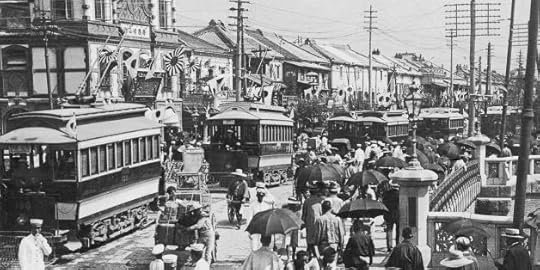
I can only assume that reading this in the original Japanese is the only way to derive its poetic value - Natsume was an acclaimed poet as well as novelist - but the story itself, though an interesting slice-of-life from turn-of-the-20th-century Tokyo, is essentially a pathology study.
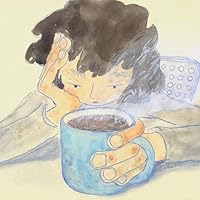
The main character, Nagai Daisuke, is best described as a lazy, spoiled loser who submerges himself in quasi-intellectual rationalizations for living a contemptible, self-destructive life. He's the son of a prosperous businessman who gives Daisuke both a house of his own to live in, complete with a servant and a cook, and a generous periodic allowance. When he's not wandering aimlessly around the city, he spends his days in idle contemplation of everything from trivia like suppositions on how the colors that rooms are painted might affect moods, to nonsensical musings like staring at his legs and imagining them as "strange creatures." He's reached his thirties but remains utterly aimless, a whim-worshipping, scatterbrained dependent who rejects the idea of developing a self-sufficient career every time anyone brings it up. Most of the chastisements come from his father, whom he treats with contempt for no good reason, but also from his older brother and sister-in-law, for whom he retains a level of respect. He rationalizes his inertia by claiming that any work done for self sustenance - as opposed to work done "for its own sake" - is a "degenerate endeavor."
His continual reference to the idea that one "degrades" a thing merely by doing that thing, is Platonism - the belief that any given thing (or action,) is only pure and unsullied if it is completely separate from physical expression, i.e., from application in the real world. It's a thoroughly irrational belief, and at once an easy "out" and psychological burden for anyone who convinces himself that it's somehow true. I'm wanting to think Natsume wrote this into the Daisuke character as a way of presenting a cautionary lesson on irrationality, but it's equally likely he agreed with it.
So because Daisuke cannot conceive of a values-derived pride arising from having put in an honest day's work for one's sustenance, he projects that blindness onto the world around him and blames *it*. It's evasion raised to the level of an art form. When he gets around to contemplating the concept of a purposive life specifically, he begins with the valid observation that one's purpose in life is properly self-directed rather than imposed by others. But immediately he flops into the crude circularity of arbitrary whim: "...the purpose of one's existence was as good as announced to the universe by the course of that existence itself," and "Daisuke held that one's natural activities constituted one's natural purposes."
In other words, "Whatever you happen to do, that's your purpose." It's a reversal of cause-and-effect, but it works wonders in rationalizing an aimless, pampered lifestyle and an ethical credo founded 100% in transitory whims.
His family is also prodding him to marry - a series of omiai or formal introduction ceremonies between prospective spouses had previously been rejected by Daisuke, one after another. The latest involves the daughter of a prospective business partner of Daisuke's father. Though not mandatory, arranged marriages were still common at that time, but Daisuke's age and the long string of past refusals have begun weighing against him. Though one would like to find admiration in Daisuke for refusing a marriage of convenience rather than of love, you as a reader can't even do that, for his motivation is primarily the same aimless, noncommittal attitude he applies to every other aspect of life, and...
As the story progresses he slowly realizes that he's fallen in love with the wife of his best friend Hiraoka, which begins to add weight to his ultimate refusal. But even this revelation is submerged in the miasma of Daisuke's scatterbrained past: Though he'd always been attracted to the woman, four years prior it was he who had, on an altruistic whim, urged his best friend to marry her instead of marrying her himself. So he's sitting in a trap entirely of his own construction, and any admiration of him, even for something as simple as rejecting convenience in favor of true love, is impossible.
Rather than accepting responsibility for his own past stupidity, trying to remain in his family's good graces and embracing an open future, he instead decides to declare himself to his friend's wife, and later, confess the whole thing to Hiraoka himself. Which of course brings his entire whim-driven world crashing down on him. Since Daisuke has remained a character for whom it's difficult-to-impossible to invest any sympathy, that outcome is as lacking in import as it is predictable.
In the end, I just didn't care much what happened to him. The only thing that kept me reading was Natsume's subtly whimsical writing style and my own curiosity about early 20th century Japan.
I can give Natsume points for that enjoyable writing style (I would like to read some of his earlier works, on the hope that they're better in actual thematic and dramatic content,) and there is always a value in reading fiction written in the past in that it offers a window into a time that no longer exists. That Natsume's style was sufficient to keep me reading a story about a complete wastrel is testimony to his skill as a writer. The brief bio on Natsume by Norma Moore Field that appears at the end is also interesting, but otherwise "And Then" is something to be read primarily for those marginal values - style and cultural history - rather than the story or its characters themselves.