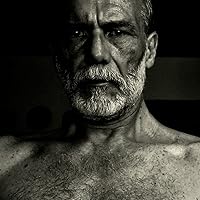
Nicolai Lilin was conscripted and trained as a sniper in an unorthodox Russian special forces regiment called the Saboteurs. Operating outside traditional military codes, this elite band fought their way through the inhospitable terrain of Chechnya, encountering mercenary fighters, anti-personnel mines, hand-to-hand combat and extreme torture.
Nicolai Lilin is a Russian writer of Siberian origin. He was born and grew up in Transnistria, which declared its independence in 1990 but has never been recognized as a state. In 2004 he moved to Italy. In 2009 he published in Italy for Einaudi "Siberian education", his first novel, written directly in Italian. The book has been translated into 19 languages and distributed in 24 countries, and has reached the interest of cinema. It will become a movie directed by Gabriele Salvatores, starring John Malkovic as Grandfather Kuzja. In April 2010 he released his second novel, "Free Fall" (or "Sniper"), and for October 2011 we are waiting for the release of the new novel "The breath of the dark". He currently writes for magazine L'Espresso and he founded Kolima Contemporary Culture, an exhibition space which also hosts cultural events in Milan. Among its activities he is also a tattoo artist, he studied for many years the traditional Siberian criminal tattoos and learned his techniques and complex codes.
When we last left memoirist Nicolai Lilin he was coming of age in the gangster's paradise of Transnistria. The honorable thief, the criminal tattoo artist, the hood with a heart of gold and a crime family behind him ... has been drafted by Russian Army to fight in the First Chechen War.
Like Siberian Education, Sniper is violence-violence-gore-gore all the way through, published as "fiction" because none of Lilin's tall tales can be confirmed (of course)
But you know what? I actually believe him this time. This book shows a lot of growth and maturity. Its structure is better, it's well organized, minor characters are better developed (Moscow! Nosov!). It is still a bit too long in certain places (after a point all the missions start to bleed together and just becoming boring to read), but Lilin holds on to his insightful philosophical edge.
This is like a Russian Catch-22 or Slaughterhouse-Five. It's a deeply cynical book about the folly and confusion of war. Not confusion as in 'why are we here?'/'who are we fighting?' but the real, more harsh confusion of battle: friendly fire, soldiers deployed critically sleep deprived, drug use on the front lines, etc, etc, etc. The descriptions of Nicolai caught in the middle of fire fights with a concussion are some of the best in the book. War in Sniper isn't just chaos.
I found myself highlighting so many passages. The translation is superb. Here are just a few of my favorites:
On being drafted, sarcastically "I kept playing the good soldier, responding in the way I imagined that soldiers were supposed to respond: fast, like tap dancing with your tongue.
On war and civilians "I looked at the gutted houses, the collapsed walls and the burnt furniture, the photographs of people I didn’t know torched and torn up, thrown aside without remorse, without any respect for memory. Anyone who experiences a war, whether fighting it or fleeing from it – either way, trying to survive – no longer has anything of his own, not even his own history."
On the mentality of war "Where a normal person sees a landscape and contemplates the beauty of nature, I realize that, against my will, I am figuring out where the machine gun should go."
On Russian military "The Russian soldier has three types of enemies. The first, the most dangerous, is in Moscow, the Russian capital: it’s the government, which is afraid of its army and thus desires its death. The second is the air troops, because they often make a mistake and bomb their own units. The third enemy is the least dangerous: the one in the war against the Russian soldier."
On returning to "normal life" "Young people competed to see who was the most ignorant, because ignorance is something that’s always in fashion"
"I was increasingly convinced that this kind of peace didn’t deserve to exist: better the bloodbath I’d known, where at least we knew what the enemy’s face looked like and there was no chance of getting it wrong, and everything was as simple as a bullet. But now I had been returned to a peace that enabled me to be a consumer of the beauties of the universe, making me believe that they had been chosen just for me, even prepaid: packaged food and virtual sex, and after those fake orgasms you’re left with nothing but contempt for yourself and for the world."
having finished this around the time of the aurora shootings, it's hard not to look at the nationwide uproar and wonder why no one knows of the medieval barbarity that consumed Chechnya for so long, killing so many.
I gave this book five stars for a number of reasons. This fictionalized account of the author's experiences as a sniper in a loathed group of saboteurs, a sort of dirty dozen who don't follow the rigid repressive hierarchy of the Russian army, and in return is given the worst, most desperate and in some cases suicidal missions. Therefore, the standard separation between the command and foot soldiers is present, yet in this one, we see how the expertise of the foot soldier gives him a superiority beyond his subjection to dogfaced indignities, as in Marlantes's Matterhorn. As a procedural account, it was outstanding. I have read many war novels and this is the one that most captured the high level of technical experience that is employed: I now know how to run through a forest in the middle of a dark night, how to clear a house, mortar a column, how to sight a rifle for distances, to wear an eyepatch while shooting, why donkeys in enemy convoys are a sign of impending doom. (In my job as an urban librarian, I never know what will come in handy, none of these likely will be useful, but it's nice to know about the donkeys).
I also found it amazing that I was able to sympathize with these men who have no qualms about atrocities, particularly their leader, Rostov, an Afghan war vet who is a hero of sorts even though he believes in leaving monuments of desecrated corpses to foster terror in the enemy. Rostov has a code, albeit twisted; while defending the paratrooper's monuments to regular army officers, he'll sneer to the paratroopers, while he skins an Arab solider alive, that anything other than looking into someone's eyes when you are skinning them is an act of base cowardice. For this and many other examples of insane cruelty, the book often reminded me of Blood Meridian.
Unlike the pure evil of Cormac McCarthy's antagonists, these damned men are still human, and the unsentimental portrayal of them as individuals who are trapped in this war manages to make them human. The author is certain that, if he hadn't been with Rostov, he would have been dead long ago -- especially as Rostov reads situations so well and often disobeys orders which would have resulted in disaster. Rostov is no patriot , and his commentary about the utter corruption of the war and of the Russian government fills the book. On one mission it becomes clear that corrupt colonels are working with the opposition and are willing to sacrifice the unit as part of a cover-up. Rostov is able to use his experience to avoid this murder of their own soldiers.
There's also so much about Russian life, from the lyrics of Russian songs about the war, the Siberian folkways and proverbs ( I will add some of them later -- between this book and Polar Star, I am more interested in Siberians and how they relate to the Russians overall), the fatality of being Russian and thus born into a perennially oppressed existence, of corruption and of commiseration. I was extremely impressed by the author's clear writing and I look forward to his other novels to be translated into English.
Raramente leggo uno stesso autore in modo così ravvicinato perché il mondo letterario è così ampio e, a me, sconosciuto che preferisco conoscere nuove realtà piuttosto che approfondire un solo mondo. Ma nel passato ho fatto eccezioni, specie quando 'sentivo' che c'era dell'altro di buono da conoscere. L'ho fatto per il Perù di Scorza, il Cile di Sepulveda, il Giappone di Mishima e altri. Nicolai è una di queste belle eccezioni, una eccezione che mi parla della nuova Russia a me così poco nota, dove un nuovo sistema di regole formali convive e si confronta con altri sistemi reali.
Anche perché rispetto alla Transnistria, qui siamo in Cecenia e cambia tutto lo scenario e le elaborazioni personali di fronte al mondo rappresentato e ai fatti che vi avvengono. Se quello di 'Educazione siberiana' era un mondo di tradizioni primordiali davanti ad un sistema di potere corrotto e sostanzialmente impotente, qui è lo stesso sistema corrotto che si confronta con un sistema di potere diverso e antagonista, entrambi alla ricerca di una supremazia territoriale, entrambi utilizzando valori nobili a tutela di interessi meno nobili e naturalmente non dichiarati.
Però, a guardarci bene, sebbene contesto e fatti sembrino estremamente distanti, in realtà il racconto di Nicolai è ancora coerente. Le sue sono si le memorie di un individuo che, limpidamente, appartiene ad una delle fazioni in campo, ma ci raccontano dell'uomo 'piccolo ingranaggio in grande macchina' che in questo ruolo naturalmente fa tutto ciò che è necessario per sopravvivere. E lo fa insieme ad altri intorno a lui che ne condividono il destino, riuscendo anche a far nascere quella fratellanza tra 'poveri' da cui creare una propria nuova nobiltà e il senso. E ce ne narra.
Lo fa di nuovo con uno stile letterario gradevole e appassionante, nonostante descriva senza veli una guerra sporca e cruenta fuori da ogni cronaca ed umanità reciproca, e lo fa secondo me in modo originale. Appassionante ma non appassionato, perché se da una parte ci coinvolge con forza nella sofferenza fisica e nello stress emotivo del protagonista, dall'altra le sue descrizioni son quelle di un testimone dei fatti quasi estraneo. Questa danza tra fatti e pensieri a volte ha livelli così intensi da subirne la forza, come quando (con furbizia?) avviene di continuo nel mezzo di una battaglia.
Una realtà da approfondire, lo stile appassionante e curato, e il peso che dà la consapevolezza di leggere vicende sostanzialmente reali mi hanno confermato e forse rafforzato, il piacere che avevo ricevuto nel leggere l'opera prima di Nicolai. Oggi, che fa tatuaggi a Milano, è possibile che stia esaurendo le fonti dei suoi racconti, ma è stato comunque un bel leggere e di ciò lo ringrazio.
Well written. Gruesome but insightful about Russia and Chechen wars. Corruption and arms trafficking but Russians profiting off the war and blood of drunken conscripts.
Putin stands no chance in a real war. Bring on WWIII already, so we can get it over and done with and move on. China stands little chance either. What are we waiting for Trump?
Probably one of the best books I’ve ever read. One of the most accurate and immersive depictions of the brutal realities of combat. Also provides some interesting insights into Russian/Chechen life shortly after the fall of the USSR. In reality this is a biography of sorts, depicting a man’s transformation into a soldier and ending with his experiences returning to society. Please read.
Very pleasant to read. The author skillfully shows war scenarios where he was deployed. Totslly recommend the book, specially to those who want to practice reading in English (easy vocabulary).
The writing isn't great, but this is still worth the read for those who are interested in the recounts of the second Chechen war. Still, would say One Soldier's War by Arkady Babchenko is a way more eloquent place to start.
Nicolai Lilin lifts war's secret shroud of denial in "Sniper." Through a combination of brutal observations and the retelling of horrific acts, Lilin exposes atrocities committed and witnessed by his highly covert military unit known as "saboteurs" in Russia's futile and vicious war campaign against Chechnya almost two decades ago.
The author acknowledges the book represents a true, albeit distorted, picture of details experienced during that tragic war by he and his unit of specialized operatives, told in a composite, first-person recollection.
The writer includes numerous instances of slayings, assassinations and vengeful brutalities committed against their Muslim foes, in circumstances that stretched the chasm between mission orders and the realities of survival. The acts of depravity in this book mount in mission after mission as Lilin relays the increasing hopelessness of a war fought without merit, its purveyors corrupt and cannibalistic at the expense of their own dedicated military forces.
Despite recurring evidence of self-sabotage and mistrust orchestrated by the nation's generals and bureaucratic power mongers, an inspiring sense of camaraderie flourished among Lilin and his colleagues. The author relays numerous instances of life-saving heroics and the implicit trust he and his cohorts developed in each other and in their unwavering leader, Captain Ivanisch Nosov. That collective confidence proved critical to sanity and to surviving the relentlessly savage campaign. But most of all, it was his group's ability to act on instinct, to modify their mission and adapt to what the situation presented, that bolstered their survival.
"I never stopped being afraid in the war, not even for an instant, and I think this is actually the reason I stayed alive and didn't lose my mind," Lilin contends. "Every day I found myself facing situations that seemed to exceed my capacities; I had to make choices that forced me to surpass my physical and mental strength...In war, the idea of death never leaves your thoughts."
"Sniper" is an immersive and visceral experience of the horrors of war. The reader may find little uplifting in this laundry list of hopeless outcomes and pervasive death. Nevertheless, the book serves as an awakening as to the commitment the sons and daughters of any nation make while serving under the unblinking eye of fate.
La guerra in Cecenia vissuta in prima persona da un ragazzo russo, militare di leva, finito a fare il cecchino. La guerra fa schifo e ogni pagina del libro è una testimonianza di questa realtà. Lo stile è meno coinvolgente del primo libro della trilogia ma comunque interessante. In questi giorni seguiamo, volenti o nolenti, la guerra in Ucraina e leggendo questo libro ho ritrovato le stesse strazianti immagini che ci vengono proposte delle città rase al suolo e delle persone che hanno perso tutto: "Attraversavamo velocemente le strade della città, diretti al nostro campo, passando fra le rovine di case semidistrutte che sembravano enormi scheletri di animali preistorici. Fin dai primi giorni una delle cose che mi avevano colpito di più erano state proprio le macerie degli edifici... Guardavo le case sventrate, i muri sfondati e i mobili incendiati, le foto di gente che non conoscevo bruciate e strappate, buttate per terra senza alcun rimorso, senza nessuna pietà per la memoria. Chi attraversa una guerra - combattendo o scappando, comunque in entrambi i casi cercando di sopravvivere - non possiede più niente di personale, nemmeno la propria storia. Nessuno di noi pensava al passato o al futuro, tutti quanti eravamo nell'oggi, immersi in un lungo e unico giorno. Anch'io vivevo così, e ormai ero abituato a veder spuntare ogni tanto fra le rovine di una casa anche dei giocattoli; non gli davo peso, cercavo di mantenere la stessa indifferenza con la quale osservavo tutto ciò che incontravo sulla mia strada: macchine incendiate, crepe aperte nella terra, tubi strappati, corpi sfigurati..."
A composite of the recollections of friend’s along with the author’s experience in the second Chechen conflict, Nicolai Lilin has created a mesmerizing narration of a sniper’s life amid war. Dates, locations and events are blurred to create a compelling story and protect identities. That said, the descriptions are rich in detail and nuance; I appreciated the way the story built vivid images that the reader is unlikely to forget. Kolima, the narrator is conscripted and assigned to the saboteurs, a rough and tumble group trained in stealth. Virtually invisible, these men are out of uniform, do not adhere to the army code book they work separately from and in support of the regular army. Their experiences are a lens for an eyewitness account of contemporary urban and sometime mountainous warfare. As the title implies the narrator is a sniper, a person trained to put another person in their sights and kill them swiftly, instinctively. Somehow in the midst of battle and really, wholesale death, Kolima creates a way for the reader to root for him and his team.
Kolima’s story fills around the edge of news accounts that merely mention, “Fighting continues in Chechyna.”
I think this book is one of the most honest and brutal war book ever made. It´s merits are not the actual writing itself which can be rather crude and basic at times still mirroring the harsh thinking of russian military men. It excels on three fronts. The story itself, the action and sense of really being there inside russian sniper´s head. The thoughts and reasonings of the main character and his saboteur colleagues are both frightening and humorous. Anna Politkovskaja´s Second chechenyan war and this book make a perfect companion for understanding the horrible events unfolded in Chechenya. I recommend this book to everyone interested in war books but not for those faint at heart.
Sniper is a fictional account of a young man, conscripted into the Russian army, and his tour of duty in the Second Chechen War. His rifle prowess leads him to be assigned to the para-bats, a team of uniquely talented soldiers, fiercely loyal to each other and their leader, and dismissive of everyone and everything else particularly the Russian Army.
Lilin does a nice job with this: the supporting characters are well-developed, the book moves ahead briskly, and the humor is dark.
Though it is fiction, I would argue that it ranks with Bowden's Black Hawk Down as one of the better accounts of modern urban warfare that I've read.
Einaudi Editore, 2010 333 pagine 📚 Genere: Narrativa di guerra, Guerra ⭐⭐⭐⭐
"Ogni tanto Nosov ci raccontava storie di guerra, e ciò che più m’impressionava di lui era il fatto che le parole che usava per descrivere tutta la brutalità e l’orrore di quel collasso sociale erano piene di tenerezza, quasi di affetto. Sembrava sempre stesse parlando di una cosa molto cara, famigliare. Anche i nemici apparivano a volte come una parte fondamentale della sua esistenza, un elemento senza il quale la sua vita non aveva senso..."
"Caduta libera" di Nicolai Lilin è un libro intenso e coinvolgente, ci racconta la storia di "Kolima" e della sua esperienza come tiratore scelto durante il secondo conflitto ceceno. Nicolai, è il protagonista, e inizia nel peggiore dei modi il servizio di leva (obbligatorio) di 24 mesi nelle Forze Armate della Federazione Russa, infatti verrà mandato a combattere in prima linea e avendo avuto uno scontro verbale nella caserma di arruolamento, e per i suoi precedenti con la legge, viene assegnato all'unità più difficile, quella dei sabotatori 😬 - I sabotatori? Cristo Santo, ma che gli hai fatto? Cos’hai combinato per meritarti questo ? - 🤔
In Cecenia, Kolima sarà un ottimo cecchino, nella sua unità troverà una famiglia, con a capo il loro comandante, il capitano Nosov, veterano della Guerra in Afghanistan, apprezzato e rispettato da tutti!! Il gruppo è unito e affiatato (si fidano ciecamente tra Compagni) e godono di una speciale autonomia, dato che vengono impiegati per le azioni più pericolose, in posizioni molto più avanzate rispetto alle altre unità speciali 😱 e sono "spietati", la violenza contro il nemico viene vista come "necessaria", in uno scenario bellico senza regole!! Kolima è un personaggio complesso, ha un forte senso di giustizia, che "sentiamo" nei suoi racconti, dove descrive le tecniche usate per "abbattere" il nemico, come sopravvivere agli scontri e ci spiega le varie armi di fabbricazione russa!! Ma oltre ai momenti di grande azione ci sono le riflessioni del "siberiano" sul significato della guerra 🤔
"Chi attraversa una guerra - combattendo o scappando, comunque in entrambi i casi cercando di sopravvivere - non possiede più niente di personale, nemmeno la propria storia..." 😥
La descrizione del conflitto ceceno è particolarmente realistica: - I soldati di fanteria, in quella guerra, erano trattati come bestie al macello. I comandanti del quartier generale se ne fregavano, e li usavano come pedine... - 🧐 Lilin con il suo linguaggio diretto e spesso crudo, permette a noi lettori di vivere quei momenti di guerra al fianco dei soldati 😨 devastante!! È un libro che fa riflettere, e che consiglio vivamente a chiunque sia interessato alla storia della seconda guerra cecena, un conflitto armato combattuto tra il 1999 e il 2009 in territorio ceceno dall'esercito della Federazione russa. Da leggere tutto d'un fiato...
I don't know why I read this book. (Yes I do, I wanted to read it for my Read the World challenge.) I don't know why I owned this book. (Yes I do, it was in the bargain bin at my favorite small run bookshelf and I want to support them by spending all of my money there.) But this book wasn't for me. I don't like war novels. This is a war novel. Though, to be honest I'm not totally sure if I would have liked it even if I did like war novels? Somewhat contrary to the other ratings and opinions on this book, I found the writing quite flat and I didn't think there was enough emotional impact from one scene to the other, so it all felt very one note even with the delineation from boot camp to special training to combat.
However, while I wouldn't necessarily recommend this book, you can generally take this review with a grain of salt, considering this isn't a genre I particularly enjoy!
Hyped as a memoir, with Roberto Saviano and Irvine Welch lending their names to endorsing this book, and Cannongate embarrassing itself by arranging it all. A closer read, factual inaccuracies and the author's history of contradicting himself makes this a "fake memoir" and really more of a very grim novel.
Plus, if we assume that the "I" (or first-person narrator) is actually the author (and calling it "an account of his life" invites this reading), it's clear that the author is a Russian nationalist (despite apparently living in Italy) and his anti-Ukrainian statements put a very specific slant on all the described torture, enemy body mutilation and casual cruelty. Having read pretty deeply in that genre, it's clear to me that this account is heavily skewed and fictionalised and, if anything, is inspired by other, better books in the same genre. For those who enjoy cheap Russian action movies, like the one Steven Segal makes these days.
I love this book. Most of the characters in it are very real in the world today. A lot of people can see the selfishness in each of them. But if reflected most of us would most likely act like them. The imagery of the torn and bloodied bodies is a great way to help us picture the real deal. The torture and tactics are all seen differently in each character. Using their own use of gear is incredible. Not wanting to go but still taken to go is the sad reality of what the world has become. Constant wars create emotional, physical and mental exhaustion which is greatly shown in this book. The main protagonist is much of an ideal character that I can relate to. Doing what may seem mean is a way to survive in other countries. But not all of this book is full of dreary and horrific battles. Jokes and bonding has helped keep the center on humanity.
Secondo della Trilogia Siberiana, è completamente diverso da Educazione Siberiana. È un libro di guerra, coinvolgente e ben fatto, con le giuste descrizioni senza diventare noioso e un'estrema sincerità che spiazza. Il ritmo è costante, non ci solo troppi intercalari narrativi come nel primo libro, ma risulta tutto molto più lineare. Verso la fine mi ha un po' annoiato perché non è un genere a cui sono abituata, ma l'ho trovato spaziale e un ottimo modo per avvicinarmi a questo mondo narrativo.
This is the second part of a trilogy, telling detailed experiences of a saboteur (ultra-high-risk paramilitary unit of the Russian army)- the writer himself; in war time in Chechnya. For me this book was too focused on explaining war tactics and military missions and not as captivating as the first part of the book series.
L'autore narra il conflitto russo-ceceno attraverso la sua (presunta e molto dubbia) esperienza personale. Il libro è piacevole, ma Lilin sembra attingere a piene mani ai ben più apprezzabili libri di Sven Hassel. Inoltre ci sono davvero troppi congiuntivi sbagliati. Non posso dare più di 3 stelle.
Easily one of the best books l've read in the last two years. Wasn't really sure about it at first, but the author keeps you hooked with continued battles as they play out. Riveting and moving at tines. A must read.
Interrotto. A quanto pare una volta tolte le tradizioni siberiani e il fascino della Transnistria, lasciando solo la guerra e le incursioni in Cecenia, Lilin non fa per me.
If Goodreads had a 10-point rating system, I'd have given this book a 7.5, but on a 5-star system, I'm rounding up to 4. I'll list how I rate, and then I'll give my synopsis. (BTW -- I won a copy of this book through a Goodreads give-away.)
FIVE – the story has changed my life, the way I view the world, or has altered the way I write. FOUR – the story has exceeded my expectations, this was truly a fabulous weave. THREE – I liked it, my expectations were met, I got exactly what I'd hoped for. TWO – I was disappointed by this story and it wasn’t what I’d desired. ONE – I’m not going to save this one from any Nazi Bar-B-Ques.
The beginning of this book was fabulously written. I was immediately pulled in as the narrator describes what being conscripted into the Russian Federation's army feels like. I understood the cattle-like process and lack of human dignity shared by his government to the conscripted. Tricked into service to Mother Russia, and then 'punished' for being outspoken, the narrator is sent by cattle train similar to what the Jews endured on their way to Auschwitz. Nicholai is sent to a different type of death camp--a training camp for a special front-line group known as 'The Saboteurs.'
This is a first person view of what it is like to kill people from the other side of a sniper's scope. Nicholai Lilin writes without sugar-coating the horrors of war. This is a bloody ugly series of stories from the front lines of Chechnya -- it not written for the squeamish or those wanting to keep their lofty opinions of how war is so noble.
I loved the fact that Nicholai writes purely from experience, and he has no qualms stating the dirty politics of his own leaders and about an America who sells weapons to Islamist Extremists (like Al Qaeda) so the Russians could have a well armed enemy to fight. Nice, eh? I deeply respect the honesty of how this book was told.
Now, here is the down-side of this 'Novel'(Memoir.) At one brief point in the second story, Nicholai quickly goes over his team, but of them, only 'Moscow' and 'Captain Nosov' are given any personality what-so-ever. I understand using aliases to protect his brothers in arms, but it made for a little bit of confusion at multiple times in the story. It may be an issue of translation to English, or maybe cultural styling, but I had a hard time feeling any definition of his comrades' forms beyond a word of identification. 'Deer' and 'Zenith' were only labels, not people.
The other issue I had with this book is around page 300, my interest in the book began to drop. I felt like I had experienced enough 'Shell Shock' that no more was needed. I already felt a deep understanding of the hell Nicholai endured and his point was made somewhere around page 300. The last 100 pages became harder to read.
I would recommend this book to anyone thinking of joining the military. I enjoyed this read but felt it was a little too long. I craved deeper understanding of Nicholai's compatriots. I appreciated the bold approach and first person viewpoint. Nicholai's voice was very clear, at points he tackled very difficult concepts with seemingly great ease. I have great respect for this author's work.
This memoir/novel provides a distressing, real account of author Nicolai Lilin's own experiences as a sniper in the Russian army. As a member of a specialized paramilitary unit, his words take readers behind enemy lines into the trenches, hills, and villages of war-torn Chechnya and into the hearts and minds of the soldiers fighting there. Lilin's unit, the Saboteurs, is not your average orthodox and strictly disciplined military regiment. He fights for a group operating on their own standards, regardless of how immoral and dishonorable they may be. There are few rules other than complete obedience to the higher-ups. The commanders in charge, however, are corrupt and greedy, collecting benefits and making a profit from the warfare. Other leaders use dehumanizing and unnecessary torture tactics on the Islamic enemies along their ethnic cleansing rampage. The bond that develops between Lilin and his closest comrades is one that proves to be the only thing that keeps them alive, and sane, in the affliction. Lilin uses vivid imagery and graphic language to accurately depict the damage an assault rifle can do to a man's body and things of that sort. Towards the end of the story, however, following his account of years of military service, comes a softer, more humane exploration into the mind of a soldier and the psychological suffering he endures in brutal combat. How much does it take for a man, even in the heat of battle, to take another man's life? What kind of effect does this have on the soldier when the fighting has ceased and civilian life resumes? Lilin does not directly address these inquiries but prompts readers to think about it for themselves. Perhaps the most profound aspect of this novel for me is this combination of harsh, jarring war experiences and reserved, intellectual discussion regarding the human condition. I really enjoyed the book, giving it a rating of four stars. The only thing I didn't like about the book is perhaps my own shortcoming. This is a frightening, brutal and accurate representation of warfare that we are not accustomed to hearing about. It is real. It is the side of the story we try not to think about, and because of this, caught me off guard. Overall, Sniper is a great first-hand narration for anyone who loves a good war story. If you are not a fan of graphic descriptions and gore, this one may not be for you.