Jump to ratings and reviews
Rate this book

Margaret Fuller: A New American Life: A Pulitzer Prize Winner

Rate this book
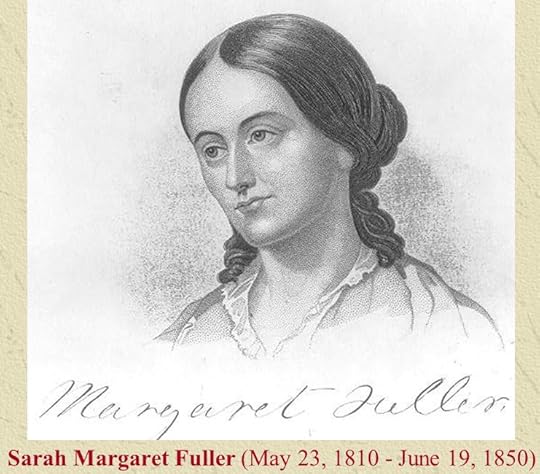
From an early age, Margaret Fuller provoked and dazzled New England's intellectual elite. Her famous Conversations changed women's sense of how they could think and live; her editorship of the Transcendentalist literary journal the Dial shaped American Romanticism. Now, Megan Marshall, whose acclaimed "The Peabody Sisters" "discovered" three fascinating women, has done it again: no biography of Fuller has made her ideas so alive or her life so moving.
Marshall tells the story of how Fuller, tired of Boston, accepted Horace Greeley's offer to be the "New-York Tribune's" front-page columnist. The move unleashed a crusading concern for the urban poor and the plight of prostitutes, and a late-in-life hunger for passionate experience. In Italy as a foreign correspondent, Fuller took a secret lover, a young officer in the Roman Guard; she wrote dispatches on the brutal 1849 Siege of Rome; and she gave birth to a son.
Yet, when all three died in a shipwreck off Fire Island shortly after Fuller's fortieth birthday, the sense and passion of her life's work were eclipsed by tragedy and scandal. Marshall's inspired account brings an American heroine back to indelible life.

496 pages, Kindle Edition

First published January 1, 2013

516 people are currently reading
4110 people want to read

About the author

Megan Marshall

14 books97 followers
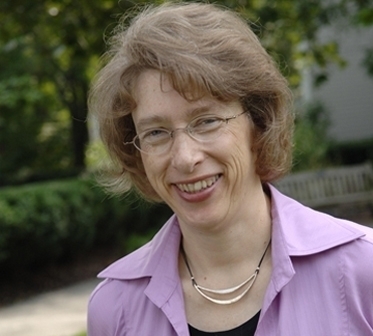
Megan Marshall is the author of The Peabody Sisters, which won the Francis Parkman Prize, the Mark Lynton History Prize, the Massachusetts Book Award in Nonfiction, and was a finalist for the Pulitzer Prize in biography and memoir. Her essays and reviews have appeared in The New Yorker, The New York Times Book Review, The Atlantic, and Slate. A recipient of Guggenheim and NEH fellowships, Marshall teaches narrative nonfiction and the art of archival research in the MFA program at Emerson College.

Her biography of Margaret Fuller is the winner of the 2014 Pulitzer Prize for Biography.

Ratings & Reviews

What do you think?
Rate this book

Friends & Following

Create a free account to discover what your friends think of this book!

Community Reviews

5 stars
445 (30%)
4 stars
555 (38%)
3 stars
317 (21%)
2 stars
91 (6%)
1 star
40 (2%)
Displaying 1 - 30 of 264 reviews
Profile Image for Teresa.
Author 9 books1,032 followers
May 31, 2024
I first heard the name of Margaret Fuller in connection with Louisa May Alcott. Though Louisa is barely mentioned in this biography (she was 17 when Fuller died at the age of almost-40) and then only as a daughter of Bronson, who was one of the Concord Transcendentalists, I know Fuller’s life had an influence on Louisa. Perhaps Louisa eavesdropped on, or was even allowed to participate in, conversations with Fuller during the time the latter taught, briefly, at one of Bronson’s experimental schools.

The brilliant Fuller influenced a lot of brilliant people, including Hawthorne, Thoreau, and Emerson; so it’s not surprising that Louisa is basically just a footnote. Fuller's friendship with Emerson especially was close and complex. Her Woman in the Nineteenth Century is, along with Mary Wollstonecraft’s A Vindication of the Rights of Woman, one of the first major works of feminist writing and was widely discussed at the time. Though Fuller had many supporters who loved and admired her, she also had detractors--sometimes they were one and the same (I’m looking at you, Sophia Peabody Hawthorne--and your husband).

I bought this book on my last night in Concord and then realized I’d come across no indication of Fuller’s life anywhere in the city (I didn’t have time to visit the Emerson House or the Concord Museum, however). Though she was a colleague of the Transcendentalists, even editing their journal (at Emerson’s urging), she didn’t consider herself one of them. She wanted more than life in a New England village (and was criticized for that too) and, while she visited Concord, even staying for long spells, she didn’t really ever live there.

Her subsequent work as an arts critic and a journalist took her far beyond the confines of the little town where the three famous men of my second paragraph lived. Born in Massachusetts, she was never content to stay in any prescribed place: traveling to and writing of “The West” (the Great Lakes area), criticizing the felling of the forests there and the treatment of the displaced Natives; and then to New York City, where she edited and wrote for Horace Greeley's Tribune, eventually becoming its foreign correspondent in Europe. Her years in Rome are fascinating.

I realize I am writing of Fuller and not critiquing the book. Suffice to say, it's a wonderful biography and I hated to see it end. While reading it, I also got a great sense of the time period, post-Revolutionary and pre-Civil War America, and how close Fuller was to both tumultuous events without experiencing either, though she was in Italy for its Revolutions of 1848. Appropriate for the day I finished this book (Valentine's Day), I now feel about Fuller much the same as I did about Constance Fenimore Woolson after reading her biography. They were both women who worked hard for a living; were superb at what they did; and, after their deaths, were mostly forgotten. I’m grateful to have read this.
Profile Image for Michael.
1,094 reviews1,965 followers
March 19, 2016
This delightful Pulitzer-winning biography satisfied an interest I got in Fuller’s remarkable life in a recent read of a broad history of cultural ferment in America in the first half of the 19th century (Daniel Howe’s “What Hath God Wrought: The Transformation of America, 1815-1848”). I wanted to learn more about her seminal contributions to the Transcendental movement in New England and how she came to write an early but sophisticated statement of women’s rights to intellectual freedom and self-dependence in “Women of the Nineteenth Century” (1845).


This book captured how in many ways she was ahead of her time but was also a product of them. I learned how it was she came to live from her pen as a full-time literary critic, cultural columnist, and journalist for Horace Greeley’s paper, the “New York Tribune”, in the process exposing the iniquities of poverty, sexism, racism, and slavery through investigations of poor houses, prostitution, prisons, and mental hospitals. How the urge to go beyond contemplation and analysis led her to travel to Europe and get engaged with true revolutionaries of thought and deed.

Beyond that kind of accomplishment, in approaching this book I wanted to feel her personal revolution in finding a late love at 37 with a younger non-intellectual man in Rome. Her lover, one Giovanni Ossoli, 10 years her junior, was a balm to her as man without a big male ego, someone who simply loved to be with her without expectations. Together they caught up in the Italian war against monarchy and for self-determination and unification, a cause. In the middle of that struggle, she got pregnant and bore a child secretly out of wedlock. But then, on the path to public revelation, while making a return trip to America, they ended up dying so tragically a shipwreck within sight of Long Island. That end to her life at a moment of great hope and change makes this story of the arc of her life to that point especially poignant.

Marshall serves up the details of these transitions and milestones as part of a comprehensive biography. She makes an interesting story of her intellectual and emotional development. She harnesses the vast trove of Fuller’s letters and writings to immerse you into the evolution of her thinking, concerns, and quests. Her unusual approach involves eschewing all secondary sources and working entirely from primary sources, in the process infusing Fuller’s words and those of people responding to her as phrases into what seems a majority of the sentences in the book. As a result I ended up feeling I was thinking and feeling with her at key points in her life.

As a former developmental biologist, I loved the magical sense of her life flowering before my eyes through a set of comprehensible transformations. In older terminology the interplay as work is between preformation and epigenesis, the metamorphosis from forms of thought and attitudes at each point giving rise to successively new ones through critical experiences with people, ideas, and struggles for agency in the world.

This is in no way a psychobiography, but Marshall does hark back often to the influences her father Timothy had on her life. He was a pragmatic businessman and state legislator in Cambridge who home-schooled his daughter on the classics from early childhood. He was a stern taskmaster who prized logical and independent thinking and writing in his daughter. An example of an essay she wrote at age 11 from reading Virgil’s Aeneid in Latin shows her arguing that the accomplishments of the likes of Napolean, Michelangelo, Demosthenes, and Brutus takes both a special imagination and a ‘will to perseverance’ marked by an ‘unwearied climbing and scrambling necessary to accomplishment.’ When she got older, she persuaded him to send her to an experimental school that supported more advanced studies for girls. Unfortunately, her capacities of mind scared off many suitors from whom she sought a marriage of minds. When her father sought the life of farming in a more rural area and her mother got ill, she was stuck tending a household and caring for younger siblings. Her only recourse for some independence was to take up tutoring and school teaching.

Fuller got her first taste of publication of her writing from a letter to the newspaper on an intellectual topic. She soon came into the circle of the poet Ralph Waldo Emerson, including Thoreau, Nathaniel Hawthorne, and the educator Bronson Alcott, she formed deep friendships with various women struggling with avenues for writing and with causes like anti-slavery activism. She tried poetry and novel writing, but she found her true niche in literary criticism. She took up serious study of the German Romanticism of Goethe and Shiller with a man whom she felt could become a life partner but ended up remaining a platonic friend. Emerson talked her into editing a literary journal, “The Dial”, which was a venue for the loose circle of thinkers tagged Transcendentalists. She didn’t consider herself one, as she wasn’t attuned to the pantheistic bent of many in the circle who were linked to development of the Unitarian church. Retiring to contemplation in the woods like Thoreau was not her thing. Though bonded in deep friendship with Emerson, she felt the limitations of his bloodless and disengaged intellectualism.


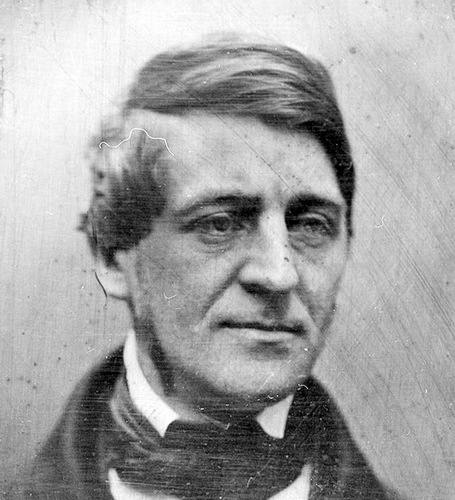
Ralph Waldo Emerson, the father of Transcendendalism and most significant mentor to Fuller before she became his intellectual equal

Fuller invented a way to make money through holding learning circles with women. The “Conversations” featured a Socratic approach to empowering the women to develop their minds and capacity of intellectual expression. In one series each weekly topic was on a particular Roman god that personified particular ideal qualities and led them to ponder lessons on the human in the divine and divine in the human. When she let men like Emerson into the group, she found their egos led them to take over the discourse and wouldn’t let them really listen. Emerson always considered her as a man (“of the bread-winning tribe”; “his female double, not his feminine muse”), but she was striving for valuable feminine forms. In an essay published in “The Dial” and later developed into her book that called for equality of women she came up with these modern thoughts:

Male and female represent the two sides of the great radical dualism. But, in fact, they are perpetually passing into one another. Fluid hardens to solid, solid rushes to fluid. There is no wholly masculine man, no purely feminine woman. …
History jeers at the attempts of physiologists to bind great original laws by the forms which flow from them. They make a rule; they say from observation what can and cannot be. In vain! Nature provides exceptions to every rule. She sends women to battle, and sets Hercules spinning; she enables women to bear immense burdens, cold, and frost; she enables the man, who feels maternal love, to nourish his infant like a mother.


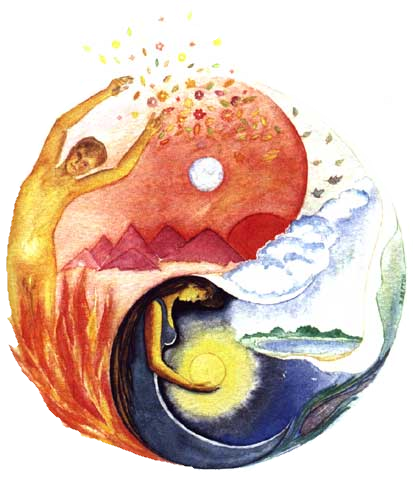
This reminds me of the old yin-yang. A metaphorical and rather poetical philosophy with the power to persuade people to change their ways of thinking. In a trip to the Great Lakes, she expanded her writing to incorporate a critical approach to the human endeavor in relationship to nature and to the oppression of Indians as immoral outcome of progress. In acting on the opportunity Greeley offered her to become a New York newspaper columnist, she was leaving her world of contemplative thinkers behind in favor of a more activist purpose to her writing. Her outlook on the position of women in the world was shaped by the urban experience of oppression by poverty and their exploitation in prostitution.

Her thinking on marriage evolved to the point of considering it a form of prostitution and even slavery. Exposing inequities eventually was not enough for her. She began to feel the call of the revolutionary ferment of ideas and action in Europe. On a tour with friends, she became enamored with men of action living in exile in England, one the Italian Mazzini and the other the Pole Mickiewicz. Her eyes were opened by the sexual liberation of women like George Sand. When they got to Italy, it didn’t take much to persuade her to stay, supporting herself as a foreign correspondent by reporting on cultural and political events for her newspaper. Her suppressed hunger for a fully sensual relationship was met by the affair with Giovanni, a solution of complementarity rather than the bond of intellectual equals she had dreamed of.

This read is a natural extension of the recent pleasures I got from a biography of Gertrude Bell and autobiography of Beryl Markham. Women who forged fulfilling lives in a man’s world. The book was clearly an inspired and intensive effort on Marshall’s part. She was disturbed that Fuller’s achievements have almost become forgotten and does a great job in making them relevant again. Previously, she worked in the publishing business, wrote a book in the 80s on women’s fear of intimacy, and spent a couple of decades writing a biographical account of other innovative women thinkers of 19th century New England, the Peabody sisters (Elizabeth, Mary, and Sophia). The Pulitzer for this biography of Fuller seems well-deserved.


Profile Image for Clif Hostetler.
1,281 reviews1,035 followers
May 21, 2017
This is a biography of the life of Margaret Fuller (1810–1850), an American journalist, teacher, and women's rights advocate associated with the American transcendentalism movement. The author, Megan Marshall, won the 2014 Pulitzer Prize for biography for this book.

I was impressed with the level of detail about her life that the author was able to compile for this book. This was possible because Margaret Fuller was a writer who interacted with other writers, and together they all left a trove of written records about their activities, feelings and conflicts. Also, the fact that she died relatively young by shipwreck prompted her contemporaries to collect her biographic information and publish it as The Memoirs of Margaret Fuller Ossoli (published 1852) which was the best-selling biography the following decade and went through thirteen editions before the end of the century.

Margaret Fuller gained international notoriety by writing the book Woman in the Nineteenth Century (1845). The book was an expanded version of an earlier essay published in 1843 titled The Great Lawsuit. Man versus Men. Woman versus Women. The book's message envisioned an optimistic view of a future when men and women would be recognized as equals and marriage could be considered a union of equals.

I was impressed with the number of firsts that Margaret Fuller experienced:
First full-time American female book reviewer in journalism.
Author of first major feminist literary work in the U.S.A. (i.e. Woman in the Nineteenth Century)
First editor of the transcendentalist journal The Dial.
First woman allowed to use the library at Harvard College.
First female columnist of Horace Greeley’s New York Tribune.
First female (only American) foreign correspondent in Rome during Roman Republic uprising of 1849.
In the course of living all the above firsts Margaret Fuller met many of the famous people of the era. Thus reading her biography provides an interesting perspective on the history of the early nineteenth century.

This book focuses on Fuller's relationships with her acquaintances and in particular her various male friends. She seems to have possessed the ability to engage in challenging conversations with men (e.g. Ralph Waldo Emerson), and he and others seem to have recognized her intellectual prowess. But Emerson and some of her other male friends drew back from a more romantic relationship which she appears to have sought.

Her romantic inclinations seem to have been achieved during her time in Italy. She had an affair with a man ten years her junior which resulted in the birth of a son. They were married, probably after her pregnancy.

After the failure of the Roman Republic uprising Margaret decided to return to the United States with her husband and son. Their voyage ended grounded 300 yards from the shore line of Fire Island during a storm. About half the crew and passengers died including Margaret and her family. Their young son was the only body recovered from their family. She had been planning to publish a book titled The Rise and Fall of the Roman Republic (19th century republic), and presumably her manuscript was with her and lost in the ship wreck.

One interesting detail I learned from this book is that Margaret was invited to convene the first women's rights convention, The Seneca Falls Convention. She was in Italy at the time and never received the letter of invitation. She was recognized at the time as the leading advocate for women's rights in America, and it is probable that she would have participated had she been present in the country.

The life of Margaret Fuller is noteworthy because she foresaw a time when women would be free to have careers and seek romantic relationships of their own choosing, and then she proceeded to live that dream in spite of the narrow role model expectations for women in the nineteenth century. At first glance it would appear that she must have been very confident and sure of herself to accomplish so much. But the details of her life were more complicated than that first glance. Obviously she was ahead of her time in many ways, but her personal struggles were not all that different from talented young women of today. This is a life story that can serve as an inspiration for today's young women who are deciding between conflicting role models for their future.
Profile Image for Chrissie.
2,811 reviews1,421 followers
May 2, 2014
There are books that are worth sticking with even if one's first impression isn't that favorable. This book is very, very good and I didn't think that way when I had read only 1/3.

The woman and her life, what she did, are amazing. I admire this woman, and I am no feminist. She was America's first feminist. She lived from 1810-1840. Where do I start to clearly explain why I liked this book so much? First, start by reading the book description above. It is accurate. Everything mentioned is well described, and in such a way that you truly get to know who that woman was and what life was like back then. Everybody reads about the first presidents, well here is delivered American life through women's eyes. She is a very well educated woman. Her thoughts are intellectual, philosophical and critical, all at once. Although she was well educated she too was restricted simply due to her gender. This book looks at literary thought (Goethe, Shelley, Wordsworth, Hawthorne, Emerson, Thoreau and Greek myths too). How these writers thought and what they wrote is quoted and referred to in detail. Transcendentalism is a central them. Passion versus intellect is too. And history, the Siege of Rome in 1849 is excitingly depicted because Margaret was there then. She was both a governess and the New York Tribune's correspondent and pregnant all at the same time. Look at that year. 1849! What is also so very interesting is why she fell for an Italian who did not in any way fill all the requirements that she spoke of wanting in her "ideal man". And what would have happened if she had not died, but had lived to continue her work and raise her family back in New York. What would have happened then?

So, her life is fascinating. The history depicted is fascinating. The unanswered questions are extremely interesting to consider and discuss.

What bothered me to no end, mostly in the beginning, is how the author throws in quotes in practically every darn sentence. The language used isn't modern and at times it was troublesome to read and difficult to listen to. Think - lyrical, rhapsodic, too sentimental, exaggerated. Maybe it will appeal more to those who enjoy poetry, which I do not. But THEN, when Margaret is a foreign correspondent in Rome, her language becomes much clearer, because the lines are written for a different audience. It is clear; it is journalistic. Now all the quotes that the author throws in are darn interesting, and so well expressed! I listened to this book, and that did make it more difficult to exactly distinguish between those lines that were direct quotes and those that were the author's views, though only occasionally was this a problem. Although I wouldn't say the narrator is one of my favorites, she (Cynthia Barrett) did a pretty good job with a difficult manuscript.......given all those quotes.

Yes, I do highly recommend this book. Fascinating woman. The author makes her life and the events and the years she lived darn interesting. Go read the book description again. All is described in this book in an interesting manner.

ETA: I must be very clear so you understand exactly what bothered me in the beginning - the theoretical, lyrical and a bit sophomoric lines of this woman in her youth probably annoyed me. They hit you strongly because of all the quotes. I believe people who like poetic, lyrical lines may even like these early quotes.


***************************


2/3 of the way through: I am VERY glad I didn't give up on the book. It is exciting, it is interesting, and definitely worth reading. Now I cannot part from it.

****************************

I have listened to about 1/3 and here are my thoughts:

The woman and her life is very interesting, BUT so much is quoted the story feels like a conglomeration of facts rather than a thorough analysis of the person. I don't like how the book is written. I want the author to tell us how she interprets the facts, the lines drawn from letters and documents, the behavior, Margaret's choices. Sure, I like quotes because they show the source material, BUT this is excessive, disrupts the flow and the language used is hard to digest. And then I ask myself, cannot even quotes be misconstrued if you take them out of context......

The author doesn't even explain Transcendentalism. I went to Wiki for that.

I find the reading so frustrating, I have decided to read this AND another book at the same time, which is very unusual for me. I mean, she IS an interesting person so I don't want to quit the book, but I don't appreciate how it is written.

Typical that this won a prize (Pulitzer Biography 2014)....and I am not enthralled!

Profile Image for Ayse_.
155 reviews87 followers
August 27, 2017
Margaret Fuller (1810-1850) is a very interesting person; a writer, a visionary, an activist, a feminist, and a genius in defining her struggle with the world that surrounds and constricts her. The book starts with her childhood and problematic relationship with a tyrannical father. Later on her relationship with her collegues, her friends and her family life is being told. She is very impressed by Gothe, one can say he was like a spiritual father to her and influenced her character. Within her circle are interesting famous thinkers and writers of the era such as the Alcott family and Waldo Emerson.

The book however lacks the enthusiasm which Fuller has for life. I gave up on it while I was 2/3rds through. Its monotonous, full of trivia, and one has to drag oneself from chapter to chapter at times. Although it gives us a good sense of how her life was, it fails in being interesting and inspiring. Reading about those times one feels the drowning sensation, the mold of bland mediocrity which women of the era are expected to fit in and which Fuller fought against throughout her life clearly. The book is based mostly on to Fuller's diaries, and quotes a lot from them.
Profile Image for Patricia Smith.
Author 1 book24 followers
February 14, 2014
I loved this book! Already a fan of other Transcendentalists, (Emerson and Thoreau), I came to this biography with great interest in learning more about Margaret Fuller, about whom I'd read and knew just the tiniest bit. Megan Marshall's biography is detailed, well-researched, well-written and a lively read. I found it compelling. Why we don't learn more about Margaret Fuller -- along with Thoreau and Emerson -- I don't know. In my own American literature class, I vow from here on in to teach my students all about her -- a radical, intellectual, socially progressive woman, and not merely one of the editors, along with Emerson, of THE DIAL. I found myself thinking about Hester Prynne of THE SCARLET LETTER -- and to be honest, this biography gave me a whole new way to think about that book and the character of Hester. MARGARET FULLER: A NEW AMERICAN LIFE is biography at its finest, a book that defies form -- a well-told story and an intellectual biography, written, from what I can tell from the text, in much the same manner as Fuller herself approached her own writing.

Fuller's ideas about the role of women in the 19th century are well before her time; she foreshadows Virginia Woolf's ideas about the status of women in conventional marriage -- one wonders what she might have thought about the possibility of same-sex marriage -- in addition to pre-dating Florence Nightingale in her service to an Italian hospital during the Italian revolution. She is an early heroine of American letters and one that every student of American literature should know much more about.

Profile Image for Jaylia3.
752 reviews151 followers
March 2, 2013
“I will never do as Waldo does . . . flee to the woods”


Margaret Fuller was the intellectual equal of her close friend Ralph Waldo Emerson, but while he was retiring she had a passionate, engage-the-world personality that makes Megan Marshall’s thoroughly researched and engaging biography of her the most moving book I’ve read in a long time. The book opens with Margaret as a precocious child, who from an early age was driven to excel intellectually by her father in spite of the fact that she was a daughter not a son, and it ends with the heartbreaking ship wreck that killed Margaret and her new husband and child within sight of the Long Island shoreline.

In between Margaret wrote books that challenged the status quo regarding women, culture, and politics. While she was part of the Transcendentalist school of thought she traveled far from New England. During a trip to the Great Lakes region she spent time with Native Americans, afterwards writing about the plight of their culture, and she was in Europe as a correspondent during the continent wide upheavals of 1848. It took me a long time to finish this biography because I kept pausing to read some of Margaret’s own works, which are available for free on sites like Project Gutenberg and Google Books.

Margaret was brilliant in a time when smart woman made men uncomfortable. Gender limited her options, but Margaret tried to use her well developed intellect to play an important role in the world like the heroes of America’s Revolutionary War that she admired. In spite of her antipathy to marriage as it was practiced in the mid-1800’s, Margaret longed for a full life with love and a child of her own, yearnings that were not fulfilled until a few years before her death.

This biography by Megan Marshall held me rapt because it brought both Margaret Fuller and the post-Revolutionary, pre-Civil War era in the United States and Europe to life for me. The book’s pages are full of the intellectual, revolutionary and literary leaders of the time, and Margaret's own words, quoted throughout the text, are so well put and insightful even now that I found myself underlining almost all of them.
Profile Image for Sylvia.
408 reviews1 follower
July 15, 2013
I've read several books about Margaret Fuller...even wrote a paper on her while in graduate school...but this is the best one I've read. Marshall's research is wonderful and her ability to weave quotes from journals, facts and her interpretation is amazing. I highly recommend this book for anyone who is interested in learning more about women in American, Transcendentalism, and the whole Italian uprising.
Profile Image for John.
226 reviews130 followers
May 12, 2015
Quite an extraordinary book, and a specimen of literary biography at just about its very best.

Some years have passed since I read Charles Capper's biography of Fuller in two closely printed volumes, and no, I did not read Capper through once more in order to compare the two. I will simply note that Ms. Marshall does not pretend to have supplanted Capper's work, which she designates "the definitive biography" - and rightly so.

In her introduction Ms. Marshall lists a number of documents that she discovered and has used for the first time in a biography of Fuller, but I can't say that her discoveries included information new to me that I found startling. But then again I didn't sift through the other biographies of Fuller that I've read in order to isolate the material in Marshall's find.

So what is it that I find extraordinary in her book? Her evocation of Fuller is riveting. I am an ardent admirer of Margaret Fuller. I can't say that I would have wanted to spend much time in her presence - ever - but I am very glad to observe her closely - as it were - at a very great remove, so far removed that I could never be subject to her relentless interrogations. What a magnificent human being! And Marshall's narrative - like Capper's - evokes in me such a powerful sense of Fuller as a living presence - a force of nature, it seems - that I become altogether absorbed in her story. Ms. Marshall accomplishes this feat in 395 pages - as opposed to the nearly 1000 closely printed pages that Capper needed.

Very few biographies effect me in this way - and books such as these keep me reading biography to find the next superlative example of the biographer's art and craft. I place Marshall's Fuller together with Ackroyd's Dickens, Wroe's Shelley, Holme's Shelley, Leaska's Woolf, and a few others I could name.

I will make one comment on one element of Ms. Marshall's method that bothers me just a bit. Sewall's biography of Emily Dickinson set the standard for me. In it Sewall identifies the gaps and absences in surviving evidence and quite openly states what can be known, what can't ever be known, as well as the various and varying interpretations that are consistent with and can be reasonably defended - given the information that survives. I find this approach both interesting and intellectually honest. It does, however, foster a rather detached consideration of Miss Dickinson, which is an appropriate response to her, it seems to me. Ms. Marshall, however, wrote her biography in an entirely different manner. We know that Fuller's family destroyed masses of Margaret's letters, journals, papers of all sorts, after her death. We know as well that Fuller destroyed a significant number of letters herself, e.g. the letters she wrote to and received from James Nathan. Yet none of these absences in the record interrupt the flow of Marshall's narrative, or obscure Marshall's evocation of Fuller in any way that I can detect. Marshall's biography reads as if she had access to a complete transcript of every thought, feeling or image that passed into and out of Fuller's consciousness from cradle to watery grave. One should be suspicious of the omniscient biographer.

But, on the other hand, Marshall's method serves her purpose very well, i.e. to resurrect Margaret Fuller - as she can. Any other approach than the one she adopted would only obscure the powerful presence of (and disrupt identification with) the Margaret Fuller that her pages can evoke in the minds of an attentive and sympathetic reader, one who reads in order to enter into and experience worlds other than his own.

As far as I am concerned there can't ever exist too many biographies of Margaret Fuller - provided, of course, that they rise to the level of Megan Marshall's perfectly splendid achievement.
Profile Image for Laurie.
Author 10 books908 followers
April 21, 2017
Margaret Fuller was a remarkable woman, way ahead of her time. Marshall's book is the first to resurrect her for 21st century readers, and I hope it won't be the last.

This book catalogs a remarkable life. I want to know more. Fuller, like the others of her time, kept a journal and copies of her letters. But reconstructing a life from what a person (or others, in Fuller's case, like Emerson et al) puts into writing for posterity can never reveal the true passions.

SPOILER ALERT
Fuller's last manuscript was lost at sea. Or at least, that's what Emerson said...
Profile Image for James Murphy.
982 reviews26 followers
February 4, 2018
Megan Marshall writes good biography. I'd had Margaret Fuller for a long time but hadn't been inspired enough to read it until I read her splendid biography of Elizabeth Bishop. My enjoyment of that was the motivation I needed, and I was rewarded.

I didn't know much about Fuller. The primary interest for me was her association with Concord, Massachusetts and its community of writers: Ralph Waldo Emerson, Henry David Thoreau, Nathaniel Hawthorne, and Bronson Alcott. I have no doubt that Fuller was their equal. I was a little surprised at the dark pictures of Emerson and Thoreau. Waldo, as he was called by those close to him, as Fuller was, is painted as one who perhaps used her work to further his, and as one probably too critical of her writing and ideas. Thoreau would have been hurt by Marshall's calling him a "poetical handyman." However, my understanding of those in Concord through other works may explain the surprise at her characterizations. I'm less familiar with 2 others who played prominent roles in Fuller's life--Horace Greeley and George Sand--and I found her views of them thoroughly engaging. And Marshall makes Margaret Fuller herself unforgettable.

I thought it not an easy read. I often have trouble with the style of biography which incorporates many quotes of letters and journals and the spoken word into the text. i would much rather the biographer explain to me while attributing facts to sources I can look at if interested. But Marshall's method here is to make each page busy with quotes. Often there are 2 or 3 quotes in a sentence. I found this distracting. Having to register each quote made my mind stutter. But this is a minor grumble about a life made otherwise completely absorbing by a biographer's ability to present such a comprehensive and intelligent record of a fascinating woman.
586 reviews10 followers
September 19, 2013
Here is just about everything you ever wanted to know about Margaret Fuller. What an amazing woman - so intelligent, so courageous, so ahead of her time. Her story makes clear how far women have come in achieving a sort of equality in American society. Marshall has done her research so completely and honored her sources so well that the text of the biography is distractingly filled with quotation marks to indicate the phrases taken form original sources that Marshall painstakingly weaves into her own narrative. Often I wished for the Cliff's Notes version so I could more easily skim past some of the esoteric details. (I read the book over a period of about five months, taking breaks with quick enjoyable reads I've now nearly forgotten.) However, Marshall's completeness and attention to minutiae is her gift to the reader who craves the full picture of Fuller's relationship to Emerson (eye-opening insights into the great Transcendentalist are to be found), Hawthorne, and the other intellectuals of her day. Of special interest are her last years in Italy, when she found a lover who became her husband, gave birth to a child and realized that the life of the mind cannot replace the joy of family.
I hope someone in Hollywood or HBO land is reading this biography right now and vowing to create a film version for those of us daunted by a scholar's dense prose.
Profile Image for Mark.
536 reviews21 followers
May 17, 2021
The difficulty with someone who is very much ahead of his or her time is twofold: externally, the person faces challenges being accepted or tolerated, even by friends and family; and internally, the person struggles with frustration over unmet desires and ambitions. The book’s dust jacket description labels Margaret Fuller a trailblazer, but she was much more than that, as Megan Marshall describes in Margaret Fuller: A New American Life, her extraordinary and empathetic account of what was surely America’s preeminent feminist of the early nineteenth century.

Margaret’s father, Timothy Fuller, a successful lawyer turned failed farmer, significantly shaped and influenced the woman his daughter would turn out to be. He provided her with as robust an education as if she were a male child, and Margaret, with a natural appetite for learning and an earnest desire to please her father, grabbed and absorbed all the intellectual fodder that came her way.

But she bristled at the preferential treatment boys received regarding education, women being denied attendance at Harvard University, for example. Her response was to inaugurate “Conversations,” an enormously successful discussion group for women, exploring ideas addressed by men in similar groups. Some enlightened men, recognizing her sharp mind and literary prowess, did promote Margaret’s intellectual progress in private, but often hesitated to do so publicly—men such as Waldo Emerson and James Freeman Clarke.

Margaret quickly realized that bold resourcefulness and self-reliance were keys to success. When opportunity presented itself, she grabbed it; when it was lacking, she created it. She assumed editorship of the Transcendental Club’s publication, The Dial, and contributed many profoundly thought-provoking articles. One such essay, “The Great Lawsuit: Man versus Man, Woman versus Woman,” morphed into an internationally successful book, Woman in the Nineteenth Century. She also became the first female front-page editorialist for the New York Tribune, highlighting the plight of imprisoned prostitutes and the city’s mental hospitals.

Margaret had a passionate heart, but was disappointed in love when she sincerely but selectively opened it to only a few men by the time she reached her thirties. Only when she found herself in Italy as part of a European visit did she surrender unequivocally to the love of a man ten years her junior. But in 1847-49, fragmented Italy was suffering Austrian and French interference against becoming a unified country. Margaret’s brilliant reporting kept America apprised firsthand of brutal battles in Rome, in the middle of which was her soldier husband.

Nevertheless, within the space of two years, Margaret married impoverished nobleman Giovanni Ossoli, gave birth to a son, and made plans to return to an American society that was scandalized by her behavior. Although she was ready to take on critics and friends alike, it was not to be. Only a few hundred yards from shore north of New York, the incompetent ship’s captain ran the vessel aground in a storm. Many perished, including Margaret, her husband, and son.

The tragedy was a huge journalistic and literary loss to the nation, but an even bigger one for the fight against gender discrimination and the inequalities between men and women. Who knows what else Margaret Fuller would have accomplished in such a noble cause? Author Megan Marshall has done a fine job of documenting the all-too-short existence of a spirited woman, who lived every moment of her life becoming, in the words of Gandhi, “the change she wished to see in the world.”
151 reviews1 follower
September 4, 2025
This is an extraordinary biography of an extraordinary 19th century American woman. Margaret Fuller was a brilliant person, born in 1810 and educated by her father in the classics, history, Latin, philosophy, etc. at a time when women were expected to confine themselves to the domestic sphere. Fuller wanted her brilliance to be understood and acknowledged, she wanted a full life. Unfortunately her gender made this almost impossible. She was also a woman with a huge heart as well as a brilliant mind, but the enormity of her mind, coupled with her homely looks, seemed unattractive to the men of her time including Ralph Waldo Emerson, who admired her mind but recoiled from her emotional neediness. So she wrote, she taught, she was the editor of The Dial, a literary magazine, she presided over “conversations” with the intellectuals of her day. Her primary community was among the prominent transcendentalists of her day in Massachusetts. Eventually she secured a position writing for Horace Greeley’s Tribune in New York. This job took her to Europe, where she was the European correspondent for the Tribune. There her brilliance was appreciated by European intelligencia including George Sand and Robert and Elizabeth Browning. In Italy in her late 30s she FINALLY lost her virginity to a sweet, handsome but uneducated Italian 10 years her junior. If a brilliant man had hooked up with a sweet, beautiful and uneducated woman 10 years younger nobody would have thought twice about it. But for Fuller it created a terrible scandal and conflict, especially when she became pregnant by this young man and gave birth to a child. At this time, the Italian revolution ( in which her lover had fought) had been defeated and the little family had no choice but to try to return to America. Long story short, the ship sank off of Fire Island and Fuller, her lover (or husband, not clear if they ever married) and two year old boy drowned. None of this summary does justice to the power, the sadness, and poignancy of this story. For me, this is the biography of a great woman who defied all of the norms of her time both in work and in love. And this defiance did not come easy for her: she constantly questioned it. The book was beautifully written and deserves all the accolades it is receiving.
Profile Image for Helga Cohen.
666 reviews
May 10, 2018
Margaret Fuller: A New American Life was the Pulitzer Prize winning biography about Margaret Fuller. She was a very intelligent journalist, teacher, an advocate for the abolition of slavery, and an advocate for women and associated with members of the transcendentalism movement. Her beliefs included equality for all people, regardless of race, creed or gender. She was captured in many ways as ahead of her time and at the same time a product of the times.

We see her intellectual and emotional development from many of her letters and writings which immerse you in the evolution of her thinking, concerns and quests. Many of Fuller’s words and those people around her are direct quotes in the book. Fuller positively influenced lot of people including Hawthorne, Thoreau and Emerson. She also had detractors like Sophia Peabody Hawthorne.
Margaret Fuller was a highly precocious child and from an early age was driven to excel by her demanding father in spite of her being a daughter and not a son. She wrote books and articles that challenged the status quo of women, culture and politics. She traveled far from New England and during a trip to the Great Lakes region, she spent time with Native Americans and wrote about their plight. Then she traveled to Europe as a correspondent and to Italy during a tumultuous time during the continent upheavals of 1848. While in Italy she secretly married Giovanni Ossoli, and had a child. Her life thereafter ended in a sad and unexpected way.

This was a book about a highly fascinating woman and well written by a thoroughly researched biographer.
Profile Image for Christine Boyer.
352 reviews54 followers
June 13, 2020
Pulitzer Prize for Biography - 2014. I often am puzzled by the Pulitzer picks for fiction. However, I've always praised the committee for their picks in nonfiction. Not this time.

There is a trap for reviewing biographies - that is an extreme interest and love of the person may tend to raise the star-rating - no matter how rough the writing was. I'm dealing with that now.

This story should have been great. I had never even heard of Margaret Fuller and now that I know her, I think that's a shame. Fuller's name should easily fall off the tongue of all American readers and writers and thinkers. In her short 40 years of life, she accomplished so many things. I won't list them all here, but she truly was one of the first women to say, wait, what? Why can't I learn that? Why can't I do that? Why I can't I be that? Just because I'm a woman? In the 1820's - I mean crazy, right? Fuller's best friend was Emerson. She was as prolific and brilliant as he was - why do we all know Emerson and not Fuller? There was lots of material here for Megan Marshall to work with.

There were two major flaws in this book. The first was Mrs. Marshall's use of quotation marks. It reminded me when I used to type college papers and I would insert quotes in the middle of my own sentences to increase the pages of my essay! Here's an example from p. 84: The "romantic rocks" at Trenton Falls and the "gorgeous prospect" from the summit of Kaatskill Mountain, its "immense hotel" seemingly "dropped there by magic," contrasted with the social whirl of "dressed dolls" and moneyed men at Newport, gave spice to Margaret's letters home.. And this went on throughout the ENTIRE book. So choppy and so unnecessary. I know Mrs. Marshall was just trying to show the reader Fuller's own words, but this layout did not work. In fact, nothing in those quotes was really even some profound statement. I have read several biographies, even a few specifically on WRITERS, (Twain and Hemingway) and the biographers approached the writing as though they did the research, and now they paraphrased and told the story in their own words. Sometimes entire passages from one of the famous author's books was quoted and that worked fine. But this interruption to almost every sentence was awkward.

Second problem was much worse. Though I don't doubt for one minute that Mrs. Marshall did a TON of research on Fuller, and knew everything about the woman, she was unable to make me interested! I've said this before, it's a challenge for nonfiction writers to make their subject into a compelling narrative. I dreaded picking this book up every evening. I've been reading it since May 20th. It felt like some kind of dry research paper. Where was the excitement? There was no love, enthusiasm, energy, interest, or PASSION in Marshall's telling of Margaret Fuller's interesting life. Wait, I will say that there was enthusiasm in the LAST 20 PAGES. I was screaming at the end asking Mrs. Marshall, why, why did you wait for 376 pages before you showed any vitality in this story? Why didn't you write like that from the get-go?? Was Marshall trying so hard to be objective that she ruined the story in meantime? Did the Pulitzer committee feel this same lack of energy throughout the book BUT fall into the trap I mentioned earlier about loving the subject so much that they failed to see how poorly the story was executed?

Well, honestly, I still hope people find interest in learning more about Margaret Fuller. Apparently, there are several other biographies and collections out there on the subject. But I personally won't be picking anything up by Megan Marshall again. I would suggest she talk to Erik Larson or Candace Millard on the art of telling a nonfiction account with VIM AND VIGOR!!!
Profile Image for Vanessa.
145 reviews
May 12, 2013
Margaret Fuller is a fascinating woman and her biography offers a wonderful case study in the limitations put on women in 19th century America. She was exceptional by all standards and struggled her whole life to figure out how to express that exceptionalism within the confines of being a woman. Reading how she navigated her course is terrifically entertaining. The book also offers interesting insights to the other great figures she knew, like Waldo Emerson (a bit of a jerk, it seems), and Giuseppe Mazzini (inspiring, of course).
Profile Image for Patty.
1,210 reviews49 followers
May 13, 2013
I went into this book with the barest knowledge of Margaret Fuller. I'm now a bit more educated as to this remarkable woman born into the wrong time. But perhaps she was needed then to help enlighten those who would take the spark of an idea that women were more than mothers, more than housewives and bring it forward to a time where such an idea could burst into a flame.

In reading of her early life, where her father "homeschooled" her and expected learning from a six year old that was nothing short of extraordinary I felt sorrow for the girl who never felt the love of a father, only his scorn when she did not live up to almost impossible expectations. She had something wrong with her spine - scoliosis maybe? - that led to one shoulder being markedly higher than the other and she had migraines. I understand how debilitating they can be. But she pushed through. When he father died leaving the family with no income or savings it was up to her to provide and she did. In a time when women were not wage earners.

Margaret Fuller was also a woman of experiment; she belonged to the Transcendentalists where she had an ongoing give and take with Ralph Waldo Emerson. She ultimately worked for Horace Greeley and ended up in Italy where she may or may not have married the father of her one and only child. As she was coming home to the United States they were all killed in the shipwreck off of Fire Island, NY.

Ms. Marshall makes extensive use of Ms. Fuller's writings to make her biography come together. How better to bring a person to life than through her own words? My issues were with the Margaret Fuller "might have, would have" suppositions that I suppose are the only way to suggest assumptions but they were too many for me. That being written, this was a well researched, fascinating look at a woman who was scorned in her time for behaviors that wouldn't rate barely a smirk today. It's a shame that Ms. Fuller didn't know how much she truly was worth.

I am so glad that I chose to read this book. It was well organized, very well written and it has left me marveling over a woman wanting what was right for people, trying to find love and seeking the respect of family. Isn't that what we all want?

4.5
Profile Image for Catherine Woodman.
5,919 reviews118 followers
June 19, 2013
The author of this Margaret Fuller biography vascillated between sympathy for the plight of an intelligent and ambitious woman who was severely hampered by the constraints of her time and admiration for what she accomplished despite those constraints. I was impressed that she was able to manage the irritation that I felt. Fuller was fortunate to have access to the great Romantic thinkers and writers of her time. She was on a first name basis with Ralph Waldo Emerson (known by her and other friends as 'Waldo'), Henry David Thoreau was visibly distraught when she was lost at sea, and she was a leader in the women's rights movement and knew all of the leaders who went on to meet at Seneca Falls and moved the women's sufferage movement foreward. So she had tremendous influence, and successes that were worthy of admiration for a man of her time, not just as a woman. So what is it that I found so irritating about her? She just came across in the book as relatively naive about the realities of intimate relationships. She was almost laughably clumsy in her relationships with men, and despite her great insights into many things, and she seemed completely unable to meet her own needs for intimacy.


She became so frustrated with her love life and the constraints on her personal life that she moved to Europe, where she had the incredible job of being a corespondent, writing pieces--as a woman, under a woman's name--about European events. She seems to have been less unhappy there, and in Italy became involved with an uneducated man who fathered her child and she married. It was a 180 degree contrast from other men she had been interested in previously--which were men who were her intellectual equals, men she could share her intellectual passions with. In the end, maybe she found that she needed a different sort of man for her spiritual and personal passions, and by all indications she was happy with him, just worried that when they returned to America that he would not fit in, not with her friends nor with the country. She never had a chance to see how that would turn out, because her ship, her family, and her book sunk, just yards off the unnavigable shore of Fire Island within clear view of shore.
Profile Image for Meg - A Bookish Affair.
2,484 reviews216 followers
April 15, 2013
3.5 stars. Before I read "Margaret Fuller: A New American," I didn't know much, if anything about her! I was drawn to this book because I really like stories about strong and interesting people. She fits very nicely into both of those categories. She also falls into the whole "person before her time" category, which is another thing I love reading about.This book covers from her very early childhood to her tragic ending being shipwrecked on Fire Island and dying with her family.

Margaret Fuller is truly an interesting person to read about. I wish I had become familiar with her sooner! She wrote a lot of different books and essays about many different subjects with a heavy focus on women and their place in early to mid 1800s society, which was a time of great change for both the United States and its women. She ran with some of the elite thinkers of the time and was quite friendly with the likes of the famous poet, Ralph Waldo Emerson. She was also very respected as a writer by many even if she also had her share of critic.

You can tell that Ms. Marshall did a lot of deep research on Fuller. Marshall draws extensively from Fuller's own writings and writings about her as well as letters from various people in her life. It gives a really good, well-rounded picture of who Ms. Fuller was and why she is still important today. There is one possible downside to dwelling so much on various writings though. There is a liberal use of quotation marks and it gets a little distracting, especially when there are only one to two words in the quotation and they don't seem to be particular remarkable or unique. I would rather have had Marshall use her own words for the one and two word quotations as these small quotations do not seem to lend themselves to the overall flavor and feeling of the book.

Overall, this book will appeal to non-fiction and biography lovers who want to read about a truly fascinating person!
Profile Image for Susan O.
276 reviews104 followers
May 3, 2018
The last three chapters pushed this book from a 3 to a 4 in my mind. Instead of focusing on Margaret's accomplishments and thoughts as an independent woman and feminist, she is portrayed more often as a love-sick, immature, inexperienced woman. Margaret was adventurous in her experiences and activities. She visited orphanages, insane asylums, women's prisons, met and wrote about the women and their living conditions. She was a journalist who wrote a regular column in Horace Greeley's New York Tribune and sent back regular columns from Europe. When she found herself in Italy during the time of the revolution of 1848-49, she covered the conflict including the siege of Rome. These last chapters in Rome and the description of her journey home and her death redeemed the book in my mind. There was much more to this woman that could have been explored more deeply than her journal thoughts about her longing for love.

Overall, it is not the type of biography I prefer. I like context, and two areas that needed explanation in my mind were transcendentalism and the revolution in Italy of 1848-49. I would love to have learned more about them. Particularly, the role transcendentalism played in Margaret's thought process and beliefs. She was one of the few women welcomed into the Transcendentalist Club of Emerson, Alcott, and others, but how was she received? Were her thoughts welcomed?

The writing of the book is good, and it is well-documented. I think many will find it excellent. We all have our preferences. I still plan on reading Marshall's book on the Peabody sisters though.
Profile Image for Kathleen Fogarty.
34 reviews4 followers
January 30, 2014
I have not been a great reader of biography, but this intense look at the short life of an American Trancendentalist feminist writer was truly inspiring. Marshall is really an archaeologist of human history, and in this case, the book is born out of deep research and connection to original sources: journals, letters and essays, not only from Margaret Fuller, but from those in her intellectual and personal circles.
She may have become one of the strongest voices in the feminist movement had she not died at the age of 40 in a shipwreck off the coast of New York with her Italian husband and two year old son. Fuller's ruthless urge to know herself, understand the role of women, and marriage in the early 1800's was counter to the culture in which women still lived. Her longing for love, and her ardent hope that she could have a more intimate relationship with several important men of her time, including " Waldo", Ralph Waldo Emerson, plays through this book like a serious piano concerto, with emotional dynamics.
I loved this story because I could connect, across the decades, with this woman's passionate desire to be authentic, smart and alive. Great applause to Megan Marshall!
Profile Image for Sher.
544 reviews3 followers
May 2, 2018
A fascinating account of Margaret Fuller's personal and professional development throughout her life. The first 1/3 of the book covers Fuller's extraordinary childhood, and the next third covers her relationships with Ralph Waldo Emerson and other Transcendentalists of the period. One gets an idea of what Fuller contributed to Transcendentalism and how her contributions were uniquely Margaret and uniquely feminine. By 2/3 of the way through the book I was tiring of Romanticism and all the over the top emotional relationships, but then she journeys to Europe and reports on the revolution in Italy. She also finds love and forms a most surprising union. A short life, a painful life, a life of brilliant intellect and searching. If you are intrigued by nineteenth century American intellectual life, you will want to read this book along with Emerson: The Mind on Fire
Profile Image for Mary Timbes.
Author 7 books10 followers
March 30, 2014
An excellent biography of one of the first American Feminists, a woman all but lost to history. Margaret Fuller lived an exciting life in the 19th century. She was well educated in a day when women could not attend college, much less vote, own property, get a divorce, or make a speech in public. She was one of the ones who changed all that. A teacher, writer, editor, Fuller was a friend and colleague of Ralph Waldo Emerson and edited his Transcendentalist publication THE DIAL, going on to write two books and become a reporter and international correspondent for Horace Greeley's NEW YORK SUN.

Marshall's prose brings this remarkable woman to vivid life for us, and, for me at least, opens up a window on the changing world of women in the 19th century. I wouldn't take anything for the lessons this book taught me.
Profile Image for Julia Hendon.
Author 10 books14 followers
April 17, 2013
It took me a little while to get into this biography. I think the early part of Fuller's life seemed so familiar from other books I've read on the Transcendentalists. But as I read on, I realized that Marshall has provided a more in depth understanding of Fuller than any other biographies I have read of her. Marshall's treatment of Fuller's trip out west and then of her travels in Europe really grabbed my attention. Fuller's experiences in Italy during the failed independence movement are described in great detail. Overall, I especially appreciated that Marshall did not fall into the trap of adopting the sometimes prurient, sometimes belittling attitudes of Fuller's contemporaries, such as Emerson, who couldn't quite come to grips with Fuller's intellect or achievements.
Profile Image for Bruce.
13 reviews
February 7, 2014
This is a rare (for me) five-star rave. It's not perfect, of course (too many direct quotes for fairly mundane concepts) but it skirts the line between biography and literature about as well as one could hope. I've read many books by and about the principals of MF's story, but I still learned a lot. The last 150 pages, in particular (covering, for example, when she ran a hospital (during the 1848 Italian Revolution) and coordinated a largely-female staff, all more than five years before Florence Nightingale's first service) were a revelation.
Profile Image for A. Anupama.
20 reviews
May 20, 2013
Riveting, for its style of in-her-own-words, for the portraits of so many literary figures along with hers, for the blazing brilliance & courage & heart of her. Can't believe I've been reading Emerson without her work alongside!

Grateful to have met Megan Marshall, and to have her recommendation of The Oxford Handbook of Transcendentalism---large textbook of critical writing about the minds Fuller tended in her editorship of The Dial.
Profile Image for Bill Finley.
38 reviews
September 29, 2014
Margaret Fuller is a worthy subject for the biographer. Unfortunately, this author brings nothing new. With the subtitle, A new American Life, one would expect to see Miss Fuller brought to life in a way that would illuminate different aspects oh her multi-faceted intellect. If that is what you seek, you will be disappointed. Here you will find only page after weary page of meaningless piffle.
Displaying 1 - 30 of 264 reviews

Can't find what you're looking for?

Get help and learn more about the design.