Jump to ratings and reviews
Rate this book

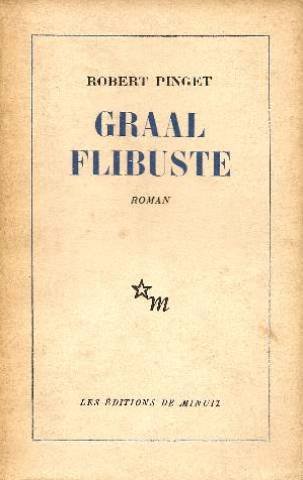
Graal flibuste

Rate this book
French language book

Paperback

First published January 1, 1955

1 person is currently reading
59 people want to read

About the author

Robert Pinget

66 books41 followers
Robert Pinget was a Swiss-born French novelist and playwright associated with the nouveau roman movement.

After completing his law studies and working as a lawyer for a year, he moved to Paris in 1946 to study at the Ecole des Beaux-Arts.

In 1951, he published his first novel Entre Fantoine et Agapa. After publishing two other novels, but then having his fourth rejected by Gallimard, Pinget was recommended by Alain Robbe-Grillet and Samuel Beckett to Jérôme Lindon, head of Éditions de Minuit, where he subsequently published Graal flibuste in 1956. Éditions de Minuit became his main publisher.

Scholars and critics have often associated his work with that of his friend Samuel Beckett, who he met in 1955.

(from Wikipedia)

Ratings & Reviews

What do you think?
Rate this book

Friends & Following

Create a free account to discover what your friends think of this book!

Community Reviews

5 stars
13 (36%)
4 stars
11 (30%)
3 stars
12 (33%)
2 stars
0 (0%)
1 star
0 (0%)
Displaying 1 - 7 of 7 reviews
Profile Image for WillemC.
595 reviews25 followers
October 10, 2024
Een surrealistische avonturenroman waarin twee personages met paard en kar door het bevreemdende landschap van de Vrijbuitersgraal trekken. Veel beschrijvingen van bizarre volkeren, rare gewoontes, fabeldieren en -planten; het deed me soms wat denken aan Mirbeaus "De tuin der folteringen". Te wisselvallig en willekeurig om als geheel te werken, maar hier en daar wel zot genoeg om je te doen verder lezen, al is de lol er op den duur wel af. Als curiosum interessant maar meer dan dat is het niet. Nu weet ik weer waarom ik bijna nooit surrealistische literatuur lees. 2.5/5

Profile Image for Brian.
274 reviews25 followers
March 15, 2020
“At around ten o’clock in the days before my defeat, I’d emerge benumbed from the lake and run a few hundred yards on the elephant track, as flat as a croquet field. Then I’d make my way back and dress. Brindon would just be waking up. His mouth still pasty, he’d demand his eggs and ants. I’d break four eggs and scramble them in a pan with a pound of these insects. They were precious to us. We collected them in the evening by candlelight.

After breakfast Brindon went back to sleep and I went hunting. I took a stick and set out for the rock piles where the bloues nest. Originally from Chanchèze, these animals abound in the lake region. They are absolutely harmless and have no impulse to flee. I could dispatch the two bloues necessary for a day's rations in short order.

Similar in size to a rabbit, the bloue is covered in velvety beige fur. Its spindly neck is hairless and up to eight inches long. Its head is miniscule and resembles that of a turtle. With its long claws, it can scamper up the steepest rocks. Its flesh is tender and cooks in a few minutes.

Here’s a family of bloues stretched out in the sun. I home in on the mother and father. Waving my stick as lightly as a wand, I fell each one in turn. The youngsters I'll save for next week; they're milling around the cadavers. Be gone you little rascals. I push them into an anfractuosity with my hand. Some neighbouring mother bloue will come around to feed them; within a few days they'll plump up to adult size and their soft fur will come in. Strange creatures! I enjoy remembering the mornings I wandered alone and aimless among these flocks like a good shepherd, who chooses his victims and leaves nature to rectify his crimes. The gods who protect us have no other duty, and we’re cowardly enough to seek their favour.”
Profile Image for michal k-c.
893 reviews120 followers
December 16, 2025
Totally bewildering. To my eyes, a sort of stylistic missing link between figures like Walser and Barthelme. Every sentence expands or condenses a new idea; which sounds economical in nature but the style feels boundless. And it’s pretty funny!
Profile Image for H.
64 reviews10 followers
April 5, 2016
so good
Profile Image for Kuszma.
2,847 reviews285 followers
October 31, 2019
Hogy ez mekkora blődli! Imádom. Pinget könyve tulajdonképpen a réges-régi útirajzok paródiája – elbeszélője a tőrőlmetszett romantikus utazó, aki földhözragadt kocsisával együtt elképesztő tájakat jár meg és meredek kalandokba bonyolódik, miközben egzotikus népekkel és sosemvolt élőlényekkel találkozik. Van itt minden, lepkemajmok, iszapnyulak, orgiasztikus fekete mise, kalandjaik leírását pedig rendre megszakítják a helyi mitológia követhetetlen (de elképesztően mulatságos) genealógiájának taglalásai*, meg mindenféle anekdoták a sikamlóstól a megdöbbentőig, amikről még mesélőjük sem tudja (én meg pláne), hogy jön ez ide, és miért kellett egyáltalán elmondani. Közben meg mennek hőseink valahonnan valahová, de hát ki tudja, hová, mert ha van is Grál, amit keresnek, valószínűleg rég elfelejtették, hogy néz ki, de még valószínűbb, hogy soha nem is tudták. Ahogy Beckettnél Godot-ra várnak, amíg idő az idő, úgy itt meg (mondhatni) kutatják Godot-t – a végeredmény tekintetében ugyanolyan értelmetlenül, de hát közben kalandtól kalandig támolyogva legalább elszórakoztatnak minket. Fárasztó prózák kedvelőinek ajánlott.

(Más. Könyvem előző olvasója szükségesnek érezte, hogy ceruzával aláhúzza az alábbi szavakat: „magja kifröccsent”, „meggyakta”, „kettyentésre”, „kutyabögyörője”. Hm. Hát igen, kinek mi ragadja meg a fantáziáját.)

* "Dan nemzé az Ikozaédert, akinek húsz lapja azt a húsz tökélyt jelképezi, melyre szükség van, hogy valaki igaz emberré váljék. A vallástörténészek vitatkoznak a katalógust illetően; egyesek például beleveszik a sziróniát is, amely a hallgatás és a megvetés közti erény; ezt azonban mások határozottan elvetik az előkelőségből és szelídségből álló eleglika javára; mi nem soroljuk fel itt ezeket az erényeket, mert sok a vita köröttük.
Az Ikozaédernek húsz leánya lőn minden lapja után; ezek a Belső Borzadályok. A tudattalanban pusztítanak.
Dutól született Flótácska, vagyis a szerelmi álom.
Általában úgy ábrázolják, amint éppen leszáll az ég felé meredő létráról. Ő vevé nőül a Szong nevű forrást, akitől annyi fia és leánya született, hogy az országban még most is mondogatják: „Úgy esik az eső, mintha Szong-Flótácskából öntenék.” Fejérseeg Sz. nagyon szépen meséli el Szong és Flótácska történetét A gutaütöttek és a malthuzián-kretének álmai című művében; mi csupán azt vetnők szemére, hogy túlságosan is bennfentesen tárgyalja a kérdést, ami megfosztja költőiségétől."
Displaying 1 - 7 of 7 reviews

Can't find what you're looking for?

Get help and learn more about the design.