Sewn hardback printed and bound by Bookcraft in burgundy wibalin cloth stamped in gold, with head and tailbands. 350 copies. -An Introduction by Glen Cavaliero-Three Miles Up/ Perfect Love/ Left Luggage/ Mr Wrong.
Elizabeth Jane Howard, CBE, was an English novelist. She was an actress and a model before becoming a novelist. In 1951, she won the John Llewellyn Rhys Prize for her first novel, The Beautiful Visit. Six further novels followed, before she embarked on her best known work, a four novel family saga (i.e., The Cazalet Chronicles) set in wartime Britain. The Light Years, Marking Time, Confusion, and Casting Off were serialised by Cinema Verity for BBC television as The Cazalets (The Light Years, Marking Time, Confusion and Casting Off). She has also written a book of short stories, Mr Wrong, and edited two anthologies.
Her last novel in The Cazalet Chronicles series, "ALL CHANGE", was published in November 2013.
Four strange stories, three of which were originally collected (without attribution) alongside Robert Aickman’s first stories in We Are For The Dark (in 1951). So, it’s impossible not to read these stories in that light, and compare them to Aickman’s.
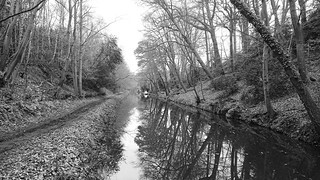
The first, and best, “Three Miles Up”, is very Aickman-esque, and of my preferred style of Aickman, too (disturbing, dream-like and muted, punctuated by odd irrationalities). A couple of men on a canal holiday pick up a young woman they find on the way, so as to prevent the tensions between them from ruining the holiday. They then elect to explore a side-canal that’s not on the map. A canal leading to wide-open water, an old man on the bank with a scythe — there are certainly signs this is a story about death, but if so, it’s not a straightforward one. In the way it presents a dream-like symbol (that old man with a scythe) only to immediately throw doubt on what it means in the tale, it’s a nicely intriguing weird story.
“Perfect Love”, the longest story in the book, starts out seeming as though it’s going to be a traditional deal-with-the-Devil tale of the price of artistic talent, in this case of a once-successful opera diva who fell abruptly out of the limelight. Then, about half-way, and just when the tale is beginning to seem rather long and tedious, things pep up a bit with the introduction of a poltergeist infant. That there’s no attempt to explain this haunting means the tale is more weird than simply ghostly, but I find the way the narrative framework (with the narrator piecing together the tale from letters, articles, and interviews he finds in his uncle’s scrapbooks) a bit cumbersome. Overall, I thought the story a bit long for the impact it was trying to make, and its episodic structure too repetitive, but there’s a good weird idea in there.
“Left Luggage” is a short tale, but the least interesting. A stay-at-home bachelor inherits, alongside some family silver, a travel case that seems to come with its own (unseen) traveller, who insists on accompanying the bachelor on his increasingly desperate travels. Aside from the haunting use of women’s clothing, this feels the least Aickman-esque tale here, and in fact not too far away from something M R James might have written. (Elizabeth Jane Howard’s world isn’t quite as contemporary-seeming as Aickman’s.)
“Mr Wrong” is a later story, but like the last two, it mixes a haunting with travel. (If you can make the case that the woman in “Three Miles Up” is a supernatural character of some sort, then all four stories combine travel with haunting in some way.) It starts slowly and seems to be building to a nicely cruel conclusion, then spends rather too long delaying its climax, detracting a bit from the final shock, I thought.
“Three Miles Up” is probably the best tale from We Are For The Dark, Aickman’s included. But I think that, ultimately, Aickman’s was the more sustained and original assault on the weird. Howard was already a novelist when that volume of short stories came out, and I can’t help feeling that the intense focus, or sustained atmosphere of strangeness, required of a really good weird/strange story wasn’t what she was interested in. But the stories here are well-written, and at least approach even traditional ideas with some freshness.
Elizabeth Jane Howard is an author whose works should be read more, appraised more, and discussed much more than what we find. These works, capped by the titualr story that unfolds like a languid nightmare, are much weirder than other, contemporary works. It’s too bad that she only finds mention among others considered Aickmanesque. According to me, these works are clearer in their telling, while retaining a chilling ambiguity at their core. This particular edition brought by Tartarus Press is a delight to be savoured. So, thanks. Recommended.
Three Miles Up 4.25⭐ Two friends, Clifford and John take a leisurely journey on a canal boat that starts with comic mishaps building up to finally losing their way on a lonely stretch of canal, half wilderness, half marsh, dank and gray, becoming quite unsettling with subtle moments of eeriness. The deeper Clifford and John guide the narrowboat into the wilderness, the further they drift from reality. They find a strange girl sleeping by a tree on the canal bank and invite this mysterious young woman to join them aboard. Things then take a decidedly spooky and sinister turn as they decide to explore an overgrown branch canal that’s not on any of their maps; the cottages by the towpath disappear overnight; the elderly man with the scythe who gives them directions to the village telling them “three miles up” they meet him again further along but as a little boy which soon precedes the chilling conclusion.
Perfect Love 2⭐ This rather long tale relates the career of a turn-of-the-century opera singer Maria Mielli, plucked from obscurity by a mysterious benefactor, and haunted afterwards by an unseen child which blights her career and romantic life with bouts of poltergeist activity. There were some good elements with a whole array of creepy effects, a handbag full of hair, a child's handprint on the outside of a second-floor window plus some humorous elements including a Russian College which is "attempting to crossbreed horses, asses, and dogs with a view to producing a new animal ideally suited for purposes of Russian transport" but for whatever the reason the author didn't elaborate upon them and the story just fizzled to a somewhat lackluster ending. 😞
Left Luggage 3⭐ A short story about a friend of the narrator, a man named Fallard who was haunted by a small shabby dressing case left to him by his uncle who was notoriously known for his affairs with women.
Mr. Wrong 4⭐ The story of Meg, a nervous, lonely young woman in London, who is thrilled to become the owner of a second-hand car, "barely three years old, and in such good condition" at a knockdown price. The car turns out to be haunted by a gruesome murderer and his victim who come after Meg, the callow, vulnerable new owner.
Elizabeth Jane Howard and Robert Aickman’s 1951 collection of ‘strange stories’ (Aickman’s favoured term) We Are For the Dark was a landmark in the development of the English ghost story in the twentieth century. Each contributed three stories but there was no indication who was responsible for which. This collection by the estimable North Yorkshire-based Tartarus Press brings together Howard’s three stories from We Are For the Dark (Three Miles Up, Perfect Love and Left Luggage) with a later story in a similar vein, Mr Wrong. Three Miles Up is a much anthologised modern classic, and by some measure the best story in this volume: a grim tale of male entitlement and incompetence undone by the elemental forces unleashed by a mysterious woman who joins two university friends on a disastrous canal boat holiday. Once read, never forgotten. Perfect Love is a novella-length story, very much in the Aickman mode, so that there’s always the sense of some key piece of information that is never revealed to the reader; its central theme of a feted opera singer haunted by a mysterious and invisible child is disturbing and chilling. Left Luggage has the feel of a Victorian or Edwardian shocker, with its haunted suitcase and story within a story framing. The last story in this collection, Mr Wrong, dates from some twenty years after the others and is a creepily effective story of a haunted car; its banal background of shared houses, antique dealers and motorway service stations emphasises the unfolding horror.
Oh I liked this one. I have to admit to often being disappointed in the BBC readings due to the way they abridge the books but here it felt like the whole thing and not just snippets of stories. This made me want to find more by E.J Howard for sure. Her stories are dark and with a little twist, yet I wouldn't call them horror. More like cosy shivers (mysrysare) which I just didn't expect.
Three of these stories initially appeared, unattributed, in We Are for the Dark: Six Ghost Stories, published jointly by Howard and Robert Aickman. A highly suggestive arrangement! We now know who wrote what, though it's reasonable to suppose some cross-pollination.
Aickman's reputation as a horror writer's horror writer has steadily increased over the years, while Howard is known mostly as a twentieth-century drawing-room "woman writer" in the vein of Elizabeth Bowen, Anita Brookner, Elizabeth Taylor, et al--all writer's writers, to be sure, but without that frisson of sinister genius that accompanies Aickman's name. One would hope that with the recent and ongoing canonization of Shirley Jackson as one of the great twentieth-century weird fiction writers we'd be more prepared to see how frequently the social-domestic is intertwined with horror, and how often drawing room dramas are weird fiction in disguise. (Look at Henry James for god's sake!) But I'll save it and say, Elizabeth Jane Howard should be in the conversation with Aickman and Jackson, even if she only dabbled in the supernatural for a short time.
When We Are for the Dark was published, Howard had already won a reputation-making prize for her debut novel, whereas it was Aickman's first publication. Her name meant more than his at the time; maybe it's going too far to say she got him published, but the lack of attribution probably helped him more than it helped her. Later, she had a long tempestuous marriage with that royal heel Kingsley Amis, and encouraged his son Martin to become a serious writer. If she were a man she might have earned the reputation of a literary mentor; instead, possibly aided by the fact that she was a gorgeous former screen actress, she is more often portrayed as a kind of long-suffering literary helpmeet or handmaiden. Her contributions to this volume always seem to take second place to Aickman's, with people lining up to say it was "obvious in retrospect" who wrote which story. In his introduction to this 2003 Tartarus collection, Glen Caviliero rhapsodizes about Aickman for a full page before he even gets to Howard. Though he is appreciative of her prose, he falls back on cliches about lady writers, with language that calls attention to craft rather than genius--"deliberate artistry," "skillfully crafted" and, weirdly, "innocent of any complicity with private phobias or obsessions." (What does that even mean?)
So, whatever. These stories are great, and show truly impressive range. I came to them via "Mr. Wrong," a gem of a low-budget film adapted from Howard's story about a haunted car, directed by New Zealand filmmaker Gaylene Peterson and probably financed in the wake of "Christine." The story and film deal directly with the particular vulnerability of an isolated single woman in moments when many of us have felt chilled by that exact vulnerability--driving alone at night. The long story, which predates the Stephen King novel by a decade, doesn't disappoint.
My favorite story in this collection is "Three Miles Up." There's a strong argument that this one is the most Aickman-influenced, because it deals with a pleasure expedition on the inland waterways both authors were involved with preserving--which is how they met in the first place. It's the most swampy and foggy and mystifying of the stories. But where it's particularly astute, and I think differs significantly with how Aickman would approach this material, is how it depicts male friends status-jockeying for the attention of a mysterious woman who seemingly exists to serve their needs. Being dudes wrapped up in a homosocial wrestling match, they don't really question her showing up, and that's their downfall. This is not a story about an evil seductress so much as a story about male blindness and willingness to take female servitude for granted.
"Left Luggage," more of a traditional ghost story, is also WILD with subtext. Putatively about the revenge of a scorned woman, it again turns out to be more about the vicissitudes and blind spots of male intimacy. The two men in question become best friends over a shared appreciation of antique Bristol glass (!), and are DEFINITELY not in love with each other, NOPE. This story is full of "confirmed bachelors." The uncle from whom the narrator's friend inherits a woman's haunted overnight case never married, though he "came close, once, but backed out of it." In a curious exchange with this uncle, one guy vehemently swears he "would never consider walking across the street on account of any woman." In telling the story, the two friends "smile in bachelor sympathy" and give each other flowers. The only thing that comes between them is the narrator's offhand (was it?) suggestion that travel might be fun. "I had overstepped the boundary of masculine friendship," the narrator says stiffly and hilariously. It all reeks of James in the best possible way. When the guy finally hurls the ladies' travel bag out the train window, doing away with the unwanted female presence once and for all, the single satin glove clinging to the edge of the window feels like an avatar for Howard herself.
Look, I don't want to write fan fiction about Howard's failed first marriage to a man who was, at various points, intensely bonded with other men over a shared love of wildlife preservation and ice skating. A marriage she was cheating on, by the way, with Aickman, having met him after joining her husband's wildlife interests--perhaps trying to muscle in? I haven't even read her memoir, what do I know. But it's all very suggestive, isn't it? She is such an astute observer of men's homosocial behaviors, mildly erotic even if never consummated, and the way they shore up institutions in which women will always be relegated to the periphery, typists and wives and boat-cooks. Pairs of gloves barely hanging on to the outside of a train window by their fingertips.
I don't even have the energy to dive into "Perfect Love," a story I did not give my best attention to, but which is about women's art and motherhood and the guilt of choosing one over the other. Maybe I'll get into it someday. Anyway, it should be obvious that I think these stories are rich and strange and tinged with madness, and demand to be read with an appreciation, rather than a dismissal, of their entanglement with men. Our insistence on seeing authors as creative monoliths has always hampered an appreciation of those women writers who were serially "entangled" with men. We want monoliths, or we can't acknowledge genius. To do that, a kind of entangled reading is required.
Imagine the TV show Lost, and it's half-baked ending, but without the action, pacing, and character development: that sums up the disappointment in reading the first story, Three Miles Up. It is a series of vibes and unresolved allusions. Was it Cronus with his scythe on the shore? Or was it death? Was Sharon a wood nymph or a witch? Why was the little boy afraid of Sharon? Is the little boy and the old man the same person because they had identical dialog? Did Sharon cause them all to hallucinate, or did she physically change the landscape? Why would the little boy tell them to keep going three miles more if he was afraid of Sharon? Don't know. Nothing lies below the surface of the still water at the end of the story.
Perfect Love
The dialog and story in here is quite sophisticated, presenting the life of a tormented opera diva named Mielli from the perspective of the few people she allowed into her inner circle as well as the lives destroyed as collateral damage. This is in turn bacon-wrapped in a portfolio of observations by a curious observer trying to piece together her life decades later. It's a passionate melodrama with an allegory on how children can stand in the way of a woman's career.
In a similar vein to the previous story, it follows the JJ Abrams school of story telling. The supernatural is not the center piece of the spectacle. It's just a mystery box vehicle to drive the plot forward. In fact, if the mystery vampire man who gives Mielli the child curse were simply removed from the narrative, it would have been a compelling tale of madness on it's own.
If you want something spooky in a classic genre that is not an act of frustration, stick with Poe, Ambrose Bierce, Robert Chambers, or HP Lovecraft.
This entire review has been hidden because of spoilers.