Jump to ratings and reviews
Rate this book

Laika

Rate this book
Laika was the abandoned puppy destined to become Earth's first space traveler. This is her journey.Nick Abadzis blends fiction and fact in the intertwined stories of three compelling lives. Along with Laika, there is Korolev, once a political prisoner, now a driven engineer at the top of the Soviet space program, and Yelena, the lab technician responsible for Laika's health and life.

205 pages, Paperback

First published January 1, 2007

90 people are currently reading
5892 people want to read

About the author

Nick Abadzis

122 books63 followers
Nick Abadzis was born in Sweden to Greek and English parents and was brought up in Switzerland and England. He is a writer and artist who likes comics (which means these days he seems to be known as a "graphic novelist"). His work for both adults and children has been published in many countries across the world.

He also works as an editorial consultant and has helped set up several best-selling and innovative children's magazines, including most recently, The DFC for David Fickling Books, the first British children's comic to feature original characters in nearly a quarter of a century. His storytelling contribution, Cora's Breakfast, was featured in The Guardian. His work has also appeared in The Times, The Independent on Sunday, TimeOut, Radio Times, and various other BBC publications and websites. Other clients have included Eaglemoss Publications, HarperCollins, Harcourt Education, Scholastic, Orchard Books, DC Comics, Marvel Comics, and 2000AD. He lives in London with his wife and daughter.

Ratings & Reviews

What do you think?
Rate this book

Friends & Following

Create a free account to discover what your friends think of this book!

Community Reviews

5 stars
2,264 (35%)
4 stars
2,319 (36%)
3 stars
1,298 (20%)
2 stars
301 (4%)
1 star
130 (2%)
Displaying 1 - 30 of 855 reviews
Profile Image for s.penkevich [hiatus-will return-miss you all].
1,573 reviews14.8k followers
July 2, 2024
LAIKA, MY LOVE!!!!
Screenshot 2024-06-27 114205
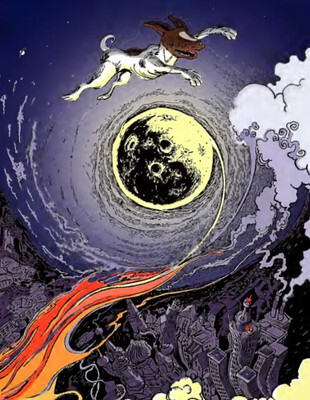
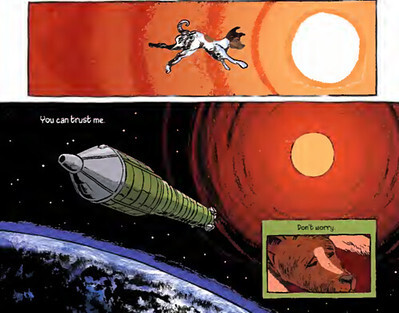
Artist and author Nick Abadzis brings the story of Laika the Space Dog—one of the first animals in space and, while aboard Sputnik 2 in 1957, the first living being to orbit the Earth—in this gorgeous and heartfelt graphic novel. Moving between the story of the space race with scientists Sergei Korolev and Oleg Gazenko to the life of this sweet puppy and the women who raised her such as Mistress Yelena, this is an astonishingly well researched, beautifully illustrated and artfully told story. Laika, who went by the name Kudryavka before her space days, is a little dog that looms large in the history of space exploration, becoming a figure of mythic proportions. And she is a very good dog. This graphic novel will fit you square in the feels and even knowing how things will turn out for sweet little Kudryavka can’t prepare you for how emotionally impactful the ending is through Abadzis’ deftness of visual storytelling. Also huge shoutout to Craig for recommending this. So cue up a good song, and while the obvious choice is the Bowie track I might recommend this one by Wolf Parade instead since its specifically Soviet, and lets talk about Laika.
Screenshot 2024-06-28 151244
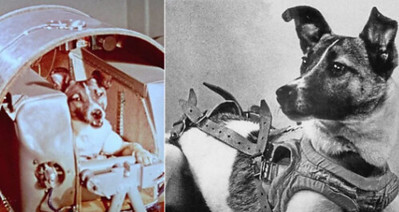
The real Laika

I’m not crying, you’re crying. Okay, fine, it’s me but this graphic novel was SO good and moving. It hits a wonderful intersection of things I love: space exploration and sweet puppies. Laika is such a well-done book that manages to balance a lot of information and history with a steadily forward moving story while also doing well to balance out the rather text-heavy aspects of this book with gorgeous artwork we feel as if we can float through like the cosmos. It is a fascinating story, looking into the political tensions and scientific advances of the Space Race through the framing of the Sputnik 2 mission. It was interesting to learn it all, especially seeing how Laika was selected and trained for the mission.
Screenshot 2024-06-28 145325
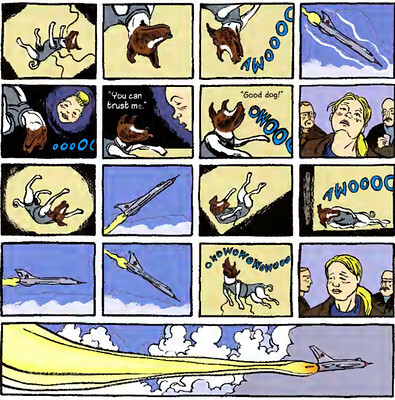
And so we go from the dog house to the great vast reaches of space in this wild, wondrous yet tragic tale that I could not put down and ended up reading in one long go. It’s long enough to give plenty of room for ideas to breathe and cover a lot of territory without feeling too bogged down in the historical details but also feeling like you’ve learned a thing or two.
Screenshot 2024-06-28 150857
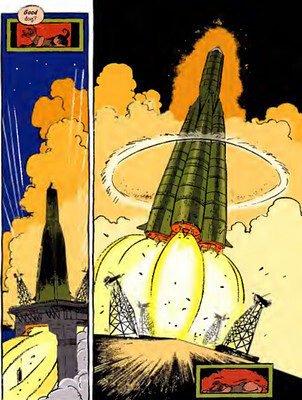
A great little read with a powerful conclusion that makes you feel the weight of mortality in the reaches of science. Initially the world was more focused on the political aspects of Russia’s space exploration advances though later the ethics of sending a living creature into space on a vessel with no option for retrieval would face some criticisms. Years later scientist Oleg Gazenko would express his regret over their choices:
Work with animals is a source of suffering to all of us. We treat them like babies who cannot speak. The more time passes, the more I'm sorry about it. We shouldn't have done it…We did not learn enough from this mission to justify the death of the dog.

Laika is a hero dog and an amazing story. For those who would like a happier end, I recommend Jeanette Winterson’s Weight: The Myth of Atlas and Heracles where Laika happily roams the stars atop the shoulders of Atlas as he holds up the world forever, each the much needed company the other desired. Good girl, Laika.

4.5/5

Screenshot 2024-06-28 150955
Profile Image for Calista.
5,432 reviews31.3k followers
January 16, 2019
This is a heartbreaking story from start to finish. This poor dog that is so sweet and no one wanted. For some political reason, the Russian person in charge decided it would be good to send a dog in a flight orbiting the Earth knowing the dog would die.

I had no idea this even happened. I know about Sputnik and everything that went with that, but I didn't know about Sputnik 2 and that they sent a dog in space. It did not get good press at the time. I appreciate stories like this and learning about humanities past. Our advancements to come with a price usually.

I was not a fan of the artwork here, but the story was told well and it was interesting to get a glimpse into how Russians thought at that time, a little. I hope they did their homework. I thought this was interesting and it was very sad.
Profile Image for Greta G.
337 reviews321 followers
July 18, 2019
In 1960, science-fiction author Robert Heinlein reported in his article “Pravda means Truth” (reprinted in Expanded Universe), that while traveling in the USSR, he met Red Army cadets who told him that there had recently been a manned space launch. This launch capsule, the Korabl-Sputnik 1, experienced a mechanical failure when the guidance system steered it in the wrong direction. This made retrieval of the capsule impossible, and the Korabl-Sputnik 1 was stranded in orbit around the Earth.
The Soviets officially claimed the launch was an unmanned test flight, but according to Heinlein, there might have been a cosmonaut inside. To lend some evidence to Heinlein’s theory, two Italian amateur radio operators allegedly picked up a number of radio transmissions that they claimed were from doomed Soviet space launches (the Torre Bert recordings).

There are also rumours, which appeared later in Omon Ra, a novel by Russian fiction writer Pelevin, that the Soviet automatic sample-return craft Luna and remote-controlled automatic Moon rover Lunokhod, were, due to failures in automation, manned by cosmonauts who had agreed to take part in suicide missions.

These and other allegations are known as the conspiracy theory of the “Lost Cosmonauts” or “Phantom Cosmonauts” (https://en.m.wikipedia.org/wiki/Lost_...).

It’s not surprising at all that such conspiracy theories exist, given the fact that the Soviets were always eager to cover up any embarrassing incidents behind the Iron Curtain.
In 1960, a Soviet rocket ignited on the launching pad, killing at least 78 of the ground crew. In 1961, just before Gagarin’s space flight, a Soviet cosmonaut was killed when a devastating fire erupted inside an oxygen-rich training capsule.
In 1967, another cosmonaut was killed when the parachute on his space capsule failed to open.

A government that sends man’s best friend into space, knowing it can not return and will die a slow death, can’t be trusted, right?

 photo EF4DC5E5-3A23-419E-B8BA-A2C1A2E7C3B4.jpg

8/10
Profile Image for Melki.
7,279 reviews2,606 followers
March 30, 2012
Augh! What the heck was I thinking...reading a book where I KNOW the dog dies at the end?!?
I've spent my entire life avoiding Old Yeller for just that reason.

But, Laika's story intrigued me, so I gritted my teeth, and mostly enjoyed the ride.

In 1957, buoyed by the success of Sputnik, Khrushchev ordered up another spectacular stunt...a second satellite launch, just in time for the 40th anniversary of the October Revolution. The second satellite would carry a passenger - a dog named Laika. With less than a month to prepare, scientists were not able to engineer a way for the Sputnik II to return to Earth. It probably wouldn't have mattered anyway. Overcome by the heat, Laika succumbed about 5 hours into the trip. The stunt backfired, with worldwide outcry over the little dog being sent to her death.

At least I think that's what happened. By that point, I was blubbering so hard, I could hardly see the pages.

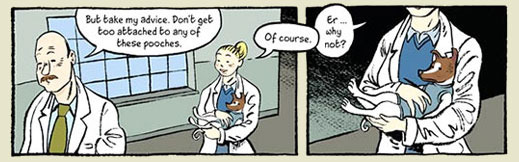
This graphic novel does a good job of mixing fact and fiction. Laika's early life as a stray struggling to survive on the streets was well-imagined. Particularly affecting were scenes depicting Laika's trainer, Comrade Yelena Dubrovsky's attempts not to get emotionally attached to the dogs in her care. The drawings feature nice attention to detail without being too "busy". I liked that all nighttime exterior panels included a drawing of the ever enticing moon.

This entire review has been hidden because of spoilers.
Profile Image for Betsy.
Author 11 books3,270 followers
August 14, 2007
Dead dog books used to be a dime a dozen. Time was a kid couldn’t walk into a bookstore without getting whacked over the head with “Old Yeller”, creamed in the kisser by “Sounder”, and roughed up royally by “Where the Red Fern Grows”. Recently, however, dogs don’t die as often as all that. You could probably concoct some magnificent sociological explanation for this, citing changes in the political and emotional landscape of our great nation leading to the decrease in deceased literary pups, but as I see it, a good dead dog story is as hard to write as an original paper on Moby Dick. What else is there to say? Man’s best friend dies and everyone feels bad. In this jaded culture it would take a pretty steady hand to find a way to write a dead dog tale that touches us deeply. Not a dog person myself, I direct your attention today to Nick Abadzis. I don’t know how he did it. Laika, the world’s most famous real dead dog (a close second: the dead pooch of Pompeii), is now presented to us in a graphic novel format. Though I prefer cats through and through, “Laika” the novel grabs your heart from your chest and proceeds to dance a tarantella on the remains. The best graphic novels are those books whose stories couldn’t have been told any other way. “Laika” has that honor.

Her story was more than just her own. It encapsulated a vast range of people, many of whom you may have never heard of. As the book begins we see a man named Korolev leaving a Russian gulag in a freezing night. Eighteen years later, he is the Chief Designer of Sputnik and his success is without measure. Buoyed by the success of the successful launch, Khruschev demands that his space program launch a second orbital vehicle within a single month. Enter Laika. An unwanted pup, abused and abandoned on the street, she’s eventually caught and taken to the Institute of Aviation Medicine. There she is one of many dogs, trained for flight travel. Laika bonds immediately with her caretaker Yelena Alexandrovna Dubrovsky and endears herself to the other scientists as well. As it stands, however, no dog is better suited for space travel and Laika is slated to make a trip from which she will never return. Abadzis deftly describes the people who care for the little dog and the process by which she was ultimately abandoned and killed by both science and Cold War mechanics.

Laika’s entire story, as conceived by Abadzis, is heartbreaking but there are certain moments towards the end that I found particularly easy to identify with. When Comrade Yelena visits Laika for one last time she can hear the dog saying her name with every bark, even when Yelena is too far away to hear them. She dreams that Laika is calling out to her for help. That she’s scared and uncomfortable and just wants to get out and play. Anyone who has ever owned a pet will be familiar with this feeling. When the pet is missing or in pain, it’s difficult to keep from emphasizing with it. How much worse then when the dog in question is imprisoned in a capsule and shot into the sky? Abadzis doesn’t just show Laika’s plight. He makes you feel it in the core of your being.


The last page of this book contains a quote that offers a 1998 statement from Oleg Georgivitch Gazenko. In it, he laments the way that Laika was misused. “We did not learn enough from the mission to justify the death of the dog.” It’s a dead dog book. Anyone who knows the story of Laika will be aware of that. But above and beyond the obvious this is an ode to dogs themselves. To the animals that we befriend and love and, ultimately, destroy. It’s also about history, humanity, and the price of being extraordinary. No one can walk away from this book and not be touched. Consider Nick Abadzis a name to watch from here on in.
September 16, 2017
“Work with animals is a source of suffering to all of us. We treat them like babies who cannot speak. The more time passes, the more I’m sorry about it. We did not learn enough from the mission to justify the death of the dog.” -Oleg Georgivitch Gazenko, 1998

If you think this is just another sad dog story…don’t bother to read on.

This graphic novel is about a man that escaped the Gulag, a little dog that is caught on the streets of Moscow, and Sputnik II, the second Soviet Satellite that was launched into the outer atmosphere with its’ first live passenger.

October 4th, 1957, it has been 18 years since Sergei Pavlovich has escaped the Gulag and returned to his work as a Rocket Scientist. On this day in Tyura-Tam, Kazahkstan, Sputnik I, the first artificial satellite, successfully launched to orbit around the Earth thanks to him. It looks like he is back in the game. With this achievement comes the pressure to top his assignment of another launch in time of the 40th Anniversary of the Russian Revolution on November 7th.

On the streets of Moscow, three years earlier, a sweet litter of 7 pups was born that a family can’t keep. They try their best to find them homes and for most of them they do. Laika ends up with a family who’s boy is an irresponsible teenager and taking care of another life is supposed to teach him a lesson. Well, that boy does the unthinkable and throws the dog into the river one night to get rid of it.

Laika befriends another street pup that knows its’ way around the market to get scraps, but one day they are not so lucky. Laika is picked up by animal control and the other pup is beaten to death on the streets. (This is not for the sensitive dog person)

Summer of 1956 at the Institute of Aviation Medicine in Moscow, Alexandrovna Dubrovsky just landed a job as the new dog trainer assistant at the kennels. All the dogs in these kennels go through rigorous training to one day be sent into space. And this is where Alexandrovna meets Laika.

What happens from here you should read for yourself. It is a sweet, poignant read. Even for a comic book. I was pleasantly surprised, if not a bit overwhelmed to get so much out of it.

I really appreciated the afterword. Nick Abadzis did extensive research to write this novel and wove the available historical elements into this powerful narrative.

“A luminous masterpiece.” – Kirkus Reviews
Profile Image for Dov Zeller.
Author 2 books124 followers
July 10, 2015
A lot of people complain about the manipulative nature of humans writing about canines who will die in the course of a story.

And some people openly admit that they appreciate the particular kind of pain that comes from these "dying dog" books.

But "Laika" is not, I do not think, a book that sets out to use Laika for emotionally manipulative purposes. On the contrary, the author makes it clear she's already been used enough (used to death) and Abadzis instead sets out to complicate and dignify the story of her life.

Abadzis makes some interesting choices in telling this well-researched and keenly fictionalized tale, and one of those choices is to give Laika a past. This is no accident or act of whimsy. "Laika" is not simply about a dog who dies (get out the hankies), but about a dog who lives, and whose life experiences and life history is as important as all the other lives in this book. Every animal we meet in these pages, human and otherwise, gets a fair and compassionate narrative.

As far as I'm concerned, this book moves away from emotional manipulation and into emotionally grounded ethical and philosophical territory. And Abadzis brings us this richness, and dignifies Laika's story without ever losing the relish a good writer has for telling a great dramatic tale. Laika is something of an Oliver Twist, but the painful ending can't be avoided.

I recommend this book to just about anyone, and I think it would be a great book to read in a middle school or high school classroom. A thoughtful teacher could take this book and run with it in many brilliant directions.
Profile Image for Orbi Alter .
234 reviews54 followers
October 14, 2016
3,3
Lijepa prica o Lajki i njenom jednosmjernom putovanju u svemir. Svida mi se nacin na koji ispreplice fikciju i cinjenice i kako su sve sudbine nekako povezane. Sam zavrsetak je melankolican zbog tragike, ali najveci dio stripa me ostavio ravnodusnom.
Nekako mi zao da ovo nije ruski strip. Vjerovala bih toj atmosferi. Ovako je sve to stereotipna percepcija koja me zivcira i koju jedino izvlaci koliko toliko korektan crtez (premda nije moja salica caja).

Mjesec je u znacajnoj ulozi i iskakao je cijelo vrijeme, pa mi je bilo interesantno da njegove faze odgovaraju datumima.

Najpotresnije je eticko pitanje i izjava Gazenka kad komentira da mu je zao zbog svega jer da iz misije nisu saznali dovoljno da bi opravdali gubitak psa...

Profile Image for Lauren .
1,834 reviews2,548 followers
October 13, 2019
Laika is an historical fiction based around the Soviet space program, and the space dogs experiments in the early 1950s. Author / artist Abadzis constructs a heartwrenching prequel for Laika, a stray dog before coming to the aviation test center. We also get the (true?) back story of some of the scientists in the Sputnik program. As this is an historical event, I am assuming many of you know the tragic outcome of this story (and the many others like it - the dogs that have no names and known stories).

I held off on this book for a long time, knowing the climax. It still is heart wrenching, and I read the final pages in tears... And then went and held my once-a-stray big dog.
Profile Image for Lata.
4,922 reviews254 followers
December 12, 2017
A story of ambition, politics, and cruelty, leading up to the first Soviet launch of a living being into orbit. That being was a young dog that had been abused for much of her life then was sent to her needless death in an effort to meet a ridiculous deadline imposed by Khrushchev. I had a lot of difficulty reading this, not because this story is poorly told. Quite the opposite. Rather, Laika's death was a senseless waste, an outcome of the political and engineering struggles and personal costs the author describes of the one-up-man-ship between the US and the U.S.S.R.
Profile Image for Seth T..
Author 2 books959 followers
July 30, 2011
Books with dogs tend to manipulate. That’s just the nature of the literary and cinematic landscape. Old Yeller. Where the Red Fern Grows. Homeward Bound. It’s like a rule. And rather than subvert this, LAIKA‘s pretty up front about the fact that it will in no way deviate from the script. It relishes in its formulaic, heart-melting prison of manipulation and contrivance.


Really, unless you’re a fan of being manipulated, the book’s only saving graces are that it offers an eye into Russia’s Cold War space program and that it occasionally remembers that its human characters have lives that don’t center on just how adorable puppy-science-fodder can be. Hm. That sounds too negative—because I actually enjoyed the book when I wasn’t noticing how intentionally manipulative it was.

So that everyone’s on the same page: Laika dies in the end. This is as much of a spoiler as saying “Kennedy dies in the end” about a book narrating Kennedy’s presidency. Author Nick Abadzis expects that the reader is aware of the poor dog’s fate and so works pretty hard to create gravitas, to fashion a sense of impending dread. He even reveals early on that Laika is doomed and spends considerable time turning the stray pup into a hero whose loss we’ll mourn. He even gives Laika a wholly fictional back-story and lets us drop into the dog’s dreams of flying happily across the cosmos. Because a dog that gets shoved into a tiny rocket capsule is a sad thing, but a dog who’s had a hard life but dreams of the freedom of space only to die out there in blazing hot, claustrophobia-inducing quarters is a damned tragedy.

Throughout the book Abadzis reminds us with a nod and a wink that we oughtn’t get attached to the curly-tailed terrier—even as he pushes us to grow acquainted with a dog of Character and Resolve, a dog whose trust in the caretaker who will ultimately betray her is absolute. Don’t get attached. Watch as Laika is so tenderly loved by the girl who can’t keep her. Don’t get attached, but watch as her new owner abuses her and then throws her in the river. Watch as she finds a canine friend and learns to survive on the streets of Moscow. Watch as she witnesses the brutal murder of her friend at the hands of an overzealous dogcatcher. Don’t get attached. But here, watch as she is entered into rocket dog training in preparation for Sputnik II. Don’t get attached as you watch nearly every human character involved become attached to her. Don’t get attached, but watch how her handlers risk the Gulag by allowing their passions to govern their words on her behalf. Watch them cry and get drunk as she prepares to unwittingly die in space. Watch her get sealed into her flying coffin. Watch as the cabin temperature rises and she overheats. Watch as Laika dreams one final dream of spaceflight, born of her final fevered delirium. But don’t get attached.

Nudge nudge. Wink wink.


And to seal the deal, Abadzis portrays those humans who do grow attached to Laika in human terms, having feelings and lives worth our attention; those who don’t take to Laika, on the other hand, are monsters—cardboard sources of antagonism with faces caught in perpetual scowls. It’s never wise to judge the motivations of authors, but it’s easy to read Abadzis (rightly or wrongly) as a dog-lover who cannot comprehend the person who might not love dogs quite so much. In this book, sacrificing dogs near the height of the Cold War for the protection of a nation might sound like an alright idea, but that’s just because you haven’t met the dog. I can sympathize, right? but did I really need to have the idea batter me over the head and shoulders until I promised to yield to its persuasive technique? Probably not so much.

So with that out of the way, why is LAIKA worth your time despite its manipulations?

It turns out that the human story Abadzis weaves is actually pretty fascinating. We follow, essentially, three individuals. Sergei Korolev is released from his imprisonment in the Siberian Gulag and in his stupor-state, believes himself blessed by the moon. Decades later, we find him driven and ambitious, the lead architect of Russia’s rocket program. Under his guidance, Sputnik has orbited the globe, striking fear into the American populace and making him a hero to the Russian government. Khrushchev demands a second Sputnik for a month later and this one will be manned. Korolev talks the premier down to using a dog instead and Laika’s fate is sealed because Korolev will do anything to remain at liberty.


Yelena Dubrovsky is the least interesting lead from a dramatic perspective. She exists as the book’s Laika-loving heart. Dubrovsky is hired on the same day as Laika’s own arrival at the space facility and begins her work as the dog’s caretaker immediately. She works diligently to prepare Laika for whatever missions might come, helping her to recover from training in the centrifuge or on parabolic flights. She harbours an affection for Korolev but imagines that he cares for Laika as deeply as she does.

Oleg Gazenko is Dubrovsky’s superior and finds his own affection growing for both the woman and her canine charge. Abadzis excels somewhat at portraying the man’s frustration with his unreciprocated feelings. Gazenko and Korolev are easily the most interesting characters throughout and watching to see how their complexities will play out was, for me, the most rewarding aspect of LAIKA.

Beyond some interesting character motives and interaction, the peek into Cold War culture may be especially rewarding for those too young to have lived through the era themselves. All told, LAIKA is a good book marred only by an unfortunate reliance upon contrivance and emotional manipulation.


[review courtesy of Good Ok Bad]
Profile Image for Drew Canole.
3,159 reviews43 followers
March 10, 2023
I knew about the story of Laika and Sputnik II mostly just in passing. So it was nice to read a fairly faithful retelling (The book is certainly files under historical fiction, like a biopic).

It never feels forced, but Abadzis really gets you to fall in love with Kudryavka (Laika's real name).

----In 1998, after the collapse of the Soviet regime, Oleg Gazenko, one of the scientists responsible for sending Laika into space, expressed regret for allowing her to die: "Work with animals is a source of suffering to all of us. We treat them like babies who cannot speak. The more time passes, the more I'm sorry about it. We shouldn't have done it ... We did not learn enough from this mission to justify the death of the dog" - from Wikipedia.----

The end is heartbreaking and makes you really feel like mankind's ambitions/achievements are worthless if we can't be kind as well.

Great artwork throughout with tiny little panels. There was a healthy amount of nitty-gritty details which is balanced with dream sequences. The pacing is maybe the only issue I have with the book. Some scenes go on for too long and get bogged down with dialogue.

Abadzis is the artist of The Cigar That Fell In Love With a Pipe - another book I quite like mostly because of his artwork.
Profile Image for Cindy.
40 reviews
January 31, 2008
Okay, let's get two things out of the way. One, this is a graphic novel. Two, this is a dead dog book. The latter's not a spoiler--we're all reasonably intelligent people, we've heard of the Sputnik program even if we weren't around to personally witness its impact on the world. The dog dies, okay? That's not an acceptable reason to give this book a pass. (I'm talking to you, Ruth.) As for the former, well, if you're going to read one graphic novel this year, make it this one.

This is a tremendous piece of historical fiction. Or maybe fictional history? Fictional biography? And it's got pictures, too! What's not to love? Some of the players are real people, such as Sergei Korolev, who went from being a prisoner of a Siberian gulag to the father of the Russian space program. Or Oleg Gazenko, a leading "life scientist" and animal trainer in the Soviet space program. Others, such as the families who lose Laika to the streets of Moscow or the new dog handler Yelena who forms such a close bond with Laika, seem to be wholly fictional. The fictional elements give depth to the story and humanize (no, not the dogs!) the people involved. Everyone working on the launch knew the dog was going on a one way trip--the personal glimpses into the major players' lives help us to see how they might have justified that sacrifice to themselves and others.

There's a lot going on in this little book--Cold War Politics, the Space Race, Soviet fear/paranoia/propaganda ('Yes Comrade, of course I'm a loyal member of the party!'), and the ethical treatment of animals. I'd love to see classrooms using this as part of their curriculum. The author, Nick Abadzis, seems to have done his homework--he's incorporated a wealth of facts into the story but it flows seamlessly, never reading like an infodump. And (Cassie Edwards take note) he's included a lengthy bibliography at the end of the book for anyone seeking more information. Give this one a read...but be sure to have some kleenex handy. Lots of kleenex.
Profile Image for Tim.
232 reviews181 followers
February 20, 2022
This is the story of the dog then went into space on board Sputnik II in 1957. It's a combination of fiction and history, and I'm not exactly sure how to separate them, though I liked it so much it didn't really matter to me.

I enjoyed the art - the drawings, coloring, and layout had a unique feel to it that was very evocative.

I thought the story was great too. I see some reviews are saying the way a dog was used is a cheap manipulative trick. I didn't feel that way, as it wasn't just to tug at the heartstrings. It was used to demonstrate the conflict some of the characters had between their intellectual assessment of their duties, including properly evaluating "the greater good", and their intuitive reactions to seeing suffering. All the characters were complex and interesting to think about.
Profile Image for Emma.
1,011 reviews1,027 followers
November 9, 2019
This graphic novel should have been about Laika, the dog that was sent to space. In reality it was about the humans that sent her there, she was just a side-character in their narratives and I did not like that. The only thing I appreciated about the humans was seeing their regret after the mission: they realized their mistake and also how horrible it had been to sacrifice a life for nothing.
Also, the drawing style wasn't really to my taste.
Profile Image for Marc.
988 reviews136 followers
October 1, 2019


Do you ever get excited about something and then not fully think through what it is you are about to experience? For example, let's say there was a dog who was the first living being in history sent into space. And you didn't really know anything more than that. Except maybe you knew the dog didn't come back. But you didn't really stop to think about it. Or what that actually meant.

So I was in tears by the end of this book. A few have criticized this as being emotionally manipulative but it seemed a very human story told to honor both Laika and the humans who cared for her. It's meant to elicit your compassion. If that's manipulative, I think we need more such manipulation in this world.
Profile Image for Katie.
588 reviews5 followers
November 7, 2015
I was prepared to be sad but not THIS sad.
Profile Image for Claire.
1,015 reviews110 followers
February 27, 2008
When I started working in a schoool, I thought that my strong immune system would keep me healthy even though all first-year teachers spend the whole year sick from new germs. Was I right? Not at all. It was the same with Laika. I knew that everybody else cried when they read this book, but I thought that somehow I'd be prepared, not that I'd find myself bawling into a bowl of pho on Clement St. And yet.

Laika is the story of the first dog to go up in space. It's not a spoiler to tell you that she doesn't come back. But Laika is really the story of the dog's -- and her people's -- life before she's launched in Sputnik II's tiny compartment. The Cold War, the space race, the USSR during that time, common human cruelty, loss, privation, powerlessness... all these provide a context and backdrop to Laika's story, so the heavy feeling starts a few pages in and continues to the end of the story. There are compassionate and kind people throughout, of course, which only increases how sad you feel while reading it.

Apparently Nick Abadzis meticulously researched this text, and I think the graphic novel format (beautifully done) gives it a real appeal to young adult readers... not to mention that it's a story full of injustice and difficult choices, themes that many teens feel deeply. If I worked with older readers, or in a history/social studies or even a science classroom, I would use this book in a heartbeat.
Profile Image for Sylvester (Taking a break in 2023).
2,041 reviews87 followers
December 10, 2012
And I thought "Lassie Come Home" was sad. This was a new level. I don't know that I can recommend this to dog lovers - it's just sad. I hate how helpless...ah, well, it's no use to wail about it. The artwork left a lot to be desired - must everyone be ugly?
Profile Image for Noninuna.
861 reviews35 followers
March 17, 2019
You got a soft spot for animals? Prepare a box of tissue before reading this book.

I still remember how I learnt about the space race between USSR & the U.S.A and the first living creature that was sent to the outer space was a dog. This is the story of the said dog, named Laika. Some would not stand the things they did to Laika that was told in this graphic novel but for me, I love how the story is told by a third person, an outsider looking in. It neither approve nor heavily condemned their action. It just telling the reader what happened based on their research on the true event.

It's a sad story with sad ending but how Laika came about to be at the USSR research center is heart wrenching. I'm just glad I know the true story now.

Profile Image for Negativni.
148 reviews69 followers
January 26, 2016
Lajka je strip o sudbini istoimenog psa, prve životinje koja je bila u Zemljinoj orbiti.

Abadzis isprepliće stvarne događaje sa fiktivnima, pa pratimo Lajku od neželjenog šteneta do njezinog povijesnog leta 3. rujna, 1957. u sovjetskom Sputniku 2. Dio o odrastanju je fiktivan, prožet mistikom i elementima fantastike - na primjer njezini snovi o letenju, kao projekcije naših snova o putovanju u svemir - lijepo je isprepletan sa povijesnim događajima i stvarnim činjenicama.

Strip je zanimljiv i autor je uložio mnogo sati i truda u istraživanje svemirskog programa Sovjetskog Saveza iz tog vremena. Čak je, kako kaže u pogovoru, pazio da i mjesečeve mijene budu prikazane točno - što mi je izmamilo osmjeh na lice, jer sam se sjetio Titanika Jamesa Cameruna i Neil deGrasse Tysonova prigovora da je tamo nebo bilo ne samo pogrešno nego je jedna polovica neba bila zrcalna kopija druge polovice.

Tema mi je zanimljva i htio sam saznati detalje tog povijesnog događaja pa me je to tjeralo na daljnje čitanje. A srećom i autor je veći fokus stavio na to jer su likovi samo imena, odnosno nisu nikako razrađeni. Svi Rusi su prikazani emocionalno hladnima, baš onako kako ih zamišljaju oni koji ih nikada nisu upoznali, osim kroz američke filmove.

Crtež mi se baš i ne sviđa, ali ima u sebi nešto stila i originalnosti pa funkcionira.

Strip mi je između ocjena 3 i 4, no evo mu slaba četvorka - nešto sam darežljiv ovih dana...

Profile Image for Alex Sarll.
7,053 reviews365 followers
Read
May 8, 2016
Oh, that poor pup. Two topics that reliably get me welling up; dogs in peril, and memories of the space age. So when Korolev tells Laika "You will fly further and longer and higher than any living being from this Earth ever has", it doesn't matter that I'm not sure about Abadzis' art style; I'm putty. Good dog.
Profile Image for Amber.
2,672 reviews365 followers
December 21, 2019
i knew what would happen and i still read it. it was worth it but dang.
1,087 reviews130 followers
February 3, 2018
3.5/5

An interesting graphic novel that depicts the story of the lives of the scientists who worked on Sputnik I and Sputnik II, and sent a dog, Laika, into space.
Profile Image for Luthfi Ferizqi.
446 reviews13 followers
May 12, 2025
I’ve always loved reading about history, and this time the story is based on a true event—the launch of the Soviet Union’s Sputnik 2 during the Cold War with the United States.

A dog named Laika was made a victim of human ambition. It’s truly a heartbreaking story.
Profile Image for Charlie.
570 reviews32 followers
August 13, 2014
(Éamon, I don't think you should read this book.) The story mostly revolves around humans, even though it's supposed to be about the first dog in space. The humans weren't as interesting to me. There's also a lot of meanness and some rather graphic violence toward the non-human characters, lots of unpleasant situations the non-humans never consented to being subjected to (like the space stuff), and all of that has left me feeling quite upset.
Profile Image for Rachael Hobson.
485 reviews22 followers
January 25, 2016
Rating: 4.5

Based on a true story about sending a dog into space. This comic was beautifully done. It moved me to tears! However, there was a slight hiccup in the beginning. It was in regards to the timeline. The story started off with a flashback, flashed forward, then flashed back again. I felt it was unnecessary. If it wasn't for this hiccup, this could have easily been a five star comic.
Profile Image for Cristhian.
Author 1 book54 followers
June 17, 2015
Sad.
So
So
So
So
Sad.

De esta novela gráfica desconocía su existencia, me enteré gracias a la lista de best 500 graphic novels aquí en good reads. El arte no es lo importante, ya que no es brillante, pero el storytelling, la historia, damn.

Feels, man.
Displaying 1 - 30 of 855 reviews

Join the discussion

Can't find what you're looking for?

Get help and learn more about the design.