A coming-of-age memoir of an African-American woman's quest for home and identity in a series of communities describes how her parents were both saved and compromised by their relocation to California and how the author herself struggled with the promises and realities of white suburbs and college life.
My review is probably more helpful than the star rating.
I immediately wanted to read The Golden Road, sensing it would bare similarities to my experiences as a person of color in predominantly white schools. I am slightly disappointed by the memoir. Having lived a similar experience, I felt certain aspects of the narrative were not fully examined. We learn most of the "truths" in the memoir because Millner tells them to us, not because we're shown. And because most of the reviews seem to be wriiten by people of color who didn't attend independent schools in the '90s or are white, they don't understand the nuances in the same way. One reviewer described Millner as a "participant observer," but that's also a way to suggest Millner hasn't been an active heroine in her own life.
Millner's story is a bildungsroman; that is what makes it interesting. What Millner captures, most realistically is the social isolation, confusion, neuroticism, and inauthenticity of middle-class life in the '90s.
Millner does position herself as the participant observer, as opposed to the full center of a self-created universe. Her own story of confusion is more interesting to me than her trying to understand the struggle of others, or even the larger dialogue about race in the U.S.
Millner repeatedly refers to an eating disorder, but seems reluctant to fully deconstruct her own illness and the commentary it makes on control and alienation. Millner misses her opportunity to talk about an experience solidly her own that speaks to her isolation, the middle-class values she interrogates, and race and gender. Likewise, Millner dances around the role of depression in her teenage years. We as readers miss out on a great deal with these omissions. It's hard to write a memoir when there are still things one does not wish to lay bare.
I found her discussion of growing up in a Latino neighborhood, highly engaging, as was her honest admission that she still harbors anger toward Latinos.
Here's what I was expecting from the memoir: 1. A deeper discussion of body politics.
2. Millner understands her privilege in relation to others deprivation. That's not the same as self-reflection.
3. I don't know how she made it through high school or college without some comment about her hair. That is a rite of passage for girls of color in private school.
4. A fuller discussion of sexual politics. Millner speaks about how she has fallen in love yet again, but never establishes why she has the pattern of falling in love so easily. This could have been a great place to talk about seeking belonging through men and what it means when it's men you need to feel claimed.
Millner mentions that she is irritated by the Black community at Harvard's exclusion of Black gay men but doesn't talk about what she did to engage those who are exlcuded. Millner also talks about a former friend Hans, who sexually assaults her friend, Millner's reaction is oddly distant.
5. There are a couple of histrionic moments at the end of the novel which seem out of place.
6. She doesn't use "...," she paraphrases what is said, and because she uses her own language, everyone sounds like her.
Maybe this is the problem: I'm trying to put Millner in a box, have her speak directly to me. My defense? My own experience calls back to me, alerting me to somewhat hollow notes. I applaud Millner for telling her own unique story - it is a story tied to time and place. Sometimes that produces a universal narrative, I'm not sure that happened here.
In the end, I'm glad I read it. I'm going to recommend it to friends and then I am going to consider writing my own memoir, 'cause I have had a lot of crazy ish go down, and if Millner can write a memoir, then I damn sure can too.
Let me start by saying I do not trust Caille Millner. It is not fair to begin reading a book this way, I know; however, the initial expenditure of 25 dollars on a book will tell you I am open-minded.
I have lived in San Jose my entire life as a Mexican-American (Chicana is the word Millner uses, although I find that to not describe the kind of Mexican I am). I went to high school and community college here and both institutions share this city's name. My brief time away from the 95112 and 95116 zip codes was for college just 30 minutes away, so you see I have never been far. Perhaps this is a negative thing, this proximity forming my view too tight and focused. Perhaps being so Mexican makes me acknowledge it even less because it is simply a fact of genetics and birthright.
I did not ask for this. I do see stereotypes come alive. I wonder about public school education and urban blight because I have lived this life and to this day have ventured only intellectually as a means of escape from so-called destiny. My future is still yet to be set.
Millner focuses on the Mexican-American culture because growing up in San Jose it was all around her, so much that her brother identified himself practically as Mexican-American. There is one short story she tells us about a boy named Jaime (a Mexican immigrant). Jaime was invited to the Lake Tahoe for the weekend by the richest boy in middle school. Later on that boy reflected that his father had stated that Jaime was speaking so openly and excitedly with the waitstaff (apparently a taboo) because he would most definitely be working at a place like that himself. Poor little Jaime, what was he thinking hanging around with the richest boy, and going to Tahoe with him too boot? I find it hard to believe that in middle school Millner and the rich boy even had this discussion, where he divulged his familial feelings towards Mexicans in such a way. But again, that could just be my distrust.
It is rare to see a literary memoir come about from San Jose, and even rarer for that writer to be a peer, a young woman and lifelong writer. I initially heard of Millner from the article about her in Metro. I knew I would read this book because of its rarity and because of my interest in personal stories, specifically literary. Millner is a light-skinned black girl with early identity issues that she worked out through academic success and most notably, the written word.
I have often considered the idea of race, at first from a radical perspective and now with uncertainty. I do not trust people's intellectualization of race because of its multifaceted nature. I enjoy the concept and comfort that intellectual rationalization brings to those who choose to go that route. But, I know from lifelong experience that you cannot and will not reach out to those people you speak of through intellectual thought. It is condescending, and just like the investment banker Millner cries about during her first years at Harvard, it misses the entire point.
My proximity to San Jose, to being Mexican and my heightened sensitivity to subtle racist slights might be my downfall. I am going to visit my father who takes care of my grandmother who is 95 years old and spent her life out in the fields. We do not talk about race because we know. My father has told me anecdotal stories of times when the slights were not slights but rather, straight-up obvious hate. We don't trust the media or politicians, we do believe that we must take things into out own hands because no one is going to fix us, the poverty and self-doubt, we must make those strides on our own and on our own time.
Millner speaks from a sweet, almost fictional place that I hope can be a dream for all young women of color. It is from this ivory tower that Millner wrote this book, not to la lucha or east San Jose and not to those cholos driving down Santa Clara in lowriders but to gain the respect of her pretentious father as well as her partners in academia at Harvard.
At first, I couldn't place the slight feeling of repulsion I felt when beginning this book. Around the 50th page I realized that the sort of mental cringing I was experiencing was most similar to the unpleasant start I always have when I put headphones on during my radio show and hear how my voice sounds to other people.
This book is about having black parents who came to California and educated themselves, and thus placed you in a yucky suburban landscape you hate more than is necessary, mostly because you have no idea what you're missing that's worse, and because you've read a lot of books that are about people and places that seem to be better.
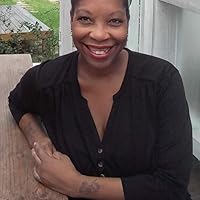
If you turn to the back of the book jacket, you'll see a picture of Caillie Millner: hair in a bun, demure blouse and one of those smiles that probably doesn't like to get captured on film much, at least not by strangers. Ack! Basically, she's me. But pale black instead of pale brown.
Obviously there are differences between the author and I - her travels, her Harvard degree, her experience with drugs (I think if you mush my adolescence together with my oldest brother's, you'll come even closer to the narrative trace of this book).
Nevertheless I've never read a story about passing that I identified so much with. Or had the feeling of blushing at the precociousness of someone else's writing as if it were my own slightly undercooked outrage, or my reflections-on-my-youth-while-still-basically-young-and-therefore-still-not-tempered-with-any-great-deal-of-wisdom.
That doesn't make this a great book worthy of five stars maybe, but I don't care because there are things about being a nerdy almost-white girl in America that I've never read anyone else write so well, and I can't do any better, so there you go.
Kinda boring. Meandered. I haven't said that about a book in a long time. It gets the extra star because the takeaway was identity narratives. Something I will probably carry with me and my ideas of writing and self for the rest of my life. I stopped halfway through though because I couldn't take the dipping in and out of time frames with seemingly little relation to the original paragraph or even premise of the book.
A coming-of-age memoir of a gifted young writer struggling with issues of cultural identity and social perception, with a theme of the impact of gentrification running through a series of life experiencess in San Jose, San Francisco, London, New York, and South Africa, and at places as diverse as Harvard, a Muslim neighborhood, a Catholic girls school, and a lowriders cruising night.
One of the strengths of the work, beyond the forementioned eloquence, is the author's ability to realistically present what she was truly feeling and believing in the past, and draw us in to identify with her perspective, and then later in the work to step back and have us reassess the same situation again, with the new insights and deeper understanding for the complex motiviations of others that devloping maturity and reflection can sometimes bring. It is, at core, a reminder of how hard it is to grow up, and the value of always being prepared for the possibility that empathy --something that takes work to get right--can lead to acknowledgement of even greater suffering and pain for others in the world, yet can at the same time help the lone individual make truly meaningful and positive connections.
This is an interesting book to read in conjunction with What We Are, by Peter Nathaniel Malae. The latter is a novel, and set a bit later in time (although there is some overlap). Both, however, speak to growing up in the multicultural diversity of the Silicon Valley in the last quarter of the 20th century. As this is my home, I know many of the places well that Millner describes in the book, and though my race, gender, and age make me very different from her, I can nevertheless appreciate the power she has to describe people, places, and behaviors I recognize and know.
A bit too self-absorbed and quite pompous in her style of writing... the word "insufferable" kept coming to mind as I read this book. I was hoping to gain some insight into what it's like to grow up in a world in which you feel unmoored from a particular racial identity/background/tribe, but instead of getting that, I got a rambling diatribe from someone who seemed to be looking to pick a fight with everyone over almost everything.
There were some gems in this book, such as her observation of how difficult it is to rally a neighborhood around issues they feel defeated by at the outset, or the awkwardness of teenage friendships which cross a significant income divide, or the excruciating painful visit with the family of your significant other when the relationship is already crumbling, or how the kids in her school felt that she unfairly exploited them in her high-school-published article to land herself a ticket into Harvard.
Issues of identity and race are quite complex and there were moments in which Millner could have dived into unexplored territory, but every time she started to do so, she seemed to get sidetracked and would meander off into a tale about some guy or another. Whatever does HE have to do with this story, I'd wonder? And did this woman never meet any women in her life, outside of her family? I never have heard of a heterosexual woman who can have so many intense - almost compulsive - relationships with single men who seem to not notice that she is a very attractive female. Men I know don't work like that!
A memoir of a young African American woman growing up in a predominantly Latino San Jose, California neighborhood. I just finished this book and found the last 1/3 to be bizarre. It wandered and jumped around to the point that I wanted to stop reading it, but the first 2/3 were full of interesting observations.
An extremely curious book. Started off as I expected and then completely changed course. I'd be curious to read other things by her. She does have an unusual, striking style.
Chose to read the book to strengthen my reading and comprehension as well as my literature analytical skills.The book's grammar has definitely helped with improving those skills by introducing me to new intense vocabulary and Syntax. Millner also has a distinct idiolect that was new to me and fun to discover. As good as the book was, it mostly felt as though it was more about the people that Millner met over the course of her life. I understand that introducing these people as characters in her life and breaking them down, in a way, is supposed help explain her own narrative, which was built from her interactions with these new characters, but Millner focused a little too much on these characters and failed to use them to explain her own sense of being. Anytime Millner came close to establishing some sense of pathos by deepening insights into her life, a new character would be introduced and spent pages or even chapters being explored, rather than largely focusing on Millner. The book also felt as though it was written in third perspective, kind of like Millner was watching her life outside of her own body without fully participating ( if that makes sense at all). There weren't enough emotional reactions. everything felt like an explanation instead of an experience. For this reason, it feels as though the book lacks sophistication. As someone who resonates with the struggle of identity in a world that denies you of one, I would have loved for Millner to focus more on herself or at least show us more how she was struggling instead of telling us.
I was interested to read this book since I grew up in San Jose, knew her father, etc. The book was a disappointment. While she does acknowledge her own advantage in life, growing up in Almaden Valley, going to Harvard, she appears to like the sound of her own voice. The fact that she has an aversion to quotation marks made it difficult for me to follow the voice. The book moved around too much and didn't explore fully any aspect of her life. I really enjoyed the family aspect & wish the book would have explored that more. I could have done without the strange friends, drugs, etc. I learned that she & I went to the same high school (15 years apart). We did not have the same experience & she claimed racism at the school (which wouldn't surprise me) & the administration shut her down. I wish she would have discussed more of her eating disorder and her personal relationships including her family. The section on her time in South Africa went no where--that is basically where the book ended.
This book was written by someone only two years older than me who also grew up in the Bay Area (specifically San Jose) and was one of a handful of Black students at an all-girls' high school. The similarities betwwen myself and the author end there. I could not relate AT ALL to the author's bitter, often ranting diatribe against people. I had to return this book to the library before I could reach the 'bitter' end and doubt that I will borrow it again to finish. I find Sylvia Plath more uplifting and refreshing to read!
I hate giving one star ratings. Writing is a lot of work and leaves the author very vulnerable--especially a memoir like this. However, I just couldn't handle this book. It started off really well but the time jumps weren't coherent and it took all I had to get through the Hans section which didn't really seem to have a point other than shock factor. I had to give up at Lyn though--cured of homosexuality?! That is so damaging and irresponsible to put into print.
DNF
This entire review has been hidden because of spoilers.
Meh. Agreed with most of the reviews that there didn't seem to be a point or overarching narrative, especially in the second half of the book. The jumping around in time was confusing especially because there didn't seem to be connections between the different parts (they might as well have happened to different people). Certain stories I will remember, especially the part about college because that's particularly relevant to my experience, but overall this wasn't really worth the read.
I seem to be reading a lot of memoirs lately. At first, I enjoyed this one very much and I think it had something to do with the author and I being of the same age. Her experiences, though unique, were ones that I could relate to on some level. The last couple of chapters, however, I lost interest in her dialogue.
I frequently enjoy Caille Millner's op-ed pieces in the SF Chronicle, so I bought this on a lark. I found it disappointing. There was a certain grandiosity about it, together with a disjointedness and an awkward writing style, particularly when she is putting speeches in others' mouths (and she likes to put long speeches in others' mouths). I wouldn't bother if I were you.
I appreciated the content of this, if not always the execution. Multipage monologues by folks other than the author resulted in everything being written/phrased in the author's own voice. As such, these portions, of which there were many, felt very stripped of the individual speakers' personality, which distracted me.
A little too self-absorbed for my liking...Milner's "privilege guilt" about wore me out. Quit trying to be something you're not, quit whining about the problems others are facing that you're not, and get active to help people fix these problems! Enough already.
she's a bit long-winded and it's pretty easy to lose interest in what she has to say. gentrification is interesting enough but this doesn't feel like a very fresh take on a subject that is already becoming stale.
The book started out strong, I was impressed by the writing, and engaged by the subject matter. But then, it started to ramble a bit and the book lost me. Overall, a good read, merely slows down a bit toward the end of the middle.
Calile's search for identity as an African-American is something that I was completely unaware that people still stuggle with. This book was such an eye-opener for me.