

What do you think?

Lips too Chilled (Little Black Classics) by Matsuo Basho
'Nothing more lonely -' A selection of Basho's most magical haiku Introducing Little Black 80 books for Penguin's 80th birthday. Little Black Classics celebrate the huge range and diversity of Penguin Classics, with books from around the world and across many centuries. They take us from a balloon ride over Victorian London to a garden of blossom in Japan, from Tierra del Fuego to 16th century California and the Russian steppe. Here are stories lyrical and savage; poems epic and intimate; essays satirical and inspirational; and ideas that have shaped the lives of millions Basho (1644-1694). Basho's On Love and Barley and The Narrow Road to the Deep North and Other Travel Sketches are available in Penguin Classics.
Paperback
First published January 1, 1702
About the author
Matsuo Bashō
312 books622 followersKnown Japanese poet Matsuo Basho composed haiku, infused with the spirit of Zen.
The renowned Matsuo Bashō (松尾 芭蕉) during his lifetime of the period of Edo worked in the collaborative haikai no renga form; people today recognize this most famous brief and clear master.
https://en.wikipedia.org/wiki/Matsuo_...
The renowned Matsuo Bashō (松尾 芭蕉) during his lifetime of the period of Edo worked in the collaborative haikai no renga form; people today recognize this most famous brief and clear master.
https://en.wikipedia.org/wiki/Matsuo_...
Ratings & Reviews
Friends & Following
Create a free account to discover what your friends think of this book!
Community Reviews
Displaying 1 - 30 of 240 reviews

November 22, 2015
Cherry blossoms -
lights
of years passed.
These days I can only read booklets and quote passages, stuck as I am in gham-e-rozgaar, or the travails of life, which Bashō effectively captures in a haiku.
Poor boy - leaves
moon-viewing
for rice-grinding.
Bashō rescued my senses from the desolation of autumn and showed me four seasons in full bloom all at once.
Lips too chilled
for prattle -
autumn wind.
On the dead limb
squats a crow -
autumn night.
But we never give up.
Parting,
straw-clutching
for support.
And want to speak - and sing.
If I'd the knack
I'd sing like
cherry flakes falling.
Then comes a most relevant realisation.
Year's end -
still in straw hats
and sandals.
November 2015
lights
of years passed.
These days I can only read booklets and quote passages, stuck as I am in gham-e-rozgaar, or the travails of life, which Bashō effectively captures in a haiku.
Poor boy - leaves
moon-viewing
for rice-grinding.
Bashō rescued my senses from the desolation of autumn and showed me four seasons in full bloom all at once.
Lips too chilled
for prattle -
autumn wind.
On the dead limb
squats a crow -
autumn night.
But we never give up.
Parting,
straw-clutching
for support.
And want to speak - and sing.
If I'd the knack
I'd sing like
cherry flakes falling.
Then comes a most relevant realisation.
Year's end -
still in straw hats
and sandals.
November 2015

January 31, 2018
Poor boy - leaves
moon-viewing
for rice-grinding.
*
Journey's end -
still alive, this
autumn evening.
*
Morning-glory -
it, too,
turns from me.
At least, I still have autumn.
A lovely selection of poems. Better collections prevent me from giving this more than three stars. And a half.
three stars and a half
sounds about right on this quiet
summer morning
*
day of the super blue blood moon

Jan 31, 18
* Also on my blog.
** Photo via NASA

June 23, 2015
If there is one thing I enjoy more than writing Haikus, its reading Haikus by people who actually know how to write a decent Haiku. It’s no wonder, then, that I loved these wonderful Haikus by a master poet. The first few Haikus, though individual, do connect in their representation of spring. A new, and beautiful, season is approaching after the harshness of autumn and winter. With it, it brings cherry blossom dawns, torrents of spring rain that leave streams of crystal water in their wake and also comes the celestial music of nature. This is, indeed, a wonderful vision of spring.
Spring moon –
Flower face
In mist
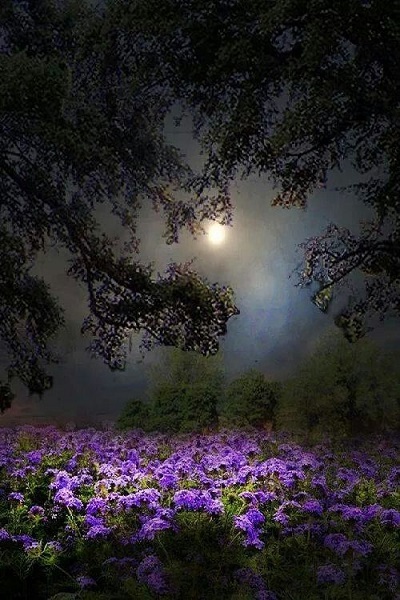
However, after that beautiful image has been evoked the Haikus take on a more ominous tone. Contrastingly the poet suggests that despite the perceived beauty of spring, it also, like winter and autumn, brings along its own problems in the form of the nature of beast and man. The Haikus then go on to represent an image of autumn and winter being worse than spring. I think it’s hard to accurately connect the Haikus together because some of them contradict each other, I think in this perhaps the poet is suggesting that the seasons can be view in differing ways.
Overall, this is a collection of Haikus I really enjoyed. I may have interpreted them completely wrong, nevertheless, though I really liked them. I think it’s time for me to go and find some more Haikus I like. I think this is a very strong edition in the Penguin Little Black Classic series, and perhaps one of my favourites so far.
Penguin Little Black Classic- 62
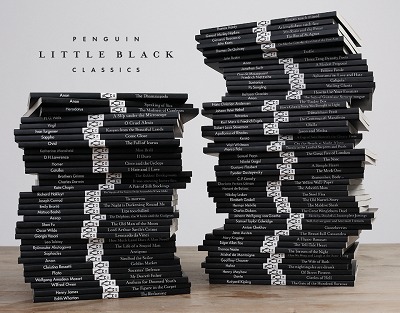
The Little Black Classic Collection by penguin looks like it contains lots of hidden gems. I couldn’t help it; they looked so good that I went and bought them all. I shall post a short review after reading each one. No doubt it will take me several months to get through all of them! Hopefully I will find some classic authors, from across the ages, that I may not have come across had I not bought this collection.
Spring moon –
Flower face
In mist
However, after that beautiful image has been evoked the Haikus take on a more ominous tone. Contrastingly the poet suggests that despite the perceived beauty of spring, it also, like winter and autumn, brings along its own problems in the form of the nature of beast and man. The Haikus then go on to represent an image of autumn and winter being worse than spring. I think it’s hard to accurately connect the Haikus together because some of them contradict each other, I think in this perhaps the poet is suggesting that the seasons can be view in differing ways.
Overall, this is a collection of Haikus I really enjoyed. I may have interpreted them completely wrong, nevertheless, though I really liked them. I think it’s time for me to go and find some more Haikus I like. I think this is a very strong edition in the Penguin Little Black Classic series, and perhaps one of my favourites so far.
Penguin Little Black Classic- 62
The Little Black Classic Collection by penguin looks like it contains lots of hidden gems. I couldn’t help it; they looked so good that I went and bought them all. I shall post a short review after reading each one. No doubt it will take me several months to get through all of them! Hopefully I will find some classic authors, from across the ages, that I may not have come across had I not bought this collection.

June 3, 2020
In my new robe
this morning -
someone else.
***
Spring's exodus -
birds shriek,
fish eyes blink tears.
***
Spring night,
cherry-
blossom dawn.
***
Sparrows in eaves
mice in ceiling -
celestial music.
***
Cherry blossoms -
lights
of years past.
***
Where cuckoo
vanishes -
an island.
***
Wake butterfly -
it's late, we've miles
to go together.
this morning -
someone else.
***
Spring's exodus -
birds shriek,
fish eyes blink tears.
***
Spring night,
cherry-
blossom dawn.
***
Sparrows in eaves
mice in ceiling -
celestial music.
***
Cherry blossoms -
lights
of years past.
***
Where cuckoo
vanishes -
an island.
***
Wake butterfly -
it's late, we've miles
to go together.

September 17, 2017
In the West we have a vague sense that poetry is good for our souls and makes us sensitive and wiser, yet we don't always know how this should work. Poetry has a hard time finding its way into our lives in any practical sense. In the East however, some poets, like the 17th century Buddhist monk and poet Matsu Bashō, knew precisely what effect their poetry was meant to produce. It was a medium designed to guide us to wisdom and calm as the terms are defined in Zen buddhist philosophy.
As a child Bashō was taught how to compose poems in the haiku style. Traditionally, haikus contain three parts: two images and a concluding line which helps juxtapose them. Until his death in 1694, Bashō alternated between traveling widely on foot and living in a small hut on the outskirts of the city. He didn't believe in the modern idea of art for art's sake, instead he hoped that his poetry would bring his readers into special mental states valued in Zen Buddhism.
His poetry reflects two of the most important Zen ideals: Wabi-Sabi. Wabi means satisfaction with simplicity and austerity while Sabi means an appreciation of the imperfect. It was nature more than anything else that was thought to foster Wabi and Sabi and it's therefore unsurprisingly one of Bashō's most frequent topics (...the cherry blossoms ya'll).
Bashō's poetry is of an enormous shocking simplicity at the level of theme. There are no analyses of politics or love triangles or family dramas. The point is to remind readers that what really matters is to be able to be content with our own company, to appreciate the moment we're in and to be attuned to the very simplest things life has to offer like the chaning of the seasons and the little surprises we encounter each day.
Bashō also used natural scenes to remind his readers that flowers, weather and other natural elements are like our own lives ever-changing and fleeting. This transience of life may sometimes be heartbreaking but it's also what makes every moment valuable.
In literature Bashō valued Karumi – lightness. He wanted it to seem as if children had written it. He abhorred pretension and elaboration. As he told his disciples: 'In my view a good poem is in which the form of the verse, and the joining of its two parts, seem light as a shallow river flowing over its sandy bed.' The ultimate goal of this lightness was to allow readers to escape from the burdens of the self. Bashō believed that poetry at its best would allow one to feel a brief sensation of merging with the natural world, leading one to an enlightened state of mind – Muga, the loss of awareness of one's self.
In a world of social media profiles and crafted resumes it might seem odd to want to escape our individuality. After all, we carefully groom ourselves to stand out from the rest of the world. Bashō reminds us that self-forgetting is valuable because it allows us to break free from the incessant sensation of desire and incompleteness, and the need of validation.
His poetry constantly reminds us to appreciate what we have and to see how infinitesimal and unimportant our personal difficulties are in the vast scheme of the universe. They remind both the writer and the reader that contentment relies on knowing how to derive pleasure from simplicity and how to escape, even if only for a while, the tyranny of being ourselves.
Personally, I found more pleasure in researching Bashō and his worldview than in the poetry itself. Granted, reading them on the train with the obtrusive smell of bear and the soundscape of crying children might have dampened the the atmosphere. ;) Nonetheless, most haikus seemed a bit too random for me and I didn't take much from them. But the point still stands: Bashō was a badass and more people should know about him!
As a child Bashō was taught how to compose poems in the haiku style. Traditionally, haikus contain three parts: two images and a concluding line which helps juxtapose them. Until his death in 1694, Bashō alternated between traveling widely on foot and living in a small hut on the outskirts of the city. He didn't believe in the modern idea of art for art's sake, instead he hoped that his poetry would bring his readers into special mental states valued in Zen Buddhism.
His poetry reflects two of the most important Zen ideals: Wabi-Sabi. Wabi means satisfaction with simplicity and austerity while Sabi means an appreciation of the imperfect. It was nature more than anything else that was thought to foster Wabi and Sabi and it's therefore unsurprisingly one of Bashō's most frequent topics (...the cherry blossoms ya'll).
Bashō's poetry is of an enormous shocking simplicity at the level of theme. There are no analyses of politics or love triangles or family dramas. The point is to remind readers that what really matters is to be able to be content with our own company, to appreciate the moment we're in and to be attuned to the very simplest things life has to offer like the chaning of the seasons and the little surprises we encounter each day.
Bashō also used natural scenes to remind his readers that flowers, weather and other natural elements are like our own lives ever-changing and fleeting. This transience of life may sometimes be heartbreaking but it's also what makes every moment valuable.
In literature Bashō valued Karumi – lightness. He wanted it to seem as if children had written it. He abhorred pretension and elaboration. As he told his disciples: 'In my view a good poem is in which the form of the verse, and the joining of its two parts, seem light as a shallow river flowing over its sandy bed.' The ultimate goal of this lightness was to allow readers to escape from the burdens of the self. Bashō believed that poetry at its best would allow one to feel a brief sensation of merging with the natural world, leading one to an enlightened state of mind – Muga, the loss of awareness of one's self.
In a world of social media profiles and crafted resumes it might seem odd to want to escape our individuality. After all, we carefully groom ourselves to stand out from the rest of the world. Bashō reminds us that self-forgetting is valuable because it allows us to break free from the incessant sensation of desire and incompleteness, and the need of validation.
His poetry constantly reminds us to appreciate what we have and to see how infinitesimal and unimportant our personal difficulties are in the vast scheme of the universe. They remind both the writer and the reader that contentment relies on knowing how to derive pleasure from simplicity and how to escape, even if only for a while, the tyranny of being ourselves.
Personally, I found more pleasure in researching Bashō and his worldview than in the poetry itself. Granted, reading them on the train with the obtrusive smell of bear and the soundscape of crying children might have dampened the the atmosphere. ;) Nonetheless, most haikus seemed a bit too random for me and I didn't take much from them. But the point still stands: Bashō was a badass and more people should know about him!

October 25, 2018
I was confused about these haikus first, because they're not in the haiku format. However, I understand why the translator did this, they work well as they are. I think I could probably appreciate them more in the original language, though.

April 5, 2019
“Year by year,/the monkey's mask/reveals the monkey”
― Matsuo Bashō, On Love and Barley
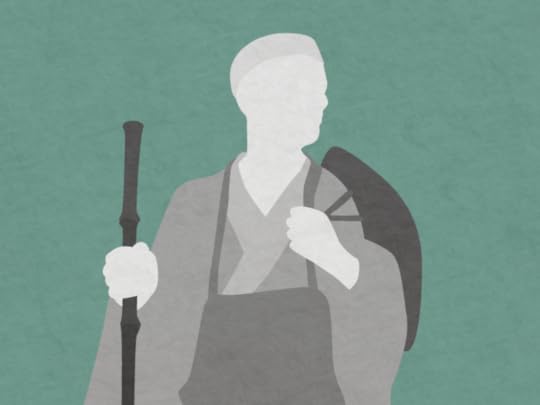
Vol N° 62 of my Penguin Little Black Classics Box Set. This volume contains poems taken from Penguin's collection of Bashō's haikus titled: On Love and Barley: Haiku of Basho.
Love Zen Buddhism.
Haikus smell like warm showers
Bashō kissing sky.
Some of my favorites from this small collection:
Sparrows in eves,
mice in ceiling -
celestial music.
Do not forget the plum,
blooming
in the thicket.
If I'd the knack
I'd sing like
cherry flakes falling.
Boozy on blossoms -
dark rice,
white sake.
Sparrow, spare
the horsefly
dallying in the flowers.
Poor boy - leaves
moon-viewing
for rice-grinding.
Morning-glory -
it, too,
turns from me.
I love them. Not all of them. They aren't all perfect. But again, I'm reading just translations. The proteins of these small poems are flattened. But still, even translated through language, culture, and time Bashō's haikus SING to me.
I stole my picture from here. I liked the piece enough I'm linking it here to remember it later.
― Matsuo Bashō, On Love and Barley
Vol N° 62 of my Penguin Little Black Classics Box Set. This volume contains poems taken from Penguin's collection of Bashō's haikus titled: On Love and Barley: Haiku of Basho.
Love Zen Buddhism.
Haikus smell like warm showers
Bashō kissing sky.
Some of my favorites from this small collection:
Sparrows in eves,
mice in ceiling -
celestial music.
Do not forget the plum,
blooming
in the thicket.
If I'd the knack
I'd sing like
cherry flakes falling.
Boozy on blossoms -
dark rice,
white sake.
Sparrow, spare
the horsefly
dallying in the flowers.
Poor boy - leaves
moon-viewing
for rice-grinding.
Morning-glory -
it, too,
turns from me.
I love them. Not all of them. They aren't all perfect. But again, I'm reading just translations. The proteins of these small poems are flattened. But still, even translated through language, culture, and time Bashō's haikus SING to me.
I stole my picture from here. I liked the piece enough I'm linking it here to remember it later.

July 19, 2024
Ainda não é desta que desisto, mas decididamente, tenho um problema com a poesia...
No entanto, para que na memória fique a parte boa, copio aqui dois haikus que me agradaram especialmente.
Wake, butterfly -
it's late, we've miles
to go together
Lips too chilled
for prattle -
autumn wind.
No entanto, para que na memória fique a parte boa, copio aqui dois haikus que me agradaram especialmente.
Wake, butterfly -
it's late, we've miles
to go together
Lips too chilled
for prattle -
autumn wind.

December 31, 2015
The last book that I read in 2015. Matsuo Basho's haiku collection. After reading it, I discovered that while haikus, I can't just read the poetry alone. I normally don't like commentary with my poems as I like to experience a poem as it is, but with haikus, I think I need commentary alongside - the historical and social context, what Basho was thinking while he was writing a poem or whom he had addressed it to, how the general description in the first few words explode into the insight in the last word - I need an explanation for all of that. The haiku alone is not enough for me. This is a totally anti-Zen thing to say, but this is what I feel.
Some of my favourite haikus from the book.
In my new robe
this morning -
someone else.
Year by year,
the monkey's mask
reveals the monkey.
First winter rain -
I plod on,
Traveller, my name.
Drenched bush-clover,
passers-by -
both beautiful.
Some of my favourite haikus from the book.
In my new robe
this morning -
someone else.
Year by year,
the monkey's mask
reveals the monkey.
First winter rain -
I plod on,
Traveller, my name.
Drenched bush-clover,
passers-by -
both beautiful.

April 8, 2023
Really enjoyed this. Having just witnessed the end of the cherry blossom season in Tokyo, I find this one pure genius (although perhaps not the deepest of Bashō's oeuvre):
Under the cherry -
blossom soup,
blossom salad.
Under the cherry -
blossom soup,
blossom salad.

July 7, 2019
Poetry has always been somewhat of a hit or miss with me. Lips Too Chilled collects Haiku, and I am not really experienced reading them. So, maybe that is why I quite liked these, some were very nice in their short simplicity. I am usually not one for the very strict formats that different poem-styles require, but these Haiku being translated there is a little bit more variation here.
~Little Black Classics #62~
~Little Black Classics #62~

August 4, 2021
A collection of beautiful and touching images that you quickly forget, but that also stay with you somehow...
'Sleeping willow -
soul of
the nightingale.'
*
'Cherry blossoms -
lights
of years past.'
*
'Poor boy - leaves
moon-viewing
for rice-grinding.'
*
'Visiting tombs,
white-hairs bow
over canes.'
*
'Chrysanthemum
silence - monk
sips his morning tea.'
'Sleeping willow -
soul of
the nightingale.'
*
'Cherry blossoms -
lights
of years past.'
*
'Poor boy - leaves
moon-viewing
for rice-grinding.'
*
'Visiting tombs,
white-hairs bow
over canes.'
*
'Chrysanthemum
silence - monk
sips his morning tea.'

July 29, 2021
This is exactly how it feels to go for a walk

April 23, 2016
The 17th-century Japanese Matsuo Bashō is considered the the great master of haiku. His work is an meditation on the natural world, with observations rooted in the stillness and movement of the seasons and time.
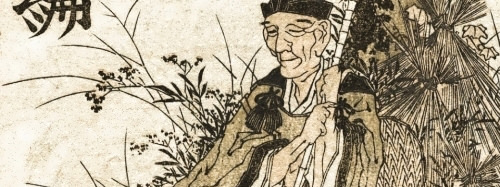
Bashō was introduced to poetry at a young age, but it was after he began to study Zen Buddhism that his own style developed and shaped haiku for the years to come. Showing the interdependence of all natural things, he focussed on translating small things of the world into the simple pattern that make up his poems.
Bright moon: I
stroll around the pond -
hey, dawn has come.
In this particular collection of his work the fleetingness of the seasons come across very well. I was surprised at how some of those simple few lines could evoke such strong recollections of heavy summers and chilling winters. And yet, in the end, it always comes in full circle - there's always the certainty that time will continue passing, seasons will return and things will stay the same.
Year's end -
still in straw hat
and sandals.
I enjoyed the idea of those poems, the mood they created and I wish I didn't have to rely on translations of them. At the same time it's more the collective impression they left on me that I liked, especially after having read more about their creator, and less the individual haiku.
In 2015 Penguin introduced the Little Black Classics series to celebrate Penguin's 80th birthday. Including little stories from "around the world and across many centuries" as the publisher describes, I have been intrigued to read those for a long time, before finally having started. I hope to sooner or later read and review all of them!
Bashō was introduced to poetry at a young age, but it was after he began to study Zen Buddhism that his own style developed and shaped haiku for the years to come. Showing the interdependence of all natural things, he focussed on translating small things of the world into the simple pattern that make up his poems.
Bright moon: I
stroll around the pond -
hey, dawn has come.
In this particular collection of his work the fleetingness of the seasons come across very well. I was surprised at how some of those simple few lines could evoke such strong recollections of heavy summers and chilling winters. And yet, in the end, it always comes in full circle - there's always the certainty that time will continue passing, seasons will return and things will stay the same.
Year's end -
still in straw hat
and sandals.
I enjoyed the idea of those poems, the mood they created and I wish I didn't have to rely on translations of them. At the same time it's more the collective impression they left on me that I liked, especially after having read more about their creator, and less the individual haiku.
In 2015 Penguin introduced the Little Black Classics series to celebrate Penguin's 80th birthday. Including little stories from "around the world and across many centuries" as the publisher describes, I have been intrigued to read those for a long time, before finally having started. I hope to sooner or later read and review all of them!
![Profile Image for [ J o ].](https://i.gr-assets.com/images/S/compressed.photo.goodreads.com/users/1673171874i/4639825._UY200_CR4,0,200,200_.jpg)
June 27, 2015
"Skylark sings all
day, and day
not long enough."
This was the first Little Black Classic that I didn't want to finish. I've read 61 of them and I think this may be the worst. The haikus are simple, childlike, boring and really not my thing. A few had some imagery that delighted by it was too few and far between to have any kind of impact. I suppose a lot can be lost in translation, but even then I can't see some of them being nothing but pretentious drivel.
Blog | Instagram | Twitter | Pinterest | Shop | Etsy
day, and day
not long enough."
This was the first Little Black Classic that I didn't want to finish. I've read 61 of them and I think this may be the worst. The haikus are simple, childlike, boring and really not my thing. A few had some imagery that delighted by it was too few and far between to have any kind of impact. I suppose a lot can be lost in translation, but even then I can't see some of them being nothing but pretentious drivel.
Blog | Instagram | Twitter | Pinterest | Shop | Etsy

March 13, 2015
Despite being an avid fan of Japanese literature and despite Matsuo Basho's popularity as mostly a classic haiku poet, I had never had the chance to read his poetry before picking up this Penguin edition. His haikus hide so much beauty in them that reading this selection made want to read more of them. His primary themes are nature and the everyday life of his era, but the lyricism and the rich images that are embedded in those short pieces of poetry are exquisite. I would love to read those haikus in their original Japanese format as well.

April 13, 2023
cosy vibes reading this lovely collection on a rainy day

April 25, 2022
I'm no way able to comment on any sort of poetry, but I loved how Basho sensei wrote his haikus.
It was eloquent, beautiful, daunting and at the same time just very heartwarming. It brings you a sense of melancholy whilst comforting a dark heart.
I picked up this short haiku collections on a day that I felt just very shitty and in some sense it comforted me.
I kind of understood what Basho wanted to portray, in his sense of fluidity in including elements of nature into his haiku. Great for a light reading!
It was eloquent, beautiful, daunting and at the same time just very heartwarming. It brings you a sense of melancholy whilst comforting a dark heart.
I picked up this short haiku collections on a day that I felt just very shitty and in some sense it comforted me.
I kind of understood what Basho wanted to portray, in his sense of fluidity in including elements of nature into his haiku. Great for a light reading!

February 7, 2026
3.5 ⭐️ vivid imagery with so little words!

December 31, 2024
Work smarter not harder

July 16, 2024
review coming, book was decent over all, some great poems, some mid ones, 3.5 overall i think, i'll round up because i fuck w basho he's cool

March 14, 2025
soms.
deze was leuk:
pretending to drink
sake from my fan,
sprinkled with cherry petals
deze was leuk:
pretending to drink
sake from my fan,
sprinkled with cherry petals

May 9, 2015
It feels weird giving a collection of very short, barely (if at all) interconnected haiku poems a star rating, especially in this case where the pieces almost certainly lose in translation. But this gets 4 out of 5 from me for the beautiful little verbal still lives Bashō creates, and that are able to transcend the shift in language.
Some were forgotten immediately, some stuck, some will definitely continue to haunt me for a while, some work because of their implicit thematic attachment to others.
4 stars for the "Noh cry / of pheasant", for the raincoated monkey, the cheeky self-referentiality, the "moon-wreathed / bamboo grove", the "sweet song / of non-attachment", the "frozen shadow", and the "chrysanthemum / silence".
"Wake, butterfly – / it's late, we've miles / to go together."
Some were forgotten immediately, some stuck, some will definitely continue to haunt me for a while, some work because of their implicit thematic attachment to others.
4 stars for the "Noh cry / of pheasant", for the raincoated monkey, the cheeky self-referentiality, the "moon-wreathed / bamboo grove", the "sweet song / of non-attachment", the "frozen shadow", and the "chrysanthemum / silence".
"Wake, butterfly – / it's late, we've miles / to go together."
September 2, 2015
"Chrysanthemum silence – monk sips his morning tea.”
In this compendium of Bashō's haikus, the reader is offered a short, yet mindful appreciation of the ecological and natural environment which surrounds us.
In this compendium of Bashō's haikus, the reader is offered a short, yet mindful appreciation of the ecological and natural environment which surrounds us.

September 20, 2016
There is no merit here. This book is an empty shell. Under no circumstance does this contain any literary content. This book gave no pleasure only frustration that this is regarded higher than other works which demand greater attention.
Read these words,
My mind benumbed
Bang my head, becalmed.
Read these words,
My mind benumbed
Bang my head, becalmed.

August 24, 2021
Nie znam się na poezji, a na haiku to już w ogóle, ale ten zbiór był jak spacer przez wszystkie pory roku na wsi i jakoś tak ciepło mi się zrobiło w środku.
Z ciekawostek to Bashō został po śmierci uznany za bóstwo w shintoizmie i przez pewien czas jakakolwiek krytyka jego twórczości była uznana za bluźnierstwo XD
Z ciekawostek to Bashō został po śmierci uznany za bóstwo w shintoizmie i przez pewien czas jakakolwiek krytyka jego twórczości była uznana za bluźnierstwo XD

February 7, 2023
This is the most poetic experience i have ever felt. The translation was impeccable, the fracing was quintessential.
I have never experienced anything like this.
I must recommend it to anyone who will read it.
I am astonished. I am stunned.
I will recite one that stuck to me particularly
Under the cherry -
blossom soup,
blossom salad.
I have never experienced anything like this.
I must recommend it to anyone who will read it.
I am astonished. I am stunned.
I will recite one that stuck to me particularly
Under the cherry -
blossom soup,
blossom salad.

Read
December 30, 2024I am always reluctant to rate translated poetry, as it changes a lot in translation - in this case, a book of haiku, it is even more changed - hence my lack of rating
HOWEVER, these somewhat convinced me that haiku be good - I never really "got them", because they were too short for me, but Matsuo Bashō used this short form to create these... miniature paintings
such a refreshing read
HOWEVER, these somewhat convinced me that haiku be good - I never really "got them", because they were too short for me, but Matsuo Bashō used this short form to create these... miniature paintings
such a refreshing read

March 21, 2026
Lips Too Chilled by Matsuo Basho feels more empty than profound. Its minimalism comes across as flat, with little emotional or narrative pull. It demands effort but gives very little back. Unless you are already deeply invested in this style, it will likely feel distant and unrewarding.

October 4, 2021
“wake, butterflyㅡ
it's late, we've miles
to go together.”
+
“spring airㅡ
woven moon
and plum scent.”
+
“spring moonㅡ
flower face
in mist.”
okay y'all don't know how much i LOVE haikus (especially matsuo basho's) so this short collection was a big NEED for me. i adored sooo many of them ahh his words are so pretty and comforting.
it's late, we've miles
to go together.”
+
“spring airㅡ
woven moon
and plum scent.”
+
“spring moonㅡ
flower face
in mist.”
okay y'all don't know how much i LOVE haikus (especially matsuo basho's) so this short collection was a big NEED for me. i adored sooo many of them ahh his words are so pretty and comforting.
Displaying 1 - 30 of 240 reviews