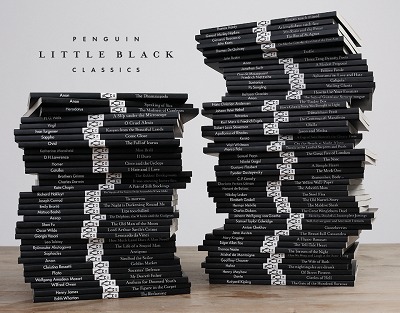
'But I ran up the broken stairway, and came out suddenly, as if by a miracle, clean on the platform of my San Tommaso, in the tremendous sunshine.' Four personal, sun-drenched sketches of Lawrence's experiences in Italy. Introducing Little Black 80 books for Penguin's 80th birthday. Little Black Classics celebrate the huge range and diversity of Penguin Classics, with books from around the world and across many centuries. They take us from a balloon ride over Victorian London to a garden of blossom in Japan, from Tierra del Fuego to 16th-century California and the Russian steppe. Here are stories lyrical and savage; poems epic and intimate; essays satirical and inspirational; and ideas that have shaped the lives of millions. David Herbert Lawrence (1885-1930). Lawrence's works available in Penguin Classics are Apocalypse, D. H. Lawrence and Italy, The Fox, the Captain's Doll, the Ladybird, Lady Chatterley's Lover, The Prussian Officer and Other Stories, The Rainbow, Sea and Sardinia and Selected Poems.
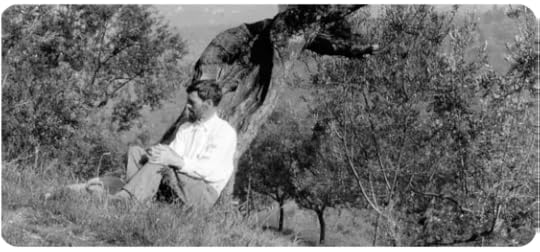
David Herbert Richards Lawrence was an English writer of the 20th century, whose prolific and diverse output included novels, short stories, poems, plays, essays, travel books, paintings, translations, literary criticism, and personal letters. His collected works represent an extended reflection upon the dehumanizing effects of modernity and industrialisation. In them, Lawrence confronts issues relating to emotional health and vitality, spontaneity, human sexuality and instinct.
Lawrence's opinions earned him many enemies and he endured official persecution, censorship, and misrepresentation of his creative work throughout the second half of his life, much of which he spent in a voluntary exile he called his "savage pilgrimage." At the time of his death, his public reputation was that of a pornographer who had wasted his considerable talents. E. M. Forster, in an obituary notice, challenged this widely held view, describing him as "the greatest imaginative novelist of our generation." Later, the influential Cambridge critic F. R. Leavis championed both his artistic integrity and his moral seriousness, placing much of Lawrence's fiction within the canonical "great tradition" of the English novel. He is now generally valued as a visionary thinker and a significant representative of modernism in English literature. http://en.wikipedia.org/wiki/D.H._Law...
I was going to write an update exclaiming that I’m now finally half way through this collection. (Yay!) This is my fortieth review after all. However, I recently learnt that Penguin is going to be releasing another fifty or so of these things in March. This means that by the time I actually finish this lot I would have read 130 of them, and will be way into the course of 2017. I only read one a week, you see. This is great news because some of the new ones look really good. (So double yay!) They’re much longer too. I may even find more authors to add to my ever growing reading list! That’s always good. I can never have a long enough reading list.
It’s a shame about this particular edition, though, because it really was quite crap, but I’m still excited at the prospect of more. But, hopefully not more like this one. I don’t like travel books. Well, anyway, on with my actual review:
”But I ran up the broken stairway, and came out suddenly, as if by a miracle, clean on the platform of my San Tommaso, in the tremendous sunshine.”
How so very unexciting.
Perhaps, I just don’t like travel writing or perhaps it’s just Lawrence’s writing that I find so terrible. Conversation followed conversation in their evoking of the spirit of tedium. And then there were a few cases of ‘Oh! There’s some scenery. There’s the sun! Let’s make it sound better than it actually is then we can continue with our boring conversation.’ I just didn’t like this in the slightest. I couldn’t engage with any of it. There wasn’t any semblance of story or really any point to the anecdotes and descriptions. It just felt like the kind of rubbish someone may try to tell you in uninspired small talk; it’s completely trivial and completely uninteresting. The writing was okay, on the surface level, but its content was so mundane.
I felt this way because of my lack of appreciation for travel writing in general. It’s just not something I would choose to read. I do think this would be of interest to those that are fans of the author’s works. But, for me, this was redundant, dry and plain boring: it’s one of the worse things in the collection. My next review of one of these, however, is a most positive one. I feel the need to say this because I’ve reviewed a chain of bad ones lately, which is only one side of the story. There are some real good things in this lot.
Penguin Little Black Classic- 71
The Little Black Classic Collection by penguin looks like it contains lots of hidden gems. I couldn’t help it; they looked so good that I went and bought them all. I shall post a short review after reading each one. No doubt it will take me several months to get through all of them! Hopefully I will find some classic authors, from across the ages, that I may not have come across had I not bought this collection.
“Man is always trying to be conscious of the cosmos, the cosmos of life and passion and feeling, desire and death and despair, as well as of physical phenomena. And there are still millions of undreamed-of ways of becoming aware of the cosmos.” ― D.H. Lawrence, "The Florence Museum"
1. The Spinner and the Monks ★★★★★ 2. Il Duro ★★★★ 3. John ★★★ 4. The Florence Museum ★★★
I loved the first piece. It was almost a Gnostic exploration of religion set around Lake Garda in Italy. I loved it. Il Duro and John both definitely had their moments of brilliance. And The Florence Museum was an interesting riff on the Etruscans, but also a look at the waxing and waning of civilizations throughout time. The first three, stylistically, were snapshots; visual representations of people and places. The last was more of an essay and exposition.
Reading travel literature surely feels different in times of a pandemic, when the ease with which some people had the privilege to explore countries and surroundings unfamiliar is nothing but a fantasy. But even with all of this disregarded, Il Duro is a short and sweet taster of how perceptive and nice with words D.H. Lawrence is.
The four excerpts presented in this Little Black Classic are taken from stories D.H. Lawrence penned during his travels through Italy in 1918 and 1932. They're to be read with care, as they feel quite randomly assembled and truly aren't more than a sample of what the full-length memoirs are like, I suppose.
D.H. Lawrence has an eye for details, may that be in people or landscapes. Italy does come alive in these narratives and his descriptions are all benefitting from his pondering, like when the churches of prompt him think about the duality of nature:
"Where is the supreme ecstasy in mankind, which makes day a delight and night a delight, purpose an ecstasy and a concourse in ecstasy, and single abandon of the single body and soul also an ecstasy under the moon?"
He concludes that these things we perceive as opposites are truly 'each only a part; partial and alone for ever; but that the two in consummation are perfect, beyond the range of loneliness and solitude?'. Made me think of the idea behind yin and yang. Beautiful, indeed.
In 2015 Penguin introduced the Little Black Classics series to celebrate Penguin's 80th birthday. Including little stories from "around the world and across many centuries" as the publisher describes, I have been intrigued to read those for a long time, before finally having started. I hope to sooner or later read and review all of them!
I’m sorry, but nothing in this managed to capture my attention. It had an interesting thought here and there, but overall, I didn’t really care for much of it
A selection of excerpts published in a Penguin Little Black Classic.
This book is noted on the back as Sketches of scorched landscapes, peasants and wild spirits from Lawrence's travels in early twentieth-century Italy.
I guess it falls into the travel genre, but I didn't consider much of the writing about travel. It was certainly portraits of people met while the author travelled, but I really didn't find it particularly entertaining, nor very descriptive or would I have said excellent writing.
I found the whole thing (ok it was only 55 pages, so not particularly taxing) rather an uninspiring and uninteresting read. It wasn't unbearable, and if I was pushed I would concede that "John" was interesting enough, but overall, I could definitely have done without reading this.
I suppose I am saying at "John" would be three stars, the other excerpts, two stars, which leads me to two stars overall.
Il Duro was my introduction to D.H. Lawrence but I am not sure it was the best place to start. It contains writings from his travels in Italy and I think travel writing is something on its own that not everyone will enjoy.
For me it was lukewarm, the writing was okay but I felt there was a lot of repetition as he goes about his travels. For me, it was not enough to add more by Lawrence to my TBR, but if you have read and enjoyed some of his other works, feel free to recommend them to me.
Lawrence's writing style is so vivid and captivating that Italy is brought to life here. The things he writes about may be of little importance in the grand scheme of things, but it is the details he sees and the way his mind works that makes this a sweet little book. It is also great to see someone who is not wholly captivated by God or religion as a lot of these Little Black Classic authors have been.
Reading a travel book written in 1912-1913 about a place you just got back from is an interesting experience. In most of this story he is in and around Lake Garda and the Dolomites which I just spent a week road tripping through. The people and places in this story no longer exist in every sense.
I finished this book in a day but didn't enjoy it much. Perhaps it's the editors' fault? I feel the four texts that make up the volume are... plain. I understand they are part of a journal or of a memory made by Lawrence but they seem so disconnected from one another, perhaps lacking context. The only text I liked was Il Duro, the story of a god-like Italian man which is depicted as basically incapable of any human emotion and some unearthly qualities. One can imagine an incredible attractive man but uncapable of feeling any emotion. And that was it.
The other story, John had a lot of potential, so to speak, as it narrates the story of a young boy who goes to the USA and then comes back, for the sake of his father, his nostalgia, etc. He finds a wife, marries, fulfills his duties, but in the end his only desire is to go back to America -and he will leave his family behind. He seems quite an interesting character -fine, good will, but after we learn from his intentions, the story strays to the descriptions of the Italian fields. What happened with John?
Sure, there is some interesting thinking about the world, life, the eternal and non-eternall, but it all seems quite superficial, just barely touched. The first story The Spinner and the Monks has some interesting lines but in the end all seems to lack purpose.
Definitely not one my favorites... and I couldn't help but think: many years ago I read Lady Chatterly's lover and though it is the story of an adultery, it all seemed very... descriptive, perhaps, lacking passion? That it is -Lawrence writes perfectly well but to me at least, there is something he lacks: all seems perfectly described and yet lacking spirit...
The fourth piece, The Florentine Museum, was a beautifully written and somewhat persuasive non-fiction piece on ancient history and the modern understanding of it, which I would definitely reccommend reading. Il Duro and John, the 2nd and 3rd pieces respectively, were captivating, with beautiful language, likeable yet believable characters and touched on some intriguing themes, which is especially impressive considering the brevity of these stories that this is done in. The first short story, The Spinner and the Monks, was also very nice to read, and included extremely powerful imagery with a boldly painted setting. These works do use a lot of low-frequency and archaic lexis, so I would reccommend reading them after a coffee as that definitely helped me with comprehending some of the text, however that was a part of the charm in reading this collection, for me at least.
“Death has no beauty in Italy, unless it be violent. The death of man or woman through sickness is an occasion of horror, repulsive. They belong entirely to life, they are so limited to life, these people.”
An insomnia read — and I do not even know what to say. What an odd little book! It is a collection of Lawrence’s sketches of Italy. Some of the pieces read like little short stories, which are quite vivid, albeit a little condescending. He is rather fond of describing people as stones, as lacking consciousness, and what have you. And there are the characteristically deep passages where Lawrence expounds his own unique world view. “The Florence Museum”, for instance, is less of a short story and more of an essay on what makes a culture, what makes a people. Lawrence places the emphasis on the cosmos. “Man is always trying to be conscious of the cosmos”, he writes, “the cosmos of life and passion and feeling, desire and death and despair, as well as physical phenomena.” Pre-history is but an ebb in “cosmic consciousness” and our task is to understand its symbols — only then can we “get ourselves into the right relation with man as man is and has been and will always be.” Bizarre stuff!
دراین کتاب بیشتر از اینکه با یک داستان طرف باشیم، با یک جور سفرنامه طرفیم. یک بخش به عنوان سالشمار هست که در اون اتفاقات کلیدی مسیر زندگی لارنس آورده شده. در انتهای کتاب هم یکی از شرح حال های نویسنده رو قرار دادن که در نوع خودش جالبه. این کتاب در واقع کتابیه که بیشتر شمارو با زندگی، نوع نگاه و قلم این نویسنده بزرگ آشنا میکنه پس اگر دنبال داستان هستید، گزینه خوبی برای شروع مطالعه آثار لارنس نیست. دیوید هربرت لارنس جز نویسنده هاییه که در سبک شناسی بسیار بر روش تاکید میکنن! به خاطر عقبه ای که در هنر نقاشی داشته در توصیف جزئیات دقتی مثال زدنی داره و همچنین نوشته هاش معجونی از داستان، فلسفه و شعر رو به مخاطب ارائه میده.
Interesting, I kind of rushed through for my reading goal 😬
“She glanced at me again, with her wonderful, unchanging eyes, that were like the visible heavens, unthinking, or like two flowers that are open in pure clear unconsciousness. To her I was a piece of the environment. That was all. Her world was clear and absolute, without consciousness of self. She was not self-conscious, because she was not aware that there was anything in the universe except her universe. In her universe I was a stranger, a foreign signore. That I had a world of my own, other than her own, was not conceived by her. She did not care.”
I think D H Lawrence is another author like Charles Dickens for me... I really want to like his stories but trying to get through all the descriptive language in this was like wading through treacle....
I didn't hate it, but I'm also glad it's over and I don't think I will ever recomend it.
Spangejimas fainas, paskutinis atperka visus kitus, bet bandyti viska perskaityti be pertrauku yra 100% kelias į smegenu lasteliu negriztama sunaikinima
This is really hard to pass comment on, but lets try shall we. while the writing has flashes of brilliance where you can almost place yourself in these wonderful villages here's the rub...
There is no cohesion to the writing. Highly descriptive one moment followed by pithy remarks with no detail the next. The chapter headed The Florence Museum has no flow, it almost reads like a 15 year olds attempt at doing their best to hit the grade for the nat 5 exams. Now for that age group it would be a fine piece of writing, in fact it would be remarkable but for someone of Lawrences' supposed literary standing it is excrable. Bitty incoherent and undetailed.
In conclusion a writer who as made his name on one book that caused a huge scandle of immense proportions which allowed him cartè blanchè to publish anything he desired.
ONE MORE THING: He continually refers to the locals as ugly and Lawrence was no oil painting himself. Perhaps that is why he went to make himself feel handsome...
As is usually the case with Lawrence’s writing, I was completely disengaged. Although some of his eloquent descriptions of nature, or scenery, were gorgeous and enjoyable, there just didn’t seem to be a point to any of it. None of his ramblings clicked together to provide any epiphanies; everything just plodded along in a masquerade depicting Italy.
The four stories don’t seem to have any connection with one another, and felt as though they had been selected and thrown into the collection haphazardly. Of these, John struck me as the one with most potential, but after coming to its apex, John’s story was abandoned for a few paragraphs heavily describing some fields. I was thrilled.
I absolutely did read some really nice snippets of prose here, but the overall lack of purpose permeated the pages to the extent I couldn’t bring myself to read the last story. This is the 71st book I’ve read in the Little Black Classics range, and I have to admit my patience is dwindling with some of the instalments Penguin have chosen to include.
At first, I wanted to criticise the few short pieces of writing in this collection for the way it seemed like Lawrence was trying too much, as well as the annoying repetitions of the same descriptions — which he recognises himself, at certain points. Or, in short, I wanted to criticise that these texts felt too consciously stylised to me, despite the fact that in most cases it does produce beautiful descriptions.
But then it occurred to me that these texts may have been written by heart, in one go. At least I tend to write like that when I do not actively try to produce a smooth read, in as far as I do that at all. From that perspective, although I have no clue whether that be true to Lawrence’s writing, I appreciate it much more. Additionally, and this is something that I see recurring in European modernist writers (among which I would not necessarily place Lawrence, despite the contemporaneity), it does convey a more authentic experience of.. well.. his experiences.
Also, always plus 1 for the philosophical musings.
If ramblings were a book. It all seemed very condescending. I guess this might be a great representation of a privileged tourist who doesn't understand the language or the people and judges everything without trying to understand the other side. It's well written but the content is not up to par.
Lawrence has written the best short story I have ever read, The Man Who Loved Islands, so reading any other by him must fail to live up to that standard. And so these do not. But they are not entirely short stories - which is why Penguin have classified this little extract as travel writing.
Set largely in an alpine Italian village, they tell the stories of the vivid impressions of the narrator, who is sometimes with his unnamed, silent companion, or alone. They combine a vivid depiction of the land and buildings - the church, the inn - under the penetrating sun, the empyrean snowy heights, the lake that binds them, with a perceptive interrogation of the individuals he meets casually within the villages of the area, always comparing their physical simple stolidity with ponderings of the soul. You are never far from the soul in a Lawrence narrative.
However, while these very short pieces are mostly self-sufficient, 'John' is breached in two and just ends. If these 'stories' were taken as excerpts of a more complete collection of travel writing, they would probably read as diary entries. They strike you as odds and ends, and that perhaps the fault is not theirs, as narratives, but of being edited together without cohesion into this little extract.
But they do give you an insight into just how much Lawrence used to think. He thinks hard, and there is always a bipartite expression of his perceptions: the concrete, and the conscious. His depiction of the concrete is often like a cubist impressionism; his expression of the conscious is necessarily tinged with the swirl of the soul, of feeling, of the emotions. Thus, the last piece, which is not about 'The Florence Museum' at all, but a discourse on his perception of civilisation and its past representations - here originating from consideration of the Etruscans of Italy from the exhibition in the museum - typifies his thinking:
'That is what one feels. If it is wrong it is wrong. But few things, that are felt, are either absolutely wrong or absolutely right. Things absolutely wrong are not felt.... They arise from prejudice and pre-conceived notions. As for things absolutely right, they too cannot be felt. Whatever can be felt is capable of many different forms of expression, forms often contradictory, as far as logic or reason goes.' (p.54).
This may not provide a clarity of philosophical meaning, but it does exemplify how Lawrence always thought in parallel: with the logical intellect (structure), and the soulful emotion (colour). It is the colour of Lawrence's writing that imprints, within a cleverly developed structure. Read The Man Who Loved Islands. You will see.
Only “The Florence Museum” disappoints. Absolutely beautiful:
“She glanced at me again, with her wonderful, unchanging eyes, that were like the visible heavens, unthinking, or like two flowers that are open in pure clear unconsciousness.”
“So we conceive the stars. We are told that they are other worlds. But the stars are the clustered and single gleaming lights in the night-sky of our world. When I come home at night, there are the stars. When I cease to exist as the microcosm, when I begin to think of the cosmos, then the stars are other worlds. Then the macrocosm absorbs me. But the macrocosm is not me. It is something which I, the microcosm, am not.
So that there is something which is unknown to me and which nevertheless exists. I am finite, and my understanding has limits. The universe is bigger than I shall ever see, in mind or spirit. There is that which is not me.”
“The shadows were coming across everything, because of the mountains in the west. Already the olive wood where I sat was extinguished. This was the world of the monks, the rim of pallor between night and day. Here they paced, backwards and forwards, backwards and forwards, in the neutral, shadowless light of shadow.
Neither the flare of day nor the completeness of night reached them, they paced the narrow path of the twilight, treading in the neutrality of the law. Neither the blood nor the spirit spoke in them, only the law, the abstraction of the average. The infinite is positive and negative. But the average is only neutral. And the monks trod backward and forward down the line of neutrality.
Meanwhile, on the length of mountain-ridge, the snow grew rosy-incandescent, like heaven breaking into blossom. After all, eternal not-being and eternal being are the same. In the rosy snow that shone in heaven over a darkened earth was the ecstasy of consummation. Night and day are one, light and dark are one, both the same in the origin and in the issue, both the same in the moment, of ecstasy, light fused in darkness and darkness fused in light, as in the rosy snow above the twilight.”
“It was like God grafting the life of man upon the body of the earth, intimately conjuring with his own flesh.”
“There was a strange, almost frightening destiny upon him, which seemed to take him away, always away from home, from the past, to that great, raw America.”
Holy moly, I gotta say, DH Laurence might have the prettiest writing I’ve ever read in English. Everything is so nonocoded, nature, flowers, architecture, but in a very, very deep Daoist symbolic way. I’ve recently gotten a liking for rereadability, and this has got it so much. I was watching a review of a different DH Laurence book and the woman was saying how she had read the book 3 times and I was like huh what? But no, it makes sense. Bro can fucking write, oh my gawd.
I also like how he presents many of his characters as deeply emotionally connected, who are part of the whole earth in a nearly spiritual way. In the sense that they don’t really have a consciousness or desires themselves, but are just an arm of a system of wholeness. That is a spiritual thought I don’t dislike. I don’t believe it to be true in a spiritual way, but the interconnectedness of being as a way of making sense of a meaningless world makes one’s very existence the ultimate sense. And that is a calming thought. You don’t have to do anything, you don’t have to get anywhere, there is nothing before or after you, you just exist as a part of the circle of earth. I get that.
Another thing I like is how Laurence gives you the feeling of a connected family in a non family setting. What I mean by that is a social group that is not necessarily related through blood or marriage, but is still a caring, connected group. A village etc. And wow, I love that feeling in media. I want to just be connected to the people around me. It’s so comforting, so calming, so desirable. People caring for each other. And yet, I haven’t managed to build an environment like that yet. It does make sense that I yearn for it in media. It’s part of a trend in my taste. I like this caring and familiar feeling in non blood, non romantic social groups. I love it in Cowboy Bebop, in Eines Menschen Flügel(best book of all time, read it), and in other media. This feeling was strong with the monks in the first chapter and in “John”.
The last chapter was a little random. I don’t know what cultural meaning the Etruscans signified. That knowledge seemed to be lost on me. But he did make great points about humanity, capitalism, and prejudice.
This book consists of 'sketches of scorched landscapes, peasants and wild spirits from Lawrence's travels in early twentieth-century Italy.' The first three chapters are taken from the book Twilight in Italy.
'The infinite is positive and negative. But the average is only neutral... After all, eternal being and non-being are the same.' The Spinner and the Monks is a quaint chapter on churches, encounters, and balance. The protagonist is very conscious of the space and details around him. He marvels at the duality of things and concludes them to be a unity of sorts.
''Why live with a woman?' he said to me, and he looked mockingly. 'Which woman is it to be?'' Il Duro is a chapter on a fiercely self-conscious and self-sufficient man. The protagonist seems to be in admiration as well as mystification of this charming character who knew exactly what it was that he wanted out of life.
The chapter John deals with an obedient character who finally makes choices of his own, although he does not know what drives those decisions.
'Romans, Jutes, Angles, Saxons, Danes, Normans, Jews, French: after all, what is England? What does the word England mean, even?' The last chapter, The Florence Museum, is taken from Etruscan Places. It feels like a sort of rant on discovering the nature of civilizations, how they form, how they are defeater, or how they evolve into something away from the original.
D H Lawrence is extremely good at speaking the true minds of his characters and bringing every little detail alive.
So Lawrence's narrative voice is flowing and lovely and I want to enjoy him but his narrative voice *is also* just always so sure of its own superiority to the people he's describing, and makes up so much about their experience, it's like a master course in Othering. And that's more frustrating in nonfiction than in fiction where at least these made up people having made up experiences are in fact *supposed* to be made up (even if I don't like how he has made them up).
tiresome because if he was less sure of himself vs everyone else i might really really like his writing.
i'm glad this little set of sketches from his Italian travels clarified that for me though, I've been wondering exactly what it was about him that bothered me so much for years....
Been decades since I've read any Lawrence. These stories were interesting which focus on his experiences travelling around Italy and Germany.
On the surface it doesn't look as if a lot is going on, or that they connect in any way. Within these experiences he reveals ethnic differences, identity, the characters that he comes across, ethnic prejudices and the anger and pain that can be felt when on the receiving end of ethnic hate. Which is not always presented in this way in classic literature but is quite often just accepted. It gives a voice to those experiences.








![Profile Image for [ J o ].](https://i.gr-assets.com/images/S/compressed.photo.goodreads.com/users/1673171874i/4639825._UY200_CR4,0,200,200_.jpg)