Jump to ratings and reviews
Rate this book

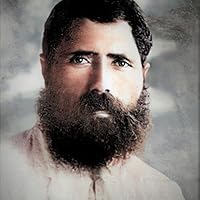
The Labyrinth of Exile: A Life of Theodor Herzl

Rate this book
"At the age of thirty-five, the fashionable Viennese playwright and journalist Theodor Herzl fantasized about the collective conversion of the Jews in a mass ceremony at the cathedral of St. Stephen. By the time he died, a mere nine years later, he had redefined Jewish identity in terms of a modern secular faith and created a national movement which, within less than half a century, led to the foundation of the Jewish state." So begins Ernst Pawel's remarkable study of Herzl. In The Labyrinth of Exile Pawel restores the vital link between the myth of the founding father of Zionism and the human being and demonstrates that the reality of Herzl's life is much more complicated and far more interesting. Legendary and all too human, Herzl remains one of the emblematic figures of modern times.

572 pages, Paperback

First published January 1, 1989

Loading...
Loading...

About the author

Ernst Pawel

11 books2 followers
Ernst Pawel was a German American biographer, novelist, and translator who worked primarily for New York Life Insurance from 1946 to 1982. Pawel wrote about the Holocaust and Sigmund Freud in three novels from 1951 to 1960. From 1954 to 1965 he translated books by Georges Simenon and Lotte Lehman. During the 1980s, Pavel released biographies of Franz Kafka and Theodor Herzl. Following his death in 1994, Pawel's biography of Heinrich Heine and his own memoir were released.

The Nightmare of Reason: A Life of Franz Kafka won the Los Angeles Times Book Prize for Biography and was nominated for the American Book Award for Nonfiction in 1984.

Ratings & Reviews

What do you think?
Rate this book

Friends & Following

Create a free account to discover what your friends think of this book!

Community Reviews

5 stars
13 (54%)
4 stars
6 (25%)
3 stars
4 (16%)
2 stars
0 (0%)
1 star
1 (4%)
Displaying 1 - 3 of 3 reviews
Profile Image for Yalla Balagan.
280 reviews7 followers
April 30, 2026
Ernst Pawel spent years cataloging Theodor Herzl's every megalomanic episode, failed play, marital catastrophe, and grandiose diplomatic stumble, and came out the other side with a case for the Zionist idea far more persuasive than any pamphlet Herzl ever produced. Pawel was a serious literary biographer, author of a celebrated life of Kafka, whose skepticism cuts to the bone. His portrait of Herzl as a narcissistic, manic-depressive Budapest playwright who dreamed up a state for the Jewish people the way lesser men dream of promotions is devastating and admiring at once. The conclusion is that Herzl's extraordinary achievement owed everything to force of personality, with originality of thought a distant second place, and that this, paradoxically, is exactly what the Zionist project required.

A Budapest Jew named Theodor Herzl got laughed at by Rothschilds, stonewalled by the Sultan of Turkey, patronized by Kaiser Wilhelm, and managed to convene the first Zionist Congress in Basel in 1897, writing in his diary that in fifty years there would be a Jewish state. He was off by one year.

Pawel traces the whole combustible arc with an eye for the detail that exposes the man behind the monument. His skepticism about Herzl the person only amplifies the astonishment at Zionism the achievement.

Pawel's own life gave every reason to find the Zionist idea valid. Born in Breslau in 1920, a refugee from Hitler's Europe, a man who watched the continent devour its Jews from across an ocean. His Herzl biography carries the weight of that experience. History rewards the theatrical, the stubborn, and the slightly delusional, and Herzl was all three in extraordinary abundance. A dandified journalist who fantasized about mass baptism at a Viennese cathedral somehow willed Israel into existence. Pawel, to his credit and perhaps his surprise, found the whole operation magnificent.

Zionism as Pawel constructs it is the vindication of the outrageous bet, the proof that history occasionally hands the trophy to the most stubborn person in the room. The book ages into greater relevance with every passing decade, as the Israeli state Herzl conjured from wounded pride and sheer force of will continues to exist against considerable opposition.

Theodor Herzl, born in Budapest in 1860 to an assimilated Jewish family that worshipped German culture with the devotion of the recently invited, spent his first thirty-five years pursuing literary fame with frantic energy. He failed at playwriting, succeeded brilliantly at journalism, watched the Dreyfus trial in Paris, and experienced what Pawel calls a transformation of staggering implausibility. The dandified feuilletonist became the prophet of Jewish nationhood. He wrote in his diary "In Basel I founded the Jewish state," and he was correct.

It is vital to grasp that Herzl's story is every persecuted people's story, compressed into one furious lifetime, because the lesson it carries is transferable and urgent. Dignity, once surrendered to the convenience of others, recovers only through collective will, that a people without sovereignty is a people permanently available for someone else's purposes, and that the distance between a dream written in a diary and a flag raised over a nation is, in the final reckoning, exactly one generation of extraordinary stubbornness.

❤️ 🇮🇱
Profile Image for Stacey.
140 reviews1 follower
May 6, 2026
Conceptual Clarity The main concepts presented in the book are defined early on and used consistently. The author ensures that the reader understands the terminology and the basic premises of the work. This clarity helps in navigating through the more complex sections of the text. Check the link for a simplified guide to the book's concepts. >>> https://script.google.com/macros/s/AK...
Displaying 1 - 3 of 3 reviews