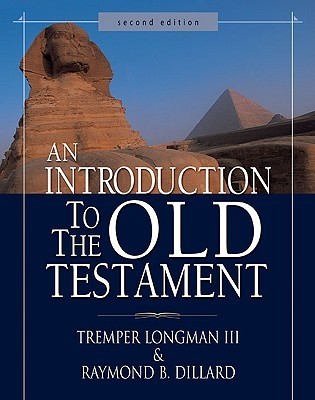
An upper-level introduction to the Old Testament that offers students a thorough understanding of three key historical background, literary analysis, and theological message.
This second edition of An Introduction to the Old Testament integrates recent developments in Old Testament scholarship. It has many distinctive features that set it apart from other introductions to the Old
It's committed to a theologically evangelical perspective.Emphasizes "special introduction"—the study of individual books.Interacts in an irenic spirit with the historical-critical method.Features points of research history and representative scholars rather than an exhaustive treatment of past scholarship.Deals with the meaning of each book, not in isolation but in a canonical context.Probes the meaning of each book in the setting of its culture.Including callouts, charts, and graphs, An Introduction to the Old Testament is written with an eye to understanding the nature of Old Testament historiography.
Perfect for seminary students, professors, and Bible teachers and ministry leaders, as well as anyone looking for an in-depth and balanced approach to Old Testament study.
Tremper Longman III (PhD, Yale University) is the Robert H. Gundry Professor of Biblical Studies at Westmont College in Santa Barbara, California. Before coming to Westmont, he taught at Westminster Theological Seminary in Philadelphia for eighteen years. He has authored or coauthored numerous books, including An Introduction to the Old Testament, How to Read Proverbs, and commentaries on Daniel, Ecclesiastes, Proverbs, Jeremiah and Lamentations, and Song of Songs.
I had to read this for an Old Testament class. Truth be told, I read 99% of it (although actually, some of the pages were skimmed which makes me feel like I'm cheating a bit adding this book) last fall but I had neglected to read the chapter on Chronicles. But now that's accomplished and the tedium is over!
I read the first edition of this book for my undergrad degree and just read the second version in masters studies. The book accomplishes its purpose well: gives an overview of each Old Testament book, author, dates, occasion/purpose, textual criticism, structure/genre/themes, history of interpretation, place in the Hebrew vs. Christian canon, theological contributions and relationship with the New Testament. In the approximately twenty years since the first edition, this book has been brought up to date on the state of scholarship for each OT book and is full of helpful bibliographical info for those who want to pursue particular areas of study further with the most representative works from various perspectives. This is written from a conservative perspective yet is conversant with/open to the contributions of critical scholarship. Based on thorough scholarship, this book is accessible to college level readers and interested lay people. This isn't a page-turner, but that is less the fault of the authors as it is simply the constraints of the genre and purpose of the work. I didn't always agree with the conclusions of the authors, but I was always informed by their discussion and occasionally edified by it, which is saying something when you consider it is pretty dry reading and coming in large doses.
This was the assigned textbook for my Old Testament 1 and 2 courses. I liked what one reviewer said "drier than Sanai" (although my dyslexic brain read it as "drier than a snail" which I liked more, haha) and this is true. But, there were some interesting things here and there.
I appreciated that Longman and Dillard were coming from a distinctly Evangelical perspective. However, what I didn't appreciate was the amount of ink devoted in each chapter to going through the eye-rolling history of textual-critical ideas about the given book (and the ideas were legion and often quite contradictory, which just shows how bankrupt the whole textual-critical enterprise is). Half of the chapter was often devoted to discussing these ideas. Why are we wasting so much time on them? I do believe that they should be discussed to some extent, but can we handle with some disdain, rather than the respect of devoting so much of this textbook to them? I joked with my cohortmates that it should also have section devoted to the thoughts Richard Dawkins, because why not? And speaking of disdain, they reserved all their ire for the ideas of Theonomy (found on page 76):
"Approaching the New Testament. Attempts like those of a movement called theonomy to impose the laws and penalties found in the Book of the Covenant to contemporary society (Bahnsen 1977; Rushdoony) are ill-founded and dangerous (Longman 1990 and 1997). They simply do not take into account the radically different cultural and, more importantly, redemptive-historical differences between Old Testament Israel and contemporary society. Theonomy used to be an attractive lens through which to read Scripture for many Christians, particularly in Reformed and Pentecostal circles in the 1970s and into the 1990s, among those who looked with horror at the secularization of society and longed for a more powerful Christian influence. Fortunately, as we begin the twenty-first century this movement has lost significant influence."
Ill-founded and dangerous? "Yeah, we hate God's law." Where is all that passion when unbelievers and supposed believers are trampling on the inherency and authority of the Bible?
But I get it, they're a different generation of Evangelical that was constantly seeking (but never really finding) respectability and the approval of the secular academy, and that really comes through. However, as the whole field of textual-critical Biblical study dies, to a Christian in 100 years, this book is going to seem very odd for how long they devote to discussing the sophistry of modernists who couldn’t countenance the idea of miracles, or something not attested outside of the historical words Scripture (something they are unwilling to do for any other work in antiquity, for example, they don’t question the existence of Alexander the Great despite the lack broader attestation of his existence, they hold the Bible to a greater standard because of their prejudice).
Skip this one if you plan to read it all the way through, or just use it as a reference work.
This was a very good book although I wasn't completely satisfied with it. It gives a detailed description for each book in the OT along with the message, who authored it and when. Of course many of these OT books have debates over who wrote them and when. I find that info useful and interesting.
This is written from a conservative viewpoint. I'm more liberal but it is still a great resource and the authors do a great job of presenting both sides. You can read the discussions on the size of the Exodus or on the book of Daniel and it's prophecies to help decide how fair they are or not but I think it was very fair. It's not an apologetic smear job.
While it is a great resource I have two criticisms of the book.
1) It doesn't give an overview of the actual content of each book. It assumes you have read the books AND remember all of the stories. It would have been nice to have a "coles notes" section to refresh the memory of the average reader like me (not a pastor, have never given a sermon). The book is already 500 pages so maybe this was left out to keep it shorter and may be an unfair criticism.
2) I would have liked further discussion on some topics. This may not be a fair criticism either since it's billed an introduction to the Old Testament. But discussions on what stories are real or not (Christian Myth) such as the parting of the Red Sea, Noah's Ark, etc would have been very interesting. Again, this is a survey book and it's already long but for some things I would have loved to have had more depth.
The authors do a good job of providing a good resource book, largely from a conservative perspective but also being fair and providing arguments from a liberal point of view.
This book provides a fairly comprehensive look at the books of the Old Testament, discussing things like authorship, date of composition, themes, and structure. It discusses the different opinions from conservative scholars and critical scholarship and Longman and Dillard do a nice job of presenting the views fairly while still acknowledging their preferred view.
The book is a scholarly introduction so at times it can be a little dry to those who are not passionate about the finer points of biblical scholarship (probably most of us) but it is an excellent introduction to the subject and there are a lot of fascinating details contained within. It is a great starting point for those who want to know where the points of contention are and have a quick overview of the reasons for the different views.
This is a fine introduction to the Old Testament. In particular, I appreciate the conclusion to each chapter, which shows how each book of the Old Testament anticipates or foreshadows the New Testament. I wish there more of an emphasis on the themes of each book and theology of each book. I think the book would be strengthened by introductory chapters on the historical background to the OT and the canonicity of the OT. (Such chapters are found in The World and the Word, another OT introduction by Merrill, Rooker, and Grisanti.)
Still, I wouldn't hesitate to recommend this book to anyone who wants to understand the Old Testament better.
Excellent resource that provides a survey level overview of the scholarship on the Old Testament. The authors' perspective is conservative while being fair when presenting alternative interpretations (critical, liberal, feminist perspectives, etc.).
The format of presentation in each chapter: -Historical Background -Literary Structure and Analysis -Theological Message -Approaching the New Testament
Excellent analysis of each book of the OT. The book does a good job of presenting various views on each book. The authors compare the different views and ***SPOILER*** ultimately make a case for a high view of Scripture, rather than trying to tear each book apart under a critical literary analysis approach. They present the research for the critical approach and then present the research for the high view, which is the view they see as most acceptable.
This entire review has been hidden because of spoilers.
Good thematic sections, and the parts looking forward to the New Testament are helpful. However, many chapters spend so much time on the scholarly debates surrounding authorship and dating that these more important sections feel short-changed. And in my opinion, those scholarly debates are best learned about in the introductions to the best commentaries.
Strong conservative critical analysis of the Old Testament.
This book gives critical analysis of each book of the Old Testament. It does not shy away from the controversies of the text, but it approaches the analysis from the conservative mindset that the Old Testament is true if interpreted correctly.
This was one of two required textbooks for my Old Testament courses, and it was the most useful of the two. I gauge that by the amount of quotes supplied for my research papers. Longman pops up in other books on the Old Testament, which must mean he has some influence. I learn quite a bit.
Essa é uma obra destinada para acadêmicos ou àqueles que desejam um estudo que vá um pouco além da superfície. Cada livro do antigo testamento possui um capítulo próprio com as seguintes seções: contexto histórico, análise literária, mensagem teológica e relação com o novo testamento.
Apesar de ser para um público mais restrito o livro segue sendo uma introdução e, portanto, os autores apresentam as principais linhas de estudo (principalmente da escola tradicional e da crítica histórica) e as discussões acadêmicas de forma simples, sem se aprofundar muito nos argumentos. Os conflitos são apontados sem que os autores se identifiquem com qualquer lado da discussão. Nesse ponto poderíamos dizer que a obra é neutra.
Essa é uma obra que se propõe a ser introdutória, mas que, pela vasta bibliografia, deve servir de referência para estudantes sérios do antigo testamento.
This was a really helpful introduction to Old Testament research. There's a 10-15 page article on each book, that goes over the history, structure, and message.
It's written specifically for Christians, so they end each chapter by tying the book to Jesus Christ. They discuss a lot of critical research, but they also give air time to the more orthodox response. I was surprised to see that critics have accused basically every book of being from a later time and written by multiple authors. I'm not sure why that's do important.
Overall, it really helped me see how each book fit into ancient history and writing styles. The Bible is pretty far removed from our current culture, so I feel like guides like this are very helpful.
This is a relatively good introduction and survey of the OT. It is not dogmatic or polemic, but instead, is objective and balanced, when presenting all of the critical issues. Although I preferred the more critical An Introduction to the Old Testament: The Canon and Christian Imagination, by Walter Brueggemann and Tod Linafelt, the book by Longman and Dillard is a better place to start for beginners (and Evangelicals).
I am now beginning to read Old Testament Survey: The Message, Form, and Background of the Old Testament, by William Sanford LaSor, David Allan Hubbard, Frederic Bush, and Leslie C. Allen. I will be sure to provide my "take" on it, as well.
Great intro to each book. As a future pastor, I can see myself using these chapters to “re-orient” myself to a book before preaching on it. I don’t expect it to be exhaustive, but it seems to do a good job of bringing up all the major points of contention that can be further researched through commentaries, monographs and such. It’s long enough to give a good overview, but short enough that it still counts as an introduction. I’ll definitely be returning to this book in the future.
A good reference book, but not something to read through for enjoyment.
That would be like reading a dictionary from A to Z.
Also, because so many topics are dealt with in a 480-page book, treatments of each topic tend to be on a shallower end, leaving the reader wanting for more.
Longman gives a very good overview of the scholarship surrounding each of the Old Testament books. I found this book to be a great companion to Breuggeman's Introduction to the Old Testament. Longman tends to be a tad bit more conservative in his scholarship that Breuggeman, but both of these books are well worth the expense for those looking for a good introduction to the Old Testament.
Good for the information given but light sometimes, for some books there is an outline and for other no outline.. Gives good theological stuff, not only critical, fight against liberal and hebrew things. Go to Merill's "The world and the word", it completes each other quite well.
Excelente livro. Aborda varias visões de vários estudiosos e contém muitas citações e indicações de outros autores e livros para complementação dos assuntos abordados em cada livro da Bíblia (Antigo Testamento). Excelente material para estudantes.
Both instructive critical and evaluative, it is not just the authors’ own understanding of OT books, but a thorough survey of the scholarship in the discipline through the perspective of evangelists. A must-read for bible students.
Um livro excelente. Dillard e Longman III fazem uma introdução aos livros do Antigo Testamento, considerando uma ampla bibliografia e expondo tópicos como a história da pesquisa, a teologia do livro, estrutura e principais temas. Quero ressaltar a parte de história da pesquisa: muito bem formulada e apresentada em detalhes, disponibilizando diversos pontos de vista sobre o assunto.
Encuentro mucho valor en la interpretación novotestamentaria que el libro ofrece, como una ligera, pero contundente introducción a la Teológia Bíblica. Cada sección de cada libro está bien documentada y presenta múltiples puntos de vista de diferentes eruditos.
This book was everything I wanted when I chose to read it. It's very consistent in its treatment of every book of the OT, and I learned a lot. This will, now that I've read it in full, be useful as a reference work when I look back to it as I'm reading through the OT.