

What do you think?

The Grid
The Grid is about the end of worlds, ancient and modern. In three sequences of poems interspersed with Mandel's own translations from classical texts, figures of obsession and loneliness try to decrypt what Maurice Blanchot called 'the writing of the disaster'. Like a detective novel, the title sequence pieces together archival fragments into a lyric essay about Alice Kober, the half-forgotten scholar behind the decipherment of the ancient writing system called Linear B. Across different wartimes, Mandel adapts the typography and formatting of archived papers, their overlaps and errors and aporias, which compel readers to invest creatively in the very act of reading, learning new ways into language as they go. The leaps between past and present work in dialogue like a series of exhilarating stepping stones. This is a collection of what, though sometimes written as prose, turn out to be poems. From Ovid's bitter letters of exile to the prime minister's letters of instruction to nuclear submarine captains, The Grid tells a series of stories about four thousand years of apocalypse. Mandel's first book surveys the ruins of the West with no nostalgia.
- GenresPoetry
96 pages, Paperback
Published September 28, 2023
Ratings & Reviews
Friends & Following
Create a free account to discover what your friends think of this book!
Community Reviews
Displaying 1 - 6 of 6 reviews

December 24, 2023
Most of your poems, it seemed to you, formed around a borrowed phrase,
a citation you knew and did not know where to put to rest.
You worried that this nacreous quality had become a tic.
You were under a sort of house arrest,
reading travel essays behind the closed blinds.
a citation you knew and did not know where to put to rest.
You worried that this nacreous quality had become a tic.
You were under a sort of house arrest,
reading travel essays behind the closed blinds.
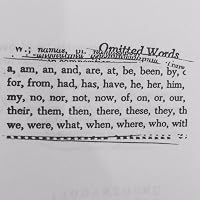
December 27, 2023
from The Grid
In the absence of depth, translation is a movement in x and y: arrangement, combination, erasure. (29)
[...]
The first reference in Western literature to written language is in the Iliad. An unsuspecting man in a story is carrying semata lygra / grapsas en pinaki ptukto thymophthora polla: baleful signs written on a folded tablet, utterly soul-destroying. The words, which some scholars conjecture to be Linear B, spell out the man's death, and the reader murders the unreeling man. After the murder, Death wipes the tablet blank and folds it back again. (54)
GORKY SUBLIMVM TEXIT
I was travelling through a particularly grim part of your country when I saw this phrase scrawled beneath an overpass. Beneath it, the same hand had painted a graffiti mural in no way reminiscent of Arshile Gorky’s work—just a heap of pink and green bubbles, like forced cheer. Naturally, the reference might have been to another Gorky, Maxim the writer for instance, or one you and I would not recognize. In any case, the phrase has the correct grammatical markers to form a Latin sentence, but the words mean nothing. If we were philologists we might instead conjecture them to be a corruption of GORKY SUBLIMVM TEXIT, an elusive sentence that would mean: Gorky protected a sublime thing, or concealed it—or even, taking TEXIT as the syncopated form of TEXVIT, that he wove it. The point is, I arrived in your town and rang your bell at the appointed time, but you did not answer, nor have I heard from you since, and all my letters have been returned sewn shut like eyelids. (60)
from Letter With the Seal of Geneva
Most of your poems, it seemed to you, formed around a borrowed phrase,
a citation you knew and did not know where to put to rest.
You worried that this nacreous quality had become a tic.
You were under a sort of house arrest,
reading travel essays behind the closed blinds. (74)
In the absence of depth, translation is a movement in x and y: arrangement, combination, erasure. (29)
[...]
The first reference in Western literature to written language is in the Iliad. An unsuspecting man in a story is carrying semata lygra / grapsas en pinaki ptukto thymophthora polla: baleful signs written on a folded tablet, utterly soul-destroying. The words, which some scholars conjecture to be Linear B, spell out the man's death, and the reader murders the unreeling man. After the murder, Death wipes the tablet blank and folds it back again. (54)
GORKY SUBLIMVM TEXIT
I was travelling through a particularly grim part of your country when I saw this phrase scrawled beneath an overpass. Beneath it, the same hand had painted a graffiti mural in no way reminiscent of Arshile Gorky’s work—just a heap of pink and green bubbles, like forced cheer. Naturally, the reference might have been to another Gorky, Maxim the writer for instance, or one you and I would not recognize. In any case, the phrase has the correct grammatical markers to form a Latin sentence, but the words mean nothing. If we were philologists we might instead conjecture them to be a corruption of GORKY SUBLIMVM TEXIT, an elusive sentence that would mean: Gorky protected a sublime thing, or concealed it—or even, taking TEXIT as the syncopated form of TEXVIT, that he wove it. The point is, I arrived in your town and rang your bell at the appointed time, but you did not answer, nor have I heard from you since, and all my letters have been returned sewn shut like eyelids. (60)
from Letter With the Seal of Geneva
Most of your poems, it seemed to you, formed around a borrowed phrase,
a citation you knew and did not know where to put to rest.
You worried that this nacreous quality had become a tic.
You were under a sort of house arrest,
reading travel essays behind the closed blinds. (74)

May 17, 2025
I really don't want to yuck anybody's yum and I promise in my heart of hearts I'm not a hater (you can look at my profile and see I mostly give 4-5 stars) but this is actually one of the worst books of poetry I've read in a while. I was very excited because I adore Rosalind Krauss's essay on Grids and I purchased the book on her backcover recommendation, but found the book lacking in everything that makes poetry something to love. If I'd met the writer in a coffee shop and he verbally told me everything he'd researched about Linear B, I would've chalked it up to an interesting and perhaps vaguely eloquent conversation with a stranger. I don't think any part of me would have told him to write it down, even. I respect Changes Press less for publishing this.
February 3, 2025
The Grid is full of stunning and witty translations, also poems that quietly emanate intense respect for life and its mystery... Goodreads, if you like Anne Carson, you will love The Grid! But this book is also doing its own thing, I wanna say that it's inventing an approach to drama that is totally specific to it and unique.
I also found the character of Alice Kober, a researcher who made key advancements in deciphering Linear B, really interesting. The Grid made me appreciate how poetry can play an important role in writing her history and assessing her contributions to her field because it illuminates the gap between what she knew and what she could have known if she hadn't been mired in self-doubt from all the misogyny in classics and academia in her time.
I also found the character of Alice Kober, a researcher who made key advancements in deciphering Linear B, really interesting. The Grid made me appreciate how poetry can play an important role in writing her history and assessing her contributions to her field because it illuminates the gap between what she knew and what she could have known if she hadn't been mired in self-doubt from all the misogyny in classics and academia in her time.

November 17, 2023
Poetic sequences about obscure historical figures must be my jam. See also Rita Dove's Sonata Mulattica and Charles Simic's Dime-Store Alchemy.
January 27, 2024
Both epic and personal, a kind and throughly enjoyable, perspective shifting experience of poetry.
Displaying 1 - 6 of 6 reviews