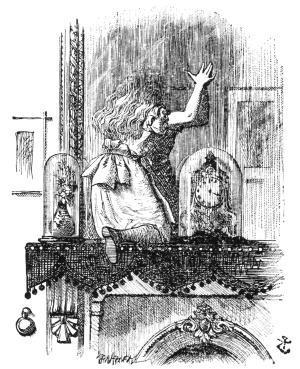
A unique, scientific look into why we are all believers. In Lewis Carroll's Through the Looking-Glass , the White Queen tells Alice that to believe in a wildly improbable fact she simply needs to "draw a long breath and shut [her] eyes." Alice finds this advice ridiculous. But don't almost all of us, at some time or another, engage in magical thinking? Seventy percent of Americans believe in angels; 13 percent of British scientists "touch wood"; 40 percent of Americans believe that astrology is scientific. And that is only the beginning.
In Six Impossible Things Before Breakfast , Lewis Wolpert tackles one of the most important causes on the horizon of public debate: the nature of belief. Looking at belief's psychological basis and its possible evolutionary origins in physical cause and effect, Wolpert expertly investigates what science can tell us about those concepts we are so sure of, covering everything from everyday beliefs that give coherence to our experiences, to religious beliefs, to paranormal beliefs for which there is no evidence.
Lewis Wolpert CBE FRS FRSL was a developmental biologist, author, and broadcaster.
Career
He was educated at the University of Witwatersrand, Imperial College London, and at King's College London. He is presently Emeritus Professor of Biology as applied to Medicine in the Department of Anatomy and developmental biology at University College London.
He is well known in his field for elaborating and championing the ideas of positional information and positional value: molecular signals and internal cellular responses to them that enable cells to do the right thing in the right place during embryonic development. The essence of these concepts is that there is a dedicated set of molecules for spatial coordination of cells that is the same across many species and across different developmental stages and tissues. The discovery of Hox gene codes in flies and vertebrates has largely vindicated Wolpert's positional value concept, while identification of growth factor morphogens in many species has supported the concept of positional information.
In addition to his scientific and research publications, he has written about his own experience of clinical depression in Malignant Sadness: The Anatomy of Depression. This was turned into three television programmes entitled 'A Living Hell' which he presented on BBC2.
He was made a Fellow of the Royal Society in 1980 and awarded the CBE in 1990. He was made a Fellow of the Royal Society of Literature in 1999.
He is a Vice-President of the British Humanist Association.
Theories
Wolpert is regarded as a rationalist. In an April 7, 2005 article entitled "Spiked", The Guardian asked a series of scientists "What is the one thing everyone should learn about science?" Wolpert responded, "I would teach the world that science is the best way to understand the world, and that for any set of observations, there is only one correct explanation. Also, science is value-free, as it explains the world as it is. Ethical issues arise only when science is applied to technology – from medicine to industry."
In a lecture entitled "Is Science Dangerous?", he expanded on this: "I regard it as ethically unacceptable and impractical to censor any aspect of trying to understand the nature of our world."
On May 25, 1994, Wolpert conducted an hour-long interview with Dr. Francis Crick called "How the Brain 'sees' " for The Times Dillon Science Forum; a video of the interview was produced by Just Results Video Productions for The Times.
On January 15, 2004, Wolpert and biologist/ parapsychologist Rupert Sheldrake engaged in a live debate regarding the evidence for telepathy. It took place at the Royal Society of Arts in London.
In the late 1960s Wolpert proposed the illustrative French flag model, which explains how signalling between cells early in morphogenesis could be used to inform cells with the same Genetic regulatory network of their position and role.
He is credited with the famous quote: "It is not birth, marriage, or death, but gastrulation which is truly the most important time in your life."
An early book was The Unnatural Nature of Science. His most recent book is Six Impossible Things Before Breakfast.
In May 2008, he gave one of four plenary lectures at the European Society for the Study of Science and Theology in Sigtuna, Sweden. His talk was reported as follows:
Lewis Wolpert's plenary address entitled "The Origins of Science and Religion" was provocative, amusing and from a totally materialist perspective. In his view, religion arose from the uniquely human need for causal explanations, and neither religion nor philosophy contributed anything of importance to scientific undersanding. ... ESSSAT is to be congratulated for offering its platform to a strong-minded materialist, but in the end Wolpert proved unable to enter serious debate with the conference theme or its participants.
While reading this my enjoyment of the book swayed from high to low and back again quite often. Since the book is only 219 pages long this pretty impressive.
I've gone on and on in my latest reviews of Richard Dawkins books about the lack of citations, and here it is even worse. Dawkins at least puts a name to what he is talking about, giving a pointer for the adventurous to find out more. Wolpert very rarely does even this. What if I wanted to find out about the little joke scientists played on Continental philosophy by getting a journal to print a 'philosophy' paper riddled with absurd scientific jargon? Where would I look? He mentions this, but gives no name to help guide the reader to find out what he is talking about. (I was giving him the benefit of the doubt, and figured in the reading lists for each chapter at the end, there would be some mention of this, the article in question or the book about the article that came out. Nothing. Looking in the index to see if maybe the un-named scientist was mentioned there also resulted in nothing. The name Skoal does not appear in the book anywhere. This isn't really a big deal, except that when Wolpert is on a roll every paragraph is an allusion to some study, some piece of history or something that goes uncited. At roughly 3 paragraphs per page, this is roughly 650 'things' mentioned that the reader either has to take on face value or try to figure out for themselves where to find out where the author is getting his information.)
The book lacks cohesion, the argument he's making seems to be forgotten over and over again while Wolpert parades out a seemingly endless stream of examples. The examples don't seem necessarily be working to prove his thesis, but rather are usually what would logically follow from the previous example. That makes no sense (my sentence, not the structure). Kind of what I mean is that there are multiple narrative strands going on, or multiple logics at work in the book, and it's kind of up to the reader to pull it all together.
Criticisms aside many of the things he mentions are really interesting (part of why the lack of citations really bothers me, I'd like to know more, but I'm kind of lazy and forgetful, so I'd like to be able to just make a list of books or articles I'd like to read while reading this, not be forced to do research on my own, which I will most likely forget to do, since I'm in no danger of running out of books to read anytime in this lifetime or probably the next three).
Back to criticism. The author is a little too nice, especially to religion. He seems too aware of not wanting to step on the toes of people who believe in crazy shit like crackers that house a god, or getting a whole bunch of virgins if you do something monumentally stupid to kill yourself. He actually bends over backwards to make the idea of jihad seem like a quirky anomaly of Islam, and focuses mainly on the positive things religion does. He kind of makes religion seem like a harmless little false-belief that we'd all be better having (except that it clouds true understanding of the world, but for day to day living 99.99% of humanity don't give a shit about having a true understanding of the physical world). At the end of the book he even half makes concessions to the relativistic belief, by saying that what you believe is ok, and what I believe is ok, lets just all get along (ok, paraphrased, but the general gist is in the conclusion). Maybe it's that I've too recently read Sam Harris that this seems really wrong. And maybe religious people need to learn what it's really like to have your beliefs ridiculed, mocked, attacked, in a real way, not in the kids gloves way that they generally are in day to day life. Having held my fair share of very very very unpopular beliefs I know that it's not nice to have your beliefs attacked, but that it also makes you seriously see that there are flaws in what you believe, and maybe even that what you believe is just fucking ridiculous.
An example. Yesterday some guy came up to me and asked for books on Reincarnation. He was standing in front of the New Age aisle, so I told him that they would be in New Age. This is something I do, I guess what the person wants to hear and tell them. Someone generally near the New Age aisle wants a certain brand of silliness that someone in front of Christianity doesn't want. These two sections are actually right next to each other though, so sometimes I'm wrong, people do wander around.
So this dude made an ugly face and said that wasn't what he was looking for. So I suggested Eastern Religions, like Hinduism and Buddhism. Again ugly face. But this time expanded on what he wanted.
"I'm looking for the books on Christian Reincarnation, not any of those fake books".
Now, I should have teed off on the guy right there. I didn't, I tried to help him, knowing full well that there weren't going to be any books on the subject for him (one because I know what is in the Christianity sections really well, because I have fighting with the books and space issues for about five years, and two, because reincarnation is not what Christians believe in, they believe in lots of crazy stuff, but when they die they get to sit next to God and sing him praises for eternity, they don't come back.).
There were no books for him. I bit my tongue and humored him, but really what he needed was to be told that he is wrong in a) believing in religion, and b) believing that he could just add something he liked in another religion to this religion, and because he wanted it to be like that it must be so. This is what children in fantasy thinking do, this is what people who make up monsters for fantasy books do, but this isn't what you should do to make a belief system up about the world. He needed to be set straight, and hopefully there is someone out there who will.
Or maybe I should just write about Christian Reincarnation and maybe make a million dollars stroking the false beliefs of people (I believe if one person wants something, there must be millions more out there).
Ok, awesome review Greg, you really made little sense and went way off topic once again. Good job.
Having believed more than my share of impossible things, I’ve gotten very interested in the thinking processes behind matters of belief. Evolutionary biologist Wolpert tackles this subject from a different angle than many in his field. Wolpert proposes that our development of tool use created a heavy mental emphasis on the relationship between cause and effect. While searching for cause and effect in the natural world has served us well in such fields as science and technology, not being able to find a cause for an effect is apparently so vexing to the brain that it has proven more than willing to simply make one up when necessary.
There’s a litany of interesting studies cited in this book in support of these arguments, but Wolpert rarely goes into detail as he discusses everything from complex tool use in ravens to retention rates in Moon’s Unification Church. This left me wanting a lot more information at times and also makes the reading a bit dense. Still, I learned a great deal about how the brain functions in relationship to various topics. The book is well organized, with each chapter addressing issues on a theme ranging from belief development in children to the persistence of beliefs in the paranormal despite the lack of evidence to how scientific beliefs differ from other kinds of beliefs. Very useful for anyone interested in how we think and why we believe what we do.
You really don't need to buy this book if you are interested in its core idea. I could sum it up in one paragraph:
Evolutionists have the challenge of explaining religion and beliefs among mankind. If our behavior and mind should demonstrate evolution reasoning, then why do we believe? The author attribute this to our need of 'causal' explanation, which helped our ancestor's discovery of tool making and tool use. Since we were so excited to find out that if you hit a dead animal with sharp objects you get nice cut meat, you try to explain other life phenomenon like sickness and death. With homo sapiens' limited knowledge of biology, the one responsible would be Gods, deities, ghosts, spirits. SOMEBODY should be responsible!
That pretty much sums it up. If you have so much extra time, feel free to swim thru numerous of studies quoted by the authos. The style is rather dry and a bit text-book-ish. Dawkin is a much better writer on this subject.
This book starts so promising, but let me down less than halfway through. The evolution of belief is a very interesting subject, and having studied biology (just as Wolpert) I thought he would give the science based results of his studies on this subject. Instead of an exposition of the history of belief according to various scientific works, however, Wolpert hurries to make his point (that humans' cause and effect beliefs evolved alongside tool use) without -I feel- sufficient scientific grounds. I do understand that this is something that cannot ever be tested experimentally, but the lack of scientific grounds are so obvious that even Wolpert himself doesn't fail to notice. This, together with his rambling way of writing in the later chapters, lack of continuity between chapters and lack of crediting in a convenient way leaves me a disappointed reader.
Interesting if you want to know about weird things your brain does and one man's opinions about the importance of tool use. Otherwise: don't bother, you'll read more interesting stuff on wikipedia. (tips: split-brain and confabulation)
Some interesting ideas put forward but absolutely irresponsible lack of citing. All he does is mention others’ ideas and research without citing any of it! It’s not fair to all the work from others.
يدعي الناس المسئولية عن الأعمال الصالحة أكثر من المسئولية عن السيئات ، وعن النجاحات أكثر من المسئولية عن الفشل. وجدت دراسة أجريت على الكنديين الشباب المتزوجين أن كل واحد منهم بالغ في تقدير مدى مساهمته في رفاهية الأسرة من حيث التنظيف ورعاية الأطفال وما إلى ذلك. كما اعتبروا أنفسهم أقل تحيزًا من الآخرين.
في استطلاع للرأي ، صنف 44 في المائة من الأمريكيين البيض ، البيض الآخرين على أنهم أكثر منهم تحيزًا ضد السود ، لكن 14 في المائة فقط اعترفوا بأن لديهم مثل هذه التحيزات. يراجع الناس تاريخهم الشخصي بطرق تتأثر بمعتقداتهم في الوقت الذي يتذكرون فيه الأحداث السابقة. يبالغون في استقراء معتقداتهم السابقة - السياسية ، على سبيل المثال - ويبالغون في تقدير مدى تغير هذه المعتقدات.
حتى عندما تم استخدام اختبارات شخصية موثوقة تمامًا ، لم يتمكن الأشخاص من التمييز بين تقريرهم عن أنفسهم وتقرير شخص آخر عن نفسه ، خاصةً إذا كان ممتعًا. هناك بحث حول "مبدأ بوليانا" ، والذي يظهر أن هناك ميلًا شائعًا جدًا بالنسبة لنا لقبول الكلمات الإيجابية في التقرير ، بدلاً من الكلمات السلبية. يكون القبول أعلى إذا كان الفرد غير آمن ، والمختبر يفترض أنه يتمتع بمكانة وخبرة عالية .
قد يكون هذا التركيز على قبول الإيجابية ، بالنسبة للفرد ، شديد التكيف ، لأنه إذا قيل لشخص ما ، عن طريق الخطأ ، أنه أفضل أو أسوأ في مهمة معينة ، فسوف يشرح السبب بشكل عام ؛ نحن سادة التفسير المخصص!! . Lewis wolpert Six Impossible Things Translated By #Maher_Razouk
How can people be so smart in some aspects but believe in the most unbelievable things that go against science and reason? In this book, the author offers his ideas on how we started forming beliefs. Beliefs, according to him, can be traced as far as tool making through which we start exploring the causal relations between things. The author also gives examples of unlikely causal thinking such as alternative medicine, religions etc. and debunks them with his own explanations.
No real qualms with this one other than a lack of internal referencing. Wolpert gives tons of examples, but none of them are cited. "There have been studies..." etc. He supplies names along with some studies, but not many. He claims to be trying to convince the reader that belief comes from tool use, but he hardly mentions tool use at all. I do not necessarily disagree with him, and he is open about the fact that it's just his idea and he could be wrong, but the book just doesn't seem to actually be about what he says it is. It is more of an exploration of investigations into the nature of belief, and I still found it fulfilling in that sense. The conclusion summed it all up very well, but didn't ultimately hinge on tool use after all.
Good clear writing with a compelling argument. I am, though, not completely convinced that tool making is the sole impetus for the mental changes that led to religion.
A person is stupid if they cause damage to another person or group of people without experiencing personal gain, or even worse causing damage to themselves in the process.
---Carlo Maria Cippola, "The Basic Laws of Human Stupidity"
What explains religion, and/or superstition? How do modern humans still buy into the paranormal, astrology, cults, a flat earth? Why beliefs, 'an acceptance that something is true without proof'?
Lewis Wolpert puts forth a hypothesis that belief is rooted in causal thinking, an adjunct of tool development; our wetware seeks meaning, needs meaning: if this occured just before this, then there must be a connection. He offers chapters on infant development, animals, morality, health. Ultimately, for me, the chapters seemed either disconnected or redundant. I wanted more science, some juicy FMRi stories, Oliver Sachs-like readability; Wolpert is much more dense, therefore (to me) less approachable. Read it, if you are interested in one take on the whole meta-category of 'why we are the way we are'; but, whether it was tool use or brain structure or latent schizophrenia, 'Six Impossible Things' does not ultimately move the needle on the bigger question of 'belief'.
In this book, developmental biologist Lewis Wolpert investigates the origin of human belief, apparently in a quest to understand religiosity and science denialism. The central thesis of the book follows the central thesis that beliefs arose from the human ability to understand cause and effect, which evolved with the ability to make complex tools. The book first provides an overview of how cause-effect thinking in humans differs from other animals and how it develops in early childhood. Wolpert then discusses the link between cause-effect thinking and beliefs. The argument here is that belief is not irrational. It arises either from the tendency to maintain cognitive coherence or from a lack of better causal explanations. It has to be noted that the book is quite dense. It is very academic and does not adopt the more jovial tone that is more common in most current science books for general audiences. However, the effort to read it is well worth it. I gained many insights from reading it. The book is very well researched and provides an excellent overview of the key texts on the evolution of causal beliefs for anyone who wants to dive deeper into the topic.
Six impossible things is very nice collection of anecdotes and arguments to explain the origin of the human species propensity to believe. Wolpert's thesis is that there is an evolutionary basis for our beliefs. He discusses the nature and historical background of belief from everyday causes of things, childhood beliefs, paranormal, false and insane beliefs, and religion to the causes of disease and treatments, real or otherwise. Considering other animals and especially primates that use tools to achieve goals, and prehistoric tool use by early hominids, he argues that a genetic predisposition to believe and understanding causality moved our species from stone age tool use to our modern scientific age. I enjoyed the book, although the examples and anecdotes sometimes ran on a bit for me, but he does include an extensive bibliography by chapter for those that may want to delve into an even deeper understanding of the topics, as is our nature!
A Compelling argument for why tools are the basis upon which the beliefs arose early in human evolution. The book is filled with examples and anecdotes which go largely uncited, which was a disappointment.
At times the book meanders a bit and seems to get lost among its desire to provide so many relateable stories to illustrate its point that it becomes overly long. Despite this it is very easy to read and understand and would serve as a good introduction to the topic.
I found the first half utterly compelling but it did lose some of its urgency and rigor at around the midways point when the author begins to tackle religious belief. At this point I sensed a trepidation at not wanting to offend and give adequate credence to religious belief as distinct from other forms of belief. I cannot say I was convinced by the argument, but this shift felt to me like a betrayal of the tone of the book. It remained fascinating though! Highly recommended.
I was frustrated with this book. It seemed to me the author was not an expert on the subject matter. There’s a lot of repetition of the same idea over and over again, and sentences beginning with “It is possible that . . .” There is too much speculation, and where there is analysis, it is obvious and banal. Also—and I say this with a wink—the guy is a Human Supremacist. He is so disparaging of animals; I think he severely underestimates their mental capabilities and undervalues their place on this planet as fellow earthlings.
Pessimo libro. Un conto è fare divulgazione, un altro è scrivere inesattezze e riportare dati senza riferimenti bibliografici di alcun tipo. Ho iniziato a leggerlo per curiosità, ma mi sono resa conto dell'errore fin dalle prime pagine. La tesi generale è interessante e generalmente condivisibile, ma gli argomenti usati la rendono ideologicamente strutturata e priva di fondamento logico o empirico.
It is a fair book but I cannot help but feel like the author had a smug on his face when bashing religious thoughs. I am na atheist myself but it is kinda sad to see him kicking a dieyng horse.
Overall it is a good book but I thought it would focus more on how belief came into being rather than bashing people that believe without good evidence or any evidence at all.
I usually award 5 stars to all my reads. Purely for the fact that I am ADHD neurodivergent and your're hard luck getting me to maintain focus for any novel.
Unfortunately in this case I found concentration lacking on a few of the concepts - a little bit far fetched in explanations.
Presents a mildly compelling thesis: the human tendency to form beliefs comes from our ability to think causally, which is also responsible for our unique use and construction of tools.
İNANILMAZA İNANMAK - İNANIŞLARIN EVRİMSEL KÖKENİ -İnanışlar mülkiyet ve kimlik gibi insanlara kendilerini iyi hissettiriyor.
-Biyolojik ve geleneksel olarak görmek/varmak istediğimize ulaşmaya ve inanmaya meyilliyiz.
-Bir ankette, akademisyenlerin %94'ünün, kendilerinin diğerlerinden daha iyi olduğuna inandığı ortaya meydana çıkmıştır; insan, kendini başkalarından daha iyi olarak görmeye meyillidir.
-MIT'de yapılan bir bilimsel araştırmada, insanların ön tanıtım sonrasında tanıştırıldıkları insanlar hakkında, tanıtımın etkisi altında kalarak değerlendirme yaptıkları gösterilmiştir. Şartlanmaya eğilimliyiz.
-İnsanları tutsak etmenin ve vicdanları ele geçirmenin 3 yolu vardır: OTORİTE, MUCİZE, BİLİNMEZLİK.
-Güven ve alışkanlık, özsaygı ve iyi hissetme halini desteklemektedir.
-Ulaşılabilir, bellenebilir ve örneklenebilir olana inanabilmek kolaylaşmaktadır.
-DİN, anlam-değer-kimlik bulma, ortaklaşma/yardımlaşma, cevap bulunmadığında etrafındakilerin yaptığına iştirak etme, yapabilmek istediklerini inanılan Tanrı'ya atfetme anlamlarını taşır (Feuerbach).
-Çoğu insan için, toplumun bir şeye inanması, inanılanın mantıklı olmasından daha önemlidir.
-Toplu inanmanın yol açmış olduğu akıl dışı savaşlar ve erkek hegemonyasının zirve zulümlerden olan CADI AVI yüzlerce yıl sürerek KADINLARA yaşattığı dehşet unutulmamalıdır. Avrupa'da kayıtlı son CADI idamı 1782 gibi yakın bir tarihte İsviçre'dedir.
-Ameliyat öncesinde %10 ÖLÜM riski var denildiğinde kaçanlar, %90 YAŞAM şansı var denildiğinde ameliyat olmakta; bir ilacın içinde KUSTURUCU VAR denildiğinde %80 insan kusmaktadır. Plasebo ilaç ve yöntemler inanmaya yatkın insanlarda işe yaramakta; tersine etkiyle, kötü bir şey olacağına inanmak da olumsuz sonuçlara yol açabilmektedir (Lanet, büyü inanışı ile Voodoo ölümleri Afrika'nın gerçeğidir).
-ABD Bilimler Akademisi Üyesi olan bilim insanlarının 1914'de %40'ı, 1933'de %20'si, 1998'de ise %10'u bir dine inanmaktaydı.
-Pratik yaşamda büyük oranda önce AKIL sonra DİN işlerliğe konur.
-Bilgilerimizi başkalarına aktarmak, önemli bir insanlık halidir ve gerçeğin herkesçe öğrenilebilmesi için sürekli hayata geçirilmelidir. Maymunlar, diğer maymunlara İSTEYEREK bir şey ÖĞRETEMEZ.
-Bilgileri geliştirmenin başlıca yolu BİLİM'dir. Sosyal Bilimler'in Doğa Bilimleri'ne göre yavaş kalmasının getirdiği kıskançlık, onları Doğa Bilimleri'ni GÜVENİLMEZ göstermeye sevketmektedir. BİLİM GÖRECELİLEŞTİRİLMEMELİDİR.
-Bilim insanı Sanat insanının aksine, birey olarak kendini önemsiz pozisyona çeker ve yaptıklarını edilgin fiilerle (passive voice) makaleleştirir.
-Bilim kuramsal BİLGİ, Teknoloji ise NESNE üretir. Çin 18.yy.da Batı'dan geri kalmaya başladığında, teknolojide ileri bilimde geri pozisyondaydı.
I picked this book mostly for its title, i love alice in wonderland. and so i couldn't resist. I have conflicting feelings about the book, but first and far most I feel like I have to express how brilliant the author really is, you rarely happen to stumble upon such an open mind, and it really shows! You might think all atheist are open minded, I am not entirely sure about that but I know that some of them are prejudice to their own beliefs. Just like any other human being with a religious identity. But to come across a mind so open to everything is just so refreshing, and it is deeply reflected and embedded in the book. The authors son is a Christian and he understand his sons belief. Because he knows that his sons need this belief. I felt related to this thought. I feel like I need something stronger and more bigger. And much more powerful than me. Somewhere to lay my burden, an eternal savior. Regardless of whether my belief is true or not. There is always a need. And that's where belief stemmed from. Out survival needed it. We believed to survive disease or natural causes. Even predators. The author delve even more to the past, back to our unicellular selfs. Movements generated the expansion of our surroundings. A need for a psychical direction meant developed brains to calculate the best where and when methods. And thus from the physical the brain grew to control the emotional side that developed when we developed. The author divided the book into sections. The role of belief in health, science, religion etc.. I did find his thoughts organized. But since each idea took on a chapter by itself. It mislead me numerous times to keep with the authors fast train of thought. That is probably its only downside. Other than that I loved this book. It explained so much, it shed the light on a lot of things I wasn't aware of. It helped me understand the psychology of belief. It's like I saw believing in 2D form and now I'm seeing it from a one more extra dimension I didn't know existed. Also, one more fun fact before I conclude. Did you know that religion people are happier, even suffer less ailments and heart attacks? U can trust this information coming from an atheist scientist.
Questo libro, dal sottotitolo "Le origini evolutive delle credenze", parte mettendo subito in chiaro che l'autore vuole far piazza pulita di tutte le credenze, religiose e no, che non siano sostenute da prove scientifiche; la causalità la deve fare da padrona. Il leit motiv del libro è per l'apunto l'ipotesi - parlare di "teoria" è un po' azzardato - che le credenze nascano non appena l'umanità ha iniziato a ragionare in termini di cause ed effetti; se quindi succedeva qualcosa, ci doveva essere qualcos'altro o qualcun altro che l'ha fatto succedere. Per la cronaca, Wolpert ritiene che l'uomo sia l'unico animale ad avere pensieri causali. La tesi è anche interessante, ma non è che il libro porti chissà quali prove a suo sostegno; più che altro Wolpert ripete fino allo sfinimento le stesse affermazioni, sperando che alla lunga vengano recepite dal lettore. Insomma, il titolo promette molto più di quanto mantenuto nel testo. Due (tristi) parole ancora per quanto riguarda la traduzione di Simonetta Frediani. Come purtroppo accade troppo spesso nei libri della Codice, è assolutamente inadeguata. Passi anticipare al 1452 la bolla di Innocenzo VI sulla divisione dei territori scoperti da Colombo: uno svarione può capitare a tutti. Ma già a pagina 6 il sillogismo presentato dall'autore viene stravolto e invalidato, traducendo "alcuni cibi malsani" invece che "alcuni cibi sani"; e non è l'unico caso in cui il testo tradotto dice esattamente l'opposto dell'originale. In un saggio scientifico errori di questo tipo sono inqualificabili.
Approached: the evolutionary roots of belief -main mechanism/concept: "THE BELIEF ENGINE":"that works on wholly unscientific principles: "It prefers quick decisions, it is bad with numbers, loves representativeness and sees patterns where there is only randomness. It is too often influenced by authority and it has liking for mysticism". -the title of the book is based on Lewis Carrol's Through the Looking Glass, in which the White Queen explains to Alice that believing in impossible things is simply a matter of practice".
-A developmental biologist, at London's University College, Wolpert links the belief engine to the use of tools (for cause-effect relationships). -VERY DARWINIAN.
Ah, the book was written by Wolpert due to the conversation he had with son Mathew,who converted to a fundamentalist Christian church; Wolpert got shocked; and yet, Wolpert now accepts that the Church was a "great benefit to his son". ...and voilá!! Wolpert says:"Not only because mysticism is in our brains, but also because it gives enormous comfort and meaning to life".
".... Reliable scientific beliefs have no intrinsic ethical or moral content: they refer to how the world is. There are no ethics in Newton's Laws, nor in the genetic code, nor in the fact that genes can affect our mental health." (p. 202)
"Non-medical causes of illness offered by psychiatric patients in a university hospital in the USA included 'God's Will' and the hex or evil eye. Psychoanalysis and Freudian views of the unconscious present us with a related set of beliefs that I think fit most comfortably with paranormal beliefs... While the aim of Freud was to make psychoanalysis part of natural science, it has not turned out that way, and Freudian explanations seem to be much closer to beliefs related to witchcraft in the way they try to deal with mental illness. Yet the concepts of repression, libido, and the Oedipus complex are repeatedly used by many people in the West as causal explanations for people's behavior, both normal and abnormal. Is it not strange, and close to the paranormal, to believe that there are three mental processes in the brain that are almost like separate individuals - the ego, the superego, and the id - which interact with one another?"
The book's about the evolutionary origins of belief, which Wolpert ties to tool use, which is apparently not that common a theory, but it made sense. The basic idea is that human's ability to have causal beliefs, to wonder why something happened, is what gave us the ability to make complex tools and also leads to us having causal beliefs on which we base our lives. There's chapters on different types of beliefs people have in their lives that are common.
The one downside is that it killed a lot hope I had for people who seem to have crazy political beliefs. People will do almost everything to not believe what they don't want to believe. They will insist someone is psychic even when told they're being tricked, and prefer holistic medicine that makes no sense because science goes against common sense. Given how often I hear people calling for elected officials with common sense it leaves me feeling we'll just never going to deal with reality.
I couldn't wait to get to this one! Professor Wolpert works at UCL where I was based as a student and staff member for 12 years. He is quite a character. I met him only a few times, once at a Q&A session that he moderated where I discovered that his wit and charm are both as big as his brain. Unfortunately, I couldn't quite get into the spirit of this book! I started reading it on several occasions since I bought it three years ago, but just can't ever convince myself to finish it. I am not entirely convinced of the arguments he puts forth because the supporting evidence seems tenuous at times. The writing style is very accessible however, and there are some interesting points within. But, for all of my effort and excitement and the last few unread chapters... I'm retiring this one to the "read" shelf!
Very interesting look at the evolutionary origins of belief. From the dawn of early man, the author argues, the brain circuitry for religion developed as a result of his endeavours with early technology/tool manufacture. Comparisons are made between the effects of hallucinatory drugs and religious experiences on the same part of the brain. The author also looks at other irrational beliefs and quotes some fascinating experiments carried out in this field of brain chemistry. We may have a genetic disposition to irrational beliefs/religion and the positive benefits (optimistic outlook, reduded fear of death etc)have ensured the survival of these traits for better and worse.
Although it's a very small book that can be read rather quickly, it's perfectly structured and the argument that belief or the search for a cause behind everything evolved from an understanding of cause and effect along with tool making seems plausible to me.
Since the text is a bit dry and repetitive I wouldn't recommend it, because there seem to be much better books on this topic. Incidentally, I just bought it because of its title and I'll be more cautious using this tactic in the future.
This book is excruciatingly dry and repetitive. He makes a one paragraph point and then spends 30 more pages restating it and supplying bland anecdotal evidence. I'll summarize the whole book for you: humans are the only animal that understands the concept of causation, and we've gotten a little carried away with it and like explanations for everything, and we end up with superstitions and religions and that sort of thing. Now you don't have to read it.