Jump to ratings and reviews
Rate this book

White Rajah: A Biography of Sir James Brooke

Rate this book
Sir James Brooke's curious career began in 1841, when he was caught up in a war in Brunei. He was an opportunist who, with the Sultan's backing, made war on the Dayaks tribespeople and as a result found himself ruling over Sarawak—a kingdom the size of England. How he achieved it is a romantic, sometimes horrifying story. This historical biography recalls the best and the worst of the British Imperial character.

272 pages, Paperback

First published January 1, 2002

Loading...
Loading...

About the author

Nigel Barley

43 books108 followers

Ratings & Reviews

What do you think?
Rate this book

Friends & Following

Create a free account to discover what your friends think of this book!

Community Reviews

5 stars
14 (10%)
4 stars
48 (35%)
3 stars
53 (38%)
2 stars
18 (13%)
1 star
3 (2%)
Displaying 1 - 13 of 13 reviews
Profile Image for Philip.
1,879 reviews132 followers
June 30, 2022
On page 74 and really torn on whether to go any further. I just came back from Kuching, and so wanted to learn more about “White Rajah” James Brooke – but this is a whole lot more Freudian than what I was looking forward. All right, I get it – Brooke was probably gay. But can we just move on and get to the pirates?

Well, apparently not. On page 13, Barley mentions “the vexed question of James sexuality, which it is premature to discuss in depth at this point” – but then he goes on to discuss really nothing else for the next 13 pages. If that’s not in depth, does that mean it’s going to get worse??

Oh yeah.

It becomes really clear really early that Barley doesn’t like Brooke. Not sure if that’s because he (Barley) is anti-colonialist (justifiable), homophobic (less so), or just thinks Brooke was a jerk (okay, there IS some supporting evidence). But whatever the reason, it doesn’t make for an unbiased read. He embellishes fact with snark at every opportunity:

“James sulked, fretted, reverted to the propounding of wild schemes. He would go to Manila, to China.” (Well hell, he was in Singapore and recently returned from Borneo. Manila and China don’t seem such crazy ideas from there.)

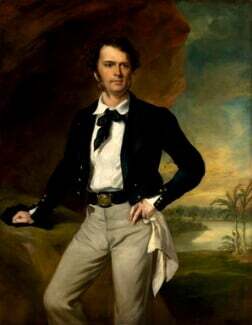
“Along with the vessel, James also bought the right to wear a special naval uniform and was so proud of it that he later had his portrait painted flaunting it.” (Flaunting? You mean “wearing,” like every Brit who owned a uniform in every portrait ever?)

And then, of course, back to the sexuality: “We will never know whether James boiled daily in the clammy sheets of unrequited lust, engaged in a little vague scout-masterly fumbling…” You’re right, we’ll never know - so why even raise the question? And what’s up with the “scout master” reference? And it’s not just the scouts – in the same paragraph, Barley takes swipes at Princess Diana and Albert Schweitzer, lumping them unnecessarily with Brooke in sharing “a form of extravagant self-abasement, that species of pride that apes humility…that is hard for us to understand except as the other side of a terrible guilt…” Whoa, slow down there, Sigmund.

Anyway, page 74 and a Chapter called "And So To War," so maybe...pirates? Give it another 26 pages, but it better get a whole lot more exciting and a whole lot less creepy.

UPDATE (FINISHED):
Well, to my happy surprise it did get a whole lot more exciting - the pirates did indeed arrive, and for the next hundred pages there is a satisfying amount of fighting, storming, burning, headhunting – the whole reason we’re here in the first place. And finally, the last third of the book is downright Shakespearean – very “King Lear,” in James' physical (smallpox, numerous strokes) and mental (basically he went a little nuts) slide that ended in the alienation of so many of his friends, supporters and family, and the painful (and wrongful) banishment of his long-time heir apparent, “Brooke Brooke” (nee Charles Brooke Johnson – long story) with BB’s younger brother Charles Brooke (also born a Johnson).

Oddly, the worse off Brooke’s predicament becomes, the more sympathetic Barley appears. Of course, that doesn’t mean that he doesn’t return to what has to be seen as his main thesis whenever the opportunity presents itself – ”In what seems inevitably a homoerotic, though possibly unconsummated, passion…;” “one does not have to be a committed Freudian to detect a phallic subtext to all this…,” (although I’m sure it helps). And the head-scratching epilogue which recounts a present-day run-in with gay aborigines in Kuching belting out “I Will Survive” is as unnecessary as it is bizarre.

That said, overall I’m glad I read the book and really learned a lot, (i.e., all I really need to know about this strange footnote to the colonial history of Southeast Asia). In fact, wish I’d read it before reading Flashman’s Lady, in which Brooke and some of his followers play leading roles.
Profile Image for Paul Cornelius.
1,099 reviews49 followers
October 24, 2021
Much information, here. But most of it doesn't come from Nigel Barley. Instead, he strings together overly long quotations. It gets worse as you go along. Barley does have a thesis: that James Brooke's tendency towards homosexuality/pederasty motivated his actions in becoming the first white man to rule in Sarawak, carving out a region of Borneo under control of the Sultan of Brunei. In effect, it's an extensive exploration of sublimated sexual desire. In order to carry it off, Barley throws out one source after another. And he doesn't need to. The task of a historian/biographer should be to make a point, contextualize it, and then use cited material that supports the argument. Barley simply says, "oh, hell, let'em speak for themselves; I'll throw in a comment or two as things develop." That is why there is a great deal of knowledge in the book and why it's not a waste of time to read it. He should have published a series of critical, annotated diaries, however. Otherwise, the writing is eccentric. It jumps and hops and moves like a bee from one plant to another. Poor transitions. Just all of a sudden, you're there. And, all of a sudden, I'm through.
Profile Image for Gary.
312 reviews63 followers
September 23, 2018
When we moved into our house in Brunei in July 2018, we were gifted this book by the previous tenant. I was unfamiliar with the story of Sir James Brooke (although he must have been mentioned in Pax Britannica, a three-volume history of the British Empire that I adored – I must check). James Brooke was the Rajah of Sarawak, a territory in north-western Borneo that was originally under control of the Sultan of Brunei. He expanded and developed Kuching, its capital city, as well as expanding Sarawak at the Bruneians’ expense, over several decades.

Brooke had to negotiate with the diverse populations of Sarawak: the native Dayak tribespeople, Malays, Chinese and Bruneians, as well as defend ‘his’ people from Iban and Illanun (Filipino) pirates, who were in the habit of venturing upriver into the interior of Sarawak and pillaging the Dayak villages, murdering and causing mayhem. Head-hunting was a common practice, and young men were expected to provide shrunken heads if they were to expect a prospective bride to consider them, which was a huge cultural barrier to overcome in his attempt to outlaw it. He failed to outlaw the practice.

He had considerable negotiating skills but was ultimately successful in securing power probably because he had a genuine desire to improve the lives of the peoples of Sarawak – he could not be considered an exploiter because he certainly spent far more money on Sarawak than he ever made, being almost penniless and in debt towards the end of his life.

It has been speculated by other authors (according to the author of this book, Nigel Barley) that Brooke never married and enjoyed the company of young men because he had sustained a wound in an intimate place during his phenomenally brave but short military career (only a few days, owing to the wound, which left him ill for years) which would have precluded him from fulfilling his ‘husbandly duty’ towards a wife; as well as his ‘man’s man’ sense of fun and boisterousness, that was more attractive to young men. Barley, writing in the modern world where such subjects can be discussed openly, speculates that he was almost certainly homosexual, at a time when it was punishable by the death penalty. He was also highly attracted by boys but, in the context of the time, when boys could marry at age 14, would not be considered a paedophile, spending a lot of time in their company and seeking out new ones when the first ones grew up. He told people that he wanted to help develop and help some of these boys and did, in fact, retain the services of several, giving them jobs and careers, so his motives were not wholly selfish.

Brooke was in a strange and tenuous position during almost all of his rule. The British government did not recognise Sarawak as a country and did not provide protection; Brooke ruled as a private citizen, although the Sarawakians did not believe this most of the time because, on occasion, a heavily-armed British ship (with both lots of heavy guns and a party of marines aboard) would arrive, often at an opportune moment. He also had his own ship, also armed, which was larger and far more powerful than anything the pirates (or the Sultan of Brunei) could muster. Eventually, Sarawak did become part of the British Empire, although this caused Brooke no end of trouble because there were debates in parliament about the cost of providing naval protection and controversy from the mid-to-late Victorians’ religious and moralistic attitudes towards ruling a nation without converting them to Christianity. Indeed, a bishop and his wife moved to Sarawak and were, for many years, supportive of Brooke, though eventually they fell out, largely as a result of Brooke’s acerbic attitude towards them in later life.

Sir James had to deal with a murderous insurrection by the Chinese, which he handled very badly, and a later plot by Malays to oust him, in addition to having to face an official inquiry (held in Singapore) into his activities instigated by his enemies in London, so his life was never easy. In the end, his family ruled as rajahs until the Second World War, when the British Empire finally took full control of Sarawak during their fight with the Japanse Empire, shortly after which came the struggle for independence, which is another story.

Nigel Barley has written a succinct (240 pages, excluding bibliography, index etc.) and fascinating history of this complicated man: a man who had his foibles, demons and obsessions, as well as charm, character, political sense, intelligence and vast wealth, most of which he spent trying to improve Sarawak. Barley’s biography is well-written and even-handed. He has no axes to grind and has made a lot of effort to portray Brooke as a real man, warts and all, without being sensationalist or overly critical. He did extensive research, as evidenced by the bibliography, and had read other histories of James Brooke, which he pulled apart. I believe this to be the seminal work on this subject and I recommend it wholeheartedly.

I have spoken with Malaysians here (today, Sarawak is part of Malaysia) about Sir James Brooke and been told that his story is taught in schools today and that he is highly thought of, being considered a force for good and ‘the father’ of Sarawak, which might still be ruled by Brunei if not for him. How refreshing!
Profile Image for AliceinWonderland.
386 reviews15 followers
March 30, 2013
- Very enjoyable biography, well-written with interesting tidbits...
- Having just returned from Sarawak, this book was great to augment the sense of history of the place, and to get a better understanding of how Sarawak came to be...
- Loved the mix of British, Dayaks, missionaries, Malays, Bruneians, etc...
- Didn't quite understand the fixation of proving whether or not Brooke was homosexual, but perhaps it was something Barley wanted to challenge amongst other Brooke biographers.
- I was more interested in his character, his challenges, his fits or rage or jealously or hatred of disloyalty, etc...than his sexual orientation; though it's understandable it casts a different light on a man during the Victorian times.
- I found it very fascinating that the founder of Sarawak was literally a bored wealthy young man with some money from his inheritance seeking adventure...It's rather amazing when you think all he struggled to achieve for Sarawak.
Profile Image for Menno.
Author 9 books103 followers
July 7, 2014
I had had this book sitting on my shelf of Malaysiana for ten years, after having purchased it in the (alas) no longer existing Borneo Books bookshop in Kota Kinabalu. I'm not sure why I put off reading it for so long--given that I had always wanted to know more about James Brooke. I guess I thought it would be either too scholarly or too uncritical.

It turned out to be neither. Nigel Barley paints a brutally honest picture of this eponymous swashbuckler. He cuts through all the mythology and post-hoc beautification and shows a version of Brooke that seems quite close to the truth. Or at least *a* truth--for we all know how difficult it is to distill the broth that centuries of lackeys have brewn.

The book is humorous and unconventional in its style. The goings-on at the Kuching court are painted in the necessarily broad but nonetheless evocative strokes. A revelation, obvious perhaps, but interesting nonetheless, is Brooke's homosexuality, which, I believe, is placed at the centre of Brooke's life's story for the first time in this book.

My only misgiving is that the book tends to peter out (much like Brooke's life did) towards the end, where the story-telling strides become perhaps a little too great and some haste on the author's part is discernable.

Nonetheless, a book I thoroughly enjoyed and which told me much about this "Lord Jim" whom Alfred Russel Wallace adored and after whom he named that great Malaysian butterfly, the Rajah Brooke's Birdwing.
Profile Image for Ali.
144 reviews2 followers
Read
February 12, 2026
didnt really like this.

really freudian?? i dont really care if james was gay or not and his pedophilic obsession with boys was treated like some curiosity? idk just all round a bit strange

i literally have nothing to evidence this with but it really gave me colonial reproduction vibes in its narrative.
Profile Image for D.A. Holdsworth.
Author 3 books89 followers
June 29, 2026
The scarcely believable story of the Englishman who founded his own kingdom on a faraway tropical island.

Sir James Brooke really was The Man Who Would be King. But whereas Kipling's story sees the hero rapidly coming unstuck in his fictional corner of Kafiristan, Rajah Brooke got to pass his kingdom on to his nephew, Charles - who passed it on to his son, Vyner - setting up a hundred years of Brooke rule in the steaming jungles of Borneo.

Fact, as they say, is stranger than fiction.

So who was James Brooke?


Born in 1803, right in the middle of the Pride-&-Prejudice era, he was doted on by his parents. James emerged from childhood as a flamboyant Regency figure - idealistic, lusting for adventure, in possession of a small fortune... and gay. (Victorian biographers tried to make out he'd been wounded in his sensitive parts and thus lived as an involuntary celibate; but he hadn't and he wasn't.) In 1835, his father died and James used his inheritance to buy himself a 140-ton schooner, the Royalist. In 1839, he set sail for the province of Sarawak in north-west Borneo and that's where the whole mad story begins.

As I read and chewed on the ensuing tale, it struck me that it can best be understood as a play in three acts. I've written a fuller account below. The shortened version goes like this: Act I is pure Gilbert-&-Sullivan as Brooke sets himself up as Governor of Sarawak. The stakes are low, Brooke's pretensions are high, very few people get hurt, and the whole thing is comedic.

Act II is the fortune-&-glory phase: the stakes are higher, more people get hurt, Brooke becomes the hereditary ruler of Sarawak, and at his high point in 1847, he returns home to England to meet the Queen.

And then Act III. Decline. Back in England, Brooke's enemies make trouble for him, while in Borneo he has to face two serious insurrections (1857 and 1859) and one hideous bout of smallpox (1858). The final act is not a story of flourishing, but of mere survival. Until he dies that is (1868).

That's the Brooke story. But how good is the book?

Answer: quite good. Nigel Barley writes at times with real flair and wit. And he makes a decent effort at trying to tell a story, as opposed to listing a chronological series of facts. By which he mean: he tries to pull out themes, to draw characters, to identify patterns. Which is more than you get from many (most?) history books. Against that, there are a lot of crucial details that are introduced into the narrative without context or explanation: for example, you have to infer for yourself all the different ethnic groups and factions at play in Sarawak, and you're never given a very clear sense of the geography. So for me, four stars not five.

[That's the end of the formal review.
Below, I've jotted down a few key dates and events as a reminder to myself. No need to read them - but if you happen to enjoy batty and extraordinary tales...]

-----------------------------------------

The Life of Sir James Brooke on Borneo as a Play in Three Acts

ACT I: Gilbert and Sullivan (1839 - 1843)
1839: A 37-year-old Brooke arrives in Kuching in NW Borneo on board his schooner, the Royalist. Think of it as a large yacht, that happens to be armed (six small cannon and a few other bits). He finds the area is in revolt. Various local factions have risen up against their Muslim overlords in Brunei. While the Royalist wouldn't scare any major fighting power, it was a big deal in Sarawak. Crucially, it established a misunderstanding about Brooke's status in Borneo - the locals see the big ship and assume this man must be a formal emissary of the British state. He isn't* - but the ambiguity served Brooke well. He intervenes successfully, and with a minimum of bloodshed, to quell the rebellion.
*(Ironically, Brooke will struggle his whole life - and fail - to achieve for Sarawak 'Protectorate' status within the British Empire.)

1841: The Sultan of Brunei, with reluctant gratitude, appoints James Governor of Sarawak. He sets about ruling his diminutive territory with patrician concern. He already has his idealistic views of how colonial government should operate - and it has more in common with running a Devonshire country estate rather than a steaming jungle full of warring factions and mutinous subjects. Because, wow, there were factions. He has to navigate his way between the Brunei sultanate plus the Malays who had settled from the mainland plus the Chinese traders plus the notorious Bornean pirates (the Iban, or 'Sea Dayaks') and - finally - the more peaceable forest tribes from the interior (the 'Hill Dayaks'). Any form of justice is entirely lacking in the area.

1842: James establishes a judicial system - with the noblest of intentions but (sometimes) the most farcical results. In the capital, Kuching, he sets up the courthouse in the sitting room of his own bungalow, he appoints himself judge and jury, and he writes the laws of the country (to begin with, just eight). The Chinese in particular love attending James's court. He just misunderstands why. This next bit is priceless:
"But James never knew that part of the fascination of his courts was not the business of justice being done, but the gambling made possible by the outcome of cases. It was even alleged that suits were wholly concocted and pressed solely to provide an outlet for this passion. And the Chinese, of course, ran the gambling and gambling was illegal. When the ex-pats of the local dramatic society happily performed Gilbert and Sullivan in later years, the exotic and absurd plots were always dangerously close to the reality of Kuching." (p.69, my emphasis)

ACT II: Fortune & Glory (1843-1851)
1843: Brooke has forged a friendship with a buccaneering sea captain called Henry Keppel. As it happens, I've been to Borneo a couple of times. I've travelled up river on long boats, I've encountered both the Iban and some of the hill tribes. All of this before the place got logged to hell, when you could still just about imagine how the place looked to 19th Century eyes. Thus I found the following passage particularly evocative:
"HMS Dido, Keppel's own ship, [was] a smart three-masted sloop of 376 tons, bearing eighteen 32-pounders and served by a crew of 145 men... Dido was by far the biggest vessel ever to enter the river, and its masts towered over the town and most of the trees, with the sailors running up and down the rigging in white uniforms in thrilling displays of symmetry, the band playing and the biggest cannon ever heard firing a salute of 21 guns which shook the houses and echoed back and forth between the mountains... It was the visible sign of the new political order and clear proof to the locals that James's claims to be a mere private citizen were nothing but diplomatic posturing."
The presence of HMS Dido does nothing to dispel the notion that Brooke is backed by the British state. He's not - this is informal help from the Royal Navy, not formal - but the ambiguity continues to serve him well. In 1843, Keppel, Brooke and HMS Dido quell the Saribus-river Dayaks and - with more reluctant generosity - the Sultan upgrades Brooke's governorship to a hereditary position. The foundations of the Brooke dynasty have been laid.

1845: The foundations of the Brooke dynasty are completed. By this point, Sultan Omar realises his new Governor is more of a threat than an asset and plots against him. In a night of the long knives, the Sultan assassinates his own uncle, Raja Muda Hassim (Brooke's main sponsor in the Brunei court), along with a dozen other nobles in the same faction. Brooke is furious, sails into Brunei and temporarily deposes the Sultan. Outcome: Brooke severs his links to the Brunei sultanate and becomes Rajah of Sarawak in his own right. And thus a century of bonkers, enlightened, British-but-not-officially-British rule in Sarawak is launched.

1847: Brooke returns to England to receive a heavy dose of adulation from an adoring Victorian establishment. He's lionised at every turn. The school that expelled him offers a dinner in his honour, the City of London makes him a freeman, the government appoints him Consul-General for Borneo, and Oxford even grants him an honorary doctorate. And then - in a scene straight out of a movie - he gets to meet the young queen. In Brooke's own words:
"Three minutes before eight, the groom of the chambers ushered me from my apartment in the York Tower [of St James's Palace], conducted me along a splendid gallery, resplendent with lights, and pictures, and statues decorated with golden ornaments, the richest carpets, and bouquets of fresh flowers, and ushered me into a drawing room as fine as mortal eye could wish to see. Directly afterwards Lady Westmoreland and Sir Robert [Peel, the ex-Prime Minster] entered with the lord-in-waiting (Lord Morley), equerries and grooms: then came the Duke and Duchess of Bedford etc., etc., and last the doors were thrown wide open, and the Queen and Prince Albert and the Duchess of Kent were ushered in, attended by the court ladies. I had to kiss hands on my presentation: her Majesty said very sweetly that she was happy to make my acquaintance. I bowed to the ground."
High noon for Sir James Brooke.

After this, alas, the decline.

ACT III: Politics and Paranoia (1851-1868)
1851-3: Brooke was starting to acquire enemies back in England - and doing so for the best of reasons. They wanted to monetise the new colony of Sarawak, he didn't.

1854: The money men conspire with ambitious liberal politicians and establish a Commission of Inquiry in Singapore to investigate Brooke's treatment of the natives. He survives this, but embittered. And that sets the pattern for the rest of his life. Joyless survival.

1857: The year of a Chinese insurrection, in which Brooke is far from his dashing best. The regime survives, but largely thanks to the intervention of (i) a surprisingly muscular churchman, Bishop Francis McDougall and (ii) James's younger nephew, Charles Brooke.

1858: Brooke is afflicted by a disfiguring bout of smallpox.

1859: The year of the Malay insurrection, which Brooke again survives but with little credit to himself. It's followed soon after by a complete breakdown in his relations with his heir apparent, his nephew 'Brooke Brooke' (don't ask*).
*(Alright, since you insist: Brooke's sister, Emma Johnson, probably understood her brother's sexuality better than his Victorian apologists and sensed an opportunity for her oldest son. She named her boy Brooke Johnson. When he did indeed become James's official heir, Brooke adopted his uncle's surname too - Brooke - making him Brooke Brooke. Gotta love it, right?)

1863: Sir James Brooke leaves Borneo for the last time and settles into a rather tawdry existence in rural Devon.

1868: Dies.

EPILOGUE (1868-1949)
No account of James Brooke is complete without a quick ha'peth on what happened after he passed. Because, believe me, the sequel is almost more colourful than episode one.

James's younger nephew, Charles, inherits the kingdom from him and rules successfully for another 48 years until 1917 (review of his biography here). During that time, Charles achieves something his uncle never could: in 1888, Sarawak is granted formal 'Protectorate' status within the British Empire. Charles is later succeeded by his son, Vyner, who rules for another 29 years until 1946, when - unnerved by the Japanese occupation during the war - he hands the country over to the British.

How successful were the Brookes as rulers?

The ending of their regime speaks volumes about the preceding 100 years. An underground, anti-cessionist movement took hold, seeking to avoid direct rule from Britain and re-establish Brooke rule. They wanted Vyner's son, Anthony, as their Rajah. This movement culminated in the murder of the new British Governor of Sarawak in 1949. Put differently: the assassins wanted a British overlord, so they killed a British overlord. You really can't make this stuff up.

Someday there's a book to be written about the the Brooke family as a whole. James, the empire-builder; Charles, the empire-maintainer; Vyner, the empire-dissolver. Taken together, the three generations stand as a kind of metaphor for empire itself, with its unstoppable rise and equally unstoppable fall.

And as I write that, I realise that Kipling had it right after all: the Brookes on Borneo really were The Men Who Would be King.
Profile Image for Behrooz.
671 reviews4 followers
December 11, 2017
Very interesting book about Borneo and the man who was at the heart of it's emergence (James Brooke). Enjoyed it. Although his homosexuality was a bit overplayed.
Profile Image for Reza Amiri Praramadhan.
665 reviews42 followers
April 15, 2026
You know that you were subject of the greatest empire in the world history when you could just waltz in some area and declare yourself its ruler with the backing of your sovereign. That was what happened with Sir James Brooke, the first Rajah of Sarawak. An inefficient merchant yet daring adventurer, he declared himself the ruler of Sarawak in the name of Queen Victoria, and just like that, significant part of Borneo fell into Great Britain's laps.

As funny as improbable as it was, this book chronicled Sir James Brooke's thoroughly Victorian life and adventures in Sarawak, battling marauding Malays, Chinese, Dayaks while trying to keep his settlement of Sarawak afloat. His paternal view of the Malays and Dayaks, while abhorrent in today context, endear him to his indigenous subjects. His other, more unsavory and unfortunate side was also intensely discussed in this book, namely, his supposed tendencies of homosexual and pederasty, which were implied throughout the book, a sour note to my reading experience. Other aspects of his life that were being discussed were his constant efforts to thwart his detractors back in London (those Whigs!), keeping his indebted colony alive, his fights with his adopted heir (funnily named Brooke Brooke), whom he ended up disown, and also other significant figures in his retinue, such as missionaries, local dignitaries and representatives of the Crown.

In the end, I found the story of White Rajah a very fascinating subject, which is more familiar in comic book setting rather than in historic book. However, I lament the author's fascination with Sir Brooke's homosexuality and pederasty, which, while unfortunate, was another aspect of highly prude Victorian Era moral code and also commonly found in other similar figures from the era. I'd rather learn more about Sir's effort in nation-building and his legacy in the Kingdom and subsequent colony of Sarawak.
Profile Image for Suzesmum.
289 reviews7 followers
June 30, 2022
128📱🇧🇳BRUNEI 🇧🇳I chose this book because I thought it would be interesting and that I might learn about Brunei. Wrong!! Wikipedia will tell you that James Brooke was born in India and raised in the Company Raj of British East India Company. As the third son, he needed something to do, so joined the Army and served with the Bengal Army where he got shot. Returning to England to convalesce, he knocked up a clergyman’s daughter, he then used his compensation to buy a boat and sailed to Borneo quick smart to make himself useful, which he did, as a pirate destroyer🏴‍☠️ He was also somewhat of a diplomat and managed to convince one of the indigenous tribes (known for headhunting) to stop it. He impressed the Sultan of Brunei so much that he bestowed on Brooke the office of Governor of Sarawak and then the Rajah. This elevated title earned him respect from Sir Stamford Raffles and a knighthood by Queen Victoria and everyone turned a blind eye to his collection of young boys. Honestly, read Wikipedia snd save yourself a could of days of tedium 😴#🌏📚#readingworldtour2021 #readtheworld #worldliterature #readingworldliterature #reading #readingwomenchallenge #readersofinstagram #readmorebooks #bookstagram #booklover #book #booknerd #bibliophile #travel #travelogue #fiction #nonfiction #nonfictionreads #travelbooks #ayearofreadingaroundtheworld #brunei #sarawak #whiterajah
Profile Image for Geoff Woodland.
Author 1 book34 followers
October 29, 2013
Overall I enjoyed this book, but I wonder if it is because I like information about Borneo and the East, having visited Borneo in the mid 60’s and re-visited Kuching a couple of time in the last three years. I find Nigel Barley a very readable author (I’ve read other books by this author), but White Rajah took me a lot longer than normal to finish. Perhaps I’m getting old after all. :-o)
Profile Image for Matthew Stanfill.
94 reviews7 followers
May 28, 2017
It is an overall good read. I think there are large gaps not written about and that Barley focuses far too much on the possibility that Brooke was gay. The entire epilogue is even about that...
Profile Image for Kay.
1,016 reviews219 followers
Want to Read
January 26, 2018
Selected to read for the December 2017 meeting of the Reading Genres book club, which on that occasion was devoted to the theme "royalty." I was away for this meeting, but decided to read along on the theme regardless. Alas, I found this book to be quite a disappointment and have yet to finish it, though I keep steeling myself to get back to it and polish it off!
Displaying 1 - 13 of 13 reviews