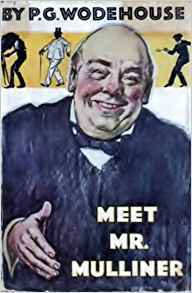
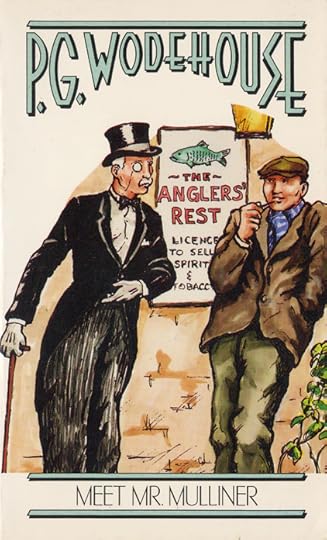
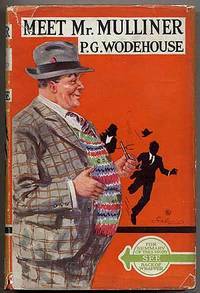
"Meet Mr. Mulliner" introduces the eponymous Mr. Mulliner, one of the most beloved creations of British literature's legendary comic genius, P.G. Wodehouse. Author of the Jeeves series of comic novels and stories, Wodehouse here presents Mr. Mulliner, an effusive and high-spirited regular at the Anglers' Rest pub. No matter the subject at hand, Mr. Mulliner will be reminded of a story and in this book, readers are treated to nine tales of hilarity and high jinks, as Mulliner the raconteur spins his various yarns about life, love and boiled eggs. An immediate sensation when it was first published, "Meet Mr. Mulliner" is the first of three books of short stories featuring the charming and loquacious Mulliner. This collection is presented here in its original and unabridged format.
Sir Pelham Grenville Wodehouse, KBE, was a comic writer who enjoyed enormous popular success during a career of more than seventy years and continues to be widely read over 40 years after his death. Despite the political and social upheavals that occurred during his life, much of which was spent in France and the United States, Wodehouse's main canvas remained that of prewar English upper-class society, reflecting his birth, education, and youthful writing career.
An acknowledged master of English prose, Wodehouse has been admired both by contemporaries such as Hilaire Belloc, Evelyn Waugh and Rudyard Kipling and by more recent writers such as Douglas Adams, Salman Rushdie and Terry Pratchett. Sean O'Casey famously called him "English literature's performing flea", a description that Wodehouse used as the title of a collection of his letters to a friend, Bill Townend.
Best known today for the Jeeves and Blandings Castle novels and short stories, Wodehouse was also a talented playwright and lyricist who was part author and writer of fifteen plays and of 250 lyrics for some thirty musical comedies. He worked with Cole Porter on the musical Anything Goes (1934) and frequently collaborated with Jerome Kern and Guy Bolton. He wrote the lyrics for the hit song Bill in Kern's Show Boat (1927), wrote the lyrics for the Gershwin/Romberg musical Rosalie (1928), and collaborated with Rudolf Friml on a musical version of The Three Musketeers (1928).
Undoubtedly, this is the most hilarious collection of short stories I've ever read. Except for one ("The Romance of a Bulb-Squeezer") which I found only so-so, all the others had me in stitches. I have returned to this collection again and again, whenever I was feeling down in the dumps, and left with an uplifted heart.
Mr. Mulliner is a regular at "Angler's Rest" (a country pub), a "man who has never told a lie in his life", according to his own confession. And the narrator tells us that it is very easy to believe it:
"He was a short, stout, comfortable man of middle age, and the thing that struck me first about him was the extraordinarily childlike candour of his eyes. They were large and round and honest. I would have bought oil stock from him without a tremor."
Mulliner does not tell lies, what he tells are stories about his numerous nephews (in which aspect he has been "singularly blessed"), brothers, cousins and uncles. And if these stories stretch our credibility sometimes, we have to murmur the adage "truth is stranger than fiction" and go ahead.
There is George, the stammerer, whose affliction is cured in a most extraordinary way in a single afternoon; Wilfred, with his marvellous chemical concoctions for all ills; Mulliner's Buck-u-Uppo, which can induce such high spirits that men of the cloth turn into mischievous schoolboys; and the malignant spirit of a pulp novelist haunting a country cottage. As Mulliner narrates the stories in an even voice to his spellbound listeners in Angler's Rest, we too forget the thin dividing line between truth and fiction: after all, does truth matter in front of a good story? And what are stories (from the old myths and legends up to the latest fiction lining the bestseller shelves), other than colourful lies we willingly hear?
Come, suspend your disbelief and get lost in the magic world of Mr. Muliner...
I've read so many P.G. Wodehouse books now that, without looking, I can guess when each book was written. It's my parlor trick/super power.
Now, you may say, "Koivu, no one cares. And furthermore, you're an idiot." However, when you consider that Wodehouse wrote over 70 novels (not to mention dozens of plays, story collections, movie scripts, and whathaveyous) over the course of some 70ish years, that seems a tad more impressive, does it not? It does not, you say? Well then, sod off, my friend, sod off!
Wodehouse's oeuvre is extensive to say the least, and his style of writing progressed from decade to decade in the early going. To take a general view, he started with light-comedy romances and gradually moved into comedy-heavy romances, until finally settling with full-on comedies with romance touched upon as a plot device. It was a progression that made sense. In the 1910s-20s, when his career took off (he started with off-time writing earlier while working as a banker) ladies loved the dime-store romance novels. Eventually that wore off as the saccharine-sweet drippy-lovers stuff ran its course. Being witty and not especially deep and brooding, comedy was his only recourse.
The transition period is an interesting one for Wodehousophiles, and that's where Meet Mr. Mulliner falls in. This 1927 collection of short stories, based around tales told at a local pub about a family of young men named Mulliner, is fun and light-hearted as almost all of Wodehouse's work, but you can see him shedding some of the sappy stuff in favor of the funny. This is a relief. Even if you're a romance fan, the old "Jane...", "James...", "Jane!", "James!" replete with longing looks routine is so outdated as to be unintentionally hilarious...for a moment, then the reading of it gets tedious right quick. I can take a bit of the lovey dovey, but I'd rather be slapping my knees. Meet Mr. Mulliner drops right in between there. Maybe I never slapped a knee, but the corners of my mouth raised up some now and again, while my brow lightened.
Is it worth a read? Only if you're already a Wodehouse fan. I wouldn't recommend this otherwise. Having said that, if you are a Wodehouse fan and you've exhausted all of the Jeeves and Blandings stuff, get on this Mulliner thing!
In the Wodehouse universe,Jeeves and Bertie Wooster reign supreme.Then come quite a few standalone novels and Blandings Castle.For me,the exploits of the family Mulliner are placed rather low in the pecking order.
In this short story collection,Mr.Mulliner of Angler's Rest,narrates the stories of several members of his extended family.Most are lovesick young men.
But this book is rather disappointing.The laughs are few and far between.Not the best book to start reading Wodehouse again.
Yet another charming expedition into the mind of PG Wodehouse, this time concentrating on Mr Mulliner. But not just one Mr Mulliner! Each story contains a different Mr Mulliner ( a different relation to the Mr Mulliner who is telling the story ) and his exploits. It's highly amusing, wonderfully written and a joy to indulge in. As Stephen Fry so fittingly said 'you don't analyse such sunlit perfection, you just bask in its warmth and splendour.'
Warning: a dangerous book to listen to on audio if going out in public! I was grocery shopping and I'm fairly confident I looked like an idiot grinning to myself and randomly bursting into laughter while making my purchases. But there are some truly excellent stories and laugh out loud lines in this collection of stories about the various Mr. Mulliners and their love lives. Worth a read if you want a good chuckle.
I am heartbroken. The most excellent Nandakishore Varma highly, highly recommended Meet Mr. Mulliner, so I, of course, immediately got it. Nandakishore and I both share an adoring regard of P.G. Wodehouse’s Bertie and Jeeves stories and novels.
But I read the first two stories in Meet Mr. Mulliner, a short-story collection, and they were sooooo very predictable. I just couldn’t finish it. I promise myself — and Nandakishore — that I will get back to the book when I have a bit more time. (With school about to start, I’ve got quite few professional educator books to get through in the next few weeks.) But for now, I’ve pulled the plug.
Bár az elején hiányzott nekem belőle Bertie és Jeeves, de aztán elkezdtem élvezni Mr. Mullinert is. Igaz, nem tudtam szabadulni a gondolattól, hogy ha egy rejtőjenői csehóban kezdené el nyomatni hajmeresztő meséit, akkor biztos hamar fejbecsűrnék egy bóléstállal. Amúgy meg hadd dicsérjem meg magamat: nagyon jó ötlet volt Wodehouse-t választani akkor, amikor a párhuzamos olvasmányomban éppen Csujkov 62. hadserege gyűri egymást Paulus 6. hadseregével Sztálingrádnál, de olyan körülmények között, hogy abba Szarumán orkjai is belesápadnának, és remegő hangon kérnék át magukat konyhaszolgálatra. Azt hiszem, ennél kontrasztosabbat aligha tudtam volna kipécézni. Üdítő volt szörfölgetni közöttük.
Nine hilarious tales. Where we hear Mr Mulliner entertain the clientele of the Anglers Arms with stories about his relatives. The Truth About George and how his nephew cures his stammer in one day by talking to three strangers with hilarious consequences. A Slice of Love fe and how Wilfred finds love with his Mulliner Snow of the Mountains Lotion. Mulliner’s Buck-U-Uppo potion gives his pale, shy curate nephew courage, confidence and a bit of charm.
The Bishops Move is a funny tale in which the curate’s Bishop drinks a bit too much of Buck-U-Uppo with his friend and het up to some hijinks. Come the Dawn where Lancelot a poet loses love but funds fortune thanks to his looks.
The Story of William who wins Myrtle Banks thanks to his first drinking experience and sleeping through the San Francisco earthquake. Portrait of a Disciplinarian where Frederick wins back Miss Olliphant thanks to his elderly strict nanny Nurse Wilks.
The Romance of a Bulb-Squeezer where Clarence a photographer finds love unexpectedly. The last Honeysuckle Cottage where James escape sickly love thanks to William the dog.
Lots of laugh out loud and chuckles in these short humorous stories.
Tall tales told in taverns are a favorite genre for me and when P.G. Wodehouse turns his hand to it, especially when read by Jonathan Cecil, how can I resist?
These are wonderful little stories, each of which contain the essence of plot points used in Wodehouse's later novels. In a way these early short stories are like his Pickwick Papers, showing us the seeds of what will later become recurring themes and what will define his comic greatness later.
The first few stories are relatively simple but the final stories were simply wonderful. I especially loved Honeysuckle Cottage, Wodehouse's haunted house story which features a young man in a house which is forcing him to an inevitable fate which we long for him to escape ... and which I found hilarious.
an absolute pleasure to read. As usual is the case with P.G. Wodehouse titles this collection of short stories portraying the hilarious adventures of various members of the Mulliner family is an absolute mood booster.
Reading Wodehouse is unlike reading any other book. It's pure delight from start to finish. It's a journey into a different world. In this case, this world is made up of Mulliners - all kinds of them. Uncles, nephews, brothers, distant relations, all Mulliners, and each with a tale to tell. These are told by one Mulliner at the local pub, the Angler's Rest, where you can also be served my the lady with the picturesque name of Miss Postlethewaite.
The stories are elaborately made-up, delightfully twisted and are simply fun to read. Each one is hilarious since the Mulliners have a knack for getting into all kinds of trouble. I, for one, wouldn't mind being a fly on the wall at a Mulliner family party! Or even just spending an evening at Angler's Rest.
I listened to an audiobook of this, and was glad that I picked it up. I had been in the mood for some summer beach read type literature and Wodehouse fits the specs. It was good to see this light comedy master working some (slightly) different avenues this time around, and not doing his usual Jeeves and Bertie and upper crust nitwits schtick. Of course, there is some of that in here too.
The stories all begin in the same, comfortable way, with Mr. Mulliner ordering a drink, usually a hot scotch and lemon but sometimes gin and ginger beer, settling in to his favorite bar stool at the Angler's Rest pub somewhere in England, and beginning a story about a member of his extended family, whose name is inevitably Mulliner as well. The tales are amusing and cover a fair amount of territory, often concerning jilted lovers, stern fathers-in-law, and misunderstandings of various types. Churchmen play a more prominent role in these stories, as one of the Mulliners is a clever young minister himself, adept at bailing his superiors out of the jams that their kooky, undignified behaviors get them into. In another story, a pretentious, poetic young Mulliner is forced to put his skills to work for his uncle's pickled foods business, with entertaining results.
If you start digging below the surface, you can find some odd things. Such as: a general distrust of romance, a little racism, some drunkenness, and a tremulous conventionality. But those things are as English as roast beef and Yorkshire pudding. I also noted that Wodehouse crafted his silly stories out of some fairly elegant prose that strikes the right tone - not too highbrow, but not simple and clunky either. I am not a Wodehouse fanatic so there are many of this works that I have not read, but this seems like one of his better collections to me.
Meet Mr Mulliner is the literary equivalent equivalent of candy. But not that hyper-palatable American candy that represents the distilled essence of the dark gods of marketing using the accidents of our own evolutionary history against us, delivering a concoction of high-fructose corn syrup and artificial flavours held together by just enough peanut butter to still legally classify as food. No, this is good-old, honest English candy. Like a boiled lolly that's coloured with chimney ash. An artisanal boiled lolly, to be sure, painstakingly hand-crafted according to a centuries-old process that would have been lost to the mists of time, were it not for novelty historical theme parks. But still, you know, a boiled lolly.
There is something so perfectly English about a work that is so devoid of substance, that stands only on style, and yet is still a bit shit. Painstakingly crafted so that you can feel guilty for reading it while still not really enjoying yourself.
When you are re-reading Wodehouse with more structure (thank god for bookclubs!), you start having opinions you never really thought you needed.
A slightly later work than Inimitable Jeeves and Something Fresh, you can see how much his art has been honed in the years. This book literally had me gasping for breathe due to excessive laughter. The omnibus I own begins with a note from the author who suggests pacing yourself with these stories and I would agree with this suggestion. Reading this all at once cannot be good for one's health.
Does Mr. Mullins tell fish tales? They are told at The Fisherman's Rest, and are hard to believe, but are rarely about fish. Listen or read for yourself and make up your own mind.
In the bar-parlour of the Angler’s Rest the efficient barmaid Miss Postlewaite was asking who was the greatest of all the Wodehouse comic creations. A Port and Lemon ventured that it would be ‘Lord Emsworth’, ‘Bertie Wooster surely?’ suggested a surly Gin and Tonic, ‘What of Psmith or Ukridge or The Oldest Member?’ questioned an aggressive half of Mild. ‘But what of Mr Mulliner?’ asked a stranger in the corner, ‘surely the Mulliner family crave you inclusion?’. The bar was undecided and the conversation moved on to weather Elvis Costello’s new album was as good as his early work.
We first meet the Mulliners in this book and the jury is still out if they can be considered amongst the Wodehouse sagas as Mr Mulliner himself merely frames the stories and the family motif is really a mechanism for a short story writer not requiring ten new surnames every new volume. We meet Mulliners whom are curates to overbearing clergy, salesmen of patent medicines and even the class of men that writes detective fiction, but what do we learn from the Mulliners.
Well of course we learn nothing but we are constantly reminded of what it is to laugh. God is surely in heaven and the Larch on the Thorn, surely the Mulliner family crave you inclusion?
I’d never looked into the Mulliner corner of Wodehouse’s world until now, but am immensely glad I did. It is a charm and a delight. For the uninitiated Mr Mulliner is a bar-room raconteur with an incredible set of stories about his quite incredible family. So we have a poet who tries to write for a pickle company; a great inventor pretending to be a servant; a separated couple brought back together by their indomitable former nanny; the incredible effects of Mulliner’s Buck-U-Uppo; and the most original ‘writer staying in haunted house’ story I’ve ever read.
If you’re a Wodehouse fan who has similarly never picked up Mulliner, then head out now and grab yourself a copy! You will not regret it.
P.G wodehouse no defrauda. En esta ocasión tenemos a Mr Mulliner que acodado en la barra del pub de turno nos va presentado a través de diversos relatos a distintos miembros de su famila: Los Mulliner. Evidentemente y como ya es habitual en las historias de este autor inglés, siempre hay equívocos, situaciones hilarantes y por supuesto, final feliz. Lo que más me gusta de Wodehouse es su fina ironía y su capacidad para decir mucho sin decir demasiado. Algunas de las situaciones que se viven en estas historias me han recordado a nuestros Jardiel Poncela y Mihura. Aún así, prefiero sus novelas y entre sus personajes, creo que Jeeves y Bertie Wooster son mis favoritos aunque, afortunadamente, aún me quedan muchas de sus historias y novelas por descubrir.
I have read a few PG Wodehouse books, mainly comprising of Wooster and Jeeves. Mr Mulliner starts altogether with a new ecospace. Characters are new and stories afresh.
A fisherman chap Mr Mulliner, who claims to speak only the truth, is at Angler's Rest - a country pub, where he narrates to his audience the tales of his family/extended family who have some interesting and enchanting encounters and experiences.
I found the book rather a slow burner and a little dry. I took time with each of the story as I found them rather un-inviting. They, unlike Wooster/Jeeves did neither have a surprise at each corner nor injected me with the same dose of humour as a Wooster/Jeeves tale.
It happens so, if one starts off with a Wooster/Jeeves book, unknowingly, a high standard is set in terms of expectations towards topics which encompass language, humour, courtesy, mannerisms and more so the usage of English.
With Mr Mulliner series, most of the ingredients were indeed present, but somehow I didn't feel at home as with Wooster. The way Aunt Dahlia, Agatha addresses Wooster at times, the way Bertie hoots proudly of the Wooster clan, the eminent metaphors lend a laugh which tends to be uncontrollable at times. Wooster's encounter with Sir Fredrick Glossop, Eustace, Eugene or Honoria Glossop all are quite memorable (that I remember them months after reading the stories - esp. the hat stealing incident in traffic).
Mr Mulliner plot did keep me engaged hoping to learn about his people, the story, what happened next etc, but I found the tempo of the humour kicking in slightly slow, few times, it failed to show up even.
An okay read, the enjoyment dampened may be by my own silly expectations or prior notions.
It was nice starting off the year with a light, entertaining read from one of the classic short story, humor authors. Meet Mr Mulliner by P.G. Wodehouse is a collection of short stories published originally in 1927. The aforementioned Mr. Mulliner is the narrator of the stories and they generally involve family members. The setting for the story telling is the Angler's Rest pub in Worcestershire.
The collection contains nine stories and they are all light, funny (the chuckle-worthy, witty kind of humor, rather than laugh out loud, rolling on the floor) and just a pleasure to read. In each case, generally, a member of his family falls in love and must endeavor to win his fancy. On the way there are fun adventures, from one Mulliner trying to cure his stutter so he can win his love, to another who invents many, many things but some of the creams / lotions have interesting side effects, to a fellow who happens to fall asleep during the San Francisco earthquake but ultimately wins his lady.
They were just a pleasure to read, intelligent, witty and totally entertaining. Wodehouse is best known for the Jeeves & Wooster stories probably but this was also an excellent collection. (3.5 stars)
Most of the stories I have been listening to as a BBC dramatized version. The rest I read by myself. Of course, those read by Richard Griffiths and others gave me much more fun than those read by myself. Wodehouse's exquisite use of language and his wit one can better appreciate when listening to the splendid narrator.
This collection of short stories was more or less in the same pattern: courting, inconvenient relatives, British upper class of those times - in other words, hilarious satire of the society. So, like always, I will not remember most of the plots, but I have had a wonderful time and some brilliant scenes will stay with me.
|Listening to it* (on Youtube) - in small doses; (very well) read by Jonathan Cecil| *(There are bound to be mistakes in especially the interpunction - sorry.)
<01:25> "He was a short, stout, comfortable man of middle age, and the thing that struck me first about him was the extraordinarily childlike candour of his eyes. They were large and round and honest. I would have bought oil stock from him without a tremor." (Chapter 1 - The Truth About Georges)
<49:52> "It was the sort of house where ravens croak in the front garden just before the death of the heir, and shrieks ring out from behind barred windows in the night. Nor was its interior more cheerful, (...)" (Chapter 2 - A Slice of Life)
Inspired to look outside my comfort zone by an anthology called The Most of P. G. Wodehouse, this is the first collection (other than the above-named anthology, of course) of non-Jeeves & Wooster short stories I've read, and they're just as delightful as Wodehouse's more famous creations. The basic premise is that these are stories related by the titular character in the bar-parlour for fishing enthusiasts called the Angler's Rest. Like the first person narrations of the Jeeves and Wooster stories, this style gives a sense of comfort and camaraderie with the narrator, who seems like a thoroughly nice and sympathetic person, and because of that you, the reader, sympathize too with the hapless members of his extended family through all their improbable adventures and troubles.
Nine comic short stories from the 1920s about the adventures of the Mulliner family, as told by Mr. Mulliner, the overbearing raconteur of Angler's Rest, the village pub. Evelyn Waugh wrote that Wodehouse "made a world for us to live in and delight in" and he was right - this idyllic British world of timid curates, stammering crossword puzzle enthusiasts, and other lovesick young men is an absolute delight, each clever story a gem, and "Mulliner's Buck-u-Uppo" and "Honeysuckle Cottage" are, for me, as brilliantly funny as anything Wodehouse ever wrote.