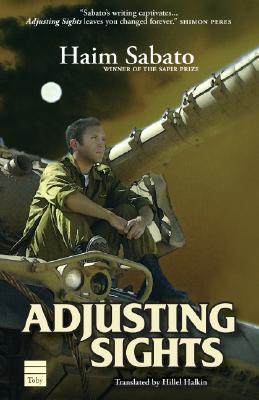
When war breaks out in 1973, childhood friends Haim and Dov are called up together to serve in their tank battalion, but in the chaos of battle the friends are separated. A month later, Haim returns alone, on his first leave home. Struggling to come to terms with his experiences he wonders what happened to Dov during those fateful days.
Haim Sabato is an Israeli rabbi and author. Haim Sabato was born to a family of Aleppan-Syrian descent in Cairo. In the 1950s, his family immigrated to Israel and lived in a "ma'abara" (transit camp) in Kiryat HaYovel, Jerusalem. He studied at a Talmud Torah in Bayit Vegan, in the vicinity, and after it attended the "Netiv Meir" yeshiva-high school, also in Bayit Vegan. Rabbi Aryeh Bina, Rosh Yeshiva of "Netiv Meir", was one of his key influences. After graduation, he joined the "Hesder" program at Yeshivat Hakotel, in the old city of Jerusalem, which combines yeshiva studies with military service. His experiences during the Yom Kippur war, at the age of 21, led him to write Adjusting Sights. After the war, Sabato spent the next few years at Yeshivat Mercaz Harav, the spiritual home of religious Zionism. After receiving rabbinical ordination, Sabato co-founded Yeshivat Birkat Moshe in Ma'aleh Adumim, near Jerusalem, in 1977. Sabato's lyrical writing, with sentences studded with phrases drawn from, and referring to, passages in the Bible and Talmud has won him numerous fans and made him a symbol of the "pitfalls" of translating literary works form one language to another. He has published four novels in addition to Rabbinical works. Sabato's first book, Emet Mi Eretz Titzmach, (published in English as Aleppo Tales), is a collection of short stories relating to his family's ancestral home and community of Aleppo, Syria. Sabato was awarded the Sapir Prize for Literature in its inaugural year, as well as the Yitzhak Sadeh Prize, for his second work, Teum Kavanot (Adjusting Sights in the English translation), a moving account of the experiences of a soldier in the Yom Kippur war. The book has also been made into a film. His third publication, Ke-Afapey Shachar (published in English as Dawning of the Day: A Jerusalem Tale), tells the story of Ezra Siman Tov, a religious Jerusalemite coming to terms with a changing world. Sabato's next work, Boyi Ha-Ruach (published in English as From the Four Winds), describes his experiences as an "oleh chadash" (a new immigrant) in the Israeli "ma'abarot" (typical transit camps of the 1950s). In his most recent book, Be-Shafrir Chevyon, Sabato returns again to his childhood in "Beit Mazmil", Jerusalem, as a newcomer, with memories from Cairo intermingling with adventures in the monastery of Ein-Karem, and the annual Independence Day exhibition in Jerusalem. Again we meet both the Piutim (religious poetry) and Torah study that dominate Sabato's spiritual world, along with his Yom Kippur War memories, all tied together in a constant search of God, Who often hides from the human eye, when the latter needs him most.
"מישהו טפח על שכמי. מה נשמע? גם בפלוגה שלכם יצא צוות אחד לעשרים וארבע שעות? היה זה מוטי מפלוגה גימ"ל. שוב עלו המראות ואני רציתי שקט. שקט כבר לא יהיה לי. במוצאי יום הכיפורים נסענו יחד בדרך לטבריה באוטובוס מקריית־נוער. מוטי ישב לפנינו עם שעיה. שעיה נפל. אני ישבתי ליד דוב. דוב נפל. "
סיפור המחדל המזעזע של מלחמת יום כיפור, מסופר מנקודת מבטו של חייל, בן ישיבת הסדר שהתגייס לצנחנים והועבר לשיריון. המספר שירת בחזית הסורית בזמן מלחמת יום כיפור.
רוב הספר מתמקד בתיאור החוויות מהמלחמה והאבל על אובדן חברו דוב. אבל, בין הפרקים ישנם שביבים של תיאור קליטת משפחתם בארץ, בתחילה בטבריה ואז בירושלים.
פרק ח' הוא אחד הפרקים המזעזעים ביותר בספר וכנראה הוא מתאר את אחד הפרקים המבזים בהיסטוריה של מלחמות ישראל . יחידת התיעוד מגיעה למוצב לשמוע את החיילים אחרי שהמלחמה נגמרה. החיילים אחרי שבועות של לוחמה עם ציוד קלוקל וחסר ופקודות עקומות, המומים מהחוצפה של הפיקוד לשלוח אליהם קבוצת קצינים שיתעדו את המלחמה כשהם סיימו את הקרב חבולים ומוכים ושחלקם איבדו חברים.
עוד לפני כן, הפיקוד שלח ליחידה את אות המלחמה. החיילים שזועמים על האופן שבו נשלחו למלחמה, שמו את העיטורים בתיקים.
כל חייל ביחידה נדרש לספר קורות יום אחד. הדובר מבקש לתאר את יום שני (יום הפריצה של צהל), כשהקצין שואל אותו בשיא הטימטום איזה יום שני.
החייל מתאר את הקרב כאשר הטנקים לא היו מצויידים ולא בוצע בהם תיאום כוונות. גם החיילים לא היו מצויידים. הוא מתאר את הפגיעה בטנק שלהם ואת האופן שבו ניצלו בחירוף נפש.
מדובר בתיאורים חיים והרגשתי שנכתבו בדם ליבו של סבתו. אומנם היה ניתן לערוך את הספר טוב יותר, אבל האוטנטיות ורוח שבה נמסרים הדברים מחפים על החסרונות של הספר הזה שאכן ראוי לפרס ספיר שזכה בו.
In all fairness, I probably would have given this a higher rating had I read it in English. And I feel pretty bad giving it just one star -- a soldier fights in the Yom Kippur War and loses his best friend to enemy fire but not his religious faith. It should be inspiring and close to my heart, right?
Alas, I found the story (such as it was) extremely hard to follow, jumping back and forth around the timeline, mixing various narratives of various soldiers, interspersing things that happened to the author as they were happening during the war with experiences told in flashback from before the war, with a home visit during one of his leaves, with things the author told to a team of soldiers debriefing him after the fact as well as things the author's fellow soldiers told to this team about their own experiences, etc. It seemed less a story than a loose, not particularly organized collection of stream-of-consciousness memories and religious musings from the front lines. Call me anal, but I really needed a beginning, middle, and end.
So even though this was rather short and should have been inspiring, I found reading it to be a chore and couldn't wait to be done. I love my Hebrew book club; I just wish I liked the books more.
Unfortunately, a big part of our definition as Israelis have been shaped and sculpted against a short period of time and the most impact on that definition was within the War of Independence (1948), The Six-Day War (1967) and the Yom Kippur War (1973).
No one objectively 'succeeds' in wars. It is very hard to choose a goal that is falling into place of all of the ideas within a country of what constitutes success. Some would say that a war is, by its own virtue, a failure to begin with.
The Yom Kippur War, which is the single prominent background story of this autobiography chapter in the life of Rabbi Haim Sabato, is generally considered a success to Israelis by the term of withstanding a very imminent attack from several fronts when outnumbered, but considered a major failure in terms of losses. There was nothing as this war to the state of Israel, in controversy and falling brothers, husbands and fathers.
Rabbi Sabato take is giving us no option to believe otherwise, but his beautiful hebrew style, almost archaic at times, which is marbled by Talmudic influences and Jewish tradition from youth at Cairo and Italy. His story of the war is the same as everyone, no effort to cover the horrible truth is given to the story but his overall positivity (even when his closest friend has fell during the war) is something to admire.
I loved the style and heartbreaking story has contributed - he is using a gentle, but steady, strokes of color to have us feel the scene and appreciate what those men have gone through.
At times of trouble the question of God's existence meets any believer - to endure this question is something beyond me and I hope never to face the challenge. The story also brings light to the confrontation of the Yeshiva guys that were all enlisted in a sudden rush right at the heart of the most sacred day for them - Yom Kippur, the jewish day of asking for forgiveness from men and god.
What IDF military intelligence, MOSAD, and politicians failed in preparation for the October 1973 Yom Kippur War, reservists and conscripts made up through shear courage, faith, and necessity. In the initial days of war along the northern Golan Heights, an unprepared and dismally chaotic Israeli armored brigade suffered against an organized Syrian armored division eight times its size. Known for its highly skilled Air Force and air superiority, the IAF failed to support its ground forces. Unprepared for Syria's SAM batteries, some of Israel's best pilots were subsequently shot down. Their tank brigades became easy targets, and gunners blinded from direct sunlight or darkness, found it difficult and at times impossible to see their Syrian counterpart. Adding to an array of mechanical failures further slowed Israel's advance. Israeli fighters were left stranded searching for barely operational tanks to continue fighting, running to safety behind ridges or ditches. Israel's loss of men, tanks, and airplanes exceeded all expectations. Its armored brigades were on the brink of being driven behind its own lines of defense, on the verge of losing on the northern front. Yet each time events were at their worst extreme, fresh support in the form of paratroopers, air bombardments, or newly arrived armored support, arrived saving many lives.
Adjusting Sights is about two orthodox yeshiva friends, who having just completed their Yom Kippur fast, were called upon to join their countrymen in battle along the Golan Heights. The year's holiest day of prayer to God had just ended. With open hearts of thankfulness for His creation and forgiveness for their sins, they are suddenly thrown into tank battle against a formidable Syrian surprise attack. From the outset of their arrival for battle, their tank platoons were in already disarray. At the army base, both boys stand amongst a crowd of soldiers in disarray. One of the commanders asks the soldiers, who of them was a loader and who was a gunner. Dov responds and is immediately taken to a tank, while Haim (the main character) is placed in another. As readers, we then see, hear, feel one of the largest tank battles unfold from inside a tank, through a telescope and Haim, the gunner.
Armed with guns and tanks, prayer books and Tefillin , inside the tank memories of Haim's childhood and teachings of local sages flashes through him while exploding mortars land nearby. Amidst the chaos, his faith and love for the promised land of Israel remains unshaken. Losses of lives mount, mechanical tank failures commonplace, and the prospect of losing the war ever so present, Haim never loses sight and faith in the Covenant made with Abraham and his Hebrew ancestors on Mount Sinai. Through selfless defense for his country and his brethrens' historically biblical identity, submitting was never an option. Faith based perspective gives him the courage and strength to overcome the chaos and an enemy armed eight times its size.
Throughout the chaos of battle, Haim prays and converses with himself. Questioning his friend Dov's whereabouts, only at the end of the story does he learn that Dov had died during the first night. This story is not about glory, but about patriotism. It is about war's chaos, and an internal peace brought on through prayer and faith, and an unconditional love for the people and the land of Israel.
Adjusting Sights is the first time I've read a fictional war story (which is based on Sabato's experience as a tank fighter in the '73 war) written in first person by an Orthodox Jewish rabbi. This novel's appeal transcended the orthodox community, and was awarded Israel's literary prize.
My concentration is shot these days, so I found it very hard to focus on this book. It's translated from Hebrew, so that may be part of the problem. Also, it's a soldier's story, and I don't follow the details of military battles well either. But I do love how Jewish faith and liturgy weave seamlessly into the narrative.
This is my second reading of “Adjusting Sights.” After reading the lyrical “The Dawning of the Day,” I so wanted to give this book another chance. But unfortunately, it still did not meet my expectations. “Adjusting Sights” is semi-autobiographical about a religious soldier from a Middle Easter background fighting in the Yom Kippur War. But with so much detail it is hard to know where reality ends and fiction begins. On the positive side, it is wonderful to read about prophet-soldiers who recite and live by the words of the Bible, Talmud and Maimonides. The plot is ostensibly about the search for Haim’s friend and study partner; but that search is never resolved. “Adjusting Sights” or kavannah in Hebrew could have a double meaning of changing direction or religious outlook. But unless we are talking about the transformation of a yeshiva student into a battle-hardened soldier, that adjustment is not so evident. I am usually a fan of the translator, Hillel Halkin. But I felt that the translation of common Hebrew terms made the reading more cumbersome. Is there a need to have ritual fringes and tzitzit on the same page when he provided a glossary in the back.
At the heart of this book lie some of the most engrossing and terrifying first hand accounts of war that I've ever read. Haim Sabato's story of a young and observant soldier fighting in the Tank Corps on the Golan Heights during the Yom Kippur War of 1973 is quite unlike any other book of war writing/memoir that I've previously encountered. Haim's (and his friends') experiences in that dreadful war were all too vivid and real. Threaded throughout the narrative are some of the contemplations, prayers, hymns and rituals, that a religious soldier takes a part in. Although of secular persuasion myself, I found many of these passages were extremely humbling. I was reminded of some of those I served with who were also soldiers while maintaining their religious observance. I always marveled at their dedication and resourcefulness in pursuing their faith in such difficult circumstances - this book reinforces that impression.
This novel provides a compelling argument for the chaos of war, the multiple perspectives, and how fundamental beliefs can be shaken or reinforced. The juxtaposition of the mundane --concrete religious practice, bound by time of day and year --with war made this read fascinating on multiple levels. We know the outcome of the Yom Kippur war writ large; Sabato provides a view of the war, micro scale. I do not know how well the experiences of these citizen soldiers transcends to those of other soldiers, nor do I know if the Israeli army today is different in terms of composition, religious practice, etc. But the melting pot and social glue that is the Israeli army provides a common experience of (unfortunately) every generation experiencing war, with their own same but different experiences.
I read this book with the purpose of getting factual material about the Yom Kippur War but found it more than that. I am not religious, so I kind of skipped the religious passages although it's clear the writer tried to make them accessible to everybody, not just those who know, but I was very impressed by the patriotism, courage, camaraderie and ingenuity displayed by Israeli soldiers in the face of the looming disaster brought about largely by the country's own government and high command. It's by this kind of people that Israel lives.
4.5 I was born at the end of Yom kipor war. Living in israel you get to hear a lot about that war and i am not a fan of war stories so i took my time reading it but Sabato takes you from the very first word by the hand and leads you gently with so much humanity in a world gone mad. Its a beautiful book
A story of an observant Jewish soldier in the Yom Kippur War. It is a far cry from a 'war novel' - a moving tale with descriptions that make you feel you are there. It makes the duel world the soldiers lived in come alive.
Lyrical, religious, almost liturgical writing. This is a story of Israel's immigrants from many lands, of comradeship and war, and of grief and loss. There isn't much of a plot. The story is thin but manages to capture so much of the pain and confusion of the Yom Kippur War.
I read this after the Jewish Review of Books touted it for a second time in the last couple years. Their reviewer – and others – compare the writing to S.Y. Agnon, but I’m afraid I don’t know my Agnon very well. (Shame on me, but there’s so much to read.)
Anyway, I find myself comparing it to Vonnegut. That may seem strange to many, but I have a particular take on Vonnegut: he’s powerful in his early novels, culminating in Slaughterhouse Five, because he defers sharing the trauma that’s clearly motivating him. I work with narrative trauma theory on this, so it gets into my academic hat, but I see the technique as acknowledging that trauma is overwhelming. It happens so quickly and with so much necessary detail, that the traumatized have to re-live what they’ve experienced. Their narrative is just that, a reexperience of the traumatic event.
And it’s at its most powerful when the speaker edges toward confession and then pulls back.
That’s what I see Sabato doing here. We know from the opening pages what the trauma is: he has endured a brutal tank battle, nearly getting killed when his tank was immobilized and then he has also had to deal with the survivor’s guilt over the fact that his best friend, Dov, was killed elsewhere in the battle.
When I started this, I expected a blow-by-blow of the campaign. I thought I’d get a conventional war story about the battles in the Golan Heights in the 1973 Yom Kippur War.
Instead, we learn the outcome right away – Sabato has somehow survived and barely been able to talk about it – and the drama comes in how he finds the language to tell this story he both needs to tell and does not want to.
Sabato and Dov were both Yeshiva students, and the language of orthodox Judaism pervades this. I can think of two ways that would have gone wrong. First, I can see Sabato clinging to that language and that vision as a kind of evangelical Jew, someone so convinced of a theological order that he refuses to doubt. Second, I can see him turning contemptuous of a faith that allowed him to suffer so much.
Instead, Sabato works a subtler and more compelling trick. He clings to the language and hope of the religious studies of his youth, but he sees them through a saddened lens. He still believes in prayer and in the sense that the stories of the Talmud carry wisdom, but he seems to bring a sober wisdom to his appreciation. The stories still comfort, and he wants still to learn and preserve them, but you can hear the effort in that intention.
In other words, he is finding a way to ‘adjust his sights,’ to look to heaven with a slightly different angle.
As a consequence, that title metaphor works on two levels – the obvious one of his needing to adjust the targeting in the tank, and the theological/ethical one where he looks for a new peace after negotiating, at last, the narrative he has to tell.
There’s catharsis here, and there’s hard-won wisdom. It’s not as funny as Vonnegut, but it achieves something of the same anti-war war-story power that Vonnegut worked to produce.
All of that is hard to do, and it’s worth celebrating that Sabato did as well as this.
I have been reading about the Yom Kippur war recently, starting with “Who by Fire,” then on to “The 2 O’Clock War.” But this is the first soldier’s-eye view.
It’s being uncomfortable at best — terrible food, days and weeks living in filthy clothes, boredom, bad weather, being with an OK bunch of guys, but not with your own family. At worst it’s terror and grief.
Like one other reviewer, I am an atheist, so don’t really understand how religious people feel. But I did understand that the protagonist and his religious friends gained comfort from their readings and discussions. What is the harm in that? Indeed, isn’t it a good thing when conversation (more portable than a chess set or a guitar) helped them endure their horrific circumstances?
Another reviewer complained that the time line was hard to follow. I agree but think the author did that intentionally. He wanted you to feel just a tiny bit of the confusion and surreality of the battlefield: being told to fire when you couldn’t see a target, being told to advance when the gears were locked and you couldn’t move at all, acting (and seeing others act) in ways that violated the procedures you’d practiced during reserve training. Most brilliantly, the protagonist occasionally sees someone acting “by the book” and is comforted by the brief respite from SNAFU and FUBAR.
SPOILER ALERT. I’m labeling this a spoiler out of an abundance of caution. I think every reader realizes, early, that Dov is gone, and the protagonist’s grief — like a throbbing toothache — cannot be fixed. We, like the protagonist, do not receive official word or incontrovertible evidence. But as the story proceeds, we, like the protagonist, adjust to the reality. There’s no “closure” in the way we’d all like there to be. But closure is a luxury, and there are no luxuries in a war.
This entire review has been hidden because of spoilers.
This view of the Yom Kippur through the eyes and ears of a tanker in the Israeli army reminded me of "Going After Cacciato" by Tim O'Brien only with more spiritualism and less hallucination.
If that sounds like a contradiction, it's not meant to be. This first-person account of combat on the Golan Heights is told via an observant Jew and Talmud student. Not meant to be a history of the conflict, it is instead an account of the conflicting requirements of duty and friendship as a tank crew is transported from the security of home and study to the chaos and death of the battlefield.
It wasn't what I expected. I expected a much more conventional account of the fighting. The unique rabbinic orientation Sabato delivers had it own appeal. I doubt I ever would have thought about some of the Psalms and stories he shared had I not been looking for a war story.
Beautiful and poetic, but it was obvious that a lot was lost in translation. Also, the plot meanders all over the place with flashbacks and stories, and it's hard to tell where the flashbacks end and what's going on. The ending dragged on and on. The plot was never really resolved: I want to read it again someday in the original Hebrew. Maybe I'll like it more.
One of the best books I have ever read. I bought copies for my family. When I finished I gave it to my husband to read; and when he was done I took it back and started again, reading it cover to cover a second time. There's so much depth there.
קראתי כשהייתי על גבול לבנון בסדיר. היכולת של הרב סבתו להכניס אותך לתוך ההרגשות שלו, ממש מחיה את תחושת המלחמה שהיה בו. הפחד, הזכרונות, הרעות. אחרי שקראתי את הספר הזה ליבי נמשך לקרוא את כל ספריו. אין עוד כתיבה כזאת בדורנו, שימוש כה נרחב ויפה בשפה העברית.
I felt I should read the book because everyone reads it but I didn't get any profound message from it. I sometimes had trouble with the jumps in time. It is sad how disorganized everything was and how many people were killed or injured because of it.
ספר על מלחמה ועל אדם, אדם דתי במלחמה. את החלקים בהם תוארו קרבות לא כל כך הבנתי, לא יכולתי אפילו לדמיין, מובן רק שהייתה שם ערבוביה ואי סדר שקשה לתאר. אבל נהניתי כל כך מהכתיבה, מהקול הצלול והנקי של הגיבור המאמין