THE INFAMOUS BOOK THAT SEGREGATIONISTS LOVED TO CITE
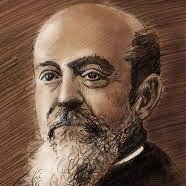
Carleton Putnam (1901-1998) was an airline executive, but is most known for his influential writings advocating racial segregation. This 1961 book was actually made ‘required reading’ for high school students in Louisiana; Civil Rights activist James Peck reported in ‘Freedom Ride’ that this book was (besides the Bible) the only reading matter allowed for jailed activists. (The now-discredited anthropologist Carleton Coon is Putnam’s cousin, by the way.)
He wrote in the first chapter, “When the Supreme Court reached its desegregation decision in 1954, not all of us stopped to think about its implications. There were many, of course, who were joyful… [such as] those good people who dream of pleasing everybody without counting the cost. But the majority of Americans, at least in the North, were preoccupied with other matters… I confess that I was in the latter category… I cannot blame myself for not realizing the meaning of the desegregation cases. Had I been living in the South, it might have struck me sooner. But I was living in the national capital… I believe that in 1954 I could lay claim to the viewpoint of an average American, a viewpoint … essentially Northern but modified by long experience in the South.” (Pg. 1)
He asserts, “Personally, I feel only affection for the Negro. But there are facts that have to be faced. Any man… can observe a Negro settlement in the Congo, can study the pure-blooded African in his native habitat… can compare this settlement with London or Paris, and draw his own conclusions regarding relative levels of character and intelligence… which is civilization… We were all in caves or trees originally. The progress which the pure-blooded black has made when left to himself …. can be measured today in the Congo.” (Pg. 7)
He contends, “from the horrors of Reconstruction through the Supreme Court’s desegregation decision---the North has been trying to force the black man down the white Southerner’s throat, and it is a miracle that relations between the races in the South have progressed as well as they have.” (Pg. 9)
“White Southerners understood the Negro and in large measure loved him. They realized that that agitation rending the South originated with organized white minorities in conjunction with mixed-bloods well over on the white side of the spectrum… The South… had developed customs and a way of life with the Negro that took his limitations into consideration with a minimum of friction and a maximum of kindness.” (Pg. 21)
He admits, however, that “There have… been situations in which a race has captured the spark of culture in one habitat but not in another. In the case of the fall of the Roman Empire the barbarians were, broadly speaking, members of the same race as the conquered.” (Pg. 27)
“The truth is that responsible Southerners have deliberately weakened their own defense because of their unwillingness to raise the underlying problem. They talk of states’ rights when they should be talking anthropology, and they do so out of instinctive human kindness.” (Pg. 35) He adds, “It is an established fact that white people favor integration throughout the United States exactly in proportion as they do not need to practice it.” (Pg. 36)
He reports, “one man who wrote me [referred to] a Negro settlement in Africa [and asked]… ‘why not point to the whites in Hog Wallow, Arkansas?’ The answer, of course, must be that the settlement in Africa is … the best that the Negro, LEFT ON HIS OWN resources, can produce, while Hog Wallow, Arkansas, is not typical … for the white race.” (Pg. 42)
He says, “I will add that membership in a RACE by no means determines membership in a GROUP. Among those I hold in bonds of close personal affection I number members of races wholly out of sympathy with … their ‘minority group.’” (Pg. 48)
He summarizes, “I am advocating a doctrine of white leadership based on proved achievement, not supremacy in any sense of domination, exploitation, or violence.” (Pg. 55)
He rejects schooling with segregation of the sexes, on the grounds that “little brother would still bring his new Negro friend home after school. One cannot break down the social barriers among either sex without eventually breaking them down heterosexually.” (Pg. 65)
He insists, “The worst conditions of slavery in the South never approached the horrors from which the American Negro was delivered when he was removed from the slavery of his own race in Africa to slavery under the white men. Wholesale crucifixions to appease the Negro’s gods was one of them.” (Pg. 88)
He states, “Two wrongs don’t make a right. The fact that it is wrong to bully, humiliate or exploit a Negro, does not make it right to integrate him.” (Pg. 91)
When confronted with examples of “Negro doctors and other estimable Negroes,” he claims “not only are those Negroes in no sense typical of their race… but… most of them owe their ability to some percentage of white genes in their system… A man may be as black as the ace of spades and still be a mixed-blood…” (Pg. 92)
He asserts, “The greatest of all human rights is the right of a race to protect itself against genocide, and its culture against deterioration.” (Pg. 94)
He advises the Christian, “In the Christian family the Negro is still your younger brother, the figure of the Galilean still stands in judgment over you both.” (Pg. 113)
It is disturbing to realize that within the lifetimes of a good number of us, people like Putnam were being taken seriously as ‘authorities’ by many. But his fallacies are shown by the fact that, despite integration being the fact and the law for more than 60-70 years, our culture continues to advance, and lead the world (e.g., in science and technology).