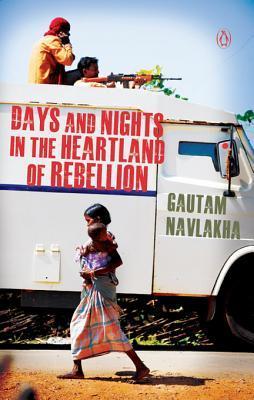
A report from the epicenter of the Naxalite war In its war against the Maoists, it is the Indian state that usually gets to tell its side of story. But official explanations are not meant to convey truth. Most often they attempt to cover up the reality and obscure it. The claim that only one warring side has the right to propagate its views whereas the other does not because they are projected as 'enemy' is questionable when we know there are two sides to any conflict and where both sides comprise our own people. In this situation of internal war, not satisfied with the knowledge offered by books and documents, Gautam Navlakha went into the heart of Bastar to get to know the Maoists first hand. This book is an account of the fortnight he spent in the guerilla zone where the Maoists run their people's government, the Jantana Sarkar. His enquiry unflinching and his perspective critical but partisan, Navlakha succeeds in the difficult task of making the demonized human, laying bare the heartland of rebellion.
Gautam Navlakha's book "Days and nights in the heartland of rebellion", is disturbing; the Dandakaranya is on fire. It's published by Penguin, but does not find place in the promotional book fare, online or offline and no reviews to my knowledge. Is this conspiratorial silence ?
Written in simple language and style, its a persuasive argument against the hegemony of the theory of non-violence. It raises doubts whether the State really perceives Maoists to be the biggest internal security threat or is it just a false facade for displacing dissident tribals to make place for its inexorable development paradigm of paving way for appropriation of mineral and natural wealth by corporates through deployment of armed forces.
He reveals first hand information of instances of self governance, an embryonic form of state within a state - manifestation of the strategy of liberating the rural to eventually proceed to the urban. Women and dalits are taking the lead, in more numbers than are seen in mainstream politics.
Navlakha seeks some answers from the militants to questions from the rights perspective, like those pointed out by Balagopal, in a different context of justifying the cleavage in the rights movements, though.
Except a brief overview of the communist movement that preceded the Maoists, little is discussed about Maoism as such. Unlike the recent ones written by "Particpant Observers", this book does not put on a high-brow face, there is no theorizing and jargon, and is bound to disturb several minds from the plains.
Not ideal as an introduction to the subject. For those not versed in Indian politics and society much context is left unexplained. Further, it's structure appeared rather haphazard. Navlakha nevertheless offers valuable insight into the perspectives of, tactics used, and obstacles facing the Maoist movement. It is worth a read, but perhaps not the place to start for those interested in the subject.
though a bit partisan but the author presents a true and genuine account about the biggest security threat facing india and about the alternative model of development followed by maoist in dandakranya