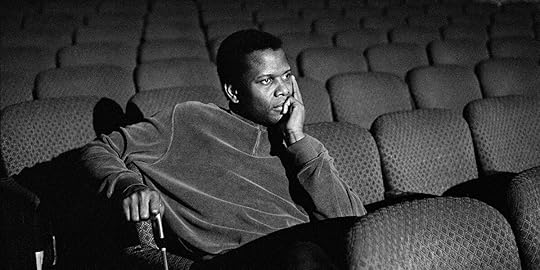
Poitier credits his parents and his childhood on tiny Cat Island in the Bahamas for equipping him with the unflinching sense of right and wrong and of self-worth that he has never surrendered and that have dramatically shaped his world. Without television, radio, and material distractions to obscure what matters most, he could enjoy the simple things, endure the long commitments, and find true meaning in his life. Poitier was uncompromising as he pursued a personal and public life that would honor his upbringing and the invaluable legacy of his parents just a few years after his introduction to indoor plumbing and the automobile. Poitier broke racial barrier after racial barrier to launch a pioneering acting career. Committed to the notion that what one does for a living articulates who one is, Poitier played only forceful and affecting characters who said something positive, useful, and lasting about the human condition. Here, finally, is Poitier's own introspective look at what has formed his performances and his life. Poitier explores the nature of sacrifice and commitment, pride and humility, rage and forgiveness, and paying the price for artistic integrity. What emerges is a picture of a man seeking truth, passion, and balance in the face of limits-his own and the world's. A triumph of the spirit, The Measure of a Man captures the essential Poitier.
In 1964, Poitier became the first Bahamian to win an Academy Award for Best Actor, for his role in Lilies of the Field. Poitier was awarded the Presidential Medal of Freedom in 2009.
Back when I was a teen, I was the high school head boy for a full semester.
That sure had its perks! One day, after student council meetings, our radiant high school sweetheart deigned to engage me - who? dumb me! - in a meaningful conversation. At one point she was a bit puzzled, and asked why I kept looking at my watch...
Duh.
Most guys would have said, “Well, Miss Universe, just talking to you makes all concept of time vanish!”
Me, I just turned crimson.
That really happened.
But seriously - reading the daily announcements over the PA system, attending regional student council meetings, and contending with a rancorous school student council of my own - it was no fun.
My main asset was simply that I was a scrupulously honest kid who always kept his nose clean. But was I ready for all the exposure and the weight of civic duties?
Stage fright!
I was a shy kid (and remain a guardedly shy senior citizen), due back then to the vigorous student body opposition to me...
You see, our Iron-Sided principal wouldn’t allow smoking on the school grounds!
The students were pretty antsy - not even a designated smoking area!
They were right, of course. Our deadhead principal wouldn’t budge. And milquetoast me - I acceded to him.
So I was hated!
Sidney Poitier, however, was self-assured from the beginning. To him, even Race was ‘un si petit ruisseau’ - Mallarme’s curt dismissal of another modern Ogre, death.
And Guess Who’s Coming to Dinner set our parents’ generation on its ears (though my beautiful Mom cheered its premises)!
You DARED make that film, sir, and God bless you for it!
So hats off to you, Mr. Poitier.
You did it.
You spoke out.
You BROKE hatred’s backbone. It would never again be as uniformly ugly as it used to be again!
And you RAISED THE BAR OF IMPECCABILITY in so doing.
And you’ve written a solid and entertaining autobiography.
This novel, published when Poitier was 73, is a philosophical reflection of his life, his accomplishments, and what makes for a life well lived in his opinion. It is also about race, integrity, grit and perseverance.
Poitier was born on Cat Island, a tiny island in the Bahamas. He was not aware of the color of his skin or what significance this would have on his life while on Cat Island. Indeed, there was not even a piece of glass that would have showed him his reflection in his childhood home. He lived a life of simplicity on the Island, with routines that could be counted on. It wasn't until age 10, when his family moved to Nassau that he saw his first automobile. In Nassau, Poitier was swept up with a grew of kids that stole and he narrowly escaped going to jail. His parents sent him to the US to live with one of his brothers and his family. He began working as a dishwasher, but ended up auditioning for a role in a play. He was told that since he didn't read, he should work as a dishwasher or something. He had never seen anything shameful in his work up until that point. After that, a Jewish man began to teach him to read every night after work. He worked hard and took acting classes drawn with a passion to acting from the start.
Poitier discusses the roles he was offered and refused because he did not feel the characters' actions portrayed integrity. He discusses his feelings about being black and outsider in America. He talks about his close friends, with whom he was often asked to sign an paper not to socialize with, because of their progressive views. Of course, he always refused. He speaks about how his value system, sense of self and integrity formed at an early age in a life of simplicity and how this grounded him. He let his ideals and strength of character guide him, even if this meant refusing a role and going hungry.
He talks about the movies he was part of, the actors he becomes friendly with, and his rise to fame, and the breaking of so many race barriers along the way. He speaks about his family, and his relationships with his two wives and children.
He is a gifted actor, writer and speaker. To hear him reflect upon his life within which he overcame such adversity is inspirational. One point that came through loud and clear in all of this was that now that are lives are more complicated and enriched in media, we have lost the simplicity that leads to quiet and profound reflection.
I'm not a big consumer of celebrity memoirs, but was challenged to read this as part of Book Riot's 2018 Read Harder Challenge. Sidney Poitier is a brilliant actor whose movies I've very much enjoyed and I was so pleased to get to know the man behind the actor in this memoir. I listened to the audio version, narrated by the author which has won numerous awards, as he is such a gifted speaker. If you decide you are interested in this book and are wanting to learn more about this charismatic, talented man I would highly recommend listening to the audio version.
I went into this book with the highest of hopes and an open mind. My mother LOVES Potier and said she really enjoyed it and we tend to agree on most books. But part way through, I felt frustrated and a bit annoyed with him.
A recommendation on the jacket says that reading this book is like having a conversation with a vanerable older relative, and I agree. There are moments when his insights on life and sprirtual aspects are interesting, and I found myself wanting to remember quotes for future use.
But, for the most part, it feels like an older relative giving the usual "in my day kids were better" speech to the next generation. While I agree that kids today are too addicted to their play stations, it's unrealistic to say that they would be better off growing up frolicking in the forest as he did as a child.
There is no arguing that Potier is a legend and that he overcame incredible odds to find his place in American Cinema. But the writing comes off a bit cocky, not sure if that is the ghost writer of if it's the tone of his speech or what, and I felt a bit like I was being preached too while reading it.
Of all my father's teachings, the most enduring was the one about the true measure of a man. That true measure was how well he provided for his children, and it stuck with me as if it were etched in my brain.
This was an excellent choice for my wife and I to listen to on a long driving trip. Poitier's rich and distinctive voice provided an additional dimension that would have been lacking reading a print copy, which I generally prefer. I found the memories of his childhood on Cat Island and Nassau, in the Bahamas, and anecdotes from his groundbreaking career on stage and screen, to be the most interesting.
I think it could have been a stronger book. He relates his experiences with racism and in the civil rights movement, but is defensive about criticism from blacks who found him too accommodating to the white public. The book title is derived from his father's focus on providing for his children, but he raises questions about how faithfully his father fulfilled that responsibility, and only touches on his role with his own six daughters by discussing his relationship with Sydney, now also an actor.
But this is an interesting memoir providing insight into an exceptional life.
I had the good fortune to listen to Poitier speak a few years ago at a conference. He was a last minute stand-in for someone who probably was considered more "current." How lucky we were to have gotten to hear him speak instead. He moved a room of hundreds to tears, recalling "snapshots" of his life in the Bahamas, Miami and New York.
His talk inspired me to check out this audiobook, which was equally moving. Many of those "snapshots" can be heard in extended form in this book. Poitier's voice is charming, emotional, and unmistakable. I can't imagine anyone else having read this out loud. It was truly like he was sitting in the car with me, what with his well-timed chuckles, growls and--my favorite-- the "you know?" scattered throughout. A true actor and artist.
i am cheating and listening to the audiobook, not reading this. but trust me when i tell you, reading it is not the way to go. and this comes from someone who never does audiobooks. but the book is written like it's just what SP was saying in a conversation with a ghostwriter (who would've/should've then turned around and put it into a much easier to read format!). it's hard to follow and doesn't flow.
but the audiobook is great. SP's voice is so soothing and wonderful. such lilt and timbre. i love listening to him...it's like a bedtime story. ;-)
Poitier from Cat Island, Bahamas to Hollywood Review of the HarperOne paperback edition (2007) of the HarperOne hardcover original (2000)
I went with several friends to see the recent AppleTV+ documentary Sidney when it had its world premiere at the Toronto International Film Festival in September 2022. We wanted to see it on the big screen even though we knew it would be available online only a few weeks later. We not only enjoyed the film but had the added bonus of hearing a panel discussion afterwards which was moderated by Gayle King with 2 of the film's producers Oprah Winfrey and Derik Murray and 5 of Poitier's 6 daughters. My friend Tony later lent me his copy of Poitier's memoir/autobiography, which I enjoyed just as much.
Film still from the 2022 documentary film "Sidney" directed by Reginald Hudlin. Image sourced from the Toronto International Film Festival.
Although The Measure of a Man is billed as a "spiritual autobiography" it still contains a considerable amount about Poitier's acting career with anecdotes about various theatrical and film productions. The most interesting background story was about the original theatrical production of Lorraine Hansberry's A Raisin in the Sun (1959) where Poitier's perception of the play was in direct opposition to that of everyone else. He states his case for it very well and reveals that he was in conflict with the producers, the playwright and the rest of the cast, esp. Claudia MacNeil (who played the mother) throughout, and yet the play was a huge success on the stage and later as a film. Probably the underlying tension added to the suspense and tension on stage, but Poitier does note that MacNeil would always find a way to not give in to him during her performances.
There are other fascinating stories throughout which involve the secret background to Poitier having to deal with the studio system and various anti-civil rights bureaucracy throughout his early career. These were things like being asked to sign "loyalty oaths" (this would have been during the McCarthy era) disavowing his association with civil rights figures such as Paul Robeson. Poitier refused to sign those, risking being dismissed from productions, but retained the jobs thanks to the associated directors (some of the lawyers did at least show a degree of shame at having to even ask him to sign).
The main refrain of the book always goes back to Poitier's childhood on Cat Island in the Bahamas, and the upbringing which he had from his parents. The dignity and forthrightness which was instilled in him from those days guided his journey throughout his life and is reflected in the legacy of film work which he left behind. It is easy to forget in the present day what groundbreaking films such as "Blackboard Jungle", "To Sir With Love". "A Patch of Blue", "The Defiant Ones", "Guess Who's Coming to Dinner", "Lilies of the Field, "In the Heat of the Night" "They Call Me Mr. Tibbs" and "A Raisin in the Sun" were back in the day. This memoir and the recent film documentary reminds us of all of it.
Trivia and Link The documentary Sidney premiered at TIFF on September 10, 2022 and was later made available online September 23, 2022 via the AppleTV+ streaming channel. You can see the trailer for the film on YouTube here.
We're all somewhat courageous, and we're all considerably cowardly. We're all imperfect, and life is simply a perpetual, unending struggle against those imperfections.
To Sir, With Love remains one of my favorite shows ever and it is mainly because of Mr. Poitier's performance. I have had "The Measure of a Man" on my book shelf for the last two years and I finally decided to give it a read and I am happy I did.
In Sidney Poitier's memoir we get an in-depth look into his life, growing up poor on Cat Island, off the coast of Nassau and making it big in Hollywood at the time, was no small accomplishment. We get a first hand account of all the struggles and problems he faced growing up and while in Hollywood.
A timeline piece on how important it is to stick with to the values you were taught growing up.
i've been wanting to read this book for many years. i saw an interview with sidney poitier on oprah once, and he made such an impression on me.
and wow - what a book - and what a man. from humble beginnings to hollywood - and he's still humble. one of those books that will leave you thinking ...
i absolutely love this quote:
“we're all somewhat courageous, and we're all considerably cowardly. we're all imperfect, and life is simply a perpetual, unending struggle against those imperfections.”
In summation, the wise old actor tells us: Life is hard and full of contradictions and you gotta have hope.
There. I've just saved you some time and possibly money.
I realize that saying anything bad about Sidney Poitier and what he might have to tell us in this book is probably tantamount to pissing on apple pie, so before I do that -- and assuming you do like your pie sans urine -- I want to say what's good about the book because there are quite a few things that are.
The book is a fast read, pleasant and mostly enjoyable. Quite frequently Poitier offers nuggets of wisdom and observation and insight culled from his life as an actor, as a boy living in tropical poverty in the Bahamas, as a father and erstwhile outsider, and as a black man hellbent on breaking through the glass ceiling in a racist culture. In fact, his memories of his boyhood are quite evocative.
The problem with the book comes when we ask ourselves what we look for and expect in an autobiography. How confessional do we want it to be? And, if it is not a warts-and-all, kiss-and-tell book -- which I can tell you, this ain't by a mile -- then can we consider the philosophical musings as an acceptable substitute, as surrogate indicators of who a person is and what his life has meant? Possibly, and yet, this book left me wanting to know more about the "dark side" of Sidney Poitier (or at least more about his career); it's something he alludes to near the end of the book but he completely fails to give specifics or elaboration. To read this, the worst thing he ever did was steal corn as a kid. I mean, everybody has fucking done that!
To his credit, Poitier mentions how he is ever mindful of his public image, and that he has always maintained it by selecting films with humanitarian themes and uplifting and dignified roles, and also by living true to a moral credo. But, apart from that, he never indicates how much of who he really is is public image and how much of him isn't. Poitier is very evasive about huge chunks of his life. We learn very little about his marriages and love lives, scant bits about his children, and not much about life in Hollywood. His stints at direction are nary mentioned. We do learn about his struggle with prostate cancer (a little) and about some scary moments where he came close to death or run-ins with angry racists and others. But by the end, I feel cheated by a memoir that would pass the approval of a Hollywood publicist, which this would, easily.
The book is frequently repetitive as Poitier explores his primary theme of the domestic and cultural forces that shaped his life and attitudes. It seems as though he finds 20 different ways to more or less say the same things. In lovingly evoking the stern discipline of his parents, Poitier finds himself on shaky ground, saying great things about their caring usage of corporal punishment, for instance, in contrast to the supposedly poor parenting styles of today. I never felt quite persuaded by that.
A year or so ago I read Bob Dylan's Chronicles and it too was a non-traditional memoir. Like Poitier, Dylan tends to muse and wax philosophical and forego a lot of typical biographical detail. However, I gave Dylan's memoir five stars. The difference between these two books is that Dylan won me over by being funny, not taking himself too seriously, and by delighting and surprising me in every paragraph. Poitier just doesn't do those things here.
I realize Mr. Poitier is too cool for the room, but I can't decide if the usage of so many conversational questions at the end of paragraphs ("You know?", "You follow?", "Does that make any sense to you?") is charming or annoyingly offputting. Since I'm posing the issue, I suppose it's the latter. You dig?
And then there's that sappy humorless sense of self-righteousness. You know the kind. I call it "pandering patriotic highmindedness." You hear it when Tom Hanks or Gregory Peck narrate documentaries or the way that talking heads sing songingly lower their voices invoking some moment of American history in a Ken Burns film, or when Burns himself sappily invokes the greatness of our great land in promos during PBS pledge drives. And I won't even mention politicians. This book has a bit too much of that high-toned pandering and self importance.
So, rather than calling this an autobiography or even a memoir, we might better call this a "palette of personal musings."
All in all, this was a genial, mostly enjoyable ramble. But if you want to know the whole story of Sidney Poitier, this ain't the place to go.
I was kind of surprised by this book. After I learned that this had won the Grammy for the spoken word recording in 2001 (I think that was the year) , I was even more intrigued. I had always liked Mr. Poitier as a talented actor, and I was looking forward to reading his own thoughts. The book was not so much about his Hollywood career (I guess there is a previous book he had written that delves more into that), though he occasionally touched on some aspect of that when he deemed relevant, but more about his upbringing and his thoughts about things in the world and life. I found it very interesting to read his personal views on a wide variety of subjects, and I gained more respect for him as a person. Although I did not agree with some of his religious views, I admired his character, honesty and depth. Now I wish to seek out his other book to read more about him.
Sidney Poitier is one of my favourite actors because of his integrity as a person first and foremost. This book tells the reader about the struggles he had on his way to his acting career, of which there were many. Throughout this book his manners, ethics and integrity shine through. He shows us how men think, and how they can choose to overcome any obstacle put in front of them. This reminds me of times gone by which is also one of the reasons that I like it. Thank you for this book Sidney!
About two pages in I realized that this book is the kind where you will want to use a pencil as a bookmark because there are so many passages that you'll want to remember and find again. I love Poitier. Scratch that. I adore him. He does have the unfortunate habit of rambling on sometimes, and there were times when (gasp) I wanted to skip over sections, but on the whole, this is a man full of wisdom and light with the voice I could listen to all day long. So I forgive him. How could I not?
Money vs. Integrity which should I choice. Should I choice the conviction of the soul – my integrity. Should I choice the oxygen of man – money. Should I choice the will of strength – my integrity. Should I choice the status of the world – money. Should I choice the love of my heavenly father – integrity or should I choice the root of all evil – money. I would say that sometimes convictions firmly held can cost more than we’re willing to pay. And irrevocable change occurs when we’re not up to paying, and irrevocable change occurs when we are up to paying. Either way, we have to live with the consequences. If I’m up to paying the price in a certain situation. I walk away from the experience with some kind of self-respect because I took the heat. And if I go the other way, feeling that the cost is too high, and then however bright the situation turns out, I feel that something is missing. Missing is what choices are about. Surrendering is what choices are all about. Compromise is what choices are all about. Seeing a better person in you is what integrity is all about? Money is not the root of all evil, but the love of it is. Much is required for those who have money and for those who don’t. The vast majority of people can be trained to do any job, career, position, or status in life in order to make money. But, no one can train you to have character, integrity, wholesomeness, or a deeper you to see something better in someone else. Those are the people life is truly searching for and the people life will remember. Will I remember you? Eat well and enjoy life. Oxygen makes you breathe easier. Taking in the full breathe of air can make your lungs explode into knowing that you are alive. Breathe In - Breathe Out and now you know how good it feels to be alive. Is this integrity or is this money? Seeing your child smile or riding a bicycle for the first time. Is this integrity or is this money? The feeling of having someone trust you for the first time. Is this integrity or is this money? Counting your blessings and not your problems. Is this integrity or is this money? Being able to say you are truly sorry. Is this integrity or is this money? Having a hurt feel? Is this integrity or is this money? Being Loved By Another Human Being. Is this integrity or is this money? Vincent J. Lombardi once said “The difference between a successful person and others is not a lack of strength, not a lack of knowledge, but rather in a lack of will” Where does man get his greatest will – In what he can see or what he can not see? For the Love of Money or For the Love of God. The world sees money. But, people see a better you. Have a beautiful wonderful great awesome day. Thank you for lending me your ear today. Thank you I am honored.
In this luminous memoir, a true American icon looks back on his celebrated life and career. His body of work is arguably the most morally significant in cinematic history, and the power and influence of that work are indicative of the character of the man behind the many storied roles. Sidney Poitier here explores these elements of character and personal values to take his own measure: as a man, as a husband and a father, and as an actor.
Poitier credits his parents and his childhood on tiny Cat Island in the Bahamas for equipping him with the unflinching sense of right and wrong and of self-worth that he has never surrendered and that have dramatically shaped his world. Without television, radio, and material distractions to obscure what matters most, he could enjoy the simple things, endure the long commitments, and find true meaning in his life.
Sidney Poitier performs magic in The Measure of a Man. Only true nobility can write the personal history and experiences of a 70-something black man from the Bahamas with such power to speak profoundly to a 22-year old white girl from Grand Rapids. The same page will draw the reader to tears both from laughter and from sorrow. At 243 pages, Measure is not difficult, which makes reading from cover to cover relatively easy in one sitting.
What's most powerful about Poitier's "spiritual autobiography" is that he's not trying to manipulate the reader one way or another. It's entirely possible to be completely changed by the end and yet leave the book disagreeing with him in some areas no less than at the beginning. He doesn't expect his readers to agree with him, he's simply telling his story. And an interesting story it is. As a boy, Poitier lived in an intense poverty, but this poverty was nothing like anyone in America would understand. He says in the first chapter, "In a word, we were poor, but poverty there was very different from the poverty in a modern place characterized by concrete. It's not romanticizing the past to state the poverty on Cat Island didn't preclude gorgeous beaches and a climate like heaven, cocoa plum trees and sea grapes and cassavas growing in the forest, and bananas growing wild" (3).
Through his journey from Cat Island to Florida to New York to Hollywood, Poitier never lost the sense of self given to him by his parents, especially his father. This is possibly one of the most profound themes of the book: the identity instilled by a parent to his son. This dignity guided him through the roles that he chose, or didn't choose, as well as how he saw his success in Hollywood and even the industry of Hollywood itself. Any reader, once reading this book, will understand the privilege just experienced from Poitier opening the door, even if only slightly, to his life and the influence his father had on him and, consequently, the entire American film industry.
“Human life is a highly imperfect system, filled with subordinate imperfections all the way down. . . . We’re all imperfect, and life is simply a perpetual, unending struggle against those imperfections.” Poiitier’s Measure of Man certainly resonated with me on a daily basis as I was reading this book. His frankness - necessary and abrupt as due to the way he HAD to handle and attack life. The distance - from extreme poverty in the Bahamas to global critical acclaim is truly astounding. Most importantly I felt his authenticity. His failures and flaws were not hidden nor excused. Poitier owned them and accepted them as human society should. An autobiography certainly worth my time and I’ll hang on to this copy for my children to read! I had jotted so many quotes that in retrospect, this review would have become too long had I shared them all. May you enjoy Poitier’s book and find merit and strength in it.
Sidney Poitier is sooo smooth...I just love him...especially in the old movies he used to be in - "To Sir With Love," "A Piece of the Action," and "Uptown Saturday Night." He's one of my best actors - hands down, and it was great to hear his autobiography.
Actor Sidney Poitier was very famous when I was a child. He stood out as he was one of the few famous talented black actors in the 1950s and 1960s, who had great respect by Hollywood and in general the white community. Sidney was born to a poor black family in Cat Island in the Bahamas. There was no electricity, no plumbing and no indoor toilets. However, since everyone in the neighborhood was black and poor, Sidney knew no difference. He had a strict, quiet, loving mother and father. Sidney felt that his very disciplined childhood gave him the foundation for strong survival skills throughout his whole life.
It wasn't until he was a teenage and ended up in Miami, Florida, where he found out that his being black would be an obstacle that he would constantly run up against. He was fascinated by the luxuries of running water and electricity in the United States, but he didn’t care for the discrimination he experienced in Florida. He heard of the Promise Land in Harlem, New York. So he traveled to New York and worked as a dishwasher to support himself. Finding the New York winters harsh, he joined the army so he could have some warmer clothes and a roof over his head. But, the army turned out to be difficult and Sidney attacked an officer, by the toss of a chair, so that he could be discharged.
As a fluke, he ended up trying out for a role in the theater when he saw an ad that said the director was looking for a young black actor. Well, the rest, as you say is history. Sidney, of course, got better at his art, and ended up in movies, where eventually he became quite famous and respected. However, although he was respected, he was not always accepted. On a promo movie tour in Georgia, he walked into a very fine restaurant for dinner. Although the restaurant was happy to have this famous actor patronize their business, they told him that they would have to close him off from the others and drape a big black sheet around his table. He was told it was the law. Sidney decided instead to walk out of the restaurant.
He writes that it wasn't easy for him at times, but that he knows that he had to go through a lot to make the way for the black actors of today. He said that he felt bad for those could not make it in the industry during his time, while he had been very blessed.
He writes a little bit about his first failed marriage and how it affected his relationship with his children. I think this memoir just gives us a taste of this wonderful actor, but it was a very good taste indeed.
Highly recommended. This is an honest, eloquent memoir. I want to watch more of his movies now, especially To Sir with Love and Lilies of the Field. My favorite quote is from Chapter 9, Stargazing: "I simply believe that there's a very organic, immeasurable consciousness of which we're a part. I believe that this consciousness is a force so powerful that I'm incapable of comprehending its power through the puny instrument of my human mind. And yet I believe that this consciousness is so unimaginably calibrated in its sensitivity that not one leaf falls in the deepest forest on the darkest of nights unnoticed.
Now, given the immensity of this immeasurable power that I'm talking about, and given its pervasiveness through the universe (extending from distant galaxies to the tip of my nose), I choose not to engage in what I consider the useless effort of giving it a name, and by naming it, suggesting that I in any way understand it, though I'm enriched by the language and imagery of both traditional Christianity and old island culture. Many of my fellow human beings do give it a name, and do purport to understand it in a more precise way than I would ever attempt. I just give it respect and think of it as living in me as well as everywhere else.
The grand consciousness I perceive allows me great breadth and scope of choices, none of which are correct or incorrect except on the basis of my own perception. This means that the responsibility for me rests with me."
This blew me away. It’s an autobiography, but doesn’t go through his life and career as a complete inventory. Rather, Poitier tells stories about his life which highlights his choices, his intentions, his humanity. Just an incredible soul.
Sidney Poitier takes us back to a distant time and place: Cat Island in the Bahamas in the 1920s. It was the place of his early boyhood, the time of his formation, where he lived a simple rural life. He was the son of a tomato farmer, dirt-poor, yet rich in love. The tiny island gave him a universe to explore, of beaches and trees, paths and rocks, and seemingly endless days of sun and grace. His imagination was as fertile as the soil. It was a time of deep fulfillment, nurturance, and well-being. Poitier has a special relationship he had with both his mother and father, and their profound values which permeated his life. He believes that in the core of his being lies the continuance of his mother’s soul, spirit, and gift.
Poitier had left the idyllic Cat Island, bound for neighboring Nassau. The US State Department had banned the importation of tomatoes grown in the Bahamas, thus cutting off the livelihood of Sidney Poitier’s father. Surely life in Nassau would be better. Yet, life in Nassau proved to be anything but better. It was urban, there were gangs, there was racism; young Sidney was soon getting into trouble. Mr. Poitier writes of the impact the move to Nassau had on him in poignant terms, “And that transition from childhood idyll to urban launched me straight into manhood. At fourteen, I was no longer a child.”
At fifteen, he moved in with his older brother, and later chose to take a train to NYC -- Harlem. He didn’t set out to become an actor; poverty threw him into it. But he also auditioned for The American Negro Theater productions. He struggled with roles, but he persevered, working hard to improve his skills. Poitier encountered a "guardian angel" in the restaurant (he worked as a dishwasher), a Jewish waiter painstakingly worked with him every night to help him read and pronounce better. Next opportunity he was the understudy for Harry Belafonte in “Lysistrata.” He also performed in “Cry the Beloved Country,”“The Blackboard Jungle,” “Lilies of the Field"-won Academy Award for Best Actor; as well as “To Sir with Love,” “In the Heat of the Night,” and “Guess Who’s Coming to Dinner”—all films in which he played starring roles. His career soared but his marriage failed. He was determined, however, to be a father to his daughters, to stay in their lives as their father, present, available, and loving. For, as his own father always told him, “The measure of a man is to be found in how well he provided for his children.”
WHAT a lovely read. I have always loved Sidney Poitier - I was introduced to him and his movies when I was very young and have enjoyed them throughout my whole life. He polite manner and amazing cadence when he speaks has always mesmerized and captivated me. So when a friend and I both needed a "celebrity memoir" for the Read Harder challenge, and we both came across the Audiobook for this on sale on Audible [S C O R E], we decided to add it to the mix. And I am so not sorry; what a lovely and amazing read.
Like my friend, I HIGHLY recommend this in audiobook form - to listen to him tell his story, in his amazing lyrical voice, cannot be beat. There are fewer people I'd rather listen to [I'd listen to him read the phone book to be honest!] and this didn't let me down once. His candid assessment of his life, his willingness to be be completely honest, even when its not particularly complimentary to himself - all of this makes for an amazing read.
This is Nonfiction/Autobiography. I enjoyed this one...a lot. A lot, a lot. I am a little baffled why the GR rating isn't higher. I love his movies. He manages to make a statement when he is performing or on the screen. I never tire of watching him. And I think he managed to make a statement with this book.
So with that said, I loved his autobiography. I listened to the audio and he did his own narration which was perfect. He had an interesting life and I liked the way he described his road to stardom. It felt honest and authentic. And there were many quotable quotes in this one. So 4 stars.
Listening to Mr. Poitier read his autobiography aloud, I've been struck over and again by his remarkable voice and charisma, making these words poetry and the whole memoir a form of theater. I began this about two weeks ago in the first days of 2022; working in my home, developing my work, or writing to friends, I listened to each chapter over and again, enjoying each and every story. When I was midway in this book, we all lost this remarkable person; the beautiful words continued, yet I felt a bit wistful. We have lost so much during these difficult years, and we -- well, at least I -- don't want to say goodbye to those who bring such brightness to our lives. Ultimately, however, my wistfulness in listening to these memories and lessons told in such distinguished, resonant tones transformed to wonder and hope. Here you'll find direct descriptions of affirming home, creating a family, seeking education, creating a truly remarkable career, and cultivating a life that inspired people throughout the world.
This is not the first autobiography by Sidney Poitier, but it is a powerful one. It is a story of wholeness, of working to achieve the best within himself. The story begins on a small piece of isolated land, Cat Island, in the Bahamas, untouched by the outside world without even the most rudimentary of what most would call necessities, so untouched the locals don’t even know there are necessities, and they may be right. The true essential is family and that they do have.
In this autobiography, Sidney Poitier looks within, the good and the bad, what drives a man, how to maintain dignity when all around attempts are made to remove the dignity. His first view that there was another kind of life, even that there was a world, was at the tender age of ten and a half, when he moved to Nassau, capitol of the Bahamas. This was the first time he lived outside the “Natural” world. A boy used to evaluating risk, sometimes successfully, sometimes not, he had never encountered the new types of risk. The thing is, he had prepared himself for life by believing that he was who he was, that not only could he be as good as anyone else but with hard work he could be better.
This is the basis of the book. It covers many years of looking for answers, taking risks to better himself, searching for meaning, the how, the why, the when, the where. Successful as his career became, he still stretched from within to better himself. He wanted to avoid slipping into thinking things were pretty good as they were. He wanted to maintain his dignity, honour his father, be all he could be, and be the best father he could. I’m summarizing rather than delving too far into the book because the summation is constant for Poitier. I learned a great deal personally from this book and found it moved along very well, although I did notice a bit of a stall or slow spot toward the end which did pick up again, so it didn’t last very long. This is not about black and white except where necessary, this is about being human and where humanity belongs in Nature’s world. I believe it is an excellent book and recommend it for the many lessons that can be learned.