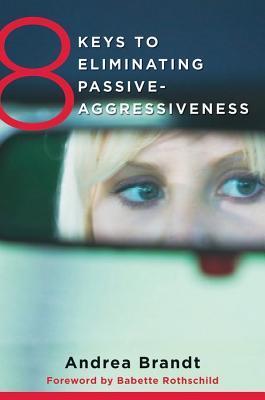
Guidance for dealing with this common and frustrating form of behavior. Many people often say “yes” to something when they’d rather say “no.” They offer cooperation through words but follow up with how they really feel―in actions that contradict their words. That’s passive-aggression. At its heart, passive-aggression is about being untrue to oneself, which makes it impossible to have a clean relationship with others. Passive-aggression as a communication method doesn’t make someone “bad.” It is simply a strategy learned in childhood as a coping mechanism, a hard-to-break habit. Changing passive-aggressive behavior requires knowledge, tools, and practice, as outlined here.
The book offers effective methods for transforming passive-aggression into healthy assertiveness to communicate in constructive ways through eight keys: Recognize Your Hidden Anger; Reconnect Your Emotions to Your Thoughts; Listen to Your Body; Set Healthy Boundaries; Communicate Assertively; Interact Using Mindfulness; Disable the Enabler; and Problem-Solve for Better Outcomes. Hands-on exercises are featured, enabling readers to better understand themselves.
Dr. Andrea Brandt is a marriage and family therapist located in Santa Monica California. Andrea brings over 35 years of clinical experience to the role of individual family therapist, couples counseling, group therapy and anger management classes.
Dr. Brandt is a recognized expert in treating a full range of emotional issues, including anger & aggression, anxiety & trauma, aging issues, relationships, work-life balance, workplace, and women's issues.
In her workshops, patient sessions and presentations, Dr. Brandt reveals positive paths to emotional health that teach you how to reinvent and empower yourself. She emphasizes the mind-body-heart connection as a key to mental, physical and emotional wellness.
Upon pioneering a new approach to emotional healing, Dr. Brandt directed her attention to the study of anger management and conflict resolution. In her book 8 Keys to Eliminating Passive-Aggressiveness, Dr. Brandt examines strategies for overcoming a common yet debilitating response mechanism. In her second book, Mindful Anger: a pathway to emotional freedom, Dr. Brandt explores methods to better understand and manage the powerful emotion of anger.
In her third book, Mindful Aging: Embracing Your Life After 50 to Find Fulfillment, Purpose, and Joy, Dr. Brandt challenges you to throw out the old stereotypes about aging, to look at the powerful and inspiring new evidence, and to open yourself to the very real possibilities that exist for you right now. Release Date: October 10, 2017
The "8 Keys to Eliminating Passive-Aggressiveness" is an easy enough read for anyone interested in understanding the underlying characteristic of how passive-aggressiveness kicks in. Typically starting in childhood, passive-aggressiveness is the mask that we wear to cover all of our unacceptable emotions. This books does a very good job of defining and describing the "whys" of passive-aggressiveness.
Where this book falls short for me, is in the tactics with dealing with passive aggressiveness. Of the 8 Keys described in this books, there are three that really standout as great solutions to driving away passive-aggressiveness:
Because passive-aggressiveness often stems from a fear of conflict and a fear of expressing overt anger, Keys 1 and 6 are spot on. By adding Key 5, you will ensure that there are no miscommunication in your efforts to hit anger and conflict head on. The remaining Keys described in this book are too generic and thus ineffective with dealing with passive-aggressiveness head on.
Overall, this is a decent book that describes some tactics to help you and the people you deal with the struggles of passive-aggressiveness. It falls short though in describing 8 true tactics for driving away passive-aggressiveness.
The fact that I hated this book on some levels showed how much it worked :D It doesn't teach a lot new things but it insists on the reader to reflect his actions and reactions and search for the reason of this behavior. And that is what I take away from this, not to react blindly according to my anger but reflect why I'm angry and if it really has something to do with the respective person.
Really great book to help with struggling relationships. It helped me find more empathy and mindfulness to break old patterns in lieu of hopeless, constant anger. Understanding that the roots of our behaviors stem from childhood is a key step in that journey that this book lays out really well.
Un 6 i gràcies. Al principi quan el llegeixes potser t'ajuda a adonar-te de certs patrons que segueixes i que influeixen a les teves relacions, però cap a la segona meitat del llibre es nota que l'autora es queda una mica sense idees i comença a divagar i donar consells súper genèrics que, com a mínim a mi, m'han semblat una merda. A més li dóna massa voltes a tot. No cal que m'expliquis el mateix concepte 20 vegades i amb 20 exemples inventats per entendre-ho. A més, la majoria dels exemples són situacions extremadament específiques dissenyades per transmetre el missatge que interessa en cada moment sense cap mena de perspectiva.
Una última cosa: arriba un punt en que l'editor/a del llibre deixa d'intentar que estigui ben editat i passa de tot. Paraules i lletres en cursiva o negreta sense cap mena de sentit, traduccions tretes de Google translate, i en un punt et recomana que peguis i amenacis físicament a l'altra persona quan hi ha una discussió o debat.(assumeixo que anava a la columna de "don't" però la van posar a "do")
He hagut de forçar-me a llegir les últimes 100-150 pàgines perquè no podia més amb tanta tonteria. El principi, però, és molt més útil i està ben escrit; es nota que el concepte estava molt clar al començar el llibre i que en algun moment se li van acabar les ganes o les idees.
In the landscape of self-help and psychological recovery literature, Dr. Andrea Brandt’s *8 Keys to Eliminating Passive-Aggressiveness* stands out not as a rigid lecture, but as an essential somatic road map. For the highly analytical, hyper-vigilant reader, the book acts as an empathetic mirror, exposing the exhaustive defense mechanisms built to navigate a world where authentic expression once felt dangerous. Brandt cuts straight through the superficial definitions of passive-aggressiveness—often reduced to mere snark or intentional stubbornness—and dives into its true origin: a structural split between a compliant "False Self" engineered for survival and a repressed "True Self" starving for visibility. What makes Brandt’s work uniquely resonant is her deep exploration of the "bunker" of intellectualization. For those who excel at psychological evaluation, the default defense mechanism against an emotional slight is rarely an overt outburst. Instead, it is a sophisticated, subterranean counter-attack—instantly diagnosing a peer’s complex headspace, hidden motives, or erratic behavior to protect the ego from vulnerability. Brandt gently yet firmly calls a timeout on this cognitive bypass, demonstrating that constructing a brilliant mental trial against others is simply an elaborate escape from the uncomfortable, raw physical sensation of being dismissed or hurt in the present moment. The architecture of the book hits its stride in Chapter 7, where Brandt introduces the body as the ultimate, honest ledger of human experience. While the mind can easily craft a polite, compliant mask to keep the peace, our physiology holds the unvarnished truth. The anger, grief, and fear we refuse to consciously voice manifest biologically as a clenched jaw, a knot in the stomach, or restricted breathing. Brandt’s profound insight is that these are not random physical annoyances; they are the somatic voice of the True Self shouting through the nervous system that a boundary has been breached. One cannot think or analyze their way out of a lifetime of suppressed emotion—one must feel their way out. To discharge this stored reservoir of historic grief, the book provides vital, proactive tools for emotional evacuation outside of our daily relationships. Exercises like writing completely unfiltered, un-sent letters or engaging in physical catharsis allow the chaotic, mobilized energy of anger to clear the body safely. This intentional practice ensures that when we return to the social sphere, our communication is clean, grounded, and free from the distortion of childhood ghosts. By systematically draining the internal container, minor daily friction stops dropping into an overflowing basin of past trauma, preventing minor triggers from causing catastrophic internal retreats. Moving into conversational mechanics, Brandt deconstructs the natural flow of human connection through the Idea-Comment-Evaluation (ICE) loop. In a healthy dynamic, this loop is fluid and collaborative, but for a vigilant person conditioned to believe that mistakes mean a total removal of warmth, the "Evaluation" phase feels like a minefield. The book brilliant exposes how a casual alternative suggestion from a peer is instantly intercepted by ancient scripts and translated as a hostile verdict on one's inherent value. Brandt coaches the reader to drop the internal scorecard, separate present-day data from historical drama, and view an alternative perspective as simple data rather than a tactical strike. To rebuild broken conversational loops, Brandt presents her signature collaborative tool: the Solving-Circle strategy. This framework flattens relational hierarchies by forcing both participants into an egalitarian space where the relationship is the priority and the problem is viewed side-by-side. Under strict boundaries—such as active listening without immediate defense, stripping away the psychological story to stick strictly to "I" statements, and separating emotional validation from final brainstorming—the circle removes the fundamental fear of conflict. It proves to the protective False Self that voicing a vulnerable, raw reality will not cause an abandonment crisis, bringing hidden ledgers directly into the light where they instantly lose their power. The book reaches a poignant crescendo when addressing the heavy toll of childhood conditioning on authenticity. When a child's natural radiance, curiosity, or vivid vocabulary is met with parental resentment rather than pride, a devastating survival rule is born: *"My mind makes people uncomfortable; I must play small to be safe."* Brandt accurately traces how this social cue forces an adult to systematically blunt their intelligence, shrink their vocabulary, and use vague phrasing so they never risk standing out or triggering someone else's discomfort. The book serves as a reclamation of that stolen agency, challenging the reader to step out of the fog of ambiguity and trust that their authentic mind has a right to take up space. This defense mechanism is further unmasked in Chapter 9's deep dive into the absolute bodyguard of the False Self: defensiveness. Brandt notes that a defensive mind cannot process simple data because it constantly reacts as if it is under siege. Whether through a compliant wall of false agreement or over-explaining to litigate the objective facts, defensiveness completely isolates us from genuine intimacy. By teaching readers to utilize somatic awareness to spot the physical "freeze" of a defensive spike, Brandt provides a practical method to lower the shield, drop the sophisticated counter-narrative, and choose the courageous vulnerability of the present moment. In its final sections, the text zeroes in on ambiguity as the ultimate playground for passive-aggressive behavior. Ambiguity is the art of leaving just enough gray area to maintain total plausible deniability, allowing the underground self to strike from the shadows and instantly backpedal if confronted. While this vagueness offers a temporary illusion of safety, Brandt highlights its immense relationship cost: it blankets connection in a toxic fog, forcing loved ones to become exhausting detectives decoding mixed signals. Replacing this defensive fog with radical, crisp precision is presented not as an aggressive act, but as an act of profound respect for oneself and the relationship. The ultimate breakthrough occurs in Chapter 10, where Brandt confronts the exhausting obsession with "being good" and the terror of emotional neediness. For the hyper-vigilant, a lifetime of performing perfection and acting entirely "low-maintenance" is exposed as a calculated strategy to control external validation while the True Self starves. Brandt reminds us that having emotional needs does not make an adult needy—it makes them human. True healing requires tolerating the temporary discomfort of other people's disapproval, shifting our focus from hunting for external gold stars, and anchoring our sovereignty firmly in our own inherent, unshakeable value. To sustain this newfound freedom, Brandt introduces the systems theory metaphor of "changing the dance." She delivers an empowering truth: relationships are deeply grooved routines, but you do not need the other person's permission or cooperation to alter the steps. The moment you execute a somatic pause, refuse the compliant mask, and deliver radical clarity from your own "I" reality, the system is permanently disrupted. The other person is physically unable to continue their old routine and is forced to adjust to your new, authentic rhythm, transforming the relationship dynamic from a tense shadow war to a space of genuine ease. Ultimately, *8 Keys to Eliminating Passive-Aggressiveness* culminates in a beautiful masterclass on healthy detachment. True detachment is not a cold, passive-aggressive wall or a tactical disappearance; it is the calm, somatic realization that other people’s reactions, limitations, and moods belong entirely to them. By using an evocative sensory anchor—much like dropping into the rich, grounding warmth of a luxurious amber and rose fragrance—the reader learns to stay tethered to the absolute physical reality of the room rather than past emotional ghosts. Dr. Andrea Brandt has written an indispensable, liberating guide that allows the analytical mind to finally put down the clipboard, step out of the fortress of intellectualization, and walk boldly into the light as a visible, integrated, and sovereign adult.
Easy to read, easy to follow. My therapist gave me this book so I’d have more insight on the relationships (friendly, romantic, familial, and professional) in my life and how to deal with them. It definitely hit the nail on the head more than a few times (some of the situational stories she shares were hard for me to read because they were so familiar). I’ve been able to implement some of her tips and have them actually work out. Others are proving a lot more tricky. Thankfully she does not shame people for their failures, but rather encourages them to step back, examine things, and try again.
Really good strategies for identifying unhelpful behaviors. I listened to the audiobook, so some of the chapters (like the one where she lists all of the emotion words that one might be feeling- and some of the journaling exercises) didn’t translate well into that medium, but regardless, it gave me a good tool to explore my own unhelpful patterns and ways to respond to passive aggression in others.
I need to start accepting that US-written self-help books annoy the f out of me, even when I agree with their basic premise. The fake dialogues and the rah-rah motivating style both rub me in a very wrong way. A perfectly decent book, but I just couldn't get past my irritation.
Attiecības kā "pasīvi agresīvs tango". Var arī šādi: Pasīvi. Agresīvs. Tango. Veru muti vaļā, lai kaut ko teiktu, un pēc dažiem vārdiem jau saprotu, ka radu Tango. Grāmata instrukcija. Acu atvērējs.
I received this book as a First Reads Giveaway. I apologize for the review being so late- I'd misplaced the book (wound up on a shelf with books I've already read) and didn't find it until I was reorganizing recently.
This book was alright. It read somewhat like a really long brochure you might pick up in a psychologist's office, but it was very readable and thorough in explaining the jargon with easily understood definitions illustrated with examples. Another positive- the advice on how to be more assertive and deal with anger is clearly laid out, even using charts when applicable, so if a person who is not usually a reader was looking for this information, they could skim the book and find techniques that may help them.
Some aspects of the book that kept me from giving it a higher rating: I found it difficult to get all the way through because it is written in a very formulaic, repetitive manner. Also, having taken a few psychology and developmental psychology classes, I feel as though the author over-simplifies situations and has perhaps an overly broad definition of passive-aggressive behavior. It seemed that pretty much any negative interaction or interaction between two people where one walks away feeling anything but positive could be called passive-aggressive in some way, and I find it hard to believe that so many very different situations can all be boiled down to one behavioral problem.
There are chapters and excerpts from this book that I could recommend as useful for psychology students who need a reference on this type of behavior, or for professors looking for excellent example of passive-aggression.
Great book. Straightforward, practical, and surprisingly relatable.
This isn’t just about spotting passive-aggressive behaviour in others (though yeah, we’ve all seen it). It also forces you to reflect on your own habits: the subtle ways frustration, avoidance, or indirectness show up in your own communication. I didn’t expect it to hit so personally, but a few chapters definitely made me pause and think.
The advice is clear and usable, with exercises that actually make sense - not just theory. It’s a good mix of calling things out while still being compassionate.
Worth a read whether you’re dealing with someone like this, or just trying to be a bit more honest and direct in your own life.
Very interesting book for me to read--the author hit the note "change" so many times in the book which she goes on too describe as the will to change from the tango to another dance. Aggressive behavior, passive as she states can be changed over time, only if we want it too. Here stories, her exercises, her key words and her thought process in helping others over cone this was truly felt--I am not a doctor, but she spoke to me in a language I could understand- no MD big terminology was used--I learned a ton from this book, and so would any reader looking to find answers, understanding or solutions on this topic.
This book is written in a way that even my 19 yr old Granddaughter can read and implement, if she chooses. So I sent her a copy along with a nice new journal to record her journey in understanding and controlling her anger. It was obvious to me she had an anger management behavior problem that she had developed over time from both her mother and father. It is time to break the cycle and I hope she finds her way out of those behaviors. It makes life so much easier and more enjoyable.
Thanks Andrea for a great book
If you'd like to read my full review click on the shortlink below.
This book is a tremendously pragmatic approach to recognizing Passive Aggressiveness and getting control of it for good. Filled with anecdotal behavioral examples, it continually educates the reader on all the different kinds of passive aggressiveness, both in one's self and in others.
I was reading it, thinking "that happened to me just yesterday" or, "that's what she meant." Of course, living in Los Angeles, I have those interactions all day long.
Seriously, if you want to get a grip on the communications within your life, this book is well worth it.
I really enjoyed this book due to its kind and helpful tone as well as its applicable content. It may seem redundant at times, but I felt that this was intentional. For some readers the repetition is comforting--especially if this is a sensitive topic fill of new, yet very needed, information regarding passive-aggressive behavior.
I read this to expand my knowledge about psychology treatments, and it was interesting, but that's definitely not the area I'm most interested in. This is a good book, and I think almost anybody would be able to get useful stuff out of it. In fact, its clarity merely helped me realize this isn't the focus I want to pursue. A great resource, however.
I won this book via a giveaway. I found this book to be helpful in detecting my own passive aggressive ways. I look forward to using the necessary keys to make my life easier and less stressful. At times book was a little dense, but it was a good read overall.
Most importantly, if you or a loved one suffers from passive-aggressiveness the suffering doesn't have to be prolonged. The rewards for being able to be wholly human and have good relationships are worth it.