CATHARINE Roehrig’s book “Fun with Hieroglyphs” takes the reader 5,000 years back to the northeast corner of Africa where the people living along the Nile River began to set their language down in writing. The cities in this region consisted of Aswan, Luxor, Cairo and Rashid aka Rosetta. The Egyptians used symbols, many of which resembled pictures of birds, snakes, baskets, pots, etc., to write their language.
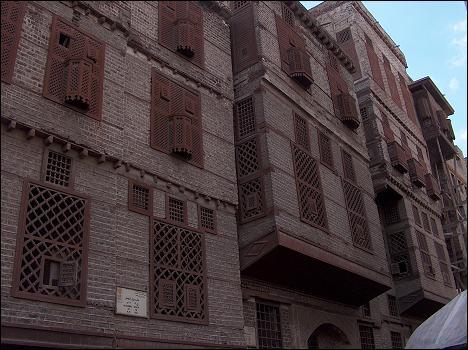
The Houses of Rosetta.
Gradually the symbols came to represent sounds. The symbols/pictures became known as hieroglyphs, or “sacred inscriptions”, because they were mostly written on the wall of temples. With the passage of time, the Egyptians started writing on a type of paper called papyrus which, like the ones we use, was made from tree. They continued to use hieroglyphic writing for more than 3,500 years, until about 400 A.D. After that, the language was written in the Greek alphabet with several extra letters added for Egyptian sounds that did not exist in Greek. This late form of Egyptian is called Coptic. Eventually, Coptic was replaced by Arabic, the language spoken in Egypt today. Since there was no one left who knew how to read or write, or speak the ancient language, it died out. Only the hieroglyphs were left to tell us that the language ever existed. Since no one could tell them what the hieroglyphs meant, they made up fantastic translations. They thought hieroglyphs recorded magic spells and secret religious practices. “For more than 1,000 years, travellers to Egypt were fascinated by the mysterious symbols they saw carved on the walls of temples and tombs.”
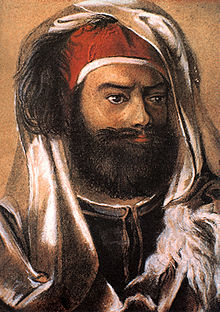
image: Jean-Francois Champollion depicted in Egyptian dress and with a beard in a pastel drawing made in Florence at the return from the expedition by Giuseppe Angelelli
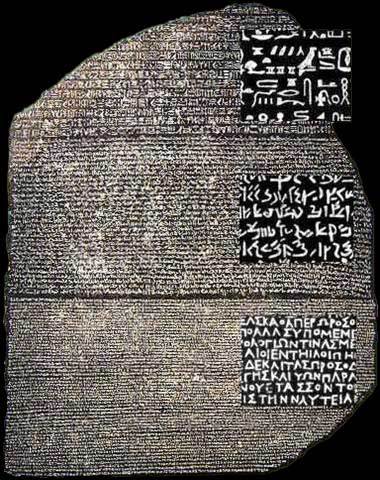
In 1799, when Napolean Bonaparte invaded Egypt, a group of Frenchmen discovered a stela, dated precisely to March 27, 196 B.C., called the Rosetta Stone. The stone was basalt whose top was written in hieroglyphs, the middle script was Demotic and the bottom section was in ancient Greek. This stone helped in deciphering hieroglyphs. However, it would take 23 more years to do so, making a young Frenchman, Jean-Francois Champollion, the first person in modern times to read ancient Egyptian.
The Rosetta Stone.
Hieroglyphic writing is more than picture writing. Twenty-four hieroglyphs represent the single sounds found in the ancient Egyptian language. These hieroglyphs are used like the letters in our alphabet. For example, the hieroglyph with the picture of an owl stands for the sound m, not for the word owl. The hieroglyph for a basket stands for the sound k, not for the word basket. The Egyptians couldn’t discern between an f and a v, but f probably sounded closest to the letter and is represented by the symbol of a horned viper. In the same way, they couldn’t discern between an l and an r, but l probably sounded closest to the letter and is represented by the symbol of an open mouth. There are also hieroglyphs like the Arabic letter that sounds like “ain”, a sound made at the back of the throat, and the Arabic letter ‘qaf’ , a q sound made at the back of the throat. Arabic has also another ‘kaf’, which sounds pretty much like the English word calf. Only people who can speak/read Arabic or Urdu can differentiate between the two. Then there is a symbol for guttural ch, found in the Scottish word loch or the Arabic letter “khay”, yet another sound that is made at the back of the throat. Then there is another symbol for ch, which is like the one found in German. The hieroglyph representing door/bolt sounds like the first letter of zebra and Xerox, and like the s in please, pieces and boys. Determinatives are used to give a clue. Written with a stroke below the symbol of an arm (or any other symbol) it represents singular, meaning an arm. With three strokes on one side of the arm, it means arms (plural always carries three strokes). Determinants have no sound value; they just give a clue to the meaning of the word, whether singular or plural or male or female. More than 6,000 hieroglyphs have been identified. Only about 700 were used at one time, and only 250 of these were used frequently. Hieroglyphs representing two sounds are called bi-literals; those representing three sounds are called tri-literals.
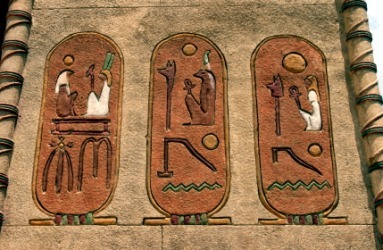
image: A trio of coloured cartouches.
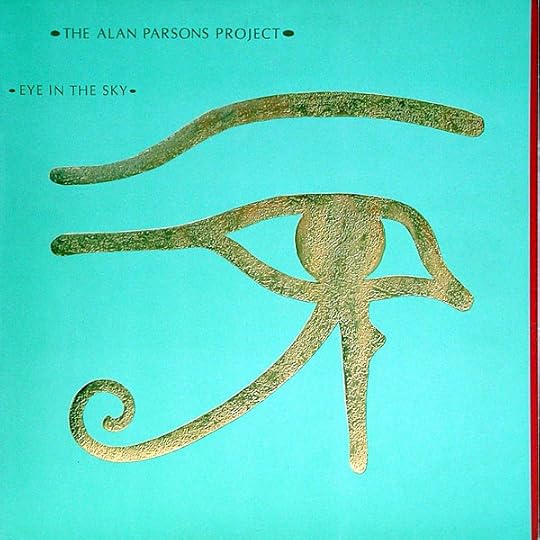
Only the names of kings and queens were written inside a cartouche, which resembled two closely-clustered ropes tied at one end. So as soon as a person saw a cartouche engraved somewhere, he could easily infer that it carried the name of somebody royal. “The Egyptians also used some hieroglyphs as amulets, or good luck charms, the way we might use a rabbit’s foot today. For example, the wedjat, eye, or eye of “Horus”, is a charm for healing that appears in Egyptian art and jewelry. The god Horus is usually shown as a man with a falcon’s head. The lines you see coming down from the wedjat-eye are the markings on a falcon’s face.”
image: The Alan Parsons Project's Eye In The Sky with the wedjat on its album cover (1982).
Apparently some very cool kid in my neighborhood just outgrew a "crazy about ancient Egypt" phase and is donating their old Egypt stuff to the local thrift store. As a result, I recently acquired this nifty stamp set and booklet on Egyptian hieroglyphs. (And also a make-your-own-papyrus kit, which is totally separate, but also very interesting.)
Because Fun With Hieroglyphs is small, slim, and written for children, I didn't expect to learn a great deal of new or complicated information about ancient Egyptian writing. But once I started reading it, I was completely absorbed for twenty-five minutes. Following-my-roommate-around-the-apartment, starting-all-my-sentences-with-"Did-you-know..." kind of absorbed. I didn't even know how much I didn't know about ancient Egyptian writing! I don't know if the target audience (children) would find the technical details in the book interesting unless they are really into languages, but I thought it was neat and informative.
Now I want to stamp hieroglyphs on everything. Happily, holiday card season approaches . . .
I love interactive books and Egyptian history, so this book seemed right up my ally. Unfortunately, it fell a little flat on the promise of a good read. After taking five minutes to figure out how to get it open and then dumping the stamps everywhere and then not being able to get it all back together, I was feeling a little too like all the king's horses and all the king's men--frustrated.
The book itself was really interesting, but not for the age group it is marketed for. While the packaging says for 8 and up, it is very text heavy and a little too fact based to really go over well with this age group. Just give them the stamps without the book and they'll go crazy.
A little too pricey, a little too much text and a little too much packaging. For that price, it could at least come with some parchment so the kids don't stamp all over the book. I'd recommend just getting Egyptology or Ancient Egypt (DK Pockets) instead.
My 7 year old is obsessed with these stamps! What I love is the top of the stamp has the symbol in addition to the English version of the word and letter it stands for. She's been writing letters to her cousin in hieroglyphics and sending them with a key so he can decode it :)
Purchased for a homeschool unit on Ancient Egypt. We aren't officially starting the unit until June, but the stamps have already gotten lots of use. A booklet of activity ideas is included. Super fun!
A lot of good info here. It even includes numbers and derivatives. The pictures are a bit dark making it hard to see but this was a fun read. Another must for any fan of Egyptology!