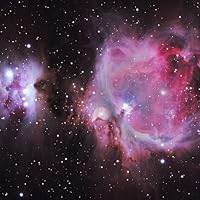
An essential reference tool for both beginning and veteran sky observers. Drawing on decades of stargazing experience, the authors suggest what equipment to buy and what to avoid, describe observing techniques, and explain how to hunt down the most interesting celestial objects. Each chapter is illustrated with the latest, breathtaking astrophotography.
This companion is broken down into three parts: "Equipment for Backyard Astronomy", "Observing the Celestial Panorama" and "Astrophotography". It focuses on the practical aspects of astronomy.
Among many astronomy subjects, the authors offer advice on how to contend with light pollution, and how to take successful and impressive color photographs of galaxies and nebulas (with or without a telescope). Each chapter is written in clear, jargon-free yet detailed.
Terence Dickinson is a prolific science writer specializing in astronomy. More than one million copies of his 14 books are in print in five languages. His best-known book, NightWatch: A Practical Guide to Viewing the Universe, is widely regarded as the essential guidebook for beginning stargazers. NightWatch, first published in 1983, now has over 600,000 copies in print, making it the top-selling stargazing guide in the world during the past 20 years. Each new edition has outsold the previous one because of extensive revisions and the addition of new material.
For those that wish become a backyard astronomer this is the reference users guide it has advices and recomendations on all the hardware and software to use :optical tubes of diferent kinds ,the best oculars ,montures and indications of how to observe ,where and when;it is beautifully and reallistically illustrated. A gem
I read the third edition of Terence Dickinson & Alan Dyer's book of The Backyard Astronomer's Guide. It is a very methodical presentation of the steps a beginner in astronomy takes to purchases the right equipment to accomplish what they want in the hobby. There is a great primer to astronomy from our earth and it's unique rotation around the sun to the Milky Way, Nebulas, Star Clusters, Binary Stars, deep space galaxies and other skyward objects.
Each topic is handled with care to ensure the beginner doesn't get lost in the content. Intermediate hobbyists will benefit from this guide as well.
Two key items make this a great book for stargazers; (1) The chapters are filled with diagrams and amazing photographs of the sky objects in discussion, each taken by the author themselves; (2) Both authors have a wealth of experience and knowledge on this complex subject matter and the pages are filled with their personal suggestions and recommendations on how to successfully enjoy this fascinating hobby.
I would certainly recommend this book to anyone who is wondering if backyard astronomy is form them!
Got the 3rd edition from the library and was sucked in so much I went and got the 4th for myself. It's a huge, thick, hardcover "textbook" style reference that you're not taking out in the field. But, every section I've dipped in to has completely captured me and it's very easy and fun to read through.
There's a lot of improvement in 4e: it is reorganized to make more sense to the amateur—starting with naked eye sky orientation, then moving to binoculars, before getting into telescopes at all. So right from the start you're out there looking and learning. (3e starts with equipment, which means you go through 100 pages before even talking about the sky). 4e also has this amazing "moon tour", which walks through each phase of the moon and what features you can spot. Since the moon is so easy to view, this is immediately gratifying and I've already been able to start spotting and identifying the big maria and craters. 4e is also updated for dates of celestial events and equipment prices.
What a great collection of everything you need to know to be an active astronomer. If you are thinking of buying a telescope, then this is your resource. Categories of price range and abilities. Table of Contents:
Introduction 1. Amateur Astronomy Comes of Age Part One: Choosing Equipment for the Backyard Astronomer
2. Binoculars for the Beginner and Serious Observer 3. Telescopes for Recreational Astronomy 4. Essential Accessories: Eyepieces and Filters 5. The Backyard Guide 'Accessory Catalog' 6. Using your New Telescope
Part Two: Observing the Celestial Panorama
7. The Naked Eye Sky 8. Observing Conditions: Your Site and Light Pollution 9. Observing the Moon, Sun and Comets 10. Observing the Planets 11. Finding Your Way Around the Sky 12. Exploring the Deep Sky
Part Three: Advanced Tips and Techniques
13. Digital Astrophotography 14. High-Tech Astronomy 15. Polar Alignment, Collimation and Cleaning
"There is something deeply compelling about the starry night sky. Those fragile flickering points of light in the blackness beckon to the inquisitive mind." This is an essential book for a beginner astronomer. I've learned so much about from their reviews on telescope models, eye pieces, and other technical pieces of advice I would've struggled to find anywhere else. I've realized that its more than just planets to view, but also aurora borealis, comets, supernovae. More importantly, the book embodies the spirit of fun and adventure: the central element of both amateur and hardcore astronomers alike.
Many other reviewers have given high marks to this book. I, too, would sing its praise. The only other book on Astronomy to which I can compare the present work, is "Night Watch", which was also authored by Dickinson, one of the co-authors of "Guide". That was good. This is better. One of the more important things I learned from both of these books is that one can enjoy the hobby a great deal without necessarily owning a telescope. Much in the heavens can be enjoyed with the naked eye or with binoculars. Recommended!
While the 3rd Edition that I read is somewhat outdated in 2025, especially in the astrophotography chapters, the rest of this book is a treasure trove of information for the new amateur astronomer, or for anyone considering getting involved in this fascinating hobby. I cannot recommend it more highly.
I read the second edition of this guide nearly twenty years ago. It was the best book of its type then and it’s only gotten better! Sky & Telescope blurbs “If you were to own only one book on amateur astronomy this is it.” Highly recommended for sky lovers everywhere.
There is a new 2021 edition of this book and it is AWESOME. Highly recommended for anyone who is interested in learning more about what you are seeing when you gaze at the night sky. Actually, there's info about the daytime sky as well. :) Such a great resource.
A great book to borrow from the library to get information on all areas of astronomy - hardware, software, star hopping, constellations, photography. An indispensable reference for the beginning amateur astronomer.
An excellently written resource that anyone thinking about buying a telescope should read. Well organized, very well edited, and full of great pictures and charts.
This book holds vast information for backyard astronomers who wish to know more about the different types of telescope and how they work, introduction to an assortment of eyepieces, how to organise star parties ect. This great book offers many tips and essential skills needed to enjoy the night sky, it touches on basic subjects to the intermediate subjects of visual and photographic astronomy. I would definitely recommend this book to any beginner who wishes to purchase a telescope or learn the basics, you can do your research using this treasure and make an informed decision about your astronomy purchases.
I loved this book. The best astronomy guide I've read to date. And, there's a fantastic website that supplements the print edition with new material. I highly recommend the 3rd edition and plan to add it to my permanent collection of astronomy reference books.
I read the first edition of this book almost two decades ago and enjoyed it so my I decided to read this newer third edition as a way to return to astronomy (and take up astrophotography). It remains an excellent reference and enjoyable read and the accompanying website does a very good job of keeping the information timely. Highly recommended!
Quickly read, yet thorough and substantially informative. What I lamentably failed to find, however, was a practical, comprehensive star map. Maybe I wasn't looking closely enough. Either way, this book will surely be helpful to any amateur astronomer.
Fantastic. Lots of super-useful information. Read nearly all of it but the appendices. The actual stuff on how objects move in the sky, etc is much better presented in Ray's "The Stars: A New Way to See Them", but for the rest of the material this book is excellent.
I am so excited! My telescope came with almost no directions or clues and this book has what looks to be the same model I have with directions on how to get it to align properly.
There is a lot of information in this book. A lot of this is available on various Web sites but this book pulls all together in one place. Good place to start with when getting into the hobby.
one very beautiful astronomy books ever. great information and photography. this book has inspired both poems and artwork. I am currently reading it again, that is how good it is!