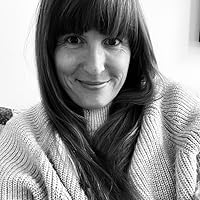
Day-to-day leisurely living on the author's Connecticut farm. "Gladys Taber, beloved author of The Stillmeadow books, columnist for "Ladies Home Journal" and "Family Circle", was born in Colorado Springs on April 12, 1899, and spent most of her early years moving because of her father's work as a mining engineer. She lived in New Mexico, California, Illinois, Wisconsin, and spent time on her grandfather's farm in Massachusetts. Later, she received her bachelor's degree from Wellesley and her M.A. from Lawrence. Marriage and a baby interrupted her academic career, then for more than 20 years, she lived in her vintage 1690 Southbury, Connecticut farmhouse, having commuted to New York part of the time to teach creative writing at Columbia University. She passed away on March 11, 1980, leaving 50 published books as her legacy."
A prolific author whose output includes plays, essays, memoirs and fiction, Gladys Taber (1899 – 1980) is perhaps best recalled for a series of books and columns about her life at Stillmeadow, a 17th-century farmhouse in Southbury, Connecticut.
Born Gladys Bagg on April 12, 1899 in Colorado Springs, Colorado, she was the middle child and only one to survive to adulthood. Her parents were Rufus Mather Bagg, who could trace his ancestry back to Cotton Mather, and the former Grace Sibyl Raybold. An older sister, Majel, had died at the age of six months while a younger brother Walter died at 15 months. During her childhood, she moved frequently as her father accepted various teaching posts until they finally settled in Appleton, Wisconsin. Gladys graduated from Appleton High School and enrolled at Wellesley College, receiving her bachelor’s degree in 1920. She returned to her hometown and earned a master’s in 1921 from Lawrence College, where her father was on faculty. The following year, she married Frank Albion Taber, Jr., giving birth to their daughter on July 7, 1923.
Mrs. Taber taught English at Lawrence College, Randolph Macon Women’s College in Lynchburg, Virginia, and at Columbia University, where she did postgraduate studies. She began her literary career with a play, Lady of the Moon (Penn), in 1928, and followed with a book of verse, Lyonesse (Bozart) in 1929. Taber won attention for her first humorous novel, Late Climbs the Sun (Coward, 1934). She went on to write several other novels and short story collections, including Tomorrow May Be Fair ( Coward, 1935), A Star to Steer By (Macrae, 1938) and This Is for Always (Macrae, 1938). In the late 1930s, Taber joined the staff of the Ladies’ Home Journal and began to contribute the column “Diary of Domesticity.”
By this time, she had separated from her husband and was living at Stillmeadow, a farmhouse built in 1690 in Southbury, Connecticut, sharing the house with Eleanor Sanford Mayer, a childhood friend who was often mistakenly identified as her sister. Beginning with Harvest at Stillmeadow (Little, Brown, 1940), Taber wrote a series of books about her simple life in New England that possessed homespun wisdom dolled out with earthy humor and an appreciation for the small things. She published more than 20 books related to Stillmeadow, including several cookbooks.
In 1959, she moved from Ladies’ Home Journal to Family Circle, contributing the “Butternut Wisdom” column until her retirement in 1967. In 1960, her companion, Eleanor, died and Taber decided to abandon life at Stillmeadow. Having spent some summers on Cape Cod in Massachusetts, she decided to relocate to the town of Orleans where she would live out the remainder of her days. While a resident of Orleans, Taber contributed “Still Cove Sketches” to the Cape Cod Oracle . Her final book, published posthumously, was Still Cove Journal (Lippincott, 1981).
Gladys Taber had divorced her husband in 1946 and he later passed away in October 1964. She died on March 11, 1980 in Cape Cod Hospital in Hyannis, Massachusetts at the age of 80.
A lovely walk through the seasons at Stillmeadow with Gladys-she writes so well of her everyday life in the country. This book belonged to my grandmother gifted to her by my aunt. Both my aunt and my mother loved Gladys and I remember them talking endlessly about Gladys, my aunt even had a red Irish setter like Holly.
Where has this been all my life? I found this darling book in a booksale and bought it because I liked the cover, then I discover it is seperated into month, start reading it and fell in love with the author. This is the most incredible, slice of life little book. It's like sitting with your Granny and sharing her stories. This made me go on an instant search for Gladys and all of her books. I have found a new favorite author.
Lovely old-fashioned ideas intermingled with detailed descriptions of life in an old New England farmhouse. I could have done without all the descriptions of the many dogs, but otherwise a perfect fit for this season of my reading life
These gentle essays were written and published in the 1950s. Gladys Taber writes about life on her Connecticut farm with her friend, Jill, and all of their many dogs. This book starts in spring, in April, and moves through the year, ending with the end of winter in March. Taber gives an overall picture of how life on the farm changes with every month of the year, with some reminisces thrown in, and also connects life in her corner of the world to the world at large.
Some of the attitudes are a little dated (at one point I recall her saying she's not a feminist--I'll bet she wouldn't say that if she were alive and writing today), but there's nothing too at odds with today's sensibilities, and many of her concerns about world events are, unfortunately, timeless. She does seem to romanticize the past as being simpler and less busy, which of course is something people still do today!
I read this slowly over the course of the year. I started it last April, and read each month in her book in tandem with my year, ending today with March. This book isn't captivating enough for me to read it all at once, but I enjoyed connecting my seasons with hers.
This is how the book ends. I thought it was a good example of the timelessness of some aspects of the book (this excerpt seems strong on religion--the book is not religious other than occasional mentions of prayer):
"Seasons flow one into the other, today moves inexorably toward tomorrow and we cannot keep even the most enchanted hour. World events shape different unknown destinies for mankind. Nevertheless these abide: love, friendship, faith in God. These armor us against the transitory aspects of life on this planet. And so, as I look toward summer, my heart is thankful. And may God bless my neighbors all over the world, I pray, as I open the picket gate."
The perfect thing to read before bedtime to lull you to peaceful slumber and good dreams..I can pick it up and open to any page and just sink into the world of Stillmeadow..she paints a wonderful word-picture of the farm, the trees, the flowers, the dogs, the neighbors, the old farmhouse..it's just the kind of cozy world I love to imagine myself in as in a warm and friendly place in my mind..I'm so thankful to have this one as part of my own home library, and I'd like to collect more of Gladys Taber's books in the future.
Mrs. Taber's worries in 1959 are, surprisingly, true for today: our need for "busy-ness", worries about the possible aggressive actions of other countries, the world's focus on change. But the charm of this book is Taber's quiet examination of the little things that make up her life at Stillmeadow Farm.
Way back when I read this book - I can't even remember when - it meant a lot to me. I found it very soothing and full of gentle good humor. It didn't hurt that Gladys had Cocker Spaniels and that they were a big part of her story. I loved Cocker Spaniels in those days!
I'm not sure it would mean as much to me today, but I still have fond memories of it.
Stillmeadow Sampler tells the readers of what it is like to live in the four seasons at Stillmeadow. Ms. Taber writes in detail about most subjects. It is so very pleasant to know how it was living in the 50's, how life has changed. Gladys truly loved the free and simple things in life. I admire her attitude about people, places and things.
I first learned of the joys of reading Gladys Taber from another author and illustrator, Susan Branch . My admiration of her told me if she enjoyed Gladys, so would I. Each short vignette takes me to a place that no longer exists in our country, regrettably. Sweet, confident women keeping a small country home with dogs, apple trees and an evening walks - what could be nicer?
This is my grandmother's favorite author. It was really boring at first then I made up my mind t not to expect anything interesting to happen. It was nice and peceful about her everyday life and her "roommate" Jill.
Its amazing that concerns of the 50's still ring true today. This book is an enjoyable trip to the country, with all the smells and sounds of country life and the chaos of dogs all around. I have 2 more Stillwater books yet to read and I can't wait to get started.
I read one of Gladys Taber's books about every 10 years. I enjoy this one because it follows her life through the seasons on her small Connecticut farm. Although I don't agree with all of her musings, it does remind me of a slower pace of life.
There are some delightful descriptions of life in New England through the various seasons. The imagery is lovely and the "poetry" of these prose sections is delightful. Not really any plot, but a wonderful picture painted with words.
This is such a lovely book. It gives a description of life in rural New England in 1959 and so much more. Reading Gladys Taber really lifts one's spirit!
If you want to sleep more soundly, skip the evening news report and instead read a few pages about the long ago happenings at Stillmeadow. It will restore your faith in humanity.
Just a delightful read walking through life in all 4 seasons on a rural Connecticut farm. Gladys Taber writes presciently about nature: “The bird population will diminish, and no amount of spraying can replace the birds, valuable not only for their beauty and their music, but because many of them eat almost their own weight in insects daily. And we should have an impossible problem trying to pollinate by hand, whereas the bees manage with no fuss and bother. We should, I feel, be very careful about upsetting the balance of Nature.”
She is similarly wise in her reflections on human nature and relationships: “When my daughter came for the weekend, she took one look at the pond and said, ‘Oh, Mama.’ I suspect parents need to be nudged frequently about various things. Connie said there was so much algae in the pond that it was dreadful. We should take a broom and SWEEP it, she said. I never believe in taking a negative attitude with the younger generation. So I said yes, we should sweep it. Well, the pond is nine feet deep in the center and swimming with a broom in one hand turns out to be quite a proposition! It is practically impossible to swim and sweep simultaneously. In the end, the algae took its own course.”
This book, first published in 1959, is not for every reader. Taber wrote about the rural community, hard work, and common sense as well as the rhythms of the seasons on her Connecticut farm. Now and then she inserts personal reflections and opinions. Interestingly, she mentions in passing that some scientists are noticing changes in the climate. Although the book is dated, I enjoyed Taber's writing.
This writer was a favorite of my Mothers. Reading her work brings my Mothers letter vividly to mind as she wrote in the same style. Beautiful lines of nature observations, touches of home duties in her beloved New England Stillmeadow home. Charming ink illustrations add a nostalgic feel to this lovely little book. I miss them both. ❤️
It was a delight to be with Gladys on her farm for all four seasons. She loves her dogs and her snarky comments:
“The previous owners of Stillmeadow did not like lilacs, but they were weird. Eventually the husband shot his wife and then himself. But I would have known that anyone who would cut down lilacs was capable of anything.”
I was so glad to have found out about Gladys Taber this year. Her writing has brought me great joy and reflection on life. Excited to keep reading more books by her next year and hope to spread the word to other reading friends about her work.