When Crusader armies on their way to the Holy Land attacked Jewish communities in the Rhine Valley, many Jews chose suicide over death at the hands of Christian mobs. With their defiant deaths, the medieval Jewish martyr was born. With the literary commemoration of the victims, Jewish martyrology followed. Beautiful Death examines the evolution of a long-neglected corpus of Hebrew poetry, the laments reflecting the specific conditions of Jewish life in northern France. The poems offer insight into everyday life and into the ways medieval French Jews responded to persecution. They also suggest that poetry was used to encourage resistance to intensifying pressures to convert.
The educated Jewish elite in northern France was highly acculturated. Their poetry--particularly that emerging from the innovative Tosafist schools--reflects their engagement with the vernacular renaissance unfolding around them, as well as conscious and unconscious absorption of Christian popular beliefs and hagiographical conventions. At the same time, their extraordinary poems signal an increasingly harsh repudiation of Christianity's sacred symbols and beliefs. They reveal a complex relationship to Christian culture as Jews internalized elements of medieval culture even while expressing a powerful revulsion against the forms and beliefs of Christian life.
This gracefully written study crosses traditional boundaries of history and literature and of Jewish and general medieval scholarship. Focusing on specific incidents of persecution and the literary commemorations they produced, it offers unique insights into the historical conditions in which these poems were written and performed.
Susan Leslie Einbinder is an American Jewish historian. Einbinder researches Jewish history and Jewish literature in the Middle Ages, particularly in relation to the Black Death and other disasters.
Susan Einbinder opens a window onto twelfth and thirteenth century northern France Hebrew martyrological poetry, verses composed after Crusader violence, blood libel trials, and public burnings of the Talmud, and her method approaches these poems as living witnesses instead of dusty relics.
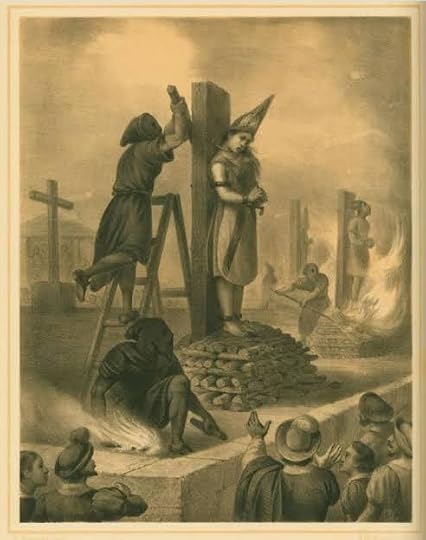
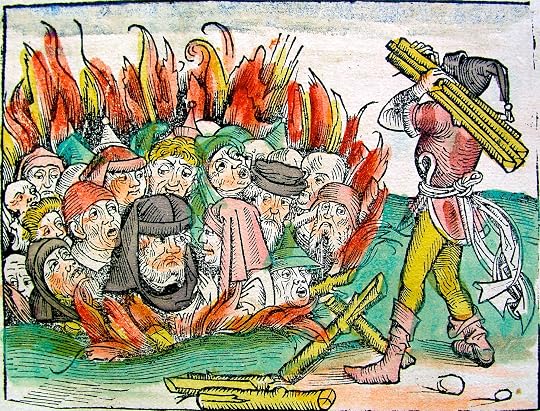
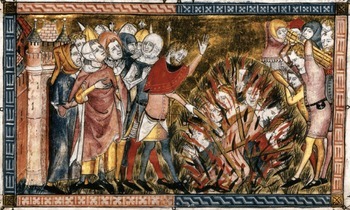
The Rhineland massacres of 1096 provide an opening spark, but Einbinder keeps her focus trained on France, tracing a chain of incidents running from Blois in 1171 through Troyes in 1288 and Paris in 1290. Fire recurs everywhere in these texts, sometimes as instrument of murder, sometimes as evidence of sanctity. Medieval Jewish audiences absorbed a belief that righteous flesh, like a righteous book, resisted the flame. Einbinder traces how this conviction borrowed freely from Christian models of sainthood even while insisting on its own theological independence.
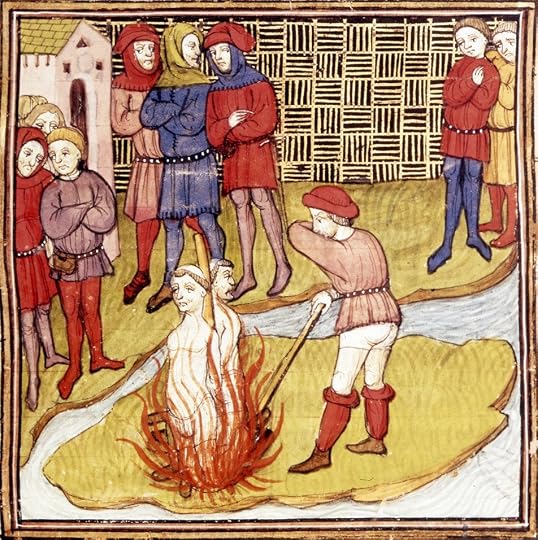
Blois in 1171 supplies one of the book's most wrenching sequences. A Christian servant claimed to have watched a Jewish man drop a boy's body into the Loire, a false charge tangled up with private tension between the local lord and a Jewish woman named Pucellina, and thirty-two Jews, most of them women, ended up bound and burned at the stake on a single day in May. The ropes around their wrists burned through before the flames reached their hands, and later chroniclers swore the bodies escaped the burning entirely, a claim that hardened fast into legend.
Earlier laments for the First Crusade dead lean on the language of sacrifice, casting parents as priests binding their own children to the altar of faith and telling them, in one poet's rendering, to set pity aside because heaven had summoned the offering. A folk belief threaded through several sources held that anyone testing a flame with a bare finger would scream despite every effort at composure, and yet the martyrs, by report, kept steady voices at the stake, their bones ground down afterward when fire left the task incomplete, then scattered into a river.
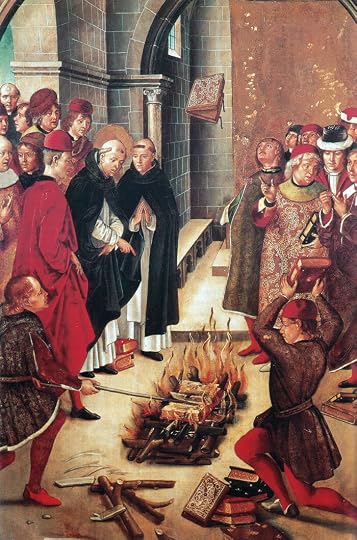
The 1242 burning of the Talmud in Paris produces one of the study's strongest chapters, built around Meir of Rothenburg's lament for a text turned to ash and a faith that outlasted the smoke. Einbinder's patience and prose carry real warmth for figures reduced elsewhere to statistics or the margins of persecution. Troyes 1288 receives extended attention, its "bele qedushah," or beautiful martyrdom, giving the book its title and its emotional core. Paris 1290 closes the main account with Jonathan the Jew and his magic book, a story where mysticism, accusation, and Old French courtly convention combine into something close to legend.
This is not a breezy survey. Einbinder assumes familiarity with medieval Jewish liturgy and Old French literary convention, and her scholarly apparatus carries real heft, sometimes rivaling the main text in density. Chapters on methodology examine how history and literature inform each other, reading poems as more than bare transcripts of fact and crediting them with truths documents alone leave out. What I carried away from the last chapter is Einbinder's insistence that these poems did cultural work beyond mourning. They shaped how a threatened community imagined courage, honor, and belonging, drawing borders between Jew and Christian even as both groups shared a common vernacular and common courtly vocabulary. The martyrs of these poems became architects of communal identity, casting their deaths as beautiful so the living could carry forward a usable, durable ideal.
The book closes on Dan Pagis's chilling twentieth century echo of a twelfth century lament. A pairing that turns eight centuries of grief into a single, continuous ember.
A demanding, illuminating study for readers drawn to medieval Jewish history, comparative hagiography, or the strange durability of verse composed under threat of the stake.
Einbinder examines Jewish martyrological poetry of the twelfth and thirteenth centuries to argue that it is useful for understanding Jewish aspirations towards life and death and some quotidian concerns. The poems also serve as polemic pieces, which Einbinder posits increased the gulf between Christians and Jews. The texts reflect some contemporary interaction with Latin hagiography and were primarily written by and for and elite, educated group of males. Books can also be martyrs.
"Everyone knows" the story of Jews in the Middle Ages: moneylending, pogroms, blood libel, exile. Einbinder's study of Jewish martyr chronicles and songs challenges the conception you didn't know you had that medieval Jews were defined solely by persecution. She draws out an amazing amount of details about everyday life, how Jews coped practically and theologically with Christian oppression--and, not incidentally, allows Jewish literature itself to stand as proof of just how vibrant these communities really were.