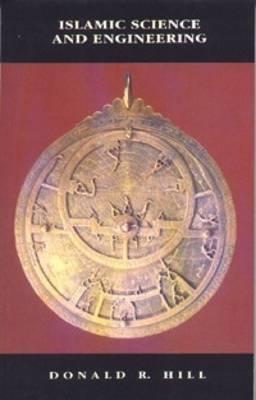
The New Edinburgh Islamic Surveys is a well-established and highly-regarded series of over 30 volumes introducing key areas within Islamic Studies. Each book is written by an expert in the field, offering an overview of its subject as well as presenting original thinking, making it suitable for students and academics alike.
he was an engineer and historian of science and technology.
Alongside more general works on the history of technology, he wrote works on the history of medieval Arabic science and technology, and translated The Book of Knowledge of Ingenious Mechanical Devices (Kitáb fí ma'rifat al-hiyal al-handasiyya) of the Arab engineer Al-Jazari.
Hill covers almost every aspect of Islamic science and engineering and is thus forced to give limited coverage to each topic. It's just my impression, but I thought his explanations of astronomical terms were sufficient to follow the text. On the other hand, perhaps because I'm not as familiar with technology, I had real trouble following his explanations of certain sophisticated machinery, even after looking up the terms. He does provide diagrams, but not enough for my limited ability. The section on surveying was far more detailed than I needed though I suppose basic high school geometry and trig should be enough to understand it. I just wasn't so inspired to follow it carefully. And I sorely wished he'd spent more time explaining some of the major innovations. For example, on p. 123 he mentions the Banu Musa brothers' preoccupation with "inline automatic controls" and writes that in many ways they were ahead of their time. I'm happy to believe Hill's judgment, but sadly I just couldn't really understand the exact innovation--I'm just vaguely impressed with the term "inline automatic control." Another example is the four paragraphs he dedicates to the Baku oilfields and that even Marco Polo "reported that hundreds of shiploads might be taken from it at one time"; keep in mind this is the 9th century. Surely this topic deserves more than four paragraphs! Nevertheless I recommend the book simply due to this broad coverage--bridges, trebuchets, damns, alchemy, and pretty much whatever else you want is covered at least to some extent. Don't miss the diagram of al-Khazini's beautiful Balance of Wisdom on page 67. He managed to calculate specific gravities with greater precision than Robert Boyle did in the late 17th century.
كتاب جيّد جدّاً قدّم فيه الكاتب العلوم التي ازدهرت في عصر الحضارة الإسلامية. يبدأ الكاتب بفصل عن كيفية تعرف المسلمين على علوم مختلف الحضارات واستقبالهم لها، ثم وبشكل تقني ومتخصص، عرض لإسهامات علماء الحضارة الإسلامية في مختلف ميادين العلوم من الرياضيات إلى الفلك والفيزياء ثم الكيمياء والتعدين حتى الهندسة وبناء الجسور والسدود، ويختتم الكتاب بفصل عن انتقال كل هذه العلوم إلى أوروبا.
بعد العلوم والهندسة في الحضارة الإسلامية بقيت أفهم ليه الناس بتتمسك بحاجات قديمة مالهاش لازمة، مفتاح بيت مبقاش بتاعهم وصورة مهتزة. Hill, Donald Routledge بيحول الأشياء لشواهد على غياب. كتاب هادي بيحسسك بتقل الحاجات الصغيرة. لمن بيحتفظ بحاجات ماحدش فاهمها، ولمن بيرمي كل حاجة بسرعة.