

What do you think?

New California Poetry
[(Voyager)] [Author: Srikanth Reddy] published on
Srikanth Reddy's second book of poetry probes this world's cosmological relation to the plurality of all possible worlds. Drawing its name from the spacecraft currently departing our solar system on an embassy to the beyond, "Voyager" unfolds as three books within a book and culminates in a chilling Dantean allegory of leadership and its failure in the cause of humanity. At the heart of this volume lies the historical figure of Kurt Waldheim-Secretary-General of the U.N. from 1972-81 and former intelligence officer in Hitler's Wehrmacht-who once served as a spokesman for humanity while remaining silent about his role in the collective atrocities of our era. Resurrecting this complex figure, Reddy's universal voyager explores the garden of forking paths hidden within every totalizing dream of identity.
- GenresPoetry
Unknown Binding
First published January 1, 2011
About the author
Srikanth Reddy
28 books25 followersSrikanth Reddy is the author of Underworld Lit (Wave Books, 2020), Voyager—named one of the best books of poetry in 2011 by The New Yorker, The Believer, and NPR—and Facts for Visitors, which won the 2005 Asian American Literary Award. He has written on poetry for The New York Times and The New Republic, and his book of literary criticism, Changing Subjects: Digressions in Modern American Poetry, was published by Oxford University Press in 2012. The NEA, the Creative Capital Foundation, and the Guggenheim Foundation have awarded him grants and fellowships, and in Fall 2015, he delivered the Bagley Wright Lectures in Poetry. A graduate of the Iowa Writers' Workshop and the doctoral program in English at Harvard University, he is currently an Associate Professor of English at the University of Chicago.
Ratings & Reviews
Friends & Following
Create a free account to discover what your friends think of this book!
Community Reviews
Displaying 1 - 30 of 39 reviews

June 6, 2018
Not bad, but a little too esoteric and highbrow for me. Practically inaccessible for a casual reader.

May 4, 2018
Srikanth Reddy's second book of poetry does so much with erasure as a technique, he may have changed my distaste for it. Voyager uses the memoir of Kurt Waldheim, the Secretary-General of the UN exposed as an SS officer as a basis and creates a political poetics that doesn't feel didactic "The World is the World" but is it the only possible one? What is our capacity for destruction and redemption? Reddy does so much here just with removing chunks of the words in a way that is both haunting and lyrical.

May 3, 2012
I sat down yesterday and read this book in one big gulp, except that there is something about the structure and patterning of the book that prevents one from gulping too fast or getting, so to speak, an ice cream headache. In the past several years, I've read several interesting erasure projects, and I'd say that this is the one that gives itself most permission to move from the source into its own language and lyricism. Part of this might lie with Reddy's willingness to revisit passages for multiple readings/erasures. He shows how every reading is a re-reading and the initiation of a new text.
April 16, 2023
A completely stunning and perfectly composed exploration of truth under truth, worlds against worlds, facts behind facts. I’m honored to have joined Reddy on this exploration behind the scenes of the Real World, amidst the battles and the trashbins that struggle beneath the surface of empire.
November 19, 2024
I have to go back and re-read bc I rly don't know what it was saying. Liked the words tho so 4 stars

November 26, 2020
i can't really say anything except that this is absolutely incredible, and this taps into something in me that i can never quite eloquently articulate, except to express my deep admiration whenever i see others do what i cannot.

May 16, 2019
This poetry collection works well on an intellectual and how-was-it-created level. The erasure concept and structure of using Kurt Waldheim’s autobiography is clever, making for a good story to share with others (“Hey, guess what I’m reading...”). The writing is lovely, lyrical and beautiful.
Why not 5 stars? After understanding the process, I found the actual product obtuse, abstract, and often impenetrable. After 56 pages, I realized that reading this poetry collection felt like homework. It was like a computer strung together beautiful words and that I had to work hard to gather the meaning. A great choice for writing a subsequent term paper, or maybe even an honors thesis. But not something that sparked joy in reading.
Why not 5 stars? After understanding the process, I found the actual product obtuse, abstract, and often impenetrable. After 56 pages, I realized that reading this poetry collection felt like homework. It was like a computer strung together beautiful words and that I had to work hard to gather the meaning. A great choice for writing a subsequent term paper, or maybe even an honors thesis. But not something that sparked joy in reading.

December 30, 2020
The erasure work is fantastic, but despite the content and conception of the collection, it feels a little too much like a formal exercise. And while the seamless "new" constructions are cogent and impressive, absent of that context the language isn't quite as profound. Could be 4 stars, but gut reaction says 3 1/2.

January 26, 2021
I read one of these poems as part of a creative writing class a few years ago, and I have been dreaming of a few lines since: “I tried to cut through/ all our hurried centuries/ lost in a forest within.” My initial impressions of the voice of the poems was the poet speaking of travelling abstractly with politicians and cobbling meaning from it, and the poet was making me work for it, trying to understand the complexity of ideas and theorists and philosophers. I really loved how he would cross out words in the poem at times, for example () indicating a cross out:
there was a book/that I wished to view-/new within/but old without/In the Middle (East) of life/it more or less went/unthinkable to the end
The eye does not lie./Some form continues/and will continue./Thus the flames/countless and imponderable,/sink anew-/solved,/whole, (Holy.)
I was disappointed that none of the words in these poems are the author’s; it is entirely the words of the Austrian politician with Nazi ties who was high up in the U.N., and while quite clever, really, it wasn’t what I thought it was. But meaningful in its way. Before I knew it was an erasure, a work of an erasurist, which the poet compares to the archeologist’s task, I was planning on my own found poem from it, which makes it a found poem of an erased poem to the 4th power as the poet went through three times and made 3 books of poems in this book. The Austrian man was associated with Nazis during WWII and while there was no sure evidence found, he may have been linked to killing some of my father’s countrymen and women in the former Yugoslavia, so I am conflicted as to why an Indian American found this memoir worthy of his time.
He wrote in an interview of trying to find poetry in a memoir of a possibly ugly life. You can go online and see his process of whittling the words down, and while I could not find the exact passage of lines, I have to respect the beauty the erasurist found in the memoir, and it does open a line of thinking, of how you retain what you retain from a book, what your mind’s eye sees, and how you see yourself in it. Only when I finished my poem did I realize I wrote "world" in every stanza. My process of excavation of the excavating was really fun, I recommend it!
Poem Found to the 4th Power
by Cheryl
I tried to cut through
All our hurried centuries,
Lost in a forest within.
The world is a world.
Even so the world has to go on.
To complain about love in front of the famous Chagall window does not make a difference.
To deny it is to break with reason.
Subject the globe to assembly.
Waves rise and fall, but the sea remains.
Nevertheless it would be reasonable to question the affair.
The speaker studies the night overhead.
I became interested in the fate of a machine which had been launched into creation and disappeared from sight during my boyhood.
To believe in the world, a person has to quiet thinking.
The world is water falling on a stone.
The star systems pace in perception.
The world is a world.
He says therefore.
Aboard, I read, was a deeply-etched record of the world that floated away, full of popular tunes and beautiful technological problems.
It was a forlorn eve,
My descent wintry,
In that foreign midnight,
I sounded the chanceries of doubt.
To my astonishment, I seemed to be blindfolded.
He would have to weigh carefully in his heart the words of a man who by some quirk of fate had become a spokesman for humanity, who could give voice to all the nations and peoples of the world.
A world broke out,
A world drained of weather.
Mother made me from whatever little was available,
A window, a magnet,
My my.
Now I realize that, in the theatres of neutrality, the heart freezes.
So I and the Minister left for a quest
Under this world,
Thus seeking
To return home,
Star fields prevailing in the East.
Everybody watches the wheel as it turns and experience taught me that, in the final analysis, nothing ends. The first steps must follow.
Looking at the strange pictures-
A black sun,
The Earth seen from inside,
And war and world in a box-
My my, such pictures!
A little gallery of being, I thought, and we spend hours discussing forms; one had a map of the real that we later published in the Times in Latin.
One opened a little clock
And said freedom.
Together we opened my will,
And in the first circle, the center of never,
The Minister had constructed a residence
And I became a disciple of despair, for I had a long good look at that world and I said Help.
Set in the midst of vineyards,
The surrounding waters deep,
His great concern
The erosion under the world
I was led to a globe, beholden to its vast revolution
I was impressed by the speech and facing him I said Help, and over the Sahara within he invited me to cross.
We were ushered in
And said world in different ways.
He made a moving speech
On one man’s faltering steps
Towards the hard barren ground of human suffering…
“Could this self, born in a stream of sad time, only be makeshift?”
there was a book/that I wished to view-/new within/but old without/In the Middle (East) of life/it more or less went/unthinkable to the end
The eye does not lie./Some form continues/and will continue./Thus the flames/countless and imponderable,/sink anew-/solved,/whole, (Holy.)
I was disappointed that none of the words in these poems are the author’s; it is entirely the words of the Austrian politician with Nazi ties who was high up in the U.N., and while quite clever, really, it wasn’t what I thought it was. But meaningful in its way. Before I knew it was an erasure, a work of an erasurist, which the poet compares to the archeologist’s task, I was planning on my own found poem from it, which makes it a found poem of an erased poem to the 4th power as the poet went through three times and made 3 books of poems in this book. The Austrian man was associated with Nazis during WWII and while there was no sure evidence found, he may have been linked to killing some of my father’s countrymen and women in the former Yugoslavia, so I am conflicted as to why an Indian American found this memoir worthy of his time.
He wrote in an interview of trying to find poetry in a memoir of a possibly ugly life. You can go online and see his process of whittling the words down, and while I could not find the exact passage of lines, I have to respect the beauty the erasurist found in the memoir, and it does open a line of thinking, of how you retain what you retain from a book, what your mind’s eye sees, and how you see yourself in it. Only when I finished my poem did I realize I wrote "world" in every stanza. My process of excavation of the excavating was really fun, I recommend it!
Poem Found to the 4th Power
by Cheryl
I tried to cut through
All our hurried centuries,
Lost in a forest within.
The world is a world.
Even so the world has to go on.
To complain about love in front of the famous Chagall window does not make a difference.
To deny it is to break with reason.
Subject the globe to assembly.
Waves rise and fall, but the sea remains.
Nevertheless it would be reasonable to question the affair.
The speaker studies the night overhead.
I became interested in the fate of a machine which had been launched into creation and disappeared from sight during my boyhood.
To believe in the world, a person has to quiet thinking.
The world is water falling on a stone.
The star systems pace in perception.
The world is a world.
He says therefore.
Aboard, I read, was a deeply-etched record of the world that floated away, full of popular tunes and beautiful technological problems.
It was a forlorn eve,
My descent wintry,
In that foreign midnight,
I sounded the chanceries of doubt.
To my astonishment, I seemed to be blindfolded.
He would have to weigh carefully in his heart the words of a man who by some quirk of fate had become a spokesman for humanity, who could give voice to all the nations and peoples of the world.
A world broke out,
A world drained of weather.
Mother made me from whatever little was available,
A window, a magnet,
My my.
Now I realize that, in the theatres of neutrality, the heart freezes.
So I and the Minister left for a quest
Under this world,
Thus seeking
To return home,
Star fields prevailing in the East.
Everybody watches the wheel as it turns and experience taught me that, in the final analysis, nothing ends. The first steps must follow.
Looking at the strange pictures-
A black sun,
The Earth seen from inside,
And war and world in a box-
My my, such pictures!
A little gallery of being, I thought, and we spend hours discussing forms; one had a map of the real that we later published in the Times in Latin.
One opened a little clock
And said freedom.
Together we opened my will,
And in the first circle, the center of never,
The Minister had constructed a residence
And I became a disciple of despair, for I had a long good look at that world and I said Help.
Set in the midst of vineyards,
The surrounding waters deep,
His great concern
The erosion under the world
I was led to a globe, beholden to its vast revolution
I was impressed by the speech and facing him I said Help, and over the Sahara within he invited me to cross.
We were ushered in
And said world in different ways.
He made a moving speech
On one man’s faltering steps
Towards the hard barren ground of human suffering…
“Could this self, born in a stream of sad time, only be makeshift?”

January 22, 2017
I haven't read a lot of erasures so I don't really have a basis for comparison, but I feel like this was an incredibly impressive achievement.

June 17, 2025
This is a re-read but I will be honest, I didn't remember anything from when I read this in college. So, this is basically a new read for me.
"Voyager" feels like a re-telling of Date's Divine Comedy. Dante is now Kurt Waldheim and Virgil is the narrator. Book One, Two and Three are Inferno, Purgatory, and Paradise respectively. It confronts Waldheim's past of erasing his involvement with the Nazis in the form of erasure poetry, which is incredibly ironic.
Book One (Inferno), the narrator points out Waldheim's sins and questions his character. The line "the dead do not cease in the grave" really makes it clear that the narrator thinks the cover up is an injustices to the dead. This book references the circles of hell, tying it closely to Inferno.
Book Two (Purgatory) the narrator talks about his motivations behind the writing of the book. He confesses that he has mixed feelings about Waldheim's actions. The erasure "carries out the bodies"/points out Waldheim's sins while also acknowledging that Waldheim was playing the alter ego that authorities wanted. That Waldheim was a puppet. The narrator doesn't come to a defined conclusion about how he should feel.
Book Three (Paradise) I really struggled with understanding. In this book Dante (Waldheim) is abandoned by Virgil (the narrator). Waldheim recounts his own story and sins. This fictionalized Waldheim says he did not like playing the alter ego role and did not want to participate in the lies, but felt that he had to. He says he wanted to show the truth but did not know how. I think he talks about the erasure helping him show the truth. In the end, Waldheim rises to the heavens like Voyager (I think?)
I enjoyed "Voyager" especially Book One, but I'm not sure I agree with the author's feels regarding Waldheim. I also think it kind of sucks that a knowledge of Waldheim is kind of required to understand this book. For me, the whole thing is very middle of the road, thought provoking and witty but nothing in this book is going to stay with me for long.
"Voyager" feels like a re-telling of Date's Divine Comedy. Dante is now Kurt Waldheim and Virgil is the narrator. Book One, Two and Three are Inferno, Purgatory, and Paradise respectively. It confronts Waldheim's past of erasing his involvement with the Nazis in the form of erasure poetry, which is incredibly ironic.
Book One (Inferno), the narrator points out Waldheim's sins and questions his character. The line "the dead do not cease in the grave" really makes it clear that the narrator thinks the cover up is an injustices to the dead. This book references the circles of hell, tying it closely to Inferno.
Book Two (Purgatory) the narrator talks about his motivations behind the writing of the book. He confesses that he has mixed feelings about Waldheim's actions. The erasure "carries out the bodies"/points out Waldheim's sins while also acknowledging that Waldheim was playing the alter ego that authorities wanted. That Waldheim was a puppet. The narrator doesn't come to a defined conclusion about how he should feel.
Book Three (Paradise) I really struggled with understanding. In this book Dante (Waldheim) is abandoned by Virgil (the narrator). Waldheim recounts his own story and sins. This fictionalized Waldheim says he did not like playing the alter ego role and did not want to participate in the lies, but felt that he had to. He says he wanted to show the truth but did not know how. I think he talks about the erasure helping him show the truth. In the end, Waldheim rises to the heavens like Voyager (I think?)
I enjoyed "Voyager" especially Book One, but I'm not sure I agree with the author's feels regarding Waldheim. I also think it kind of sucks that a knowledge of Waldheim is kind of required to understand this book. For me, the whole thing is very middle of the road, thought provoking and witty but nothing in this book is going to stay with me for long.

Read
April 14, 2022"I had an essential volume which touched upon the question of autonomy, a copy out of our library. I studied it carefully, surprised by the extent to which political philosophy was marked by faith. The style, formal and cool, highlighted the limitations of feeling. In my office I would often consider that bleak voice, convinced that, in the end, it was a splendid lamentation."
"Now I realize that, in the theatres of neutrality, the heart freezes. This is a difficult problem. Everybody watches the wheel as it turns. Apparently incapable of peace and well-being, and unable to draw political conclusions, in the late summer, on the outskirts of a small town to the south, I embraced a new work. It was engendered in my dream. It was built of desire. Experience taught me that, in the final analysis, nothing ends. The first steps must follow."
A superb mind. Too political. Less emotional.
"Now I realize that, in the theatres of neutrality, the heart freezes. This is a difficult problem. Everybody watches the wheel as it turns. Apparently incapable of peace and well-being, and unable to draw political conclusions, in the late summer, on the outskirts of a small town to the south, I embraced a new work. It was engendered in my dream. It was built of desire. Experience taught me that, in the final analysis, nothing ends. The first steps must follow."
A superb mind. Too political. Less emotional.
April 22, 2022
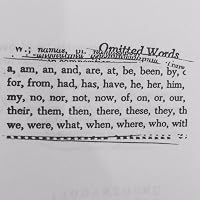
'To cross scenes out of a text would not be to reject the whole text. Rather, to cross out a figure such as to carry out programmes they approve the various regional economic commissions and inter-governmental bodies sometimes increases the implications. I had hoped to voice my unhappiness in the world thus. More and more, it seems to me the role of the Secretary General in this book is that of an alter ego. In a nightmare, Under Secretaries General, Assistant Secretaries General, and other officials of rank reported directly to me. I was given an office and a globe. But I wondered why the forest just beyond the window seemed so cold when it was, to be sure, rapidly burning.'
(p31, 'Book II')
(p31, 'Book II')

March 25, 2024
World poetry day was March 21st, and I have poetry on the brain with TTPD so close (lol), so I've been digging through some of my shelved to-read poetry books!
This work is incomprehensible without a real grasp of who Kurt Waldheim was - a grasp that I do not have. I'd like to re-read this in the future after traveling down a few rabbit holes. A casual reader can get the broad strokes, but not the nuance.
"Death may be a change of style, but surely not of substance."
This work is incomprehensible without a real grasp of who Kurt Waldheim was - a grasp that I do not have. I'd like to re-read this in the future after traveling down a few rabbit holes. A casual reader can get the broad strokes, but not the nuance.
"Death may be a change of style, but surely not of substance."

Read
October 7, 2024This is an erasure work using a memoir by Kurt Waldheim, a former secretary general of the UN who, during WWII, was judged to have been fully aware of the atrocities that the Nazis were committing, yet did nothing. The whole thing was a bit heady for me. I also am skeptical of erasure works, as the whole time I felt like I should’ve read the memoir first. You also need to have extensive historical knowledge of the 20th century to catch everything.
December 15, 2017
Three part book of erasures from Dr. Weldham's, a Nazi data analysis and later part of UN, memoir on his life. Really interesting how Reddy using Weldham's voice to critic and at moments sympathizes with him and includes what feels like Reddy's own voice. Great read!

August 24, 2020
Erasure as field note. Erasure as fever dream. Erasure as travelogue. The memoir has turned into an allegorical and surreal triptych. A stripped away fable. A dense and interesting collection of poetry from a poet so obviously in love with the word and the line. This book sings with sorrow and awe.
May 21, 2017
Re-read. Still amazing.

April 12, 2023
The project of this book is pretty amazing—one text erased three times—and I live for a project.

April 18, 2023
unreal

April 13, 2024
I had to be very thoughtful and pause while reading this because there was so much hidden within the structure and connection within each book. Very powerful me thinks
November 5, 2024
interesting use of erasure
October 6, 2025
Some crazy surrealism, made me feel like my mind was floating at times... gotta reread and think on it. But a surreal, great experience.

October 10, 2025
deserves more from me, but i think i will read it again someday and it will be even better then

November 9, 2020
I want to come back to this book because I skipped a few pages in the middle. The poetic technology of erasure was incredibly executed. Book 2 - the blocks of prose - the fact that Reddy excavated that from Waldstein’s memoir? that he retained authentic voice (or what sounded like a Reddy’s voice) and lyricism? wow.
This book holds many invitations to consider silence / violence / voice / complicity / the banality of evil / excavation. It’s chilling to think about Waldstein’s obfuscation of his role in the Nazi regime paired with the fact that his voice was recorded on the Golden Disk of the Voyager — that he will be the first person to speak for humankind. I’m admiring Reddy’s labour to reveal the paratext of complicity and silence within Waldstein’s memoir, and how he works with notions of alterego.
“The silent alone lie united” (16).
Autumn was in pieces all across America. - 9
With mountains by a pale, fragile sea, the coast stretching southwards in the curtained evening hours. - 23
Drawing to a close, / he was quiet — / so I said my name / from time to time / and wondered / whether I sounded like myself. - 48
— fields endless / but visible / behind every field. - 49
I stood before the remains of the war, / whistling / until the door opened within - 115
This book holds many invitations to consider silence / violence / voice / complicity / the banality of evil / excavation. It’s chilling to think about Waldstein’s obfuscation of his role in the Nazi regime paired with the fact that his voice was recorded on the Golden Disk of the Voyager — that he will be the first person to speak for humankind. I’m admiring Reddy’s labour to reveal the paratext of complicity and silence within Waldstein’s memoir, and how he works with notions of alterego.
“The silent alone lie united” (16).
Autumn was in pieces all across America. - 9
With mountains by a pale, fragile sea, the coast stretching southwards in the curtained evening hours. - 23
Drawing to a close, / he was quiet — / so I said my name / from time to time / and wondered / whether I sounded like myself. - 48
— fields endless / but visible / behind every field. - 49
I stood before the remains of the war, / whistling / until the door opened within - 115

November 5, 2012
An immense work. Haunting, lyric, and perhaps the most successful erasure I've ever read. The three erasures construct three different takes on the horrors and strangeness of the twentieth century. The third, the bulk of the book, moves the fastest for me and is the most narrative, telling a surreal story embedded in the nightmare-scape of a world confronted with its own capacity for destruction. Still, it avoids the angst and irony so much of contemporary writing turns to to engage with the legacy of violence left for us by the past century of mechanized warfare. And finds a kind of faith despite it all, in the very ability to relinquish faith. Stunning.

September 26, 2015
One of the most intriguing, imaginative, and bold projects I have read recently. This erasure project seems to rely on structure and patterning to say something big. Written in such a way that each reading is a re-reading, a new look. The lyricism and construction is really what hold a greater narrative afloat, a surreal experience in a nightmare landscape of a world that comes face to face with it's own capacity to destroy itself from the inside-out.

June 24, 2016
First, read it before looking up anything about it. Then come back to it.
It's a great project utilizing greatly varied prose between 'books,' and deserves multiple reads (and encourages it; it's quite enjoyable to read multiple times to pull more out of it). Historically compelling. You have very little to lose by reading it, and much to gain in my opinion. I won't say too much to let you engage with it without spoiling it.
It's a great project utilizing greatly varied prose between 'books,' and deserves multiple reads (and encourages it; it's quite enjoyable to read multiple times to pull more out of it). Historically compelling. You have very little to lose by reading it, and much to gain in my opinion. I won't say too much to let you engage with it without spoiling it.

July 10, 2012
If you're not really interested in poetry and analysis, do not pick this book up. It took me hours to analyze this book, and although it is beautifully written, it is definitely not my cup of tea. I do see how some people would find it fascinating though.
August 9, 2012
The book is made up of three long poems (or four, depending how you think about it). The harsh juxtaposition in form between each poem helps keep the reader's attention fresh in what otherwise might be very dense work.
Displaying 1 - 30 of 39 reviews