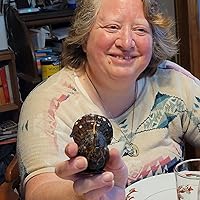
Beverly was a native of Milwaukee, Wisconsin and a long time resident of Rhinelander. Beverly had planned to be an artist, but an impending blindness impelled her to learn typing in order to rejoin her high school class. For practice, she began typing remembered stories which led to her inventing stories. In 1954, she graduated cum laude from Mount Mary College in Milwaukee where she wrote her first young novel, Song of the Voyager which later won Dodd Mead's Seventeenth Summer Literary Competition. Beverly earned her M.A. Degree from Marquette University in 1961 and she returned to Mount Mary in 1962 to teach writing there until 1974. Beverly moved to Sun Prairie before marrying fellow Wisconsin author, Theodore Victor (T.V.) Olsen, and moving to Rhinelander in 1976. T V Olsen died in 1993 and she continued to live in Rhinelander till her death in 2007 at the age of 75. She is survived by her niece and nephews. Her novel "Light a Single Candle" was based on her own experiences with blindness. The sequel was "Gift of Gold". She used her other senses and her brilliant imagination to create her vivid stories which are still enjoyed by her loyal readers today.
Another childhood favorite I reread recently as a brain-break – a sequel to Butler's Light a Single Candle, which I'd suggest you read first if you want to pick this one up. Gold could stand alone, but it has much more impact if you know the main character's background.
After losing her sight at the age of 14, Cathy Wheeler had to give up her dreams of becoming an artist. Light ends with a suggestion that she'll go on to become a writer instead. But Gold begins with Cathy in college studying to become a speech therapist.
I remember as a kid feeling disappointed by this turn of events, especially when it becomes clear immediately that Cathy is not in love with her studies. She's hardworking and conscientious, but she fell into her major pretty much by accident, and is now sticking with it more from stubbornness than anything else.
She tells herself she's just being practical. Plenty of people have jobs they don't adore, after all. But as her friends and family pursue work they're passionate about, her stolid pragmatism begins to crack.
The main plot line is ostensibly about the hope an eye doctor offers her for regaining some vision, but really this is a story of a young woman learning not to settle for less than true love – not just romantically, though that's important too, but in every aspect of life. Yes, Cathy is completely blind. She's also solidly middle class, and has all the options that come along with a supportive family and the chance to obtain a university education. Under those circumstances, why on earth would anyone slog through life doing a job that makes them feel just "meh"?
I never thought this was as good as Light a Single Candle, and a reread confirms that. That said: it's a fascinating read, even if - or perhaps because - it's kind of a downer.
Here, Cathy is older, and in college, and drifting along, not very happily. There's a lot of specific detail on what it's like, being a blind speech therapy student and working with children in a clinic, and all of it feels painfully realistic.
Then Joan shows up - Joan! - and she's engaged to Pete - Pete! - and not the slightest bit different, and it's hilarious and terribly sad, and then Steve shows up again, too, as part of the wedding party. Steve's the emotional heart of the book, the impetus who challenges Cathy's preconceptions; it's very quiet, and I wish he'd been there more, but it's very well done.
And then there's Leonard, who's so fabulous he pushes this book to four stars all by himself. He's Cathy's five-year-old patient, and he's her primary challenge. And he makes me cry, every time I read this book, which is saying something.
Cathy lost her sight as a teenager, and now as a college student, she's working to become a speech therapist. When the head of her school's speech department suggests Cathy's choice of profession is unrealistic for a blind person, Cathy becomes all the more determined to succeed. But after a doctor's appointment gives her hope of regaining a measure of her sight, Cathy may roll out a new plan for her future in Gift of Gold by author Beverly Butler.
I remember the day I first came across this novel in my adolescence, seeing the old-fashioned cover art depicting a woman in a green head scarf, holding the harness of a service dog. I had no idea then that the author herself was blind or that I'd be revisiting this novel years later, and then more years after that.
But now having read this book three times, I can say it's just as powerful as it was to me the first time. Maybe more so.
Yes, I still like the old-fashionedness of it, the plastic rain scarves and typewriters and all. Nevertheless, what I may love most is that this isn't some predictable, run-of-the-mill tale merely about goals and dreams. This is a complex, soul-searching kind of read. It's smart in style with wit and wisdom. Not at all fast-paced, but anything but flat.
In the last quarter especially, Cathy's journey pulls no punches. It even gets pretty depressing for a while, but I find it all the more compelling for not being too easy. The truth, growth, and hope in Cathy's story is earned. Plus, there's a nice little thread of down-to-earth romance tied in.
A novel about not only facing your outward challenges but taking a deep, honest look at yourself—so worth the read.
Give me any “coming of age” book set in the 70’s and I am almost certainly going to love it. There is something so utterly wholesome about books like this, and the plot was captivating and the moral lessons are not heavy handed, but true to life. Just good, solid, entertaining and pure literature.
Though dated, this was a heartwarming story about a blind college student in a speech therapy program. It contains one of the worst bridezillas I have ever seen (though bridezilla wasn't a word back in the early 1970s when it was published), one of the main character's friends who ropes her into being a bridesmaid and then doesn't allow her to bring her guide dog. It contains plenty of young adult angst even outside of the wedding. I'm giving it 3.5 stars rounded up to 4.
This is the sequel to Light a Single Candle, continuing Cathy Wheeler's story into her junior college year. The books were published a decade apart, but they're very much the same in style and form.
The first book dealt largely with Cathy's adjustments to living without sight as a young teenager. In Gift of Gold, that process is largely complete, but as a young adult she is still developing her own sense of self. Will she be defined by her blindness, by her profession, by her relationships? I think we can all relate to these questions from our own lives.
The "gift" from the title has a few different meanings in the book, but for me the most important was the idea of truth being paramount. In a few different instances, someone stretches the truth...Cathy's eye doctor mentioning possible partial return of her sight, misdirection about a what's happened to a favorite teacher, a mother hiding a beau's interest from her daughter...and they all cause more pain than good. Well-intentioned lies end up doing more damage than what the difficult truth would have caused. It's a better "gift" to simply be honest up front than to try to soften the blow with omissions or lies.
If you enjoyed the first book, I have little doubt that you'll want to read this one as well.
Kathy is now enrolled in the speech pathology program at St. Chystosome College, and having to deal with a new department hear, Dr. Paulus, who has replaced Sister Bernard. Dr. Paulus doesn't think that Kathy should pursue working with children on their speech, but, because she is blind, should stick to working with blind students. Kathy, who has excelled academically, is rather angry, and determined to prove Dr. Paulus wrong. When one of her students is withdrawn from her caseload because the mother doesn't want him to work with a blind therapist, Leonard, a five year old boy who doesn't speak, is added to her caseload. Kathy is dating Greg, who is a bit self centered, and is asked to be in the wedding of Joan, whom she knew in high school. Joan is no better at dealing with Kathy's blindness, and the wedding planning is one debacle after another. Kathy makes some strides with Leonard's speech, and is able to deal with Dr. Paulus. She is glad to reconnect with Steve, whom she knew in high school and who is also in Joan's wedding. How will things work out as she progresses through college? Strengths: Kathy continues to make good progress and to stand up to people who think that her blindness is holding her back. I didn't remember a lot of this book except for the Braille watch that Kathy wore, but I was glad to see that she still had a good group of friends and classmates who were supportive. I was also glad to see Steve back. While Kathy's blindness is certainly mentioned frequently, the book is not about her being blind, but more about her progress through school and her struggles with her clients, especially Leonard. Why is it that mid century young adult books often depicted girls getting married but were read by middle school students? Now, when I see characters applying for college, their experiences seem so far off from middle school concerns. Weaknesses: Leonard is repeatedly referred to as "retarded", which would have been the terminology at the time but is not used now. This was written ten years after Light a Single Candle, and those ten years saw a lot of change. There was a slight air of the book not completely reflecting 1972, but that might just be me. It's a little alarming to think that I read this when it was fairly new! What I really think: This one is also being deaccessioned; I'm not sure I will keep it forever because it's not quite as interesting as the first book.
I thought the first of the two books about Cathy Wheeler dealing with her blindness at age 14 was pretty good. This was not and three stars is probably generous. It details Cathy's life at college where she is training to become a speech therapist, and it did read like a bad novel rather than one based on someone's life. The best part about it for me was to see the direction her life took as an adult.
I recently discovered this sequel to one of my favorite childhood books, Light A Single Candle, and had to read it.
There was a lot of cringe for me in the first part of the book because of attitudes and phrases that are no longer appropriate. It was written in 1973.
As I continued reading, I became interested and wanted to read what happens. I enjoyed reading Cathy’s eventual self awareness journey.
Look, I never read it, but it IS the sequel to one of my favorite Extremely 70s disability novels (Light a Single Candle), and the dude on the cover looks like John Edwards. I used to have a copy on loving display at my house. Also, it's #ownvoices, so take that!
Fairly good book about a blind woman working to become a speech therapist, written by a blind author. You'd think I wouldn't have to go back to 1973 to find a book like this, but here we are.
Another quick read courtesy of Archive.org. I read Light a Single Candle first, and this is the sequel. I hadn't read that one previously, but I did read this one long ago. I didn't remember any of the speech therapist bits, but I vividly remembered . I'm glad to have a title to go with that memory.
I finally got to read the sequel to Cathy's story in Light A Single Candle, which I first read over 25 years ago.... I enjoyed it and will probably read it again.
In this sequel to Light a Single Candle, Cathy is a junior in college, studying to be a speech therapist. The new head of the department has doubts about Cathy's ability to succeed in that profession. Cathy determines to prove she can do the job well, even though she's given a particularly challenging child to work with.
The story lines with her friend's wedding and with Greg drag a bit. Greg is clearly a buffoon and she knows that he is, and yet thinks of marrying him. Such was life for a young woman in the 70s... Overall, Cathy's development and growth was nice to see. I'm so glad I've finally read the sequel. College-aged protags are hard to find, and adding a disability makes this book a rare gem.
Though more dated than it's prequel, Light a Single Candle, this is a very enjoyable follow up. It's great to know what becomes of Cathy (and Trudy!) and where her determination takes her, though her career path is a surprise. If you liked Light a Single Candle, you'll want to read this, at least to find out the rest of the story. I didn't find this sequel until many, many years after reading the first book, but I'm glad I found it.
I saved this book when it was removed from the library many years ago, intending to read it because it is the sequel to one of my favorite books. I came across it again and read it now. It holds up in themes of young person struggling to find her place and confidence in the world, against people who want to hold her back because of her disability; and also in the theme of learning to understand yourself and your own motivations.
A blind college student struggles to keep her place as a speech pathologist in a speech therapy program. Cathy's romance and fun with friends were a relief to the depression I felt through most of the story. Thankfully it ended on a positive note. The author is blind so it would be very relevant to her but I just felt an overwhelming sense of sadness as I read it.
In this sequel to "Light a Single Candle", Cathy, now a college student, faces more difficulties as a blind person with a desire to become a speech therapist. In addition to trying to find her place in the world, she's trying to decide which man she'll let find a place in her heart.
I found this long after Light a Single Candle, and did not find it quite as moving and unusual, although still liked it and was glad Cathy found some romance.