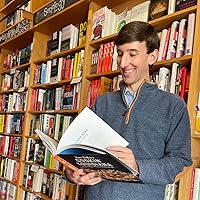
In 1926, twenty-three-year-old cub newspaper reporter Leslie McFarlane responded to an "Experienced Fiction Writer Wanted." The ad was signed by Edward Stratemeyer, whose syndicate effectively invented mass-market children's book publishing in America. McFarlane, who had a few published adventure stories to his name, was hired and his first job was to write Dave Fearless Under the Ocean as Roy Rockwood--for a flat fee of $100, no royalties. His pay increased to $125 when Stratemeyer proposed a new series of detective stories for kids involving two high school aged brothers who would solve mysteries. The title of the series was The Hardy Boys . McFarlane's pseudonym would be Franklin W. Dixon. McFarlane went on to write twenty-one Hardy Boys adventures. McFarlane kept his ghostwriting gig secret until late in life when his son urged him to share the story of being the real Franklin W. Dixon. By the time McFarlane died in 1977, unofficial sales estimates of The Hardy Boys series already topped fifty million copies. Ghost of the Hardy Boys is a fascinating, funny, and always charming look back at a vanished era of journalism, writing, and book publishing. It is for anyone who's curious about solving the mystery of the fascinating man behind one of the most widely read and enduring children's book series in history.
Charles Leslie McFarlane. who dropped the first forename for his writing career, was a Canadian journalist, novelist, screenwriter and filmmaker. McFarlane is most famous for ghostwriting many of the early books in the very successful Hardy Boys series using the pseudonym Franklin W. Dixon.
The son of a school principal, McFarlane was raised in the town of Haileybury, Ontario. He became a freelance writer shortly after high school. He and his family moved to Whitby, Ontario in 1936. This period is described in his 1975 book 'A Kid In Hailebury'.
He was also a reporter for various Canadian and American newspapers. From 1943 to 1957 he was a producer for the National Film Board of Canada in Ottawa.
In 1959/60 he was the Chief Editor for the CBC television drama for the Canadian Broadcasting Corporation. He wrote and directed numerous films and wrote more than 70 plays.
He lived in Whitby from 1936 to 1943 and from 1961 to 1976. He was a member of the Whitby Public School Board and the Whitby Public Library Board in the 1960s, and in 1987 a public school on Garden Street was named after him.
He died in Oshawa on September 6, 1977. His ashes were spread on the Ottawa River.
Imagine how a kid feels after hearing the words "There is no Santa Claus." That's how I feel after finishing Ghost of the Hardy Boys. In a twist I should have seen coming, I realized I've never read a Leslie McFarlane Hardy Boys story. This hurt quite a bit as I grew up reading old Hardy Boys stories and even have a reasonable collection of the books stashed away somewhere.
Franklin W. Dixon, the author of over a hundred different Hardy Boys stories, doesn't exist. Edward Stratemeyer, the Henry Ford of youth literature according to McFarlane, invented Dixon along with dozens of other manufactured authors. McFarlane was the first ghost writer for the Hardy Boys books.
I enjoyed following in this autobiography as McFarlane moved from peddling pure schlock in adventure novels to slowly falling in love with the world he assembled for Frank & Joe Hardy to run around in. I knew going in that the earlier Hardy Boys books were rewritten in the 40s (I own a number of the pre-40s editions but have never read one past the first few pages), but I assumed that McFarlane was going to be a part of those. When the final pages of McFarlane's autobiography revealed that not only did he not write the new versions, but he also despised them, my heart broke. I never explored the world McFarlane lovingly created after all.
I was completely enthralled hearing about how McFarlane first contacted Stratemeyer and became a part of one of the most famous children's book series of all time. Stratemeyer is a mysterious figure throughout the story. Despite working for Stratemeyer for decades, McFarlane never once meets or speaks to the man. Stratemeyer dictates all the terms of the contract coldly, and McFarlane's only request for a raise is not even acknowledged. Stratemeyer seems to me to be an unacknowledged genius of the 20th century.
McFarlane's depiction of the state of youth literature was also a treat. The backlash against "dime novels" was entertaining to learn about- it's difficult to imagine an era when adults rallied against the corrupting effects of cheap adventure novels. McFarlane provides the necessary background I didn't know I needed by describing all the relevant youth serials leading up to the Hardy Boys.
It's wrong of me, but I was somewhat disappointed when the narrative cut away from McFarlane's time with the Hardy Boys to his past as a struggling journalist in early 1900s Canada. I'm sure McFarlane knew the reader would be most interested in his time as Franklin W. Dixon, which is why he opened the autobiography with that chapter from his life. While the earlier chapters in McFarlane's life were interesting, I remained eager to pick up on the Hardy Boys threads again, and I was disappointed that this didn't happen until the final chapter or two.
Most of the stories from earlier in McFarlane's life showed the same cruel trends about the low regard society (and management) held for writers. The most interesting nugget for me an anecdote about McFarlane's time as one of the first ever hockey broadcasters in the pre-radio era. McFarlane would type out fun commentary on the game as it happened and then couriers would rush the commentary to the telegraph office, where the commentary would be transmitted across the country and finally read aloud to audiences waiting breathlessly in theaters. The end of this segment was also informative and illuminating, as McFarlane's request for an increase in pay resulted in his termination from the broadcast role altogether.
In summary, I enjoyed McFarlane's direct, sometimes jaded perspective on the state of modern literature. I couldn't put down the sections where he describes his collaborations with Stratemeyer on the Hardy Boys books, and the anecdotes from his earlier days had some gripping highlights. At the end of the day, I feel a little shell shocked to learn that the stories I loved years ago are part of what McFarlane considers to be devoid of merit.
Also as a side note, I want to thank the Arlington Heights Public Library for having a copy of this book. There is no digital version, and Ebay and Amazon both charge in the hundreds for it, so I'm thankful the library entrusts random strangers like me to hold it for a while. I've done my best to keep the book in excellent condition, and I hope it survives its journey into the return chute without a scratch.
This was a very enjoyable read for anyone who grew up reading mysteries from the Stratemeyer Syndicate (or any of the series that competed with those). I devoured it in under a day!
I never read any Hardy Boys books as a kid and, in fact, read my first one when I was about 40 years old. But I'm always fascinated to discover how authors came to write whatever it is that they wrote, especially when it's an iconic series and the author is relatively unknown. Such is the case with Leslie McFarlane who wrote the original Hardy Boys mysteries based on outlines provided by the Stratemeyer Syndicate (who also created Nancy Drew, Tom Swift, and the Bobbsey Twins among many others). McFarlane wrote twenty-one Hardy Boys books but also had a long career in other writing endeavors including plays, film, and television scripts.
The book does veer off a little too much in the middle when he goes into great detail about his early writing life as a reporter in Canada. This part wasn't so much about him as it was about the newspaper world he inhabited. But even so, McFarlane is such a good storyteller that even this side jaunt was interesting.
This is a humorous autobiography by a guy who can be self-deprecating as well as extremely humble about the success and influence that the Hardy Boys had on young readers. Even in his later years, he considered himself a hack writer at that time, merely a ghost writer who could easily have been replaced by any other hack writer. I'm not so sure I agree.
Actually read this a few years ago from the library at which I was employed at the time. Giving it an extra star because I remembered it fondly enough to reread it, and wasn't disappointed by the golden haze of memory. Not that this is an intensely complex autobiography, mind. It's as quick a read as those long-ago Hardy Boys books, and as blithely skipping the surface of Great Literature and Deep Analysis.
But 'fess up: if you've come across this book because you read more than a handful of the Stratemeyer Syndicate books...don't you have a weeny little corner of your heart that remembers how fun they were to read? Well, this is that fun. And that fun.
I really enjoyed this book. I got it mostly out of curiosity and nostalgia, but it turned out to be an excellent read.
The thing that surprised me the most is how funny McFarlane was. There's a little less Hardys than I expected, though there's enough, but the rest is so entertaining that it hardly matters. It was also interesting to read about McFarlane long career writing in newspapers, magazines, radio, and tv.
I thoroughly enjoyed this memoir by the ghostwriter of many of the Hardy Boys books, Leslie McFarlane. Written in the 1970’s, it’s a look at both his own interesting life in Canada, and a look behind the scenes of the Stratemeyer Syndicate, the creators of many children’s series. McFarlane sounds like quite a character!
This is an autobiography of the man who wrote most of the early Hardy Boys series for the Statemeyer syndicate, as well as many other adventure series novels. It's a fascinating and nostalgic account of a bygone era.
I don't know why this book was so fascinating to me, there was something relatable about the story, and McFalaine's somewhat downtrodden career and journey through life, I enjoyed his jaded seen-it-all philosophical style, and his occasional irreverent remarks.
And, yet for such an accomplished author, or perhaps in tribute to his write-and-never-review approach to the Hardy Boys, it felt like this story wasn't edited at all. There were multiple spelling mistakes and factual errors (for example, mentioning the title of a Hardy Boys books correctly in one paragraph, incorrect in the next; mixing up plot details when summarizing Hardy Boys stories). Still, it was enjoyable read and felt like listening to a beloved elder relative reminisce about the good old days.
Godine Press has just re-issued this 1976 memoir by Leslie McFarlane. He was the author of 21 Hardy Boys books from 1927 to 1947. He was the ghost writer. They were published under the name "Franklin W. Dixon".
The books were owned by the Stratemeyer Syndicate. They would send him a plot outline and he would write the book. He got $85 a book. It eventually went up to $100 a book. He got paid a little over $2,000 over 20 years. The syndicate made millions and is still selling thousands of copies of revised editions of his books. He insisted he was not bitter. A deal is a deal.
These days most memoirs are stories of hardship, abuse and/or addiction. They are advertised as "moving", "brutal" and/or "painfully honest". This is a memoir from an earlier time when memoirs were sold as "heartwarming", "charming" or "lively".
McFarlane describes growing up in Western Canada. he starts work as a newspaperman right out of High School. He tells good stories about small town reporting. Murder trials, mine explosions and traveling vaudeville shows are the big beats.
He describes how he got involved with the Syndicate. He makes no pretense that his books were well written or significant. He tried to write good solid stories and took some pride in being a professional writer. He makes it clear that the stories were formulaic and the plots were silly.
We get very little about his personal life. He mentions a wife and children. He had a career writing for television in Canada which he does not discuss.
This is a good description of the life of a ghost writer. Godine Press takes pride in the appearance of its books. This is cleverly presented to echo the hardcover Hardy Boys books. The binding and cover illustrations are spot on.
FOOTPRINTS UNDER THE WINDOW **
By coincidence I saw this 1933 Hardy Boys book on the $3 table at Brattle Books just after I read the above memoir. It is one of the books which McFarlane wrote.
McFarlane was correct. The plot is silly. The characters are one dimensional. The dialog is stilted and the writing is simple.
McFarlane did not mention the casual racism, probably because it never occurred to him. On page 5 the boys go into a laundry and see "a Chinaman, deep and diabolical" who says things like "no likee" and "Boat velly hot". On page 51 we get an Irish policeman, Con Reilly, who "was so thick-headed'" that he was "the despair of his superiors."
Decent if scattershot account of the Canadian ghostwriter of the early Franklin W. Dixon Hardy Boy books in the 20's and 30's, though I'd guess only about a third of the book actually concerns that process (essentially he got a set fee of a couple of hundred bucks for each book and if he is to be believed, had no real idea that they were the bestselling children's fiction of its era). The rest of the book is about life as a newspaper and freelance writer in mostly rural Canada, which I found hit or miss in terms of reader interest.
I was a little worried that reading this book would be a bit like learning how sausage is made. I loved the Hardy Boys as a kid, pouring through the blue hardcovers as fast as I could track them down. There's a distinct memory I have of wondering how Franklin W. Dixon became such a good writer.
It turned out not to be the case. McFarlane provides a fascinating glimpse at a peculiar process; an instructive read for those interested in how writing and other creative work is done.
As someone who read all the Hardy Boys books our elementary school library had as a kid, I enjoyed this memoir by the original ghostwriter. He was not what I expected (and some parts dragged a bit), but it was a very interesting read. I did not realize how old the books were, nor that the original author was Canadian.
An entertaining and informative autobiography about the creation of the Hardy Boys, about youth fiction publishing mills, and small-town Ontario from the 1920s-40s.
The ghostwriter who hooked millions of boys on reading (early 1900s–1975; Northern Ontario, Canada and Springfield, Massachusetts): How good a sleuth are you?
Did you detect the picture hanging on the wall, spying through the window of the nostalgic cover art of the Ghost of the Hardy Boys, is the cover of the first book in the original mystery series published in 1927, The Tower Treasure? In the spirit of anonymity, the identity of the good sleuth who clued me in shall remain a secret.
Talk about secrets! It took fifty years for “the writer behind the world’s most famous boy detectives” to reveal his identity – Leslie McFarlane aka Franklin W. Dixon – and for most of us another fifty years with the publication of this entertaining and enlightening memoir. First published in 1976, a year before the Canadian ghostwriter died, for most of us it’s likely these are brand new revelations about an indelible slice of Americana.
If you were a Nancy Drew reader, like I was, you too will find the memoir fascinating as both series (and The Bobbsey Twins, Tom Swift, Rover Boys, Dana Girls series) were the brainchild of the “sales genius” behind “one of the great merchandising ideas in the history of American publishing”: Edward Stratemeyer. Who? “A Henry Ford for fiction for boys and girls.” Founder of Stratemeyer’s Syndicate. Creator of 800 juvenile books.
Staying within Stratemeyer’s outlines – titles, characters, mystery – McFarlane “hammered out” the original 21 volumes of The Hardy Boys from 1927 to 1947, published by Grosset & Dunlap. His memoir is a treasure trove of early-19th century journalism, and one man’s control and transformation of the children’s book market.
Marilyn S. Greenwald, journalism professor at Ohio University and 2017 author of The Secret of the Hardy Boys: Leslie McFarlane and the Stratemeyer Syndicate, writes in her Introduction that The Hardy Boys were one of the “most enduring series in the history of young-adult literature.” (For a complete list see: https://hardyboys.us/hbos.htm.)
Via today’s sleuthing tool, you can learn that McFarlane’s fictional series in Bayport, Long Island, New York was “similar” to his hometown in Baileyville, northern Ontario. Ripe for two made-up boy sleuths – Joe and Frank Hardy, whose father Fenton was akin to Sherlock Holmes – yet adventures in some real places like Barmet Bay, Lakeshore Road, and cliffs. “How does one explain the subtle, magnetic attraction of one’s native land?”
Early on, you’ll read about the circumstances that led to McFarlane’s writing the first three Hardy Boys books. Published at the same time, the clever marketing “breeder” strategy meant the reader was apprised in book one that The House on the Cliff and The Secret of the Old Mill were awaiting. Circling back to the books later, he writes more about the books in the series. A technique he repeats when discussing the remote cabin in the Ontario woods where he wrote all the books after circling back home from America as a reporter for the Springfield Republican.
As of 1975, McFarlane tells us 11 million copies of his books were sold. But he never received name recognition for them, part of his benefactor’s strategy to be in command. Spinning a yarn about Ernest Hemingway, with whom he worked when the two were reporters for the Toronto Star, he warm-heartedly lets us know how he felt about anonymity. “No doubt a Nobel Prize winner feels pretty good when he learns he’s made it, but he can’t feel any more elated than a novice writer who sees his name in print.”
There’s no anger or resentment in McFarlene’s reflections. A “wordsmith” who admired great literature and “fine writing,” he doesn’t feel betrayed by Stratemeyer who paid him a pittance and became a millionaire. The chapter like “A Book is a Book is a Buck” shows he tells it like it was: these books weren’t the “Better Stuff” he aspired to but the reason he was able to eke out a living. “One should be thankful for whatever gift, no matter how small.”
Still wanting to incorporate some “embroidery” into his writing, “opting for Quality,” he created a character fans loved: Aunt Gertrude, his father’s sister. He also understood “you couldn’t go wrong by larding the action with a little funny stuff.” Years later his daughter says he “hated” the books, but in his telling he takes a pragmatic and generous tone.
“Honesty is everything,” the memoirist says, one of the life lessons he sought to instill. Another, a can-do spirit that nothing’s outside of a young person’s reach with enough “patience,” “luck,” and “ability.”
Nostalgia draws you to the memoir. To more “wholesome” times when our youth weren’t exposed to and victims of all the ills of modern society. As seen in his delightful writing and old-fashioned prose like “lads,” “rascals,” “scoundrels, “belly-buster,” “knee-slapper,” “tiddlywinks,” “buffooneries,” “gosh,” and “golly.”
McFarlane’s “comic itch” can be attributed to growing up on silent era comedians like Charlie Chaplain and W. C. Fields, vaudeville, and minstrel shows. That they included “blackface comedians from the American stage” like Amos and Andy brings us to bad nostalgia. Which opens up Pandora’s Box resonating the same racial and ethnic stereotyping complaints in children’s literature still seen today. Numerous websites discuss the racist, anti-Semitic, sexist, and derogatory language in the original series.
When Canadian journalist Bob Stall asks him how he felt about his books being “completely rewritten” (beginning in 1959), McFarlane knows they “aren’t the same books” (see here and here). He doesn’t say anything about the offensive prose. Rather, he discusses how “the old books were written for a literate generation,” pre-technology when kids had more time to entertain themselves, including reading versus the dumbing down of makeovers.
How to approach these sensitive issues in reviewing this charming memoir? Look for evidence of inflammatory language based on what’s written in the memoir. This is not a review, then, of the language of the actual Hardy Boys books.
Here’s what I found: McFarlane lived near mining camps and railway towns that attracted immigrants: “Finns, Ukrainians, Russians, Italians, Poles, and French-Canadians.” When he says immigrants need to learn English if they don’t want to be “an object of mirth,” he’s speaking to the importance of a key aspect to assimilation versus anti-immigrant sentiment viewing immigrants as objects of hatred and violence. When you come upon the word Swastika, your hairs stand up until you realize that’s actually the name of a real town in Canada. Why hasn’t the name been changed? When he says, “No popular magazine editor would go for a Good Guy who wasn’t a white man,” it’s a disturbing commentary but historically realistic. The most egregious depictions were his comments on dialogue excerpts a la Keystone Cops poking fun at the police. Not at all funny today, dangerous, though his intention was to show young people that it’s okay to question authority. These days, how we speak about law enforcement necessitates handling with care.
McFarlane’s lamentations on the loss of reams of defunct newspapers, weeklies, and magazines take center stage. He’s nostalgic for the days when you could pick up pulp fiction for a nickel or a dime.
“No ghost is irreplaceable,” he writes. You have to wonder if that’s true since Leslie McFarlane brought his small town boy’s sense of wonderment, adventure, humor, and attachment to a place from his early-20th century childhood into his books.
To Bob Stall, he says about his extensively remade mysteries: “Even a ghost has feelings.”
I’ve known about this book forever but resisted reading it—fearing the worst—you know—but I was really surprised at how good it is. It’s really very entertaining—because he’s so funny and has a good attitude about being this kind of odd figure in literary history—a ghostwriter. He also describes his young life in Canadian mining towns and early career as a journalist—as well as his writing career after writing series books. I’ve always been curious about a few things, ever since I learned that about 20 of the early Hardy Boy books were written by him—including most of the early ones, which are among the best—and he answered a lot of my questions. He was much the source of the humor, strangeness, and irreverence that make the early, original versions so good. Of course, I grew up thinking Franklin W. Dixon was a real person—so it wasn’t until I was an adult that I learned most of the children’s series books were written by ghostwriters, and it wasn’t until much later that I learned that many books (Hardy Boys and Nancy Drew, primarily) were not only being updated—in many cases entirely rewritten. McFarlane apparently didn’t learn until much later in life, either, about the re-writing—and he ends the book on that note. He doesn’t necessarily sound bitter about it—or the fact that he was paid around $100 per book—and they went on to be franchises—but he gets his last word in here, at least. You can tell by reading this autobiography, as well as early editions of the Hardys, that he had a unique sensibility and went a much further than it would have been required of him to infuse books—particularly the early Hardys—with some oddball perspective—essentially the personality of the books—which is why I’m still able to read them as an adult.
I was a huge fan of "The Hardy Boys" series when I was young and pretty much read every one. It was surprising to find out that the original author, Franklin W. Dixon, did not, in fact, exist. The entire series was written by ghost writers. It was a further surprise was the first 21 were being written by Canadian, Leslie McFarlane, the father of famed Hockey Night in Canada broadcaster, Brian McFarlane.
This is a must read for fans of the Hardy Boys and readers who have an interest in northern Ontario mining communities in the 1920s-30s. It's not just about writing the original 21 books of the series but is mostly about life in the 1920s-30s of Sudbury and Cobalt.
McFarlane has an excellent sense of humour and is an entertaining writer. I learned much about life in the north and it was fascinating to have the curtain pulled back, not only on the Hardy Boys, but also Nancy Drew.
I’ve always been a big fan of the Hardy Boys series reading many of the books as a child and then later buying them for my son and watching him enjoy the same stories. This book as the biography of one of the series writers who worked anonymously to write 20-some of the earliest (and probably best) entries in the series. Was a great look into his life but really mixed on the feelings surrounding the Hardy Boys. The author pretty much looked upon his work writing this simply as work. That seemed sad to me as maybe he never realized the impact his work had on young readers through many years. While I really enjoyed this book and learning about his interesting life and accomplishments, I was a bit disappointed as I really didn’t learn any interesting tidbits about his drafting then hardy Boys stories. I still appreciate all he did to provide high quality literature to spur the reading interest of a young boy growing up in the 70’s and later that boys’ boy.
Utterly breezy read, conversational and anecdotal and delightful, with sprinkles of commentary on how the newspaper and paperback publishing systems were growing.
The detour for eight (8) pages to do a drive-by on Elsie Dinsmore may be the best thing I've read all year.
Not much has changed about the psyche of writers, I'll tell you that much.
As opposed to all the physical books I'm reading this year where I review how their physical presentation shapes the reading, I will note I read this digitally, as the hard copy here was certainly exorbitant . . . it felt quite strange, actually, to be reading this on a kobo screen instead of a thick, matte, blue hardcover, the way I read and re-read Hardy Boys books as a kid.
But feeling the tactile contrast between this and those, now and then, may also be a great deal of why reading it digitally was so fascinating.
I have to admit I was amazed a book of this age and niche was actually rated on Goodreads. Published in 1976, Ghost of the Hardy Boys tells the tale of the writing life of Leslie McFarlane - and it reads much more like a tale than a memoir. The tone is casual and entertaining and comfortable, as though you are listening, fascinated, to long-ago yarns of backwoods Canada and publishers that spilled real ink on the floor. I understand McFarlane's frustration with being remembered for only one thing, ghost writing the early Hardy Boys books, when he actually went on to so much more. This is a great look-back for fans of the series.
A fun romp through the life of the man who ghosted many of the Hardy Boys books. It is more about the writer and his life than the Hardy Boys books and he clearly regards the books as hack work, if well-written hack work, which form only a tiny portion of his life. Folks interested in life a hundred years ago and what it was like to be a writer then will enjoy this book, but true adult collectors of Hardy Boy books who think they are fine literature will be shattered if they are intelligent enough to understand McFarlane's opinions of series books.
Okay, growing up, I was a big Hardy Boys fan. While my friends read Nancy Drew, I was searching for the next Hardy Boys book. In 1926, Leslie McFarlane took a position as a ghost writer for Edward Stratemeyer, a prominent author and publisher. McFarlane wrote 21 Hardy Boys books under the pseudonym of Franklin W. Dixon. He was paid a whopping $125 for each, quite a bit of money in the 1920s and 30s, but really not what he deserved for the number of books sold. This is a witty and engaging memoir of a man who should have known fame, but didn't.
An interesting memoir by the original ghost writer for the Hardy Boys. I never read a single Hardy Boys book. Someone gave me #2 as a gift when I was a kid, but I was much more into Nancy Drew, and never got around to reading it (maybe I would have if it had been the first book in the series?)
This is a nostalgic look back on his career written by the man who ghost wrote a number of series books for the Stratemeyer Syndicate including many volumes of the Hardy Boys Series. How he fell into writing for Stratemeyer and his attitude towards the books is kind of an eye-opener. Recommended reading for aspiring writers.
I was told that some of the finer details in this book are slightly incorrect. But this is a memoir written many years later and memories dim. But it is not surprising to me that an avid (obsessed?) collector has details available that the author didn't when he wrote this book. McFarlane admits to mailing manuscripts to Stratemeyer without even keeping a carbon copy. For someone whose food, clothing, and shelter depended on it, McFarlane didn't seem to be taking the whole thing very seriously. He aspired to write Great Literature. McFarlane claims that he was completely unaware of the popularity of the Hardy Boys books until his own son informed him of the fact decades later. This is all very different from the story of Mildred Wirt Benson, also a journalist and author of books 1 through 7, 11 through 25, and 30 of the Nancy Drew series.
If you grew up reading the Hardy Boys adventures like I did, you will probably be interested in this autobiography. It’s about the man who was the author behind the first fifteen Hardy Boys novels. You may already know that Franklin W. Dixon was a corporate penname, one of sixty-odd such names developed by Edward Stratemeyer as part of his Stratemeyer syndicate—a book publishing assembly line that produced such iconic books as Nancy Drew and Tom Swift. Stratemeyer provided ghost writers with outlines and a $100 check and they wrote the books for him leaving all rights to the syndicate.
Leslie McFarlane was a Canadian author who wrote dozens of books for Stratemeyer over the years. About half of this autobiography provides really interesting insight into those books and series and how the syndicate worked. The other half is about McFarlane’s life. It isn’t without interest, but it’s not why I read the novel. I wanted insight into those early Hardy Boys novels. And while the books he describes are very familiar in feel, they aren’t quite the books that you probably read as a child. That’s because in the 1960s the syndicate updated all the books in the series to make them feel more modern. They also took out what sounded like absolutely wonderful elements in the original series.
For example, did you know that Detective Smuff, long time bungling detective striving to get on the Bayport police force, was originally a Bayport cop? McFarlane made Chief Collig and him look like Keystone Cops but apparently, the syndicate came to the conclusion that it was subversive to make the police look incompetent so that the boy detectives could shine.
Here’s another example. Aunt Gertrude used to be a lot more bossy and yell at the brothers when they got into danger. She still did worry and warn them in the series I read, but it was apparently totally over the top in the original books and it made her one of the most beloved figures in boys’ fiction. That yelling said “I love you” in ways that the readers could accept without feeling like the books hadn’t gotten all mushy on them.
I loved this series growing up and I’ve been enjoying rereading them as an adult. But I have to admit, many of them could have used the humor that McFarlane says he included. And I think it would have been wise to keep the original Aunt Gertrude too.
I read some of the Hardy Boy mysteries when I was a child in the early 1960s. By then, although I didn’t realize it and wouldn’t have cared if I had, the books were forty years old but had not yet undergone their modernization. By the time the animated and film versions were televised I had outgrown what today might be called young adult fiction.
This book was originally published in 1976, the year before the author died, aged seventy-five. So it was an interesting sensation for me to feel nostalgic about a work that was in turn nostalgic for an even earlier past. Actually the author was not nostalgic at all. He considered himself a poorly paid writer in a genre he did not respect. But he was not resentful. The royalties, actually a single payment upon the publisher’s receipt of a manuscript, allowed his family to survive the Great Depression. He did not see the work as requiring talent and he knew he was easily replaceable.
One recurring theme is about the absence of sex or libido from the books. McFarlane resented but did not rebel against the mores of his time. It left me wondering if he may have ghost written pornography too. The foreword for this edition is by Marilyn S. Greenwald, author of "The Secret of the Hardy Boys," a biography of Leslie McFarlane. Perhaps reading that volume would provide a deeper dive into his life. But I consider this memoir well written and he did abandon three earlier attempts at it. He seems fairly unequivocal and forthright about his life and writing. Greenwald’s biography is pretty far down on my list of books to read at this time.
A couple of interesting observations I made on style were his occasional use of archaic words such as guedon and tosspot, and the reticulated structure of the story, similar to long and short versions of the creation story in the Book of Genesis, that is he starts with the lead up to his first Hardy Boys book, then doubles back after several chapters and tells his whole life story in greater detail. He also recounts the history of children’s books series and their most prolific authors such as Horatio Alger, Jr.
To his credit, Mr. McFarlane knows why people are reading his memoir - to find out about the behind the scenes of the Hardy Boys. This knowledge is to his credit, because as his memoir unfolds, we discover that though he is most well-known for writing 20 odd Hardy Boys books, he wrote much much more than that. His time with the Hardy Boys was relatively short, compared to the rest of his life, but he is known for writing the Hardy Boys. Additionally, he had little emotional investment with the Hardy Boys, yet that is all people wanted to talk to him about. I imagine this is the same problem that many artists face when they gain fame for one song, book, movie, painting, etc, and become burdened by that work and can't distance themselves from it.
Mr. McFarlane seems to have made peace with that, and while I applaud him, it also saddens me. The sadness didn't hit me until the very last chapter, but in considering the whole of the book, I realized Mr. McFarlane spent 3/4s of the memoir writing about a 10 year period of his life. That time period was 40 years before he wrote his memoir, which means he skimmed over the most productive 30 year period of his life. Again, Mr. McFarlane knew why people were reading his memoirs, and he graciously gave the people what they wanted.
This book is humorous. The humor is the real draw, in fact. It's of historical interest to learn about the 20s in North America, and it's fascinating to read about publishing in that time period, but his wit and humor drive the book.
In the end, I unexpectedly left the book sad. I felt for Mr. McFarlane, though I doubt he wanted sadness felt on his behalf. It sounded like he had a happy life doing what he loved to do, and he is to be applauded for working hard building a career as a writer. This memoir is a bit unusual in that he details plot points of numerous books, and he occasionally gets hung up on something he wrote, convinced it's hilarious, but overall this book is worth reading for the warmth and wit that Mr. McFarlane delivers.