Jump to ratings and reviews
Rate this book

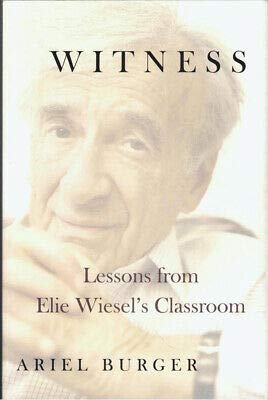
Ariel Burger 1st edit/1 print Witness Lessons from Elie Wiesel s Classroom First Edition 2018 [Hardcover] Burger, Ariel [Hardcover] Burger, Ariel

Rate this book
This rare and vintage book is a perfect addition to any bibliophile's collection

Hardcover

First published November 13, 2018

228 people are currently reading
1886 people want to read

About the author

Ariel Burger

3 books37 followers
ARIEL BURGER is a writer, artist, teacher, and rabbi whose work combines spirituality, creativity, and strategies for social change. A lifelong student of Elie Wiesel, he spent years studying the great wisdom traditions, and now applies those teachings to urgent contemporary questions. When Ariel's not learning or teaching, he is creating music, art, and poetry. He lives outside of Boston with his family.

Ratings & Reviews

What do you think?
Rate this book

Friends & Following

Create a free account to discover what your friends think of this book!

Community Reviews

5 stars
624 (61%)
4 stars
287 (28%)
3 stars
75 (7%)
2 stars
10 (<1%)
1 star
13 (1%)
Displaying 1 - 30 of 194 reviews
Profile Image for Angela M .
1,456 reviews2,116 followers
November 2, 2018
“ If anything can, it is memory that will save humanity.” (Elie Wiesel)

I was fortunate to receive an advanced copy of this book. It was before the horrific event last week at a Pittsburgh synagogue where eleven people were murdered because they were Jewish. I thought about the Holocaust and the hate of the anti semitism that caused over six million Jews to be murdered and thought how could this happen now ? I was planning on reading it soon, but I thought right now would be a good time. What I knew about Elie Wiesel was limited to my reading of Night and having seen him on Oprah years ago. This book provides a bigger window into the man, his thoughts, his beliefs, his intellect, his empathy and understanding, an outlook on life that left me in awe considering his history. In this beautifully written book, Ariel Burger writes of the impact of his relationship with Elie Wiesel as a student of his, as his teaching assistant, and ultimately as a colleague. He writes of how his life was impacted as well as the students who came to Wiesel’s classes. Burger is also a teacher and the reader becomes his student as well as Wiesel’s.

This is of course a beautiful tribute to a mentor and beloved friend, but it is more than that. He challenges the reader as he tells of discussions that occurred in Wiesel’s classes as we read the questions that students asked, students who majored in journalism, theater not just religion. They asked questions that were intelligent and emotion filled, questions from students who were both Jewish and Christian. It’s as if I was present in that classroom listening to the discussions on the Old Testament, books by Kafka and Dostoyevsky, Anne Frank, stories, personal experiences, discussions of madness, mysticism, faith, listening, understanding, art, music, literature, philosophical questions, hatred, forgiveness and the importance of bearing witness. Burger says of Wiesel: “Most of his writing dealt with other subjects: examinations of literature, contemporary struggles for human rights and dignity, and Jewish legends and personalities. The Holocaust was not his subject; it was the lens through which he looked at all subjects.”

This book was such a profound reinforcement of so much that I feel and believe when I read Holocaust stories especially memoirs . The author lists a number of things about what it means to be a student of Elie Wiesel and this : “Most of all, it means remembering the past and understanding the link between past and future. It means choosing to care about others’ lives, their suffering and their joy. It means becoming a witness.” Burger based this book on his journals, notes, interviews, voice memos and twenty five years of friendship, being mentored by Elie Wiesel. I came away knowing much more about the wise and beautiful human being that Elie Wiesel was. I was awed, inspired, challenged. This book reinforced my personal conviction that we must read about the horrific times so we remember and bear witness. Highly recommended! There is so much that is relevant for this precarious time in our county.

“Listening to a witness makes you a witness.” (Elie Wiesel)

I received an advanced copy of this book from Houghton Mifflin Harcourt through NetGalley.
Profile Image for PattyMacDotComma.
1,775 reviews1,056 followers
May 20, 2024
5★

‘Listening to a witness makes you a witness.’
. . .
‘The witness inhabits the world of madness. He sees what is happening with lucidity, but when he reports what he has seen, he appears to others to be mad.
. . .
‘If anything can, it is memory that will save humanity.’
- Elie Wiesel” [from his Nobel Peace Prize acceptance speech


Elie Wiesel was a Holocaust survivor who wrote and travelled and lobbied and pressured world leaders about human rights violations. What's more, world leaders listened to him. He was awarded the Nobel Peace Prize, but most importantly, he taught. He was a professor for many years at Boston University, but he taught everyone he met. Everyone who heard him became a witness.

“Professor Wiesel emphasized difference. ‘It is the otherness of the other that fascinates me. . . . What can I learn from him? What does he see that I do not, cannot?’

I began reading this book, not having read Wiesel’s famous account of his time in Auschwitz as a 15-year-old, "Night". Because so much of this obviously referenced it, I stopped reading this and finally read "Night", which I’d always ‘meant to read’ but hadn’t. It is a wonderful book – sad and awful of course, but simple reading and still amazingly full of love. I can’t recommend it highly enough. (Link to my review at the bottom, if anyone's interested.)

He had been an extremely thoughtful, devout little boy and was a teenager when he and his family were taken to Auschwitz. Ariel Burger, the author, seems to have been similarly devoted to his Jewish religion and its traditions.

For young Ariel, learning was an escape from the challenges of his family. His mother was an active, orthodox intellectual while his father was a ”composer and ex-hippie”, as Burger describes him. I don’t mean a street-corner busker, but a serious musical composer. When Ariel was five, his parents split up, and he and his sister, who was blind, alternated between homes, one a strictly observant household and the other a much looser affair.

Ariel loved drawing and painting (his father’s artistic genes) and liked to lose himself in the old stories, mythology, folk tales and such. This reminds me so much of young Elie Wiesel who said the same thing about himself and the old tales. I was another who loved myths and legends and learning, memorising things, although not in a religious sense, so I have some modest understanding of what kinds of little boys they were. Burger says of himself:

“For most of my life, I have fought to understand the uncomfortable gap between professed values and actual conduct, between lofty aspirations and real-life behavior. When I was a child, learning was a source of joy and comfort to me.”

I think Burger found solace in following the rules. I was also a stickler for the rules (then, not now!), and I would argue with my parents about exactly what I was or wasn’t allowed to do ‘according to the rules’. In my teens, when my father was withdrawing some privilege for some new transgression, I argued that it was an ex post facto ruling (he’d made the rule after the fact - I’d paid attention in civics class that day), and he was so amused, he let me get away with whatever it was. I expect young Ariel was a similar trial to his parents as well.

About his art, Burger says it may seem unusual for a boy whose sister was blind, but he felt in some ways he was painting for her the things she couldn’t see. It’s an interesting thought, and he is still an active artist. (His website has examples of his art.)

When he was older, he went to Elie Wiesel’s lectures, and through the course of the book we follow the author’s life in school, working and studying in Israel, his being torn between a life of devotion or one of study, but also of having to earn a living when he had a wife and children.

What he enjoyed most was learning and talking with Wiesel, who became his teacher, mentor, advisor, and friend. He returned to him time after time when making decisions

This is a wonderful story, chock-a-block with recreations of conversations from Wiesel’s classroom, which was filled with undergraduates, graduates, retirees attending just to listen, and professionals going for more degrees. It must have been a wonderful mix of viewpoints for Wiesel to bounce against each other. And there was certainly tension.

“The encounter between the child of a Holocaust survivor and the granddaughter of an SS officer was fruitful because of their very different starting points.”

A granddaughter of Holocaust survivors asked what kept Wiesel going after the Holocaust.

“Learning. Before the war, I was studying a page of Talmud, and my studies were interrupted. After the war, when I arrived at the orphanage in France, my first request was for that same volume so that I could continue my studies from the same page, the same line, the same spot where I had left off. Learning saved me. . .

Maybe that is why I believe so deeply in education. If there is a solution to the problems humanity faces, education must play the central role in it. I know that learning saved me. And I believe it can save us.”


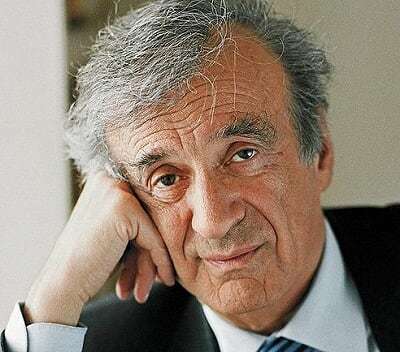
The photos I’ve seen of Elie Wiesel, mostly as an old man, are of a kind, wistful, thoughtful, careworn face.

Photo of Elie Wiesel, thoughtful

As Burger describes him:

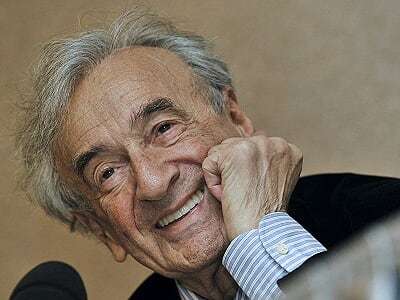
“His skin is weathered, his face furrowed by deep creases. It looks like a map of the world, if the world had been wounded but still managed to laugh.”

Photo of Elie Wiesel, joyful

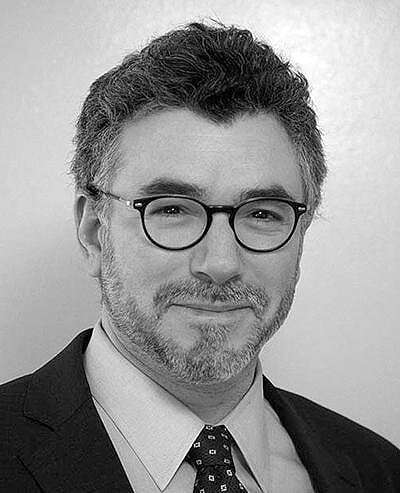
He still managed to laugh. Burger didn’t endure the Holocaust, but his search for a path in life seems to have caused him a lot of consternation, so I expected his face to showed similar signs of angst. To my happy surprise, I discovered what appears to be a cheerful, good-natured fellow. I’d say his scholarship sits on him lightly, so he seems very approachable, as all good teachers should be.


Photo of the author, Ariel Burger, now a teacher and rabbi

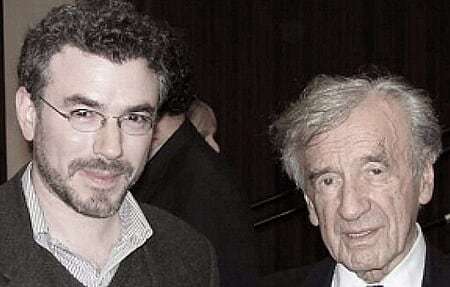
Yes, he became a teacher. He began as Wiesel’s teaching assistant, and Wiesel encouraged him to study but not to lock himself away, as he seemed inclined to do. Burger had a wife and children by the end of Wiesel’s life, and Wiesel was so much his mentor and adviser that Burger says he still asks himself “What would Professor Wiesel do? I continue to learn as much from him after his death as I did before it, and his words echo in my mind.”

Photo of Ariel Burger and Elie Wiesel, a student and his teacher

A good teacher stays with you forever. This book is chock-a-block with the lessons from Wiesel’s classroom but also from Burger’s life and experiences. It’s one that you want to read with someone and talk about the various points of view brought by the students.

It’s also the kind of book that if you read a hard copy, I bet you find it hard not to begin highlighting and underlining passages. Every story and anecdote leads to another thought. Wiesel told so many stories and advised everyone to tell theirs, but cautioned them to use language wisely.

“Don’t say ‘income inequality’ when you can say ‘hungry child’. Don’t say ‘racial tension’ when you can describe rocks thrown at a family.”

The main point is the part I quoted in the beginning, that when you hear something, you are a witness to it, and as a witness, you have an obligation to remember it and tell it.

Just before he died, Wiesel told the author, and not for the first time, “Remember, your voice is just as important as mine.” Burger’s voice is clear here, but his art is also his voice, and you might like to see some on his website.

And remember, your voice is important, too!

I thank NetGalley and Houghton Mifflin Harcourt for the preview copy from which I’ve quoted.

[My review of "Night"
https://www.goodreads.com/review/show... ]
Profile Image for Elyse Walters.
4,010 reviews11.9k followers
April 17, 2019
“Witness” is a memoir.
I’ve sure been engaged with Jewish reading this week. Must be that Passover is in a couple of days.

We follow the author’s story from a young teenager when he first met Elie Wiesel - to being his student - then later an assistant teacher for Wiesel.

Elie Wiesel was a famous writer - a famous Holocaust survivor- an activist - winner of the Nobel Peace Prize and a long list of other humanitarian awards - a Professor of Humanities at Boston University- involved in many Jewish causes - a husband and father - but considered ‘himself’ first and foremost, a TEACHER!
He died in 2016, at the age of 87.

Ariel Burger gives us an experience of the value he got - and other classmates got from Elie’s teachings. Through dialogue and classroom conversations, students asked Wiesel tough questions. Elie answers them brilliantly....giving us ( the readers)...much to contemplate.

Ariel Burger was a driving force in having us see clearly the dedication
and teachings of Wiesel’s life work.

Elie Wiesel was described as “ The most important Jew in America”.

Two quotes stand out strong - words that Elie said:

“It is memory that will save human beings”,

“Whatever you learn, remember, the learning must make you a better person”.

This book was much better than I expected. I had a little resistant to reading it at first. I had my own experience of Elie Wiesel - and I wasn’t sure how this book would work from Ariel’s point of view. Ariel adds background into his childhood- the differences in thought about religion from each of his parents - his orthodox education - mixed with modern orthodox education.

This story was particularly beautiful to be privy into the relationship Ariel shared with Elie. It was actually quite moving. And ... the classroom stories and chatter-exchanges were filled so much compassion....
as in the purpose being to teach sympathy....deep sympathy for those who have suffered.

Witness is the perfect title.... capturing the incredible achievements & gifts Elie Wiesel offered the world.

Who will fill this great man’s shoes next?
Profile Image for Jennifer ~ TarHeelReader.
2,781 reviews31.9k followers
November 23, 2018
5 stars! ⭐️ ⭐️ ⭐️ ⭐️ ⭐️

Ariel Burger was first a student, later a teaching assistant, and much later, a friend to Elie Wiesel, and he writes here of Wiesel’s time teaching at Boston University, something he did for over 40 years.

The primary, most important task in Wiesel’s teachings was educating against indifference. In addition, he was passionate about individual responsibility and building more compassion through literature and the arts.

Burger shares the intimacies of their conversations, along with the triumphs of Wiesel’s words inside and outside of classroom walls. Burger also speaks of his own personal journey and what Wiesel taught him, how he shaped and molded him into the rabbi and teacher he became.

I first read Night by Elie Wiesel the summer before I started high school. We had “summer reading,” and it was assigned. I was starting a new school, again, something I did frequently as a child, and I was anxious about life in general, and somehow in reading the book, as heartrending and devastating as it was, I was given hope for my new school, that we would be assigned books like Night to read, a book that made me feel deeply, viscerally because the atrocities of which Wiesel wrote actually happened. That hope held true, and Elie Wiesel helped in bringing that to me in many more ways than just that small one by comparison.

The biggest takeaway from Witness: if you listen to a witness, you, in turn, become a witness. This one is not to be missed!

Thank you to Houghton Mifflin Harcourt for the ARC. All opinions are my own.
Profile Image for Cheri.
2,041 reviews2,968 followers
November 13, 2018
!! NOW AVAILABLE !!

”If it be your will
That I speak no more
And my voice be still
As it was before
I will speak no more
I shall abide until
I am spoken for
If it be your will
If it be your will
That a voice be true
From this broken hill
I will sing to you
From this broken hill
All your praises they shall ring
If it be your will
To let me sing”

-- If It Be Your Will, Leonard Cohen, Songwriters: Leonard Cohen / Patrick Leonard

Instructions for life, or at least for living a life with meaning, words of thoughtful counsel shared through the mentorship, friendship and affection that Elie Wiesel had with his student and teaching assistant, Ariel Burger, along with many other students through the years. This was profoundly lovely, and reflective, with perhaps just a dusting of something along the lines of Tuesdays With Morrie added, without being overly sentimental. This isn’t a book of sadness, but rather of the joy that his wisdom can bring us.

Twenty-five years of journal entries, five years of notes from the classroom, interviews with Wiesel’s students from around the world all went into this book. Burger met Elie Wiesel when he was a fifteen year-old young man, and most of the years that followed were spent with them in contact with one another. Sometimes often, other times, not as often. But since that first meeting, Burger considered him to be ”my mentor, my guide, and eventually my friend. He helped me steer my way through complex questions of identity, religion and vocation to a life of meaning I did not know was possible.”

If you’re not familiar with Elie Wiesel, he was a professor at Boston University, a journalist, a writer – best known for his book Night – about the atrocities he lived through during the Holocaust, when he was young. Later in life and living in New York City, he taught at City College of New York, and then eventually at Boston University, where he was a professor, and where, eventually, Burger would also attend as a student.

This manages to walk that fine line between overly sentimental and a somewhat quietly shared, honest and genuinely loving look at Wiesel’s life, the wisdom he shared, and how through this relationship both changed from knowing the other. There is so much respect, love, and genuine admiration in Burger’s sharing – but there are the stories of Eli Wiesel, as well. Not the ones he wrote about in his books, word for word, but his life, irrevocably changed, after the Holocaust, how it shaped him, and how he used that to teach us all how to be better at this thing called life.

I’ve watched, and listened to interviews of Wiesel on television, in audio books, and much of this book is in his words, conversations, writings, but there is that other side from Burger that shows what a blessing learning from a man like Wiesel can bring, not only just to him and his students, but to everyone that takes the time to listen to what Elie Wiesel has to share.

So many reasons to read this book, but let me leave you with this one, a quote that starts off the first chapter of this book:

”Listening to a witness makes you a witness. –Elie Wiesel”

Be a witness.


Pub Date: 13 NOV 2018


Many thanks for the ARC provided by Houghton Mifflin Harcourt
Profile Image for Natalie.
641 reviews3,852 followers
August 10, 2018
This book was exactly what I was seeking with Elie Wiesel’s memoirs: it summarises Wiesel's concise teachings on keeping history alive through morality and vulnerability. You're guaranteed to leave Ariel Burger's Witness with a changed perspective.
Ariel Burger first met Elie Wiesel at age fifteen. They studied together and taught together. Witness chronicles the intimate conversations between these two men over decades, as Burger sought counsel on matters of intellect, spirituality, and faith, while navigating his own personal journey from boyhood to manhood, from student and assistant to rabbi and, in time, teacher.

In this profoundly hopeful, thought-provoking, and inspiring book, Burger takes us into Elie Wiesel’s classroom, where the art of listening and storytelling conspire to keep memory alive. As Wiesel’s teaching assistant, Burger gives us a front-row seat witnessing these remarkable exchanges in and out of the classroom. The act of listening, of sharing these stories, makes of us, the readers, witnesses.

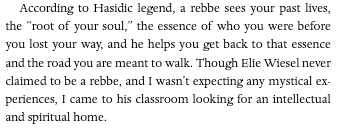
Witness 1-- bookpsoils

To start off each part, the author's stories are interspersed throughout, which made for a well-paced read regarding the bond shared between Elie Wiesel and Ariel Burger.

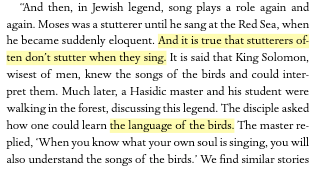
witness 9-- bookspoils

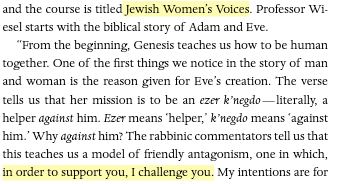
Wiesel comes to provide the home described above in the pages of this book. Like put so well in explaining the meaning of ezer k'negdo:

witness 10-- bookspoils

He continues to write: “What does it mean to disagree for the sake of the other rather than in order to defeat or silence the other?” Such grandiose ideas to wrap my head around.

I consider it to be a good sign if a book makes me stop every few pages or so to run and share the information I just read with the people surrounding me. Witness makes for an excellent book discussion.

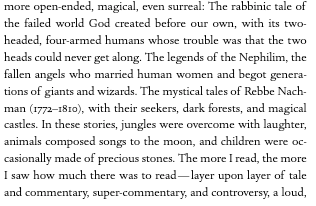
And since this was such an honest and vulnerable read, it feels only right to make my review as such, as well. From sharing the many rabbinical and Hasidic tales that populated Elie Wiesel's childhood, to discussing the age-old question, “must art emerge from suffering?”; keeping memory alive through reading; Judaism; fanaticism... There are so many thought-provoking ideas introduced through Wiesel's words that, in order to hold on to them all, I felt like being in one of those money blowing machines*, trying desperately to grasp on to even one fundamental thought so it won't escape me with time. The amount of notes I took from this book is a bit over the top...

*I'm, of course, referring to one of these bad boys:


So, let's jump right into the good stuff:

• When attending one of Elie Wiesel's lectures becomes a life-changing notion:

Witness 2-- bookpsoils

This put exactly into words why I make sure to read up on survivor testimonies, instead of reading the words of the enemy.

Witness 4-- bookpsoils

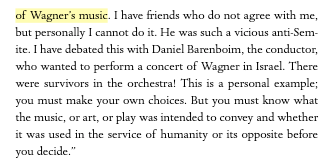
• When discussing the misuse of music and "why knowing the history of works of art is important." He continues to discuss, in the passage below, how he personally "would not go to a concert of Wagner's music..."

witness 3-- bookspoils

I feel so grateful to see someone address this in writing!!!! Nowadays, people boycott modern public figures left and right for their inappropriate nature but seldom hold up "classic" figures to the same actions... So I was beyond relieved to finally read this passage in black and white on paper. Ever since I listened to a life-changing lesson on the so-called "geniuses" of Western culture (Shakespeare, Michelangelo, Voltaire, and many more) and exposing their utter immoral natures, I make sure to check if what I'm consuming was created "in the service of humanity or its opposite..."

• Expanding upon the opening quote of "listening to a witness makes you a witness," which completely flipped my worldview around.

Witness 6-- bookpsoils

• I appreciate how included we felt in the class discussions, each covering through such wide-ranging questions. The movement is rapid from student to student, and we follow it expertly like a ping pong match. Pages flew by when heated topics were introduced, or simply hearing the tales of Wiesel's childhood.

Witness 7-- bookpsoils

The stories that were chosen to be included in here have not left my mind. Including, this short on sanity:

Witness 5-- bookpsoils

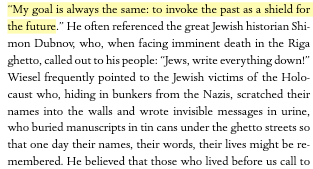
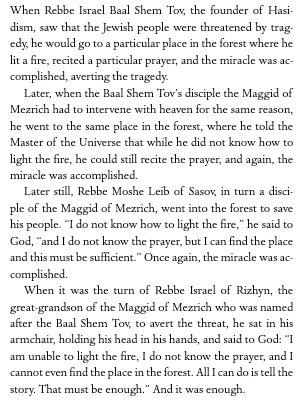
And this brilliant take on keeping memory alive within us:

witness 8-- bookspoils

• This last one is so important and personal to me because of the hidden meaning of birds:

witness 11-- bookspoils

There's so much more I highlighted and would love to share but it all boils down to this: Elie Wiesel was a bright soul put on this earth; we need more people like him in our time. I was beyond disheartened to learn that he had passed away in 2016. Zichrono Livracha.

ARC kindly provided by the publisher in exchange for an honest review.

Publication Date: November 13th, 2018

bookspoilsbookspoilsbookspoilsbookspoilsbookspoils

Note: I’m an Amazon Affiliate. If you’re interested in buying Witnessjust click on the image below to go through my link. I’ll make a small commission!


Support creators you love. Buy a Coffee for nat (bookspoils) with Ko-fi.com/bookspoils


This review and more can be found on my blog.
Profile Image for Jenny.
268 reviews102 followers
October 6, 2018
Egil Aarvik, chairman of the Norwegian Nobel Committee, once said "Eli Wiesel is a messenger to mankind. His message is one of peace, atonement, and human dignity. His belief that the forces fighting evil in the world can be victorious is a hard-won belief."
Eli Wiesel was a father, husband, friend, humanitarian, author, Holocaust survivor and a teacher. Somehow the word teacher doesn't do justice to someone whose words continue to help us learn what being a better human being is. I have read a few books by Eli Wiesel and jumped at the chance to read Ariel Burger's book, Witness: Lessons from Eli Wiesel's Classroom. Ariel was Wiesel's teaching assistant at Boston College. He writes a book that gave me the feeling of sitting in one of Wiesel's classes myself and letting Wiesel's stories and life lessens envelop me. I felt like I was back in college sitting in the lecture halls as Wiesel tells the stories and parables from Kafka, the Bible and other great works. These are stories hat sometimes will make you angry or leave with a an aching sadness but always stories that have a meaning and purpose. I felt like that kid again in college inspired to fight the good fight and wanting to back to the days of sitting with my fellow classmates talking about current events, challenging the status quo and ready to take on the world.
Burger's book is filled with Wiesel's lessons and also the impact that Burger and others had on Wiesel. Burger based this book on twenty years worth of journal entries, interviews and five years of classroom notes. He takes the reader on his own spiritual and intellectual journey starting as a young boy and then the conversations with Wiesel spanning decades.
It's not hard to read this book but it is hard to hear what this book says if you truly listen. It is then that this book or really Wiesel will bring the gamut of emotions to the forefront and a wish that we as human beings can one day find a way to stop the hatred and destruction of humanity.
Eli Wiesel said, "Mankind must remember that peace is not God's gift to his creatures: peace is our gift to each other." Eli Wiesel would be proud of his student, Ariel Burger and the beautiful book that he wrote.
Thank you to NetGalley for an opportunity to read an advance copy of this book. #NetGalley #Witness
Profile Image for Marialyce.
2,237 reviews679 followers
January 1, 2019
There are probably not that many people living in the modern world today who have not heard of Elie Wiesel, a survivor of Auschwitz, where he witnessed more cruelty, more hatred, more indifference, and more death, including that of his entire family than this man. Going onto to be a great humanitarian, Mr Wiesel has influenced many from the common man to presidents and world leaders. In this fantastic book, Mr Wiesel is looked at by one of his former students, a person who is searching for the meaning of his Jewish faith and the relationship one has with God.

As we explore with Mr Burger the words and actions of Elie Wiesel, we become students ourselves immersed in the wisdom of his words, of his ability to teach, not preach, of his joy in being the one thing he wanted most to be, a teacher.

"What hurts the victim the most, is not the cruelty of the oppressor, but the silence of the bystander." In this story, Elie Wiesel encourages all of us to be that voice, that one person who stands and speaks out without fear of retribution, or fear of what others think and do. He weaves his faith, his belief in God, into words that inspire as well as help those of us who have so struggled with religion and the ravages it sometimes brings into the world it is suppose to make better. Growing up myself surrounded on all sides by a Catholic environment, I found myself somewhat adrift when relating to others outside of the faith that was pretty much drummed into me from a very young age. My religion frightened me as I was an extremely sensitive child, and the thoughts of beloved family members going to hell because they were not baptized made me sick with worry. So, in my own way, I have been searching for answers, the same as the author has been.

"To remain silent and indifferent is the greatest sin of all." That is why we must stand up today. There is an enormous amount of hatred circling our world. It is squeezing the very life out of us and as we witness once again the recurrence of antisemitism, we can't stand silent. I have often thought of the term used..never again when referring to the Holocaust...and yet never again has happened in Darfur, Bosnia, and Rwanda to name just a few. Christians are being persecuted in Syria, Jews are being attacked, as I write these words and here we are not raising our voices as Mr Wiesel so adamantly wanted us to.

Reading this book was an awakening for me. It made me realize the presence of God in our lives is the focus of our lives. It made me know that while I thought God was silent as the world has burned, God is not. He has allowed his human creation to become better. We haven't though and there is still time for us to be what Mr Wiesel wants us to be. "I still believe in man in spite of man. I believe in language even though it has been wounded, deformed, and perverted by the enemies of mankind. And I continue to cling to words because it is up to us to transform them into instruments of comprehension rather than contempt. It is up to us to choose whether we wish to use them to curse or to heal, to wound or to console."

Thank you to Ariel Burger who wrote this inspiring book about his beloved teacher, to Houghton Miflin Harcourt for an advanced copy of this book, and to NetGalley. It is a book I will always remember...
This book is in my top ten reads for the year, 2018. Pick it up, read it, and assimilate Elie Wiesel's words. It just may change you for the better.
My reviews can also be seen here: http://yayareadslotsofbooks.wordpress...
Profile Image for Carmel Hanes.
Author 1 book176 followers
June 1, 2024
This was a truly remarkable listen on audio. What a fabulous human Wiesel was. What a gift we received with Burger's desire to catalog Wiesel's life and thoughts. What a testament to enduring the unthinkable and going on to offer so much wisdom and mentorship to students, colleagues and the larger world.

It's hard to capture all the philosophical and spiritual nuggets in this book, but a few parts stood out to me:

Faith must be wounded in order to be true/whole. Any faith can lead to fanaticism and then to heresy, martyrdom and then death. One must always question if faith is leading to kindness and justice.

Doubt is not the opposite of faith, but a necessary part of it in order to deepen it; questions are not seeking answers, which can close things down, but are seeking responses that help guide living.

One must accept all the contradictions in oneself in order to be able to accept them in others. Wiesel attended the trial of one of the people responsible for countless murders during the war, trying to see if he was something other than human; he discovered he could not say that, that the person was human just like himself, with all those contradictions that can baffle us; indicating that any of us is capable of doing tremendous harm to others.

Hatred begins with words, then symbols, then killing; it succeeds when we are too busy with our lives and too busy focusing on re-election to pay attention to the memories that can keep us from repeating that path.

A treasure trove of thoughtful conversations raising issues that are important to all of us trying to get along on this planet. As I listened, interspersed with news clips about today's challenges, I was saddened to think we are failing in that memory Wiesel believed was the key to bearing witness and keeping our world from repeating terrible mistakes.

Profile Image for Toni.
821 reviews264 followers
November 11, 2018
To give witness, typically, is to tell the truth. One tells what one saw, gives facts, details; what one witnessed.

Ariel Burger, gives witness to what he learned from Elie Wiesel, in the classroom, in personal discussions, reading his books, and through both men's belief in their faith.

Most people remember the witness Elie Wiesel gave to the Holocaust, the horror of its existence, the brutality of of its keepers, the smell of the death camps that he himself survived. Elie trusted his God, believed in his God, had faith in his God. When he survived the death camp he "Gave Witness" to his faith. He became a scholar, a Rabbi of his religion so he could be a teacher. To his death, he always described himself as a teacher.
Ariel Burger describes scenes from Elie's classroom sessions, where Ariel was his teaching assistant, with students from all cultures, religions, races; wanting to learn and question this brilliant man. He would tell them stories, quizzical, moral stories, and the class would discuss it. He never gave them direct answers or told them what they should think or know; they learned together, thinking for themselves. That's teaching.
This is the best way I can describe this beautiful book to honor a man the world should never forget.

Thank you Netgalley for the opportunity to read this advanced copy. Thank you Ariel Burger for sharing your experience with us.


A timely book about a man bigger than life during the 20th century; a man who's life was almost snuffed out at an early age for being insignificant and not worthy. Oh how wrong they were
627 reviews339 followers
November 10, 2018
Some of the most moving and thought-provoking passages I’ve read in a very long time. This is the kind of book that leads you to ponder your own life, the choices you’ve made, the things you’ve done that you shouldn’t have and the things you didn’t do but should have, the values you have claimed as your own. For reasons that are likely quite obvious the book strikes me as particularly timely... and necessary.
Profile Image for Micebyliz.
1,263 reviews
March 30, 2019
an exceptional book and must read for anyone interested in true learning.
Profile Image for Kelly Hager.
3,108 reviews153 followers
November 4, 2018
This book is one of the most profound things I have ever read, and that actually doesn't do it justice.

When I was in college, my sociology professor said something along the lines of how we need to always believe that one person can make a difference in the world. "Look at Rosa Parks," she said. And it's true that one person can make a real, permanent difference, although most of us won't. Elie Wiesel did, and he devoted his life to showing others how to do the same. 

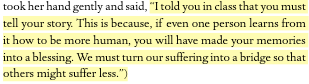
He told this to a student who survived Mugabe’s regime in Zimbabwe: “I told you in class that you must tell your story. This is because, if even one person learns from it how to be more human, you will have made your memories into a blessing. We must turn our suffering into a bridge so that others might suffer less.”

I have a friend who talks about her struggles with mental illness and I have always found her to be so eloquent and so brave in discussing something that still has a little bit of a stigma but she's turning her suffering into a bridge. That's a powerful and beautiful thing, and I admire that so much.

But Elie Wiesel turned his suffering into making the world more compassionate. This book---and the ones he wrote---serve as a call to arms. If he, and other survivors of the Holocaust, could still be open and compassionate while at the same time being fierce in protecting other people, what choice do any of us have but to do the same?

I needed this book. It's a hard and scary time and we have to save each other. Highly recommended. Could everyone please read it so I have someone to discuss it with?
Profile Image for Becky R..
484 reviews84 followers
April 8, 2019
This piece of nonfiction is an inside look at the teaching methods and philosophy of humanitarian, teacher, lecturer, Nobel Peace Prize Winner, and holocaust survivor, Elie Wiesel. As a current English teacher, I have taught his autobiography, NIGHT, many times. I've also read other works by Wiesel and followed his humanitarian acts over the years. With his death has come this loss to the world, and yet, he has left behind his WITNESS in recorded speeches, his works, and his teaching.

In Ariel Burger's book, WITNESS, he discusses his own education and how he came to work with and beside Elie Wiesel. He takes us into the classes that Wiesel taught, showing how he used fables, tales, songs, stories, and questions to get his students to reach for deeper levels of understanding. The thing that I most appreciated about this book is the way I get to see how Wiesel uses questioning alongside his students' readings to explore ideas of deeper humanity. I really loved the way Wiesel approached a person's witness to their life or experiences, and validated them. He used where and what students had to get them to think more deeply about how to reach out to lift other human beings. For this, I am in amazement.

Honestly, this book is a must read for all teachers. I wish it could be alongside the pedagogy and classroom management books that teachers read, to remind us WHY we endeavor to teach--not just to a test, to a worksheet, or to a theme, but to the betterment of humankind. I loved this book and will be keeping my well-marked copy with me as I plan future lessons and discussions.
Profile Image for Milly Cohen.
1,435 reviews503 followers
December 29, 2018
Este libro es más de lo que esperaba, las enseñanzas de Elie Wiesel contadas por su alumno, asistente y amigo. Una combinación de memorias de ambas vidas porque la del alumno se funde con la del maestro y el alumno, maestro se convierte.

Las clases se narran tan claras que te hacen sentir como si estuvieras sentada en el salón de clase, en el piso, apretujada por los muchos que lo iban a escuchar, cuestionándote asuntos personales y universales y literarios provocados por su luminosa inteligencia, un verdadero erudito que interpretaba los valores universales a partir de las lecturas clásicas. Y siempre, de la mano de las enseñanzas del judaísmo.

Son tantas las citas y enseñanzas que subrayo, tanto lo que le aprendo, tanto lo que me motiva a no perder la esperanza, a seguir enseñando como manera de activismo, a enseñar de formas creativas, que me apena no haber leído antes todos su libros, no recordar ni siquiera su fecha de muerte, y no haberle honrado en vida como merecía. Sirva mi lectura para homenajear su memoria.

Si leerlo me hace testigo de lo que vivió, me sumo a sus millones de testigos con agradecimiento.

(hubiera preferido leerlo en español)
Profile Image for Candlin.
37 reviews16 followers
March 15, 2021
Lovely book about how to engage with life in all its complexities. A memoir of the author’s experiences as one who was mentored by Elie Wiesel. The reader is invited into Wiesel’s seminars at Boston University where he taught students how to engage with literature, religious texts, and philosophy, as well as history and what is happening right now.

Amazing man. Amazing stories. Lots to think about.

Great Spiritual text for people of all faiths.
Profile Image for Erin Isgett.
606 reviews5 followers
December 28, 2021
Another "I really think you should read this" recommendation from a friend, and another "You were absolutely right!" from me. Read this. Please. I had dozens of excerpts I wanted to share, and I had to pare it down to five. I am grateful for the wisdom of Elie Wiesel and for Ariel Burger's effort to share Wiesel's teachings with all of of us.

"At the heart of Elie Wiesel's mission as a teacher was a phrase his students heard him repeat time and again: 'Listening to a witness makes you a witness.' Like propaganda, its evil twin, moral education is contagious. And to be effective, it *must* be contagious. Unlike propaganda, though, which tells people what they want to hear or feeds their existing fears, moral education tells people what they *need* to hear, even when it is painful. 'Here is how you can tell the difference between false prophets and true ones,' he explained to the class more than once. 'The former comfort, while the latter disturb.'

"When moral education works, students investigate and embrace new ways of thinking, learn new habits of questioning, and, ultimately, find a deeper sense of common humanity. Students who experience this become sensitized to suffering... Inaction is no longer an option."

***

"'We study madness in order to learn how to resist,' Professor Wiesel replies. 'Madness holds the key to protest, to rebellion. Without it, if we are too 'sane' by the standards of our surroundings, we can be carried along with the world's madness.'

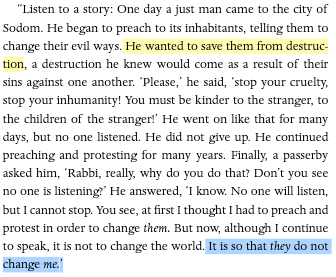
"'Listen to a story: One day a just man came to the city of Sodom. He began to preach to its inhabitants, telling them to change their evil ways. He wanted to save them from destruction, a destruction he knew would come as a result of their sins against one another. 'Please,' he said, 'stop your cruelty, stop your inhumanity! You must be kinder to the stranger, to the children of the stranger!' He went on like that for many days, but no one listened. He did not give up. He continued preaching and protesting for many years. Finally, a passerby asked him, 'Rabbi, really, why do you do that? Don't you see no one is listening?' He answered, 'I know. No one will listen, but I cannot stop. You see, at first I thought I had to preach and protest in order to change *them*. But now, although, I continue to speak, it is not to change the world. It is so that *they* do not change *me*."

***

"'Hatred is like a cancer, and it transcends all boundaries--religious, ethnic, national. It is contagious, spreading from one person or community to another, always ending in more hatred and destruction...

"'To be human is to share a common origin. And if we share a common origin, our destinies are entwined. What happens to me will eventually happen to you; what happened to my people is a foreshadowing of what will threaten the world. Auschwitz led to Hiroshima and who knows what else? Therefore the most important biblical commandment is 'Thou shall not stand idly by the shedding of the blood of thy fellow human being.' *Anyone* who is suffering, *anyone* who is threatened becomes your responsibility. If you can feel this and act with even a little bit more humanity, more sensitivity, as a result, that is the beginning. It is not the end--I do not know how to end hatred, I truly wish I did--but recognizing our shared humanity is a good beginning.'"

***

"'And yet...what can we do? We can only do our best with what we have, what we know. We must ask, and ask, and ask again, and once we feel we have the knowledge we need, we must act. To avoid action for fear of causing more harm is to play into the hands of those who *deliberately* cause harm and who hope for our silence. We cannot do that.'"

***

"'So often we are told not to be too passionate, not to feel too much, to go along with the world as it is. I reject that. I believe we are meant to feel strongly, to feel deeply, to awaken and cultivate our yearning for good. Only then can we have a chance of overcoming those who are passionate for the wrong things.'"
Profile Image for Jenni Ogden.
Author 6 books321 followers
March 23, 2019
A strong story about the influence of Elie Wiesel on one of his students, Ariel Burger. Burger is struggling to find his direction in life, and although perhaps there could have ben less of that and more of Wiesel’s teachings, it never-the-less is a powerful story about mentoring, teaching and learning.
Profile Image for Aaron.
151 reviews4 followers
October 7, 2025
“Whatever you learn, remember: the learning must make you more, not less human.” (Elie Wiesel, my transcription from the audiobook)


There are books aplenty by Elie Wiesel. There are books aplenty about Elie Wiesel—not even counting this one! So what can one more offer? Do we need another biography? Do we need another look at his post-Holocaust theology? Is there a stone left unturned?

Actually, yes. Elie Wiesel as much as a living legend as he was for a myriad of reasons I won’t pad this review with was in fact also human and thus, like pretty much all adult humans, needed a day job. Of course he wrote and may have done well with that, but a man like him is one who seems more comfortable being among people, not in an outhouse-turned-studio with great views pounding away on a typewriter (ala historian David McCullough).

Thus, Elie Wiesel for the bulk of his adult life worked in academia. In college. And given his celebrity status, was the kind of professor who pretty much never had to worry about empty classes nor zonked out students hoping for another notch in their report cards and nothing more. He had engaged pupils of uncountable numbers and TA’s as well. One of those TA’s who became a rabbi in his own right wrote a book on his experiences being in the shadow of Professor Wiesel.

Thus, what we get in Witness: Lessons from Elie Wiesel's Classroom can be considered a side of Elie Wiesel many outside of academia may not be familiar with. We’ve chapters built on themes that consist of various daily sketches of the legend in action, wise words, unique Hasidic stories only he can tell properly, and more from an angle that really does satisfy another stone finally being raised high to shine.

It’s going to be nigh on impossible to not write a review on Elie Wiesel and not include some choice quotes. He was known for many things and among them are some great one-liners. I started this review with one and will add another now from the book as it paints a solid picture of who the man was and what he believed. Then I will explain how it has stronger meaning now even than when he said it.

As we learn later on in this book’s first chapter, during one of his classes, a student from the former USSR asked him in so many words why is all the focus on the Holocaust in relation to Jews and not the millions others who died in concentration camps. Professor Wiesel had a sober answer to him: Not all victims were Jews, but all Jews were victims.

Obviously outside of deniers, few may see this and find fault with it, but nowadays people are quick to ignore the plights of those not like them—due to their skin color, romantic orientation, or even just political beliefs. Not too long ago someone told me Martin Luther King, Jr. said one should “judge people by the content of their character” as the end-all be-all to a question where he would stand in the current political spectrum. However, the actual quote was very much in the spirit of Wiesel’s “all Jews were victims” quote from above. We don’t yet live in a time where we can square being more human with judging all of humanity equally. When someone is being humiliated, we jump in and save them (a paraphrase on another salient nugget of Wiesel wisdom from this book). I hope those who believe “all live matters” take this to heart.

Many subjects Elie Wiesel surely has touched upon in other books, interviews, and possibly articles come up again here, but what makes Witness stand out is seeing him incorporate this in a classroom setting. Rather than simply putting pen to paper, rather than talking to a professional interviewer who thus may not disagree nor ask hard-hitting questions, we see him conversing with college students of various faiths and various levels of religious observance handling some of the more thorny issues of both life and Scripture. There again when discussing such issues, we’re hit with another (and this’ll be the last one, I promise) zinger most anyone best memorize and think over daily: Fanatics and heretics both have faith, except fanatics have no doubt and they should. To be human is to doubt.
Profile Image for Dan Curnutt.
400 reviews18 followers
October 8, 2018
What a very interesting read. The book is written about Elie Wiesel from the viewpoint of a former student then a teaching assistant and finally as someone whom Wiesel mentored through his life. Ariel Burger starts out talking about his upbringing in the Jewish faith in a family where one parent was orthodox and the other parent was apathetic. It makes for a strange upbringing.

As a teenager Burger wonders about life, death and why God is not more approachable.

Then as a student of Elie Wiesel's he becomes infatuated with the intelligence, the stories, the moral's and ethics of a Jewish man who lived through the Holocaust and especially through Auschwitz. What is the more important is that Wiesel does not try to cram knowledge down the throats of his students but instead he helps them to ask the right questions and seek the answers that will change their lives.

Burger eventually leaves the teaching assistant role and travels to Israel where he hopes to complete his studies. But after being there a year Wiesel shows up and they have a conversation that changes Burger's life and makes him a disciple of the wise teacher.

I loved the examples from Wiesel's classroom ,but more important I loved the way that Burger explains what he learned and how he learned it under the leadership and discipling of Elie Wiesel.

This is a great book for anyone wanting to know three things:
1. How an Orthodox Jew survived the camps of the holocaust.
2. How this intellectual became a professor at the University of Boston
3. How a teacher impacts his students and further disciples those who want to truly grow.

Enjoy!
Profile Image for Tracy.
2,400 reviews39 followers
February 14, 2019
"Listening to a witness makes you a witness". I'd like to think that I became that when I heard Elie Wiesel speak several years ago. It was a thrilling moment for me, that I dragged my oldest kids to witness as well. Mr. Wiesel was a soft and lyrical speaker, and combined with the heat of the room, we all found our eyes closing! I let the kids have a minute and then gently woke them so they would be able to witness.
This is such a beautiful book, filled with wisdom that Mr. Wiesel imparted to his students. I am a self proclaimed speed reader, but it took me 5 days to finish 250 pages. I kept stopping to re-read and contemplate. Ariel Burger most certainly has a way of bringing those classrooms to life, I could hear the students and teacher talking.
I thought near the beginning that it was almost the opposite of the movie "God's Not Dead". I realize that many of his classes were specifically about faith and religion, but I was almost surprised at how much of his own faith he brought into his classes. He had learned an astonishing amount in his lifetime.
I rarely buy books when I can borrow them, but I bought this one, and convinced my district manager to buy one as well. I hope to continue leaning from it.
Profile Image for Annalise Williams.
73 reviews
Read
August 18, 2022
this book took me wayyyyy too long to read, but i think it’s cause it’s not a type of book i normally read ?? either way, i’m glad i read it cause it was a good refresher. since it’s a memoir type of book, i feel bad rating it, soooo it just doesn’t get one. however, im still glad i read it :)
Profile Image for Talia.
65 reviews
November 5, 2019
This book was a balm for the soul. So many nuggets of wisdom, I finished it a better person than when I started it.
Profile Image for Jim Beatty.
537 reviews5 followers
February 12, 2022
This question is more important,more fruitful than any answers we might offer.
424 reviews2 followers
July 29, 2022
A fantastic book that inspires. One to have on the bookshelf and reread every once in a while.
22 reviews1 follower
August 18, 2024
The book that I thought ‘Tuesday’s with Morrie’ would be
1 review
July 17, 2018
For those of us who have imagined having the chance to speak with Professor Elie Wiesel, perhaps even to ask him a question about life, Witness offers us an amazing gift. In this riveting work, we hear Professor Wiesel’s words and thoughts not only in the university lecture hall, but also through the 20+ year relationship between him and his student, teaching assistant and friend, Ariel Burger. Whether discussing literature, philosophy or his own life, Professor Wiesel’s ideas about resilience, hope, despair, and the crucial importance of listening to diverse viewpoints are especially urgent right now.
Ariel Burger generously shares his own personal and professional struggles so that we may grasp his mentor’s impact on the most personal level, distinct from the global impact that continues to be visible throughout the world. Witness will ensure that this intensely personal impact — felt by those who knew Professor Wiesel — can reach any of us who have the wonderful opportunity to read it.

Elinor Bashe, Psy.D.
Profile Image for Trenchologist.
585 reviews9 followers
December 3, 2019
I'm not going to try a distillation or synthesis. There's too much within and I'm still processing. Which is also one of the strengths of this book; it's a synthesis of Weisel's work shared by a man processing his own reactions and beliefs after decades of study with Weisel.

Good and thoughtful and provoking. Enough of the person so it's not simply an homage but the personal doesn't topple the insights. Nor do are they removed to make the way clear for easy platitudes (because that's not the point). Reaffirms and shakes up ideas of activism and rebellion and speaking truth to power.

I definitely don't think Weisel was a saint and I appreciate the humanity Burger brought to him; neither of them would want for Weisel to be elevated beyond what he was. And that was a great human, and humanitarian.

A book and thoughts and things to grapple with--including warnings-- that are especially dire and poignant today. I'm going to set it aside for a while and reread it in the near future. It will be good, and likely necessary, to have the reminders.
Profile Image for Greg Marcus.
Author 2 books29 followers
January 22, 2019
Ok, I am only a third of the way through this book, and it already merits a five star review.

Rabbi Ariel Burger is an amazing writer. Whether he is describing his upbringing, or an anecdote from Elie Wisel's classroom, I feel like I am right there, witnessing it.

Wisdom is knowledge translated into guidance for everyday living, and boy is this book full of wisdom.

Witnessing is how we internalize and empathize with the stories of others. Burger does an amazing job of laying out Elie Wisel's education philosophy, which is also his life philosophy. How can we take lessons from life, literature and philosophy, and turn them into guides for living an ethical an authentic life?

How do we focus on our differences with others in a constructive and productive way?

The only question left for me is whether this book will become part of the Mussar literature. I think it is destined to be a book we are reading decades and perhaps centuries from now.
Profile Image for Don.
1,564 reviews21 followers
August 13, 2019
begin with student questions, learning is key, was divorced and alternated days, teacher and writer, 4 year siege longest ever in Sarajevo, Cain and Abel no communication jealous pride, be brother not master a servant like Jesus, start where you are, thousands are a statistic one is a tragedy, who is true or false there are false profits who mislead and twist facts, create hope always and combat despair, no resistance without hope, language dies first disinformation, hatred starts with words and images, friends keep your hope up, laughter undermines lies, superficiality is enemy of everything, no heart as full as broken heart, faith in spite of divorce claim the struggles not afraid of the challenges have faith and do not avenge past channel anger to good and renounce despair, keep learning innocent curious hopeful, to be human is to be questioning.
Displaying 1 - 30 of 194 reviews

Can't find what you're looking for?

Get help and learn more about the design.