The freezing ecosystem in the far north of the globe is home to many different kinds of animals. They can beStrong, like a walrusTough, like a lemmingResilient, like an arctic foxBut no arctic animal is as iconic as the polar bear.Unfortunately, the endangered polar bear is threatened with extinction due to rapid climate change that is causing the ice where it hunts/lives to melt at an alarming rate. This book uses accessible, charming art to explore what would happen if the sea ice melts, causing the extinction of polar bears, and how it would affect environments around the globe.
Lily Williams is the author and illustrator of the If Animals Disappeared nonfiction picture book series and graphic novels Go With The Flow and Look On The Bright Side (co-written with Karen Schneemann). Lily seeks to inspire change, engage audiences, and educate people of all ages with her artwork. Her work can be seen in films and books and on the web at lilywilliamsart.com.
This is the second book I've read by this author and it is once again illustrating what would happen if a certain animal species was to disappear. In this case, we're talking about polar bears.
The author first explained the habitat followed by a brief exploration of polar bears' evolution (to explain the reason for the different fur colour, mostly) concluding with what is threatening the polar bears existence and why/how.
Once again, the illustrations were adorable and greatly helped to illustrate both the habitat and the problem even for really small children. But the book isn't just cute, nope. Despite it being for really young readers, the author had a wonderful way of still conveying the facts and packing lots of information into the text without burying the reader under them.
As with the other book, this, too, had a small secton in the end that gave tipps on how to help should one want to get involved. Fantastic addition to any library and I hope the author will create many more such books.
A beautifully illustrated book highlighting the dangers of climate & environmental change on our planet, highlighting in particular the effects on polar bears. Well written and not preachy this is an awesome book for younger and older readers alike.
I love that Lily Williams consulted with an Inuit, Shelby Angalik, for this book and that she acknowledges the indigenous people of the "icy north" in her author's note. Williams also does not avoid telling readers that climate change is the reason polar bears and the arctic are in danger. This is the fourth book I have reviewed in Williams's "If Animals Disappeared" series and I find the explanation in this book less clear than the explanations in the shark book and the bee book, unfortunately. Still, the illustrations are adorable. I would recommend this book as a gift for a child who loves polar bears and/or is concerned about climate change, of course, but I would pick a different book from the series if someone was hoping to help a child understand the importance of biodiversity. I might not include this title in my polar bear lesson plan if I can find a different book that more clearly explains the important role polar bears play in their ecosystem, but I still like it.
This is kind of a long read. It's about how climate change causes ice to melt, and the ways in which this is bad for polar bears and other animals. There is a lot of cause and effect throughout the book, as it highlights how something harmful happening to the polar bears would also harm other species.
I would use this to talk about climate change and what we can do to protect the earth and the species that live on the earth. It would tie in well around an earth day unit. Kids can come up with ways that they can do their part to protect the earth, and then they can work with their families to actually implement those ideas into their routines and actions.
This book gives us an insight into how polar bears evolved and that they are not vulnerable to habitat loss due to pollution and climate change. This book tells readers what will happen to not only polar bears but also to other animals if the ice were to melt. Every arctic species will be affected and will lose its home.
I can use this book in my future classroom to teach about climate change and that there are many things that we can do to help prevent this situation. I can show the children how big of an impact climate change has on our world and that it is important to take action so animals can be saved.
Continuing this interesting idea for a series. Sure it's propaganda. But getting a message across takes all forms. And this one is both pretty and educational. Nice art, good text, clear message and a decent enough afterword. I'm not sure there's that big of an impact of the polar bears disappearing. But there's a pretty big impact of the polar ice melting enough that the polar bears die out in the wild.
While the information was important and interesting, I think it was a little much for a picture book. The information is kind of a downer up until the end.
In this informational book about polar bears, the author Lily Williams describes how Polar bears, the apex predators of the arctic, are still threatened by factors outside of the natural order, which is global warming. She describes how polar bears' numbers are dwindling as a result of this and how they are having fewer children and may even lead to their extinction. I really loved how the author drew the problem of climate change and its effect on polar bears in a way that any audience is able to grasp the issue. The illustrations in the book are also beautiful and very detailed making them look like paintings. A major theme I found within the book is how big of an impact the extinction of polar bears will have not only on the Arctic’s ecosystem but on the entire Earth as well, and how it will affect everything from the food chain to even us. It shows how all species, even those who seem to have no relation to one another, are interconnected and rely on each other for survival. Another theme in the book is the severity of climate change, the root cause of the melting Arctic ice, which threatens the lives of polar bears and other related animals. The author also uses this book to inform readers about how big of an issue this is and what they can do, which is to inform themselves. Through reading this book children could learn the severity of the climate crisis and what they could do to help reverse this issue, even if it is in small ways. Towards the end of the book the author urges every child to inform themselves on the issue and help save the polar bears, which her answer to the problem is to gain knowledge. This was also a WOW book for me because it is not very common for books about significant issues around the globe to be taken seriously, but the author does a perfect job of blending the seriousness of the problem with enough light-heartedness to keep younger readers interested. This writing style works for adults reading the book as well, as she breaks the information down in a very simple way, which I loved.
Now, for a writing craft, I noticed that the author also used cause and effect to first state the issue at hand, then show how severe this problem really is for the polar bear population. This added to the quality of the book by first laying out the problem, then showing the different ways this will impact the entire world, and finally how we, as individuals, can fight against it. The book also does a great job of painting pictures in the reader’s mind with its descriptions of the Arctic and the polar bears. The illustrations and vivid text help you imagine what the environment looks like and really make you feel the impact of losing these animals, which is a very possible future. It makes the whole story come to life and makes the topic easier for kids to understand, which, even for older audiences, is an effective method of detailing the information. Finally, while to some this may seem like a biased book simply because of the topic, which is climate change, I think this book is anti-biased because global warming is an ongoing issue, backed by numerous climatologists. The fact that the author is only stating that polar bears will be a casualty stemming from this is the truth, and in fact, not biased.
I was not expecting this book to be a bit sad! This book is all about how polar bears are being affected by climate change and what that means for the rest of the worlds ecosystems. It discusses what an ecosystem is and how bears adapted to live in the arctic. Then it starts to mention how climate change affects all animals, not just polar bears, and how devastating that can be. Each page leaving off with "if too much sea ice melted..." and then how the next ecosystem could be affected negatively. The illustrations are cute and are created by the author herself. The way the polar bears look with their little faces make this book more emotional. The illustrations being more child friendly makes this book more appealing for younger audiences. This would be such an impactful story to read to students as they are our future! This book would be best used to for 2nd-5th grade. Second graders will be able to grasp the understanding of endangered animals and food chains and older students will understand how one species can affect many ecosystems and long term consequences if we don't do something now. It could also be read to younger students too as they can start thinking about this topic and hold conversations. An activity to do with students after reading this book would be for the students to create there own "if the ___ disappeared..." stories. They could research about their chosen animal and draw it, describe its habitat, who eats it, what it eats and what would happen if it were to go away. This book does a great job at balancing storytelling while being packed full of accurate scientific information and vocabulary. I really enjoyed this book and want to own it myself.
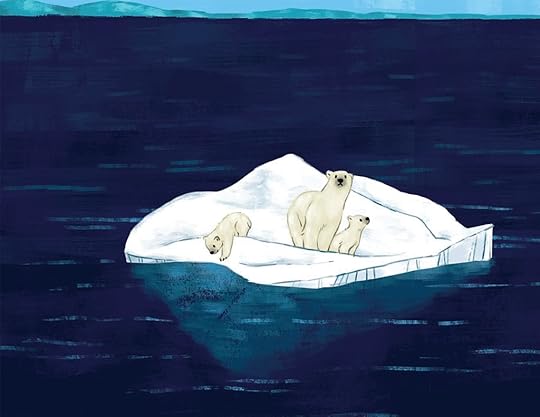
Using the same approach to climate change that she did in her first book, If Sharks Disappeared, author Lily Williams describes the effects of global warming on various species. While some short-sighted individuals might see the demise of polar bears as singular, regrettable, of course, but having little impact on other animals and nature, she points out their struggles and what might happen if too much sea ice melts. Not only would these resilient and majestic animals be forced to scavenge for food and move into unfamiliar territory, but they would eventually die. The loss of polar bears would, in turn, lead to a flourishing ringed seal population since the bears no longer were dining on them. But they too would face problems as the result of climate change as would other species as the land in the Arctic also warmed up, making it inhospitable for certain species who would be vulnerable to predators as the result of the loss of their snow cover. By the time readers reach the end of the book, they will be emotionally wrung out and concerned about just how close Earth is to the tipping point and whether there is enough time to make the changes that are necessary to stop this from happening. In simple but effective text and illustrations that clearly show the domino effect, this book is clearly a cry for action. I cannot imagine anyone reading it and not being moved, particularly with that last illustration of a polar bear family resting on a small patch of ice, surrounded by sea water and no food in sight. Everyone needs to read this book and share it with someone else as well as suggesting that teachers add it to their science classroom library.
I fell in love with Lily's first book in this series, "If Sharks Disappeared", and my feelings for "If Polar Bears Disappeared" are no different. In this latest release, Lily tackles the difficult topic of climate change and how the disappearance of an apex predator affects all ecosystems, and ultimately, all of us. With her thoughtful, informative text and engaging illustrations, the readers are pulled into the plight of polar bears, seals, orcas, fish, caribou, etc. I am a big fan of using picture books for all ages (even adults) and the one thing I believe Lily excels in beyond so many of her peers is her ability to explain the interconnectedness of all living things and the web of life we are all connected to, and how the loss of just one species from that web will have a catastrophic ripple effect across every living thing in it. When people start to truly grasp the concept of interconnectedness, they open themselves up to caring about our planet and wanting to make a difference to save it. And Lily is right, there is still time to make positive changes and reverse the course we are on. The addition of a glossary, a "what can you do to help polar bears" section, bibliography and information on organizations to get more information shows Lily's commitment to furthering positive changes. This is a great book to buy for your children or grandchildren, to gift to your local library or school library, or to share with someone who loves polar bears and our planet. Extinction is forever. Together we can all make a difference, for polar bears and for us. I can't wait for the next book in this series!
The fourth informational book I read this week was If Polar Bears Disappeared by Lily Williams. This book was about how ecosystems, environments, populations, and other species would react if polar bears disappeared. The book also discussed sea ice melting and the effects of climate change are threats to the Arctic. I also like how the book discussed the predator-prey relationship between other species in the Arctic such as ringed seals, orcas, snowy owls, and the Arctic fox. This book did a wonderful job of introducing ecosystems to young children and made me think of my biology class at Marietta College. I gave this book five stars because of the excellent job of making these higher-level scientific words into a meaning that children can understand and the way the book discusses all parts of how environments and species survive because they are all working together in some way.
I would use this book in middle or upper elementary grades because of the higher-level science topics. Young children might not understand how to survive and advance (along with predators) in an environment as well. An activity I would do with this book is comparing the world with polar bears and then without polar bears using a graphic organizer. This activity will help students see the differences of the Arctic ecosystem with and without polar bears and will understand the importance of them in our environment. After the students complete the graphic organizer the students and I may research and brainstorm ways to help save the polar bears and think about a how-can-you-help situation (students understand they can make a difference).
This book is an amazing way to get children involved in learning about climate change and how it effects the world, especially the animals that are living in certain climates. One of the most loved animals, polar bears, was the main focus of this book, and it discussed if all the ice in the arctic melts, the polar bears will have no home, and they will end up going extinct because they are used to living in the cold temperatures, but if temperatures get too hot, they can't live in that weather. All of the ice melting and rise in temperatures has an effect on all the animals in every climate, as well as the plants too. If everything starts to die and go extinct, then there won't be anything left! I would use this in my future classroom to help inform children on real life events that are happening, and have them brainstorm different ways that we can help stop climate change from getting worse than it already is. Having children know about these issues at a young age can help them understand ways to help make a change, and continue to do these things as they grow up to have an even bigger impact.
This series combines vivid illustrations with a gentle introduction to ecology—a branch of biology which focuses on understanding organisms and their habitats. This series can be used as a tool to deepen the understanding and reverence of the ecosystems God has created, the interdependencies of God's creations, and the potentially devastating impact one’s choices can make on the environment. In this story, readers are introduced to polar bears, their place in the Arctic ecosystem, and the impact of climate change. The glossary along with the background information and the Author's Note at the end of the book reinforce the concepts and includes a list of actions that children can do to slow climate change. Building this awareness at a young age is vital to teach future stewards of this Earth how to care for our planet
We rate children's books for virtue, language, story, and beauty and flag content advisories when needed.
If Polar Bears Disappeared is a nonfiction picture book about the origins of polar bears and how climate change is affecting them right now. It is teaching kids before they make a huge impact on the environment to care for it and make small changes to help keep polar bears alive and well.
I like this book. It teaches kids a lot of fascinating information as well as adults. A lot of this information I did not know as a college student. I also like that it explained climate change in a simple way that also highlights the severity. Finally, the illustrations in the book were well-drawn and helped kids understand that the tropical animals they love and adore might go away someday if we do not take care of them.
I plan to use this book in my classroom. For science, I am required to teach about evolution and climate change which is such an important topic but very hard to teach since it is rather heavy. This book would be good to use because it helps kids understand a heavy topic but also makes it fun to learn.
The author does a great job at explaining subjects about nature such as adaptation, camouflage, evolution, ecosystems and even climate change. It discusses the negative effects climate change has on female polar bears and their cubs. I think the book did a great job explaining this aspect of science and discussing different parts of their habitat such as the predator - prey relationships and the climate where polar bears live. It even gives them facts about how snow stays cold which I thought was very interesting. My favorite part was the call to action at the end of the book. it gives kids a feeling of hope and maybe encouragement to do something about it.
I would use this book in my classroom as a way to educate my students on the dangers of climate change and how that could affect the animals we love. It allows my students to better understand food sources in the wild, disruption of migration, food supply and so much more.
This story focuses on the community that polar bears live in and what would happen if they were to disappear. The story talks about how polar bears are currently endangered. If polar bears were no longer a part of their ecosystem, they would cause a loss in the lives of seals and hemmings due to the loss of snow and ice melting. Because the snow and ice would melt, this means that the entire arctic would suffer. This would then damage other ecosystems that are near the arctic. The story ends with a message on how we need to work to save the polar bears and keep their ecosystem alive. I can use this story in my classroom to teach my students on the importance of saving wildlife. This book gives an in depth description as to why polar bears are disappearing and the need for them in the world. This story shows students how they can make a small impact in the polar bears' live and how we can support them in the future.
If polar bears disappeared is book about polar bears, throughout this book it talks about the features of a polar bear, deeper into the book it brings up if the arctic ice metaled then a lot of the arctic animals would be effected, but it specially focus on polar bears and what would happen to them. This book is a great way to teach children about climate change and how it is affecting animals habits and lives. This book is word focused but the wording ins't too complex for young readers to follow along with. Climate change is happening in the world and it is important for children to know what climate change is and the change that it is causing some places, this book is a great way to introduce the topic to children. I would 100% have this in my classroom and take this book to then expand on climate change. A note that I will take from this book and apply in the classroom is, having books that talks about real life changes.
I think that this book would be most appropriate for first grade and on through elementary school.
This is an informational book about the effect of climate change on the Arctic. It is well illustrated with many labels. The language is simple; however, any word that may be outside of a young child's vocabulary is included in a glossary along with a list of recommendations for combating climate change.
I believe this is a very approachable text on climate change for young minds. It doesn't aim to argue positions, only educate using scientific facts. Furthermore, the ending adds hope and motivation for young readers to step forward and inspire change in the world.
This could be used in a study of ecosystems that could range from deserts to the arctic. Also, most obviously, this book could be used in a thematic study of environmentalism.
If Polar Bears Disappeared by Lily Williams PICTURE BOOK, NON FICTION Roaring Brook Press, (Holtzbrinck), 2018. $18.00 9781250143198
BUYING ADVISORY: EL (K-3), EL - OPTIONAL
AUDIENCE APPEAL: AVERAGE
The sea ice is melting because of climate change. Polar bears depend on the sea ice for hunting, traveling, and caring for their young. Less sea ice means less habitat for the plants and animal that live in the polar regions; climate change affects all of them, seals, whales, shrubs, caribou, even lemmings.
Williams text seems a little heavy handed - it has a disclaimer "The information in this book is a simplified description of a complex process", so be sure to read the author's note. Includes a bibliography, acknowledgements and additional sources.
This book is part of a larger series of books - If Animals Disappeared. Its focus is on the importance of the polar bears, changes to its habitat and what effect extinction would have on our world. The text uses illustrations, rather than photographs, but still communicates that it is nonfiction. The narrator speaks to the reader matter of factly, intelligently and with a sense of urgency. There are many comparisons done with other bears that help explain the polar bear’s evolution and how it is perfectly adapted to the Arctic.
The text is appropriate for grade school children, does not talk down to them and uses academic and content language appropriate for understanding and discussing the content. The literary artistry is very effective and beautiful. The author is an illustrator and uses her skills to engage the reader.
This book talks about the Arctic, and how polar bears impact the environment; they had to adapt to live here. If polar bears went extinct, every aspect of the environment could change! Population of plants and animals, amount of arctic ice, snow, terrain, and more could all change drastically.
However, we can still save the polar bears and our environment! I would definitely include this book in my classroom. I love seeing books that pertain to children that teach about the importance of the environment and the food chain; it is important for kids to understand this! It also teaches good vocabulary: prey, food chain, extinction, etc. This would be a great book for cross curricular lessons with social studies/geography.
This book described the threats of climate change and how the population of polar bears depends on their habitat status, and the amount of sea ice that's left. Not only are polar bears in danger, but also other species that relate. For example, seals are their prey, and herbivores could loose their food sources by other plants starting to grow after the sea ice melts. The book discusses the cycle of change with warming temperatures and how it can be stopped. I think this book would be great for a classroom to describe climate change. For children, it can be confusing to try to understand why warmer temperatures are harmful, and so this book takes something most kids like (animals) and demonstrates how they'll be affected, in a scientific way.
This is an educational and informational book about polar bears and how if we do not take care of our planet, they could disappear forever. This book is detailed and explained how polar bears and other artic animals are endangered. Even though this topic can be complex the author did a great job simplifying the content for children to comprehend. In the future after reading this book to students we will have a discussion after how we can help endangered animals. I will write down what children's responses are on a poster board and incorporate their answers into our daily schedule. As a future teacher I want children to learn about climate change, not to scare them but so they understand and can help better their environment so it continues to take care of animals and humans.
The book If Polar Bears Disappeared is enlightening and intriguing! I thought it did a great job of explaining how the environment and the ecosystem would be affected if polar bears disappeared. The book does a fantastic job of simplifying difficult environmental topics so that young readers may understand and find them interesting. The pictures effectively convey the significance of conservation by their vibrancy and impact. The way it inspires children to consider their part in preserving the environment and the creatures who depend on it is what I found most admirable. I became more conscious of the pressing need to protect our planet and its inhabitants after reading this timely and instructive book.
This book is about how polar bears live in the Artic and the hardships they face. Some of these hardships include lack of food, which is needed for survival. Also, the melting of ice in the Artic, other animals living in the Artic would also lack food. Although these things are important to consider and think about, there are also other ways to minimize these effects. One of the most crucial is learning the importance of climate change. I enjoyed reading this book. I thought it gave me valuable insights about how I can be well-informed about climate change as this is important to know. In my future work with children, I can use this book by doing a climate change related activity mentioned in the book. This can help my future learners learn more about environments like the Artic.
This is the story of the arctic and the polar bears that live there. It talks about the threats polar bears experience and the main one being climate change. It explains that the raising of sea level could cause a lot of difficulties to the polar bears and the could be in big danger. The melting sea ice could affect all that lives there. It talks about the other animals that could be affected by this change. I think this book may be hard for young children to understand but I think climate change needs to be taught in school. There are huge dangers to our planet if it continues to get worse and I think this book did a great job introducing this topic.
If Polar Bears Disappeared is an informational picture book about the topic of global warming. It talks about the number of effects that will happen due to global warming. The climate of the Arctic north could change tremendously. Many animals could go extinct, due to lack of resources like food and habitats being destroyed. This book would be great to use during a science lesson about habitats. Especially if you want to talk about the topic of global warming. Students could start with a brain storm about the topic about what they already know. This lesson and book would probably fit older elementary students best.
This book talks about the effects of climate change in the Arctic. Climate change is causing temperatures to rise and sea ice to melt. Sea ice melting destroys not only the habitats of Arctic animals, but also the food sources. The Arctic would suffer many losses from the melting of sea ice and climate change. If climate change changes the arctic, it will also affect the other ecosystems in the world. We have to use our voices and advocate for finding solutions to climate change to save the Arctic and the world. This book would be good to have in the classroom because it teaches students about climate change and its effects and how we should use our voices to help.
This books is about climate change and its effects on the arctic. The book focuses on polar bears and what will happen if the weather in the arctic keeps warming, and how that will continue to affect all aspects of the ecosystem. The book goes through how each animal will be affected by climate change and how it will eventually affect other ecosystems as well. This book is very educational and could easily be used in the classroom to teach about climate change, ecosystems, animal habitats, and other topics. The book has some vocabulary that may be new to some students, however, the pictures are very large and make it easy to follow along with the story.