

What do you think?
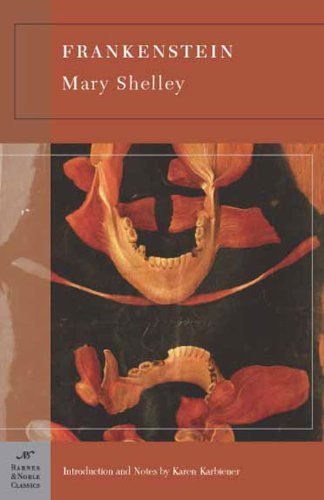
By introduction and notes by Karen Karbiener Mary W. Shelley - Frankenstein (Barnes & Noble classics)
A 2,200+ word academic essay exploring the use and meaning of outsiders in 'Frankenstein'. The essay's main focus is on Victor Frankenstein and the Creature, but the essay also deals with the other outsiders that Shelley presents. Fully sourced with academic citations.
- GenresClassics
216 pages, Paperback
First published December 31, 2013
Ratings & Reviews
Friends & Following
Create a free account to discover what your friends think of this book!
Community Reviews
Displaying 1 - 23 of 23 reviews
November 1, 2025
mary shelley you would’ve benefited so well from therapy

October 4, 2025
Like everyone else whose first exposure to Frankenstein is the generic Universal Monsters adaptation, I was surprised to see the monster written so eloquently. This is truly one of the most vulnerable and interesting characters in classic literature. To be honest, I read this because of the upcoming Guillermo Del Toro adaptation, and safe to say I'm glad I did! Especially since this is going to be one of the more "book accurate" depictions of the monster and story in cinematic history. I'd check it out or re-read before the release of the film!

November 9, 2025
i last read this in high school and wow this hit so much harder than it did when I was 15. poor creature being:(
April 6, 2026
#teammonster
July 26, 2025
I hate how much I enjoyed this book. For a classic written in 1818, it's crazy readable. You can tell that Mary Shelley was definitely going through something when writing this, and after learning a bit about her background, I absolutely dislike her husband and understand the book even more. I recommend that you read a bit about her life; it will give you a different perspective.
Victor is the type to throw himself on a couch dramatically while screaming into the cushions after having a horrible day, which he pretty much does throughout the entire book, moaning and laying about after being unable to make the most rational decisions known to man. I can't help but complain about Victor being a terrible man and parent. I felt so bad for “the monster/daemon,” who did nothing but exist, only to have their creator feel regret. It was very sad.
To me, this book is meant for when you're near the ocean on a cloudy day, wanting to stare out across the distance and contemplate your existence.
Victor is the type to throw himself on a couch dramatically while screaming into the cushions after having a horrible day, which he pretty much does throughout the entire book, moaning and laying about after being unable to make the most rational decisions known to man. I can't help but complain about Victor being a terrible man and parent. I felt so bad for “the monster/daemon,” who did nothing but exist, only to have their creator feel regret. It was very sad.
To me, this book is meant for when you're near the ocean on a cloudy day, wanting to stare out across the distance and contemplate your existence.

January 28, 2025
Really easy to follow for a classic. I LOVED the pacing and the story’s progression. Mary Shelley's writing is captivating.
I was also really intrigued by Mary Shelley’s life story.
I was also really intrigued by Mary Shelley’s life story.
May 25, 2025
this is one of my first classics ive ever read and let me tell you when i say it was so beautifully written. i absolutely LOVED how the story was paced and the ending was so well done. i feel as though it represents our own world in a way. where someone is distrusted only because of the way they look. people tend to overlook things if they dont find you pleasant looking. and the fact that even victor was disgusted by the “monster” he very much created says a lot. he did sit down and listen to what the monster had to say but still disregarded it even though the experiences that the monster went through were so saddening. this book clearly presents how one is not created evil, and rather its the events that influence it.
This entire review has been hidden because of spoilers.

November 11, 2025
“Do you dream?’ Said the [demon]”
Oh boy boy boy. I read this book almost a month ago and I’m only now done with my review. I have LOTS OF THOUGHT!! Overall I adore this book. It is definitely up my alley of books I’d like. It did not disappoint!! It was so so so good and immediately became one of my new favorites. Everything is perfect. The tone and atmosphere is beautiful. The writing is so intricate. The characters are exceptionally well written. Everything was wonderful. What I loved most was the complex themes of the story. WARNING!! This review is basically all my thoughts about EVERYTHING so this will be LONG. Sorry not sorry.
A big theme in the book is obviously life and death. The catalyst that sparked Victor’s affinity with life and death was his mother dying. This heavily motivated his quest to create life from death. It is his implicit motivation. I think it’s really interesting how Victor describes death as a curable disease. I really really love Mary Shelly’s portrayal of grief. I think it’s very accurate. A good example of that is after Clerval died. He described the aftermaths of his death like a dream or memory because he’s been surrounded by death his whole life. Though his hubris lead him to his fate you can’t help but sympathize with him and his repeated losses. The quote that stuck out to me was, “The whole series of my life appeared to me as a dream; I sometimes doubted if indeed it were all true, for it never presented itself to my mind with the force of.”
Mary Shelly also portrays PTSD and depression very well. Victor may be annoying but he has gone through a lot. When someone dies or something traumatizing happens to Victor he tends to bring up memories from his childhood or feelings he used to feel. He long for his life before his mom died which was the catalyst for his motivation to create the monster which haunts him. Even on the happiest day of his life he is sad and winey. I greatly dislike him but he’s a great representation of grief and depression. Get this guy on Prozac.
Mary Shelly did a fantastic job with the imagery and its underlining meaning. Victor creates life in the season where life dies (winter) to insinuate how unnatural it is. In contrast to his dark and grim conception, the monster begins to educate himself as the world comes back to life (spring).
Mary Shelly did a fantastic job with the moral ambiguity of her characters. Victor towards the end of the book is absolutely insufferable (IMO) but I love how complex his character is. He isn’t black or white. He isn’t good or bad. Mary Shelly herself doesn’t think Victor is evil and that is conveyed well to the reader despite their own opinions
A cool part in the book is when the monster confronts Victor. He says, “Accursed creator! Why did you form a monster so hideous that even you turned from me in disgust? God, in pity, made man beautiful and alluring, after his own image; but my form is a filthy type of yours, more horrid even from the very resemblance.” This is a great example of Victor not only playing god, and if god greater man in his image what does the monster reflect in Victor?
The central theme (I would say) is connection. Either having it, longing for it, or neglecting it. For example the monster said, “No father had watched my infant days, no mother had blessed me with smiles and caresses; or if they had, all my past life was now a blot, a blind vacancy in which I distinguished nothing.” The longing for intimate connection and care is a motif within the book.
Another example is Victor and his connection with his mother. the long lasting scar that she leaves when she dies. That connection being severed fuels his desire to bring his mom back and reconnect with her.
On a similar note, when Victor became entranced with his work he severed his connection to his family.
Walton is a very obvious parallel to Victor, so at the beginning at the book he is very lonely and longs for a companion like Victor. After meeting him he seems so grateful when he arrives and yet so scared to have him leave and have that connection severed.
Back to the monster, he longs for Victor’s love and affection and his general longing for a companion.
Lastly, Victor’s strongest connections: his best friend Clerval, Elizabeth, and his father and then they eventually are taken from him too.
The book really highlights the importance of connection and how the lack of it can affect someone.
Some general things I liked were Walton being GAY for Victor. He keeps talking about his Lustrous eyes and how fine he is. Gay romance or a male friendship written by a woman? You tell me.
I thought it was cool how the creature referred to Victor as My creator and then to my destroyer. It is a great way to characterize both Victor and the monster. It shows Victor’s slow violent shift in nature and the monster’s ability to understand the situation.
Oh boy Victor… his character development was more like character devolvement. He was such a great realistic character with plans and mistakes and weaknesses and strength and had complex thoughts and then we became SO WINEY.
He begins the book by describing himself as a “peaceful mind” who would “never[…] allow passion or a transitory desire to disturb his tranquility” and then he becomes obsessed and fixated on his work. He becomes ill and isolates himself.
I found it very interesting how Victor became more religious and there was more religious theming as he became more and more insane.
Victor reminds me of two different people. His childlike innocence at the beginning is a stark contrast to his selfish and cruel outlook on life later. When reflecting on creating his first monster it seems like he misses and disdains his old self. He both longs to be innocent again and hates his nativity. I like the parallel to his blind enthusiasm when creating his monster and his cold and calculated outlook on the monsters companion.
Oh boy now let me talk about the creature. I love him. He’s my baby His anger stemmed from his sadness and isolation. He was not born evil. The monster acknowledges his strength and refrains from using it as much as possible.
-“For a while I destroyed my hopes, I did not satisfy my own desires.”
Once Victor dies he acknowledges how silly his pursuit to kill him was and that revenge was unsatisfying.
-“But soon," he cried, with sad and solemn enthusiasm, "I shall die, and what I now feel be no longer felt. Soon these burning miseries will be extinct.”
The ending is so sad and purposely unsatisfying. Not once does Victor acknowledge his wrong and everyone continues to view him as a monster even after he tells his story. He ends up killing himself because he knows he will never be able to live a normal life and be happy. What the fuck. Justice for my baby. I love him.
Mary Shelley is definitely a creature self insert. Knowing the context between her and her father makes it glaring apparent how she felt towards him.
Parallels I liked that I haven’t mentioned:
-Victor is also a parallel to the monster because they both wish for death which the other indirectly caused
-Walton as a parallel to Victor in his per suit of knowledge and to be conscious of his own hubris
Quotes that stuck out to me:
-"This suspense is a thousand times worse than the most horrible event: tell me what new scene of death has been acted, and whose murder I am now to lament?"
-“the glimmer of two eyes that glared upon me. Sometimes they were the expressive eyes of Henry languishing in death, the dark orbs nearly covered by the lids, and the long black lashes that fringed them; sometimes it was the watery, clouded eyes of the monster as I first saw them in my chamber at Ingolstadt.”
-“Nothing is so painful to the human mind as a great and sudden change”
TLDR:I REALLY FUCKING LIKE THIS BOOK
This entire review has been hidden because of spoilers.
April 21, 2026
From when he was born he smiled upon his creator. The feelings of happiness yet defined but innately human, he smiled. His creator however did not share the same sentiment and only wanted to be rid of his very creation and its ghastly smile. Given not a name and not educated or taken care of, he is called a daemon. Treated as an outcast because Victor made him to look distorted, ugly, and wretched. The daemon’s first interaction blemished in being unwanted, this daemon could never fit in, clinging to the shadows because of his appearance and learning but never quite learning the ways of society. Yes, he was able to read and converse in French but unable to find a friend or companion to share time and conversation with. Frankenstein’s monster’s only idea of self revolved upon his creator and ultimately the chase marked his very existence.
Despite the monster following Victor, their lives followed one another. Victor’s escape from guilt was nature and the monster’s escape from society was likewise nature. Victor goes out into the wilderness to seek clarity but the monster did so because that is where he felt the most safe. The monster was alienated for his appearance and could only retreat when he tried to enter a town or home, when he was fully capable of destruction. While Victor faced with persecution after being wrongly accused of the death of his friend Henry but was granted rights on his safety. Victor received lopsided treatment and couldn’t empathize with the monster of what it means to not be embraced by society. His alienation was the monster’s fault despite being the creator all arrows still pointed towards the destruction of his creation.
The daemon is flawed in his attempts to fit into society. His failure to assimilate and befriend the De Lacy’s pushed him out of what he first thought of as his home… his attempt to make William a companion by kidnapping him but unfortunately killing him out of spite for William’s relationship towards his creator pushed towards his moniker and he became the victim and the perpetrator. He became the monster.
Victor dies with a wry smile as his revenge was incomplete but the monster comes to a clear conclusion of his time spent alive, planning to die out of pain and sorrow to live such a wretched life incomplete of truly living.
- 4/5
Despite the monster following Victor, their lives followed one another. Victor’s escape from guilt was nature and the monster’s escape from society was likewise nature. Victor goes out into the wilderness to seek clarity but the monster did so because that is where he felt the most safe. The monster was alienated for his appearance and could only retreat when he tried to enter a town or home, when he was fully capable of destruction. While Victor faced with persecution after being wrongly accused of the death of his friend Henry but was granted rights on his safety. Victor received lopsided treatment and couldn’t empathize with the monster of what it means to not be embraced by society. His alienation was the monster’s fault despite being the creator all arrows still pointed towards the destruction of his creation.
The daemon is flawed in his attempts to fit into society. His failure to assimilate and befriend the De Lacy’s pushed him out of what he first thought of as his home… his attempt to make William a companion by kidnapping him but unfortunately killing him out of spite for William’s relationship towards his creator pushed towards his moniker and he became the victim and the perpetrator. He became the monster.
Victor dies with a wry smile as his revenge was incomplete but the monster comes to a clear conclusion of his time spent alive, planning to die out of pain and sorrow to live such a wretched life incomplete of truly living.
- 4/5
This entire review has been hidden because of spoilers.

October 10, 2025
Absolutely tragic in every sense of the word. I honestly wasn’t prepared for how different this story was compared to what Hollywood made it out to be. The movies never came close to capturing the depth, pain, and brilliance of this book. The writing is hauntingly beautiful and dreadfully heartbreaking all at once.
Listening to the story unfold was breathtaking. I was completely stilled by how Frankenstein’s creature saw the world—his innocence turning to despair as he realized how cruel people could be. His hatred wasn’t born out of evil, but out of rejection and loneliness. It’s gut-wrenching to think he never asked to exist, yet he spent his entire life yearning for compassion, a friend, a partner… something Victor himself also longed for, in his own way.
And that scene where the creature begs Victor to create another like him? Ugh. I understood Victor’s hesitation, but it was still devastating to see the creature’s hope crumble.
The ending left me speechless. It’s tragic and mesmerizing. One of those endings that lingers long after you finish. Mary Shelley didn’t just write a horror story—she wrote a masterpiece about humanity, isolation, and the monster that exists in us all.
Listening to the story unfold was breathtaking. I was completely stilled by how Frankenstein’s creature saw the world—his innocence turning to despair as he realized how cruel people could be. His hatred wasn’t born out of evil, but out of rejection and loneliness. It’s gut-wrenching to think he never asked to exist, yet he spent his entire life yearning for compassion, a friend, a partner… something Victor himself also longed for, in his own way.
And that scene where the creature begs Victor to create another like him? Ugh. I understood Victor’s hesitation, but it was still devastating to see the creature’s hope crumble.
The ending left me speechless. It’s tragic and mesmerizing. One of those endings that lingers long after you finish. Mary Shelley didn’t just write a horror story—she wrote a masterpiece about humanity, isolation, and the monster that exists in us all.

Read
September 3, 2026I watched Guillermo del Toro's version of Frankenstein and it was terrific. Then I was looking in my collection of books and found this edition of Frankenstein. It turns out that Guillermo's version is pretty darn close to the book. The Boris Karloff movie, not so much. This version of the book gives you an account of Mary Shelley's life. It suggests that she was influenced by The Rime of the Ancient Mariner, which I also read before starting the main story. I am absolutely thrilled by reading this book. The lifetime struggle of Victor Frankenstein and the Wretched thing is so compelling. If you are going to read a classic novel, I highly suggest this one. It's been over 200 years, I hope I didn't spoil anything.
November 1, 2025
I struggle with the classics sometimes because the pacing and flow can feel a little unfamiliar to me, but I really loved Frankenstein. Mary Shelley did a great job with the emotion in this story. There were so many complex themes and this had me questioning morals and the human nature verses the obsession of progress just for the sake of progress. It was excellent and had me feeling all the things by the end.
I also highly recommend the audiobook narrated by Dan Stevens. I listened while I read and his delivery was phenomenal. It’s a great way to take in this book if you also struggle with the classics at times.
I also highly recommend the audiobook narrated by Dan Stevens. I listened while I read and his delivery was phenomenal. It’s a great way to take in this book if you also struggle with the classics at times.
November 2, 2025
Almost a 5 star book — despite the wonderful prose, there was something off, maybe with the pacing? That could’ve been my own fault, since I finished the book pretty quickly. Despite this and the few other frustrations I had with Frankenstein, Shelley’s sentiments, characters, and plot were extremely moving.
Want to read the 1818 version soon ;)
Want to read the 1818 version soon ;)
January 8, 2026
some of it was kind of a huge drag to read and it would literally take me an hour and twenty minutes to read 30 pages (like, how???) but there was like a lot to analyze, which was cool and there was a lot of like psychology stuff which was also cool so yay
June 1, 2024
I loved this version because of Karbiener's notes.

November 11, 2025
had to return to the ancient texts after watching Frankenstein (2025)!!! it’s mary shelley weird girl fall

December 31, 2025
What an ungrateful idiot I was to find this boring my senior year of high school.
March 2, 2026
only a virgo could have written this

March 14, 2026
Enjoyable & easy to read!

April 10, 2026
i am forever a creator sympathizer. all things are made internally good and with compassion they can thrive.

September 5, 2026
Who would have known that the story of a monster would be so emotional and heartbreaking. The depth to this story is far more profound than I expected.
September 8, 2026
very cool book mary shelley ate down
February 4, 2024
maybe i should accept i’m too stupid for classics and move on
Displaying 1 - 23 of 23 reviews