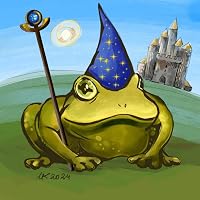
Dal Timgar had always wanted to be a doctor. As a Garvian and the first non-human to study medicine on Hospital Earth, he must face enormous adversity from classmates, professors, and some of the highest ranking physicians on all of Earth. Will his efforts be enough to earn him the Silver Star of a Star Surgeon?
Alan Edward Nourse was an American science fiction (SF) author and physician. He also wrote under the name Dr. X He wrote both juvenile and adult science fiction, as well as nonfiction works about medicine and science. Alan Nourse was born to Benjamin and Grace (Ogg) Nourse. He attended high school in Long Island, New York. He served in the U.S. Navy after World War II. He earned a Bachelor of Science degree in 1951 from Rutgers University, New Brunswick, New Jersey. He married Ann Morton on June 11, 1952 in Lynden, New Jersey. He received a Doctor of Medicine (M.D.) degree in 1955 from the University of Pennsylvania. He served his one year internship at Virginia Mason Hospital in Seattle, Washington. He practiced medicine in North Bend, Washington from 1958 to 1963 and also pursued his writing career. He had helped pay for his medical education by writing science fiction for magazines. After retiring from medicine, he continued writing. His regular column in Good Housekeeping magazine earned him the nickname "Family Doctor". He was a friend of fellow author Avram Davidson. Robert A. Heinlein dedicated his 1964 novel Farnham's Freehold to Nourse. Heinlein in part dedicated his 1982 novel Friday to Nourse's wife Ann.
His novel The Bladerunner lent its name to the Blade Runner movie, but no other aspects of its plot or characters, which were taken from Philip K. Dick's Do Androids Dream of Electric Sheep? In the late 1970s an attempt to adapt The Bladerunner for the screen was made, with Beat Generation author William S. Burroughs commissioned to write a story treatment; no film was ever developed but the story treatment was later published as the novella, Blade Runner (a movie). His novel Star Surgeon has been recorded as a public domain audio book at LibriVox His pen names included "Al Edwards" and "Doctor X".
This YA novel from 1959 is a critique of systemic racism thinly disguised as a Golden-age space opera that works surprisingly well.
In the distant future, humans have invented the Koenig star-drive, allowing us to explore solar systems far beyond our own. It turns out that the galaxy is teaming with intelligent life, united under a Galactic Confederation, but it seems human civilization is the only one that has developed any kind of medical science. Therefore, Hospital Earth is the main center of healthcare in the whole galaxy. Dal, an alien from the planet Garv II, is inspired to become a physician, probably the only one in the history of his people. But while Earthlings have long since ended their centuries of race and culture wars, becoming unified in their diversity, there is still fear of the Other. Thus, our hero struggles to graduate from medical school on an equal footing with his human colleagues despite his academic performance.
But this book is far more advanced in it's conception of the cause of racism than we have today. Racism does not come from some inherent fault in the genetics of white people, one of the latest racist testaments of contemporary culture, nor is it the product of necessarily a fault of ignorance or morality. It is the product of politics. A truly unified population is impossible to control. Once cultures and ethnicities blend in harmony, apparent differences tend to dissipate anyway to the point where a common language and values are shared. The political elite are motivated for this to never happen, and thus to stoke the fires of division.
In this case, Earth holds the monopoly on the health sciences. All other planets must rely on humans to save them from infectious epidemics and other global health crises. Therefore, the Confederation NEEDS Earth, and that gives Earth political leverage and power. If a non-human is allowed to join the exclusive club, then it won't be long before other alien candidates will be admitted, this diluting the power.
Racism is fear of losing control.
Now, as brilliant as this idea is, the author does not subtlety weave this in to the narrative. Instead, he artificially inserts the main theme into an inquest on whether to grant the young Garvian a probationary license. So one doctor basically spouts out the whole plan to keep the medical profession ethnically pure--right in front of Dal. Not in closed session. Not in some internal narration. Not even in a private scene where he lets the sinister motivation slip while having one too many pangalactic gargleblasters. Nope. Instead, the scene plays out like a senator shouting out on C-SPAN, "We are holding this hearing today not really to investigate anything, but only to tarnish the reputation of the other party to make sure they never get elected again! It's our only hope to stay in power! We must rule the WORLD! Mwoo hoo ha ha haaaaa!!!"
Sure, that would be honest. But it's stupid. And it doesn't happen. So it should not have been written this way in this book. I understand this is a novel for young people, but I think the author should have respected the intelligence of his audience a lot more.
But the rest of the book is pure Golden-age sci-fi goodness. Dal, his pink pet Fuzzy, and two other resident doctors, fly around space in their rocket ship "Lancet," encountering different races and planetary environments among a variety of medical challenges. These are the kinds of adventure stories I like best, and why Doctor Who remains one of my favorite television shows. "Star Surgeon" also reminds me of Murray Leinster's "Med Ship" series, also reviewed here, which follows a similar formula.
The stakes are high for Dal, as not only does he have the lives of his patients on his hands, but mean Doctor Hugo Tanner is gunning for him. One slight mistake could give an excuse for Dal's dismissal. So this makes for some fairly good drama as well as fun sci-fi adventure.
The way I came across this book was kind of by mistake. I was looking to read the James White "Sector General" series, which includes a novel called "Star Surgeon." But this one was published some three years before and was written by Alan E. Nourse, who was also a physician. Nourse even wrote several nonfiction medical texts. When he wrote fiction, he sometimes went by the rather sinister pseudonym Doctor X. Fun fact, Nourse's novel "The Bladerunner" was the source of the title of the famous movie "Bladerunner," though the movie script was mostly based off of Phillip Dick's story "Do Androids Dream of Electric Sheep." Anyway, it seems I have a few more medical space operas to check out, and you can be sure I'll review them here!
But in the meantime, I do recommend this short novel to vintage sci-fi fans young and old. It's a simple but fun romp through exotic worlds with a worthwhile message.
I read this SF book when I was about 9, and I forgot most of it pretty quickly, but there was one subplot I've often wondered about. The heroes are space doctors who go around the galaxy doing heroic medical stuff (the author was himself a medical doctor). They land on a planet where the monkey-like inhabitants are suffering from a weird virus infection, and they do their best to cure them. It doesn't work: every time a native looks like he's virus-free, he turns into a babbling idiot. In the end, the hero has an epiphany. They've got the wrong patient! The intelligent species isn't the monkeys, it's the viruses. They've been doing their best to kill the people who needed their help.
It works okay as a metaphor for various kinds of misguided interventionist foreign policy, which of course I completely missed as a 9-year-old. But that isn't the thing I wondered about; I was more curious to know whether it was in principle possible to have an intelligent virus. In the book, they were supposed to have some kind of hive mind, but this struck me even then as nonsense and still does. I couldn't really have said why at the time, but now I think I can voice my objections coherently: a virus contains too little information to encode any kind of intelligent behavior. It doesn't matter how many bodies you spread it over.
Or is it so obvious? Maybe there's a flaw in my reasoning... what do other people think?
This entire review has been hidden because of spoilers.
Audio via YouTube. A vintage 6o's Sci Fi story, written by a medical doctor. I wonder if he had the idea before Star Trek? The Earth develops space travel , and discovers a federation of worlds. Each planet, that is a member has to meet two criteria. First is to have the advanced technology for extended space travel. The second was to offer a special service/skill to the federation. Earth specialty became medicine/medical care. By contract of course, just like a policy. Four branches of service, with pathology being black, and surgery being red. All doctors are human, until now. Del is from a trading world, and wishes to be a doctor since childhood. He saw the humans save his people. The humans do not want him-gee reflects 1960's racial tensions. If other races can offer medical services, then Earth will not be able to become a full member. Three doctors on a ship--gee who does the bedpans and urinals them??!?! The doctors are so great in the future, they do not need nurses at all!!!! Well, the rest of the novel is about the trails and tribulations experienced by poor Del, and his fuzzy. Not a tribble-much much more coolth. Interesting medical story at the end, I did not see coming, with a new planet client. The reader is great for this story.
Published in 1959, Star Surgeon is the story of three young men (where was Cherry Ames when they needed her?) on a medical ship, boldly bringing health and wellness and healing to the galaxy. It seems that no other races had the medical knack, until now, and the Earthmen are hesitant to break the tradition. Nourse (I've been reliably told his name was to be pronounced "nurse," not "Norse," which is ironic since he wrote many medically-themed works), wrote some really entertaining stories over the years, but this one didn't hold up quite as well for me. Still, it's a nice old-fashioned story for a younger audience in the tradition of Leinster's Med Service and Hubbard's Ole Doc Methuselah.
The analogy is clear, an alien (Garvian) named Dal Timgar who is perfectly qualified to serve in the field of medicine struggles to get opportunities and recognition due to an ubiquitous prejudice. There's a bit more to it than that because medicine is kind of Earth's thing in the Galactic Federation and some fear that allowing non-humans to enter the field will take away from Earth's strategic advantage.
Garvians carry around a pink fuzzy alien pet with some mild telepathic connection existing between the two. Humans who are aware of this are understandably paranoid of the potential for psychic trickery, but they are not the only ones who don't understand the full nature of the link, the Garvians are themselves not entirely sure how the relationship functions. Anyway the pink fuzzies are pretty cute and react to their companion's emotions and you'll probably love them.
Dal gets tentatively accepted into the Red Service of Surgery but will need to justify himself before the rank becomes permanent and official. The various medical services are identified by colour with the highest and most authoritative branch being the Black Service of Pathology.
Dal is assigned to the aptly named Lancet, a patrol ship which swoops in to provide medical aid as required by other Galactic Federation missions and outposts. Hospital Earth serves entities who have a contract for medical assistance and these contracts are graded to prioritise the level of service provided.
A crisis arises for the Moruans due to their own doctors attempting organ transplants away from the excellent facilities of Hospital Earth and thus even though they call upon the Lancet for assistance they remain reluctant to receive any assistance from Earth's hospital ships, for fear of ridicule within the Federation. This initially complicated matters for Dal but it ends up uniting the members of the Lancet.
In an all too real fashion we learn that even some of Dal's own people, the Garvians, have taken issue with his ambition to enter the ranks of Hospital Earth service.
For a book published in 1959 this is an exceptionally immersive and readable novel. The crisis which eventually seals the fate of the medical team on board the Lancet is a gripping and tense bit of technical and emotional writing, the outcome of which will take you by surprise, I'm certain.
The author seems to have been a physician, lending some obvious skill to his writing on this topic and although I'd never heard the name before, according to GR and Wikipedia he has a fairly extensive list of scifi under his belt. I'll certainly be looking to obtain and read some more of Nourse's books.
Read and reviewed March 2022 but for some reason there are two listings for this book and I've just noticed, so I've added my review here now too.
Enjoyable refreshing take on an intergalactic corporation that see's humans significant contributions to a galactic confederation as purely medical. A simple story following the narrative of finding your place within a world set on rejecting you. Dal (the only non-human in 'Medical Earth's' medical fleet) is humble with his surgical qualifications and abilities and at times unsure. But we follow his journey as he learns to trust himself and his place.
The ensemble is delightful enough, I particularly enjoyed the character Jack. Although the antagonist of the book is two dimensional and character arc is flat and unsurprising.
I loved the portrayal of 'Hospital of Earth's' divisions and humans position in the galaxy is interesting with "being otherwise primitive" but "excelled with biology and medicine that surpasses all other confederation members." Also, the uniform descriptions are fantastic, makes me want one! They sound empowering and incredibly handsome.
The story ended on a heartwarming note, and the twists in the middle and end felt reasonable and right.
An Enjoyable read on the whole, even if a bit simple - but I liked the premise and am impressed how it holds up completely considering it was published just shy of 60 years ago. There's also quite a few little parallels to Star Trek (notably Tribbles), though I am unsure if that is intentional or not - but those were fun details regardless.
Highly recommended. Never mind that it's old; it's relevant right now. I enjoyed the free audio from Librivox.org of this short public domain book and suggest you trust me (the narrator is a volunteer, but he's very good... there's also an ebook version on project gutenberg). If you want more persuasion, read on, but I can't really talk about it without being a bit spoilery.
Mostly surprisingly intelligent and wise. Ok, it does seem odd at the beginning that Tanner has to tell the committee his objections to the Garvian probationer, as I would think they would have had discussions well before Dal had 8 years of training. And the cleverness of the virus vs. their hosts is kind of awkward (see Manny's review).
But the anti-racist message of Dal's fight for respect and independence is beautifully done. He has to deal not only with Tanner's racism and extreme patriotism, and Jack's ignorance and fear, but with his friend Tiger's impulses to be a 'white savior.' He has to find his own core of strength, his own confidence in his skills and judgement, his own self-respect. All along I thought he was doing fine, but the ending just makes me realize that, as a white American, I do not always see what challenges the disenfranchised face.
Note : 3 étoiles pour cette novella plutôt YA écrite en 1960 par un auteur pratiquement inconnu en France
Le thème : la vocation professionnelle ou comment la force morale et la compétence permet une insertion malgré un ostracisme flagrant (m'a semblé fortement inspiré par Stars Sturgeon de James WHITE pour la vision soins aux ET )
des défauts : un peu trop moralisateur avec des ficelles très voyantes et peu crédibles (pourquoi les humains seraient-ils les seuls à avoir développé une science médicale ??? difficilement acceptable ! ) une écriture qui pourrait être plus peaufinée : beaucoup de but et de and à chaque paragraphe
qualités : se placer dans le monde médical en SF (je n'en connais pas beaucoup à part James White et la série de Stardoc par S.L. Viehlet un ET plutôt sympathique avec son fuzzi (je vous laisse découvrir ce que c'est) et imaginer des vaisseaux spécialisés dans le médical parcourant la galaxie et souscrivant des contrats "d'assurances"
En dépit de ma note qui peut paraître basse, j'aurais bien aimé lire d'autres aventures de Dal (avec ou sans Fuzzi) bien volontiers !
Star Surgeon showcases Alan E. Nourse doing what he does best - science fiction with a medical theme. Dal Timgar’s character was well-fleshed out. The story reminded me of watching Star Trek reruns. For a Young Adult novel it was really satisfying.
If you haven’t read Nourse’s The Bladerunner, I highly recommend it.
Dal Timgar wants to be a surgeon. He's dreamed of it most of his life, and he has the intelligence and the discipline to do it.
Unfortunately, he's a Garvian, an alien, humanoid, but not human. No non-human has ever studied medicine on Hospital Earth; Dal is the first. And he's mostly not welcome.
When Earth developed a faster than light space drive, they also discovered a thriving Galactic Federation, composed of myriad different races. Each of them contributes some particular talent or achievement. Dal's race, the Garvians, are merchants, and especially good at managing people.
Earth's specialty is medicine. Since having a valued specialty is the price of full admission to the Galactic Federation, Earth, now "Hospital Earth," is determined to protect the reputation of its doctors and medical technology.
Dal Timgar gained admission to medical school, and has graduated. He's ready for his first assignment on a patrol ship, the assignment all young doctors must complete successfully before getting full recognition as doctors in their chosen specialties. But there is opposition to Dal getting his assignment; there has been from the beginning. Have failed to stop his admission, they try to stop him at this point--and he achieves a highly conditional victory. He gets his assignment, but with conditions and with one of his teammates chosen by his biggest enemy.
Frank, a.k.a "Tiger" Martin is the Green Doctor, the internal medicine specialist, and a friend of Dal's from early in medical school. Dal is the Red Doctor, the surgeon. The Blue Doctor, the diagnostician, is Jack Alvarez, the choice of Dal's most determined enemy, and very hostile to Dal's presence in the medical service, never mind on the same ship.
This is a book that takes on racism, including structural racism, pretty directly, but also with grace. Jack's racism is obvious. Tiger, with the best of intentions, and loyalty to his friend, has an inclination to be a rather bull-headed "White Knight" savior, which Dal finds neither welcome nor helpful.
These three young men have to find a way to work together, while confronting some serious challenges on worlds Hospital Earth, and even the Galactic Federation, haven't been in contact with before. They all have a lot to learn. Aside from Jack's desire to find something that will disqualify Dal, and Tiger wanting to charge in and save Dal when there's a problem, Dal has his own temptations. He has a companion, a symbiote, and it's very, very useful. It's one of the things that makes Garvians such successful traders. And it would be extremely unethical for Dal to use it to help him in his difficulties with humans--at least according to the ethics he's learned on Earth. Will he resist? Will he succumb to temptation?
This is an enjoyable book, with decently drawn characters, and real growth in those characters, including the ones one might not be tempted to think of as good guys
It's not as good or exciting as I thought wen I was racing through all the science fiction in the library in the 1960s, but it is good, and satisfying, and making thoughtful points I didn't consciously notice as a kid.
Recommended.
It's available free as an audiobook on LibriVox, and as an ebook on Project Gutenberg, and I am reviewing it voluntarily.
In an all too convenient future humans are the ONLY race in the galaxy to develop medicine (?) and therefore all others are dependent on earth 🌍 for their medical service. Our main character Dal— an alien from the planet Garv II — wants to be a physician and after a time is begrudgingly allowed to study medicine and somehow passes his overly hard exams despite prejudice against him. He is given a trial of one year of service similar to an Intern year. Dal and his co-symbiant pink pet, fuzzy, are assigned to the Lancet with two other residents (doctors in training) to visit many planets (like housecalls) and encountering different races with different medical needs and some big medical challenges—- All while trying to not get dismissed.
This book had a LOT of accuracy in it, esp the struggle thru training and even had a lot of racial prejudice commentary that was perfectly written in.
I have a weird soft spot for medical drama science-fiction, so this book fits well into my personal tastes. Although a bit dated (it is nearly 60 years old) it holds up pretty well. Nourse's writing style was just a bit ahead of his time, so hit proses lacks some of the odd stilted was that many of his contemporaries share, making this a very easy read. Fun bits of light dramatic tension, although most readers will probably guess what the final resolution will be early in the book. All in all, a fun read.
Just who in the name of DeForest Kelley would think to write a Star Trek-style science fiction novel featuring the Earth as part of a Galactic Confederation of spacefaring species in which the heroes boldly going where no one has gone before are - wait for it - doctors?
Answer? A doctor, of course.
In physician and sci-fi writer Alan E. Nourse's take on the future, we will all come to live on Hospital Earth, and due to our superior skills with surgery and all things medical will be 'in charge of the health of a thousand intelligent races on a thousand planets of a thousand distant star systems.'
I bet there still won't be an NHS in America though.
Yanks would probably be better off as Garvians. We save them gratis from the plague as they generally dominate galactic politics and trade. Not that they don't deserve the goodwill. They may be shorter and hairier and have one less finger than us, but they sure seem nicer.
And here's the rub, one of the two reasons I really enjoyed this little novel, despite being essentially a pretty standard quality space opera of its time, probably published with nothing more than a juvenile audience in mind too.
The moral. In short, we humans need to tidy our act up before we are worthy of a full membership within the space community, and it takes our tolerance of an alien stepping into our shoes to earn that place.
That alien is, of course, a Garvian, namely Dal Timgar, who wants to be the first Star Surgeon of his species - who like every other species seem to know heaps about astral physics and nothing about medicine. But not everyone wants him to succeed.
Fortunately he has the help of Fuzzy, a little fur ball with whom he has a symbiotic relationship ("He's a pleomorph," Dal said. "No cellular structure at all, just a protein-colloid matrix." Er, right-o!), and Frank "Tiger" Martin, a good guy human doctor.
So other than the moral of racial tolerance, what was the other reason I really liked Star Surgeon?
Just, simply, the unlikeliness of it. Who needs Flash Gordan when you've got Dr Kildare?
Dal Timgar, the first alien enrolled in Earth's medical school system, struggles to prove his ability to be a good doctor.
This was a surprisingly enjoyable quick little SF read. It was originally published in 1959 so of course there are some social hiccups (based on the text, no women exist, apparently) but it's still worth reading to watch Dal win out over prejudices against non-humans. He and his two companions visit a plague planet with a nice little twist on what is causing the disease.
I prefer James White's medical SF, but did like this as well.
fun. a remarkably thoughtful 1960's sci-fi analogy for racism. counterpoint: the word "she" is only used twice in this book, and both times refers to a spaceship not a woman.
Star Surgeon is a light, young adult sci-fi novel that imagines a future for Earth in which humanity’s primary occupation is as physicians for species across the galaxy. The book also contains themes of tolerance for others and independence in hard work. The morals and primary plots aren’t very engaging and might only be interesting to the youngest audiences.
However, the sci-fi elements are imaginative. I want to write down a few so that I don’t forget them. Ignore what comes next if you don’t want spoilers. 1. In this world, the whole galaxy has an intergalactic administration of alien species and planets. Earth is a “probationary” member as it’s not yet clear if we belong in the wider group. What elevates us to this probationary point is our advanced medical knowledge. As a result, the whole planet becomes essentially a hospital for all the planets and species in the galaxy.
2. Because of point 1, the doctors are more like veterinarians than present-day doctors. They must adapt their knowledge to diverse anatomies and physiologies. The book states in the beginning that Earth doctors can do this because they treat “chemistry” as the fundamental, universalizing principle of all medicine. In other words, anatomy and physiology may be different between species, but chemistry never changes.
3. This is my favorite point in the book. At the climactic medical mystery, a group of intelligent monkeys are hit with a plague that renders them “dumb.” As the doctors try treating them with antibodies, the monkeys get worse. The brilliant revelation is that the monkeys themselves are not the intelligent species, but rather a symbiotic virus that makes them intelligent by infecting them. It’s the virus that must be saved, not the monkeys. This is super brilliant and playful.
Star Surgeon was penned in 1959 but it still holds up remarkably well today. This novel is a good example of what I call "hopeful" science fiction-humanity has not put all its' faults behind it but has reached the stars and is trying to settle into a new existence as part of a confederation of galactic cultures. Though the book itself is short it is filled with timely events that will probably strike a chord with the modern reader-Dr Dal Timgar is the first non-human to attend and graduate from Terran medical school, and his every attempt to practice medicine is met with strong opposition. This was a lively, quick read and just what I needed to tackle on a day when I was sick. Just one problem:
When I was young person I always felt that somehow something like this would really happen-that humanity would advance as a race and become something greater. That was one of the reasons I enjoyed this type of story. But I just don't have that optimism anymore. Every Trumpalo and anti-vaxxing cretin I run across convinces me that we just aren't going to make it, and convinces me that the reason we have found no other intelligent life in the Universe is because there isn't any-they were also run into the ground and bombed themselves back into the Stone Age, thanks to greed and the actions of mountebanks, charlatans and fools. I need a John Paul Sartre or similar philosopher to tell me the name of a depression this big. Galactic? Global? Cosmic? Or is it the same old nausea?
Don't let any of that prevent you from picking up this book. It is a fun example of old style science fiction.
The novel is quite often mentioned as a ‘classic medicine sf’, so finding it in the Storytel catalogue I decided to give it a try. As with many classics the age shows. The story itself is a standard ‘overcoming the prejudice’ motive – Earth had already eliminated wars and racism (and I had to remind myself several times that black doctor has nothing to do with said doctor’s skin, and everything with his uniform), but prejudice against non-humans does occur giving the story a start. What bothers me is a total lack of women. I know, it is quite a standard in the classic sf, but in the medicine context it is much more noticeable. But if Nourse would have included a nurse (or two! or more!) on the General Practice Patrol ship he would probably had to describe some female/male interactions… The Horror! To avoid it the 3 poor straight-out-of-the-school doctors have to fend for themselves… I even did a quick search in the Gutenberg version of the novel: there are exactly two occurences of the pronoun ‘she’, and the ’she’ in question is a spaceship.
A very quick, easy read. Really I think this could fairly be a YA title? And please note that I do enjoy YA titles, so that was not a bad comment. I actually read the entirety of this book on my flights home from Denver a couple of days ago. Yes, it's that quick. So, yes a quick read, but fun nonetheless. Basically a young outcast seeks to embitter himself, and also serve the greater good. He has troubles with his fellow crew on the Patrol Ship Lancet, and also from the hierarchy from on high. The characters are all pretty one dimensional, and pretty much what you would expect. But they do drive the plot, and there are some interesting ideas that are brought up.
It's kind of dated, All the characters are men. It's kind of a weird projection into the future that doctors would be color coded. It was awkward every time they mentioned Black Doctor Tanner. It seems that I recall a few other SF stories from the 1950s and early 1960s where capes are a fashion thing.
To join the Galactic Federation,a planet has to have something to contribute to the Federation and what Earth has to offer is probably not realistic but unexpected and interesting. The motive for Tanner hating our hero is believable but petty.
And the solution to the Brucker aliens medical problem was clever and a big surprise.
Could not work up sufficient belief in this book to carry it far... It may have been sufficient for 1950s pulps, but growing up in the 1980s, my standards for believing are a bit higher. There is not only pretty severe technological dating (the ship communications are by teletype for instance), there are scenic difficulties (200,000 doctors for a galaxy-wide service in teams of three or more?). There is simply a lack of the sort of standards and procedures that the modern era has conditioned us the expect. DNF
This was a reread for me, the first reading was completed in the 60s when I read as much scifi as I could find. The book retains the elements which impressed me first at age 15, and even though our world today belies some of the advanced science in the story, the inter-species relationships still hold their worth. A well scripted story, with a surprising twist and the subconsciously hoped for outcome.
It was an interesting read. Quite imaginative, and a nice change of pace from the standard Sci-fi War stories I normally read. May be slow for some with the technical/medical stuff involved, along with the crew dealing with long stints of space travel and how they get along. Still pretty neat how they have to get creative in order to save the lives of the multiple alien species throughout their initiation voyage so they can become fully qualified Star Surgeons.
One of the old (not to say classic) science fiction books in the Sci Fi Stockpile collection, over 10,000 pages long, that I downloaded from somewhere. This one's from 1959 and shows its age, both in ancient technology (spaceships communicate by TELETYPE!) and in heavy-handed preachiness. Still, an interesting look back at the kind of books I devoured in high school. Not a bad story at all, just a bit dated.
Really enjoyed this little gem. The narrator was very good and easy to understand and my favorite character was Fuzzy 🥰 The story was pretty simple, had a happy ending, morals prevailed, and new worlds and species were discovered. It was a shorter read but I wouldn't mind reading more about Del and Fuzzy's adventures as a real doctor and his little molecule of fuzz. This was my first book from this author.
i think Warren Fournier's review of this book does it justice. I liked the characters. I thought the third guy's antagonisms towards Dal were quickly read over. And the head surgeon guy was a little too direct in his messaging. But it's a short book, so I get that it had to be skipped over. I was entertained the whole time, and I found the later chapters to be really fun. Definitely a book I wished I had read when I was younger.
Haven’t read a lot of classic sci-fi lately, so this was a refreshing read. I enjoyed the protagonist,Dal Timgar, for his bravery and take-charge persona. The dialogue comes across a little stuffy in a few spots, but the storyline and supporting characters are solid. Overall, a nice escapist tale!
This is a Librivox (http://librivox.org/star-surgeon-by-a...) audiobook in the public domain. I don't remember reading it in my younger days, but the straight forward story brings back thoughts of a time when anything was possible. I enjoyed the story and I would recommend it to none critical fans of classic science fiction. A good read.
Not since junior high school so many years ago have I read a book that captivated my soul. Probably my reaction has not a little to do with my training and practice as a physician since then. Even though this book was primarily about the practice of medicine, there were interesting comments that pertain to the current, 2018, social status of my country.
Star Surgeon seems to me more of a book written in the 40s than the late 50s. It has the feel of a fix up, but I don't think it is. I found the plot to be rather simplistic although some of the things the surgeons come across are different. Over all I liked it, but if it had been longer I might not have.