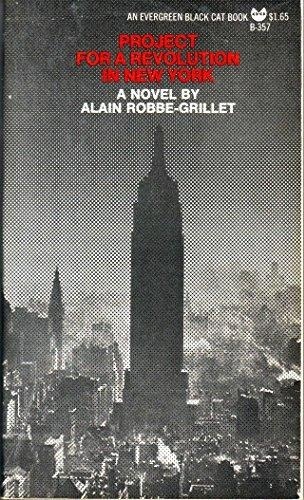
It would stand to reason that the increasing pervasiveness of the habitually triggered makes for somewhat timid times. I write this at the end of 2018, smack-dab in the middle of an era characterized by contentious argument and sanctimonious hand-wringing regarding the politics of representation. To my mind it would be dumb and undistinguished to wax apoplectic about such phenomena. Since I was a kid I have felt no fealty to the crowd, and can hardly be expected to care terribly much how and what it thinks. Well, up to a point. I am sensitive to the requirements of critical thinking. People are generally upset or offended for reasons which are intelligible and seldom completely illegitimate. When a work of art or of culture more generally produces an effect I am prepared to attempt to look at why that effect was produced and consider the matter with adequate emotional sobriety. Goddamnit, I have a graduate degree in the liberal arts, do I not? All that given its due consideration: I remain a man with a pronounced passion for transgressive art, and equally for the transgressive dimension of all true art, paradoxically at odds as it always must be with the civilizing apparatus of which it is also invariably a provisional extension. Of course, then, naturally, I will always retain a place in my heart for the French. In these skittish and sensitive times, the French continue to make their piecemeal stand on behalf of obscene and/or dangerous art, to creativity in some degree married to combat. Look no further than the delightful fact of beloved actress Isabelle Huppert's recent public readings of some of the greatest hits of the Marquis de Sade. Or look at the fact that the French continue to give out a literary prize called the Prix Sade, one recent winner of which was Alain Guiraudie's NOW THE NIGHT BEGINS, a novel I read earlier this year and which is distinguished by the brazenness of its sundry (sometimes hilarious) provocations. In the Marquis de Sade as in the Guiraudie much of what is transgressive is related to aberrant sexual behaviour and to sexual violence. We of course live in the time of #MeToo, a movement under the umbrella of which a new level of public attention has poised itself to reflect the ubiquity of gendered oppression and the predations of rape culture. While I largely support this general shift, I do not opt to discount or rebuke-as-an-automatic-matter-of-course "problematic" art or culture, still myself wholly primed to engage these things in the wild. I am above all interested in what is evil deep within us and deep within myself. Exploration of the darker libidinal realms will always be a part of my study, and I see my whole life as study. Which brings me to Alain Robbe-Grillet's PROJECT FOR A REVOLUTION IN NEW YORK, a novel I love very, very much, which is deeply problematic, and by which I would absolutely defend anybody's right to be utterly appalled. Robbe-Grillet was a fantastically kinky dude. I have read a few of his novels and watched a great number of the films he wrote and directed. His work is almost always on some level fundamentally sadomasochistic, novels and films in which schema of dominance and submission operate on a conditional, vibrating plane of desire. He specializes both as a filmmaker and novelist in creating interlocking tableaux, almost painterly, across which desiring-operations ritualistically expend themselves (but never to satiation). As in both psychoanalysis and Buddhism (and Gilles Deleuze's utterly remarkable MASOCHISM: COLDNESS AND CRUELTY) desire is perpetually undulating, constantly resurgent, never consummated, only modulated. Ritual, just as in religious practice, serves to invest desire with ideal conditions of form, with shape, rendering sacred (even when demonstrably profane) practices grounded in the cosmic and libidinal. The sacred-profane operates in Robbe-Grillet not dissimilarly to how it operates in Georges Bataille, and both writers seem, in their exultation of debasement, to see rot and decay as the ground of material matters. Objects and bodies in Robbe-Grillet routinely become fetishes, the fetish the necessary illusion. Having only previously read Robbe-Grillet novels of the 50s I cannot help but be powerfully struck by how much further he has gone in PROJECT FOR A REVOLUTION IN NEW YORK than I have seen him go previously as a novelist, though I do know that his cinema of the 70s was far more advanced and transgressive than were his earlier films, EDEN AND AFTER (1970) and SUCCESSIVE SLIDINGS OF PLEASURE (1974) remaining by far my favourite of his cinematic works. I am very pleased to have finally read a novel from the same period, comprehensively radical and incendiary as it indeed is. PROJECT FOR A REVOLUTION is both hazy and extremely vigorous. The enunciating voice is in a constant state of metamorphosis, appearing to seamlessly occupy multiple characters (there is nary a chapter break) in a kind of free-floating absorption; there is a character known as "the narrator" but at times he is spoken of as a secondary party by the voice that has occupied the seat of enunciation. Twice the voice of a female interlocutor being interrogated under torture fleetly steals the novel away. Likewise the urban landscape of the novel is characterized by tremendous plasticity. When I use the word hazy, one may be inclined to think of smoke or of a kind of opalescence, but this is actually a practically textural novel of coarse mutating materiality; I am inclined to compare it rather to one of Dali's melting clocks. Its New York is of course a kind of fantasy New York. I think of all the European popular culture since at least Karl May that has used the American West as its playground. Perhaps we should see Robbe-Grillet's New York as an Old West for modernist literature. The novel does indeed tie a number of tableaux and nebulous characters together through something like a ritualistic desiring-operation. Central here is the idea of the libidinal energies sublimated in acts of criminal and or political violence, organs of both law and of lawlessness complementing one another, serving the same fundamental ends. Reading Joseph Conrad's THE SECRET AGENT I was struck by the elegance of the manner in which Conrad seems to trace revolutionary violence back to emotional wounds. Robbe-Grillet, on the other hand, traces is simply to desire. The crux of what the novel is getting at is ultimately summed up by the psychoanalyst (possibly), artificial-inseminator, and torture specialist Doctor Morgan: “Rape, murder, arson are the three metaphoric acts which will free the blacks, the impoverished proletariat, and the intellectual workers from their slavery, and at the same time the bourgeoisie from its sexual complexes.” He then goes on a little later to advocate for "a general catharsis of the unacknowledged desires of contemporary society.” The point is that rape and torture are not intended here to pacify the victim but rather the human social animal in aggregate. Interrogations and tortures are recorded within the novel and distributed through shady channels. We are meant to understand the grotesqueries on display as heavily blocked-out rituals meant to be consumed by spectators, and periodic interjections of "Cut" and "Retake" officially code such rituals as fundamentally cinematographic. Robbe-Grillet's sick entertainment is as much about our own culpability as are many of Alfred Hitchcock's movies about pathological criminals amid a camouflaging sea of men. The characters are often likened to dolls, a mere addition to the profusion of objects, which may of course cause one to think of the tenets of the Nouveau Roman, but may also suggest the depersonalizing mandate of the homicidal psychopath. Again, this is a sadomasochistic sensibility heavy on the sadism, but it is also one that addresses itself to the whole of social enterprise, in so doing offering viciously damning testimony. A brutal societal novel of the libidinal. One of remarkable literary characteristics and some actual honest-to-God refinement (curious as it may seem). It is one of very few books which I feel obligated to compare to NAKED LUNCH, also a brutal societal novel of the libidinal, which just so happens to be the one that when I read it in my early teens sent me off benevolently down this road to ruin upon which I continue, having been singed awfully by the fires of Inferno, to merrily traipse.