Stockholm var en småstad men ingen idyll när den femtonårige pojken Henning kom dit 1860. Att få arbete var svårt och illa betalda var de yrken den okunnige pojken prövade. Han blir sjåare i hamnen men får sedan ett lindrigare arbete. Tillsammans med den kvinna han efter några år gifter sig med, Lotten, skapar han en dräglig tillvaro, stänger ute den smuts och det elände till vilket hans klass tycks vara dömd. Men nöden är aldrig långt borta. Löftena om den växande stadens lyckomöjligheter är inte för hans generation av arbetare.Mina drömmars stad är en underhållande, brett realistisk berättelse om stockholmsliv för etthundra år sedan. Per Anders Fogelström är inte bara en oöverträffad stockholmsskildrare utan också en människokännare med ömhet och medkänsla. Han inleder här ett stort stockholmsepos. laddat av dramatik och fängslande människoöden.
Per Anders Fogelström was among the leading figures in modern Swedish literature. He spent his whole life in Stockholm, and the most famous of his many works is a series of novels set in the city he dearly loved.
Ingmar Bergman's taboo-breaking 1953 film Summer with Monika is based on Fogelström's novel of the same name, published in 1951.
The author of more than 40 books in total, Fogelström also served as director of the Swedish Peace and Arbitration Society from 1963 to 1977. He received an honorary doctorate from Stockholm University in 1976. On the day he died, June 23, 1998, a bust of Fogelström was unveiled in Stockholm City Hall.
There is nothing objective in my love for this book. I read it in two days, eagerly walking around the settings to follow the characters, looking for what is left of Södermalm's working class life, loving each street, each corner, each view in the hilly landscape in the bitterly cold and snowy, windy rain in early April. Stockholm, the beautiful dreamlike city built on islands in the glittering meeting place between lake and sea. Stockholm, the city where nature has its perfect place. Stockholm, the place where working class people struggled to survive next to representatives of liberal and conservative establishment in the boom years of 19th century industrialisation.
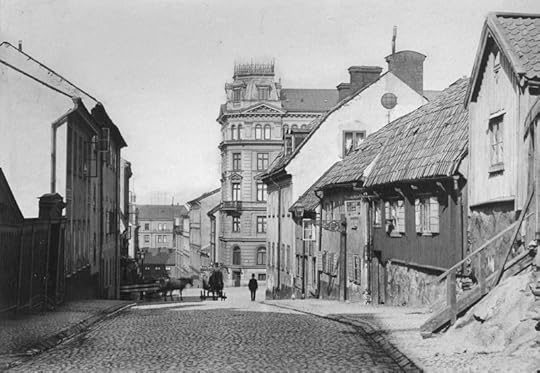
The wooden houses built into the rocks of Södermalm's hills look picturesque to the eye of today, but to those who lived their lives in the cold, wet, damp air, they became dirty traps, carriers of disease and pain. Violence, sexual abuse, drunkenness, hard factory work, tuberculosis, unemployment - the downward spiral of children born in the poor areas in the southern parts of Stockholm was almost inescapable, and the bitterness of those trying as painful as the delirium of those who gave up and let themselves go.
Fogelström's narrative is as captivating as Zola's social studies of Paris, and as heartbreakingly sad. And yet, there are signs of hope in the late 19th century: despite malnutrition and violence, children receive a better education, and workers manage to fight for at least rudimentary rights.
If you walk through Stockholm on a bitter cold April day, knowing what lies behind us after six months of snow and ice and wind and darkness, without any signs of the tiniest and bravest spring flowers yet to be found, snow still lingering in the shadowy parts of gardens and parks, you have to admire the strength of those who made a difference for themselves and their children when they stepped into the emerging modern city to help develop the commodities we now take for granted.
Covered in a woolly hat, a winter coat, a rain coat and warm gloves, I walk uphill and downhill, longing for something warm to drink and eat, thinking of Fogelström's women who spent their days washing clothes without a coin to spare to enter one of the many picturesque pubs in the area. I think of the many children who starved because the salaries their fathers earned went to the whore houses and liquour stores in the harbour. And I think of the young couples who tried to keep a clean and neat environment for their family in a tiny wooden house where they shared minimal living space with three or for other groups of poor and starving strugglers.
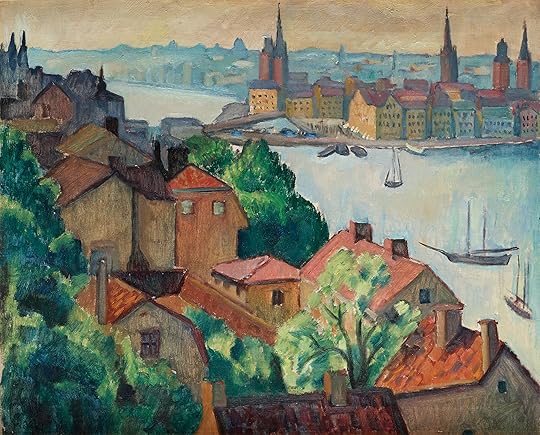
Standing on the mountain of Södermalm, those young dreamers notice how beautiful the city is - from a distance. And that is what I see as well: the story of of 19th century Stockholm is captivating, exciting, fascinating - from a distance. If I had to live through it myself, there would have been no power left to read, let alone write.
To see Stockholm with the eyes of an artist is a treat, and a privilege.
När jag i veckan var på Centralen i genomresa passade jag på att köpa några böcker och däribland Mina drömmars stad. Efter att jag läst ut Dickens The Haunted House under den första timmen på tåget norrut plockade jag upp denna och började läsa. Och några timmar därefter hade jag läst ut den. Jag kunde för mitt liv inte lägga ifrån mig Mina drömmars stad. Jag är som besatt av handlingen, karaktärerna och de små historielektionerna. Det är rent av beroendeframkallande och nu lider jag av abstinens.
Det var oerhört länge sedan jag läste en roman med denna grad av historieanknytning och, utan att egentligen veta om det, har jag saknat det. Mycket hade jag redan koll på men händelser som introduktionen av kronan var bara en av de många mindre sakerna jag hade förträngt. Henning Nilsson är en oerhört sympatisk karaktär som jag fäste mig vid redan i första kapitlet. Han kommer gående in till Stockholm barfota utan egentlig plan och det är fruktansvärt uppenbar hur ung han är. Vi får sedan följa honom under 20 år tillsammans med hans familj och utvecklingen av Stockholm.
Den mest emotionella delen i boken var tiden efter att deras barn dött och Lotten går i sorg. Kapitlet då Henning kommer hem med en kälke till barnen och de leker utanför huset fick mig nästan att börja gråta av någon slags tragisk glädje.
Jag är så oerhört fäst vid Hennings familj så det ska bli rolig att följa barnen August och Emelie i nästa bok, Barn av sin stad, som utspelar sig 1880-1900. Det kommer däremot att dröja innan jag läser den eftersom att jag inte äger den för tillfället.
Detta är en väldigt fin och rörande bok om livet på 1800-talet Det måste ha varit en otroligt hård tid med långa, slitsamma arbetsdagar med påfrestande och fattiga boendesituationer. Ändå lyckas människorna finna glädje och livskraft, kärlek kan blomstra och vänskap spira.
Boken är så välskriven med fantastiska miljöbeskrivningar som gör att man kan förstå hur 1800-talslivet såg ut. Eftersom jag inte bor i Stockholm satt jag och googlade de platser och gator jag inte kände till. Då bodde de i utkanten av söder, idag är det centrala platser.
Denna klassiker är ett mästerverk och nu ser jag fram emot att läsa nästa del i Staden-serien. .
Oj mitt lilla hjärta. Det är som att ha öppnat porten till en helt ny, fruktansvärd värld. Med människor så älskvärda, så sanna att jag känner dem. Och Stockholm och 1800-talet blir levande som aldrig förr.
Det känns som att jag förstår historien på ett nytt sätt, som att detta kunnat vara mina förfäder, och det har det ju varit. De dog unga, de slet ut sig, de kämpade.
Och så där, glimtande bland misären. Livet. Människorna. Som aldrig slutar vara så som människor är.
Men mest av allt är det en berättelse. Som är helt och fullkomligt omöjlig att slita sig ifrån. Jag är helt fångad, såpass att jag förlåter enstaka små skaviga detaljer som dyker upp bland kvinnoporträtten. Sånt som är utöver gestaltning av tidens kvinnosyn, alltså. Men det är petitesser i det stora hela, överlag är jag imponerad av författarens förmåga att skildra både män och kvinnor, unga och gamla. Vilken blick. Förmåga att lyssna, se, ta in, skildra, sätta på pränt. Det känns sant. Allt är sant. Hands down.
Nej, nu ska jag återgå till bok två. Skönt att det är fem kvar. Här vill jag stanna ett tag till.
A life passes in seasons, the city responding to the desolation or abundance of the environment, conditioned by it, and so are the words and actions of the people that live there. Machines grow and dynamite tears at the land while poor men wonder how much they will demand to deserve out of life.
A pretty interesting read if you have some knowledge of Stockholm geography and history, otherwise I think I would have been somewhat lost.
There is a lot of focus on class struggle and conflict and the moral fabric of society is illustrated through it. Is it hard work that changes society? Or proletariat uprising? Authoritative might? Or is it universal ideas like brotherhood, solidarity, and grit? But by the way, why bother discussing the question too much, when half the time people will just all want to keep on keeping on as they know how.
The end of the book is a twist of feeling, as you are drawn into the story's climactic tragedy just to have it suddenly swept away by the comedy of hope. Because the story isn't really about any of the human characters, but about Stockholm as a character, Stockholm as a city which has half a million faces, which is expressed simultaneously through half a million people, which is rage hope love fear and everything in between.
I'm quite surprised that I haven't already read this book. It feels like I should have read it 10 years ago at least, but I'm quite happy I read it now. I don't know how historically accurate the book is, but it feels incredibly real. It feels like it was actually written by someone who lived in Stockholm in 1860. And Stockholm in 1860 more or less feels like it could have been Stockholm in 1560. All Scandinavians need to read this book to realize that, not that awfully long ago, we lived in a piss poor part of the world where people worked themselves to death, and where your life was more or less over at 30.
Now that I've read the entire book, I'm just left feeling a bit sad. While I was reading it, however, I was quite frustrated with human nature, which really shows a pretty face in poverty stricken societies. You really understand how prohibition could be a great idea, seen how weak most men (and some women) are.
4,5 stjärnor. Läste så långsamt för att verkligen hinna måla upp gatorna och kvarteren. Lärorik och intressant, en både mysig och allvarlig historielektion. Är väldigt glad att jag lever i Stockholm 2020, och inte 1880.
PS. Så pepp på att ha rent och prydligt hemma nu. Lotten be original Marie Kondo ❤️
Today would have been Per Anders Fogelström's 100th birthday, and I'm trying to sum up some thoughts on his most well-known and -loved achievement, the City series; five novels tracking the growth of Stockholm, and of Swedish society, from 1860 to 1968. A time when my country went from being a dirt-poor, rural backwater at the edge of Europe to being a (mostly) working democracy with one of the highest standards of living in the world for (almost) everyone. How We Got Here.
1860: The 15-year-old orphan Henning Nilsson arrives in Stockholm to look for work. If not for brand new railway and the factories that are springing up (child labour, 12-hour days, you know the drill), you'd be forgiven for thinking it's 2-300 years earlier; Stockholm, and especially the south side where the poor folk live, is a shanty town, two families in every room. A quarter of the population would eventually flee to the US. The people who could at least farm for a living out in the country are forced to make money or starve, and the only jobs available are hard. But Henning meets Lotten and together they try to make a go of it - to improve their lives at least a little, to pass something on to their children even if it's just food on the table, even if it's just not having to work yourself to death before your 40th birthday.
1860. It sounds forever ago, especially for someone like me who's never had to starve or fear dying of cholera or TBC, but then I think about it. My grandfather, who I knew well, was born in 1906. He remembered the last great famine during WWI, he remembered getting the right to vote, he'd known people who remembered the mid-19th century. He never threw anything away. That's how close it is. What we have isn't god-given, it was earned.
Like I said, the series sets about describing how a people rise from nothing, but it does so with a tight lens. Keeps the focus on the Nilsson family and a few others, stays with the characters for their whole lives. One of Henning's and Lotten's children is adopted by a rich family (young enough to adapt, old enough to remember his old family and live with a lifetime of guilt), giving Fogelström access to both worlds. But it's with the workers on the southside that his sympathies lie, often with the women, the ones who have the furthest to go, and he follows them in detail, step by step including those who stumble and fall and (sometimes) get up again. From serfdom to democracy and wealth in four generations ... Yeah, that's the big story, but the one he tells is of the characters. Of Henning who works himself into an early grave, of his daughter Emelie who has to spend her whole life taking care of the whole family, of all the children and grandchildren and great-grandchildren who do their part in wrenching something out of nothing. Or nothing out of something, in some cases. New ways of being men, of being women, of being of being citizens, new opportunities and new challenges. But all told through the day-to-day drudgery that only gets better so very slowly from each person's perspective. If it gets better at all. I haven't wept over a book this much in years.
Fogelström's sense of presence, of prescience. Even when describing 1860, he captures the hustle and bustle of the city I've made home. Even when describing 1960, he echoes the 100 years that have passed in both the people and the buildings. It's a book in four dimensions. Nobody here feels like they're drawn in sepia tones, they all live and struggle in the now.
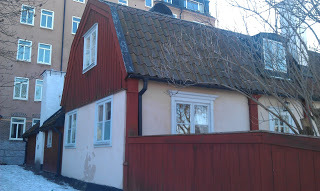
I read the first book in school, then re-read it a few years ago, then read the next four parts this year. I moved to Stockholm 17 years ago, I can walk along the streets he describes, I can barely imagine what they looked like. Half the city has been levelled with dynamite, the horses replaced with cars and trains, almost all of the old houses are gone (the new ones are all built within the novel) but the little red wooden house Fogelström had Lotten and Henning move into still stands as a memory. The flats next to where people worked themselves to death now sell for millions. Despite all the hardship, desperation and failure in these books they're shot through with optimism, that when the kids are united they can never be a fair society can be built with cooperation. It is possible because it happened; Fogelström has Emelie Nilsson see it all unfold. But it's also only possible because people kept working at it. It's not something we are, it's something we have to keep doing.
She felt the city was in the world, that the world concerned her, that she had to dare walk out into it. That you have to dare to be home. The girl dreamed. The world waited.
"Löftet hade givits: porten till den nya tiden skulle öppnas. I decemberkvällens mörker böljade människomassorna sorlande och hurrande genom stadens gator. De utkommenderade soldaterna som plötsligt förvandlats från fiender till vänner omfamnades och dunkades i ryggen. Varje människa var nu en vän och bror. När kungen kom från teatern störtade man fram för att spänna av hästarna och dra vagnen till slottet. Men kung Karl röt och ville ha sina hästar kvar, då sjöng man kungssången och berättade att den folkkäre inte ville att någon svensk skulle göra slavarbete för hans skull. Och hurrade igen. Operakällarens alla fönster slogs upp, många rutor krossades. Trängseln var lika stor innanför som utanför, sedlar räcktes in genom fönstren och punschbuteljer lyftes ut. Talare stod på krogborden och skrek ut sina hyllningstal utan att kunna göra sig hörda. Tills man hyssjade, sorlet dämpades: August Blanche ska tala! Stod där, festtalaren framför andra, rund som en padda med sin väldiga guppande buk, vita hårtestar fladdrade kring det blanka, rödmosiga ansiktet. Leende och tårögd, säker men ändå stammande av rörelse, orden forsande över läpparna. Knappast någon kunde riktigt uppfatta vad han sa – men något var det om Engelbrekts kamp mot sturiga adelsmän och myndiga prelater. Och folket, det ädla och ofördärvade, som segrat denna dag. Blod skulle ha flutit på gatorna om de privilegierade inte gett upp motståndet. För första gången ville rabulisten och republikanen utbringa en skål för en kung. Man skålade och hurrade och drog talaren med sig, nu måste representationsreformens upphovsmän hyllas med sång och hurrarop utanför sina bostäder. Hesa och trötta vände människorna småningom hemåt, ännu burna av vågen, av känslan att tiden var ung, att blommande löften snart skulle förvandlas till närande frukt. Några unga hamnarbetare sjöng fortfarande på sin väg mot Söder, som rädda för att komma ur ruset. Men bittra motståndare till reformen gömde sig undan ropen och glädjen, undrade om pack och vettvillingar skulle gripa makten nu när landet sjunkit ner i demokratins djupaste gyttja. Några undrade kanske varför de hurrat så våldsamt. Vad hade egentligen skett? Kanske bara bördens och titlarnas välde utbytts mot ett ännu hårdare, penningens? Porten skulle öppnas – men tröskeln vara så hög att endast de välbärgade kunde klättra fram till medbestämmanderätten."
Kanske inte det mest SPÄNNANDE att läsa... men det är VIKTIGT. Det utspelar sig i Stockholm - mot slutet av 1800-talet - och handlar om människorna som stod i smutsen, arbetade tills de gick sönder och drömde om en rättvis framtid. Det här är vår historia. Det är det här vår idag blomstrande huvudstad grundar sig på. Det här är VIKTIGT. Läs den här boken eller läs på på annat håll. Det viktiga är att vi inte glömmer bort de här människorna som la grunden för en verklighet som vi idag ser som så självklar.
Effektiv och väl skriven, trodde helt ärligt jag skulle ha svårare för den än vad jag hade. Tog ett tag för mig att verkligen fastna för den dock, delvis var den långsam, men när man väl kom in i karaktärerna och miljön var den svår att lägga ifrån sig trots allt. En mäktig historia och en klassiker av en anledning!
Precis så underbar som alla säger, speciellt för en Stockholmsbo. Vackert och förvånansvärt lättläst skriven. Precis som med Utvandrarna så älskar jag den här typen av historiska romaner. Fogelström målar upp en skitig och fattig stad där människor drömmer, arbetar och lever trots misären. Även om den många gånger är mörk så är allt inte nattsvart - det är tydligt att både staden och dess människor är påväg att bli något.
Mästerligt RYSsnyggt hur första kapitlet knyter an till det sista.
The book does a great job of painting a picture of life in poverty during late 19th century Södermalm. Descriptions of the gritty areas, the beautiful scenery, and the general lifestyle of working class people were very immersive.
There's several noteworthy and quotable remarks regarding classism from the point of view of the downtrodden and the writing is quite elegant (I read th English translation) though a majority of the story takes place in gritty and grimy locales.
However, the writing is incredibly inconsistent. First of all, the pacing is terrible. I'm not talking about the huge jumps in time between some of the chapters (this works quite well actually), but within chapter there are sudden jumps between thoughts or events with little to no transition or context.
Often times important plot point are glossed over very quickly in a paragraph or two with very little detail then jump to something completely different, and I mean right in the middle of something completely different and unrelated and being very vague of which character is being followed. There are definitely some important story elements that are in great detail, but in between the writing can also go into great detail about absolutely nothing, for several pages at a time.
My biggest issue though was the character development. In the first 2/3 of the book, there is nearly none. Everything is surface level and interaction between many of the key characters is minimal and doesn't give a genuine understanding of their actual relationships with each other aside from explicit statements with little evidence to back it up in the writing.
It's a shame as the book picked up near the end when it seemed a bit too little too late and it rushed towards the conclusion.
That said, I appreciated the historic elements within the book which gave me better insight about the history of the city I live in. How many things have changed so much, while others remain issues.
Very good book, a real fascinating story about a workers life in Stockholm in the mid 10th century Stockholm. Gives an excellent view of the times city environment, the ideas and the standard of living at the time. Really interesting to read about how some kind of workers movement begin to shape at the same time as the capital owners slowly start to raise the there conditions in response. I do not find marxs ideas appealing at all today but reading a book like this really makes you understand how books like Daz Capital and the communist manifesto could be so popular. The workers in the book have no safety what so ever. One day of rest each week at best, worked all day and could barley provide for a family on a super low standard. I also found the amount of alcohol that the workers absorbed fascinating. Many of them seems to be in some kind of addiction trap, there they are in a vicious circle between finding some kind of work and alcohol.
Äntligen! Vet inte varför det tagit mig så länga att börja läsa den här serien. Fast jag lyssnar... inte läser... och det är en utmärkt berättelse att lyssna på. Den är precis så bra jag hoppades på och trots att det är en mkt hård verklighet som skildras så är det spännande att höra om hur Stockholm såg ut och fungerade på 1800-talet. Har redan börjat på #2!
Trodde inte alls jag skulle gilla baserat på de 20 första sidorna men är besaaaattt. Så bra och vacker historieskildring av Stockholm och ännu bättre att läsa den när jag bor precis i de områden som beskrivs i boken.
Är glad att jag inte är född på 1800-talet. Det var en fin berättelse som också ibland var jobbig att läsa. Jag blev väldigt investerad i karaktärerna och deras öden
Ja den här boken läste jag i ett svep, blev helt indragen i 1800-talets Stockholm och jag kan tänka mig att det blir en ännu bättre upplevelse om man verkligen kan Stockholms alla gator. Min starkaste känsla är nog fascination över hur otroligt fattigt folk levde och vilka enorma klasskillnader det var, samt hur otroligt mycket Sverige utvecklats på 140 år, det är ju inte så många generationer bort ändå.
Det slår mig genom hela läsningen: vad sjukt det är att Fogelström skrev en bok som i mångt och mycket handlar om klasskillnaderna under sent 1800-tal och att den är helt applicerbar på det Stockholm vi lever i i dag. Privatiserad vård, bostäder för de redan priviligierade. Dessutom: känslan att vara ny i en stad – vilka barer går man på? Vart hör JAG hemma? Underbar läsning.