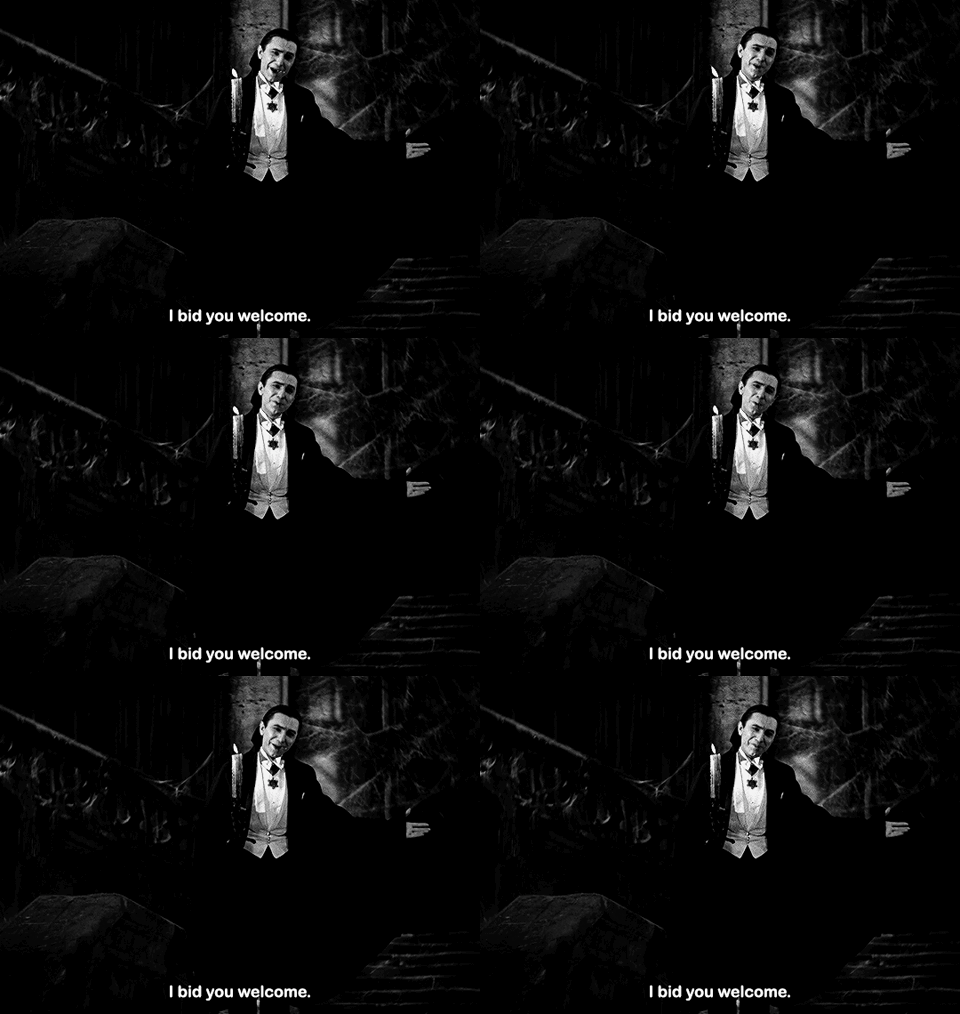
There are few fictional characters who have entrenched themselves so thoroughly in the popular imagination as Count Dracula. Although legends of vampires and other blood-thirsty creatures existed long before him, Dracula has become the ultimate apotheosis of the vampiric monster. He has spawned an entire industry of books, films, television shows, and other forms of media devoted to the vampire.
In the 10 episodes of The Real History of Dracula, folklorists Dr. Sara Cleto and Dr. Brittany Warman, of The Carterhaugh School of Folklore and the Fantastic, will shine a light into the dark recesses of our cultural obsession with vampires. Using folklore, literature, history, television, film, and more, Sara and Brittany will show you how—and why—vampires are a potent metaphor for what matters most about the human condition.
The vampire existed long before Bram Stoker introduced readers to the Count from Transylvania. Having been a staple of popular culture for a century since, Dracula is more than just another rendition of a common folkloric monster. He is arguably one of the most influential fictional characters of the last century.
Times may have changed since Dracula became the definitive vampire of the modern era, but many of our fears have not. So much of what Dracula represented to his fin de siècle audience remains part of our consciousness—our fears and desires may shift to reflect our time and place, yet the human condition remains much the same. Vampires since Dracula have taken on different aspects to reflect their times and the lore changes to suit new sensibilities, demonstrating the vampire’s cunning ability to thrive in multiple cultures, genres, and mediums. As Sara and Brittany make clear throughout this course, folklore is not just a thing of the past, but rather a living, growing, continual presence in our lives. As a part of this living tradition, the vampire has become truly immortal.
Vampires continue to be part of our cultural conversation, and there’s no sign that that will end any time soon. They are tools for understanding the world and, therefore, are more significant than they might first appear. They teach us about our anxieties and our desires—particularly the ones we’re afraid to speak out loud.
I saw this and thought it would be a fun little lecture series - and it was! But not in the way I thought it would be. I didn't read the blurb, I just looked at the title and mistakenly assumed it was about Vlad the Impaler. No.
And while you might think that I should have learned my lesson about that sort of thing by now, my itchy trigger finger has honestly opened the door to a lot of books that I probably would never have found if I had done my due diligence instead of just grabbing something because it looked cool.
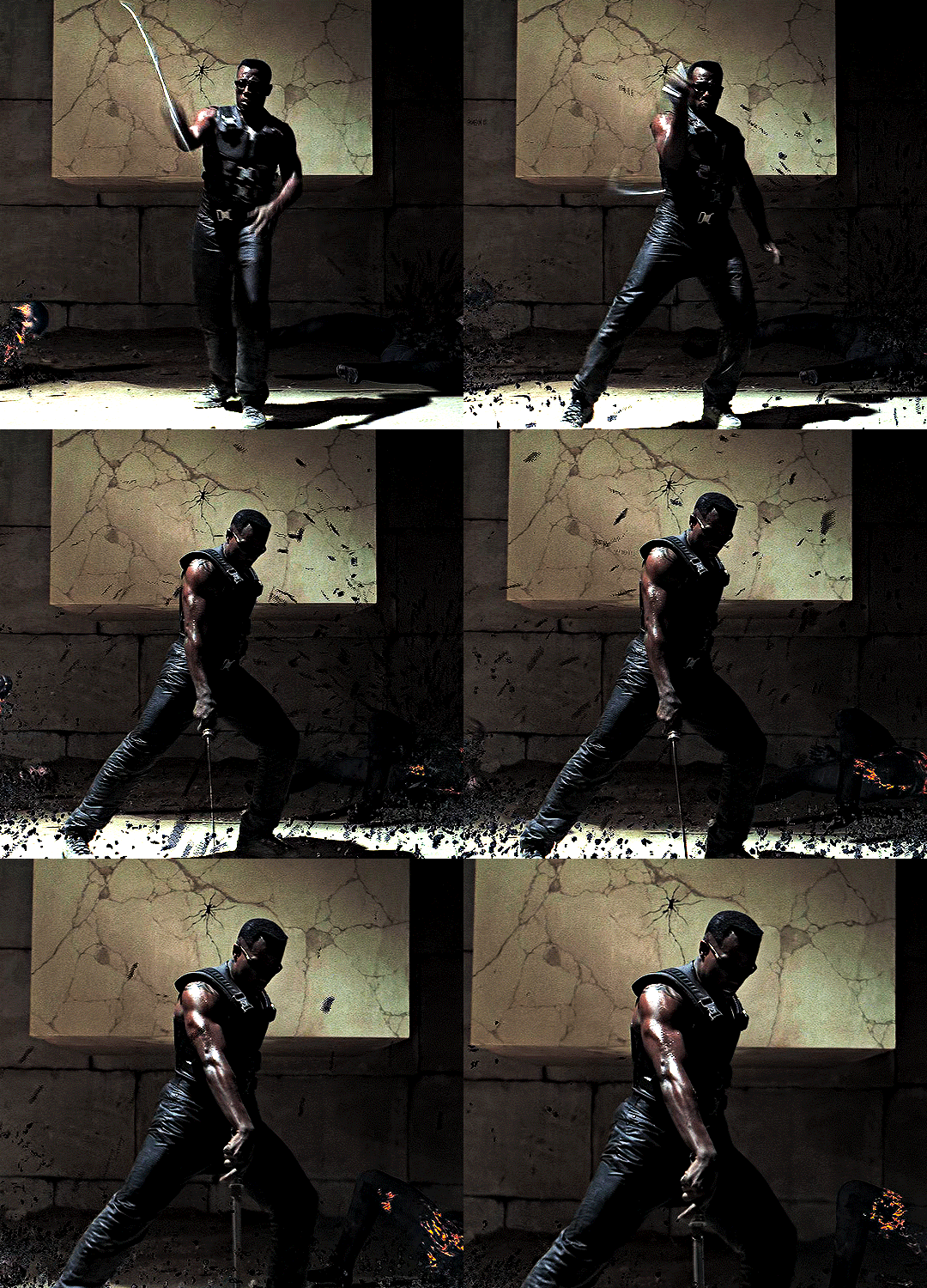
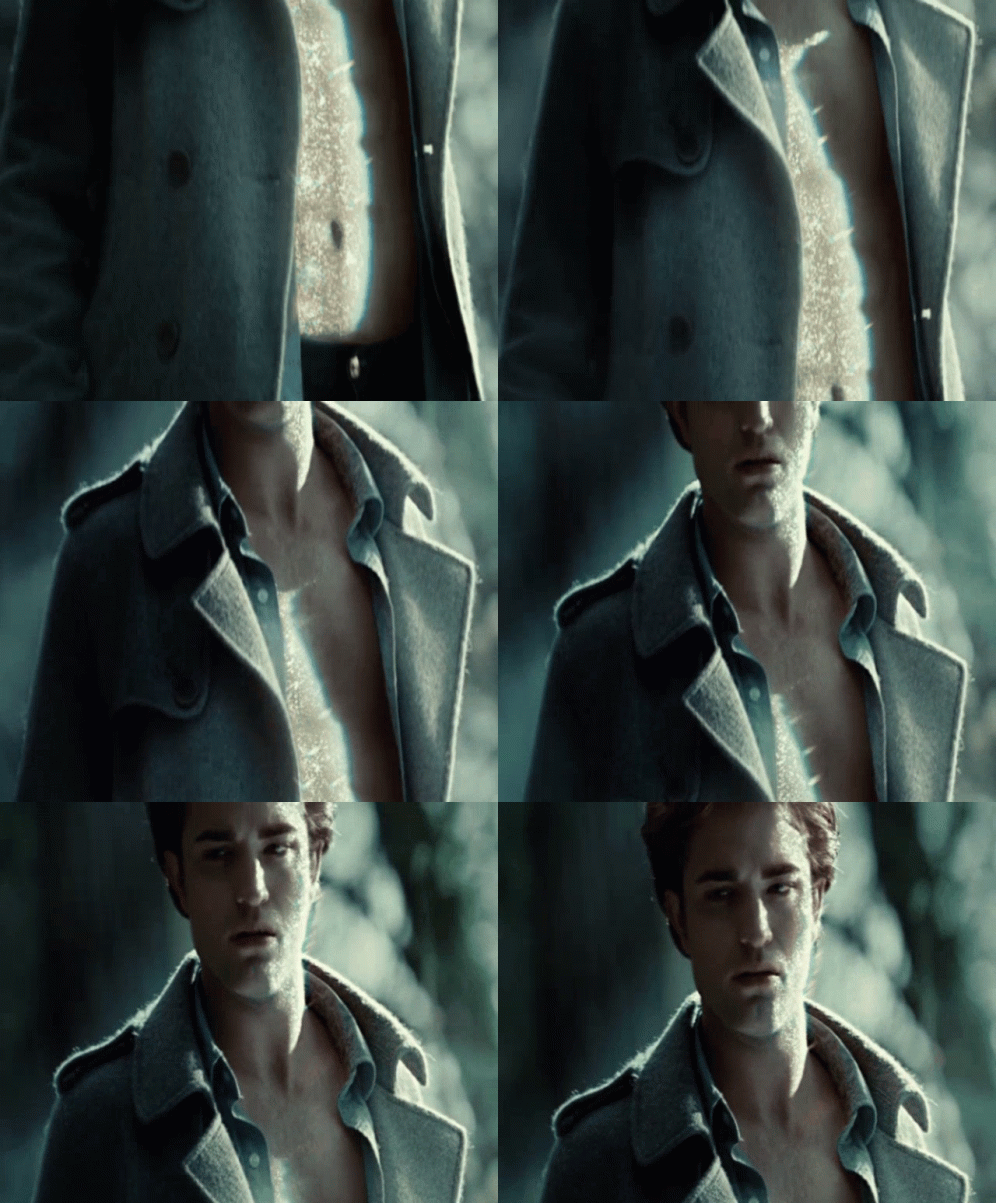
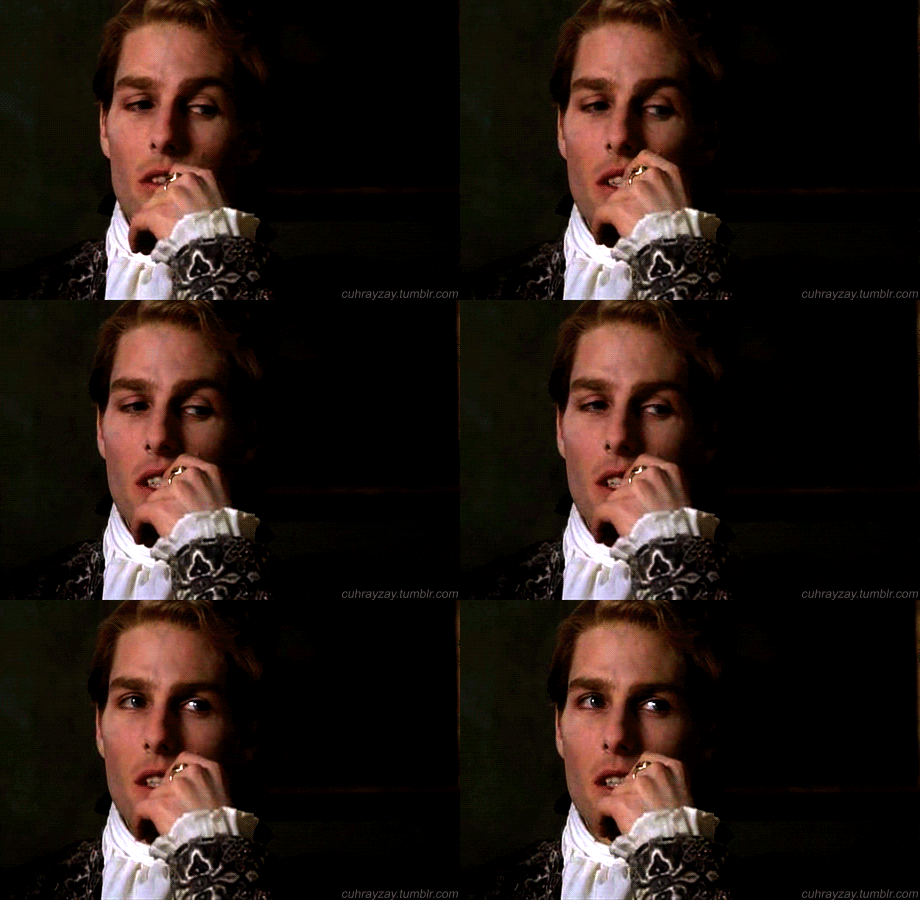
Ok. So what this actually is, is a lecture on the history of vampires in folklore. It centers on the history and cultural effect of Bram Stoker's Dracula, but they also go into the history of vampires from the oldest known folklore (where vampires were a lot like the fae), to fairytales (Snow White), to Anne Rice's Interview, to Marvel's Blade, to the sparkling reimagined vampires we have today.
And while Stoker and his Dracula get the most page time, they also delve into other cool stories, like Le Fanu's Carmilla & Polidori's Byron-inspired Vampyre. I've always wanted the skinny on that whole relationship, so that was worth the price of admission right there.
This was fun. And the two lecturers were kind of adorable with the way they did this little back-and-forth with each other. At first, I thought it might be annoying but they were just geeky enough to pull it off. And it's not a long lecture, clocking in at only about 4 and a half hours. So if you're looking for something a bit different to kill time on a long car ride, this would fit the bill.
A short (10 lecture) Great Courses audio course with a remarkable amount of interesting information on the book, the movies, and a diverse set of other Gothic & folkloric topics. This is actually less about the character -- or even the novel -- than about influences on Bram Stoker, Bram Stoker's influence on other writers & creators, and many speculations on why we as readers/viewers are still fascinated by vampires.
Despite the bubbling enthusiasm of Sara Cleto & her audio colleague Brittany Warman, this came off as a solidly academic experience. I've had a good bit of coursework on the Gothic & have been reading horror/vampire literature for longer than I want to confess, and I still got something fresh from this. This Great Course was included in my Audible subscription (not a credit purchase), and I found it listening time well spent.
The Real History of Dracula by Sara Cleto and Brittany Warman is a charming, if odd, survey course. First up, this course is not about Dracula. Not the historical character, and not even the vampiric character. It is instead, a story of vampiric folklore with a brief nod to the history of Vlad the Impaler and a couple of lectures focusing on Dracula the book and character. It would be more accurate to say this is about vampires, but even that is a bit... off. It is better to call it about vampiric folklore and literature, but not in a systemic fashion. The actual lineage is unimportant, so there's little in the way of an extensive survey showing interconnections at play with the exception surrounding the first Novel and some connections early on. A large part of your time will instead focus on snapshots about what the folklore represents and says about society, in a social literary critique. You'll spend a lot of time with Snow White, of all characters. I would say Snow White folklore is the third most prominently featured character.
But, that's not to say its a bad thing. It just means the title is off. "Vampires as Interpreted Through Folklore and What They Tell us About Social Issues" wouldn't have workshopped well in the marketing department. It also veered more into podcasty, conversational styles - which is probably why the lectures were called episodes.
The two lecturers are pretty charming. While John McWhorter came across as trying too hard and entirely absorbed in self-satisfied amusement, Cleto and Warman are an active duet who trade off against one another. Their voices are similar enough that there's a near seamless transition between the two, unless they are making a meta joke - but they are brief. Usually a joke, a statement, and a repetition of the statement with a chuckle before moving on. This is a strength, as most Great Courses don't handle multiple lecturers very well most of the time.
And the information is fun and engaging in a "I'm going to nerd out of vampires around Halloween" kind of way.
Its not all that extensive or serious, so I'll be a stick in the mud about that. Chronological lineages and evolutionary development for vampires and vampiric literature and folklore should definitely have been teased out quite a bit more. And for the frequent references to media outside of literature and folklore, some of that could definitely have been explored more. The size of a course like this could have done one of them well, but with attentions divided across so much, there are places that definitely come across as thin. Very, very, thin.
So, its fun and informative, but suffers from an overly spread out focus and a bit of an advertising curfuffle.
So you likely know that vampires haven’t always been sparkly in the sun. But did you know when their vulnerability to daylight first appeared? Or which pre-existing vampire traits Bram Stoker gave to his Count Dracula and which he invented? The Real History of Dracula, written and presented by folklorists Dr. Sara Cleto and Dr. Brittany Warman, is an in depth look at all things vampire: their folkloric origins and historical inspiration, Dracula and his literary predecessors, the symbolism of the vampire throughout history, its astonishing influence on today’s popular culture, and so much more.
The Real History of Dracula, a ten-part lecture series from the Great Courses, is a comprehensive and fascinating study on everything you ever wanted to know about our bloodsucking friends but were afraid to ask, or, for me in many cases, wouldn’t have even thought to ask. Cleto and Warman take on topics like why vampires tap into our anxieties about sex, illness, and death, how they symbolize the threat of reverse colonialism, which fairy tales have vampiric overtones, and ask the question what makes vampires so damned (pun intended) compelling?
If you have ever taken a course at Cleto and Warman’s Carterhaugh School of Folklore and the Fantastic, rest assured the Carterhaugh founders sink their teeth into this subject with the sharp intelligence, playful humor, academic integrity, and genuine love for their subject their students expect. If Carterhaugh is new to you, The Real History of Dracula is a perfect taste of Cleto and Warman’s work. This lecture series is available to either view on Wondrium or listen to on Audible. Whip-smart and highly accessible, The Real History of Dracula is truly a feast for the vampire fan.
I got this from the library because I was about to see Dracula and I wanted a refresher. I had no idea it was a podcast. I started with the podcast and finished reading the book.
I loved all the detail into Dracula the book, history of the lore, and history in general. It was very well researched and it is clear these girls are passionate about Dracula.
However I was shocked there was not a whole section devoted to Buffy the Vampire Slayer. so that is why this only got 2 stars because they missed out on mentioning some really important shows that brought vampires back into popularity.
this is so wrong, it’s absurd. as a romanian, i actually know the history behind it…this book is just a pop-culture mishmash, not the real origin story, of the iconic figure who was named Dracula (Drăculea). they talk more about Twilight in this book, for reference. and, no, the origin of the word is not slavic either…it actually came from egypt, the original myth. (search)”Tales of demonic entities and blood-drinking spirits in ancient civilizations, such as those of the Mesopotamians, Hebrews, ancient Greeks, and Romans” while porphyria was a thing and “The disease was described as early as 370 BC by Hippocrates”, so, not slavic. while in ancient egypt they used to drink blood as part of various rituals. lilith, in the current format, which is mentioned in the book, is still a product of the christian religion, which started after ancient egypt.
seriously, this book was incredibly bad. just overall inaccurate, a true example of the fake-news era. the “real” history of Dracula…as told by some late millennials or genZ, more like that. this is how people learn inaccurate things… …what a disappointment from the Great Courses series.
This is, unfortunately, not about Vlad Tepes, but it is about Bram Stoker's Dracula. It discusses the origin of Bram Stoker's inspiration, research, and some of the literary predecessors to Dracula. The writers/hosts discuss the history of dark fairytales, Bram Stoker's research and other prolific writers of his time, Stoker's inspiration, the conception of the modern vampire, and sundry other things in this 10 lesson mini class.
This course has two hosts as opposed to the usual singular host and it gives off the vibe of a podcast due to the two hosts interacting with one another. This can provide an engaging and energizing experience for some, but might be an annoyance to others.
As I usually warn with these Great Courses on audio, this does not cover as much or nearly in depth as I wish it did, but it was good for learning some things I hadn't known prior.
Meh not for me. For the first few lectures i thought it might be light and fun but quickly lost interest. Though called a history of 'Dracula' it's decribed as history of the vampire myth but in fact it's more an examination of vampire pop culture and all it's themes and the history itself is very thin. The great courses have let themselves down here and these are not really lectures but more informal chats with 2 speakers more akin to a podcast, gushing over vampire fiction and giggling. A lot of the examination feels sorta secondary-school-book-report-ish. The women reminded me of south park for some reason, i just had an image of Wendy and Bebe on one of their faux-serious rants in my head as they prattled through the series.
Definitely meet their stated goal. These two lecturers obviously are very knowledgable and enthusiastic. Would love to join their D&D party (they are obviously having fun and enjoy their work)! Great series of lectures (make sure you read the description). These are two folklorists and come at the idea of vampires/Dracula from that specialty and discuss cultural underpinnings and consequences of the titular subject.
This was a great introduction into the many layers of meaning and origin behind vampiric lore. I found some chapters immensely fascinating and I was struggling to write in my notebook fast enough, while others I wasn’t as intrigued by. Overall it was an interesting read and I’m glad I decided to grab the audiobook from my library’s collection on Libby.
This was not what I expected from the Great Courses. It was okay as far as educational entertainment, but I choose these titles for the information enclosed. Also, I feel "The Real History of Vampires" would be more descriptive than the actual title. I was expecting a biography of Vlad the Impaler, who was discussed but not much. I'd bet this item would make a very popular podcast.
Great selection of lectures on vampires in pop culture and how folklore from all over the world contributed to the current myths of vampires. It's short and fun. This is the first time I've done a Great Courses selection with two different lecturers collaborating together and I really enjoyed that.
Zero new information for me. Much of the series felt like movie reviews or book reports. The presenters are super passionate and their enthusiasm for their topic is felt. If you are a youngblood to the genera or younger than 30 years old. You will love this.
Very disappointing. Not much more than movie info. Does have information on Bran Stoked and where he got his ideas which was interesting. But no history of early beliefs and reasons legend began. Miss titled.
More like a podcast than a set of lectures, and the liberal sprinkling of giggles, "totally", "goals", etc. made it much more informal than I expected from The Great Courses. That said, the material was well organized and engaging, and the conclusions were reasonable and interesting.
This is a good book if you want a very surface-level summary of Dracula in pop culture and a short book analysis. However, since I read this book after The Historian, I found the historical analysis to be bear bones.
This had some very interesting facts and theories about vampires and the concept of Dracula in general. I didn't expect it to be in a podcast format, which is not my favorite, and there were some points that seemed like filler/a stretch.
I read this fun little history on audio. The hosts are very well-versed experts in their field. I found their little jokes to each other when transitioning from one speaker to the other a little tedious, but that was a mild distraction in an overall fun and informative listen.
A very approachable and fun iteration of The Great Courses--this is taught by a pair of instructors who have great banter, giving it more the relaxed feel of a well-researched podcast than a college lecture.
Extremely entertaining! Very informative and well researched, even discovered things I never previously knew. Definitely would recommend this fang-tastic quick read 🧛🏻♂️
This is a charming look at how legends and folklore have woven Vampires as important beings in the fabric of our culture throughout history up to modern day.
Very entertaining, informal in presentation and informative in content. I am familiar with much of the material covered but found the review of similarities between fairy and vampire lore very interesting and new to me.