

What do you think?

Education for Critical Consciousness
'Freire combines a compassion for the wretched of the earth with an intellectual and practical confidence and personal humility...Most of all he has a vision of man.' ~ Times Higher Educational Supplement
Paulo Freire (1921-97) was an educationalist based in Brazil and became the most influential writer and thinker on education in the late twentieth century. His seminal work Pedagogy of the Oppressed has sold almost 1 million copies. Education for Critical Consciousness is the main statement of Freire's revolutionary method of education. It takes the life situation of the learner as its starting point and the raising of consciousness and the overcoming of obstacles as its goals. For Freire, man's striving for his own humanity requires the changing of structures which dehumanise both the oppressor and the oppressed, rather than therapy.
Paulo Freire (1921-97) was an educationalist based in Brazil and became the most influential writer and thinker on education in the late twentieth century. His seminal work Pedagogy of the Oppressed has sold almost 1 million copies. Education for Critical Consciousness is the main statement of Freire's revolutionary method of education. It takes the life situation of the learner as its starting point and the raising of consciousness and the overcoming of obstacles as its goals. For Freire, man's striving for his own humanity requires the changing of structures which dehumanise both the oppressor and the oppressed, rather than therapy.
160 pages, Paperback
First published January 1, 1965
About the author
Paulo Freire
138 books1,516 followersThe Brazilian educator Paulo Freire is among most the influential educational thinkers of the late 20th century. Born in Recife, Brazil, on September 19, 1921, Freire died of heart failure in Sao Paulo, Brazil on May 2, 1997. After a brief career as a lawyer, he taught Portuguese in secondary schools from 1941-1947. He subsequently became active in adult education and workers' training, and became the first Director of the Department of Cultural Extension of the University of Recife (1961-1964).
Freire quickly gained international recognition for his experiences in literacy training in Northeastern Brazil. Following the military coup d'etat of 1964, he was jailed by the new government and eventually forced into a political exile that lasted fifteen-years.
In 1969 he was a visiting scholar at Harvard University and then moved to Geneva, Switzerland where he assumed the role of special educational adviser to the World Congress of Churches. He returned to Brazil in 1979.
Freire's most well known work is Pedagogy of the Oppressed (1970). Throughout this and subsequent books, he argues for system of education that emphasizes learning as an act of culture and freedom. He is most well known for concepts such as "Banking" Education, in which passive learners have pre-selected knowledge deposited in their minds; "Conscientization", a process by which the learner advances towards critical consciousness; the "Culture of Silence", in which dominated individuals lose the means by which to critically respond to the culture that is forced on them by a dominant culture. Other important concepts developed by Freire include: "Dialectic", "Empowerment", "Generative Themes/Words", "Humanization", "Liberatory Education", "Mystification", "Praxis", " Problematization", and "Transformation of the World".
http://www.education.miami.edu/ep/con...
Freire quickly gained international recognition for his experiences in literacy training in Northeastern Brazil. Following the military coup d'etat of 1964, he was jailed by the new government and eventually forced into a political exile that lasted fifteen-years.
In 1969 he was a visiting scholar at Harvard University and then moved to Geneva, Switzerland where he assumed the role of special educational adviser to the World Congress of Churches. He returned to Brazil in 1979.
Freire's most well known work is Pedagogy of the Oppressed (1970). Throughout this and subsequent books, he argues for system of education that emphasizes learning as an act of culture and freedom. He is most well known for concepts such as "Banking" Education, in which passive learners have pre-selected knowledge deposited in their minds; "Conscientization", a process by which the learner advances towards critical consciousness; the "Culture of Silence", in which dominated individuals lose the means by which to critically respond to the culture that is forced on them by a dominant culture. Other important concepts developed by Freire include: "Dialectic", "Empowerment", "Generative Themes/Words", "Humanization", "Liberatory Education", "Mystification", "Praxis", " Problematization", and "Transformation of the World".
http://www.education.miami.edu/ep/con...
Ratings & Reviews
Friends & Following
Create a free account to discover what your friends think of this book!
Community Reviews
Displaying 1 - 30 of 123 reviews

Read
June 9, 2016This is my second time reading this book in the last year, and the vistas it opens up continue to expand. Freire’s exploration of the problematizing method is layered and thoughtful. This is a brief book, but that’s like saying it doesn’t take very long to see a beautiful sunrise.
This book helps layout the approach for overturning the pedagogy of the oppressed and combating the banking model of education (teacher deposits information into students). The solution is put forward in The Pedagogy of the Oppressed, but in this book the problem focused model of education is more fully developed.
The approach is geared toward the cultural realities in Chile and Brazil, so it must be adapted by the reader in order to apply the education for critical consciousness to the various cultural realities in the United States, but the adaptation is not too hard to envision.
The banking model of education is the overemphasis on didactic teaching (lecture) and of course, the glut of standardized testing -- overall, the banking model assigns a passive role to the student. The problem focused model of education can be exhibited in the classroom through inquiry based instruction and genuine seminars. The problem focused model of education allows for education for critical consciousness through the students' dynamic interaction with questions, the open-ended questions of the inquiry process. The dialogue in the seminars between the teacher and the students does NOT consist of the teacher approving of the knowledge the students repeat (after having heard it from the teacher). The dialogue in the seminar consists of the students and the teacher exploring open-ended questions without assumptions of correct answers -- especially on the teacher's part. This allows for the students to discover knowledge/understanding on their own, and in this discovery, a transformation of the world takes place. This transformation expresses the true aim of education (as Freire explains it): the practice of freedom -- in understanding & making meaning of the world.
Anything less than the problem focused model of education amounts to the domestication of humans -- the taming of people, taking away the freedom of thought & critical thinking that allows for praxis. As Freire defines it, praxis is the combination of action and reflection, and it's what separates humans from being brute animals. The combination of action & reflection isn't possible for students (and citizens at large) who have been domesticated by the banking model of education -- only conditioned responses to advertising & propaganda are possible.
One of the most important aspects of Education for Critical Consciousness that I haven't mentioned is the importance of the teacher understanding, empathizing, and valuing the point of view & cultural background of each student. If teachers don't take the time to do this, then they are essentially performing cultural invasion and are acting in the realm of domestication.
What's the biggest reason teachers don't use the problem focused model of education? One reason is the fact that nearly the entire education system (K-16) is rigged towards the banking model of education. Freire nails another reason: many teachers, when faced with knowable objects, "are incapable of taking up a cognitive position. They remain in the realm of 'doxa' beyond which they are the mere repeaters of texts read but not known."
Education for Critical Consciousness excels at explicitly showing how an education system can function through oppression & manipulation to create domesticated animals, and it also excels at showing how education can create people who can actually think for themselves.
This book helps layout the approach for overturning the pedagogy of the oppressed and combating the banking model of education (teacher deposits information into students). The solution is put forward in The Pedagogy of the Oppressed, but in this book the problem focused model of education is more fully developed.
The approach is geared toward the cultural realities in Chile and Brazil, so it must be adapted by the reader in order to apply the education for critical consciousness to the various cultural realities in the United States, but the adaptation is not too hard to envision.
The banking model of education is the overemphasis on didactic teaching (lecture) and of course, the glut of standardized testing -- overall, the banking model assigns a passive role to the student. The problem focused model of education can be exhibited in the classroom through inquiry based instruction and genuine seminars. The problem focused model of education allows for education for critical consciousness through the students' dynamic interaction with questions, the open-ended questions of the inquiry process. The dialogue in the seminars between the teacher and the students does NOT consist of the teacher approving of the knowledge the students repeat (after having heard it from the teacher). The dialogue in the seminar consists of the students and the teacher exploring open-ended questions without assumptions of correct answers -- especially on the teacher's part. This allows for the students to discover knowledge/understanding on their own, and in this discovery, a transformation of the world takes place. This transformation expresses the true aim of education (as Freire explains it): the practice of freedom -- in understanding & making meaning of the world.
Anything less than the problem focused model of education amounts to the domestication of humans -- the taming of people, taking away the freedom of thought & critical thinking that allows for praxis. As Freire defines it, praxis is the combination of action and reflection, and it's what separates humans from being brute animals. The combination of action & reflection isn't possible for students (and citizens at large) who have been domesticated by the banking model of education -- only conditioned responses to advertising & propaganda are possible.
One of the most important aspects of Education for Critical Consciousness that I haven't mentioned is the importance of the teacher understanding, empathizing, and valuing the point of view & cultural background of each student. If teachers don't take the time to do this, then they are essentially performing cultural invasion and are acting in the realm of domestication.
What's the biggest reason teachers don't use the problem focused model of education? One reason is the fact that nearly the entire education system (K-16) is rigged towards the banking model of education. Freire nails another reason: many teachers, when faced with knowable objects, "are incapable of taking up a cognitive position. They remain in the realm of 'doxa' beyond which they are the mere repeaters of texts read but not known."
Education for Critical Consciousness excels at explicitly showing how an education system can function through oppression & manipulation to create domesticated animals, and it also excels at showing how education can create people who can actually think for themselves.

April 22, 2016
Sublime. Cuando un autor escribe de forma tan linda y tan cierta sobre la importancia de la educación es normal que a nosotros, los maestros, se nos pongan los pelos de punta, un brillo especial en los ojos y nos lata un poquito más deprisa el corazón. Sé que corro el riesgo de caer en las cursilerías pero será porque sigo con el "subidón" en el cuerpo.
Recomiendo este libro a docentes de todas las etapas educativas. Una lectura necesaria. Gracias Freire por recordarme que la educación es una fuerza de transformación del mundo y que hemos de seguir trabajando para cambiar los sistemas obsoletos hacia una práctica de la libertad.
Recomiendo este libro a docentes de todas las etapas educativas. Una lectura necesaria. Gracias Freire por recordarme que la educación es una fuerza de transformación del mundo y que hemos de seguir trabajando para cambiar los sistemas obsoletos hacia una práctica de la libertad.
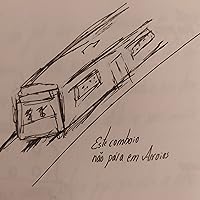
October 20, 2022
“Faço sapatos”, disse outro, “e descubro agora que tenho o mesmo valor do doutor que faz livros”. “Amanhã”, disse certa vez um gari da Prefeitura de Brasília, ao discutir o conceito de cultura, “vou entrar no meu trabalho de cabeça para cima”. É que descobrira o valor de sua pessoa. Afirmava-se. “Sei agora que sou culto”, afirmou enfaticamente um idoso camponês. E ao lhe perguntar por que se sabia, agora, culto, respondeu com a mesma ênfase: “Porque trabalho e trabalhando transformo o mundo.”

August 16, 2020
Though Freire's analysis of the "dialogue" required for any education to be necessarily transformative can be easily applied to more contemporary ideas of decolonizing education, the failure to synthesize Brazilian women into his vision of radical "historical participation" leaves much to be desired.

October 31, 2018
La única razón por la que lo leí es porque tuve que hacerlo para una clase, ya que no es el tipo de libro que me gusta. Y a pesar de que lo leí a las apuradas me gustó y algunas partes me parecieron muy interesantes. Seguramente en un futuro, cuando tenga más tiempo libre, lo vuelva a leer más detenidamente.

Read
July 23, 2009Note to self: Re-Read this book.

June 20, 2023
FUNDAMENTAL.
January 5, 2018
This is an amazing and inspiring book for any educator that has felt that the current/historical way of teaching leads to the continual submission to authority instead of the liberation on the individual.

February 28, 2020
Aunque dista considerablemente de las lecturas que suelo elegir, tuve que leer este texto para una materia de mi carrera (Profesorado en Lengua Inglesa) y me pareció muy enriquecedora la experiencia.
Los planteos expuestos por Freire hace aproximadamente medio siglo son tan relevantes en la actualidad que esta sigue siendo una lectura muy necesaria.
Los planteos expuestos por Freire hace aproximadamente medio siglo son tan relevantes en la actualidad que esta sigue siendo una lectura muy necesaria.

March 17, 2023
4,5 ⭐️
Tive um pouco de dificuldade de me situar no começo mas depois de pesquisar um pouco sobre o contexto de publicação desse livro, fluiu bem. Não tem como né, o homem era muito brabo. Aqui ele vai falar de história, democracia, consciência, se sentir parte do mundo e produtor de cultura, além de explicar o método dele de alfabetização. Pra não gostar de Paulo Freire, das duas uma: ou a pessoa tá apenas repetindo o que ela ouviu por aí de certas pessoas ou ela é extremamente perversa é só se preocupa em manter seu poder sobre as outras pessoas.
Tive um pouco de dificuldade de me situar no começo mas depois de pesquisar um pouco sobre o contexto de publicação desse livro, fluiu bem. Não tem como né, o homem era muito brabo. Aqui ele vai falar de história, democracia, consciência, se sentir parte do mundo e produtor de cultura, além de explicar o método dele de alfabetização. Pra não gostar de Paulo Freire, das duas uma: ou a pessoa tá apenas repetindo o que ela ouviu por aí de certas pessoas ou ela é extremamente perversa é só se preocupa em manter seu poder sobre as outras pessoas.

April 27, 2025
i’m sorry cause he has good points but did you have to make it so boring? i didn’t have my nighttime meds and i was out like a light anyway at this snooze fest, which is saying something, as i say absolutely nothing of importance.

October 8, 2024
A mixed bag, some powerful, some lost to historical context - this text in particular contains many of the concepts that you’ve heard of, but applies them in a way that assumes you are already familiar - definitely not text 1 to read of Freire

December 26, 2024
This book has gotten much much stronger yet as I go through it deeper.

March 11, 2018
"Knowing, whatever its level, is not the act by which a Subject transformed into an object docilely and passively accepts the contents others give or impose on him or her. Knowledge, on the contrary, necessitates the curious presence of Subjects confronted with the world. It requires their transforming action on reality. It demands a constant searching. It implies invention and re-invention. It claims from each person a critical reflection on the very act of knowing. It must be a reflection which recognizes the knowing process, and in this recognition becomes aware of the "raison d'être" behind the knowing and the conditioning to which that process is subject."

June 28, 2021
This Paulo Freire book is a huge insight on things that the left does wrong when debating politics. The book is not actually focused on "teaching politics", it is a book focused on pedagogy and education in general. I would strongly recommend this book to any person at all, because communicating while sharing information is a huge part of our daily-lives. I especially recommend it to people in positions of power where the need to disseminate things is part of their profession, and those who are very frustrated with the current state of conversations about politics. In the next paragraphs I'll say why I recommend it to these groups, in no particular order, introducing quotes and arguments from the book, and connections I've made between this and other content I've encountered in the past.
Education is obviously very political, but within politics there is a big concern with sharing knowledge so people are more aware of issues and their environment and better make informed choices for themselves and their communities. Freire himself calls this process "conscientization". Honestly, I feel we are making so many mistakes in this area. This is specially concerning for the Brazilian left, who is more aware of Paulo Freire yet still tries to debate instead of having dialogues, but I have observed problematic patterns of communication in multiple progressive circles around the world. Unlearning unhelpful patterns when sharing knowlegde is very hard stuff and I have observed these issues within myself, but in Education for Critical Consciousness Freire lays down great instruments to rationalize this process.
Many insights in this book are drawn from two types of experience: teaching literacy to adults as an educator, and the experiences of agronomists who are designated to go to rural communities and share technical knowledge to improve local maintenance of crops and general quality of life.
Within the first group, Freire raises the issue with the massification and domestication of critical thinking, and how the first step before stepping into literacy itself is democratising culture. The first lesson is on culture so people understand their roles in systematic acquisition of human experience, and see that it is not limited to oral tradition. By doing that, their literacy objectives is not just taking in information from the rest of society, but creating culture and sharing their own experiences in such a way that the student can become the agent of their own learning. Not so they can change themselves, but also their reality and the world. Becoming literate is not just the mechanical part, it involves consciously understanding what one reads and writing what one understands. The goal of the educator is to enter into dialogue with the student and offer the instruments for them to teach themselves. Especially considering an audience of adults, this is essential.
This process is not one that happens without some sort of resistence. And that's what Freire illustrates with the case of technical teaching of agricultural skills. These rural communities are full of traditions, some of thaem containing magical thinking such as "to get rid of this insect we put three sticks near the crop" etc. There is a natural rejection on embracing knowledge from a rando invader, so they can't just get there and tell people to stop doing those things and do something else. Trying to just dump knowledge is futile, ephemeral and likely to actually be worse for the community that they are trying to help develop. One key problem here is that education is not neutral and agronomists can't participate in agrarian reform as if they do not participate in the universe. "All development is modernization, but not all modernization is development". The solution is that this educational dialogue is a 2-way street. Turns out you also have to learn a lot from the community to find a process that can be maintained and continued by them to establish real development.
The take away is that any development has to come from within. And this works for any kind of knowledge. Dialogue does not depend on a context that can be presented probematically. Bad educators will think that there's nothing to be conversed in teaching that 4x4 is not 15, or that some historical event happened like such and such in such day. In their view, the role of the teacher is to share information, and the student, to memorize it. When they fail, they will try to make the teaching more "delightful". They'll use fun facts, exaggeration, gamification or other dynamics to get the message across, but they will still FAIL. That is such a limited and horrendous way to educate because it is discovery and challenge, not information, that form the basic constitution of knowledge. Freire reminds us that the best physics students are not the ones who know the formulas, but the ones who know where to use them. The best philosophers are not the ones who know the work of other philosophers by heart, but those who think critically about them and create a thought of their own. Any classroom needs a process of creation and recreation, and throughout school the students need to learn how to identify, dissociate, evaluate and create ideas, not just absorb them. By limiting critical thinking in education, the way knowledge is created is disconsidered, so it is in fact a deprivation of learning. Teachers don't teach anything. It is the students who learn. Transforming a teacher into a mere channel of technical information is, simply put, the end of education. Critical thinking has to be fostered as a skill and introduced into the whole process of teaching.
This topic of education ties back to how we talk about politics in that I feel we are failing in the same ways. We should actually worry LESS about argumentation and misinformation. This can sound shocking in the era of fake news, but I want to argue that we are ignoring the elephant in the room: everything else being suitable, the way we communicate ideas is often patronizing, inneficent, uninvolving, segregating, and doesn't actually help anyone. We need to stop debating. I said this before and will say it again as someone who was once in a debate team: the purpose of debate is to win, not to inform. Some things can seem really obvious to us: "death penalty is a moral failure", "access to safe abortion is a basic human right", "lack of labour rights is bad for the worker". And every time we try to share the reasoning for that, we fail in spectacular ways and get very drained. And every time we ask ourselves why, we often rationalize that our interlocutor must be mad, evil, stupid, stubborn, uneducated or manipulated. Of all of these things, the only one that's definitely true is stubborn. All humans are like that because that's how language works. And no, we don't have to open our arms to someone who thinks "we should beat the devil out of homossexuals". There's little point in debating with these ideas, there's nothing to debate there. I'm trying to argue here that there's little to debate in a lot more scenarios than these ones. Perhaps a little like children, we should repeatedly ask why? When we challenge people to answer questions that they were maybe never asked before, they have to think about the answer. As we explain things to others, like when we write an article, we can spot gaps in our knowledge. In some cases, people will be able to spot a void or a conflict on their own account, and there's no need to intervene. A lot of conclusions are also based on building blocks. In our rush to get people to understand how pressing some issue is, we ignore that there's a whole thought process that our conversation partner needs to navigate fully. They might need first to build the whole picture to find by themselves the pattern we want to raise attention to. A critical evaluation of a foundational building block is often more useful than a superficial agreement that won't stick.
In a book called "Language, Cognition and Computational models", there's a chapter on the evolution of language and how it emerged in humans that, although not about politics, was very useful to me for understanding how fundamental cognitive aspects play a role in all of this. The author argues that language did not evolve for social communication (in the same way that wings and feathers evolved in birds not so they could fly, but primarily for the purpose of a cooling system, and being able to fly is like an additional feature) and that a big characteristic of language is our ability to talk about things outside of our immediate context, that is, our ability to lie and, in consequence, manipulate (which is not necessarily detrimental) . Because language is not just encoding and decoding messages and there is a lot of implicit communication, preferring one's own beliefs over a belief that was just communicated to us keeps credibility in check. This is called egocentric bias, and it's just how our brain works. This is part of the co-evolution of language and reasoning. We need to reason and evaluate the reasoning of others. When we detect someone else is trying to change our belief we automatically increase distrust! The existence of chains of trust is also related to that. By delegating some of this fact-checking to someone we trust, we unload a bit of the burden of having to check everything. We've seen how fake news exploits these aspects of cognition by breaking into these chains.
I see this reasoning resistence in language and cognition being very connected to Freire's thoughts on education because although he doesn't mention aspects of cognition in his book, we are talking about the same thing over here: People only learn things when they come up with their own conclusions about it, and simply sharing arguments is insufficient and bound to be unsuccessful. The take away is that we need to share less and ask more. Challenge instead of argue. Have a dialogue instead of a debate. One key aspect is that the interlocutor needs to be able to differentiante information from propaganda to do their own rationalization, which is not always the case. So even if we think we know the answer to something, we should try more of coming up with solutions together. What is the exact complaint of the person we're talking to? For them to fulfill their wishes, is the system in place/proposed really providing a solution? What would fix it?
Going forward after this reading, my plan is to observe more how I communicate things, spot the problematic patterns, and then see how I could change them. Freire's book doesn't contain concrete solutions for making this process easier, so I am open to suggestions in this aspect, but it was an excellent starting point.
5/5
Education is obviously very political, but within politics there is a big concern with sharing knowledge so people are more aware of issues and their environment and better make informed choices for themselves and their communities. Freire himself calls this process "conscientization". Honestly, I feel we are making so many mistakes in this area. This is specially concerning for the Brazilian left, who is more aware of Paulo Freire yet still tries to debate instead of having dialogues, but I have observed problematic patterns of communication in multiple progressive circles around the world. Unlearning unhelpful patterns when sharing knowlegde is very hard stuff and I have observed these issues within myself, but in Education for Critical Consciousness Freire lays down great instruments to rationalize this process.
Many insights in this book are drawn from two types of experience: teaching literacy to adults as an educator, and the experiences of agronomists who are designated to go to rural communities and share technical knowledge to improve local maintenance of crops and general quality of life.
Within the first group, Freire raises the issue with the massification and domestication of critical thinking, and how the first step before stepping into literacy itself is democratising culture. The first lesson is on culture so people understand their roles in systematic acquisition of human experience, and see that it is not limited to oral tradition. By doing that, their literacy objectives is not just taking in information from the rest of society, but creating culture and sharing their own experiences in such a way that the student can become the agent of their own learning. Not so they can change themselves, but also their reality and the world. Becoming literate is not just the mechanical part, it involves consciously understanding what one reads and writing what one understands. The goal of the educator is to enter into dialogue with the student and offer the instruments for them to teach themselves. Especially considering an audience of adults, this is essential.
This process is not one that happens without some sort of resistence. And that's what Freire illustrates with the case of technical teaching of agricultural skills. These rural communities are full of traditions, some of thaem containing magical thinking such as "to get rid of this insect we put three sticks near the crop" etc. There is a natural rejection on embracing knowledge from a rando invader, so they can't just get there and tell people to stop doing those things and do something else. Trying to just dump knowledge is futile, ephemeral and likely to actually be worse for the community that they are trying to help develop. One key problem here is that education is not neutral and agronomists can't participate in agrarian reform as if they do not participate in the universe. "All development is modernization, but not all modernization is development". The solution is that this educational dialogue is a 2-way street. Turns out you also have to learn a lot from the community to find a process that can be maintained and continued by them to establish real development.
The take away is that any development has to come from within. And this works for any kind of knowledge. Dialogue does not depend on a context that can be presented probematically. Bad educators will think that there's nothing to be conversed in teaching that 4x4 is not 15, or that some historical event happened like such and such in such day. In their view, the role of the teacher is to share information, and the student, to memorize it. When they fail, they will try to make the teaching more "delightful". They'll use fun facts, exaggeration, gamification or other dynamics to get the message across, but they will still FAIL. That is such a limited and horrendous way to educate because it is discovery and challenge, not information, that form the basic constitution of knowledge. Freire reminds us that the best physics students are not the ones who know the formulas, but the ones who know where to use them. The best philosophers are not the ones who know the work of other philosophers by heart, but those who think critically about them and create a thought of their own. Any classroom needs a process of creation and recreation, and throughout school the students need to learn how to identify, dissociate, evaluate and create ideas, not just absorb them. By limiting critical thinking in education, the way knowledge is created is disconsidered, so it is in fact a deprivation of learning. Teachers don't teach anything. It is the students who learn. Transforming a teacher into a mere channel of technical information is, simply put, the end of education. Critical thinking has to be fostered as a skill and introduced into the whole process of teaching.
This topic of education ties back to how we talk about politics in that I feel we are failing in the same ways. We should actually worry LESS about argumentation and misinformation. This can sound shocking in the era of fake news, but I want to argue that we are ignoring the elephant in the room: everything else being suitable, the way we communicate ideas is often patronizing, inneficent, uninvolving, segregating, and doesn't actually help anyone. We need to stop debating. I said this before and will say it again as someone who was once in a debate team: the purpose of debate is to win, not to inform. Some things can seem really obvious to us: "death penalty is a moral failure", "access to safe abortion is a basic human right", "lack of labour rights is bad for the worker". And every time we try to share the reasoning for that, we fail in spectacular ways and get very drained. And every time we ask ourselves why, we often rationalize that our interlocutor must be mad, evil, stupid, stubborn, uneducated or manipulated. Of all of these things, the only one that's definitely true is stubborn. All humans are like that because that's how language works. And no, we don't have to open our arms to someone who thinks "we should beat the devil out of homossexuals". There's little point in debating with these ideas, there's nothing to debate there. I'm trying to argue here that there's little to debate in a lot more scenarios than these ones. Perhaps a little like children, we should repeatedly ask why? When we challenge people to answer questions that they were maybe never asked before, they have to think about the answer. As we explain things to others, like when we write an article, we can spot gaps in our knowledge. In some cases, people will be able to spot a void or a conflict on their own account, and there's no need to intervene. A lot of conclusions are also based on building blocks. In our rush to get people to understand how pressing some issue is, we ignore that there's a whole thought process that our conversation partner needs to navigate fully. They might need first to build the whole picture to find by themselves the pattern we want to raise attention to. A critical evaluation of a foundational building block is often more useful than a superficial agreement that won't stick.
In a book called "Language, Cognition and Computational models", there's a chapter on the evolution of language and how it emerged in humans that, although not about politics, was very useful to me for understanding how fundamental cognitive aspects play a role in all of this. The author argues that language did not evolve for social communication (in the same way that wings and feathers evolved in birds not so they could fly, but primarily for the purpose of a cooling system, and being able to fly is like an additional feature) and that a big characteristic of language is our ability to talk about things outside of our immediate context, that is, our ability to lie and, in consequence, manipulate (which is not necessarily detrimental) . Because language is not just encoding and decoding messages and there is a lot of implicit communication, preferring one's own beliefs over a belief that was just communicated to us keeps credibility in check. This is called egocentric bias, and it's just how our brain works. This is part of the co-evolution of language and reasoning. We need to reason and evaluate the reasoning of others. When we detect someone else is trying to change our belief we automatically increase distrust! The existence of chains of trust is also related to that. By delegating some of this fact-checking to someone we trust, we unload a bit of the burden of having to check everything. We've seen how fake news exploits these aspects of cognition by breaking into these chains.
I see this reasoning resistence in language and cognition being very connected to Freire's thoughts on education because although he doesn't mention aspects of cognition in his book, we are talking about the same thing over here: People only learn things when they come up with their own conclusions about it, and simply sharing arguments is insufficient and bound to be unsuccessful. The take away is that we need to share less and ask more. Challenge instead of argue. Have a dialogue instead of a debate. One key aspect is that the interlocutor needs to be able to differentiante information from propaganda to do their own rationalization, which is not always the case. So even if we think we know the answer to something, we should try more of coming up with solutions together. What is the exact complaint of the person we're talking to? For them to fulfill their wishes, is the system in place/proposed really providing a solution? What would fix it?
Going forward after this reading, my plan is to observe more how I communicate things, spot the problematic patterns, and then see how I could change them. Freire's book doesn't contain concrete solutions for making this process easier, so I am open to suggestions in this aspect, but it was an excellent starting point.
5/5

April 25, 2021
Tenía el gusanillo de Freire desde hacía tiempo. Una reflexión crítica sobre lo que implica saber o no-saber (el paso de lo que el llama la 'intransitividad' a la 'transitividad crítica', con el eslabón de la 'transitividad ingenua') para el individuo como sujeto político, y también para una sociedad que está construyéndose aún a sí misma (los estados postcoloniales, con todos sus problemas estructurales, aunque sus reflexiones pueden transportarse a cualquier sociedad). Muy interesante su crítica, desde una postura casi-marxista, a la escuela tradicional (cada sistema educativo o escolar, argumenta, se vuelve fácilmente cómplice de las estructuras de poder existentes porque es al fin y al cabo un sistema dispuesto por los poderosos, es decir, por los que detentan el poder); la educación tradicional es para él una educación bancaria (acumulación de conocimiento), y a ella contrapone una educación liberadora y emancipadora (su peopuesta radicalmente política de alfabetización de adultos, por ejemplo).
Leyéndo a Freire, entiendo que tenga aún hoy un ejército de fervientes seguidores: tuvo que ser una persona francamente inspiradora.
Muy recomendable echarle un vistazo aunque no se tenga relación con el mundo de la educación por las reflexiones que sugiere.
Leyéndo a Freire, entiendo que tenga aún hoy un ejército de fervientes seguidores: tuvo que ser una persona francamente inspiradora.
Muy recomendable echarle un vistazo aunque no se tenga relación con el mundo de la educación por las reflexiones que sugiere.

September 25, 2024
✏️La educación como práctica de la libertad
Paulo Freire
“Sobre la pregunta “¿Qué significa educar, en medio de las agudas y dolorosas transformaciones que están viviendo nuestras sociedades latinoamericanas…?”,
Paulo Freire nos contesta diciendo que la educación verdadera es praxis, reflexión y acción del hombre sobre el mundo para transformarlo”.
Releer a Freire en estos tiempos tan convulsos me hizo bien. La educación, como maestra en enseñanza, es para mí el arma más poderosa que tenemos ante el cambio y los nuevos desafíos.
“Lo que se precisa urgentemente es dar soluciones rápidas y seguras a sus problemas más angustiosos. Soluciones, repito, con el pueblo y nunca sobre o simplemente para él”.
“La educación es un acto de amor, por tanto, un acto de valor. No puede temer el debate, el análisis de la realidad; no puede huir de la discusión creadora”.
Que caricia para el alma de un educador es Paulo Freire. Que necesario es en los históricos tiempos que vivimos.
Paulo Freire
“Sobre la pregunta “¿Qué significa educar, en medio de las agudas y dolorosas transformaciones que están viviendo nuestras sociedades latinoamericanas…?”,
Paulo Freire nos contesta diciendo que la educación verdadera es praxis, reflexión y acción del hombre sobre el mundo para transformarlo”.
Releer a Freire en estos tiempos tan convulsos me hizo bien. La educación, como maestra en enseñanza, es para mí el arma más poderosa que tenemos ante el cambio y los nuevos desafíos.
“Lo que se precisa urgentemente es dar soluciones rápidas y seguras a sus problemas más angustiosos. Soluciones, repito, con el pueblo y nunca sobre o simplemente para él”.
“La educación es un acto de amor, por tanto, un acto de valor. No puede temer el debate, el análisis de la realidad; no puede huir de la discusión creadora”.
Que caricia para el alma de un educador es Paulo Freire. Que necesario es en los históricos tiempos que vivimos.
July 26, 2026
"Sino con una educación que, por ser educación, habría de ser valiente, ofreciendo al pueblo la reflexión sobre sí mismo, sobre su tiempo, sobre sus responsabilidades, sobre su papel en la nueva cultura de la época de transición".
En este ensayo, Paulo Freire parte por introducir su concepto de transición para explicar los motivos de que el sistema de educación replique el sistema de poder, así como la importancia de orientarse hacia una educación más democrática que implifque favorecer la libertad del estudiante. Finalmente, se presenta su propuesta para la alfabetización de adultos, que considera todos los elementos propuestos, evidenciando una educación que sí pone la democracia y libertad en el foco.
En este ensayo, Paulo Freire parte por introducir su concepto de transición para explicar los motivos de que el sistema de educación replique el sistema de poder, así como la importancia de orientarse hacia una educación más democrática que implifque favorecer la libertad del estudiante. Finalmente, se presenta su propuesta para la alfabetización de adultos, que considera todos los elementos propuestos, evidenciando una educación que sí pone la democracia y libertad en el foco.

November 22, 2023
La densitat dels capítols, la complexa cohesió de les primeres 100 pàgines i el lèxic dificulten bastant la lectura.
És una proposta pedagògica molt interessant, i un cop mig entès el concepte, els exemples al final realment ajuden molt a consolidar i pulir lo llegit. Tot i així és trist que no m'hagi enterat de ⅔ o ½ del llibre.
És una proposta pedagògica molt interessant, i un cop mig entès el concepte, els exemples al final realment ajuden molt a consolidar i pulir lo llegit. Tot i així és trist que no m'hagi enterat de ⅔ o ½ del llibre.
May 2, 2026
Acredito que era meu dever ler um livro do Paulo Freire antes de acabar a minha graduação em licenciatura! Esse livro vc consegue sentir o amor dele pela educação em especial a alfabetização de adultos, algo que eu tenho uma simpatia enorme, então foi legal ler esses processos e entender um pouco mais sobre essa dinâmica.
Obviamente estudamos ele nas aulas de ensino de física, (inclusive esse livro) e sobretudo a importância da contextualização para alfabetização, afinal isso é libertador e sabemos que quando a educação não é libertadora, o sonho do oprimido é se tornar o opressor! Fico feliz de ter o mesmo sobrenome dele
Obviamente estudamos ele nas aulas de ensino de física, (inclusive esse livro) e sobretudo a importância da contextualização para alfabetização, afinal isso é libertador e sabemos que quando a educação não é libertadora, o sonho do oprimido é se tornar o opressor! Fico feliz de ter o mesmo sobrenome dele

August 13, 2026
Sólo así nos parece válido el trabajo de alfabetización, comprender la palabra en su justo significado: como una fuerza de transformación del mundo. Sólo así la alfabetización tiene sentido.

August 9, 2019
Uma lição de humildade e conscientização. E mais: uma fonte de força e resistência política nesses tempos sombrios.

April 14, 2021
Esta corriente de la pedagogía y sobretodo Freire hace que te cuestiones el sistema y consideres nuevas formas de hacer las cosas, buscar una real educación popular.
Si hay algo que aplaudir del autor es que no postula nuevos modelos, ni busca la modernidad educativa. Postula modelos de ruptura y formas de transformación total.
Sin duda la corriente crítica en la educación define a Latinoamérica como un pueblo con ansias de revolución.
Tengo entendido que este ensayo chiquito es antecesor de Pedagogía del Oprimido
Si hay algo que aplaudir del autor es que no postula nuevos modelos, ni busca la modernidad educativa. Postula modelos de ruptura y formas de transformación total.
Sin duda la corriente crítica en la educación define a Latinoamérica como un pueblo con ansias de revolución.
Tengo entendido que este ensayo chiquito es antecesor de Pedagogía del Oprimido

September 21, 2021
Sensacional
Tinha muita vontade de ler essa obra de Freire mas sempre adiava, por sorte minha prof resolveu iniciar as aulas desse semestre com essa leitura incrível!
Educação e conscientização são dois lados da mesma moeda.
Viva Paulo Freire
Tinha muita vontade de ler essa obra de Freire mas sempre adiava, por sorte minha prof resolveu iniciar as aulas desse semestre com essa leitura incrível!
Educação e conscientização são dois lados da mesma moeda.
Viva Paulo Freire

September 8, 2022
A great book to read prior to Paulo Freire’s work is his contemporary Karl Popper’s: The Open society and Its Enemies, which lays out some vulnerabilities in Freier’s watershed of thinking that stems from Karl Marx’s underlying assumptions that were tinted by the qazi-metaphysical frameworks of Hegel and Plato as opposed to the much more accountable frameworks which Freire also used along the watersheds of Epicurus, Lucretius, Hume, and the modes of naturalistic analysis of the world exemplified by Darwin. Even in Federico Mayor Zargoza’s introduction we can see these artifacts crop up in linguistic habit like the unnecessary use of superlatives or quasi-mystical term usage like “”psychic boundaries” as rather tangible, the treatment of psychology as an “-ism,” assertions of “distorting the totality of human experience,” and (Hegelian-proximate) “dialectic” as something revered beyond conversation without underlying description, as though these were a graspable things, If we are not careful, we get can get caught in these types of intangibles in the same maelstrom that swept from Marx through Lenin, to Stalin, and because for a regime to protect these magicalist terms is no effort and can sweep whole populations into allegiance that is self-harming as their defenders move to oppressors. In the Introduction Denis Goulet perhaps tips his hat to the unnecessary level of opacity of Hegelian-inspired language as “unduly Promethean” to understand in his introduction, as does Jacques Chonchrol’s characterization as “at times difficult to follow.” When coming from public intellectuals who are allies steeped in his work, we can take these as substantive influences of the “obfuscation as wisdom” techniques of Hegel and should take time for reflecting on this in our own writing.
Yet Freire’s raw goal of empowerment of the learner is undeniably positive and worth extracting the core of his practical efforts while using his case as a guide for pulling tangible, measurable, quantitative, and non-falsifiable assertions to fruition. This is not hoping for just a post-positivist world, but attempting to bring more value forward from the eclectic use of a broad range of empowering of each individual to greater self-fulfillment in a way that can lead to mutual, earnest, and self-interested collaboration on the greatest problems of the natural and social world that challenge our species and can lead us to a sustainable future, and a place where contributing to larger societal progress in a way that meaningfully allows society to be directed by their own critical feedback and aspirations.
As Zargoza summarizes, some very practical elements of this practice include (as interpreted here for a K12 school district context):
Prompt educators to learn about students sufficient to acquire their vocabulary and context so that the content transfers in ways that are actually usable by and valuable to students in an empowering way rather than silent absorption and accountability through testing as a means for getting through a class
Collaboratively generating bridges of language and experimental engagement so that active engagement is fostered rather than only identifying onramps to positions of fulfillment and empowerment that may be situationally unavailable to them
Use visuals to help students engage as co-creators of culture that is empowered in the larger society, including global society
Engage in facilitative learning that habituates the learner to active knowledge acquisition and critical consideration of their situation and societal momentum, processes and power structures that impact that situation
Facilitating the formalization of critical analysis from the perspective of the students such that students become empowered for having substantive effect on their own life trajectories and societal norms and power structures at a range of scales.
These practical measures may be employed without quasi-metaphysical and other ambiguous-as-specific language that might exist in the text and are similar to empowering approaches we can identify in a range of social movements, here tuned perhaps as one of a suite of educational strategies for both students of a K12 system and their parents. This summary of bullet points is also an acknowledgement that the introducer Goulet is right, in that some significant localization is necessary for application of these methods in the U.S.A. as opposed to their current structure, originally formed to solve problems in Brazil. The US is a mix of diversity of groups, often intermixed in the children we see in K12. Teachers are not just conveyors of knowledge whose delivery can be tuned to empower children’s situations, but also conduits for counseling, nutrition, safely services, as well as guides through the vast wave of cyberspace sweeping through our lives. We go that path together. Regardless, this review encourages employing Freire as a significant reminder that as we empower students with the context of school, we must provide them with the autonomy to make their own context and meaning with the world’s knowledge.
One strong point of critical consideration in Freire’s work is not successfully an empowerment of experts like research scientists and others that allow for rapid progress of human knowledge that may be disseminated by Freire’s methods. Freire’s own vocabulary of expression, at least in the English, suggests an ironic level of jargon and theoretical complexity that is relatively opaque for the audiences he is intending to serve. Steinbeck’s Of Mice and Men would better fit the “true praxis” of Freire’s “problematizing” “appropriation,” and “ conscientização.” by “authentic persons.”
Freire’s work does have some parallels in the work Visual Philosophy Language VPL 1.0, by Erik Lowell Moore, including two specific points: 1) the Global Relational Link for collaborative cultural contributions to a global society, and 2) the need to empower students in science education as critical contributors rather than absorbers. Critiques of Freire’s academic discourse vs. his methods can be clearly diagrammed in the case study of Descartes in VPL 1.0 as a stretch in the social fabric between knowledge developers, scientists, and researchers, and those with common social presumptions that can tear that fabric in outbreaks of violence or “framing of eletissm” against those engaged in academic discourse as they explain the complexity of their discoveries and their implications?. And when is the overthrow of oppressive frameworks necessary? This is the hard work ahead.
Much like the significant and meaningful work works of Gödel and Tarsky can be also wielded by the ideology-driven as a want of misinterpretation they can wave to dismiss the world of science and mathematical understanding in order to claim higher authority in their magicalism, we can see that Freire’s techniques are also vulnerable to this type of abuse as a readily available critique on the visible channels of the fruits of the inteligencia. Despite these vulnerabilities, Freire’s work does appear to have strong value in tuning scientific education, outreach, and support for those who were not part of its initial formation. Labeling technocrats, scientists, agrarianism, engineers and their activities as “enemies” or “elites” is perhaps the first faulty step of Freire’s that opens up these vulnerabilities further. While this “utopianism,” as Goulet puts it in the preface, and apparent abrogation of any ideological motivation in the face of technocratic enemies may not be Freire’s intent, history is rife with well meaning philosophers and activists that taken too literally or followed to ardently led to yet more oppression that the original authors might regret. Let us take this as an admonition as we find the value in Freire’s work. As we look to avoid missteps, let us not lose sight of the great discoveries in Freire’s work: the persistent problem of the silence-monologue relationship of the student-teacher that prevents engaged connection and ownership of knowledge that can lead to empowerment.
Freire’s opening in Chapter 1: Society in Transition, while hoping to be scientifically-based, makes some un-sussed assertions that Animals are inherently in a different situation than humans, and some ambiguous assertion that we are “not only in the world but with it.” For a book hoping to be useful, this is a rather sad beginning. Modern animal psychology puts many animals in not only a self-ware state, conscious, and demonstrating self-awareness of tool usage, but reflects on the high similarity of our thought processes in general where our mystical philosophies have hoped to create a gulf of superiority. Reference to the relative differentiator of us as an animal on a scale with significantly the most complex language might have been a more specific and usable start for Freire rather than boolean absurdities of time, consciousness, and remembrance of past.
Education as the Practice of Freedom: Chapter 1 Society In Transition
Starting with the assertion of man not being an animal, Freire walks through a set of loosely linked assertions and definitions that, while not creating a defendable case, lay some of the context he sees in the world and his intellectual background that he hopes will make more intuitive the problems he sees and how he hopes to solve them. Primarily he leads the reader to a human struggle against dehumanization, as detected by people adapting to situations instead of attaining some “full humanity.”.
An interesting usage of Freire that may throw some readers is his particular use of “appropriation” as a way of having an “integrated” context as necessary to become a “subject” (with some sense of autonomy) who “integrates” with in a uniquely human way rather than “object” who is forced to adapt to the social forces around them in a “dehumanized” way. This is a striving path of identity transformation leading to a somewhat revolutionary empowerment perhaps driven by Marxist views of proletariat empowerment that leads to the utopian view that even his proponents see as a concern in the work.
Freire generally has a teleological predisposition that tends to cause him to speak in terms like “fulfillment … of the epochs” as though there is some grand plan he is discerning from behind a magic screen. This problematic view should be noted, but would be problematic to absorb in practice, particularly in a diverse society where different groups have different goals for society and we have a pragmatic sense that these are visions for the future and not a magical destiny. This is amplified by his vague, if poetic, innuendo about man “discovering their own temporality” etc. Generally Freirer’s long conceptual works do tend to be sprinkled with aphoristic clauses that sound wisdomic while leaving interpretation significantly to the reader to pull up situationally like “While all transition involves change, not all change results in transition.”
Freire continuously creates adversarial posturing, quoting Erich Fromm’s “anonymous authorities” and speaking so vaguely about “elites” that it seems somewhat intractable without revolt against some ambiguous system of power. While all societies have power dynamics, we would be better off speaking in specifics so that well meaning scientists, sociologists, and bureaucrats all looking to help and make the world a better place and advance society do not get lumped as a target for the spear of Freire’s students. Of course these generalizations have specificities in the Brazilian transition from an imperial province to an independent nation.
Freire’s goal on page 7 of moving from a closed to an open society as defined by Karl Popper’s “The Open Society and Its Enemies” is a great reference that, when pursued, provides clear definitions of more precise behaviors to identify in oppressive regimes and less ambiguous references. Perhaps Popper’s safe place of writing in New Zealand during World War II offered Popper the courage to do this with greater specificity than Freire had immersed in his own South American culture as he worked to reform it.
Freire’s statement on page 9 that radicalization... “is predominantly critical, loving, humble, and communicative, and therefore a positive stance” is hard to swallow in any broadly meaningful uses of the term in that radicalization has historically lead to support for violent movements and oppressive regimes as can be seen in the Nazi revolution, and is more about the level of motivational force in relation to an ideology. Statements like these from Freire are surely inspired by radicalization in movements he respects as reflected in workers movements, but the generalization Freire makes is a rosy generalization of history that would have people lose critical thinking regarding risks and mental vulnerabilities of the human situation of being radicalized.This statement is followed by self-contradictory statements about sectarians (as opposed to radicals), but is trying to make the good point that people are better off talking across boundaries than defending ideologies. Reflecting later in the book though, it is easy to see Freire’s statement applying well to the situation he was addressing in Brazil during a post-colonial time where he worked to educate those forcibly kept from education and substantive social discourse.
While the use on page 14 of the terminology “semi-intransitive” and “impermeable” to describe people from communities resistant to external concerns or knowledge due to focus on self-interest is perhaps overly abstract, perhaps to avoid insult, Freire’s pointing out that those with limited knowledge like this are susceptible to magical explanations that can create a position of indignant disagreement and distrust of external ideas that could otherwise be freeing. This is indeed a lesson that might be good to address in terms of creating avenues for greater openness in the U.S. education system. To be clear Freire is particularly talking about this as an aspect of rural Brazilian communities. He identifies the rise of a resistance to education during the Brazilian eras of transition to its modern political state that had these type of semi-intransitive communities as their root.
Extension on Communication: Chapter 1 Section 2: Extension and its Gnosiological Interpretation
Pages 87-96 are a tour de force coverage of the challenges faced by a society with separate scales of discourse. Those at a lower knowledge level actively reject higher level knowledge in order to maintain coherence of their thought system and power structure, as diagrammed in VPL1.0 on page 452. Freire labeled the lower level of knowledge as “magical” in an anthropological tradition as those without full causation reach for causes. His example of deity and priest attribution to natural world events is also a classic case of (as I differentiate to clarify in my book VPL1.0 on pages 263 and 360) Allegiance-Belief driven characterizations of the world that cause action. While this portrayal of the problem is very good compared to even anthropological cases, a reference to even the seminal work The Golden Bough by James Frazer would bring some insight into Freire’s recognition that there is an internal logic to all knowledge levels and often what is lacking is effectual understanding by which the individuals can better control their situation. It is a problem I directly address in VPL1.0 and is a classical challenge on page 156. When educators and those wanting to improve class and labor traditions of the exploited do this work, there are also classic dynamics for those in a high allegiance-power situation who look to disrupt or stop this type of mass empowerment because it reduces the ability to continue exploiting in an established way. Additionally, as more recent anthropological work indicates, even those at a low knowledge level may have transformational information that they can share with the world, so even though it seems overlooked in this section of Freire’s work, his methods are effective for capturing this type of information in discourse, and through scrutiny from a higher level of knowledge may be able to bring shared information to rigorous confirmation and broader use, such as Amazonian tribal medicinal practices. The other thing Freire’s work does is to bring a better possibility to balance the empowerment of communicating parties that can lead to democratic discourse. While there is classical usage of the term “magical thinking” in that people often ascribe some visible coincidence as cause and effect, or use a deceptive guessing language to pretend privileged knowledge, it is perhaps much better to categories these as knowledge/ethics levels and practices of belief/allegiance power structures. That is because in this form, as described in VPL1.0, they become much more identifiable and actionable. In Freire’s narrative there is no clear distinction between the misconception that lizards, like human beings, would fear the sight of a dead lizard and thus a plague would end, versus going to the top of a hill and praying to a deity associated with indoctrination imported by Portuguese conquerors. One is a misunderstanding at a low level of knowledge, the other is an enforced social hierarchy that portends (through the use of imaginary characters like gods, etc.) to have control over the natural world. Recognizing the difference between these types of psycho-social phenomena differently is important for effectively and humanely addressing them. This would be significant even if it were a local legacy power hierarchy claiming control over the natural, social, or psychological world whether they used imaginary characters or not.
By chance, I happened to be reading Freire’s work at the same time I read 1493, Uncovering the New World Columbus Created by Charles Mann. This work speaks directly to the economic risk in the face of monoculture crops and environmental disasters that plantation farming had caused, along with large-scale deforestation of the Amazon river basin that is still occurring pell-mell today. While little humanity could have done would have fully addressed the full consequences of the ecological exchange between the Americas and Eurasia, we can see Freire’s work as an approach that could have helped address the fall-out of that even in Freire’s time in the 1950’s and 60’s.
A link to the full set of notes is available at: https://docs.google.com/document/d/1V...
Yet Freire’s raw goal of empowerment of the learner is undeniably positive and worth extracting the core of his practical efforts while using his case as a guide for pulling tangible, measurable, quantitative, and non-falsifiable assertions to fruition. This is not hoping for just a post-positivist world, but attempting to bring more value forward from the eclectic use of a broad range of empowering of each individual to greater self-fulfillment in a way that can lead to mutual, earnest, and self-interested collaboration on the greatest problems of the natural and social world that challenge our species and can lead us to a sustainable future, and a place where contributing to larger societal progress in a way that meaningfully allows society to be directed by their own critical feedback and aspirations.
As Zargoza summarizes, some very practical elements of this practice include (as interpreted here for a K12 school district context):
Prompt educators to learn about students sufficient to acquire their vocabulary and context so that the content transfers in ways that are actually usable by and valuable to students in an empowering way rather than silent absorption and accountability through testing as a means for getting through a class
Collaboratively generating bridges of language and experimental engagement so that active engagement is fostered rather than only identifying onramps to positions of fulfillment and empowerment that may be situationally unavailable to them
Use visuals to help students engage as co-creators of culture that is empowered in the larger society, including global society
Engage in facilitative learning that habituates the learner to active knowledge acquisition and critical consideration of their situation and societal momentum, processes and power structures that impact that situation
Facilitating the formalization of critical analysis from the perspective of the students such that students become empowered for having substantive effect on their own life trajectories and societal norms and power structures at a range of scales.
These practical measures may be employed without quasi-metaphysical and other ambiguous-as-specific language that might exist in the text and are similar to empowering approaches we can identify in a range of social movements, here tuned perhaps as one of a suite of educational strategies for both students of a K12 system and their parents. This summary of bullet points is also an acknowledgement that the introducer Goulet is right, in that some significant localization is necessary for application of these methods in the U.S.A. as opposed to their current structure, originally formed to solve problems in Brazil. The US is a mix of diversity of groups, often intermixed in the children we see in K12. Teachers are not just conveyors of knowledge whose delivery can be tuned to empower children’s situations, but also conduits for counseling, nutrition, safely services, as well as guides through the vast wave of cyberspace sweeping through our lives. We go that path together. Regardless, this review encourages employing Freire as a significant reminder that as we empower students with the context of school, we must provide them with the autonomy to make their own context and meaning with the world’s knowledge.
One strong point of critical consideration in Freire’s work is not successfully an empowerment of experts like research scientists and others that allow for rapid progress of human knowledge that may be disseminated by Freire’s methods. Freire’s own vocabulary of expression, at least in the English, suggests an ironic level of jargon and theoretical complexity that is relatively opaque for the audiences he is intending to serve. Steinbeck’s Of Mice and Men would better fit the “true praxis” of Freire’s “problematizing” “appropriation,” and “ conscientização.” by “authentic persons.”
Freire’s work does have some parallels in the work Visual Philosophy Language VPL 1.0, by Erik Lowell Moore, including two specific points: 1) the Global Relational Link for collaborative cultural contributions to a global society, and 2) the need to empower students in science education as critical contributors rather than absorbers. Critiques of Freire’s academic discourse vs. his methods can be clearly diagrammed in the case study of Descartes in VPL 1.0 as a stretch in the social fabric between knowledge developers, scientists, and researchers, and those with common social presumptions that can tear that fabric in outbreaks of violence or “framing of eletissm” against those engaged in academic discourse as they explain the complexity of their discoveries and their implications?. And when is the overthrow of oppressive frameworks necessary? This is the hard work ahead.
Much like the significant and meaningful work works of Gödel and Tarsky can be also wielded by the ideology-driven as a want of misinterpretation they can wave to dismiss the world of science and mathematical understanding in order to claim higher authority in their magicalism, we can see that Freire’s techniques are also vulnerable to this type of abuse as a readily available critique on the visible channels of the fruits of the inteligencia. Despite these vulnerabilities, Freire’s work does appear to have strong value in tuning scientific education, outreach, and support for those who were not part of its initial formation. Labeling technocrats, scientists, agrarianism, engineers and their activities as “enemies” or “elites” is perhaps the first faulty step of Freire’s that opens up these vulnerabilities further. While this “utopianism,” as Goulet puts it in the preface, and apparent abrogation of any ideological motivation in the face of technocratic enemies may not be Freire’s intent, history is rife with well meaning philosophers and activists that taken too literally or followed to ardently led to yet more oppression that the original authors might regret. Let us take this as an admonition as we find the value in Freire’s work. As we look to avoid missteps, let us not lose sight of the great discoveries in Freire’s work: the persistent problem of the silence-monologue relationship of the student-teacher that prevents engaged connection and ownership of knowledge that can lead to empowerment.
Freire’s opening in Chapter 1: Society in Transition, while hoping to be scientifically-based, makes some un-sussed assertions that Animals are inherently in a different situation than humans, and some ambiguous assertion that we are “not only in the world but with it.” For a book hoping to be useful, this is a rather sad beginning. Modern animal psychology puts many animals in not only a self-ware state, conscious, and demonstrating self-awareness of tool usage, but reflects on the high similarity of our thought processes in general where our mystical philosophies have hoped to create a gulf of superiority. Reference to the relative differentiator of us as an animal on a scale with significantly the most complex language might have been a more specific and usable start for Freire rather than boolean absurdities of time, consciousness, and remembrance of past.
Education as the Practice of Freedom: Chapter 1 Society In Transition
Starting with the assertion of man not being an animal, Freire walks through a set of loosely linked assertions and definitions that, while not creating a defendable case, lay some of the context he sees in the world and his intellectual background that he hopes will make more intuitive the problems he sees and how he hopes to solve them. Primarily he leads the reader to a human struggle against dehumanization, as detected by people adapting to situations instead of attaining some “full humanity.”.
An interesting usage of Freire that may throw some readers is his particular use of “appropriation” as a way of having an “integrated” context as necessary to become a “subject” (with some sense of autonomy) who “integrates” with in a uniquely human way rather than “object” who is forced to adapt to the social forces around them in a “dehumanized” way. This is a striving path of identity transformation leading to a somewhat revolutionary empowerment perhaps driven by Marxist views of proletariat empowerment that leads to the utopian view that even his proponents see as a concern in the work.
Freire generally has a teleological predisposition that tends to cause him to speak in terms like “fulfillment … of the epochs” as though there is some grand plan he is discerning from behind a magic screen. This problematic view should be noted, but would be problematic to absorb in practice, particularly in a diverse society where different groups have different goals for society and we have a pragmatic sense that these are visions for the future and not a magical destiny. This is amplified by his vague, if poetic, innuendo about man “discovering their own temporality” etc. Generally Freirer’s long conceptual works do tend to be sprinkled with aphoristic clauses that sound wisdomic while leaving interpretation significantly to the reader to pull up situationally like “While all transition involves change, not all change results in transition.”
Freire continuously creates adversarial posturing, quoting Erich Fromm’s “anonymous authorities” and speaking so vaguely about “elites” that it seems somewhat intractable without revolt against some ambiguous system of power. While all societies have power dynamics, we would be better off speaking in specifics so that well meaning scientists, sociologists, and bureaucrats all looking to help and make the world a better place and advance society do not get lumped as a target for the spear of Freire’s students. Of course these generalizations have specificities in the Brazilian transition from an imperial province to an independent nation.
Freire’s goal on page 7 of moving from a closed to an open society as defined by Karl Popper’s “The Open Society and Its Enemies” is a great reference that, when pursued, provides clear definitions of more precise behaviors to identify in oppressive regimes and less ambiguous references. Perhaps Popper’s safe place of writing in New Zealand during World War II offered Popper the courage to do this with greater specificity than Freire had immersed in his own South American culture as he worked to reform it.
Freire’s statement on page 9 that radicalization... “is predominantly critical, loving, humble, and communicative, and therefore a positive stance” is hard to swallow in any broadly meaningful uses of the term in that radicalization has historically lead to support for violent movements and oppressive regimes as can be seen in the Nazi revolution, and is more about the level of motivational force in relation to an ideology. Statements like these from Freire are surely inspired by radicalization in movements he respects as reflected in workers movements, but the generalization Freire makes is a rosy generalization of history that would have people lose critical thinking regarding risks and mental vulnerabilities of the human situation of being radicalized.This statement is followed by self-contradictory statements about sectarians (as opposed to radicals), but is trying to make the good point that people are better off talking across boundaries than defending ideologies. Reflecting later in the book though, it is easy to see Freire’s statement applying well to the situation he was addressing in Brazil during a post-colonial time where he worked to educate those forcibly kept from education and substantive social discourse.
While the use on page 14 of the terminology “semi-intransitive” and “impermeable” to describe people from communities resistant to external concerns or knowledge due to focus on self-interest is perhaps overly abstract, perhaps to avoid insult, Freire’s pointing out that those with limited knowledge like this are susceptible to magical explanations that can create a position of indignant disagreement and distrust of external ideas that could otherwise be freeing. This is indeed a lesson that might be good to address in terms of creating avenues for greater openness in the U.S. education system. To be clear Freire is particularly talking about this as an aspect of rural Brazilian communities. He identifies the rise of a resistance to education during the Brazilian eras of transition to its modern political state that had these type of semi-intransitive communities as their root.
Extension on Communication: Chapter 1 Section 2: Extension and its Gnosiological Interpretation
Pages 87-96 are a tour de force coverage of the challenges faced by a society with separate scales of discourse. Those at a lower knowledge level actively reject higher level knowledge in order to maintain coherence of their thought system and power structure, as diagrammed in VPL1.0 on page 452. Freire labeled the lower level of knowledge as “magical” in an anthropological tradition as those without full causation reach for causes. His example of deity and priest attribution to natural world events is also a classic case of (as I differentiate to clarify in my book VPL1.0 on pages 263 and 360) Allegiance-Belief driven characterizations of the world that cause action. While this portrayal of the problem is very good compared to even anthropological cases, a reference to even the seminal work The Golden Bough by James Frazer would bring some insight into Freire’s recognition that there is an internal logic to all knowledge levels and often what is lacking is effectual understanding by which the individuals can better control their situation. It is a problem I directly address in VPL1.0 and is a classical challenge on page 156. When educators and those wanting to improve class and labor traditions of the exploited do this work, there are also classic dynamics for those in a high allegiance-power situation who look to disrupt or stop this type of mass empowerment because it reduces the ability to continue exploiting in an established way. Additionally, as more recent anthropological work indicates, even those at a low knowledge level may have transformational information that they can share with the world, so even though it seems overlooked in this section of Freire’s work, his methods are effective for capturing this type of information in discourse, and through scrutiny from a higher level of knowledge may be able to bring shared information to rigorous confirmation and broader use, such as Amazonian tribal medicinal practices. The other thing Freire’s work does is to bring a better possibility to balance the empowerment of communicating parties that can lead to democratic discourse. While there is classical usage of the term “magical thinking” in that people often ascribe some visible coincidence as cause and effect, or use a deceptive guessing language to pretend privileged knowledge, it is perhaps much better to categories these as knowledge/ethics levels and practices of belief/allegiance power structures. That is because in this form, as described in VPL1.0, they become much more identifiable and actionable. In Freire’s narrative there is no clear distinction between the misconception that lizards, like human beings, would fear the sight of a dead lizard and thus a plague would end, versus going to the top of a hill and praying to a deity associated with indoctrination imported by Portuguese conquerors. One is a misunderstanding at a low level of knowledge, the other is an enforced social hierarchy that portends (through the use of imaginary characters like gods, etc.) to have control over the natural world. Recognizing the difference between these types of psycho-social phenomena differently is important for effectively and humanely addressing them. This would be significant even if it were a local legacy power hierarchy claiming control over the natural, social, or psychological world whether they used imaginary characters or not.
By chance, I happened to be reading Freire’s work at the same time I read 1493, Uncovering the New World Columbus Created by Charles Mann. This work speaks directly to the economic risk in the face of monoculture crops and environmental disasters that plantation farming had caused, along with large-scale deforestation of the Amazon river basin that is still occurring pell-mell today. While little humanity could have done would have fully addressed the full consequences of the ecological exchange between the Americas and Eurasia, we can see Freire’s work as an approach that could have helped address the fall-out of that even in Freire’s time in the 1950’s and 60’s.
A link to the full set of notes is available at: https://docs.google.com/document/d/1V...

January 22, 2018
De manera detallada y a partir de su experiencia, Freire describe el proceso de alfabetización de hombres y mujeres brasileñas como una manera de hacerlas conscientes de su importante rol en el desarrollo de la cultura y sobre su propia capacidad de reflexionar. La educación es vista entonces como una manera de generar seres autónomos

December 10, 2019
Capítulo 1 - reflexão muito relevante sobre o processo de conscientização e o processo de alfabetização
Capítulo 4 - abordagem prática
Capítulo 4 - abordagem prática

November 16, 2022
Foundational book for those interested in liberation psychology, the dialectical education method and those interested in reconciliation projects.
March 7, 2025
Pra alguém que defende a educação enquanto diálogo, ele prega muito (mas dá pra entender os motivos)
March 26, 2025
“in their role as educators, they must refuse to domesticate people. their task is communication and not extension.”
“knowledge is constant succession— dialogue is key.”
argues against memorizing and for critical engagement with the target material. teaching it through dialogue allows the students to have their own interpretations and builds their own self-teaching skills. running into problems allows for them to make their own discoveries.
“education is communication and dialogue, and not the transfer of knowledge”
“knowledge is constant succession— dialogue is key.”
argues against memorizing and for critical engagement with the target material. teaching it through dialogue allows the students to have their own interpretations and builds their own self-teaching skills. running into problems allows for them to make their own discoveries.
“education is communication and dialogue, and not the transfer of knowledge”
Displaying 1 - 30 of 123 reviews