When John Owens left a lucrative publishing job to teach English at a public school in New York City's South Bronx, he thought he could do some good. Instead, he found an educational maelstrom that robs students of real learning to improve the school's statistics at any cost, even demonizing its own support system: the teachers. Using first-hand accounts from teachers across the U.S., Confessions of a Bad Teacher is an eye-opening look at the dire state of American education and an essential blueprint for how to embrace our best educators and create positive change for our children's futures.
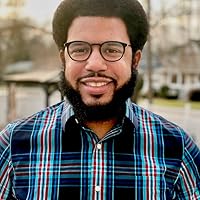
John Owens is an award-winning humorist, author, and editor based in Florida.
His just-released novel, Death Wears Flip-Flops, is fun, fast-moving, and packed with brutally accurate insights about The Sunshine State. A laugh-out-loud satire, it's like Florida itself:
A hot, boiling blend of everything that’s funny —and frightening— in America today.
Think Ozark meets South Park meets National Lampoon's Vacation.
His book Chickens Are Not Pets, A Kid’s-Eye View of a Shattered American Dream grew out of his teaching. One exercise popular with his students was Writing Your Life; students eagerly captured colorful stories about growing up. Chickens Are Not Pets resulted from John doing exactly that. A soul-baring celebration of childhood, this collection of stories is a hilarious flashback to offbeat people and you-can't-make-this-up experiences.
A former publishing executive, John has been the editor in chief of numerous magazines, including Travel Holiday, BOATING, and Popular Photography, and editorial director of Yachting, American PHOTO, Road & Track, and Cycle World, among others.
He has made more than 100 appearances on national television and radio.
Fifty percent of all new teachers will leave the field within the first five to seven years. This statistic may actually be higher, as more and more school districts across the country are finding themselves going into state receivership due to serious financial cuts because of a growing number of charter and private schools. Public education---one of the best things that our founding fathers ever devised---is in its violent death throes, and politicians don’t care. Teacher turnover rate is a serious issue. It has surpassed the divorce rate in this country.
When it comes to our failing educational system, politicians (conservative ones, at least, although some liberal voices seem to echo them) would put the onus on teachers, as if everything wrong with public education is their fault.
Never mind that for the past four decades, teachers have been mandated to follow policies and practices---at the risk of losing their jobs---devised by people in Washington, D.C. who have never taught, never worked in the field of education, and who expect schools to follow these mandates without offering any attempt to help pay for them.
Never mind that teachers are still accused of being “money-grubbers” and “whiners” when it’s the administrators and superintendents who are getting paid ridiculous amounts of money. Strangely enough, it’s their salaries that get yearly raises while most teachers haven’t seen a raise in their salary for the past ten years, and, in fact, most teachers have seen a decrease in salaries due to rising healthcare coverage costs.
Never mind that many people within the general public harbor an inexplicable hatred for teachers, most likely borne by FOX News, one-sided media attacks (such as the film “Waiting for Superman” which was unquestionably anti-union and pro-charter schools), and ridiculously unfair Hollywood-ized depictions of teachers as either horrible people (“Half Nelson”, “Bad Teacher”, “Fist Fight”) or miracle workers (“Stand and Deliver”, “Dangerous Minds”, “Freedom Writers”).
Never mind the number of completely false “truths” that still exist in the minds of most people: teachers get paid all year, even on the three months they’re off in the summer (they don’t---their salaries are calculated for a nine-month calendar, but teachers have the option of having paychecks spread out over 12 months), they only work part-time hours (if, by part-time, one means over 60 hours a week because a teacher’s day never ends at 3 p.m. and it doesn’t end on weekends), it’s impossible to fire a bad teacher (it’s not; it’s quite easy in fact, although it depends on what one means by “bad”), and teachers are overpaid (if, by “overpaid”, one means, as a national average, roughly $55,000 a year.)
But, hey, it’s still the fault of the teachers. Well, the bad ones anyway. So, what exactly is a “bad” teacher?
John Owens attempts to answer that in his 2013 book “Confessions of a Bad Teacher”, which describes his (brief) tenure as an eighth-grade teacher in the New York City school system. He was, by his own admission, a “bad” teacher. But what made him “bad”?
It may help to illustrate Owens experience with my own. Because I was a bad teacher, too.
In the 2008-2009 school year, I started teaching at an east side Cleveland public high school. A predominantly black suburban demographic, the school was a pretty typical one, dealing with the typical problems of budgetary cuts, a lower-income populace, and a growing gang problem.
I was excited to get the job, mainly because I was excited to get a job, any job, teaching. Despite the fact that I had many people express worries about me working there, I actually wasn’t worried. A small part of me may have been nervous, but only because my only experience prior to this job was a private Catholic high school. The demographics may have been different, I thought, but kids are still kids.
Things started to go sour almost immediately, but it wasn’t the kids at all that was the problem. I loved the kids. They may have been a little more rough around the edges than I was used to, but they were great. Discipline-wise, they were certainly more of a challenge than the parochial school kids, but one learns to adjust.
The problem actually came from an unexpected source: the faculty.
The teachers I worked with were a great, and diverse, mix of personalities and teaching styles. I was excited to learn from them, and they seemed earnestly excited to offer a helping hand. If what I describe in the following paragraphs gives the impression that that wasn’t actually the case, then I apologize, because my view of them still stands: they were good people. And good teachers.
The problem (and I have had several years to ponder my experience at this school, so this is merely my assessment based on those years of reflection) is that many of these teachers were veteran teachers, some had been there for many years, some for a few, but all had more experience than me. Their worldview was shaped by the fact that they simply had a better understanding of how the educational system really worked, not how it SHOULD work. I think what happened is that the system was so corrupt and problematic, these teachers simply adapted---for their own sanity---to accommodate to the system. Unfortunately, none of them seemed to remember what their original ideal of what being a teacher was anymore.
I remember, during the first week, I was teaching a lesson on the Transcendentalists. In class, we read aloud an essay by Emerson and a short excerpt from Thoreau’s “Civil Disobedience” and discussed them. The reading was short enough to keep the kids engaged and interested, but the discussion that followed was amazing. The kids were excited. We talked about Naturalism and Fate and, somehow, our discussion brought in everything from Freudianism to Stephen King. These were ninth graders, mind you. I doubt most of them had even heard of Freud or even King, for that matter.
Anyway, during our weekly staff meeting, I was pumped and excited to share my first success story. I told the group of teachers in my department about my lesson and about the way the kids were engaged. I told them what we had discussed, the wide range of topics that came up in the discussion, and how the kids were really interested.
Based on the expressions of the faces as I told the story, however, one would think that I had pissed in their breakfast cereal. One lady actually shook her head and said, “Oh no, no, no...”
As it turns out, what I had done was wrong. I had strayed from the important things, such as the state standards, and I had taught nothing that would help the students for the upcoming standardized tests that was mandatory for all of them and would determine whether they would actually graduate. I hadn’t “taught to the test”.
I felt sick after that meeting. I put on a happy face and pretended to heed their gentle and (in their minds) extremely helpful warnings, but I was devastated. It literally set the tone for the rest of my year there. When, in May, I was called into the principal’s office and told that my contract was not going to be renewed for the next year, a large part of me was actually relieved. Outwardly, I was upset and saddened (and terrified---I would, after all, have to find another job), but deep down i actually felt as if it might actually be the best thing for me.
I was a bad teacher. Or rather, I was made to feel like a bad teacher, and that’s pretty much the same thing.
Owens’s book resonated strongly with me because he had a similar experience. It has, apparently, resonated with countless other teachers across the country.
This country is in crisis. Anybody with eyes and ears already knows this, but it goes beyond being a problem that can be fixed by throwing money at something or changing a few policies here and there. It is deep-rooted and systemic. It has been rotting from the inside out for decades, and what we are seeing is now the cascade of devastation and death of the educational system in this country.
I want to have hope. I have to have hope that things will get better, but I---and millions of other bad teachers out there---see it getting much worse before it gets better, if it ever does.
As a former teacher, I won't bother denying that I have a bias. I believe in a strong public education system, am appalled by public money being used to line the pockets of private industry, and am vehemently against the overemphasis on standardized testing in this country. As a parent, I am all of these things and more. I saw the effects of our deeply troubled system on our students, felt them as a teacher, and am experiencing them as the parent of an elementary-age child. Even if you don't have kids, this issue is of the utmost importance because the quality of education in this country will determine the success of business in the future. If we don't have an educated workforce, the innovative, high-paying jobs will go elsewhere in this global economy, and I think the devastating effects of that would be obvious.
Anyone who wonders what it's like to be a teacher should read this book. Though I taught in a blue collar suburban district, so much of what Owens experienced echoes my own experiences. Being a first year teacher is an overwhelming experience, and the process of teaching is so much more complicated than most people imagine. Not only do you have to get to know your students and learn how to tailor your lessons to their needs, you have to learn how to navigate the system, attempt to build a rapport with your administrator, and figure out how to deal with parents, none of which is easy. The time I spent instructing students was only one small piece of the whole picture of my short teaching career. I can probably sum it up best by saying this: though I loved working with students, there is nothing that could ever tempt me to return to the classroom, short of a complete, 180 degree turn from the direction in which American education is headed.
Owens's book perfectly illustrates why this is. Even though I've been there done that, I still found it eye-opening to read about his experiences with endless data compilation. I think every American needs to ask themselves a simple question: What do we want teachers to spend their time on? Do we really want them filling out spreadsheet after spreadsheet, or do we want them to spend that time working with students and crafting instruction that's tailored to each individual class's needs? Yes, some data is necessary to assess teacher and school performance but, as Owens shows, we are going about it the wrong way. Rather than trying to develop a good system for obtaining information that's as objective as possible, we are wasting billions of dollars on standardized testing and driving bright, motivated people out of the profession by evaluating their performance based on factors out of their control, such as the home situations of their students and the whims of fickle administrators. Plus, as Owens shows, this data is far from infallible and, because the stakes are so high, it's subject to manipulation on an alarming scale. Simple logic tells us why this is: if your boss tells you to do something or you lose your job, you will do that thing using whatever means necessary, even if your methods aren't exactly above board.
Administration is another area in need of serious overhaul. Owens cites numerous examples of horrible bosses, some of whom proved to be liars and cheats in the end. To think that we can plop untrained businesspeople in these positions is a fallacy. Administrators need to have a firm background in education, and it would be best if all of them had been classroom teachers for at least 5-10 years, preferably closer to 10. Our high stakes testing environment engenders animosity between administrators and teachers when, really, these two groups should be working in concert as their ostensible goal is the education of all children. Instead, the system has set them up as opposing parties to the detriment of all. Yes, administrators should have some say in their staffing, but placing the power for all these decisions in their hands only leads to the sorts of abuses and petty squabbles that Owens describes in this book. Owens also does a great job of highlighting how deftly administrators have passed the buck of discipline from themselves to teachers, enabling them to engage in rampant CYA as they now have plausible deniability for disciplinary issues in their own schools. Why has this happened? Discipline was traditionally an integral part of an administrator's job, which freed teachers up to focus on actual teaching, and which benefited students because they didn't have to deal with the distraction of disruptive classmates.
The importance of what Owens discusses with regard to special education and mainstreaming can't be underscored either. Mainstreaming is a good, democratic idea that makes sense, but only if teachers and students are provided with adequate support. It's unconscionable to put a student with learning disabilities into a class and expect them to perform to the same standards as their peers without the benefit of the extra help they need. The system is failing special needs students, teachers, and students without special needs alike. As Owens emphasizes, regular classroom teachers do not have the background needed to assist special education students. A whole different skill set is required, along with the proper training. If schools are going to expect regular teachers to be successful in teaching special needs students, those teachers need to be provided with the training required to learn techniques for helping those students.
This excellent book provides readers with a real, visceral idea of the challenges facing teachers, schools, and students. And things will only get worse if we don't take some serious action and take it soon. There is already a dearth of teachers in some subject areas, and the numbers will only continue to decline due to poor pay and deplorable working conditions. What incentive does someone with a degree in math or science have to work in a school when they could work for private industry making much more money with better working conditions? As Owen says, our problems with education are serious and complicated and will require a great deal of time and money to fix. It's time America stops throwing money at the problem, wasting taxpayer dollars on pointless reforms and charter schools (which are often not held to the same exacting standards as public schools, even though they get public funding) that show no quantifiable improvement in outcomes over public schools.
This book is NOT about a bad teacher. It is about a teacher who was caught in a broken system (Latinate Institute). A broken system with a commanding officer (Ms. P) who was more driven by the outward appearance of success (outdated school information) than the actual success of the students. When reading about his experiences, and those of other contributing teachers, the dedication to the school and students is evident. In general teachers want only the best for their students. We don't go into the profession for the money. There are a great number of other career paths that are a lot less stressful and a great deal more lucrative, but not as rewarding in the sense of achievement. The feeling you have when you see the light come on in that one child's eyes as "they get it" for the first time is like none other. You truly feel like you have won. Now, tell me, how can the CEO of any top business relate? Okay, maybe they are going to make in one day what a classroom teacher makes in an entire year (or sadly maybe two years), but will they have the satisfaction and helping a child learn a skill that will be used for the rest of their life? Remember, that CEO got to be in that position because great teachers helped them along the way to be successful!
Although the title of the book is a little off-putting, it is a fabulous read. It made me think about my twenty year career in education. I am thankful I have never been in the same position as Mr. Owens, traveling from classroom to classroom with a cart of materials or working for a difficult commanding officer. My experiences are very different in a number of ways, but very similar in others. I think all educators will be able to relate to this book and see they too could be labeled as a "bad" teacher simply because what they see as the best for their students may seem inappropriate by the "powers that be". This makes me think of a saying I read on a bumper sticker (or somewhere else), "Those who can, teach. Those who can't make the rules for teachers!"
*To comply with new guidelines introduced by the Federal Trade Commission, Sourcebooks, Inc. has provided a complimentary electronic copy of this book through NetGalley.com.
The title of John Owens' book, and the back-of-the-book description and blurbs, led me to believe I would be reading about a very good teacher. Mr. Owens was a new teacher with promise, potential, and much to learn. Not bad, but certainly not what I would classify as good. With that said, I enjoyed the book. As a teacher entering my seventh year, much of what was in Confessions of a Bad Teacher resonated with me. Some of it was beyond what I had experienced, thankfully, but I'm sure most public school teachers can find truth in Owens' words. The book failed in showing how a truly excellent teacher can also fall victim of being branded as "bad," but perhaps that wasn't the point. The majority of the book focused on the disconnect between parents, administrators, taxpayers, legislators, and teachers. We all share a common goal, but operate within independent circles. I do hope Mr. Owens continues his work in trying to educate the public as to some of the faults of our educational system.
A book which makes many good points about bad policy and bad managers in the public schools of today - all of which could be taken much more seriously were the book not so full of self-congratulatory narrative about the high income our suburban author sacrificed in order to "rescue" the poor souls of the South Bronx. His outrage at being falsely accused of cultural insensitivity is rather rich when considered alongside his musings marveling at the fact that his students did not all have names lifted directly from the King James Bible (like his own) or that many of them did not know how to tie the school necktie because they were not from households with adults who wore ties to work (um... duh?).
If a person goes into teaching with the attitude that he will educate students but students cannot also educate him, he is probably not emotionally mature enough for the profession.
I implore everyone to take a glance at this book- this honest memoir is the best rendering I've looked at to date about the public education system in America and the true effect of so much "reform". At the end of the day I still believe teaching is an incredibly rewarding and life defining profession and my administration is caring and helpful (think the opposite of Ms. P) but so many people who are not part of the education system judge it, limit it, and do not truly know what is going on. There are more and more hoops added to a teachers to-do lost each year and the system itself has not changed to support individualized or true reform in education. As in the case of Mr. Owens, these are rough waters to navigate and not everyone makes it through to the other side. At the end of the day it's a good thing so many "bad" teachers remain to continue to broaden students educational horizons despite legislation, administration, and reform. What a breath of fresh air in a sea of anti-teacher and anti-public education articles, documentaries, and books! Kudos, Mr. Owens!
This book is an absolute must-read for anyone who cares about the American public education system. Both a jolt of reality and a rallying cry, Confessions of a Bad teacher pulls back the curtain and exposes the dangerous truth behind many of the current data-driven "reform" efforts. John Owen's honest and compelling memoir needs to be read; but, more importantly, it needs to be discussed.
Owens taught for less than one year in an exceptionally mismanaged school. It’s hard to trust any of his general conclusions about the state of America’s public schools based on that limited experience. It’s entertaining, but reads as sensationalized pop nonfiction and I think that such a serious issue deserves a more balanced treatment.
Why So Many Of America's Teachers Are Leaving The Profession
John Owens in his book, Confessions of a Bad Teacher, shares that "America's public school teachers are being loudly and unfairly blamed for the failure of our nation's public schools." As a 2012 nominee for the Presidential Award for Excellence in Math and Science Teaching and a veteran of public and private schools for the last twenty years, I have to agree but I was glad to hear someone else say it in print.
The vast majority of teachers are working overtime without the tools or budget to manage the plethora of issues inside and outside the classroom. On top of that, administrators who only compound the situation by micromanaging the wrong things make the lives of teachers completely untenable with their lack of support.
Most teaching preparation programs including the one Mr. Owens attended do not adequately prepare anyone for life in the classroom. For many beginning teachers, "It was as though I had just joined the circus as an apprentice clown and was immediately required to juggle plates, bowling pins, butcher's knives, and axes all day long while walking along a tightrope in midair." Teachers make more decisions per hour than any other job including what to do with a student who falls behind, manage students with learning or emotional problems, tailor each lesson every day to up to 125 students or more who are somewhere between illiterate and highly gifted.
Sadly some administrators, students and parents instead of partnering with teachers, blame "teachers which is easier than doing a massive system overhaul."
We need "teachers who can present a passion for the greatness and potential of learning and the greatness and potential of America." I believe John Owens wanted to be one of those people. His unsuccessful attempt to complete one year in the classroom paints an ugly and honest picture of life in many American schools today. The statistics from the National Commission on Teaching and America's Future show that his experience is not unique as "in urban districts, close to 50 percent of newcomers leave the profession during their first five years of teaching."
Many non-teachers claim that teaching is an easy life with long vacations. However, as Owens shares his daily routine it is a job way past full time hours, "I spent virtually every waking hour -- 5 a.m. to 10 p.m. -- all week long on my teacher duties. Lessons, backup lessons, tutoring students during lunch and after school, PowerPoints, grading, inputting data, inputting more data, meeting with parents, observing experienced teachers to learn their techniques, meeting with my bosses, updating databases, writing reports, and trying to get help from someone for the struggling students in my classes." All teachers are familiar with the many hours required to keep lessons, grades and life engaging and organized.
Most of the teachers I have worked with have been caring and concerned both with doing a great job and meeting the needs of each student. However, "every second of the day was filled with demands and -- sadly -- students whose needs still weren't being addressed despite all the efforts I could put in." Even with the frustrations of not being able to do enough, Owens wishes to be a better teacher and contribute to his students and society but the principal is not interesting in supporting his contributions as a new teacher.
Owens creates an enthusiastic response from his students but he is reprimanding for his class being too noisy. He has many meetings and moments with the principal as he is warned that he will receive an unsatisfactory rating for his first year skills. He learns that "inspiring, empowering, really teaching these students" is not enough.
Many teachers are leaving the profession, as "America is demanding too much from its teachers without giving them the proper support to educate students effectively. Commitment, caring, pushing for results, and putting in a full work's day no longer seem to be enough...Often, I felt like a soldier dropped behind enemy lines with nothing more than orders. No weapon. No helmet. No hope of reinforcements." I was disappointed and frustrated to learn about his challenges, and it reminded me of many situations and schools were I have been forced to work with incompetent management.
Students want to share themselves and deserve teachers who can be present and focus on them from "Rikkie, the bright, defiant ninth grader, who did a long piece about how prison isn't so bad to a ninth-grade girl wrote about the day she saw her father get arrested in the neighborhood check-cashing store." Students need caring supportive teachers, not teachers who feel threatened that they will lose their job for showing enthusiasm and initiative. Teachers need to work in an environment where they can thrive.
In Los Angeles, new teachers and old can find mentorship and engaging lessons with the Los Angeles Science Teachers Network. In response to an overwhelming situation in 2009, I created this network for professional development, support and camaraderie. Administrators cannot do everything and we all must participate to improve learning for the children. Do not listen to the blame. Do something about it. We are each responsible to do what we can. Write a blog, start a network, help a child and find a way to feel supported in the classroom. America needs you.
About this review: Lisa Niver Rajna was a 2012 nominee for the Presidential Award for Excellence in Math and Science Teaching. She was the first teacher to appear on Career Day. She and her husband George are on a career break sharing their world adventures on We Said Go Travel.
This review first appeared on the Huffington Post as of Nov 11 it has had over 1.4K likes and over 50 comments! Add your views: http://www.huffingtonpost.com/lisa-ni...
I feel this book should be required reading for every adult in the U.S. John Owens left a high paying job to teach English at a public school in New York City's South Bronx. He felt he could give back to the community in a positive way by becoming a teacher. However, what he encountered instead was a broken educational system which was focused on test scores and an administration that offered no support to the teachers. In many schools across the U.S. the same thing is happening. Teachers that cannot live up to all the reform mandates and/or have to deal with an administration that talks the talk but doesn't walk the walk are then labeled "bad" teachers. Here is an excerpt from the book that perfectly defines what is happening in many schools:
"Today, teachers must be able to pull every student into every topic with the power of a video game and get them to not only absorb but also to process, analyze, and synthesize the information at the highest level. And do it every day, every time, regardless of the students' learning abilities or the resources available to them. The general expectation is that poverty, learning disabilities, medical-emotional issues, and behavior problems shouldn't stand in the way of student achievement."
Until the citizens of the United States start demanding that teachers be able to teach - really teach - not just teach to a test - the educational system will stay broken with school systems fudging their data and kids getting second rate educations at best!
Sadly, this book was nothing new for me. I've lived some of it and read lots more about the rest. I'm really saddened by the direct of education in the US and I'm not sure how much longer I would like to be a part of it which breaks my heart because I love my students. Mr. Owens talks about his experiences teaching in a inner city school. In particular, he details the insanity of personal grudges from administrators, endless data and testing, and how tough it is to learn classroom management with a room full of neglected and academically deficient students. I am not in an inner city school, but I myself have been told that students that only complete half an assignment should be given 60% credit instead of 50% credit because at least that looks better to them when they look at the grades (this is assuming they look at their grades). Even that really bothered me so I can't imagine the number gymnastics and outright cheating that occurs in other schools around the country. This should be a must read for anyone involved in public education. They need to read these books over and over until they learn that problems are not isolated to one area or one teacher, but a nation of teachers.
This was REALLY interesting. This guy was a publishing exec who wanted to help kids, took a graduate program, and went to work teaching English at an inner-city high school. But he ended up at a "charter" type school (hardly a really independent school---just a smaller public school) run by a kind of crazy principal, and ran into endless political/administrative problems that prevented him from being a real help, and he ended up resigning. He identifies lots of really salient points that are real problems in education today--but his fixes aren't all that helpful. Just more same old same old--more money, same structure (although I think he wants to limit principal power) I wish he'd seen real, truly independent charter schools. He made no mention of homeschooling. I wish there were more teachers like this guy--but it wouldn't solve the structural problems of education in America today. Nor would any of his "fixes." The problems run much, much deeper. But it was a very instructive book on what is WRONG with education. Good read--the author has a vigorous voice and a lot to say.
*I was given a free copy of this book from netgalley.com for a fair and unbiased review*
This book was amazing to me. It seemed very honestly written by a man who wanted to be a good man and teach the youth of our age in school and found out just how corrupt and problematic the system has become. This poor guy did years of college to teach just to essentially get pushed out by a horrid Principle and guidelines and requirements even Superman couldn't manage to do.
I knew our educational system had problems,but reading this book was a serious eye opener. I really had no idea it was as messed up as it is. It also saddens me because I would love to be a teacher, but it sounds like it has become a revolving door system and it wouldn't justify the cost for the education.
I liked this book a lot. Now, my copy had a few formatting errors, but nothing that couldn't be overlooked or ignored. It was a fast read, I read it in one sitting, and it seemed to go by very quickly.
If you like nonfiction or are an educator or have considered becoming a teacher, you should read this book.
This is a public school teacher's voice whose authenticity cannot be questioned. When someone steps away from a lengthy and lucrative career in the business of writing and publishing to share that expertise with young learners, they should do what the author did-commit to a full program of education, with ongoing classes and guidance once classroom instruction begins. Readers cannot question his motives: for his choice to be a teacher, for his decision to return to business, for his reporting on the political and financial decisions that have made public school classrooms hugely challenging, or for telling the truth in his story.
I enjoyed this book! What I liked was hearing the author's stories on how the principal demanded perfection and how he was somewhat able to do it even with all the barriers. I am shocked at how principals have all of these unrealistic expectations and how that among other factors is destroying education for students. I could also not believe that when things go wrong that they blame the teacher for every little thing. It's not just the teacher. It is the result of a broken education system that no one is willing to fix.
Confessionsof a Bad Teacher isn't about a teacher witch hunt, that would be too simple and there are bigger problems with the American education sytem than a teacher's performance, rather it is the system itself that does a unsatisfactory job of supporting it's teachers and students alike. Definitely eye opening and poignant. A must read for parents, students, teachers or anyone that knows one.
I received this book free to review from Netgalley. I chose it because I am a teacher and it sounded interesting. I agree that if most people spent a day in public school, they might be shocked. However, I was not too impressed with this book. The author spends a lot of time complaining about the principal he worked for. He really hated her and he quit teaching before he had even completed one school year. I wonder if he really wanted to be a teacher or if he just tried it for a year so he could write a book about it. Many of the things that he complains about are valid complaints and I agree that there are many things about our educational system that are broken. Other things that he complains about though are normal teaching skills. When students run in the hall, we should yell "walk" or "please walk" rather than "don't run" because, according to studies, when kids hear the word "run" and keep on running and when they hear the word "walk", they may just begin walking. I don't think that it is a difficult thing to ask teachers to phrase things positively rather than negatively. It sounds like the school district that John taught in could use a lot of improvement. I understand that. I taught middle school for 13 years, then volunteered in my children's schools some and have been substitute teaching for 4 years. I have been involved in 5 different school districts in all income levels from the inner city school where I taught my first three years to the nice suburban district where I now substitute teach. I think that people who are not teachers may enjoy John's book and may indeed be shocked by some of the things he shares. I just think that John was a first year teacher in a difficult school and he was unable to manage teaching, student discipline and keeping to the standards that his principal set. That can be difficult to do in any teaching situation and it does sound like John's situation was especially difficult. John could not take it and he quit teaching. I did not find this book interesting enough to finish and I quit reading it.
An excellent, amusing and gut-clenchingly familiar tale of the "easy" teacher life from one who lived it. Although I have never had such an unreasonably demanding principal as Owens, so much of what he talked about related closely to my experiences in urban and suburban school settings. No matter what obstacles are in the way: poor family life, cognitive dysfunction, behavior problems, lack of materials, lack of training, lack of effort from students, everything comes down to teacher effectiveness and what WE will do to make the kids meet certain (often unrealistic) benchmarks. I'm sorry the author had a particularly bad experience with public education, but it is nice to hear an outsider-turned-insider validate what so many of us career teachers have been feeling over the past 10 years. We are society's scapegoats in a job that is assumed to be easy so our cries are not heard. Let's hope some more non-teachers take up the school reform banner that focuses more on policies and funding than bad teachers.
This book is a good look at many of the problems that have developed in American education over the past two decades. Written by a career-changing (now former) teacher, the book details his experiences in the public schools of New York city.
Not all schools are as bad as Latinate, but MOST have most of the issues to varying degrees. I have taught in the Baltimore City public school system and have encountered my own version of Ms. P. They do exist. It is also a very common mantra that states, "Well, if you were a GOOD teacher, you would do (something that does not permit you have a life away from the classroom) or you would not do (something contrary to what some supposed expert [expert never having actually taught real students] says will work." The bad teacher witch hunt is real.
I hope that this book is read by people who aren't teachers, because teachers already know what is happening and can do precious little to change it.
A harsh but fair critique of the education system. It addresses the multiple flaws that plague education today. It is a well-targeted assault on knot-headed state bureaucrats trying to regulate something they don't understand to equally knot-headed administrators, including self-serving principals who flourish in the modern data driven edu-culture. An indictment of the absurd testing models that have been implemented to evaluate student and teacher competence. Such number crunching has little to commend it unless one likes to chant the battle cry of " Blame the teachers", or " Privatize education." The author offers an inside view as he worked in a Bronx school and observed the pathos and corruption first-hand. His article in Salon received such an overwhelming response, he decided to recount his experiences in book form. If have an interest in the education system and how it has become just another outpost of inane bureaucracy in America, it is highly recommended.
This book reveals the extent of scandal, mismanagement, and cheating that goes on in our nation's school and makes you question the motives of everyone in--as Owens so ominously refers to NYC public schools--"the System." As a recent college graduate who emerged from a teacher education program, got her license, and went through student teaching drenched with the fear of those ~60 bullets of evaluation, I was able to connect to Owens' tale. Interesting, although I knew that problem schools such as "Latinate" truly exist, I couldn't help but feel he must be exaggerating...and wound up being not just disenchanted with the obvious issues--the management, "the System"--but also, in some respects, with Owens.
After reading this book, I would have to agree that this author upholds racists views. No, I am not calling him a racist because I believe that racism is systemic and not just individual. He blames culture and poverty for his short comings at providing culturally relevant pedagogy. Do not use blanket statements that all students at being manipulative with only a precious few who are doing well. Don't say that the teachers who are not getting U's is only because they are at the beck and call of the principal. Don't shy away from going to school functions and then complain about parents not being more involved. Also, how was he working so many hours when he had a file of an entire years lesson plans?
I read every word and enjoyed dissecting this book. He truly was a bad teacher.
Very alarming book about a new midcareer teacher who started at a NYC high school. But he offended the principal because he did not volunteer enough hours so she became determined the rate him Unsatisfactory (and there's enough subjectivity in the process that the principal can find an excuse for any rating.) The book shows many of the problems of school reform and how we expect the impossible from teachers and force them to teach in ways that don't recognize where the students actually are and fail to support them in discipline. As a result, someone who might have become a good teacher in time left to go back to his old career. There was too much emphasis on the rules and not enough on helping the students.
This is a must read for teachers, administrators, parents and anyone who cares about our future. We know educating our children is the most important thing we can do. But do we enable our teachers to do this important work? Hardly. Owens shows us how out of control the education programs are with the clear eyes of an outsider. He makes the situation understandable to anyone. The system is abused so that the teachers and the kids are the last ones to get a break. The time to change things is now and Owens' cogent book makes it clear. Don't think this isn't your kids' school. It is. Stop the madness now. Read this book!!
Sadly, this is an excellent and revealing look at what happens in more schools than one would think. I experienced the type of school leader that the author had. There are many leaders in the charter/reform movement who are truly humane people (at least in my experience) , but others who are bean counters only interested in what the test data says (not that results aren't important).
Confessions of a Bad Teacher goes beyond the telling of one teacher. It shouts the struggles on a seriously messed up educational system. The blaming of teachers for poor test scores and biased data is just a small part of the problem. I wish those in charge of making educational decisions would read this book.
I enjoyed this book immensely. As a public school teacher myself it made me laugh and smile and cry all at the same time. I highly recommend to anyone working in or around public education.